Acoustic Treatment For Windows (How To Fix The Biggest Reflection Problem In Your Room)
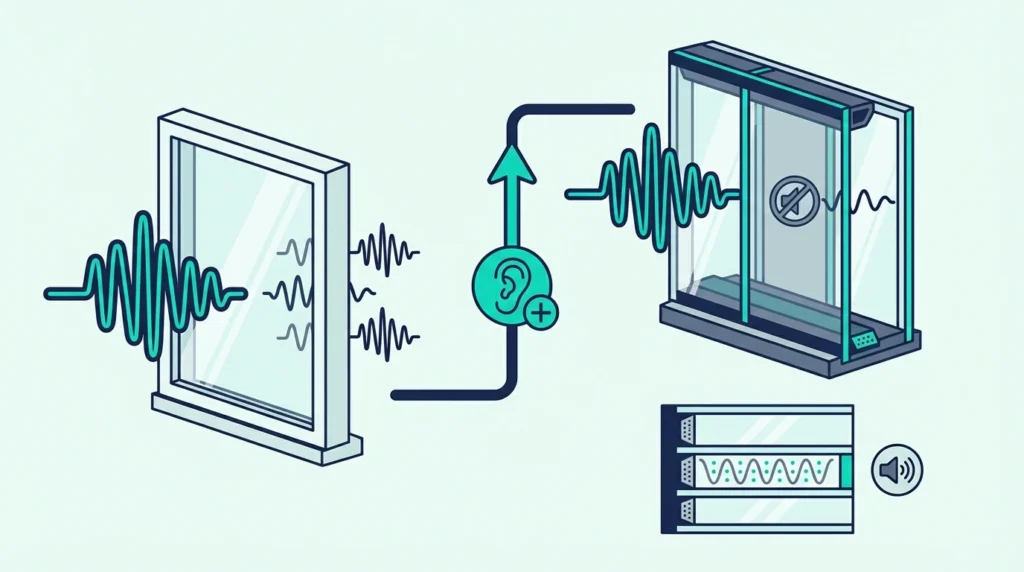
Best acoustic treatment for glass starts with understanding why windows are the single most reflective surface in most rooms — but most guides skip the explanation and jump straight to recommending foam tiles that do almost nothing against a flat pane of glass.
Glass reflects nearly 100% of the sound energy that hits it. A large window acts like an untreated wall section that you cannot mount panels on, bouncing every frequency back into the room with almost no absorption.
The result is flutter echo between the window and the opposite wall, harsh high-frequency reflections that smear stereo imaging, and a bright, ringy quality that makes the room sound larger and less controlled than it actually is. Standard acoustic panels on the surrounding walls help, but they cannot fix what the glass itself is doing.
Below, this guide covers why windows cause specific acoustic problems, which treatment options actually work on glass surfaces, and how to balance acoustic performance with the practical need for natural light.
Windows reflect nearly all sound energy and create flutter echo, harsh reflections, and uncontrolled brightness in any room. Heavy acoustic curtains are the most practical treatment — they absorb mid and high frequency reflections when drawn and preserve natural light when open. For maximum control, pair curtains with removable window plugs made from rigid fiberglass for recording and mixing sessions.
Why Windows Are An Acoustic Problem
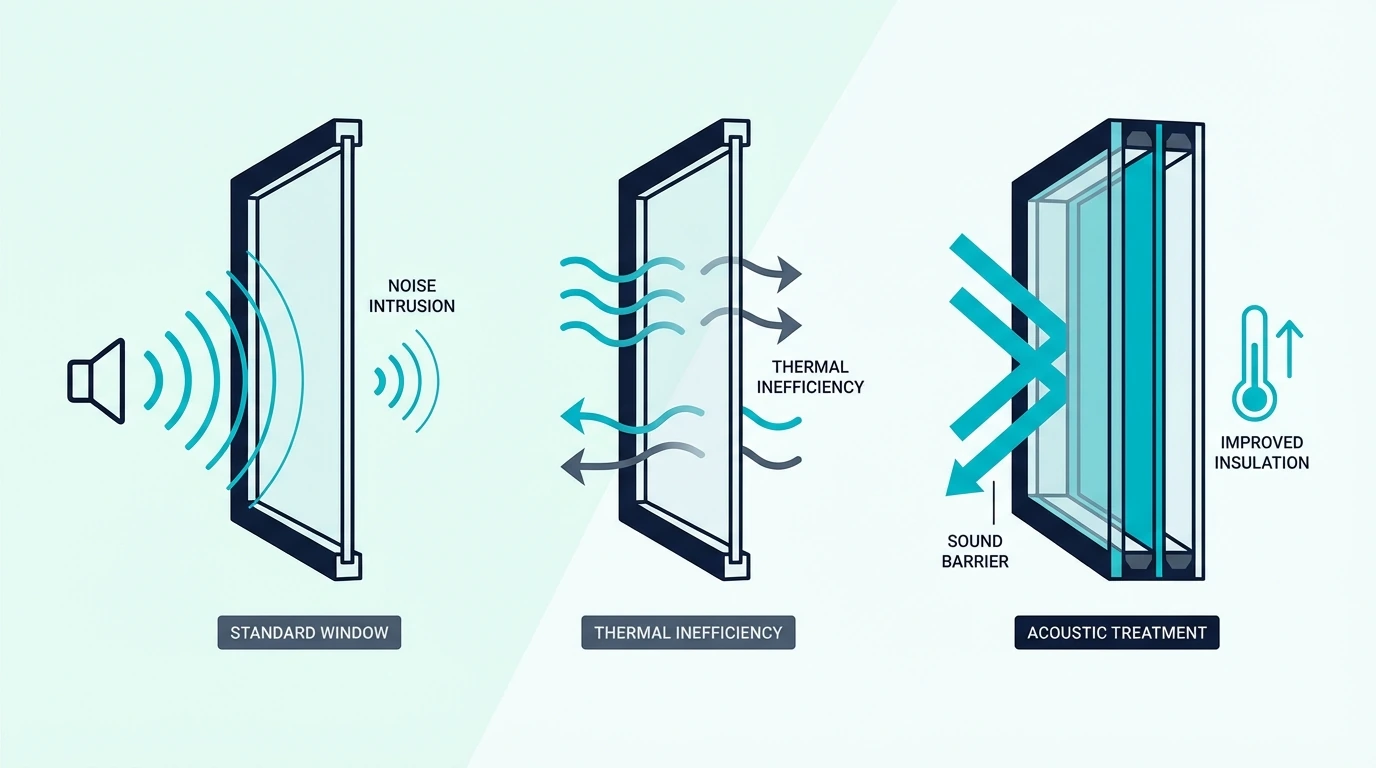
Glass is one of the hardest, smoothest, and most acoustically reflective materials in any building. Where drywall absorbs a small percentage of sound energy on contact, glass reflects virtually everything — from low bass frequencies all the way through the high end.
A single large window in a room creates the same acoustic effect as an untreated concrete wall. Every sound wave that hits the glass bounces back at nearly full strength, adding reflected energy to the direct sound and increasing the overall reverberation time.
Flutter Echo From Glass
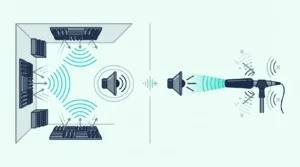
Flutter echo is the most immediately audible problem that windows cause. When a window sits opposite a hard wall — or worse, opposite another window — sound bounces back and forth between the two parallel reflective surfaces in a rapid series of reflections.
The result is a metallic ringing quality that follows every sharp transient: claps, consonants in speech, snare hits, and pick attacks on guitar. Flutter echo is easy to identify — clap your hands in the room and listen for a rapid “zing” or “ping” that rings for a fraction of a second after the clap.
In small rooms where the window and opposite wall are close together, flutter echo is more pronounced because the reflections arrive faster and overlap more tightly. The smaller the gap between the two surfaces, the more the flutter echo sounds like a tonal ring rather than a series of discrete reflections.
High-Frequency Reflections
Glass reflects high frequencies with particular efficiency because its smooth, hard surface does not scatter or diffuse the incoming sound waves. The reflection comes back as a near-perfect mirror image of the original wave.
Those strong high-frequency reflections interfere with the direct sound from your monitors or speakers. At your listening position, the reflected energy from the window arrives milliseconds after the direct sound and creates comb filtering — a pattern of sharp peaks and nulls in the frequency response that changes your perception of the mix.
Bass Leakage vs Bass Reflection
Windows also vibrate at low frequencies because thin glass has relatively little mass. A bass note from a subwoofer or a kick drum can physically vibrate the glass pane, which transmits some of that energy outside as airborne sound.
This is a soundproofing problem, not an acoustic treatment problem. Acoustic treatment controls reflections inside the room — it does not prevent sound from passing through the glass to the outside.
If bass leakage through windows is your main concern, the solution is heavier glass, secondary glazing, or window plugs — not curtains or panels.
Curtain-weight fabric is predicted to lose almost nothing at 100 Hz, and why curtain-weight fabric can’t stop bass shows the worked numbers.
How To Treat Windows Acoustically
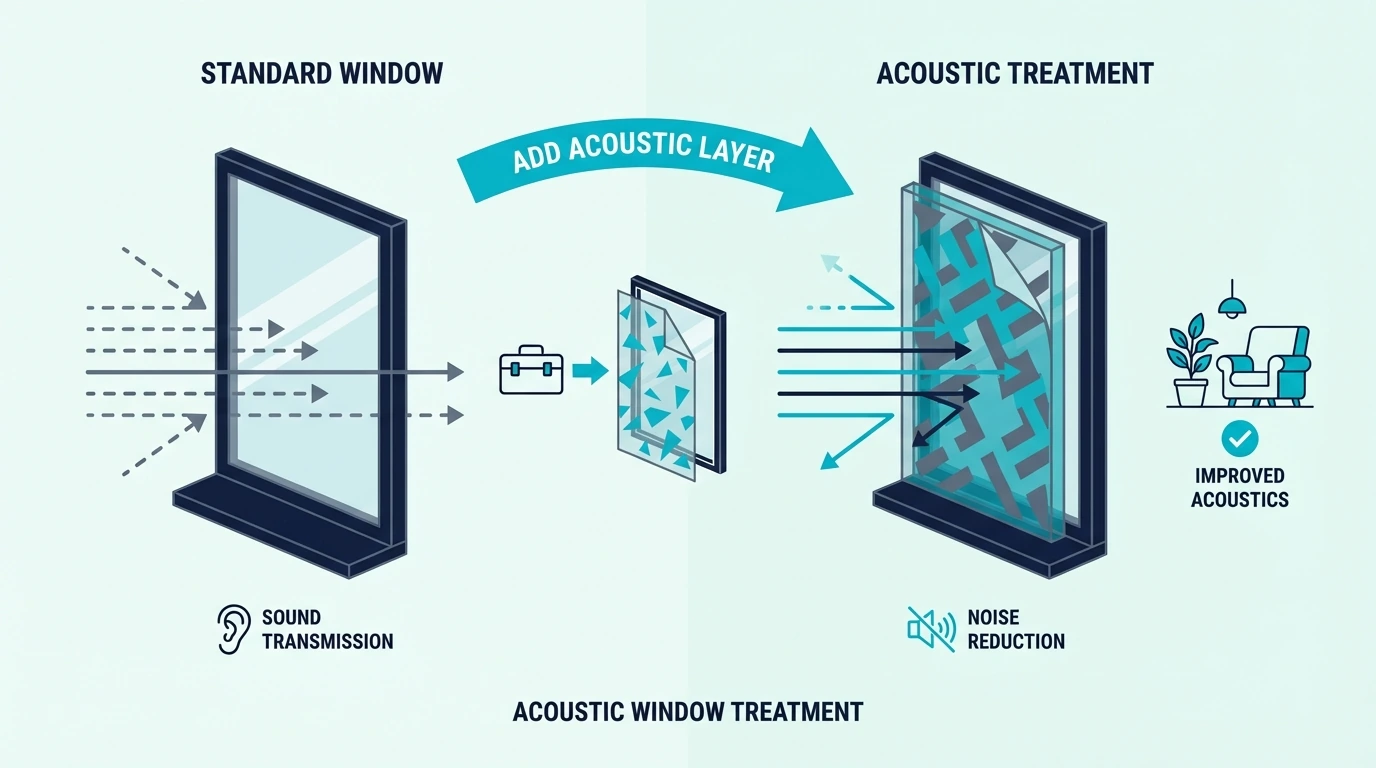
Treating a window is different from treating a wall because you need to preserve access to natural light and ventilation. Permanent panel mounting is not practical on glass, so window treatments must be removable, retractable, or both.
The three main options — heavy curtains, removable window plugs, and panels on adjacent walls — each address different parts of the problem. Most rooms benefit from a combination.
Heavy Acoustic Curtains
Heavy floor-to-ceiling curtains are the most practical and most popular acoustic treatment for windows. When drawn closed, the fabric absorbs mid and high frequency reflections that would otherwise bounce off the glass.
The key is weight and density. Thin decorative curtains do almost nothing acoustically because the fabric is too light to resist sound wave energy.
The curtain needs enough mass to slow down and absorb the incoming sound rather than letting it pass through to the glass and reflect back.
A budget option like the NICETOWN Blackout Curtain Panels uses a triple-weave construction that adds enough mass to absorb mid and high frequency reflections. The floor-length design covers the full window surface when drawn, and the panels open completely for natural light during non-critical listening.
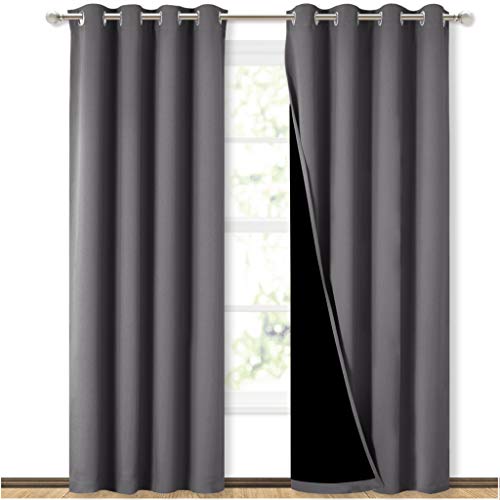
NICETOWN Blackout Curtain Panels
For rooms where acoustic performance matters more — home studios, home theaters, and dedicated listening rooms — a 3-layer acoustic curtain delivers noticeably better absorption. The RYB HOME 3-Layer Soundproof Curtains sandwich a blackout layer between two felt layers, which absorbs more acoustic energy across a wider frequency range than a single-layer curtain.
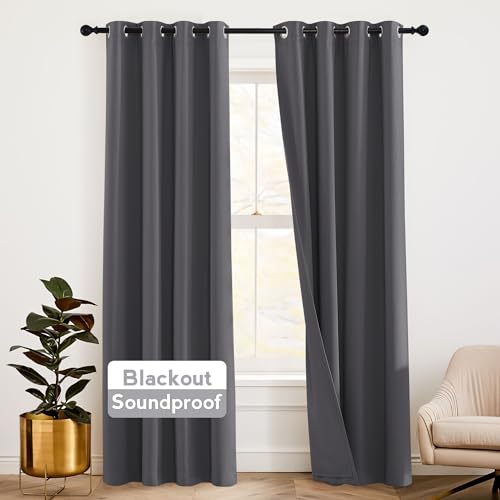
RYB HOME 3-Layer Soundproof Curtains
Hang curtains as close to the ceiling as possible and let them fall to the floor. Gaps at the top or bottom allow sound to reach the glass and reflect back around the curtain edge, which reduces the treatment’s effectiveness.
Removable Window Plugs
Window plugs are rigid panels — typically built from fiberglass or mineral wool in a wooden frame — sized to fit snugly inside the window opening. When inserted, they cover the glass completely and absorb reflections across a much wider frequency range than curtains can manage.
A 2-inch thick fiberglass plug absorbs effectively down to about 250 Hz. A 4-inch plug extends that absorption into the low-mids where curtains have minimal effect.
The tradeoff is total light blockage — with the plug inserted, no natural light enters the room. This makes plugs ideal for dedicated recording or mixing sessions where light is irrelevant.
For rooms that double as living spaces, plugs work best as a session-only tool that you insert before recording and remove afterward.
Building window plugs is a straightforward DIY project. Cut rigid fiberglass to the window opening dimensions, wrap it in breathable fabric, and add handles for easy insertion and removal.
The total material cost for a standard window runs 30-60 dollars. That makes plugs one of the most cost-effective treatments per square foot of coverage.
Panels On Adjacent Walls
When the window itself cannot be covered — because you need the light, or the window is too large, or the room serves a dual purpose — treating the walls adjacent to the window reduces the damage that window reflections cause.
Panels on the wall opposite the window break up the flutter echo path by absorbing the energy that would otherwise bounce back toward the glass. Panels on the side walls near the window intercept angled reflections before they reach your listening position.
Fiberglass panels like the Olanglab Fiberglass Panels fit in the wall space between and beside windows without blocking any glass. The compact rectangular shape works in the narrow wall sections that typically surround window frames.
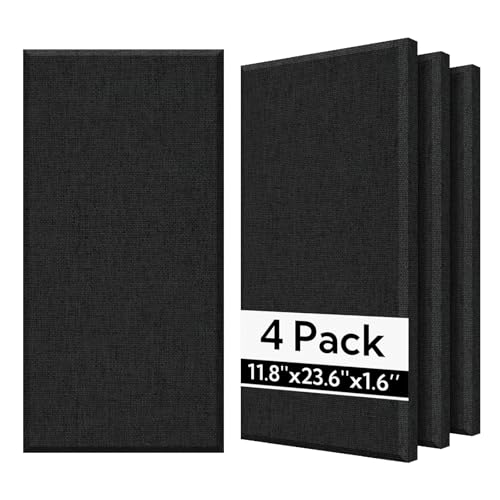
Olanglab Fiberglass Panels
This approach does not treat the glass itself, but it reduces the total reflected energy in the room by absorbing a portion of the sound before and after it hits the window. Combined with curtains, adjacent wall panels bring the window area’s acoustic impact close to that of a fully treated wall.
Get Studio Tips Weekly
Join 5,000+ creators getting acoustic treatment advice every week.
No spam. Unsubscribe anytime.The Bottom Line
Windows are the most reflective surface in most rooms, and leaving them untreated undermines whatever panels and bass traps you install on the surrounding walls. The reflected energy from a large window can dominate the room’s acoustic character.
Heavy curtains are the practical first step — they absorb mid and high frequency reflections when drawn and preserve natural light when open. For critical listening and recording, removable window plugs deliver the best acoustic performance at the cost of blocking all light.
The full guide to acoustic treatment covers placement priorities for every surface type. If budget is tight, the budget acoustic treatment roundup shows what delivers real results at the lowest cost, and the best treatment kits simplify the buying process for outfitting a full room.
To estimate the total project cost including window treatment, the pricing guide breaks down DIY, commercial, and professional installation ranges.
Frequently Asked Questions
Can you put acoustic panels over windows?
Yes — removable fiberglass panels sized to the window opening are one of the most effective acoustic treatments for glass. The panels absorb reflections across a much wider frequency range than curtains and eliminate flutter echo completely when inserted.
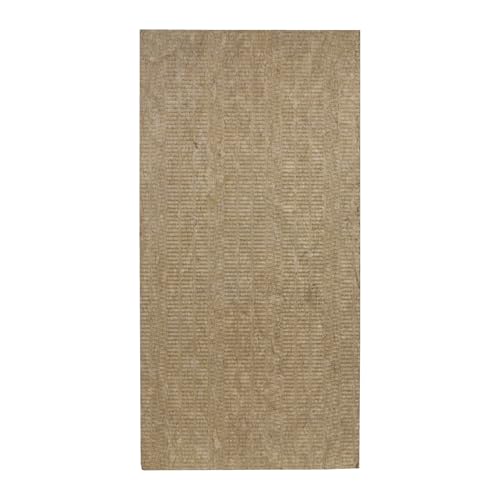
The tradeoff is that panels block all natural light while in place. Build them with handles for easy removal so you can switch between treated and untreated modes depending on whether you are recording or just using the room normally. Rockboard 60 mineral wool boards cut to exact window dimensions with a utility knife and friction-fit into the opening for a snug removable plug.
Do curtains help with room acoustics?
Heavy floor-to-ceiling curtains absorb mid and high frequency reflections and noticeably reduce flutter echo from glass surfaces. The heavier and denser the curtain fabric, the more acoustic energy it absorbs.
Standard decorative curtains provide minimal acoustic benefit because the fabric is too thin and lightweight. For measurable improvement, choose curtains marketed as blackout or soundproof — they use heavier materials that resist sound wave energy rather than letting it pass through.