Should You Cover Walls In Moving Blankets For Acoustic Treatment (Honest Answer)
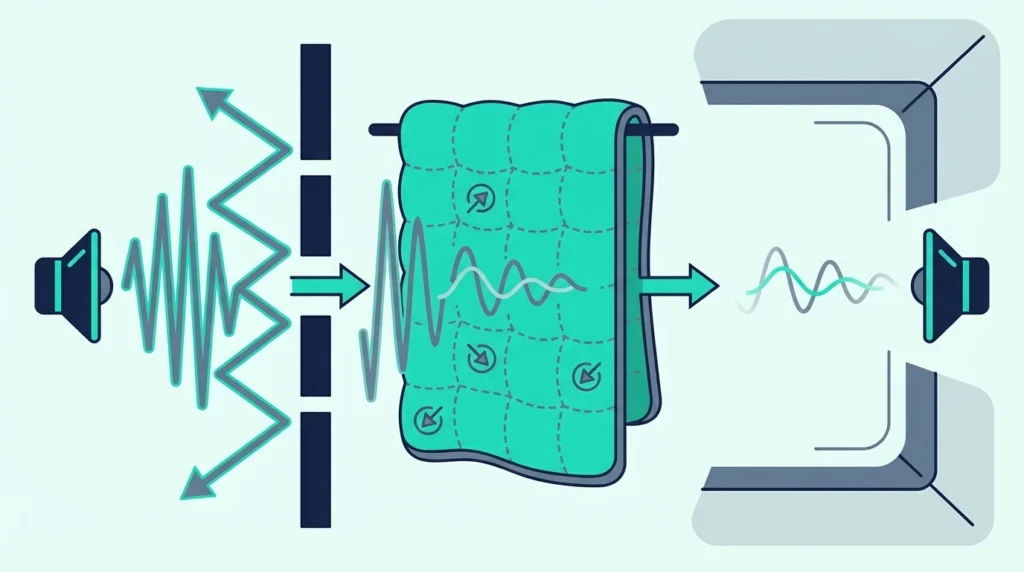
Should I cover walls in moving blankets for acoustic treatment — it is one of the most common budget questions in home studio building, but moving blankets provide mild mid-frequency absorption while doing nothing for the bass and low-mid problems that actually ruin recordings and mixes.
A heavy moving blanket hung on a wall absorbs some sound energy above roughly 500 Hz. That reduces high-frequency brightness and takes some of the harshness out of a reflective room.
The problem is that the reflections causing muddy, boxy recordings live in the 200-500 Hz range, and moving blankets are not dense enough or thick enough to absorb at those frequencies. Hanging blankets on every wall gives you a room that sounds slightly muffled in the highs while the low-mid problems remain completely untouched.
Below you will find what moving blankets actually do acoustically, how they compare to purpose-built acoustic blankets and panels, and when they make sense versus when you should spend the money on proper treatment instead. Start with two fiberglass panels at first reflection points — they solve the problem blankets cannot.
Moving blankets absorb some mid and high frequency energy above 500 Hz but do not control bass or low-mid reflections where most room problems live. They are a reasonable temporary solution for rental spaces and extreme budget constraints but should not be your primary acoustic investment. Two fiberglass panels at first reflection points outperform an entire room of hanging blankets for recording and mixing accuracy.
Moving Blankets vs Acoustic Blankets – What Is The Difference
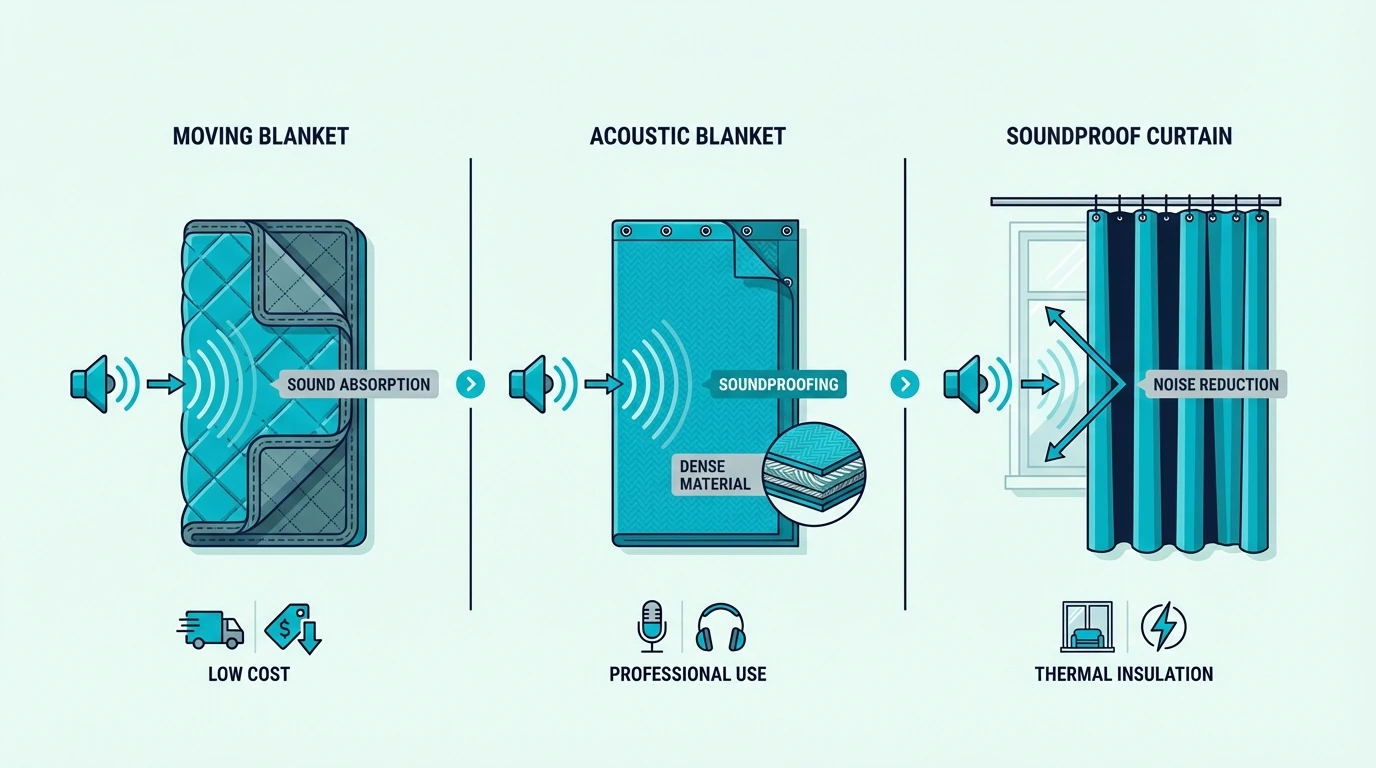
Not all blankets perform the same acoustically. The difference between a standard moving blanket and a purpose-built acoustic blanket is significant enough to affect whether hanging them on your walls is worth the effort.
What Moving Blankets Actually Do
Moving blankets are dense woven pads designed to protect furniture during transport. They typically weigh 5-8 lb each and consist of a woven cotton or polyester shell filled with recycled textile padding.
That mass and padding absorbs some mid and high frequency sound energy. A single moving blanket hung flat on a wall provides roughly NRC 0.2-0.4 depending on the blanket — meaning it absorbs 20-40% of the sound energy that hits it in the mid-high range.
For comparison, a 2-inch fiberglass panel achieves NRC 1.0 — absorbing virtually all sound energy across the full mid and high frequency range. A moving blanket provides roughly one-quarter to one-third of the absorption of a proper panel.
Moving blankets do nothing meaningful below approximately 500 Hz. The low-frequency room modes and the 200-500 Hz reflections that cause boxy, muddy recordings pass through blankets as if they were not there.
The performance also varies wildly between brands. A cheap, thin moving blanket absorbs almost nothing useful. A heavy-duty blanket with dense fill performs noticeably better, though still far below purpose-built acoustic materials.
What Purpose-Built Acoustic Blankets Offer
Acoustic blankets — also called sound blankets or producer blankets — are designed specifically for sound absorption. They are heavier (typically 10-15 lb each), use denser fill material, and include grommets along the top edge for easy hanging.
A good acoustic blanket achieves NRC 0.5-0.8 — significantly better than a moving blanket but still well below a fiberglass panel. The higher mass absorbs slightly deeper into the low-mid range, extending useful absorption down to approximately 300-400 Hz.
The US Cargo Control sound dampening blanket is a typical example — 96 x 80 inches with built-in grommets for hanging. One blanket covers a full wall section and absorbs more effectively than a standard moving blanket due to the heavier construction.
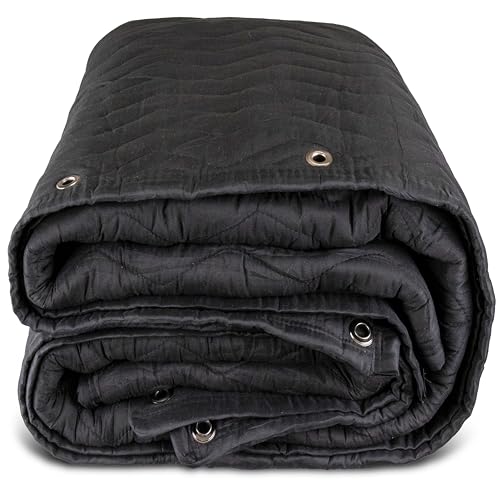
US Cargo Control sound dampening blanket
Acoustic blankets cost 2-3 times more than moving blankets. Whether the upgrade is worth it depends on how long you plan to use them — for a weekend recording session, moving blankets are fine; for a semi-permanent setup, acoustic blankets justify the premium.
Moving Blankets vs Acoustic Panels – Which Is Better
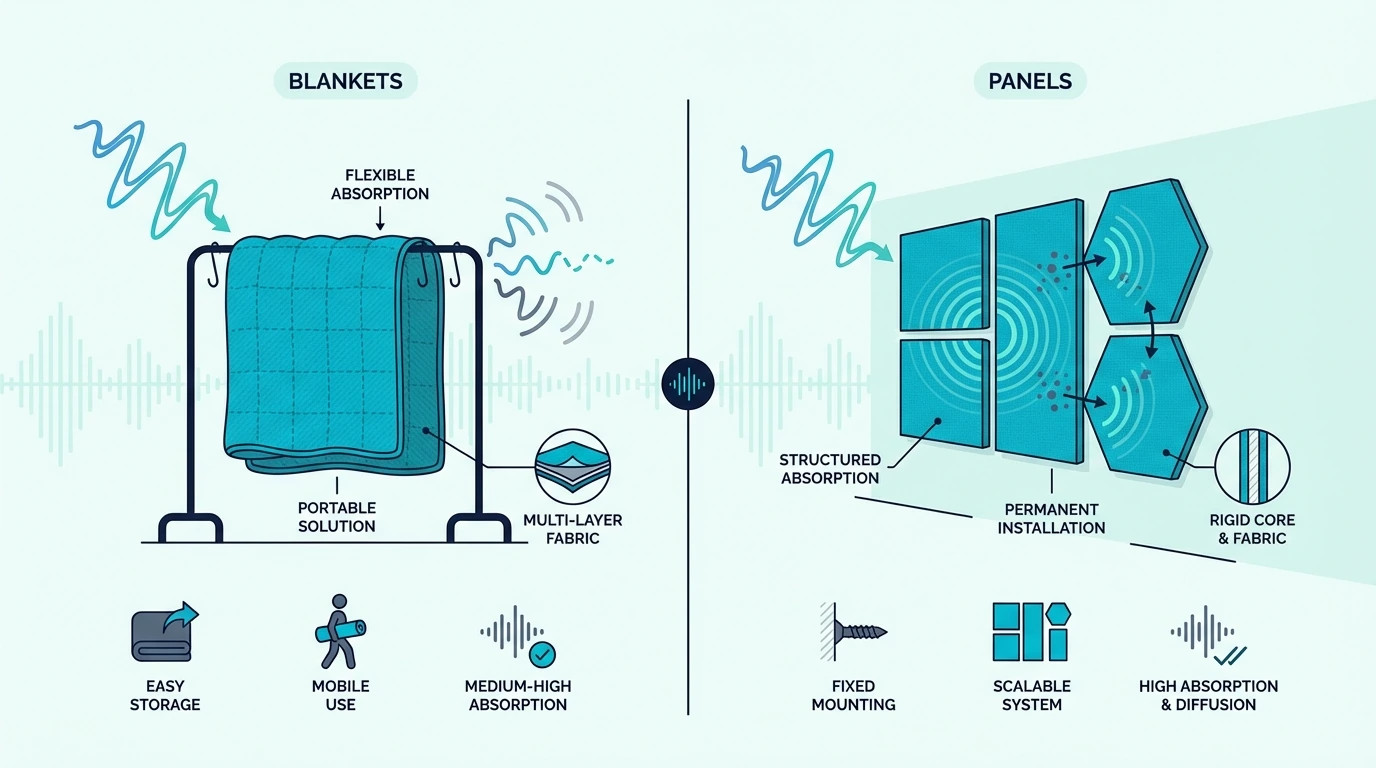
Acoustic panels outperform blankets in every measurable acoustic metric. The question is not which sounds better — panels always win — but whether the convenience and lower commitment of blankets makes them the right choice for your situation.
When Moving Blankets Make Sense
Moving blankets are a reasonable choice in a narrow set of circumstances:
- Rental spaces where you cannot mount anything on walls and need a removable solution
- Temporary recording setups where you need quick absorption for a single session or project
- Extreme budget constraints where you already own moving blankets and cannot afford any alternative
- Vocal booth improvisation where blankets draped around a microphone position reduce the closest reflections
In these situations, blankets provide some improvement over bare walls. The room will sound less bright and less echoey, which helps reduce the worst artifacts in vocal recordings.
The temporary treatment guide covers additional portable and removable options that work alongside blankets for non-permanent setups.
When Panels Are The Better Choice
Panels are the better choice in every situation where you can mount them:
- Permanent or semi-permanent studios where you want consistent, reliable acoustic performance
- Mixing rooms where accurate monitoring requires controlled reflections across the full frequency range
- Any room where bass and low-mid control matters — blankets cannot address these frequencies regardless of how many you hang
A 4-pack of fiberglass wall panels costs roughly the same as two acoustic blankets but absorbs across a wider frequency range including the low-mid frequencies where room problems are most severe. Two panels at first reflection points improve recording and mixing accuracy more than blankets covering every wall in the room.
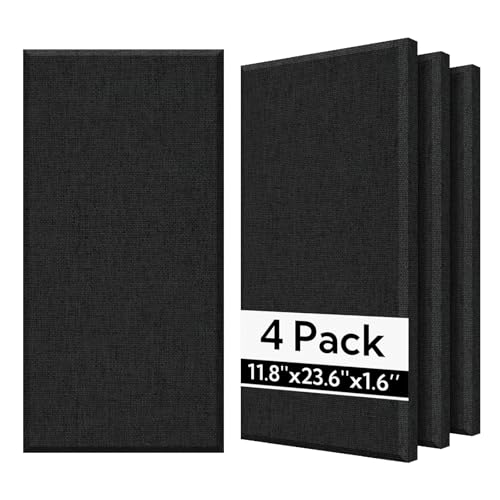
fiberglass wall panels
The fiberglass treatment guide covers DIY panel construction for builders who want even better performance at a lower cost per panel.
Get Studio Tips Weekly
Join 5,000+ creators getting acoustic treatment advice every week.
No spam. Unsubscribe anytime.How To Use Moving Blankets For Acoustic Treatment
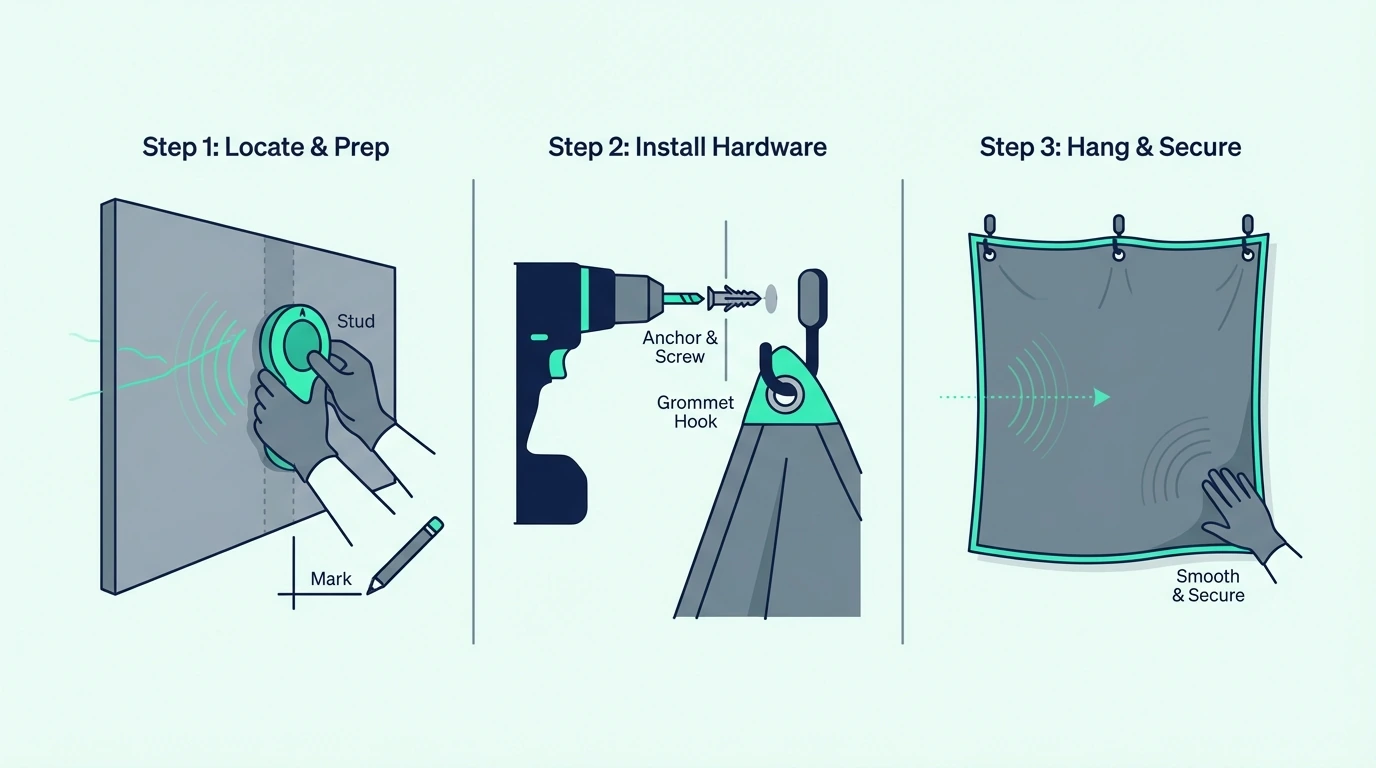
If blankets are your best available option, proper placement maximizes the limited absorption they provide.
Hanging Methods
Use grommets, binder clips on a curtain rod, or heavy-duty Command hooks with clips. Hang blankets flat against the wall at the first reflection points — the spots on the side walls, ceiling, and rear wall where sound bounces from your speakers to your listening position.
For vocal recording, hang blankets behind the microphone and behind the singer. These two positions catch the strongest early reflections that cause the boxy coloration in vocal recordings.
Double-Layering For More Absorption
Two blankets layered on top of each other absorb more than a single blanket. The additional thickness extends the useful absorption range slightly lower in frequency and increases the overall NRC by approximately 30-50%.
If you have enough blankets, double-layer at the first reflection points rather than single-layer across more wall area. Concentrated treatment at the most critical positions outperforms thin treatment spread across the entire room.
Leave an air gap between the blanket and the wall if possible — even 1-2 inches of space improves low-frequency absorption. Draping the blanket over a curtain rod instead of pressing it flat against the wall creates this gap naturally.
What Blankets Cannot Fix
No amount of blankets will control bass modes in the room corners. For low-frequency problems, you need corner bass traps built from dense material — 4 inches of fiberglass or mineral wool minimum.
Blankets also cannot fix the room if you hang them on every surface. Over-treating with blankets creates a room that sounds dead and muffled in the highs while the lows remain uncontrolled — the worst of both worlds for mixing.
The Bottom Line
Moving blankets provide mild mid and high frequency absorption. They are a reasonable temporary solution for rental spaces and budget builds but should never be your primary acoustic investment.
If you can mount anything on walls, fiberglass or Rockwool panels at first reflection points deliver dramatically better results per dollar spent. Two panels outperform a room full of blankets for the acoustic problems that matter most.
The full guide to acoustic treatment covers placement priorities that deliver the biggest improvements. The cost breakdown compares blankets, DIY panels, and pre-built panels at every price point.
Frequently Asked Questions
Are moving blankets good for soundproofing?
No — moving blankets do not block sound between rooms. They provide mild acoustic absorption within a room, which reduces reflections and echo.
Soundproofing requires mass, decoupling, and airtight construction — none of which blankets provide. A moving blanket on a wall will not meaningfully reduce how much sound passes through to the other side. For the numbers behind that answer, our guide on whether moving blankets work for soundproofing compares a pad’s weight with drywall, mass loaded vinyl and vinyl-backed sound blankets.
How do you use moving blankets for acoustic treatment?
Hang them at first reflection points using grommets, clips, or Command hooks. Prioritize the wall behind the microphone, the wall behind the singer, and the side walls at the listening position.
Double-layer blankets at priority positions rather than single-layer across more area. Concentrated treatment at critical reflection points outperforms thin coverage spread across the room.
Can you soundproof a wall with blankets?
No — blankets lack the mass needed to block sound transmission through walls. Even the heaviest acoustic blanket reduces sound transmission by only 2-3 dB, which is barely perceptible.
For actual soundproofing, you need mass-loaded vinyl, double drywall with Green Glue, or isolation clips with resilient channel. The home theater guide explains the difference between treatment and soundproofing in practical terms.