Are Hotel Rooms Soundproof? What Codes and Acoustic Experts Say

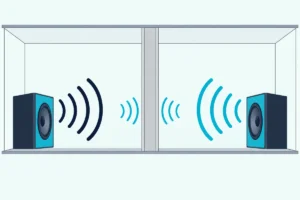
Are hotel rooms soundproof? Not completely, and the wall between two rooms is rarely the reason you can hear the couple next door.
You check in hoping for a quiet night, then lie awake listening to a television through the wall and a door slamming down the hall.
The building code, an acoustic consultancy and lab-tested wall numbers reveal what a hotel wall can block and where the sound slips around it.
Below, you’ll see what the code requires, why walls aren’t the main problem, and how to pick a quieter room and cut the noise you can’t avoid.
Start with the number the code sets.
Are Hotel Rooms Soundproof?
Not fully, and the industry’s own acoustic consultants say so. Acentech, an acoustics firm, reports that noise from other guests is the number one complaint of hotel guests, and that a brand’s sound standards don’t always translate into a quiet building (Acentech).
The building code sets a floor between rooms, and many brands aim higher, but a rating describes the wall and not everything around it. That gap is where most of the noise gets in.
Our guide to how mass, separation and damping stop sound explains the three tools behind every hotel wall.
What Does the Building Code Require Between Hotel Rooms?
That floor comes from the International Building Code’s Section 1206, which covers walls and floors between dwelling units and sleeping units, the code’s term for spaces like hotel rooms. It asks for an airborne rating of STC 50 in the lab, or NNIC 45 when the finished wall is tested in place, and for floors an impact rating of IIC 50 in the lab or NISR 45 in place (UpCodes, IBC Section 1206).
The same section requires penetrations for pipes, electrical devices, recessed cabinets and ducts to be sealed or treated so the rating holds. Entrance doors are exempt from the rating, but the code says they must fit tightly to the frame and sill.
This table sets out what the code asks for:
| Requirement | Lab rating | Field rating |
|---|---|---|
| Airborne sound between rooms and to public areas | STC 50 | NNIC 45 |
| Impact sound through floors | IIC 50 | NISR 45 |
The code also lets a registered design professional establish a rating by engineering analysis, comparing the assembly with walls tested to ASTM E90. A hotel can therefore meet the code on paper without a test of the finished wall, which is worth remembering when a room is louder than the rating suggests.
Get Studio Tips Weekly
Join 5,000+ creators getting acoustic treatment advice every week.
No spam. Unsubscribe anytime.What Does STC 50 Sound Like Between Rooms?
That STC 50 figure only means something next to the scale. Acoustical Surfaces’ chart says STC 45 is where privacy begins, STC 50 leaves loud sounds faint, and STC 60 and up is where good soundproofing begins (Acoustical Surfaces).
It adds that STC 50 is the point where survey respondents report a drastic drop in noise complaints. On paper, then, a hotel wall at the code minimum should keep speech out.
Hotel brands aim higher. Commercial Acoustics says major brands specify STC 55 between guest rooms, and that at STC 50 muffled speech and television can still be audible (Commercial Acoustics).
The two sources differ on what STC 50 lets through, and the lab number doesn’t settle it for a real room. What they agree on is that 50 is the floor, not the goal.
How Do Hotels Check That a Wall Meets Its Rating?
Meeting a rating in a lab and in a finished building are different things, which is why the code has two columns. A lab test to ASTM E90 measures a wall assembly alone, while a field test to ASTM E336 measures the finished wall in place and produces the NNIC figure (UpCodes, IBC Section 1206).
The code accepts 45 in the field where it asks for 50 in the lab, a five-point allowance for the gaps and paths a finished building has. Commercial Acoustics says field testing is what confirms a project actually reached its target, and that when high-risk adjacencies get heavier assemblies, penetrations are sealed and doors are upgraded, field results land within a few points of the lab rating.
That means a hotel with a field test on file is the exception, not the rule. Guests rarely see one, so the practical check is the room itself, which the last sections cover.
How Are Hotel Walls Built to Block Sound?
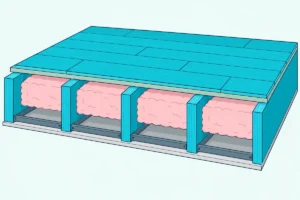
The rating a field test checks comes from how the wall is built, and the tools are well known. Acentech names three: mass, meaning enough layers of gypsum board; separation, meaning a double wall or resilient elements that decouple one side from the other; and insulation between the separated layers (Acentech).
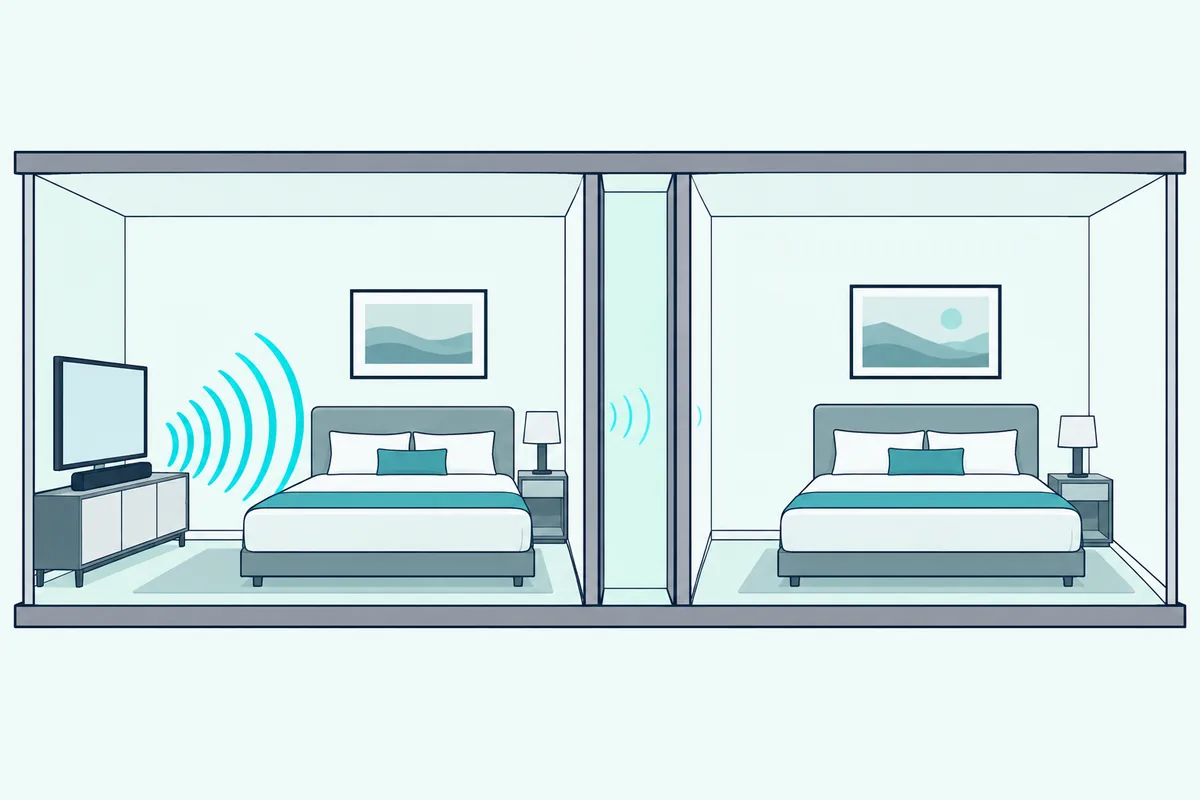
ROCKWOOL’s catalog of lab-tested walls shows how much those choices move the number. Its steel-stud walls with mineral wool range from STC 40 for a single layer of half-inch drywall up to 57 with two layers of 5/8-inch drywall, and its double 2×4 wood-stud walls with a one-inch air gap reach STC 56 to 66 (ROCKWOOL).
Acentech adds a warning about the resilient option. Anything anchored to the studs, such as a headboard or a television, can short-circuit the decoupling unless the detail is done right.
For the same ladder of wall types in wood-frame construction, see how townhouse walls score in lab tests.
Its preferred fix for televisions is to put them on credenzas or floor-supported cabinets. A wall-mounted television is possible, but the details are fussier.
Why Do You Still Hear Your Neighbors in a Hotel?
Even a wall built with all three tools counts for little when sound has other routes. Acentech calls communicating doors, the ones that connect two guest rooms, the worst offenders, and says they must be heavy, well sealed and treated as a complete assembly with frame and hardware.
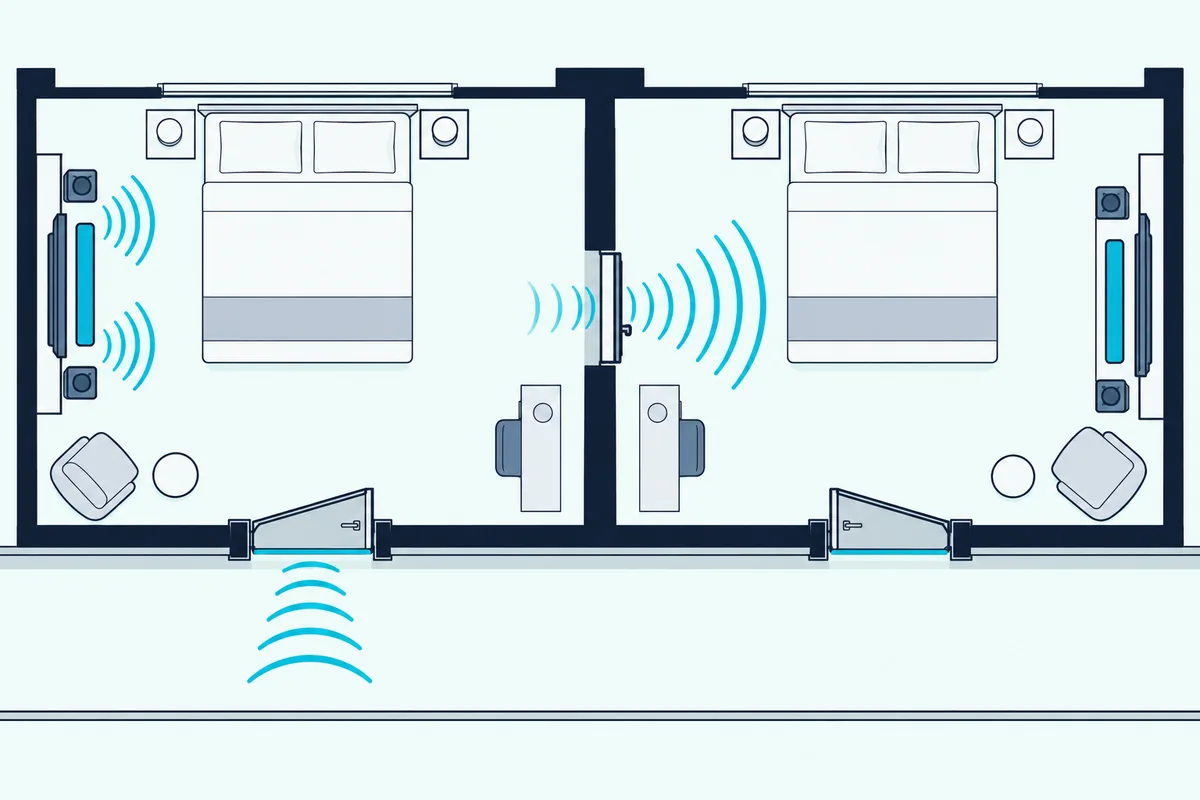
The entry door is the next weak point. A deep undercut, handy for moving air, is an invitation to listen to the corridor all night, and Acentech prefers full perimeter gaskets on a tight-fitting door while noting they need upkeep on such busy doors.
Floors and machinery matter too. Footfall noise counts for more now that guest rooms are moving away from carpet, and Acentech says hard floor finishes work best over a resilient underlayment.
Mechanical noise cuts both ways. Acentech looks for a middle ground, since a system that’s too quiet lets you hear a neighbor’s television.
This table gathers the weak points the article names and the easiest response for a guest:
| Weak point | Why it leaks | What a guest can do |
|---|---|---|
| Connecting door | A door-sized opening in the wall | Ask for a room without one |
| Entry door undercut | A gap lets in corridor noise | Block it with a towel or draft stopper |
| Hard floors | Footsteps travel through the floor | Ask for a room away from heavy foot traffic |
| Ice machine, elevator, laundry | Functions that need their own isolation | Ask to be away from them |
| Through-wall air conditioner | A weak spot in the outer wall | Ask what kind of system the room has |
Do Hotel Floors and Ceilings Block Footsteps?
Footsteps are impact sound, and the code rates them with a different number. Section 1206 asks for an impact insulation class of 50 in the lab, tested to ASTM E492, or a normalized impact sound rating of 45 in the field, tested to ASTM E1007, for floor-ceiling assemblies between rooms and to public areas (UpCodes, IBC Section 1206).
The tools are the same three, with one addition. Acentech says footfall noise deserves its own attention as hotels move away from carpet, and that hard floor finishes work best over a resilient underlayment that cushions the blow.
The code number tells you what the floor was designed to do, not what a heavy walker above you does to it. If the room’s ceiling gets more footsteps than you can tolerate, ask for a room on a different floor or away from the ballroom and fitness areas.
Do Hotel Windows Keep Street Noise Out?
Walls are only half of the picture, because the outer wall faces the street. Acentech says hotels near busy roads or train lines start with a multi-day noise survey to set the sound-isolation target for windows and the rest of the facade, and that the whole facade assembly has to be judged as one.
Windows are rated the same way as walls. Window makers put single-pane glass at roughly STC 20 to 28 and double-pane glass at about 26 to 35, with laminated and double-glazed combinations reaching about 40 (Infinity by Marvin, Indow, Giroux Glass).
Traffic and aircraft noise sit lower in frequency than speech. Andersen’s help center notes that STC covers mid-to-high frequency sources like speech and television, while a separate rating, OITC, covers lower-frequency ones such as aircraft, trains and cars (Andersen).
Through-wall ventilation can undercut all of this. Acentech says packaged terminal air conditioners and similar systems can create a significant weakness in a hotel’s outer wall.
Are Newer or Luxury Hotels Quieter?
That gap between paper and finished room is why newer or luxury hotels are often, but not reliably, quieter. Some hotels have strong sound-isolation standards and others don’t, and Acentech says that even where standards exist they don’t always produce an acoustically robust building, because designers may not know how to apply them and enforcement can slip under budget pressure.
A higher star rating tells you what the brand asked for rather than what the contractor built. The code’s allowance for field-tested ratings and engineering analysis, covered above, is part of why two hotels with the same paper standard can sound different.
Event space adds another variable. Hotels with ballrooms, conference facilities or retail need robust isolation from those spaces, often a heavy, resiliently suspended sound-barrier ceiling, according to Acentech’s own design notes, and not every property has one.
How Can You Tell Whether a Hotel Is Quiet Before You Book?
You can’t read a wall’s rating on a booking page, but you can look for the signs the weak points leave behind:
- Read reviews for the specific complaints. Comments about connecting doors, hallway noise or a neighbor’s television point at the doors and walls above.
- Ask about the air conditioning. Through-wall units are a known weak spot in the outer wall.
- Ask about the floors. Hard floors without underlayment carry more footfall noise.
- Ask which rooms sit beside the elevator, ice machine or event space. Those are the spots to avoid.
A front desk that can answer these questions is a good sign. One that can’t isn’t proof of a problem, but it tells you nobody has been asked before.
How Can You Get a Quieter Hotel Room?
At check-in, you can use those same weak points to choose well:
- Ask for a room without a connecting door. Acentech names those doors as the worst offenders.
- Ask to be away from the elevator, ice machine and laundry. Acentech lists them as sources that need their own isolation.
- Ask to be away from event space. Ballrooms and conference facilities are loud, and not every hotel isolates them well.
- Check the door when you enter. A big gap at the bottom will let corridor noise in.
A room change is easiest on the first night, so ask early. If the room has a problem you can hear, say so before you unpack.
What Can You Do in a Room That’s Already Loud?
If the door at the end of that list is the problem, start there, since the undercut is the cheapest leak to close. A rolled towel or a door draft stopper across the gap shuts the path Acentech describes, and our guide to sealing a door against noise covers the permanent versions.
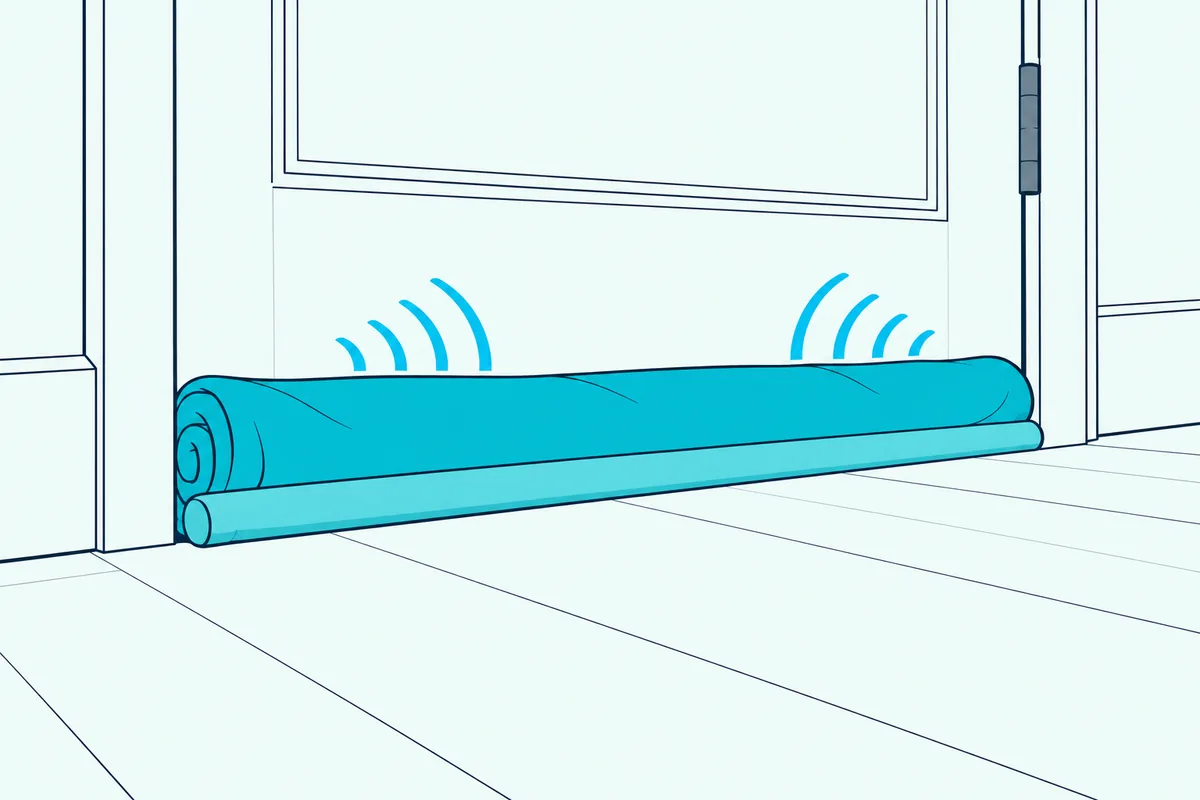
Then move the bed away from a connecting door if the room allows it, and use white noise or earplugs for what remains. None of this changes the wall, but it addresses the weak points that sound uses most.
The Bottom Line
Hotel rooms aren’t fully soundproof: the code sets STC 50 between rooms, brands often aim for 55, and the doors, air conditioners and floors let sound around the wall.
Choose a room without a connecting door and away from the elevator and ice machine, and seal the gap under the door when you can.
Frequently Asked Questions
What STC rating do hotel walls have?
The building code requires STC 50 in the lab, or NNIC 45 when the finished wall is tested in place, between sleeping units. Commercial Acoustics says major brands specify STC 55 between guest rooms.
Why can you hear other rooms in a hotel?
Usually the sound goes around the wall rather than through it. Acentech points to connecting doors, entry doors with deep undercuts, through-wall air conditioners and hard floors.
Are luxury hotels more soundproof?
They often have stricter standards, but Acentech says standards don’t always translate into a quiet building. Ask about the room’s location rather than assuming.
Do hotels have to soundproof between rooms?
Yes, where the International Building Code applies. Section 1206 requires STC 50, or NNIC 45 in the field, between sleeping units and to public areas.
How can you block noise from the hallway?
Close the gap under the door with a rolled towel or a draft stopper, since Acentech says a deep undercut lets corridor noise in. A tight-fitting door with full perimeter gaskets is the better fix.