Should You Put Acoustic Foam in Bedroom? Pros, Cons & Considerations
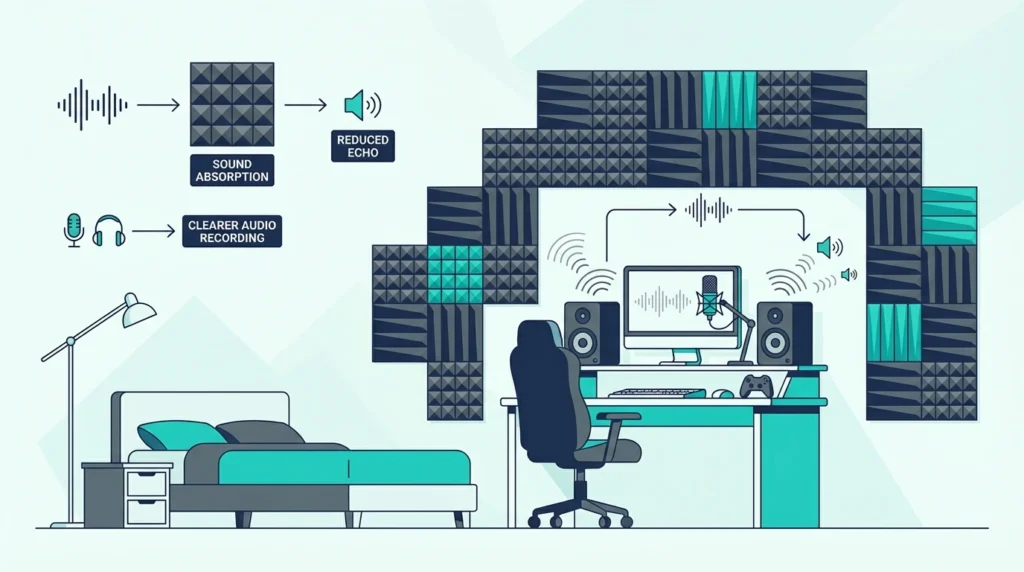
Bedrooms often double as recording spaces, gaming rooms, or home offices. Adding acoustic foam seems logical, but bedrooms have unique considerations because reflections in a room this personal affect both audio quality and comfort.
That’s usually the cause of confusion: foam helps with echo and reverb inside the room, but it won’t block noise coming through walls.
You’ll find when bedroom foam makes sense below, plus potential concerns and how to implement it effectively. Start with the scenarios where foam helps, then move into placement and safety.
Should you put foam in your bedroom? – Yes, if: You record audio, game/stream, or have echo problems affecting calls – Maybe not, if: You only want to block outside noise (foam won’t help) or prioritize bedroom aesthetics
Key considerations: – Foam won’t soundproof against neighbors or traffic – Bedrooms often have soft furnishings that already absorb sound – Partial treatment around your desk/recording area often suffices – Consider aesthetics—you’ll see it every day
When Bedroom Foam Makes Sense
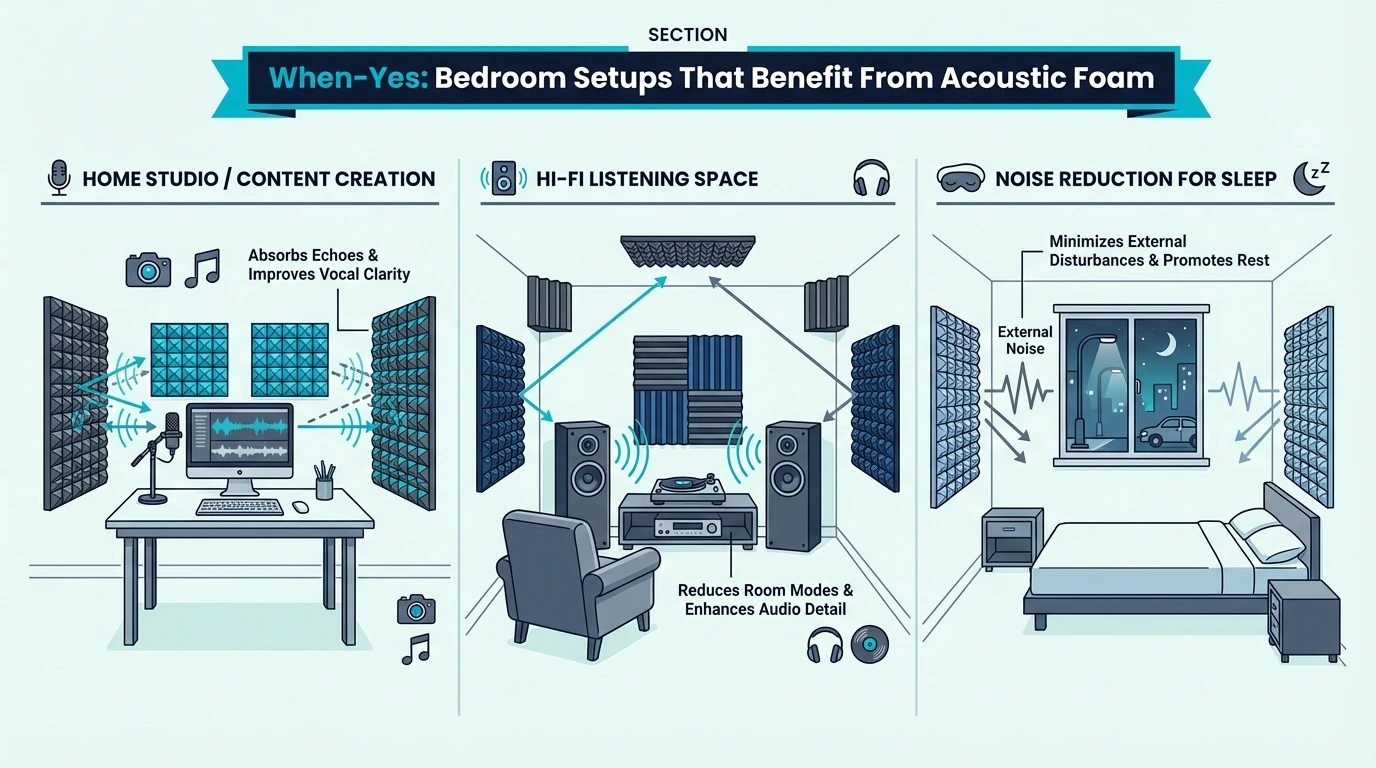
Several scenarios justify acoustic foam in bedrooms.
Recording and Content Creation
If you record in your bedroom: – Podcasts – YouTube videos – Music/vocals – Voiceover work
Foam reduces the room sound that makes recordings sound amateur. Even basic treatment (6-8 panels covering 4-6 square feet) around your microphone position significantly improves audio quality—often reducing audible room reflections by 40-60%.
For recording recommendations, see our guide on best acoustic foam for recording.
Gaming and Streaming
Streamers and gamers benefit from foam: – Clearer voice chat (teammates hear you, not your room) – Better stream audio quality – Reduced echo in headset mic (3-5 dB improvement typical) – More professional sound that keeps viewers engaged
Video Calls and Remote Work
If you work from home in your bedroom: – Clearer call audio – More professional sound – Reduced room echo that makes you sound like you’re in a bathroom – Better impression on colleagues/clients
A 2021 survey found that 67% of remote workers reported audio quality issues during video calls—most caused by room acoustics, not equipment.
Actual Echo Problems
Some bedrooms have echo issues: – Minimal furniture (reverb time can exceed 0.8 seconds) – Hard floors (hardwood reflects 85-90% of sound) – Large windows (glass reflects nearly as much as concrete) – Parallel walls creating flutter echo
If your bedroom sounds echoey when you clap, foam helps regardless of other uses.
When Bedroom Foam Doesn’t Make Sense
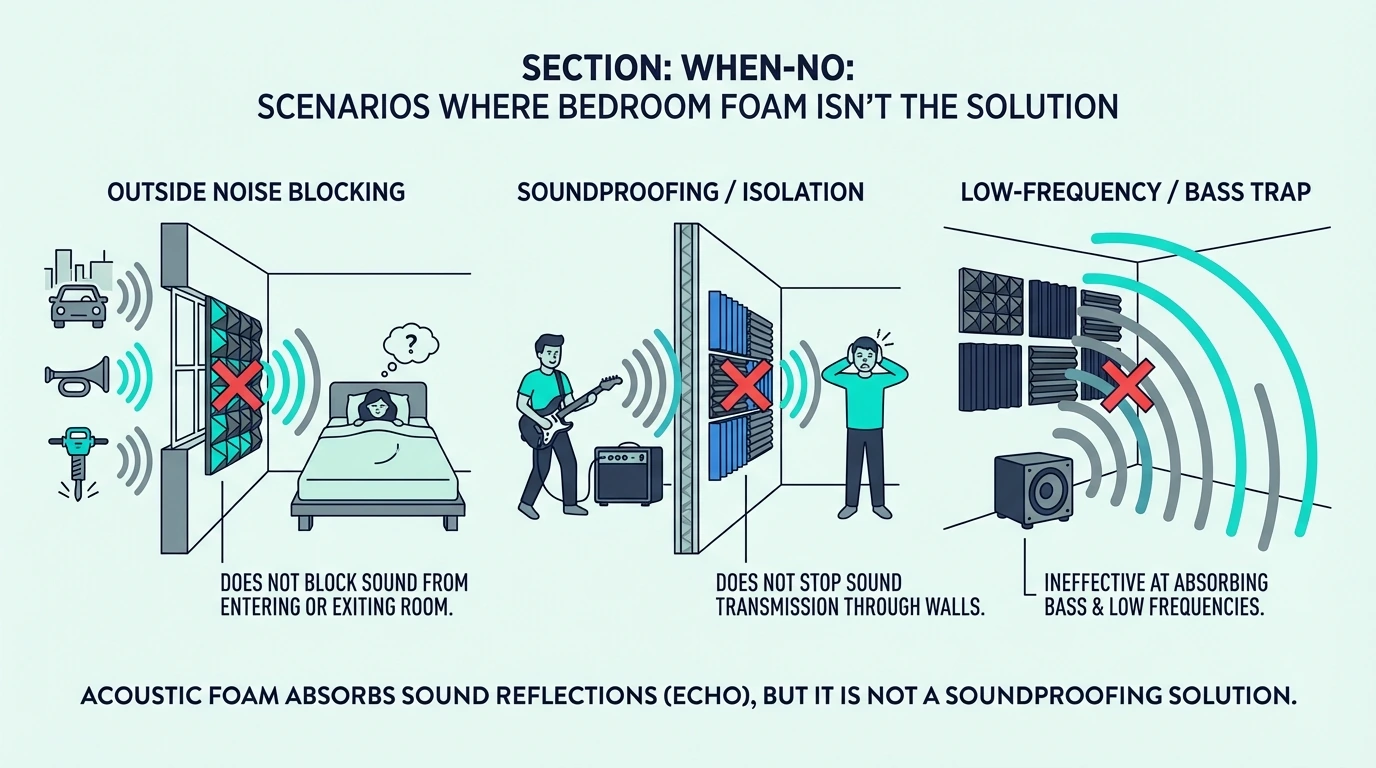
Foam isn’t always the answer.
Blocking Outside Noise
If your problem is: – Traffic noise – Neighbor noise – Street sounds – Airplane noise
Foam won’t help. These are sound transmission problems requiring soundproofing (mass, sealing, better windows), not absorption.
Already Soft Room
Bedrooms with: – Thick carpet – Heavy curtains – Upholstered furniture – Lots of bedding
…may already have adequate absorption. Adding foam provides diminishing returns.
Purely Aesthetic Concerns
If you don’t have functional needs and just want your bedroom to look like a studio—consider whether you’ll enjoy that aesthetic long-term. Bedrooms are personal spaces where comfort matters.
Sleep Quality Concerns
Some people worry about: – Off-gassing affecting sleep – Dust accumulation – Fire safety near bed
These concerns are manageable but worth considering.
Get Studio Tips Weekly
Join 5,000+ creators getting acoustic treatment advice every week.
No spam. Unsubscribe anytime.Health and Safety Considerations
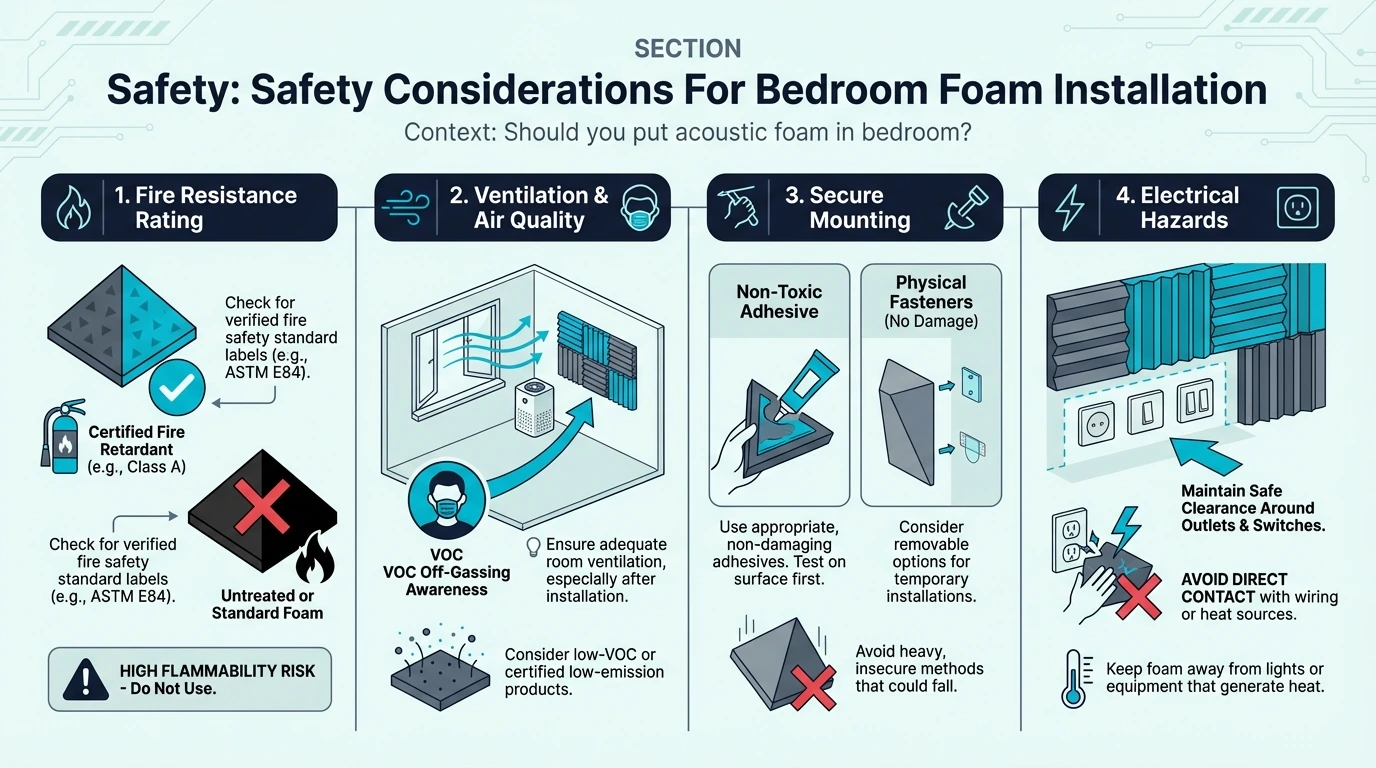
Bedrooms have unique safety considerations.
Off-Gassing
New foam can emit VOCs: – Air out foam before installing in bedroom – Ensure good ventilation initially – Consider low-VOC or melamine foam – Don’t install directly above bed
Fire Safety
Bedrooms require extra fire caution: – Only use Class A or B rated foam – Keep foam away from heat sources – Don’t cover electrical outlets – Maintain clear path to exits
For safety information, see our guide on whether acoustic foam is dangerous.
Dust and Allergies
Foam collects dust: – Vacuum regularly – Consider flat panels (less dust trapping) – Keep foam away from bed if allergies are concern – May not suit severe allergy sufferers
Sleep Environment
Consider impact on sleep: – Very dead rooms can feel uncomfortable – Don’t over-treat the sleeping area – Focus treatment on work/recording area – Maintain some natural room ambience
Strategic Placement for Bedrooms
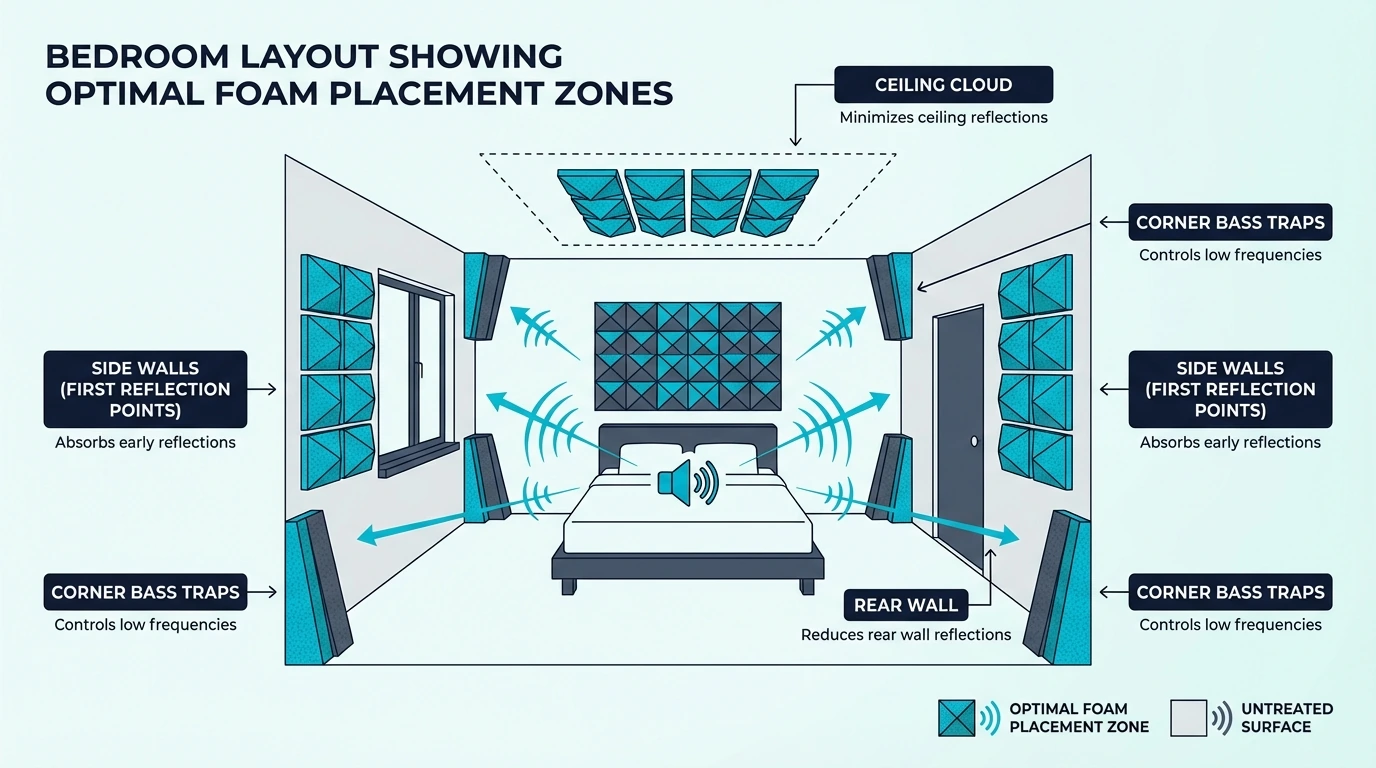
Bedrooms benefit from targeted treatment rather than comprehensive coverage.
Zone-Based Approach
Divide your bedroom into zones: – Work/recording zone: Treat thoroughly – Sleeping zone: Minimal or no treatment – Transition areas: Light treatment if needed
Desk/Recording Area Focus
Concentrate foam around your desk: – Wall behind your monitor/microphone – Side walls at first reflection points – Ceiling above desk (if practical)
This treats where you need it without affecting the whole room. A budget-friendly starting set like a 24-pack of 2-inch pyramid panels covers the key reflection points around a desk.
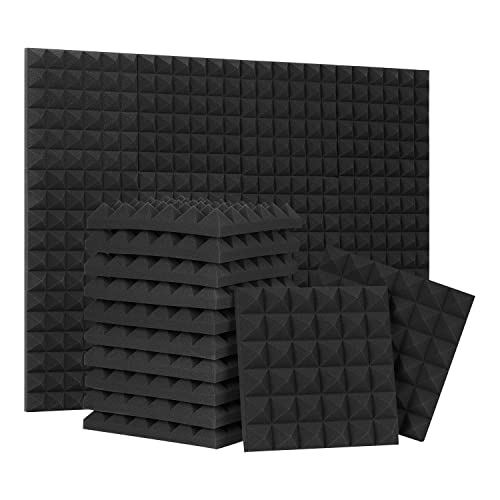
a 24-pack of 2-inch pyramid panels
Avoiding the Bed Area
Generally avoid foam: – Directly above the bed – On walls the bed touches – Where you’ll see it while trying to sleep
Keep the sleeping area feeling like a bedroom, not a studio.
For placement strategies, see our guide on how to arrange acoustic foam.
Aesthetic Approaches for Bedrooms
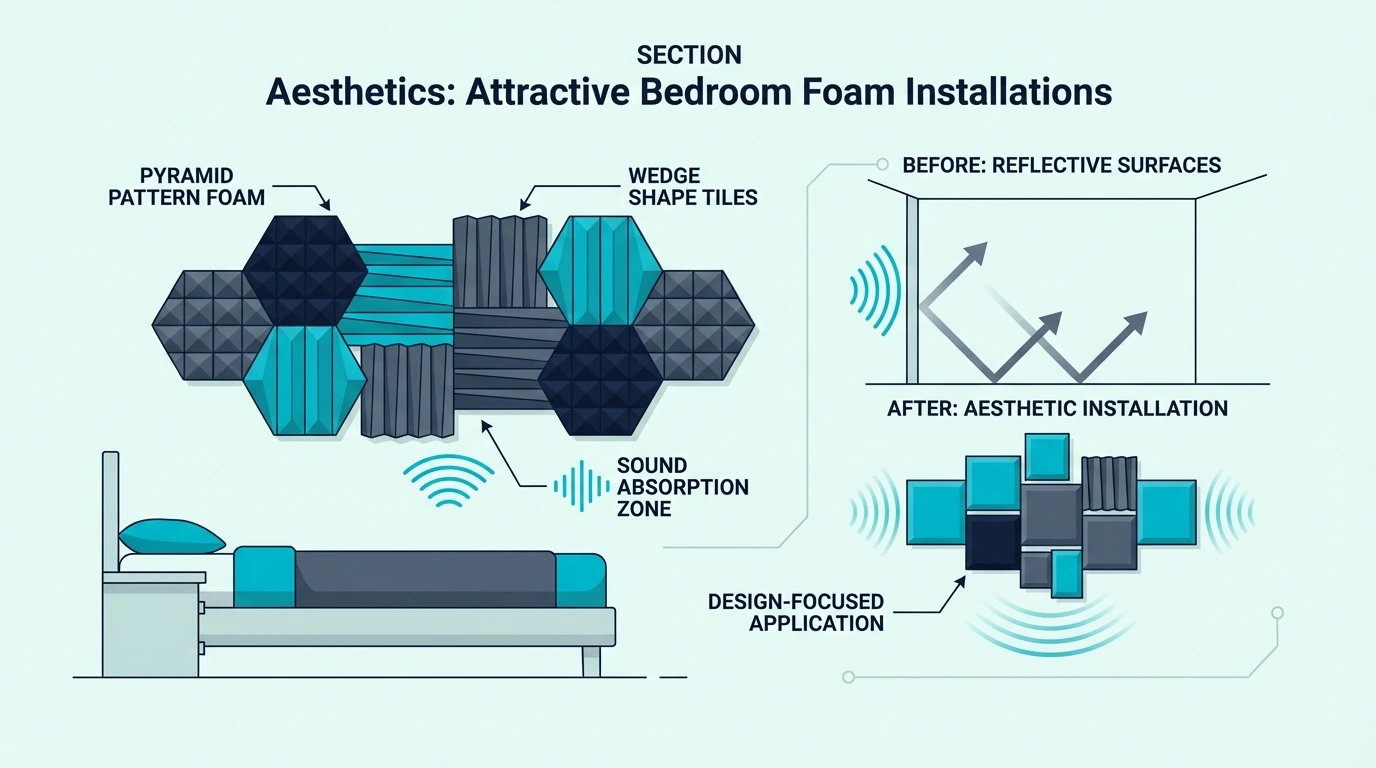
Making foam work visually in a bedroom.
Color Coordination
Choose foam colors that complement your bedroom: – Match wall color for subtle look – Coordinate with bedding/décor – Avoid jarring contrasts – Consider charcoal or gray for versatility
Contained Installations
Keep foam visually contained: – Behind desk area only – One accent wall – Defined geometric arrangement – Not scattered randomly
Alternative Products
Consider more bedroom-appropriate options: – Fabric-wrapped panels – Decorative acoustic panels – Acoustic art panels – Flat panels instead of wedges
For decorating ideas, see our guide on how to decorate with acoustic foam.
Removable Solutions
For flexibility: – Command strip mounting – Freestanding panels – Portable vocal shields – Treatment you can remove if needed
How Much Foam for a Bedroom
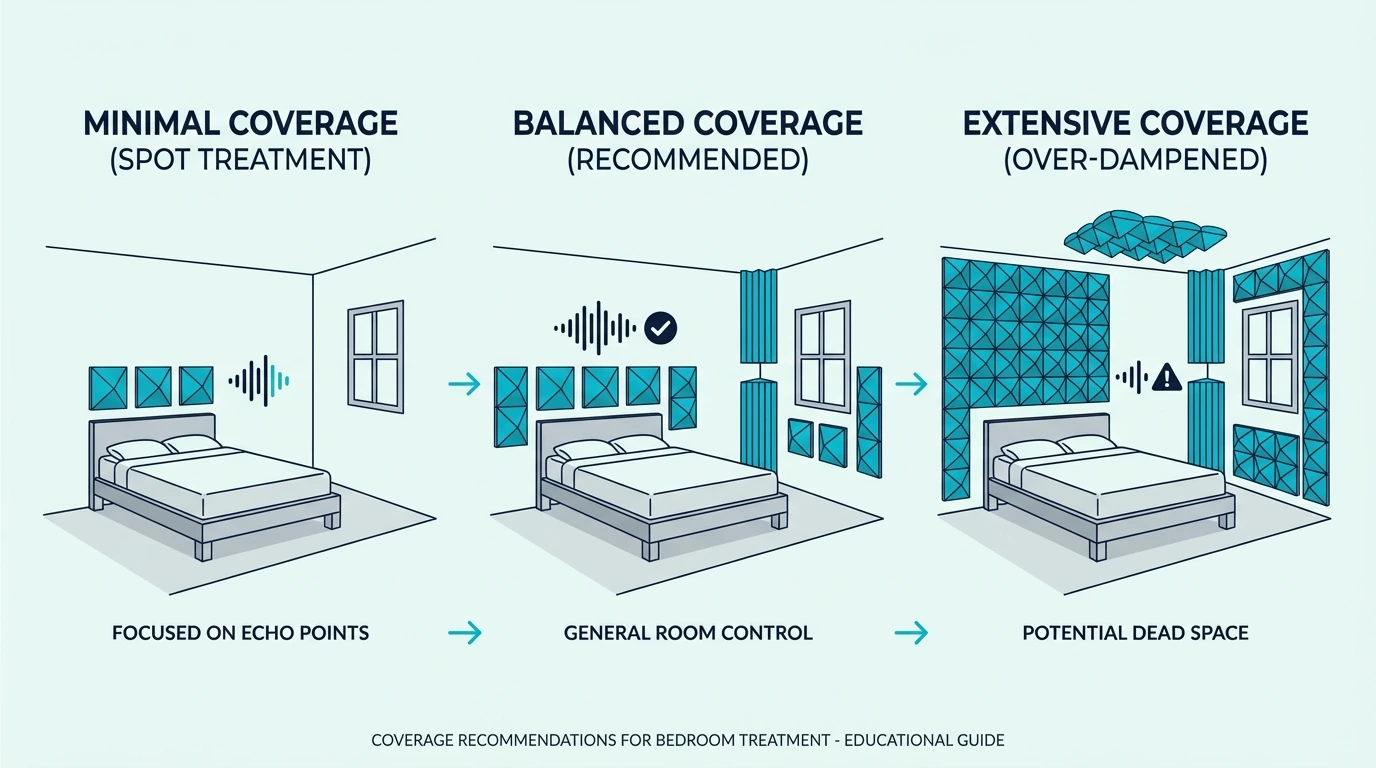
Bedrooms typically need less foam than dedicated studios.
Minimal Treatment (8-12 panels)
For basic improvement: – 4-6 panels (12”x12” each) behind desk/mic – 2-4 panels on side walls at ear level – Total coverage: 8-12 square feet – Noticeable improvement for calls/recording
If you want to keep costs low while testing placement, a JBER 12-pack is enough for the wall behind your mic.
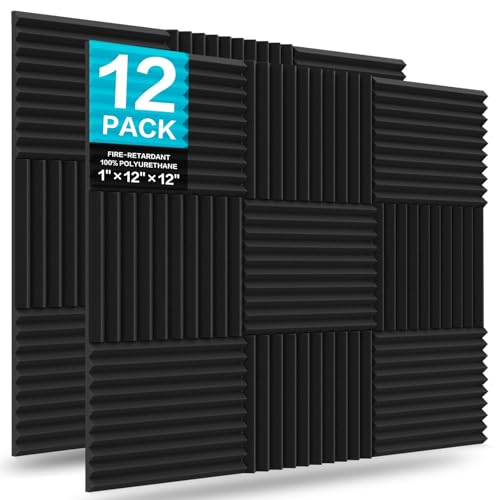
JBER 12-pack
Moderate Treatment (16-24 panels)
For better results: – Comprehensive desk area coverage (8-12 panels) – First reflection points treated (4-6 panels) – Some ceiling treatment (2-4 panels) – Total coverage: 16-24 square feet – Good recording quality achievable
For larger coverage, a JBER 48-pack gives you enough panels to cover the desk zone plus first reflection points.
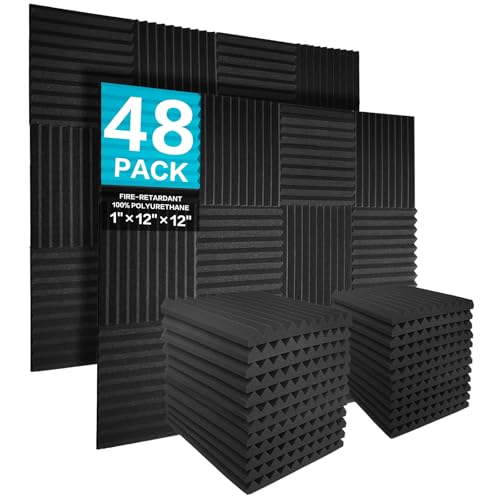
JBER 48-pack
What to Avoid
Don’t over-treat bedrooms: – Wall-to-wall coverage unnecessary (and costs $300+) – Creates uncomfortable dead sound – Wastes money on areas that don’t affect your recording position – Looks overwhelming—you’ll feel like you’re sleeping in a studio
For coverage guidance, see our guide on whether you can put too much acoustic foam.
Alternatives to Consider
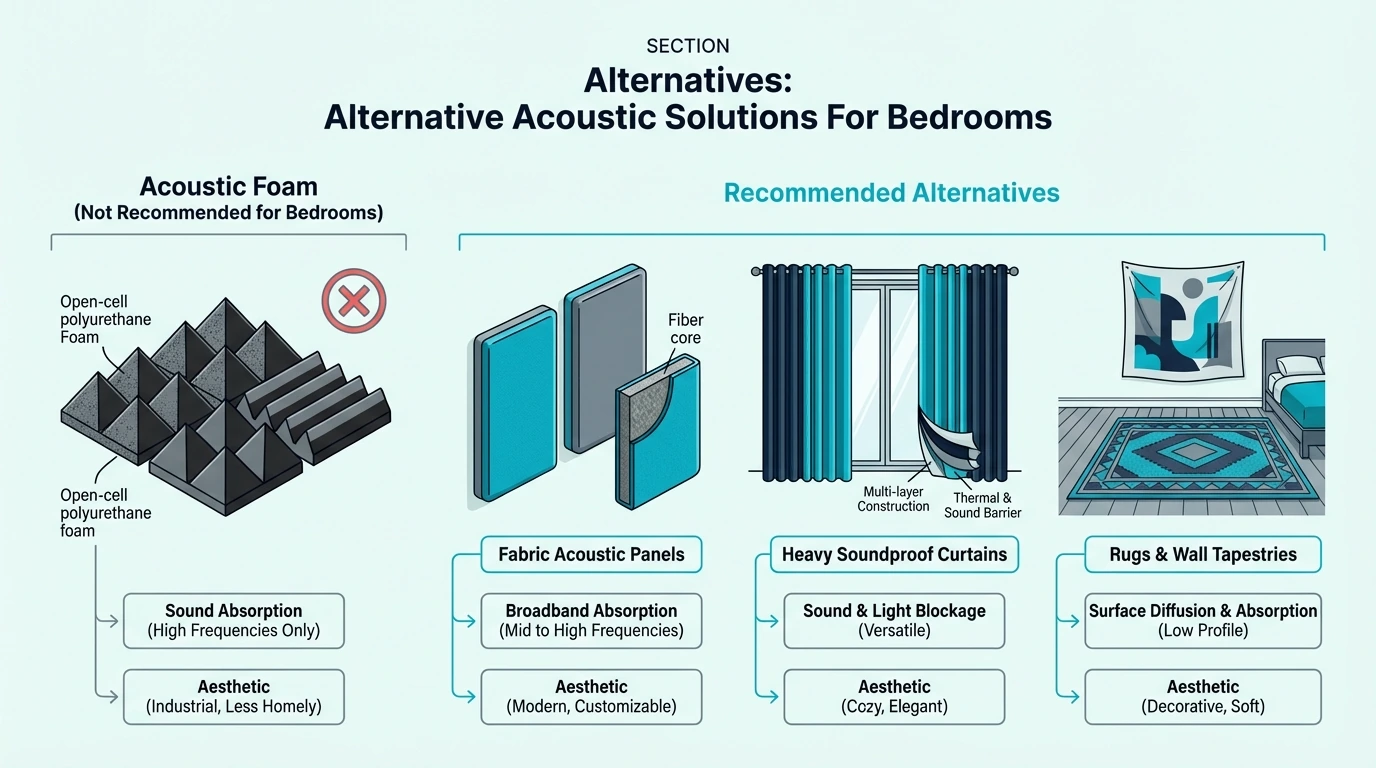
Foam isn’t the only option for bedroom acoustics.
Soft Furnishings
Leverage what bedrooms naturally have: – Heavy curtains (significant absorption) – Thick rugs (floor reflection control) – Upholstered headboard – Bookshelves with books
Portable Solutions
Non-permanent options: – Portable vocal shields – Freestanding acoustic panels – Acoustic room dividers – Moveable bass traps
Fabric Panels
More bedroom-appropriate aesthetics: – Custom colors and prints – Professional appearance – Better absorption than foam – Can look like art
For alternatives, see our guide on what to use instead of acoustic foam. If you want a deeper look at foam’s limitations, our cons of acoustic foam guide covers all nine.
For help choosing foam that balances budget and quality, see how to choose acoustic foam.
Conclusion
Acoustic foam in bedrooms makes sense for recording, streaming, gaming, or video calls—situations where room acoustics affect audio quality. It doesn’t make sense for blocking outside noise (that requires soundproofing) or in bedrooms that already have adequate soft furnishings.
If you do add foam, focus treatment on your work/recording area rather than the whole room. Keep foam away from the sleeping area for comfort and safety.
Choose colors and arrangements that complement your bedroom aesthetic, or consider fabric panels for a more refined look.
Bedrooms need less treatment than dedicated studios. Start with 8-16 panels around your desk area and add more only if needed—over-treatment makes the room feel dead and uncomfortable.
Consider safety factors unique to bedrooms: use properly fire-rated foam, air out new foam before installation, and maintain the room as a comfortable sleeping environment first, recording space second.
Frequently Asked Questions
Will acoustic foam help me sleep better?
Not directly. Foam absorbs reflections inside your room but doesn’t block outside noise—if traffic or neighbors disturb your sleep, you need soundproofing, not foam.
If your room has excessive echo that bothers you, foam might help marginally. Most people don’t notice room reflections while sleeping.
Is acoustic foam safe to have in a bedroom?
Yes, with precautions. Use foam with Class A or B fire rating, and air out new foam before installing to reduce off-gassing.
Keep foam away from heat sources and don’t install directly above your bed. Vacuum regularly to control dust—quality foam from reputable manufacturers is safe for bedroom use.
How much foam do I need for a bedroom studio?
For a bedroom recording setup, 8-16 panels (12”x12”) around your desk/recording area provides meaningful improvement. Focus on the wall behind your microphone and side walls at first reflection points—you don’t need to treat the entire bedroom.
Should I put foam behind my bed?
Generally no. Foam behind your bed doesn’t serve acoustic purposes for most bedroom uses—recording happens at your desk, not in bed.
It may collect dust near where you sleep and affects the bedroom aesthetic. Focus foam on your work area instead.
Can I use foam in a bedroom I rent?
Yes, with removable mounting. Use Command strips or other damage-free mounting methods—avoid permanent adhesives that will damage walls.
Check your lease for any restrictions on wall modifications. Removable mounting lets you take the foam when you move.
Will foam make my bedroom too quiet?
Only if you over-treat. Moderate foam coverage (20-30% of wall area) in your work zone won’t make the room uncomfortably dead.
Keep the sleeping area untreated and avoid covering every wall. Some room reflection is natural and comfortable—you’re reducing echo, not eliminating all sound.