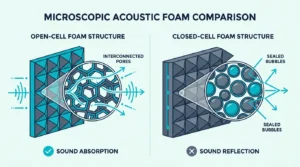
Can You Put Too Much Acoustic Foam? Yes—Here’s What Happens
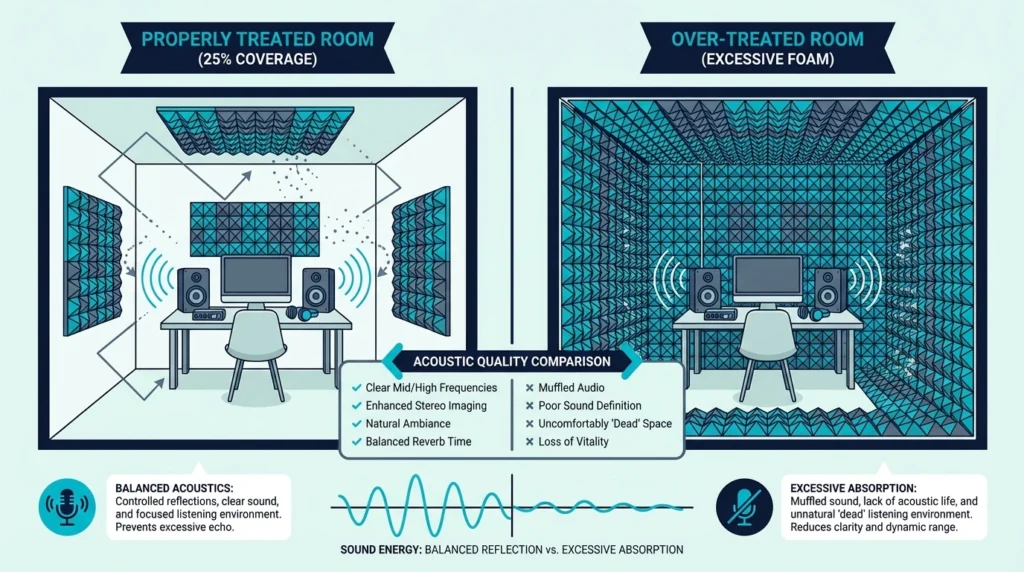
Can you put too much acoustic foam? Absolutely, but most people don’t realize it until the room sounds worse than before they started.
If your room sounds hollow and muddy, music feels lifeless through your monitors, and long sessions leave you fatigued, too much absorption is usually the cause. Most people assume more foam equals better sound, so they keep adding panels until the room feels like a padded closet.
Once you know the warning signs and the right coverage targets, fixing an over-treated room takes an afternoon. Below you’ll find what over-treatment does to your acoustics, how to spot it, and the coverage range that actually works. For foundational understanding, see how acoustic foam works.
Target 20-30% of wall surface area at first reflection points and problem areas. Signs of over-treatment include muffled speech, lifeless music, uncomfortable or oppressive room feel, and unnaturally dry recordings. The fix is removing panels from low-priority areas (far walls, low positions) until the room sounds natural again, while keeping treatment at first reflection points.
What Happens When You Over-Treat a Room?
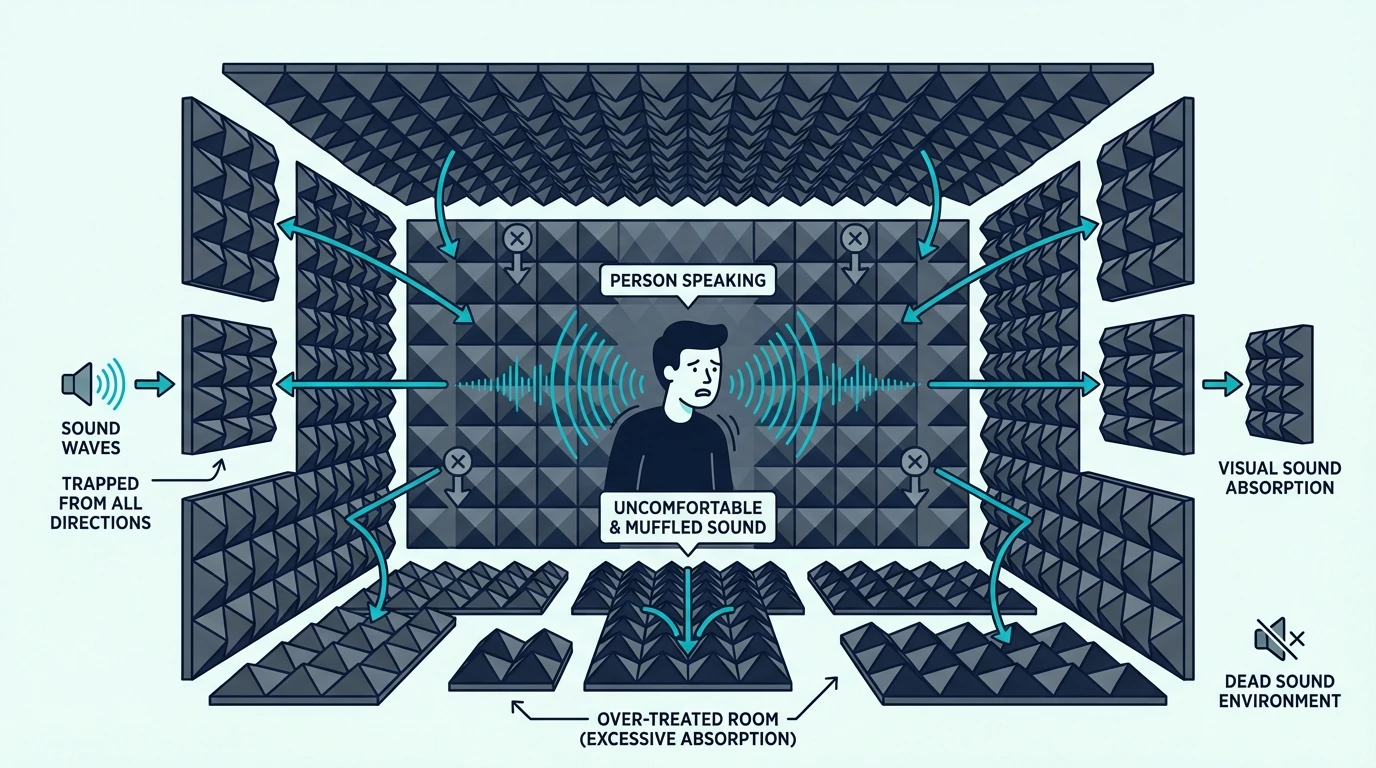
Over-treatment creates specific acoustic problems that are just as bad as—sometimes worse than—no treatment at all.
The “Dead Room” Effect
When too much absorption covers your walls, sound has nowhere to reflect. Every wave that leaves your mouth or speakers gets absorbed almost immediately.
The result is an acoustically “dead” space.
Dead rooms feel strange to occupy. Humans evolved hearing reflections—they help us understand space, distance, and environment.
Remove all reflections and something feels fundamentally wrong, even if you can’t articulate why.
Speech in dead rooms sounds muffled and close, like talking into a closet full of clothes. There’s no sense of space or air around the voice.
It’s technically “clean” but unnaturally so.
Music Loses Its Life
Music needs some room interaction to sound engaging. The slight reverb and reflections from walls add dimension, space, and energy to what you hear.
In over-treated rooms, music sounds flat and lifeless. Drums lose their punch.
Vocals feel disconnected from instruments. The stereo image collapses because there are no reflections to create width and depth.
Professional studios don’t eliminate all reflections—they control them. The goal is removing problematic reflections while preserving the beneficial ones that make music sound alive.
Uneven Frequency Response
Here’s a technical problem: foam absorbs mid and high frequencies but not bass. Over-treating with foam creates severe frequency imbalance.
With excessive foam, you absorb most mid/high energy while bass remains largely unaffected. The room becomes bass-heavy and boomy—the opposite of what most people want.
This imbalance makes mixing impossible. You’ll add too much high end to compensate for what the room absorbs, creating mixes that sound harsh everywhere else.
Psychological Discomfort
Anechoic chambers—rooms designed to absorb virtually all sound—are famously uncomfortable. People report anxiety, disorientation, and even hallucinations after extended time in them.
Over-treated home studios aren’t that extreme, but they create a milder version of the same discomfort. The absence of normal acoustic cues makes the space feel wrong.
Extended work sessions become fatiguing.
Your room should feel comfortable to work in for hours. If it feels oppressive or strange, you’ve likely over-treated.
How Much Coverage Do You Actually Need?
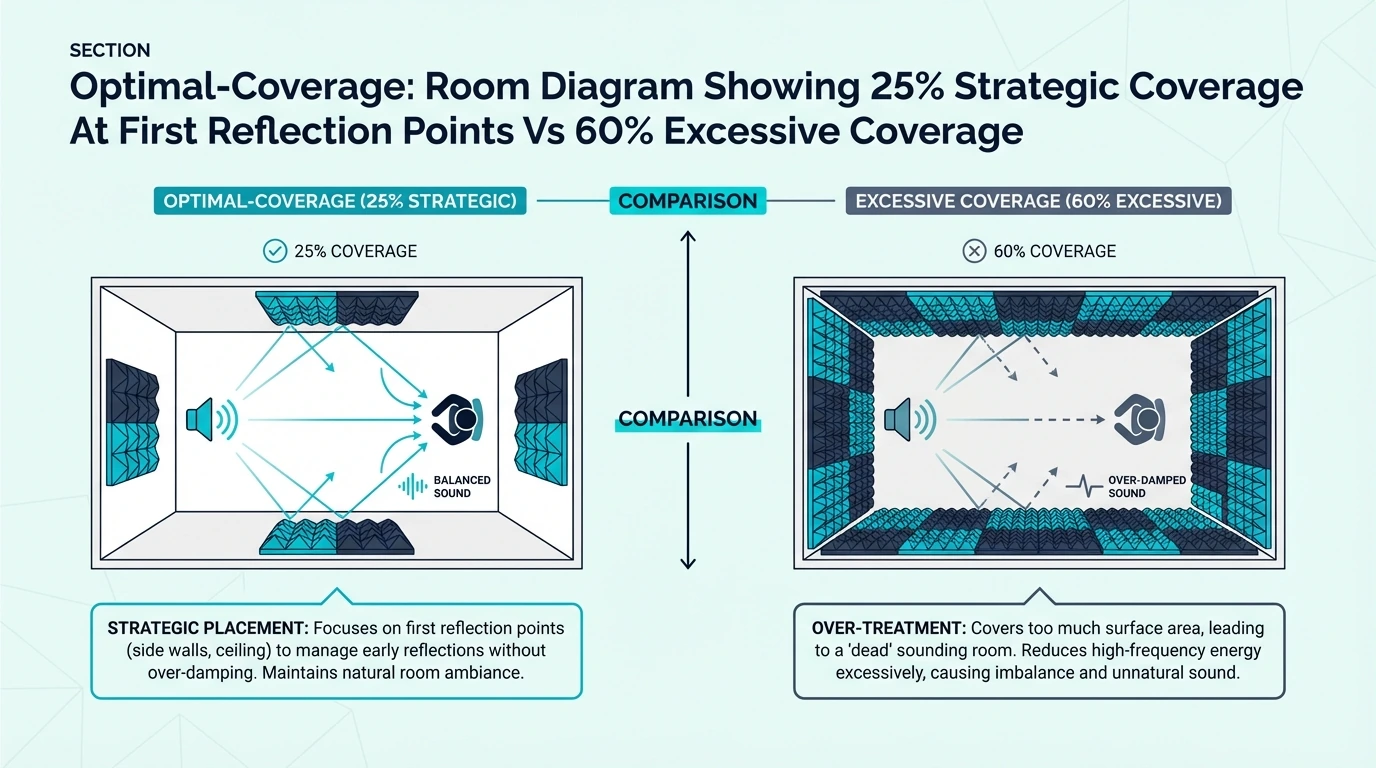
The right amount of treatment depends on your room and goals, but general guidelines apply.
The 20-30% Rule
For most rooms, covering 20-30% of wall surface area provides effective treatment without over-deadening. This assumes strategic placement at high-impact locations.
In a 10×12 room with 8-foot ceilings, total wall area is about 352 square feet. At 25% coverage, you need roughly 88 square feet of treatment—about 22 standard 2×2 panels.
That’s far less than covering every wall. And those 22 panels should concentrate at first reflection points and behind speakers, not distribute randomly.
Strategic vs Random Placement
Twenty-two panels at first reflection points outperform forty panels scattered randomly. Location matters more than quantity.
First reflection points, the wall behind your speakers, and corner bass traps address specific acoustic problems. Foam elsewhere provides diminishing returns and eventually creates the dead room effect.
For effective placement strategies, see how to arrange acoustic foam.
If you’ve treated the priority positions and problems persist, the solution usually isn’t more foam—it’s different treatment (bass traps, diffusion) or addressing the specific remaining issue.
Room Size Considerations
Smaller rooms need less coverage percentage-wise because the walls are closer together. Sound bounces more frequently, so each panel intercepts more reflections.
Larger rooms can handle more coverage without feeling dead because the greater distances allow some natural reverb to develop regardless of wall treatment.
A bedroom studio might need only 15-20% coverage. A large dedicated studio might handle 30-35%.
Adjust based on how the room sounds, not arbitrary targets.
Get Studio Tips Weekly
Join 5,000+ creators getting acoustic treatment advice every week.
No spam. Unsubscribe anytime.How Do You Know If You’ve Over-Treated Your Room?
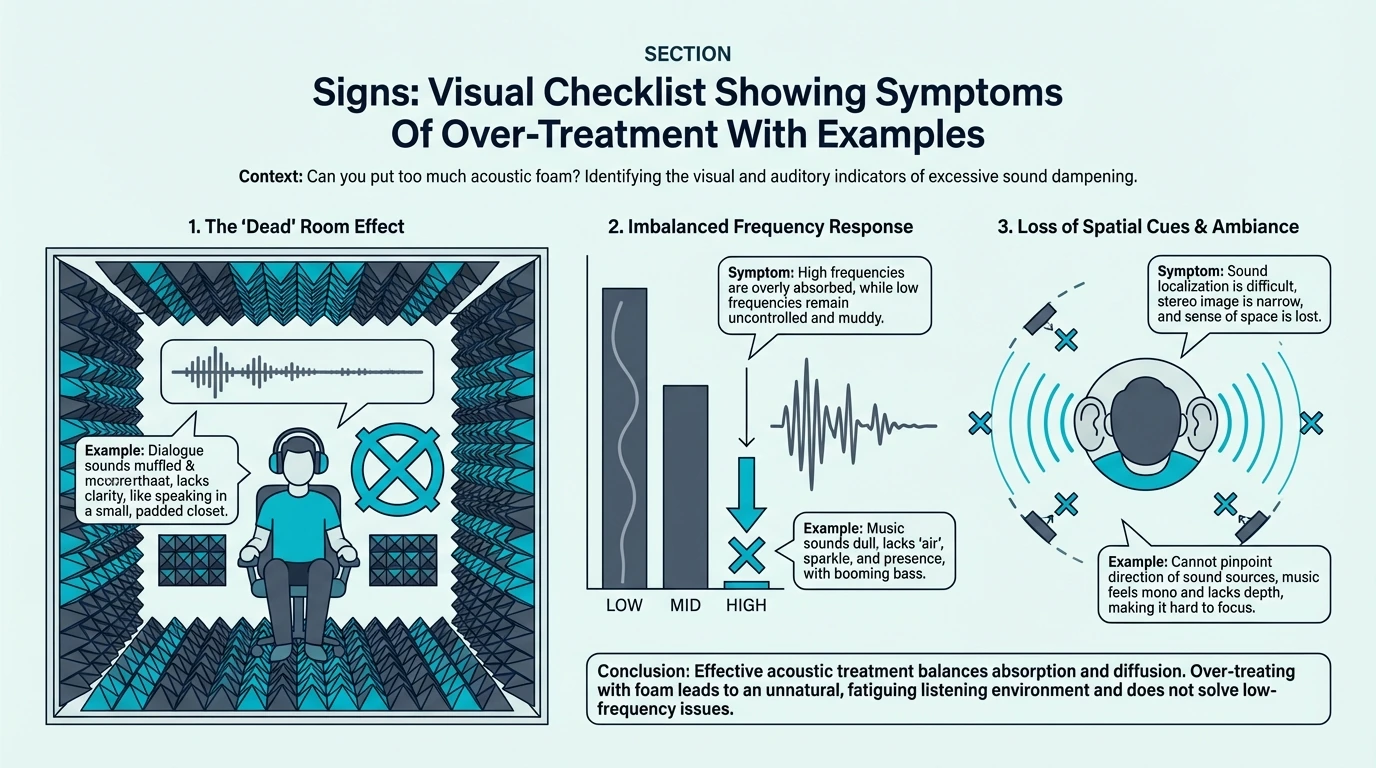
Recognizing over-treatment helps you correct it before it ruins your work.
The Clap Test
Clap your hands sharply and listen. In a well-treated room, you hear a short, controlled decay—the sound dies quickly but naturally.
In an over-treated room, the clap sounds “thuddy” with almost no decay at all. It’s like clapping in a closet.
There’s no ring, no tail, just immediate silence.
Some decay is normal and desirable. If your clap produces zero audible reflection, you’ve absorbed too much.
The Voice Test
Speak normally and listen to how your voice sounds. Natural speech has a slight sense of space—you can hear the room around your voice.
In over-treated rooms, your voice sounds unnaturally close and muffled. It feels like speaking into a pillow or heavy blanket.
There’s no “air” around the words.
If you find yourself speaking louder to compensate for the deadness, that’s a sign of over-treatment.
The Comfort Test
Spend an hour working in your treated room. How do you feel?
Well-treated rooms feel comfortable and natural. You can work for extended periods without fatigue or discomfort.
Over-treated rooms feel oppressive. You might notice tension, fatigue, or a vague sense that something is wrong.
The acoustic environment affects your psychological state more than most people realize.
The Music Test
Play familiar music through your speakers. Does it sound engaging and alive, or flat and lifeless?
Music should have energy, dimension, and space. If your favorite tracks sound boring in your room, over-treatment may be the cause.
Compare to how the same music sounds in your car or on headphones. If the room version sounds noticeably worse—not just different—you’ve likely over-absorbed.
How Do You Fix an Over-Treated Room?
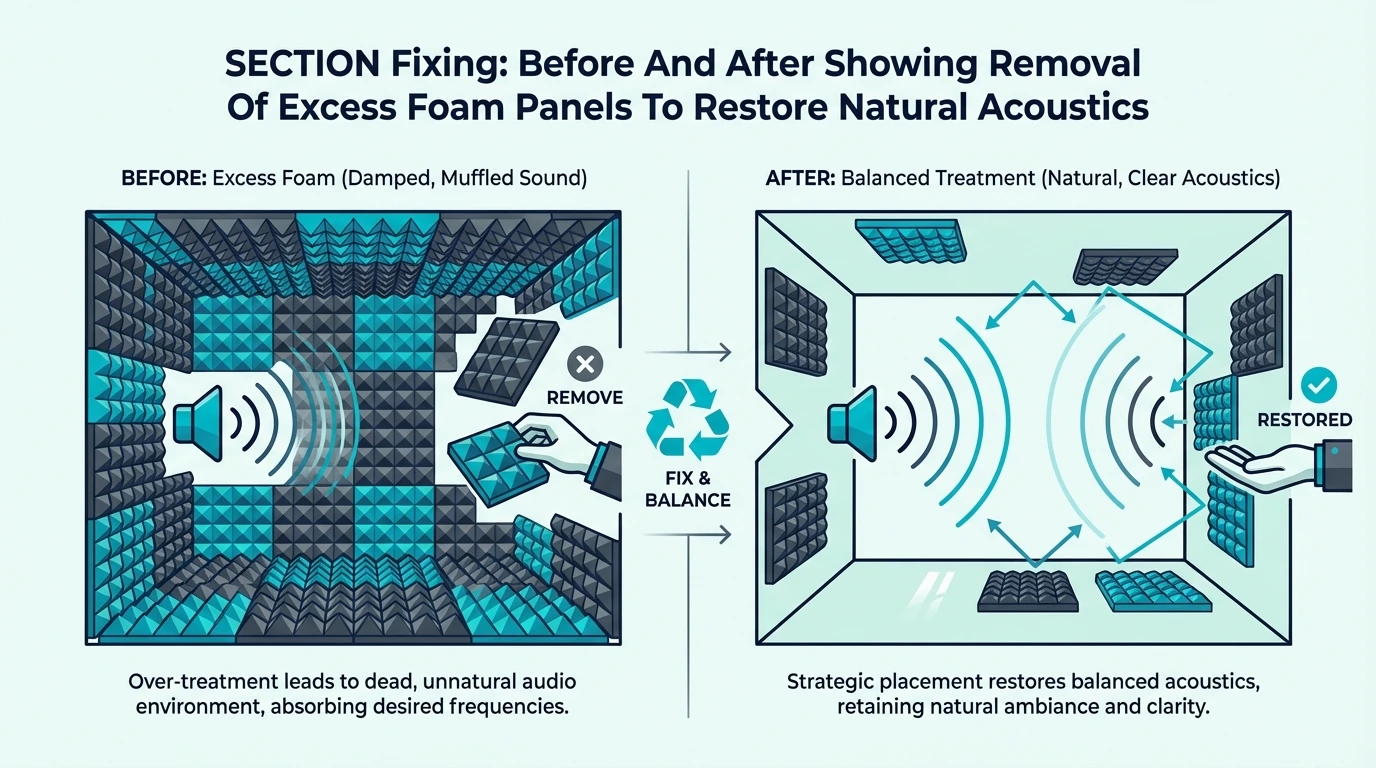
If you’ve over-treated, the fix is simple: remove panels until the room sounds natural again.
Start With Low-Priority Areas
Remove foam from locations that matter least first:
- Far walls away from your listening/recording position
- Low positions below ear level
- Areas behind you (if you’re mixing/listening)
- Excess coverage beyond first reflection points
Keep treatment at first reflection points and behind your speakers—these high-impact locations should stay treated.
Remove Incrementally
Don’t strip everything at once. Remove a few panels, then test.
Repeat until the room sounds balanced.
The goal is finding the minimum effective treatment—enough to control problems without killing the room. This sweet spot varies by room and personal preference.
Consider Replacing With Diffusion
If removing absorption brings back problems (flutter echo, harsh reflections), consider replacing some foam with diffusers.
Diffusers scatter sound instead of absorbing it. They control reflections while maintaining room liveliness.
A combination of absorption at first reflection points and diffusion elsewhere often works better than absorption everywhere. If you’re looking for a budget-friendly way to test absorption before committing to more coverage, JBER 48 Pack Acoustic Foam Panels give you enough panels to experiment with placement without over-committing.
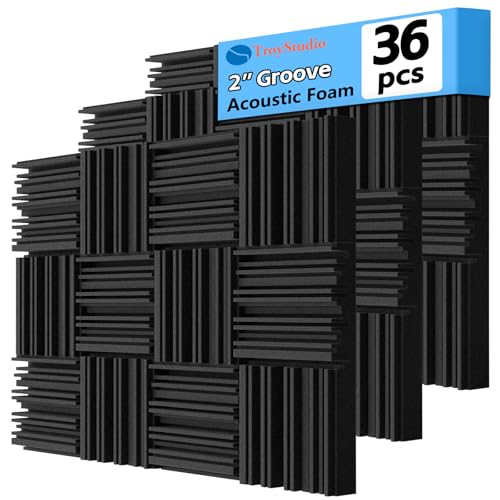
JBER 48 Pack Acoustic Foam Panels
For more on this approach, see acoustic foam vs diffusers.
Rebalance for Bass
Over-treatment often creates bass-heavy rooms because foam doesn’t absorb low frequencies. If your room sounds boomy after removing some foam, you may need bass traps rather than more wall panels.
Bass traps in corners address low-frequency buildup without affecting mid/high frequencies. This rebalances the room’s frequency response.
A set like the Acoustic Foam Corner Bass Traps can handle the corners without adding more wall coverage. For more on this topic, see bass traps vs acoustic foam.
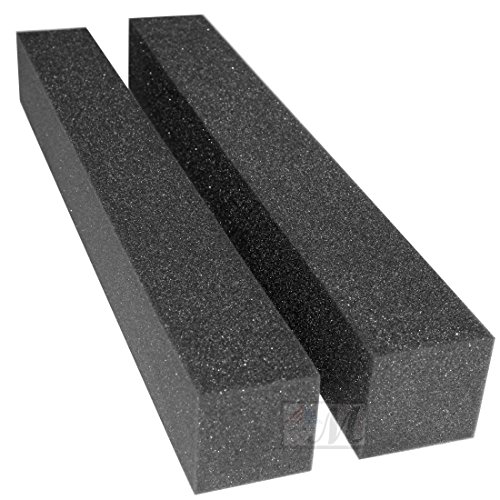
Acoustic Foam Corner Bass Traps
How Much Treatment Does Each Room Type Need?
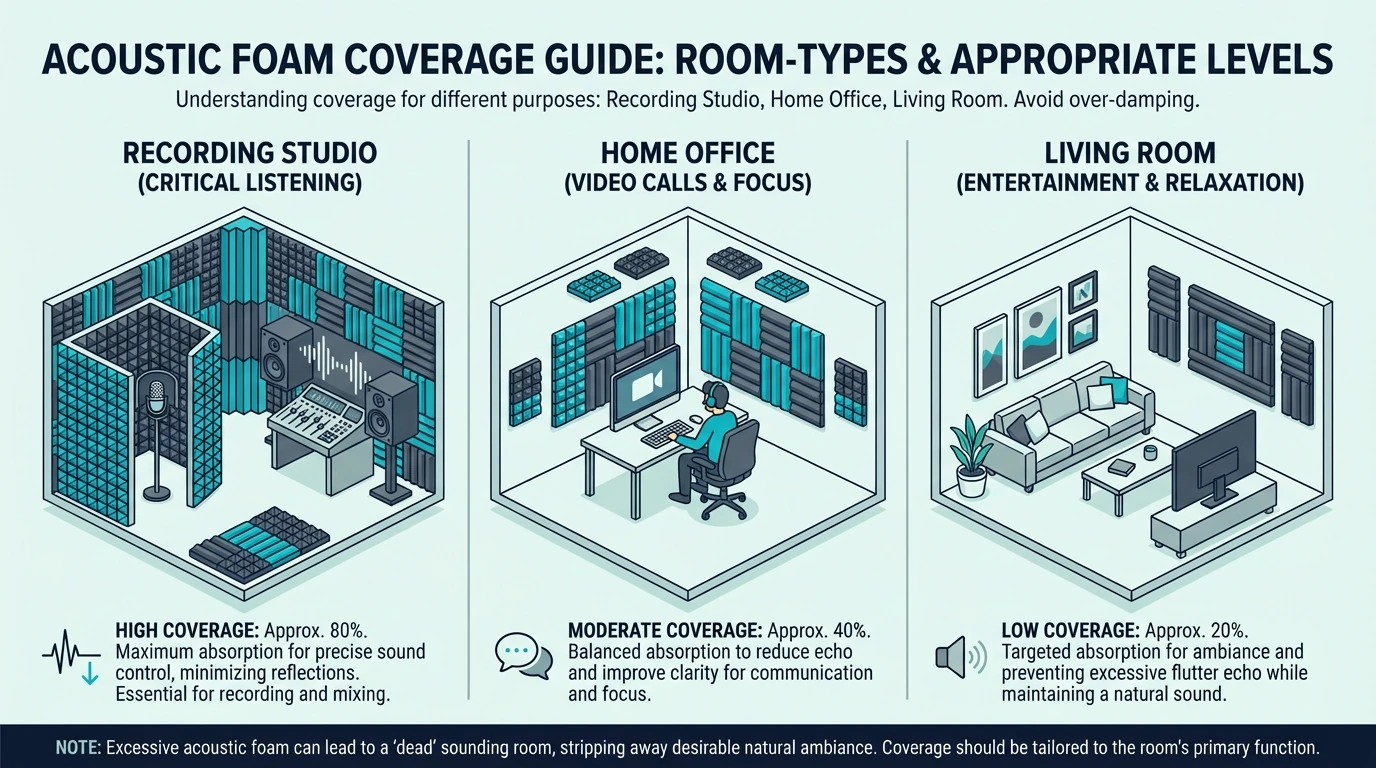
Different rooms have different ideal coverage levels.
Recording Studios
Recording spaces need more control than listening spaces because microphones capture everything. But even recording studios shouldn’t be completely dead.
Recommended coverage: 25-35% of wall surface, concentrated around recording positions. The area immediately around microphones can be heavily treated while the rest of the room maintains some life.
Professional vocal booths are an exception—they’re intentionally very dead because the goal is capturing only the voice with zero room sound. But these are small, purpose-built spaces, not general-purpose rooms.
Mixing/Mastering Rooms
Mixing rooms need accurate monitoring, which requires controlled but not dead acoustics. You need to hear what’s actually in your mix, not what your room adds or subtracts.
Recommended coverage: 20-30% of wall surface at first reflection points, plus bass traps in corners. The rear wall often benefits from diffusion rather than absorption to maintain some sense of space. For studio-specific guidance, see where to place acoustic foam in home studios.
Over-treating a mixing room leads to mixes that don’t translate—they sound good in your dead room but harsh or thin everywhere else.
Home Offices (Video Calls)
Home offices need enough treatment for clear video calls without making the space uncomfortable for all-day work.
Recommended coverage: 15-25% of wall surface, focused on the wall behind your camera and side walls near your desk. This controls reflections that reach your microphone without deadening the entire room.
You’ll spend hours in this space daily. Comfort matters as much as acoustics.
Living Rooms / Media Rooms
Living spaces should feel natural first, acoustically controlled second. Heavy treatment looks and feels wrong in spaces meant for relaxation.
Recommended coverage: 10-20% of wall surface at first reflection points for your primary seating position. Aesthetic panels that blend with décor work better than industrial-looking foam.
Some reverb is fine—even desirable—in living spaces. The goal is reducing obvious problems (flutter echo, harsh reflections) while maintaining a natural, comfortable environment.
For aesthetic options, see how to make acoustic foam look good.
What Are the Most Common Over-Treatment Mistakes?
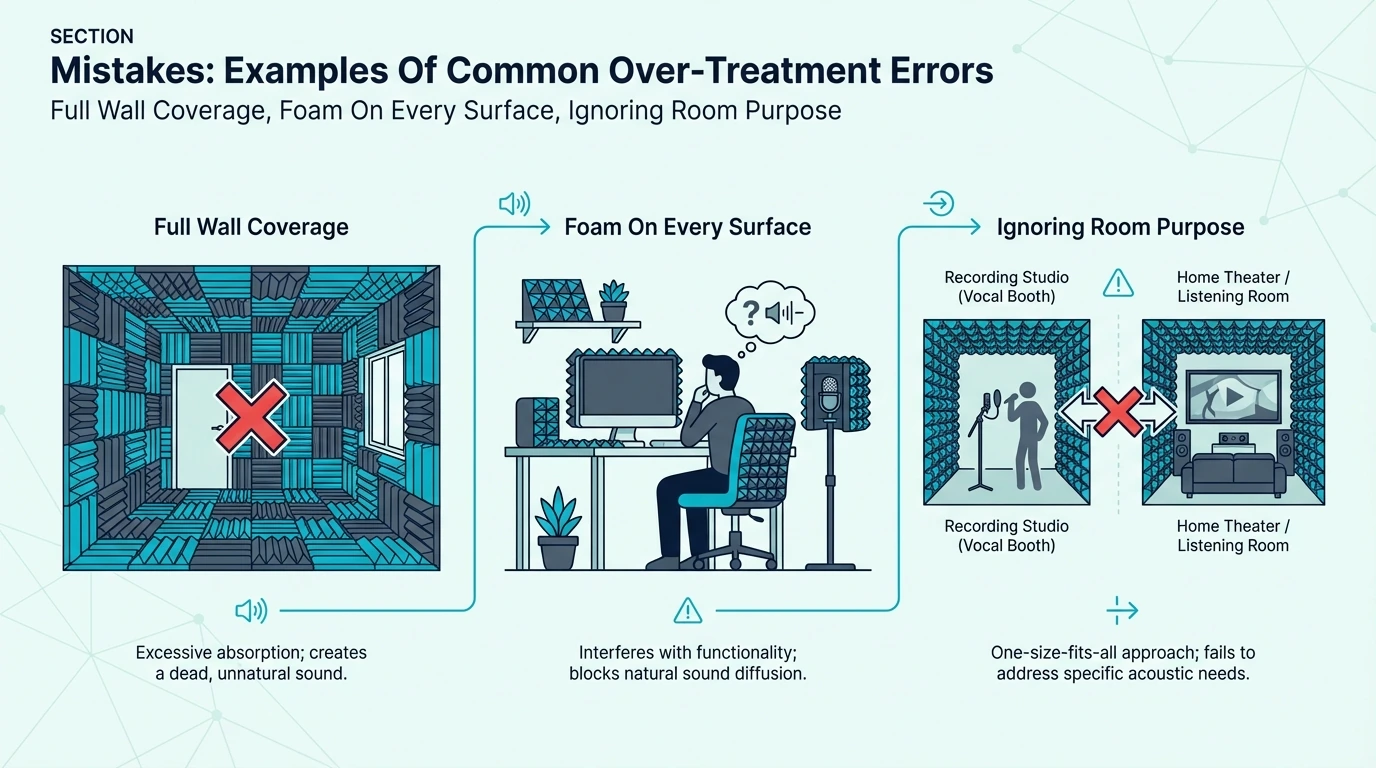
Avoid these patterns that lead to over-treatment.
Covering Every Wall Completely
The most common mistake is assuming walls should be fully covered. They shouldn’t.
Strategic partial coverage works better than complete coverage.
Full wall coverage absorbs too much mid/high frequency energy while doing nothing for bass. The result is an unbalanced, uncomfortable room.
Treating Floors and Ceilings Excessively
Some treatment on ceilings (clouds above listening positions) helps. Carpet on floors helps.
But covering every horizontal surface creates the same over-treatment problems as excessive wall coverage.
Floors and ceilings contribute to room acoustics, but they’re lower priority than wall first reflection points. Treat them moderately, if at all.
Ignoring Room Purpose
A room used for recording vocals can handle more treatment than a room used for mixing. A dedicated studio can handle more than a multi-purpose living space.
Match treatment level to how you’ll use the room. Don’t apply recording-studio levels of treatment to a home office or living room.
Adding More When Problems Persist
When acoustic problems persist after initial treatment, the instinct is to add more foam. This often makes things worse.
Persistent problems usually indicate wrong placement, wrong type of treatment (foam when you need bass traps), or issues foam can’t solve (noise transmission, HVAC rumble). More foam rarely helps.
Diagnose the specific problem before adding treatment. The guide on how to stop echo with acoustic foam helps identify what’s actually causing issues.
How Do You Find Your Room’s Sweet Spot?
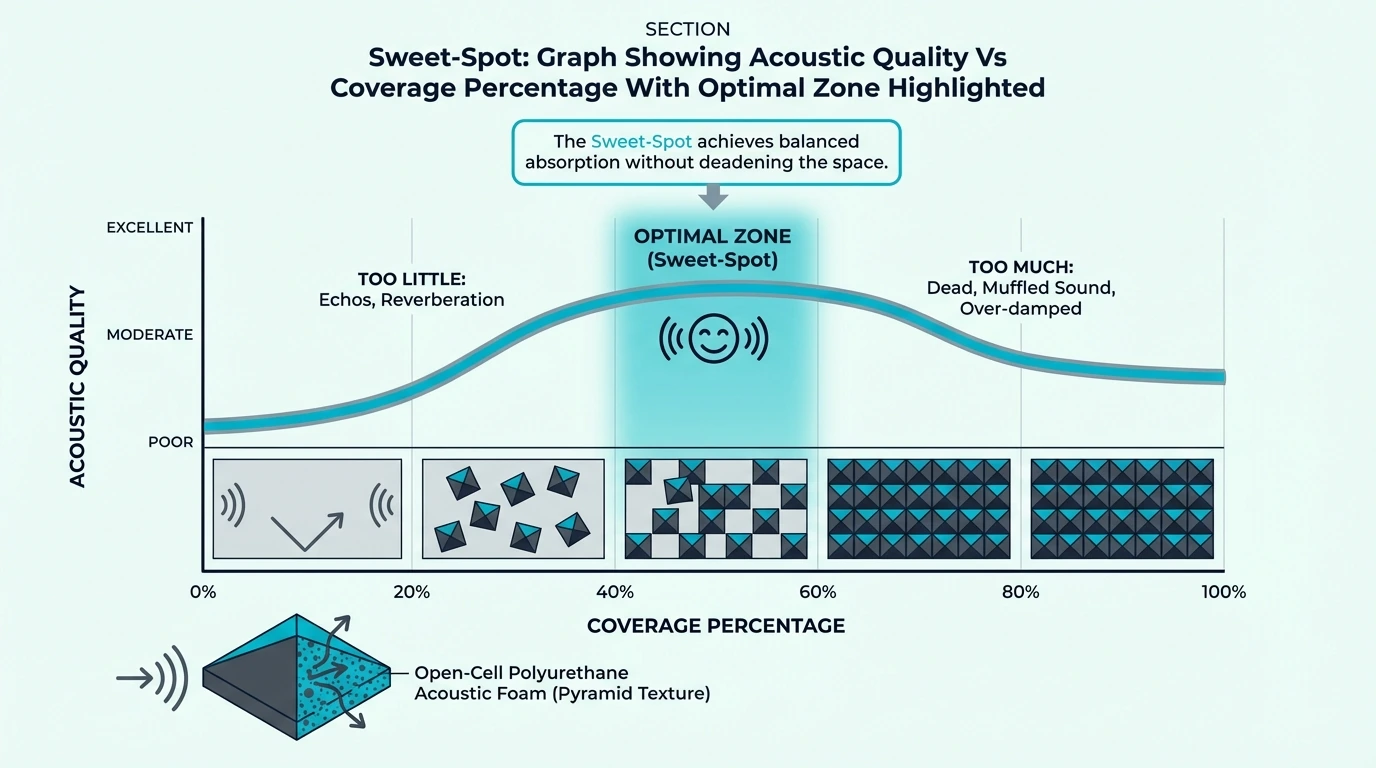
Every room has an ideal treatment level. Here’s how to find yours.
Start Minimal
Begin with the minimum treatment that might solve your problems: 4-6 panels at first reflection points. Test and evaluate before adding more. A starter set like the Foamily 12-Pack Acoustic Wedge Panels covers several first-reflection spots without overbuying.
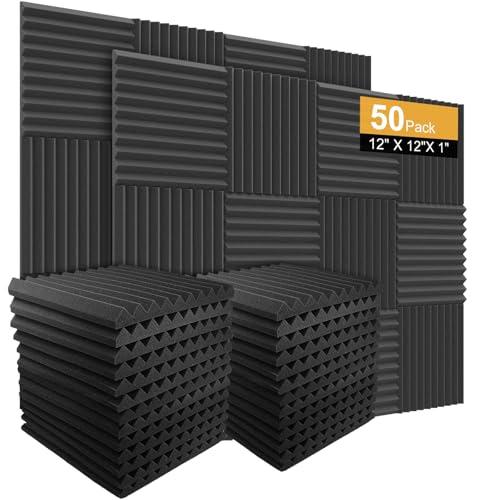
Foamily 12-Pack Acoustic Wedge Panels
This approach prevents over-treatment by default. You can always add panels; removing them after you’ve bought and installed them feels wasteful.
If you need thicker coverage for voice recording, the TroyStudio 2-inch Self-Adhesive Panels give you more absorption per panel. For shape selection, see best acoustic foam shape.
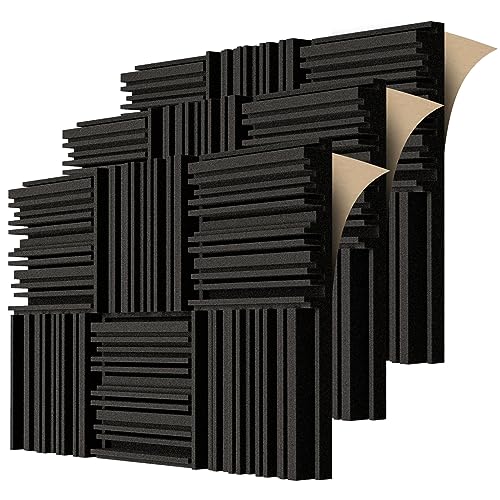
TroyStudio 2-inch Self-Adhesive Panels
Test After Each Addition
After adding panels, do the clap test, voice test, and music test. Has the problem improved?
Does the room still sound natural?
If problems persist, identify what’s wrong before adding more treatment. Is it flutter echo? Add panels at parallel walls.
Bass boom? Add corner traps.
Different problems need different solutions.
Trust Your Ears
Acoustic measurements can help, but your ears are the final judge. If the room sounds good and feels comfortable, the treatment is right—regardless of what measurements or coverage percentages suggest.
Conversely, if the room feels wrong despite “correct” coverage, something needs adjustment. Acoustic treatment serves your perception, not abstract targets.
Leave Room to Adjust
Don’t permanently mount every panel immediately. Use removable mounting (Command strips, Velcro) for at least some panels.
That way you can experiment with placement and quantity. For mounting options, see how to put acoustic foam on walls.
Room acoustics interact in complex ways. The ability to move and remove panels lets you fine-tune until the room sounds right.
The Bottom Line
Yes, you can absolutely put too much acoustic foam. Over-treatment creates dead, uncomfortable spaces where speech sounds muffled, music loses life, and extended work sessions become fatiguing.
The goal is controlled acoustics, not maximum absorption.
Aim for 20-30% wall coverage at strategic locations: first reflection points, behind speakers, and corner bass traps. This level controls problems while maintaining natural room character.
More coverage provides diminishing returns and eventually creates new problems.
If you’ve over-treated, remove panels from low-priority areas until the room sounds natural again. Consider replacing some absorption with diffusion for better balance.
Trust your ears—if the room feels wrong, it probably is, regardless of how much foam you’ve installed.
The best-sounding rooms balance absorption with reflection. They control problems without killing the space’s acoustic life.
For more guides on foam types, placement, and mounting, start at the acoustic foam hub.
Finding that balance takes experimentation, but the result is a room that sounds good and feels comfortable for hours of use.
Frequently Asked Questions
How do I know if I have too much acoustic foam?
Signs of over-treatment include muffled speech that sounds like talking into a pillow, music that feels flat and lifeless, and a room that feels uncomfortable or oppressive. The clap test helps—if clapping produces almost no audible decay, you’ve absorbed too much.
What percentage of walls should acoustic foam cover?
For most rooms, 20-30% coverage at strategic locations provides effective treatment. This means first reflection points, the wall behind speakers, and corner bass traps—not random distribution across all walls.
Smaller rooms may need less (15-20%); larger dedicated studios might handle more (30-35%).
Can too much acoustic foam make a room sound worse?
Yes. Over-treatment creates unbalanced frequency response (too much bass relative to mids/highs), unnatural “dead” acoustics, and psychological discomfort.
Music loses energy, speech sounds muffled, and the space feels oppressive. Moderate, strategic treatment sounds better than excessive coverage.
How do I fix an over-treated room?
Remove panels from low-priority areas first: far walls, positions below ear level, and areas beyond first reflection points. Keep treatment at high-impact locations (first reflections, behind speakers).
Remove incrementally and test until the room sounds natural. Consider replacing some absorption with diffusion for better balance.
Is it better to have too much or too little acoustic foam?
Neither extreme is ideal, but under-treatment is generally easier to fix—you just add more panels. Over-treatment requires removing panels you’ve already bought and installed.
Start with minimal treatment at priority locations and add based on results. This approach prevents over-treatment while ensuring you address actual problems.
Why do professional studios have so much acoustic treatment?
Professional studios use thorough treatment, but it’s carefully balanced—not just maximum foam everywhere. They combine absorption at specific locations, diffusion to maintain liveliness, and bass traps for low-frequency control.
The result looks heavily treated but sounds natural and controlled, not dead.