Is Rockwool Good For Acoustic Treatment? (Why Pros Swear By It)
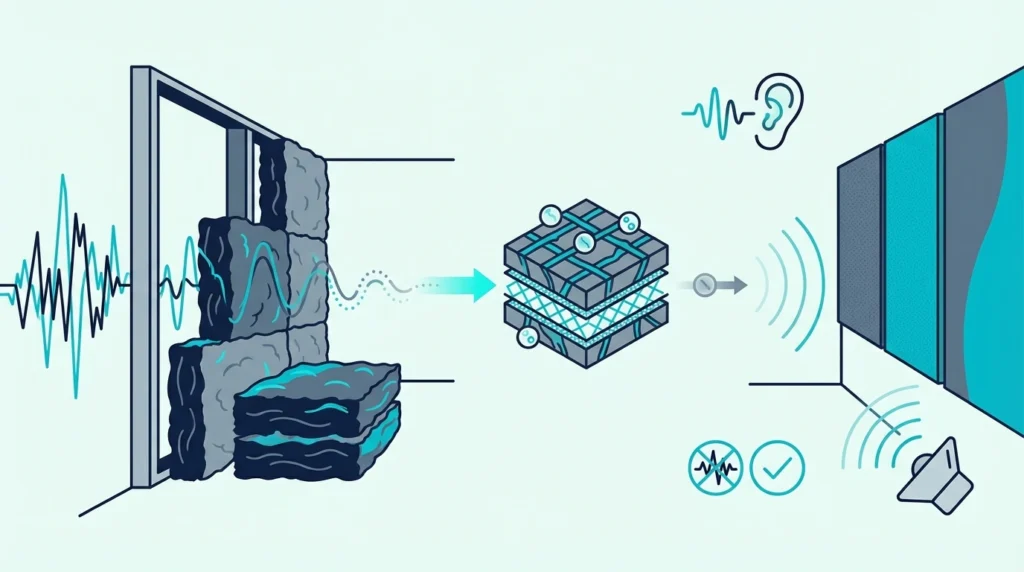
Is rockwool good for acoustic treatment — it is one of the best materials you can use, but most people grab the wrong product or skip the air gap that makes bass trapping actually work.
You spend money on thin foam panels expecting a studio-quality room, only to find that every mix still sounds muddy because the foam does nothing below 500 Hz where your real bass problems live.
Rockwool fixes that. Its dense mineral fiber structure absorbs sound across the full frequency spectrum — including the low end that foam physically cannot touch — at a fraction of what commercial panels cost.
The first step is picking the right rockwool product for your panels and your bass traps, because they need different densities.
Below, this guide covers which rockwool products work for acoustic treatment, how to build DIY panels from raw batts, and how rockwool compares to fiberglass — the other material that dominates the treatment world.
Rockwool is excellent for acoustic treatment. Its dense mineral wool fiber structure absorbs sound across a wide frequency range, including bass frequencies that foam cannot handle. Rockwool Safe n Sound is the most popular choice for DIY panels, while Rockwool AFB offers higher density for bass traps. Both outperform foam at every frequency and cost significantly less than pre-made commercial panels.
Is Rockwool Good For Acoustic Treatment — The Short Answer
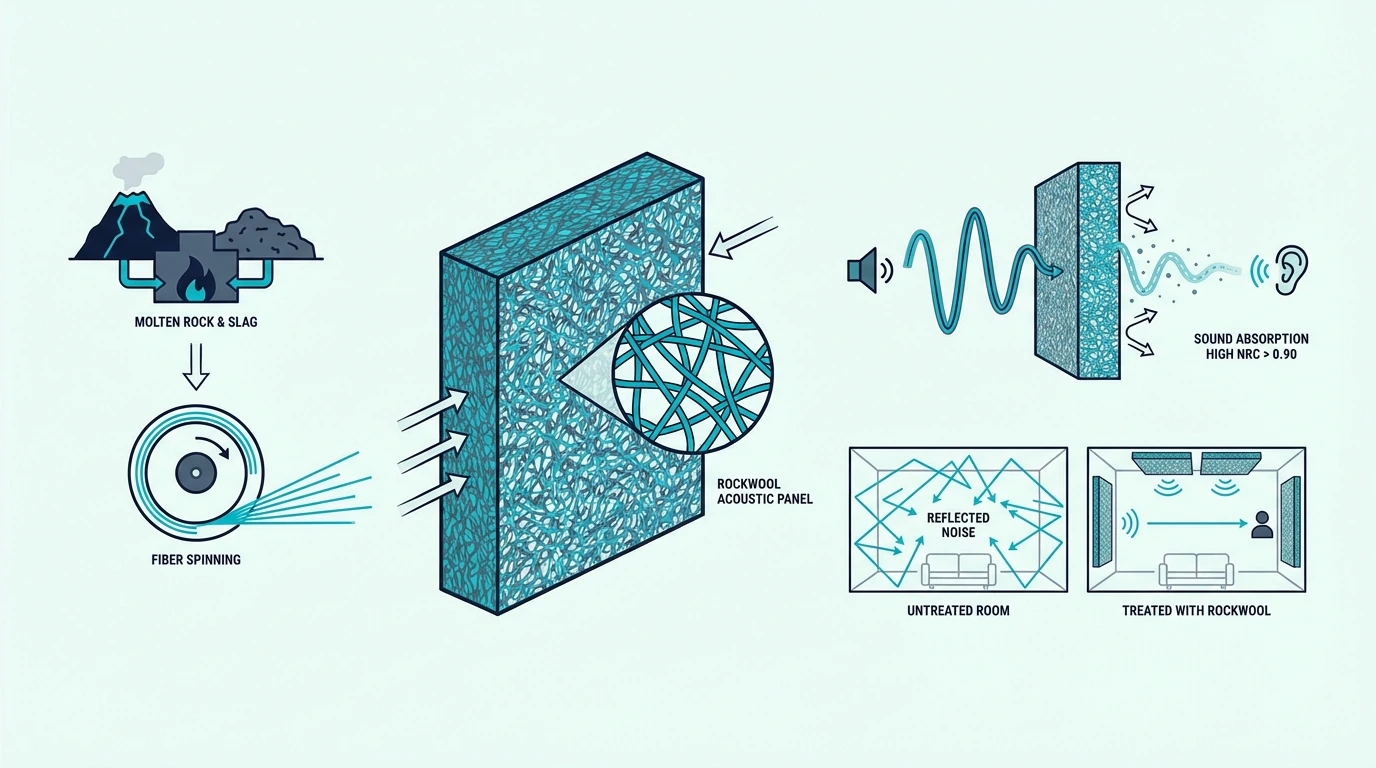
Yes — rockwool (also called mineral wool or stone wool) is one of the two best materials for DIY acoustic treatment, alongside rigid fiberglass. Professional studios have used mineral wool for decades because it delivers broadband absorption at a price point that makes full-room treatment affordable.
The reason rockwool works so well comes down to its physical structure. The fibers are dense, randomly oriented, and create millions of tiny air pockets that convert sound energy into heat through friction as sound waves pass through the material.
A 2-inch thick rockwool panel achieves an NRC (Noise Reduction Coefficient) of approximately 0.95, which means it absorbs 95% of the sound energy that hits it across the mid and high frequency range. At 4 inches thick, absorption extends well into the bass frequencies — something foam panels physically cannot achieve regardless of thickness.
For a broader look at why material choice matters, see what is acoustic treatment and the role each material plays.
What Makes Rockwool Effective For Acoustic Treatment?
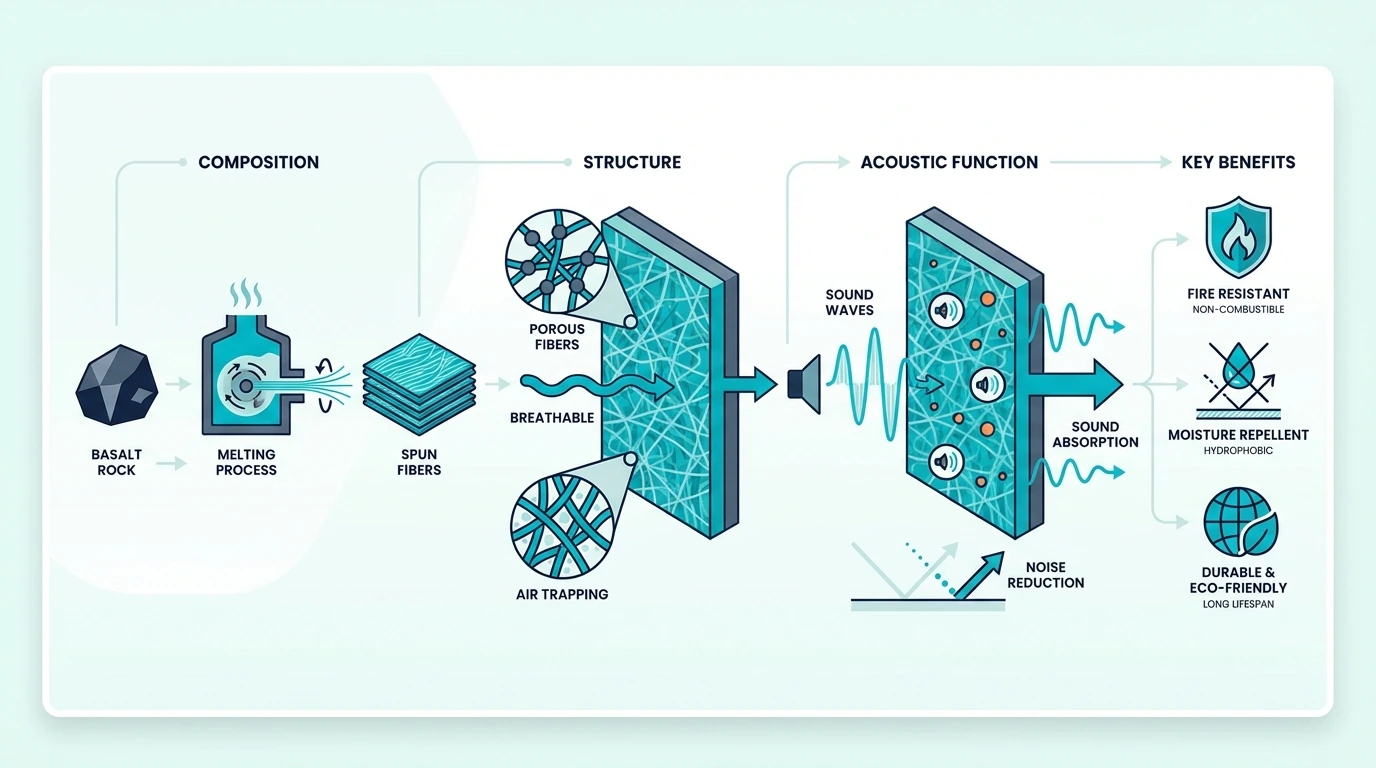
Three properties make rockwool stand out for acoustic treatment: density, fire resistance, and moisture resistance. Each one matters for different reasons.
Density is the primary acoustic factor. Rockwool products designed for acoustic use typically range from 3 to 8 pounds per cubic foot.
Higher density means more friction as sound waves pass through, which translates to better absorption — especially at lower frequencies where long wavelengths need more material to slow down.
Fire resistance is a practical safety advantage. Rockwool is made from volcanic rock and slag, which means it does not burn.
It can withstand temperatures above 2,000°F without igniting, which makes it significantly safer than polyurethane foam — a material that can melt and produce toxic fumes in a fire.
Moisture resistance matters for basements, garages, and any space where humidity is a concern. Rockwool does not absorb water, does not grow mold, and maintains its acoustic properties in damp environments where fiberglass would degrade over time.
Rockwool Safe n Sound — The Most Popular Choice
Rockwool Safe n Sound is the product most DIY builders reach for first, and for good reason. It is widely available at Home Depot and Lowes, it fits standard 2×4 stud cavities, and it delivers excellent mid and high frequency absorption.
Safe n Sound is 3 inches thick with a density of approximately 3.0 lb/ft³. At that density, it absorbs aggressively above 250 Hz and provides meaningful absorption down to about 125 Hz when mounted with an air gap behind it.
For small room treatment, Safe n Sound panels at first reflection points make a dramatic difference in monitoring accuracy.
The limitation is bass. For frequencies below 125 Hz, you need either thicker material or higher density — which is where Rockwool AFB comes in.
Rockwool AFB (Acoustic Fire Batts)
Rockwool AFB is the higher-density option specifically designed for acoustic applications. It is available in 2-inch and 4-inch thicknesses, with a density around 4.0 lb/ft³ for the 2-inch version and higher for thicker cuts.
The 4-inch AFB is the go-to material for DIY bass traps. Mounted across a corner with a 4-inch air gap behind it, a 4-inch AFB panel effectively behaves like an 8-inch trap for low frequencies — enough to tame room modes down to 60-80 Hz in most small rooms.
AFB is harder to find in retail stores but readily available online. For ready-made panels using rigid mineral wool board, the Rockboard 60 Mineral Wool Rigid Insulation Board provides the density and rigidity you need for high-performance DIY panels.
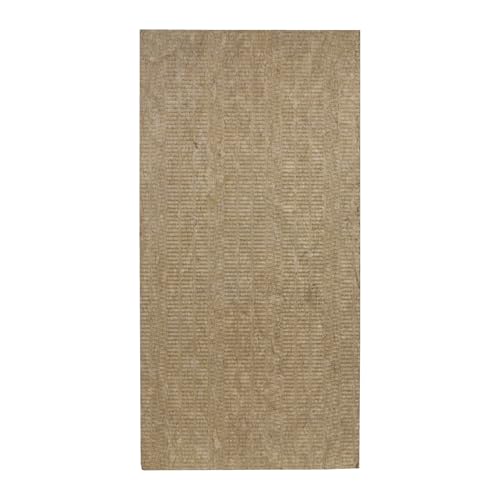
Rockboard 60 Mineral Wool Rigid Insulation Board
Get Studio Tips Weekly
Join 5,000+ creators getting acoustic treatment advice every week.
No spam. Unsubscribe anytime.How To Use Rockwool For DIY Acoustic Panels
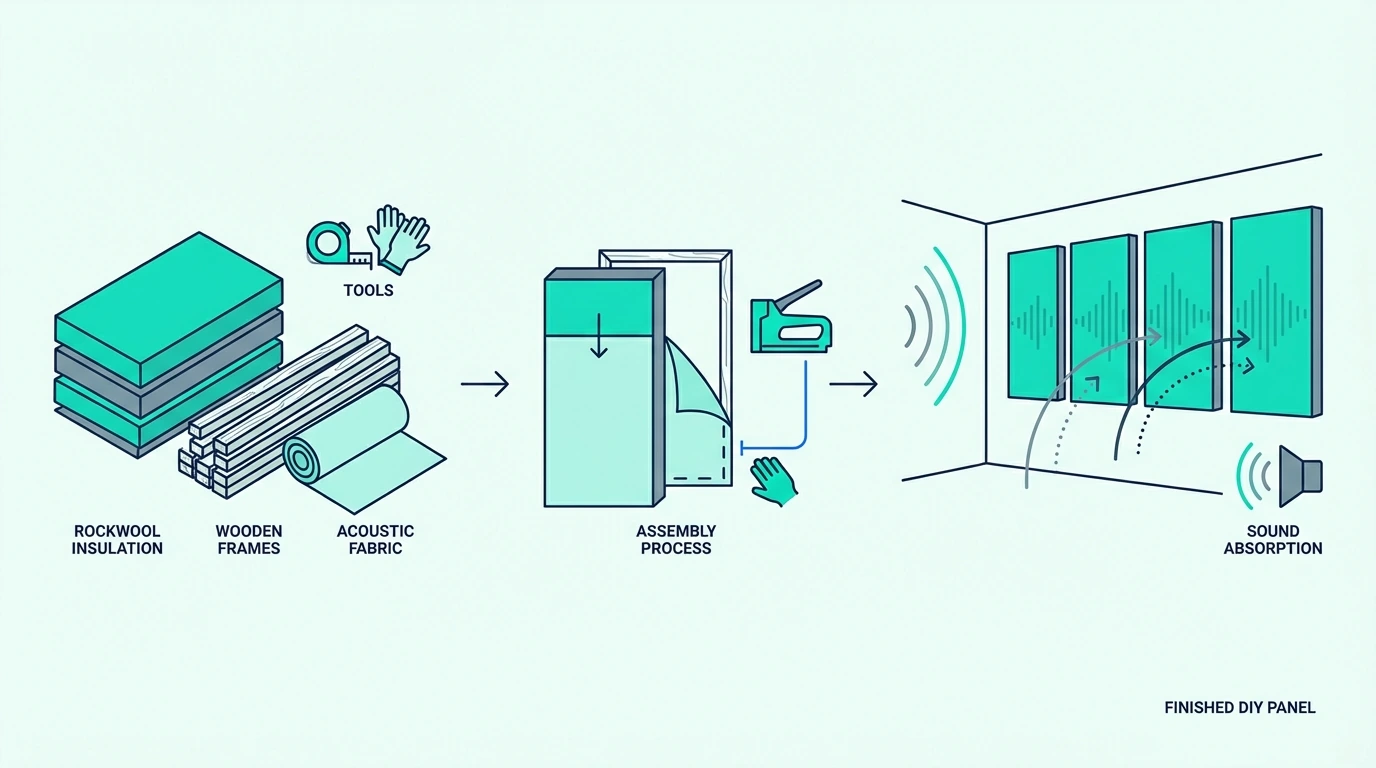
Building your own acoustic panels from rockwool is one of the most cost-effective upgrades you can make to a home studio. A single DIY panel costs roughly a third of what a comparable commercial panel sells for, and the acoustic performance is identical.
Building The Frame
The frame is simple: 1×4 lumber for 2-inch rockwool, or 2×4 lumber for thicker batts. Standard panel sizes are 24×48 inches (the most common) or 24×24 inches for smaller spaces.
Cut four pieces of lumber to size, join them with wood screws or pocket screws to form a rectangle, and optionally add a crossbar in the middle for rigidity on larger panels. The frame does not need to be furniture-grade — it sits behind fabric and nobody sees it.
Cutting And Handling Rockwool Safely
Rockwool mineral fibers irritate skin, eyes, and lungs. Always wear long sleeves, gloves, safety glasses, and a dust mask when cutting and handling the material.
Cut rockwool with a serrated knife or a bread knife — a standard utility knife crushes the fibers instead of cutting them cleanly. Mark your cut line, compress the material slightly with a straightedge, and saw through with the serrated blade.
Once the rockwool is cut to size, press it into the frame and wrap the entire assembly in acoustically transparent fabric. Guilford of Maine FR701 is the industry standard, but any loosely woven fabric that you can blow air through works.
If you want to skip the DIY process entirely, pre-made fiberglass panels deliver comparable performance without any construction. The tradeoff is cost — commercial panels run two to three times the price of raw rockwool batts for the same acoustic result.
If you want the full breakdown of the DIY approach with cost estimates, see our DIY acoustic treatment guide.
Rockwool vs Fiberglass For Acoustic Treatment
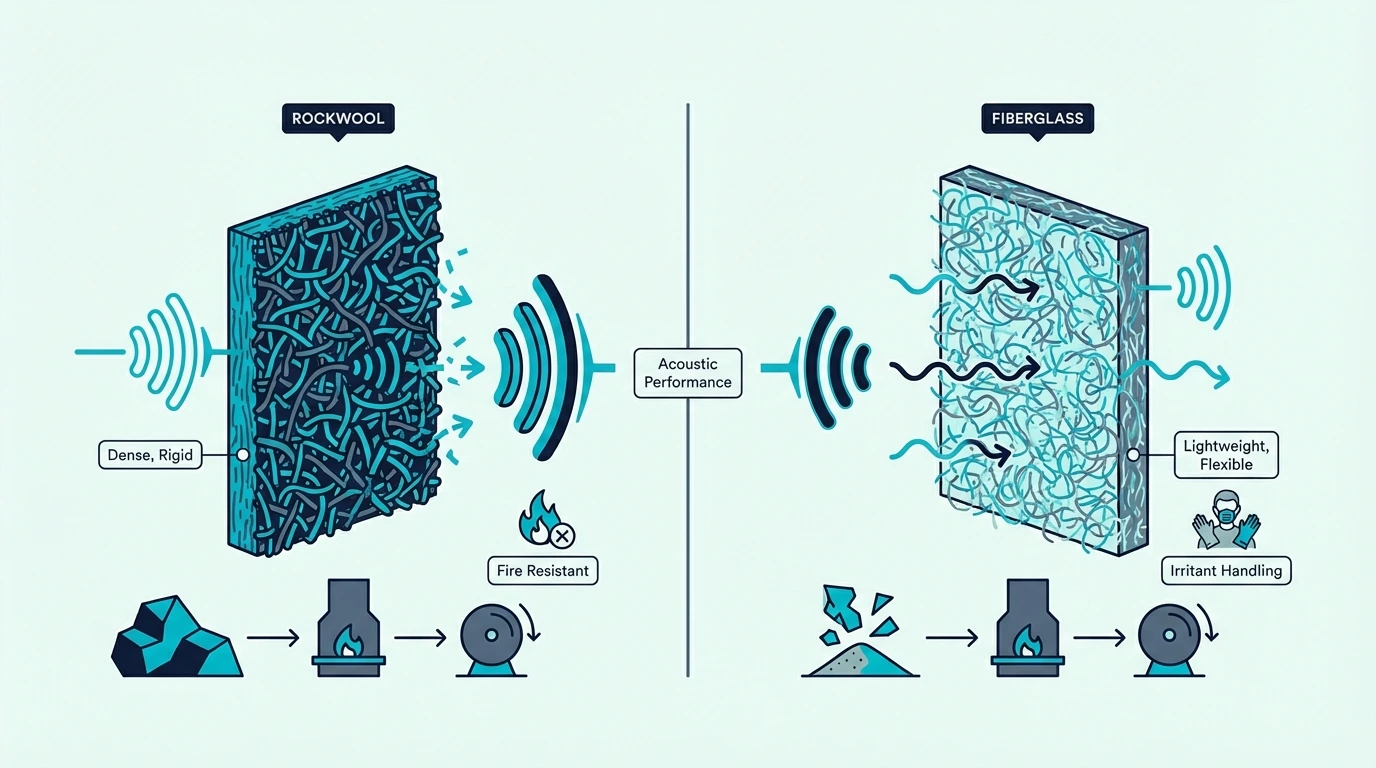
The two dominant materials for acoustic treatment are rockwool and rigid fiberglass (typically Owens Corning 703 or Knauf insulation). Both work extremely well, and the differences are smaller than most forum debates suggest.
Fiberglass has a slight edge in absorption per inch at mid and high frequencies. OC 703 at 2 inches thick achieves an NRC of 1.0 in some configurations, compared to rockwool’s 0.95 at the same thickness.
Rockwool has better fire resistance — it does not burn at all, while fiberglass can melt at high temperatures. Rockwool also handles moisture better, making it the superior choice for basements and garages.
Cost depends on your location. In most areas, rockwool Safe n Sound is cheaper per square foot than OC 703, but the gap has narrowed in recent years.
Both are available at major building supply stores.
For a detailed side-by-side comparison of these two materials with specific product recommendations, see our Owens Corning vs Knauf guide and our broader fiberglass acoustic treatment breakdown.
If you prefer ready-made fiberglass panels over DIY rockwool, the UMIACOUSTICS Fiberglass Acoustic Panels deliver the same broadband absorption with zero build time.
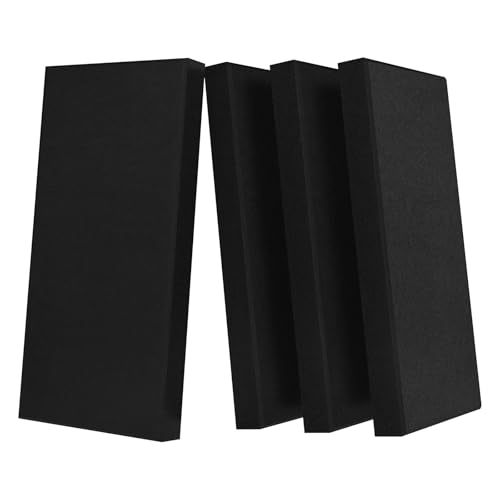
UMIACOUSTICS Fiberglass Acoustic Panels
The Bottom Line
Rockwool is an excellent material for acoustic treatment — affordable, effective across the full frequency range, fire resistant, and widely available. It is the material of choice for DIY builders who want professional-grade absorption without the commercial price tag.
Start with Rockwool Safe n Sound for wall panels at first reflection points and Rockwool AFB at 4 inches for corner bass traps. That combination covers the two most critical treatment needs in any home studio.
If you are still weighing whether treatment is worth the investment, see is acoustic treatment necessary. For understanding how much to budget, check the acoustic treatment cost guide.
And if you want to see how all the pieces fit together, start with how acoustic treatment works.
Frequently Asked Questions
What is the downside of rockwool?
The main downside is handling. Rockwool mineral fibers irritate skin, eyes, and lungs during cutting and installation, requiring gloves, long sleeves, safety glasses, and a dust mask.
Once installed inside a frame and wrapped in fabric, rockwool is completely safe and poses no ongoing health risk.
What is the best material for acoustic treatment?
Rockwool and rigid fiberglass (like Owens Corning 703) are both excellent and used interchangeably in professional studios. Rockwool is generally cheaper and more fire resistant.
Fiberglass absorbs slightly more sound per inch at mid frequencies. For most home studios, either material produces outstanding results.
Is rockwool better than spray foam for soundproofing?
For acoustic treatment (controlling sound inside a room), rockwool is dramatically better. Spray foam is closed-cell, which means it reflects sound rather than absorbing it — the opposite of what you want for treatment.
Spray foam is designed for thermal insulation and air sealing, not acoustic absorption. Using it on walls or in panels will make room reflections worse, not better.