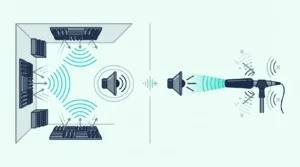
Can You Use A Rug For Acoustic Treatment (What Rugs Actually Fix And What They Cannot)
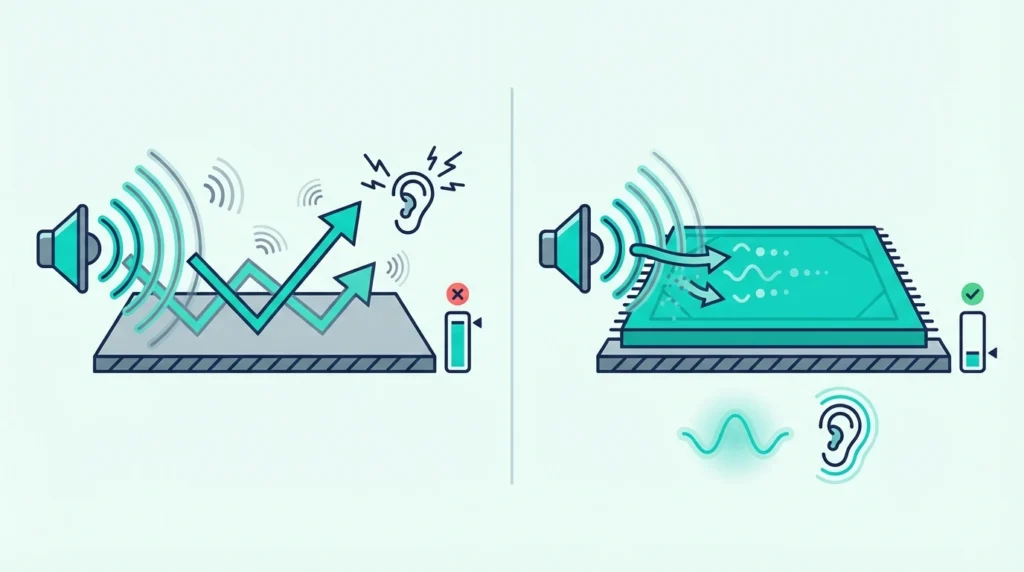
Can you use a rug for acoustic treatment is one of the most common questions from people setting up a recording or listening space, but the honest answer is that rugs help with one narrow problem while leaving the main acoustic issues completely untouched.
A thick rug on a hard floor absorbs some mid and high frequency reflections that bounce between the floor and ceiling. That reduces flutter echo and takes a small amount of brightness out of the room.
The problem is that the reflections causing muddy recordings and unreliable mixes come from walls, corners, and the ceiling — surfaces a rug does not touch. A rug treats roughly 10-15% of the acoustic problem in a typical room while the other 85-90% continues bouncing off every other surface.
Below you will find exactly what rugs can and cannot do acoustically, when they are worth using, and what delivers better results at a similar price. Start with wall panels at first reflection points — they address the reflections that actually damage your recordings.
Rugs absorb some mid and high frequency reflections off hard floors, reducing flutter echo and footstep noise. They do not control bass, eliminate wall reflections, or replace purpose-built acoustic panels. A thick wool or shag rug is a useful supplement to proper treatment but should never be your first or only acoustic investment.
How Well Do Rugs Absorb Sound?
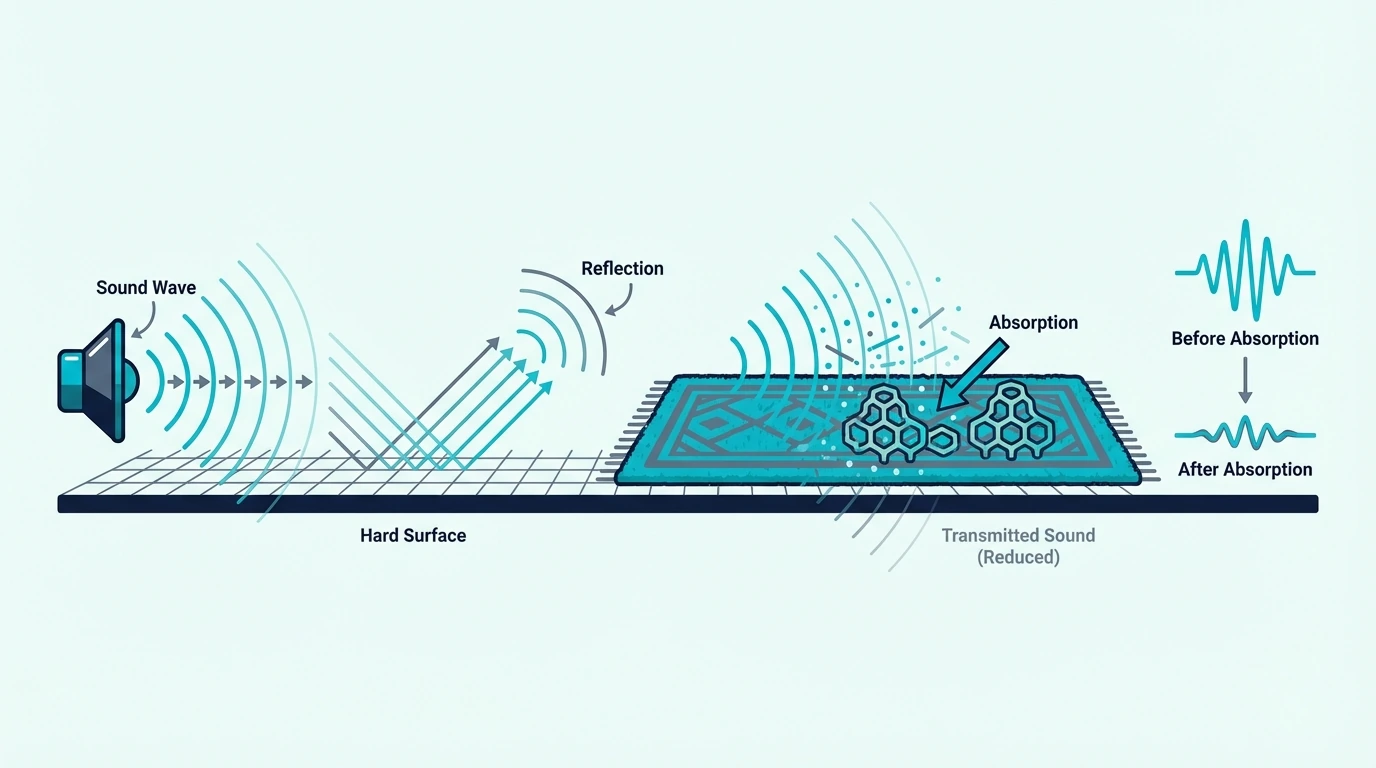
Rugs absorb sound, but understanding how much and at which frequencies prevents you from expecting results they cannot deliver.
What Rugs Can Do
A thick rug on a bare floor reduces flutter echo — the rapid series of reflections that bounces between the floor and ceiling in rooms with hard surfaces. Flutter echo creates a metallic, ringing quality that is particularly noticeable when you clap your hands in an empty room.
A dense wool or shag rug eliminates most of that flutter echo. It also absorbs footstep noise and reduces the overall high-frequency brightness of a room with hard flooring.
In living rooms, home theaters, and home offices, a rug makes an audible difference in how the room sounds for conversation and casual listening. The room feels less harsh and echoey with a thick rug covering a significant portion of the bare floor.
What Rugs Cannot Do
Rugs do not absorb bass frequencies. The low-frequency room modes that cause boomy, muddy sound in small rooms are completely unaffected by any rug, regardless of thickness or material.
Rugs do not control wall reflections. The early reflections from side walls, the front wall, and the rear wall are the primary cause of comb filtering and imaging problems in recording and mixing environments.
A rug on the floor does nothing to address these.
Rugs do not replace corner bass traps. The low-frequency buildup in room corners requires thick, dense absorption — 4 inches of rigid fiberglass or mineral wool minimum.
No rug or carpet provides that level of absorption at those frequencies.
The acoustic properties of even the thickest rug are limited to frequencies above approximately 500 Hz. Below that threshold, the rug is acoustically transparent — sound passes through it and reflects off the hard floor underneath as if the rug were not there.
When Are Rugs Worth Using For Acoustics?
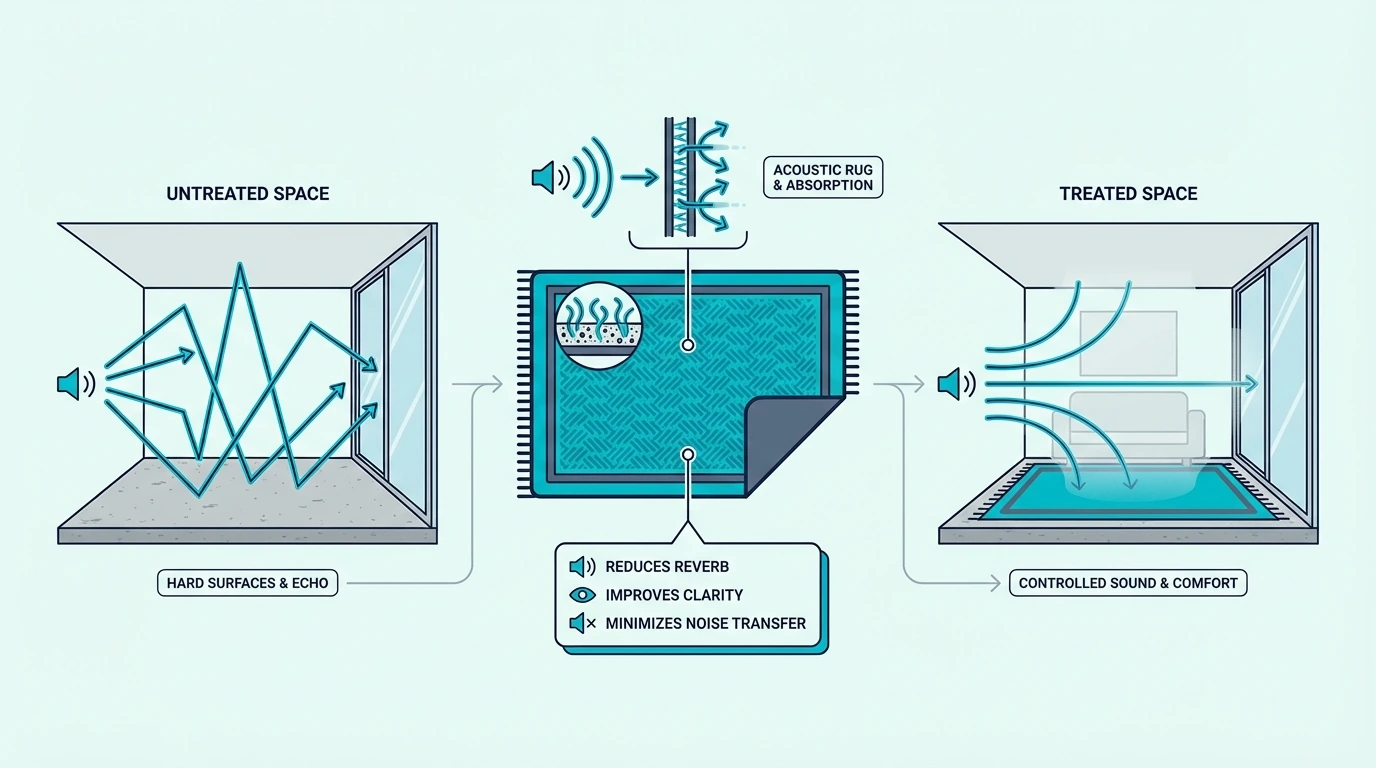
Rugs make acoustic sense in specific situations where they supplement proper treatment or where permanent treatment is not possible.
Rooms With Hard Floors And Flutter Echo
If your room has hardwood, tile, concrete, or laminate flooring and you hear a distinct ringing when you clap, a thick rug directly addresses that problem. Place the rug in the area between your listening position and the speakers or microphone.
A deep pile wool rug or a thick shag rug absorbs more effectively than a thin flatweave rug. The thicker and denser the material, the lower in frequency the absorption extends.
Adding a thick rug pad underneath further improves absorption by increasing the total thickness of the absorptive layer. The combination of rug plus pad can absorb effectively down to approximately 300-400 Hz for floor reflections.
Apartments And Rentals
For renters who cannot mount panels on walls, a rug is one of the few acoustic improvements that requires no modification to the space. Combined with temporary treatment options like freestanding panels and blanket-covered mic shields, a rug contributes to an overall reduction in room reflections.
In shared living spaces where a dedicated studio is not possible, a rug is a practical compromise. It will not solve serious acoustic problems, but it reduces the worst of the flutter echo without requiring any installation.
The key for renters is combining a rug with other non-permanent solutions. A thick rug on the floor, heavy curtains on the windows, and a portable reflection filter behind the microphone collectively reduce room reflections enough to produce usable recordings in an otherwise untreated space.
As A Supplement To Wall Treatment
The most effective use of a rug is as one component of a complete treatment plan. After you have addressed the walls and corners — which are the primary sources of acoustic problems — a rug handles the remaining floor reflections.
In a room that already has wall panels at first reflection points and bass traps in the corners, adding a thick rug completes the treatment by absorbing the floor-to-ceiling reflections that the wall treatment does not cover.
The small room treatment guide covers the full placement priority order. Floors are typically the last surface to treat because wall and corner reflections cause more audible problems.
Best Rug Types For Acoustics
Not all rugs absorb equally. The key factors are thickness, density, and material:
- Thick wool rugs absorb the most across the widest frequency range due to the natural density and fiber structure of wool
- Shag rugs with deep pile (1 inch or more) absorb well due to the air trapped between the long fibers
- Flatweave rugs absorb the least — they are too thin and dense to trap much sound energy
- Synthetic rugs fall between wool and flatweave depending on pile depth and density
A rug covering at least 60-70% of the floor area between your speakers and listening position provides the most acoustic benefit. Smaller rugs help less because sound reflects off the uncovered floor area around them.
Get Studio Tips Weekly
Join 5,000+ creators getting acoustic treatment advice every week.
No spam. Unsubscribe anytime.Better Alternatives At Similar Cost
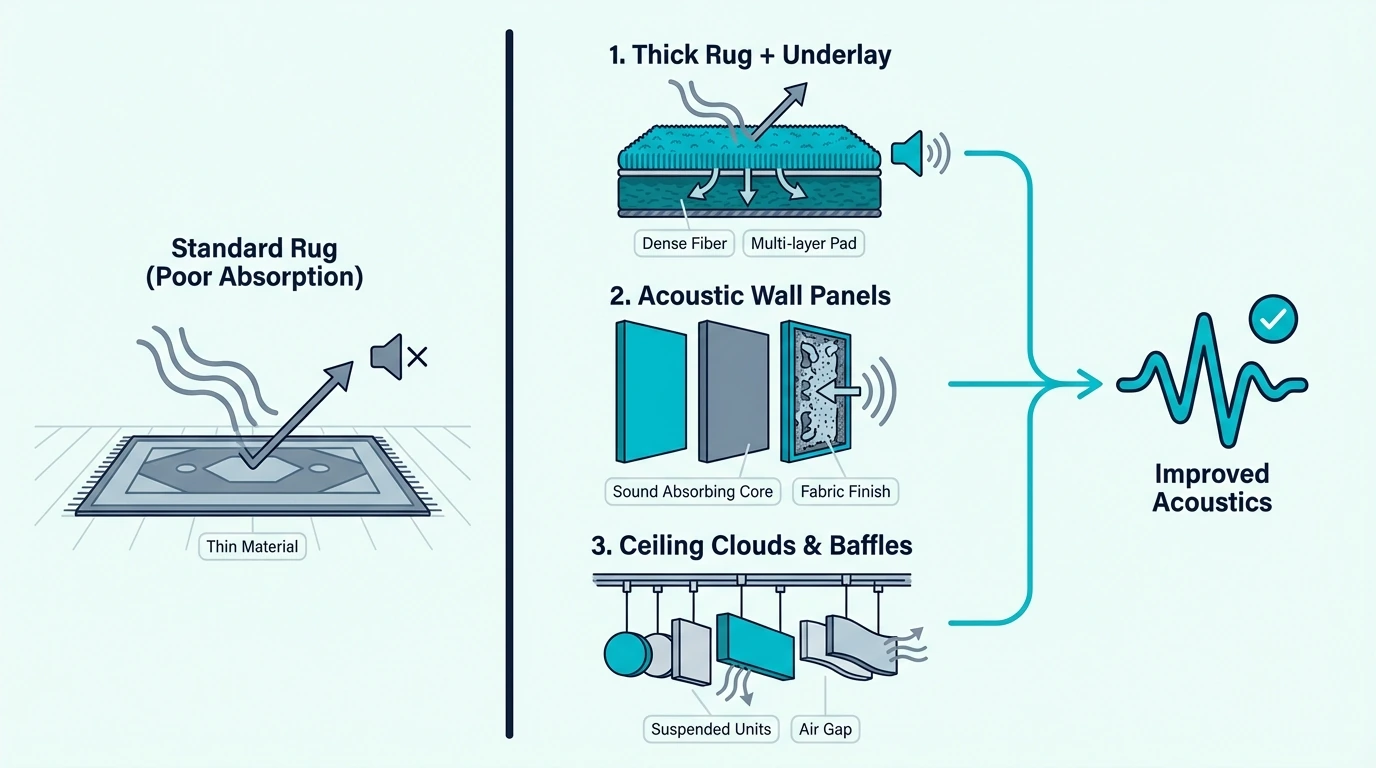
A thick area rug costs 50-150 dollars depending on size and material. That same budget delivers significantly more acoustic improvement when spent on purpose-built absorption.
Two DIY fiberglass panels built from hardware store materials cost approximately 25-40 dollars each. Mounted at the first reflection points on the side walls, they address the reflections that cause the most damage to recording and mixing accuracy.
For dedicated recording spaces where floor treatment matters, interlocking sound absorbing floor tiles absorb more effectively than a rug. They interlock without adhesive so they can be laid down and picked up without damaging the floor.
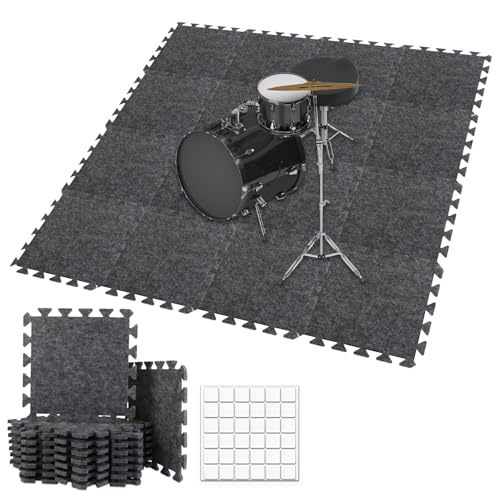
interlocking sound absorbing floor tiles
If your budget allows only one purchase and you are choosing between a rug and wall panels, choose wall panels every time.
Fiberglass wall panels address the reflections that actually cause recording and mixing problems. Wall reflections contribute far more to acoustic issues than floor reflections in any room.
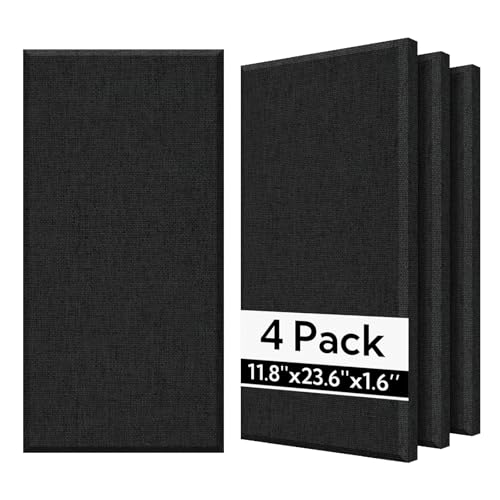
Fiberglass wall panels
The Bottom Line
Rugs absorb mid and high frequency reflections from hard floors. They reduce flutter echo, footstep noise, and overall room brightness.
They do not control bass, address wall reflections, or replace purpose-built acoustic panels. A rug is a useful supplement to proper treatment but should never be your primary acoustic investment.
The full guide to acoustic treatment covers the treatment priorities that deliver the biggest improvements. The cost breakdown compares what you get per dollar spent on rugs versus panels versus bass traps.
For rooms where you cannot mount anything on walls, the blankets as treatment guide covers other soft-goods options that provide more absorption than a rug alone.
Frequently Asked Questions
Do rugs help with room acoustics?
Yes — rugs provide modest mid and high frequency absorption from hard floors. A thick wool or shag rug reduces flutter echo between the floor and ceiling and takes some brightness out of the room.
They do not address wall reflections, bass modes, or the primary acoustic problems in recording and mixing rooms. Treat rugs as a supplement, not a solution.
What is the best flooring for acoustics?
Carpet absorbs the most floor reflections. A thick carpet with dense pad underneath absorbs effectively from approximately 300 Hz up through the full audible range.
Hard floors with a thick rug and pad are the next best option. Hard floors without any covering reflect nearly all sound energy back into the room, contributing to flutter echo and overall reverb time.
Can I use a rug instead of acoustic panels?
No — rugs only treat floor reflections. The main acoustic problems in any room come from walls, ceiling, and corners.
Wall reflections at first reflection points cause comb filtering that damages recording clarity and mixing accuracy. Corner bass modes cause low-frequency buildup that muddies the entire frequency balance. A rug addresses neither of these problems.