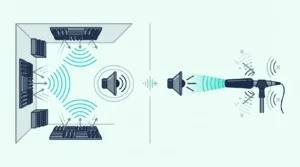
Best Acoustic Treatment For Concrete Room (Complete Guide)

Best acoustic treatment for concrete room setups requires a different approach than standard drywall rooms — but most treatment guides ignore this, leaving concrete room builders with generic advice that underperforms in the most challenging acoustic environment.
The problem is that concrete reflects nearly 100% of sound energy at every frequency. Drywall absorbs a small percentage of bass energy through panel flexing, but concrete does none of that.
The result is severe reverb, metallic flutter echo, and bass buildup that makes untreated concrete rooms unusable for recording or mixing.
Thicker panels, dedicated corner bass traps, and air gaps behind every panel solve the specific problems concrete creates. A properly treated concrete room performs as well as any drywall studio — it just requires more material in the right places.
Below you will find the exact treatment plan for concrete rooms: which panels to use, how thick they need to be, where to mount them, and why air gaps matter more here than in any other room type. Start with corner bass traps — they solve the most damaging problem first.
Concrete rooms need thicker treatment than drywall rooms. Use 4-6 inch bass traps in all corners, 2-4 inch wall panels mounted with air gaps at first reflection points, and a ceiling cloud above the listening position. Plan for 40-50% wall coverage compared to the 20-30% typical for drywall rooms. Mount panels 2-4 inches off the concrete surface — the air gap dramatically improves low-frequency absorption.
Why Concrete Rooms Are So Challenging
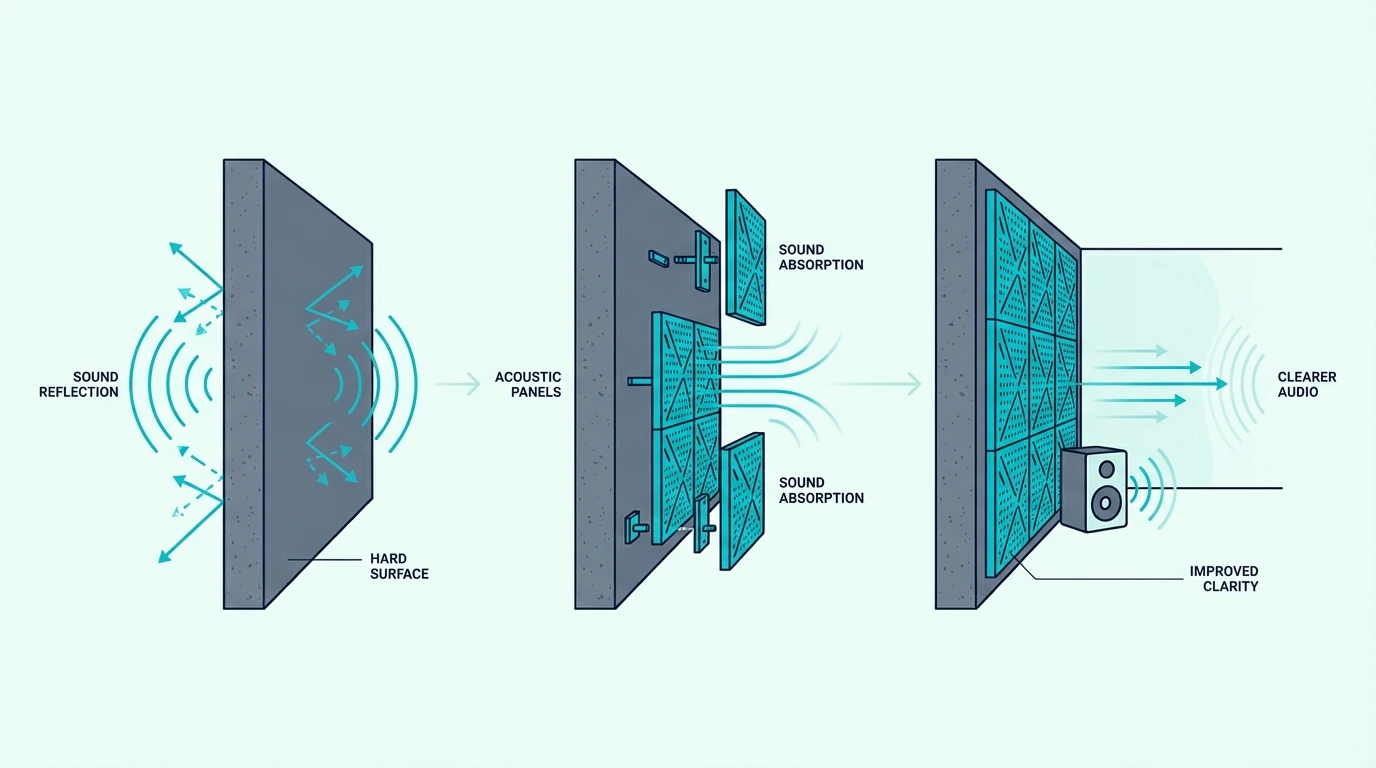
Concrete is one of the most acoustically reflective building materials. It is dense, rigid, and non-porous — all properties that cause it to reflect sound rather than absorb it.
Extreme Reflectivity
A concrete wall reflects approximately 97-99% of the sound energy that hits it. For comparison, standard drywall reflects approximately 90-95% — still highly reflective, but the difference is audible.
The result in an untreated concrete room is long reverb times, harsh metallic flutter echo between parallel walls, and a bright, ringing quality that makes speech difficult to understand and music impossible to mix accurately. Clap your hands in an empty concrete room and the echo sustains for several seconds.
Flutter echo is particularly severe between parallel concrete walls. The sound bounces back and forth with almost no energy loss per reflection, creating a rapid metallic ringing that colors every recording made in the space.
Even placing furniture in a concrete room barely dents the problem. Soft furnishings absorb some mid and high frequency energy, but concrete walls return bass and low-mid frequencies at full strength regardless of what else is in the room.
Bass Buildup In Concrete Rooms
Drywall panels flex slightly at low frequencies, which absorbs a small amount of bass energy with each reflection. This natural damping does not exist with concrete.
In a concrete room, low-frequency energy bounces between surfaces with virtually zero absorption. Room modes — the resonant frequencies determined by room dimensions — are far more pronounced.
Bass notes sustain longer, overlap with each other, and create severe peaks and nulls throughout the room.
This makes accurate bass monitoring nearly impossible without treatment. The mixing room guide explains how room modes affect mix decisions and why bass traps are the highest-priority treatment for any mixing space.
How To Treat A Concrete Room For Audio
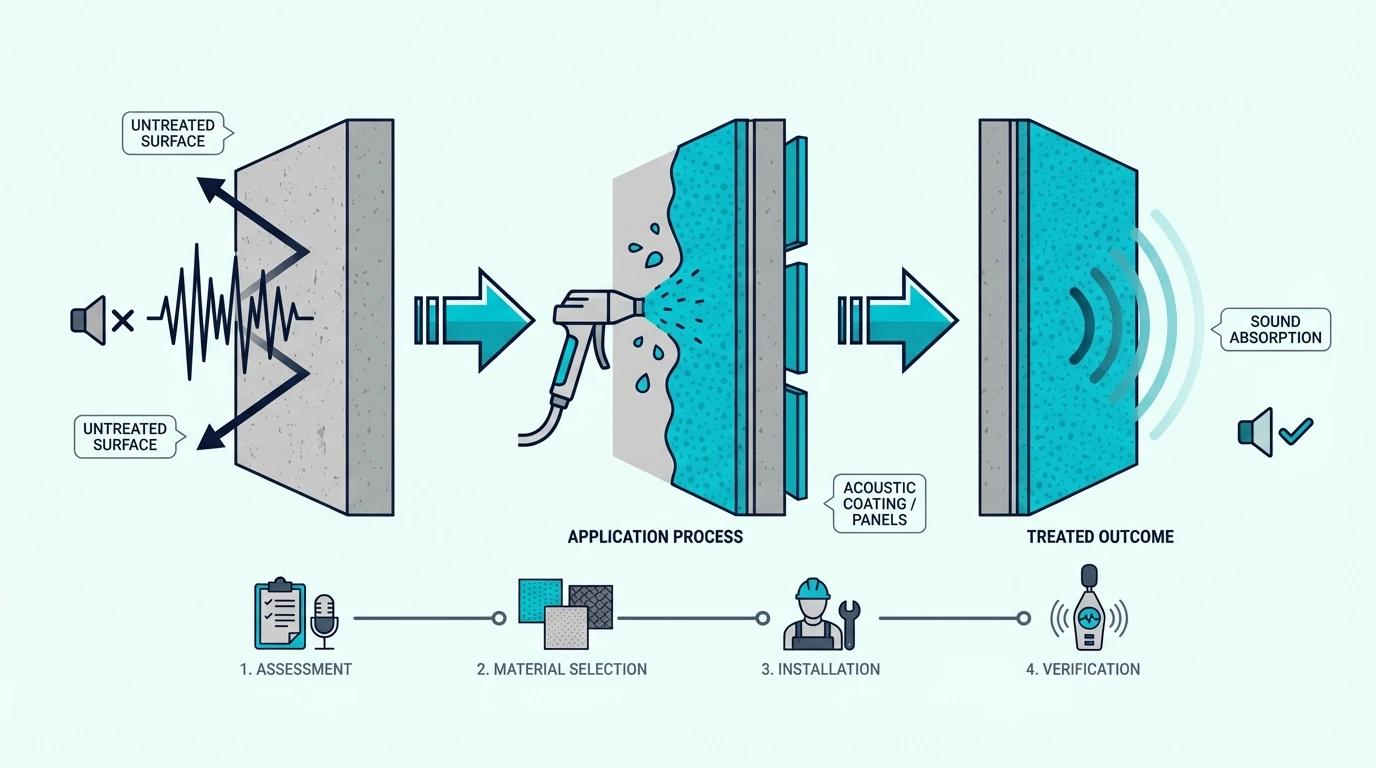
The treatment priority order for concrete rooms is the same as any room, but every element needs to be thicker and more extensive.
Thick Corner Bass Traps — The Highest Priority
Corner bass traps are the single most important treatment in a concrete room. Low-frequency energy concentrates in room corners where two or three surfaces meet, and concrete corners trap more bass energy than drywall corners because none of it leaks through the walls.
Build or buy bass traps at least 4 inches thick for vertical corners. For maximum effectiveness, use 6-inch thick traps or stack two layers of 2-inch rigid insulation.
Rockboard 60 mineral wool boards at 6 lb per cubic foot density are ideal for concrete room bass traps. Stack two or three boards to reach 4-6 inches of total thickness. The high density provides maximum low-frequency absorption where concrete rooms need it most.

Rockboard 60 mineral wool boards
Mount bass traps across corners at a 45-degree angle with an air gap behind them. The triangular air space behind the panel adds effective absorption depth without increasing the panel thickness.
The corner treatment guide covers bass trap sizing and positioning in detail.
Treat all four vertical wall corners plus the wall-ceiling corners above the listening position. Concrete rooms benefit from bass trapping in every available corner.
Wall Panels With Air Gaps
Wall panels in concrete rooms should be mounted 2-4 inches off the wall surface rather than flush against it. The air gap behind the panel dramatically improves low-frequency absorption by allowing the panel to work as a diaphragmatic absorber at lower frequencies.
Use L-brackets or spacer blocks to create the air gap. Attach the bracket to the concrete wall with concrete anchors or tapcon screws, then mount the panel to the bracket.
UMIACOUSTICS fiberglass panels with included hanging brackets simplify installation on concrete surfaces. The 2-inch fiberglass core handles mid and high frequency reflections while the air gap behind extends absorption into the low-mid range.
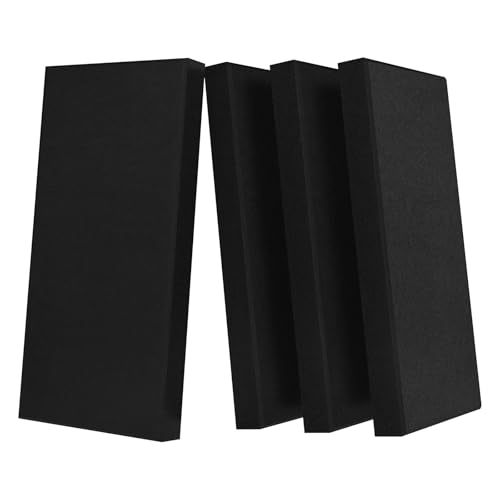
UMIACOUSTICS fiberglass panels
Place panels at first reflection points on both side walls, the wall behind the speakers, and the rear wall behind the listening position. Concrete rooms typically need 40-50% wall coverage compared to 20-30% in drywall rooms.
For rooms where drilling into concrete is not an option, the temporary treatment guide covers freestanding panel options that lean against walls or stand on floor bases without any wall mounting.
The fiberglass treatment guide covers panel thickness recommendations and NRC data for different air gap configurations.
Ceiling And Floor Treatment
A ceiling cloud above the listening position eliminates the ceiling reflection that causes comb filtering with the direct sound from your speakers. In concrete rooms with concrete ceilings, this reflection is especially harsh.
Suspend a 2-4 inch thick panel from the ceiling using wire or chains attached to concrete anchors. Position it directly above the equilateral triangle formed by your speakers and listening position.
For concrete floors, a thick rug or carpet reduces the floor-ceiling flutter echo that plagues rooms with two parallel hard surfaces. The rugs as treatment guide explains which rug types provide the most acoustic benefit.
If carpet installation is not an option, alternative floor treatment methods include interlocking rubber mats or dense carpet tiles laid without adhesive.
Surface Coverage Requirements
Concrete rooms need more treatment area than drywall rooms to achieve the same reverb time reduction. Plan for approximately 40-50% of total wall surface area covered with absorption.
For a typical 12×10 foot room with 8-foot ceilings, that means approximately 150-180 square feet of panel coverage across all walls plus ceiling treatment. Large 72×48 inch acoustic panels cover significant wall area efficiently — a 6-pack provides 144 square feet of coverage.

Large 72×48 inch acoustic panels
The cost breakdown guide helps budget for the additional coverage concrete rooms require. For DIY builders, constructing your own panels reduces the cost of high-coverage treatment significantly.
Get Studio Tips Weekly
Join 5,000+ creators getting acoustic treatment advice every week.
No spam. Unsubscribe anytime.The Bottom Line
Concrete rooms are the most acoustically challenging common room type, but they respond well to proper treatment. The key differences from drywall rooms are thicker bass traps (4-6 inches minimum), air gaps behind wall panels, and 40-50% wall coverage instead of 20-30%.
Start with corner bass traps in all four vertical corners. Add wall panels at first reflection points with 2-4 inch air gaps.
Finish with a ceiling cloud and floor treatment.
The full guide to acoustic treatment covers treatment priorities for all room types. For basement studios with concrete walls and floors, the garage treatment guide addresses the specific combination of concrete surfaces, large volumes, and mounting strategies that apply to basement studios as well.
Frequently Asked Questions
How to make a concrete room less echoey?
Add absorption panels to the walls at first reflection points with 2-4 inch air gaps behind them. Install thick bass traps in all corners.
Add a ceiling cloud above the listening position.
Concrete rooms need more treatment than typical rooms — plan for 40-50% wall coverage with 2-4 inch thick panels rather than the 20-30% sufficient for drywall rooms.
Can you soundproof a concrete room?
Concrete already provides excellent soundproofing — it blocks sound transmission between rooms effectively due to its mass and density. The problem in concrete rooms is internal acoustics, not sound leakage.
What concrete rooms need is acoustic treatment (absorption panels and bass traps to control reflections inside the room), not soundproofing (additional mass to block sound from entering or leaving). The home studio guide explains the difference between treatment and soundproofing.
How much treatment does a concrete room need?
More than a drywall room. Plan for 40-50% wall coverage with panels that are 2-4 inches thick, plus 4-6 inch thick bass traps in every corner.
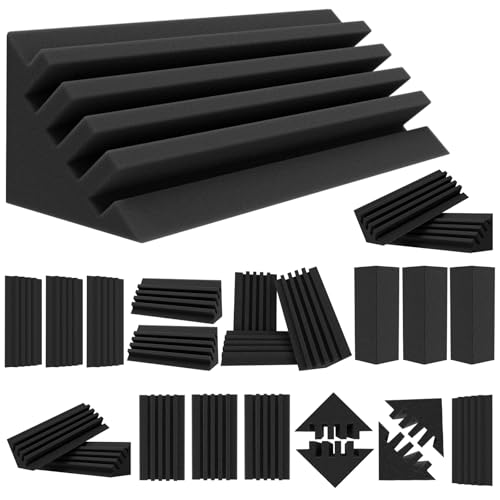
A typical 12×10 foot concrete room needs approximately 8-12 wall panels, 4-8 corner bass traps, a ceiling cloud, and floor treatment. The total cost ranges from 400-800 dollars for DIY builds to 1,500-3,000 dollars for commercial panels. A budget starting point for corners is the TroyStudio 24-pack foam bass traps — they fill all four corners immediately while you plan thicker fiberglass builds for deeper bass control.
The small room guide covers additional treatment considerations for compact concrete spaces where room modes are especially severe at shorter wall distances.