DIY Cheap Bass Trap — Budget Builds That Actually Absorb Low Frequencies
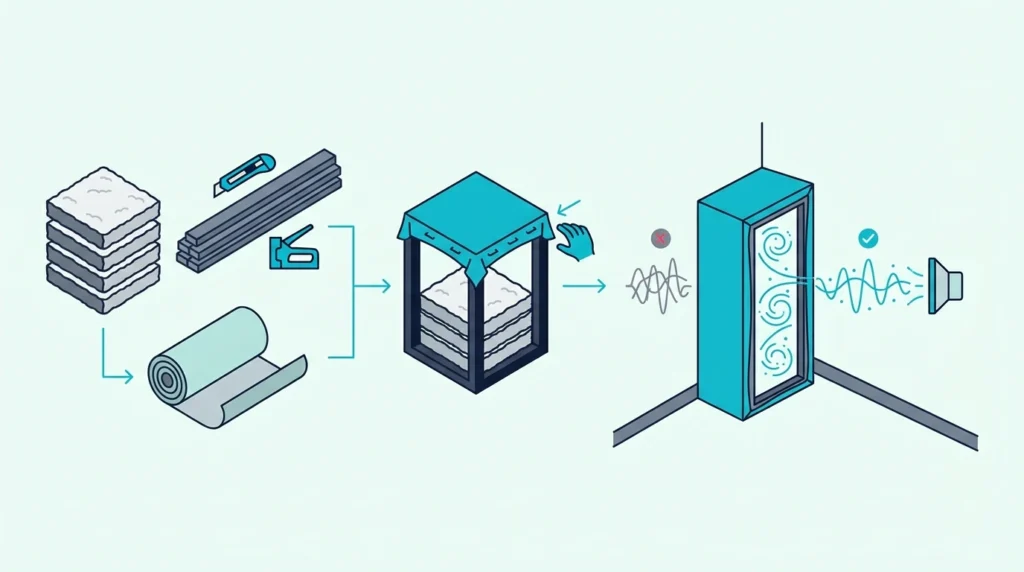
A diy cheap bass trap built from hardware store mineral wool costs under $15 per corner and absorbs more bass than commercial foam traps selling for $50-80 each, but most budget build guides skip the critical details about material density and thickness that determine whether your cheap trap actually works or just decorates the corner.
Rockwool Safe’n’Sound is the budget pick for bass trap material — stack it into corners at 4+ inches thick and you get real bass absorption down to 200 Hz. Household items like blankets and towels can help with mid-frequency reflections, but they lack the density and rigidity to absorb low-frequency sound waves.
Building budget bass traps doesn’t require woodworking skills or expensive tools. The simplest effective design is stacking insulation batts directly into the corner with no frame at all — the corner walls hold the material in place.
Below, you’ll find the cheapest materials that actually work for bass absorption, a step-by-step budget corner trap build, how DIY compares to commercial options, and ways to make your budget traps look presentable.
The cheapest effective bass trap is Rockwool Safe’n’Sound stacked directly into corners — no frame needed, under $15 per corner. For a finished look, wrap the insulation in cheap muslin fabric ($3-5/yard) stapled to a simple 1×3 lumber frame. Avoid relying on blankets, towels, or thin foam as primary bass treatment — they absorb mid/high frequencies but barely touch the bass range below 200 Hz.
Can You Build Effective Bass Traps On A Budget?
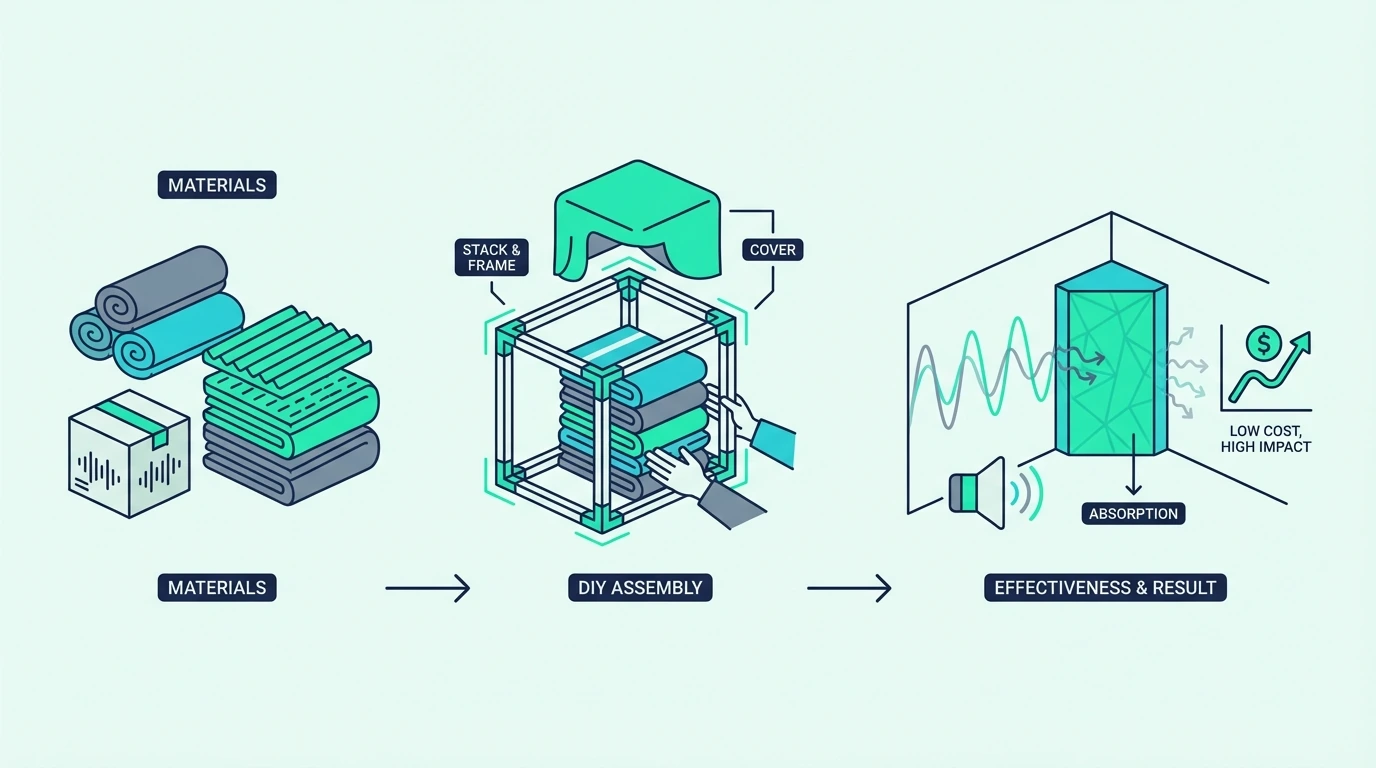
You can build bass traps that perform as well as $150+ commercial panels for under $30 each — the acoustic performance comes from the insulation material, not the brand, frame, or fabric. A bag of Rockwool Safe’n’Sound absorbs just as effectively as the mineral wool core inside a GIK Acoustics panel.
The key is choosing the right material at the right thickness — a cheap trap that’s too thin or uses the wrong material won’t absorb bass no matter how carefully you build it. A cheap trap with proper 4-inch mineral wool in the right placement will outperform an expensive foam trap every time.
Budget doesn’t mean cutting corners on the physics — it means cutting costs on the frame, fabric, and finish while keeping the acoustic core at the right specs.
Cheapest Materials That Actually Work
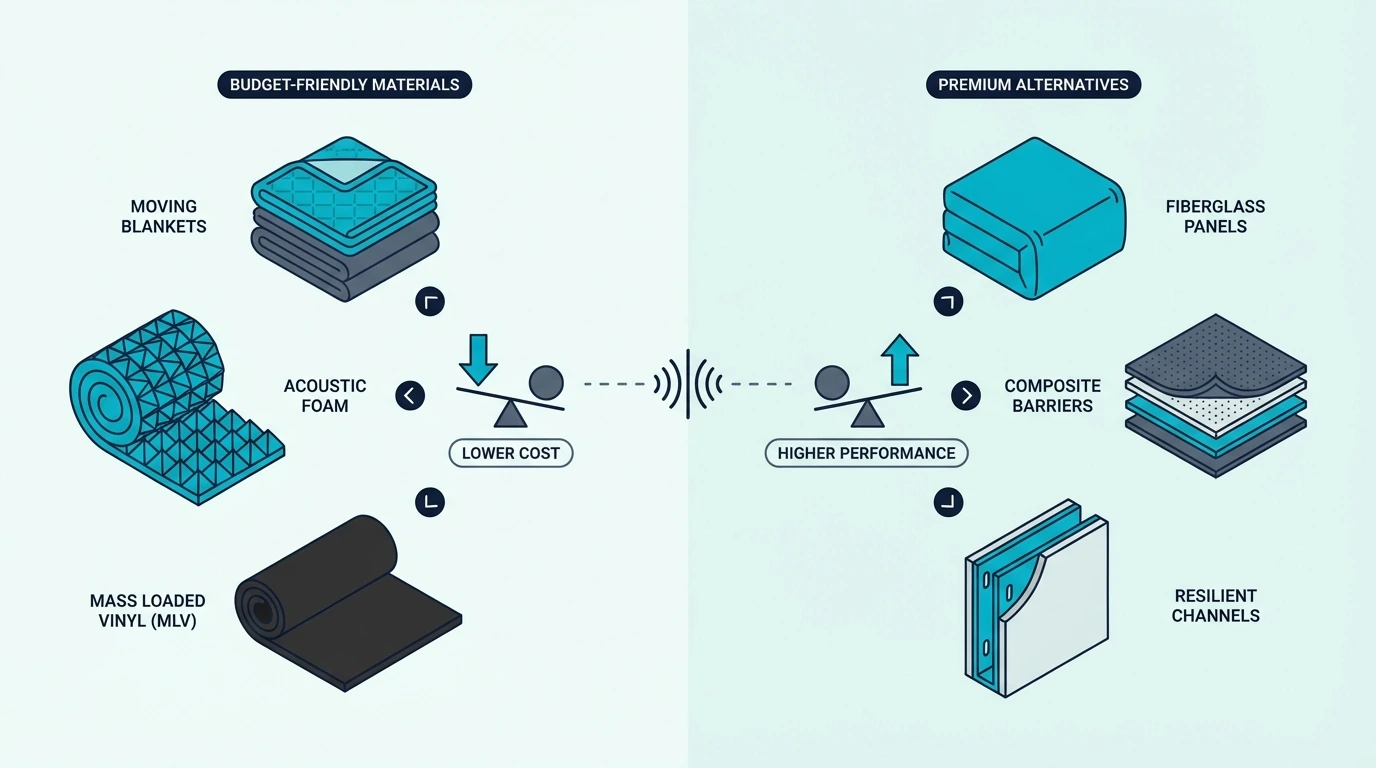
Not all cheap materials absorb bass. The ones that work share two properties: enough density to create friction with sound waves (3+ PCF) and enough thickness (4+ inches) to interact with bass wavelengths.
Mineral Wool On A Budget
Rockwool Safe’n’Sound is the budget king for bass traps — each batt is 15.25×47 inches at 3 inches thick, and doubling them up gives you 6 inches of effective bass absorption. One bag treats two full corners.
Safe’n’Sound is designed as building insulation, not acoustic treatment, but the acoustic properties are nearly identical to products marketed specifically for studios. It’s stocked at Home Depot and Lowe’s, so you can pick it up the same day you decide to build.
Rockwool ComfortBoard 80 costs more but comes as rigid boards that hold their shape without a frame. If you want the simplest possible build — no frame, no stapling — ComfortBoard stacked in a corner is the fastest path to bass absorption.
Household Items As Bass Traps
Thick moving blankets folded and stuffed into corners provide some acoustic benefit, but they primarily absorb mid and high frequencies. A folded moving blanket is roughly 1-2 inches thick equivalent, which doesn’t reach bass frequencies effectively.
Pillows and towels stacked in corners create even less absorption — their density is too low to convert bass-frequency sound energy to heat. They may reduce flutter echo and room brightness, but they won’t address room modes or bass buildup.
The honest assessment: household items are better than nothing for general room acoustics, but they’re not real bass traps. If your room has genuine bass problems (boomy corners, uneven low-frequency response), you need proper insulation material.
Get Studio Tips Weekly
Join 5,000+ creators getting acoustic treatment advice every week.
No spam. Unsubscribe anytime.How To Build A Cheap Corner Bass Trap
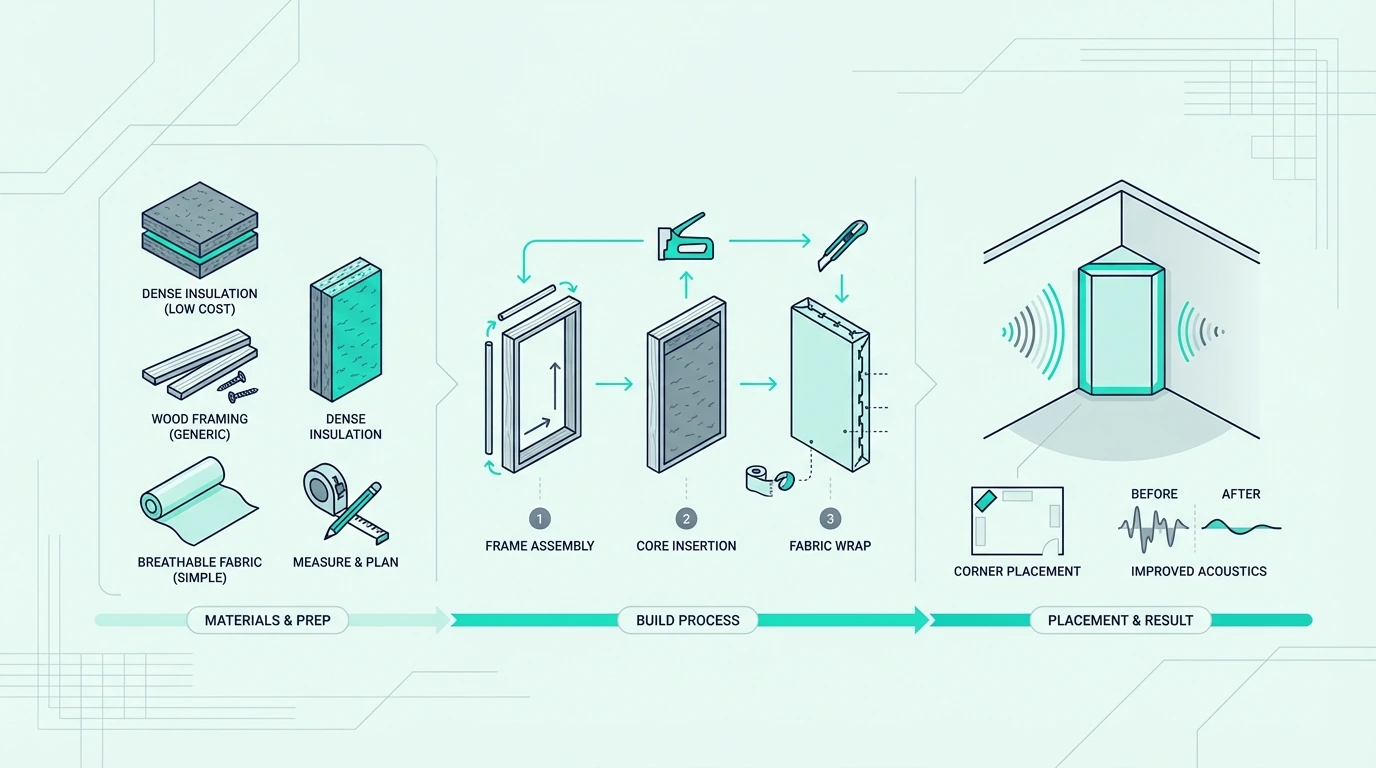
The cheapest effective bass trap requires zero woodworking — just stack insulation batts directly into the corner. Total cost: under $15 per corner.
What you need: – 2-3 Rockwool Safe’n’Sound batts (from a bag that treats multiple corners) – A utility knife for cutting (optional — batts can be folded or stacked as-is)
Step 1: Take a Safe’n’Sound batt and fold it diagonally, pressing the folded edge into the corner where two walls meet. The batt’s natural rigidity holds it in a triangular shape against the corner.
Step 2: Stack additional folded batts on top until you reach the ceiling or run out of material. Four batts stacked vertically covers roughly 6 feet of corner height.
Step 3: For a superchunk approach, cut batts diagonally with a utility knife to create triangular pieces that nest tightly into the corner. This fills more of the corner volume and improves low-frequency absorption below 100 Hz.
That’s it — no frame, no fabric, no hardware, with the walls holding the insulation in place and gravity keeping the stack compressed. If the stack leans, press a scrap piece of lumber across the front to hold it in position.
For a slightly more finished version, build a simple triangular frame from three pieces of 1×3 lumber and stretch muslin over it. Lean the fabric-covered frame against the corner to hide the insulation behind it.
DIY Bass Traps vs Commercial: Is Cheap Worth It?
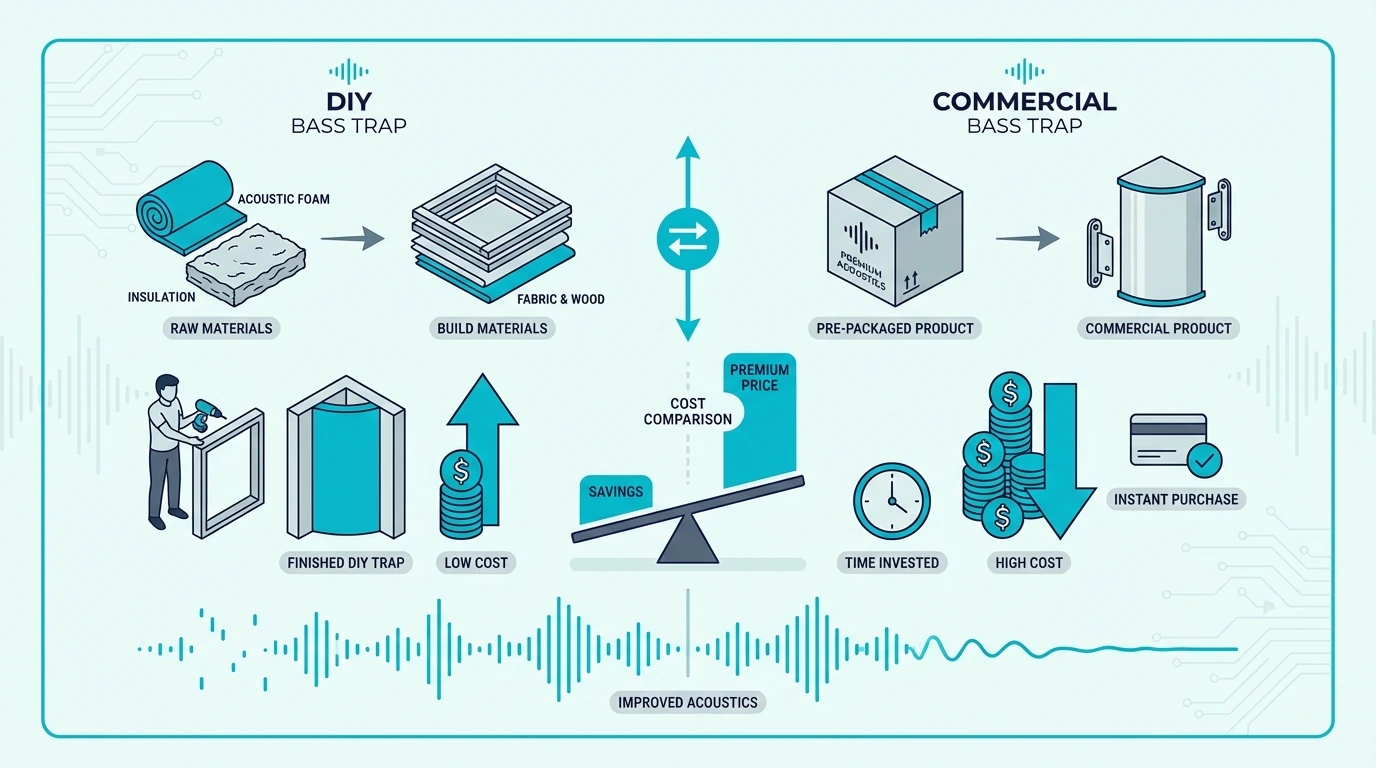
The cost comparison strongly favors DIY bass traps for anyone willing to spend a few hours building:
| Option | Cost Per Trap | Bass Performance | Appearance |
|---|---|---|---|
| DIY (no frame, insulation only) | $10-15 | Excellent | Poor |
| DIY (framed + muslin wrap) | $25-40 | Excellent | Good |
| Commercial foam | $50-80 | Moderate | Good |
| Commercial fiberglass | $120-200+ | Excellent | Excellent |
Commercial foam traps cost 3-5x more than DIY mineral wool traps but absorb less bass because foam is less dense. You’re paying for convenience and appearance, not better acoustic performance.
Rigid Mineral Wool vs Foam Traps
Rigid mineral wool at 4 inches thick absorbs meaningfully down to 200 Hz when corner-mounted, while acoustic foam at the same thickness only reaches roughly 400 Hz — a full octave higher. The foam simply lacks the density to interact with longer bass wavelengths.
Foam traps have one genuine advantage — zero construction required. The 4 Pack Bass Traps for Ceiling Corner installs in minutes with adhesive. If time matters more than performance, foam is a reasonable starting point.
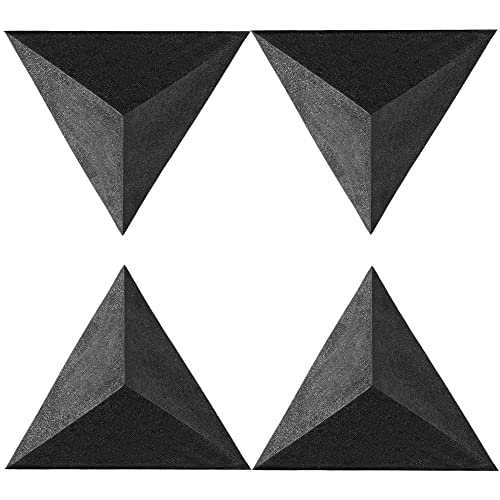
4 Pack Bass Traps for Ceiling Corner
For treating multiple corners on a budget, the 8 Pack Bass Traps Acoustic Foam Corner provides enough pieces to cover all four vertical corners.
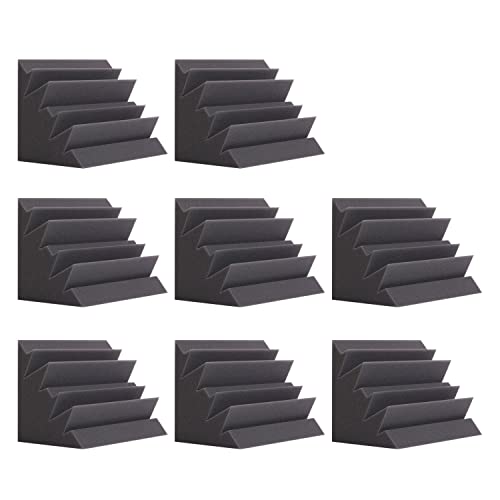
8 Pack Bass Traps Acoustic Foam Corner
Making Budget Bass Traps Look Good
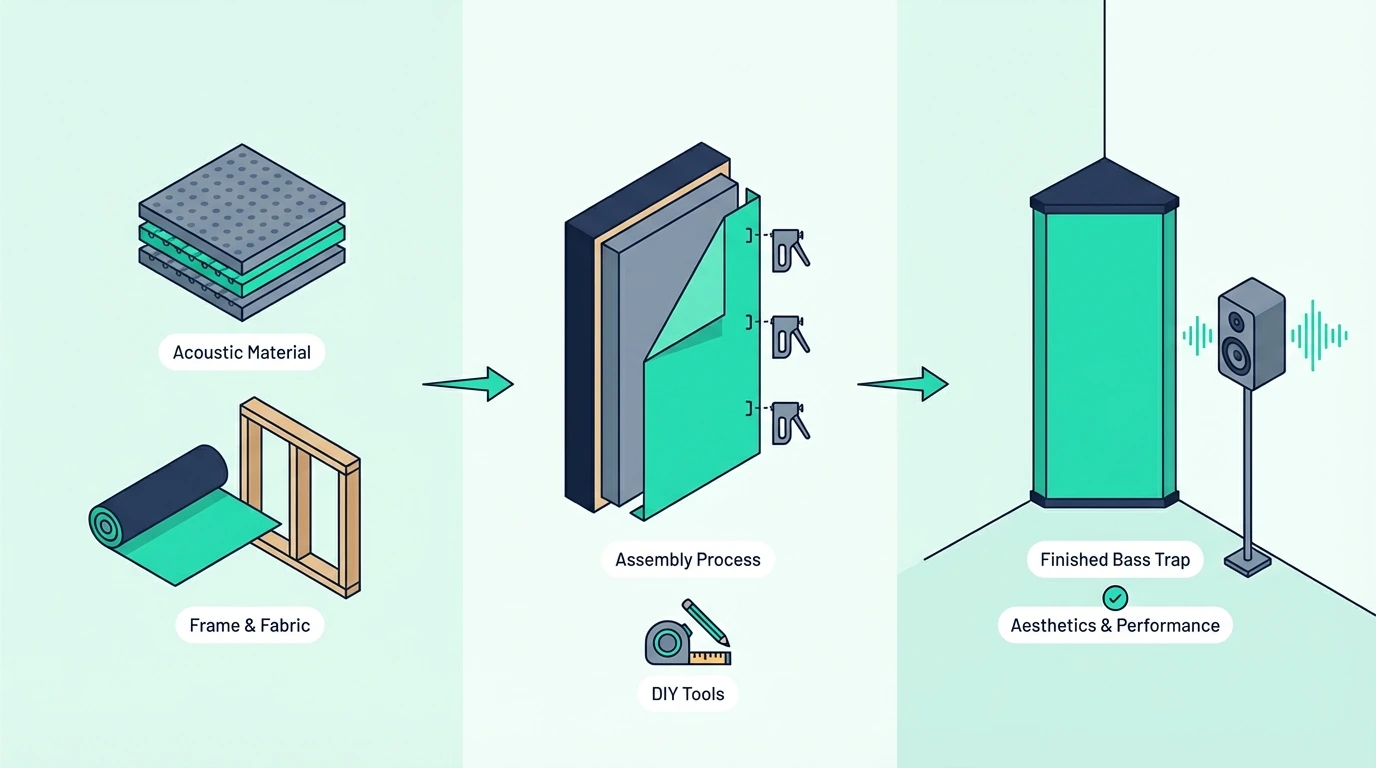
Raw insulation in corners looks terrible, but you can make budget traps presentable without spending much on aesthetics.
Muslin curtain ($5-10 total): Hang a strip of muslin fabric from the ceiling in front of the insulation stack using small cup hooks, and hem the muslin with iron-on tape for a clean edge. The muslin is acoustically transparent, so it doesn’t affect absorption.
Thrift store fabric ($2-5 per panel): Browse thrift stores for large fabric pieces — curtains, bed sheets, or tablecloths in solid colors work well. Stretch the fabric over a simple 1×3 lumber frame and lean or mount it in front of the corner treatment.
Simple wood frame ($8-12 per panel): Build a triangular frame from three pieces of 1×3 lumber, wrap it in muslin, and use it as a cover panel for the insulation behind it. The frame adds a finished, intentional look to what would otherwise be a pile of insulation in a corner.
Painting bass traps is another option once they’re wrapped — use latex paint applied lightly to the fabric surface to match your room’s color scheme without blocking sound transmission.
The Bottom Line
A diy cheap bass trap using Rockwool Safe’n’Sound costs under $15 per corner and absorbs as much bass as commercial panels costing ten times more. Stack insulation directly into corners for the fastest, cheapest build, or add a simple frame and muslin wrap for under $30 per trap with a polished appearance.
Skip household items like blankets and towels as your primary bass treatment — they help with general acoustics but don’t address the low frequencies where room modes cause the worst problems. Invest in proper mineral wool insulation and your bass traps will work as effectively as anything on the market.
Frequently Asked Questions
Can a blanket be a good bass trap?
A thick moving blanket provides some mid-frequency absorption when folded and placed in a corner, but it’s not an effective bass trap. Blankets lack the density and thickness needed to absorb below 300 Hz — they’re better used as supplementary treatment alongside proper mineral wool or fiberglass traps.
What is the cheapest effective bass trap material?
Rockwool Safe’n’Sound is the budget pick for real bass absorption. A single bag contains enough insulation to treat 4+ corners when doubled up to 6 inches thick — making the per-corner cost under $15.
Are cheap foam bass traps worth it?
Cheap foam bass traps absorb mid and high frequencies effectively but perform poorly below 200 Hz — the range where most room mode problems live. They’re worth it as a convenience upgrade over bare walls, but don’t expect them to solve genuine bass problems in your room.