Do Bass Traps Work For Outside Noise — Or Are You Solving The Wrong Problem?
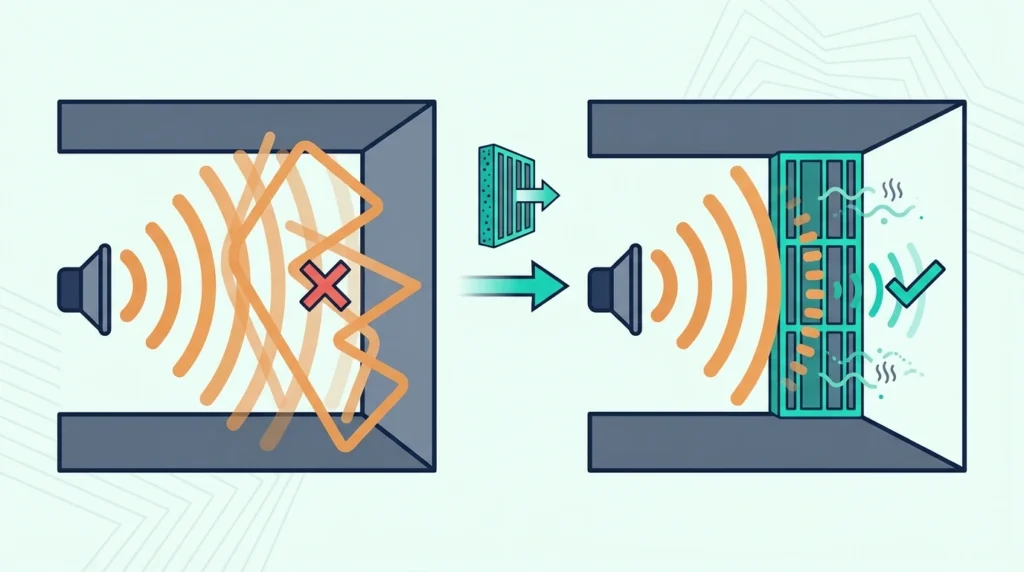
Do bass traps work for outside noise — not in the way most people expect, and confusing what bass traps actually do with what they don’t is the fastest way to waste money on acoustic treatment that won’t solve your problem.
Bass traps absorb low-frequency sound energy bouncing around inside your room. They tame standing waves, clean up muddy bass, and make your listening environment more accurate.
What they don’t do is stop bass from a neighbor’s subwoofer or highway traffic from entering your room in the first place. That’s a soundproofing problem, not an acoustic treatment problem — and the two require completely different solutions.
Below, this guide walks you through exactly what bass traps fix, what they can’t fix, whether foam traps hold up against fiberglass, and what actually works if outside bass noise is driving you crazy.
Bass traps work extremely well for treating internal room acoustics — standing waves, boomy corners, and uneven bass response. They do NOT block outside noise. If your problem is bass coming through walls from neighbors or traffic, you need mass-based soundproofing (dense drywall, decoupled walls, sealed gaps), not absorption. Bass traps and soundproofing solve different problems entirely.
Do Bass Traps Work For Outside Noise — And Why Does It Matter?
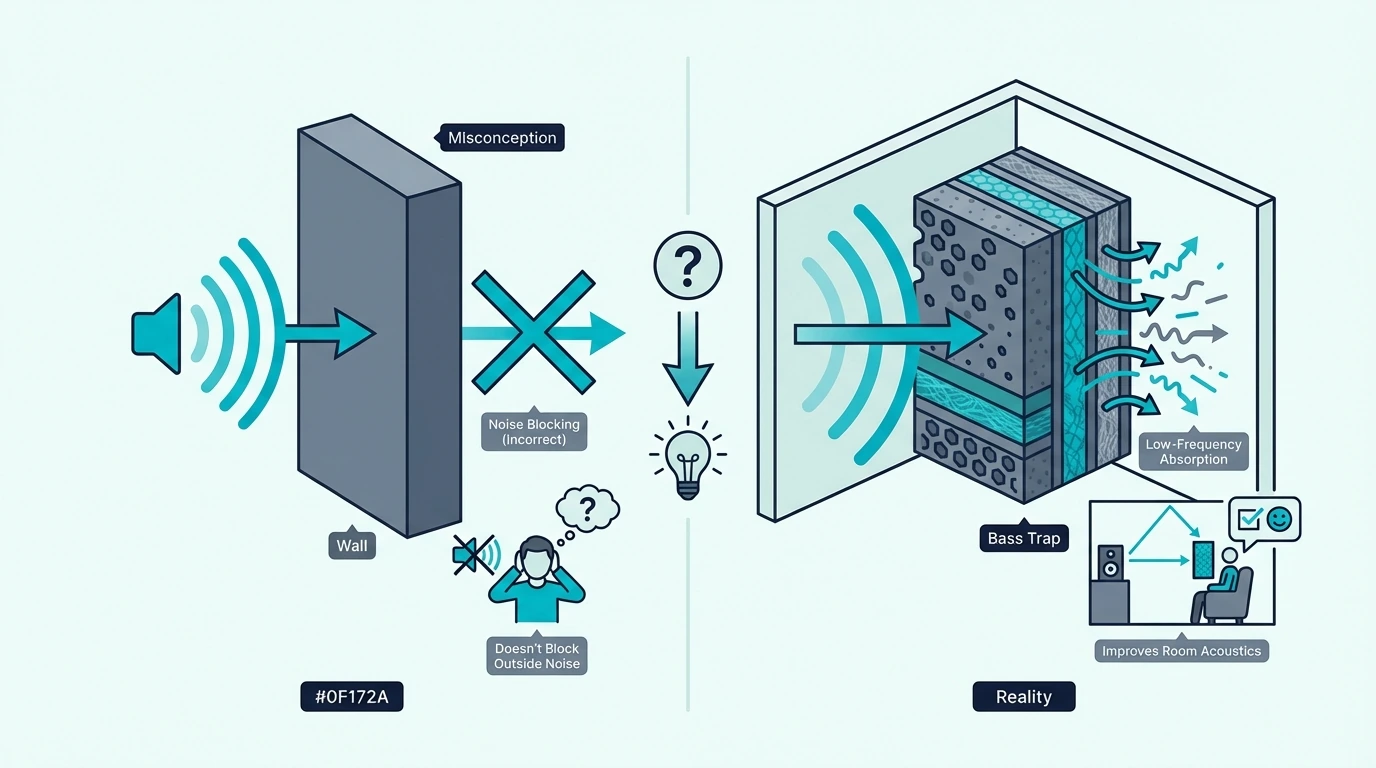
The confusion between bass traps and soundproofing costs people real money. Someone hears thumping bass from next door, buys corner foam traps, installs them, and wonders why nothing changed.
The Core Misconception
Sound travels through walls, floors, and ceilings by vibrating the structure itself. Low-frequency bass is especially good at this because long wavelengths carry more energy and pass through building materials that stop higher frequencies cold.
A bass trap sits inside your room and absorbs sound that’s already bouncing around between your walls. It reduces reflections, standing waves, and modal buildup — all internal acoustic problems.
But it can’t stop sound from entering the room through the structure. That’s like putting a sponge on your kitchen counter and expecting it to stop water from leaking through the floor below.
Absorption vs Isolation
Acoustic absorption and sound isolation are two fundamentally different things. Absorption converts sound energy into heat using porous materials — it makes a room sound better by reducing internal reflections.
Isolation blocks sound transmission between spaces using mass, decoupling, and sealed air gaps — it makes a room sound quieter by preventing external noise from getting in. Bass traps handle absorption; they have zero effect on isolation.
How Do Bass Traps Actually Reduce Low-Frequency Problems?
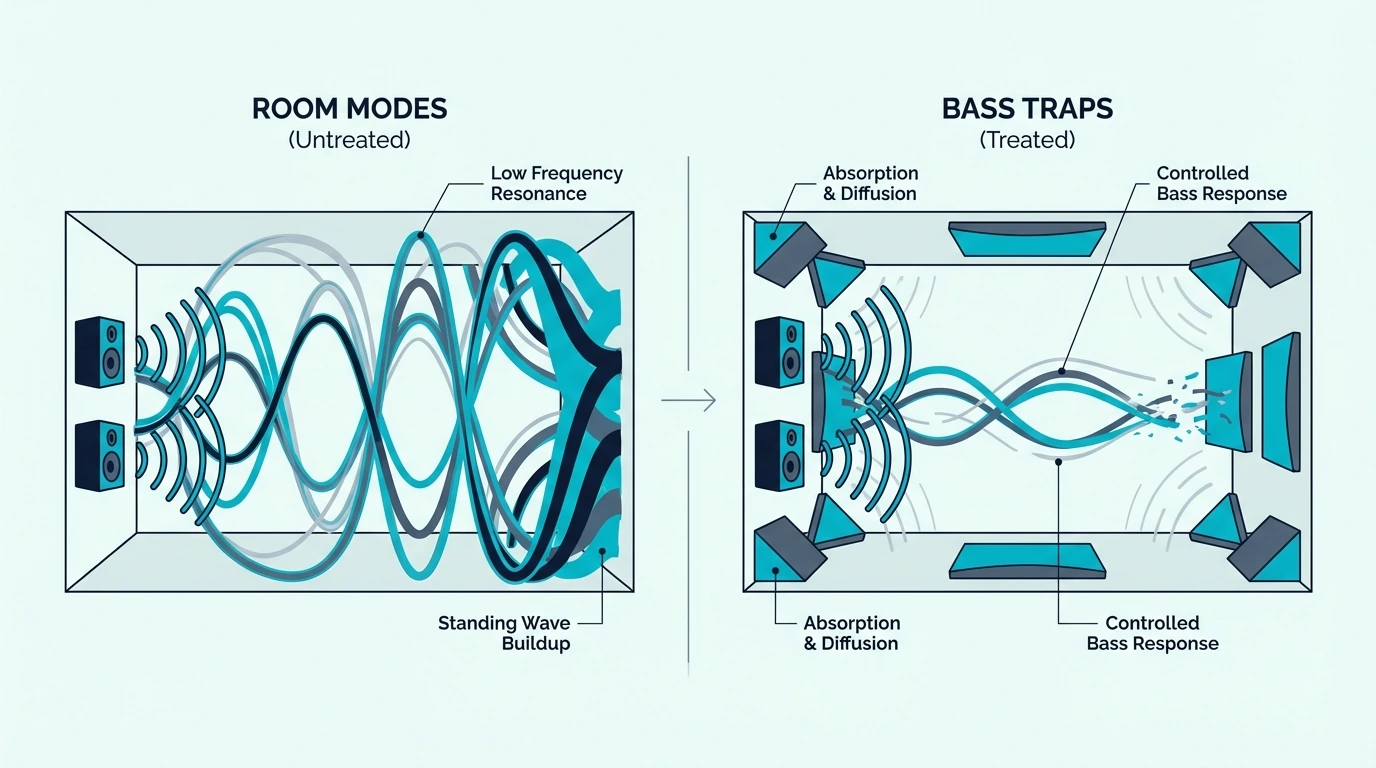
Understanding what bass traps actually fix explains why they’re so effective at their real job — even if that job isn’t blocking outside noise.
When you play music or speak in a room, low-frequency sound waves bounce between parallel surfaces. At certain frequencies determined by your room’s dimensions, the reflected waves overlap with the incoming waves and create standing waves — zones where bass is dramatically louder or quieter depending on where you stand.
These standing waves pile up in corners where two or three surfaces meet. A 15-foot room has a fundamental mode around 37 Hz, with harmonics at 74 Hz and 111 Hz that stack at specific frequencies in every corner.
Placing bass traps in those corners absorbs the excess pressure before it builds up. The result is flatter, more even bass response across your entire room — not less bass, but more accurate bass.
What Bass Traps Fix vs What They Can’t Fix
Bass traps fix standing waves, modal ringing, boomy low end, and uneven frequency response caused by your room’s geometry. They make mixing, recording, and critical listening dramatically more accurate.
They cannot fix sound transmission through walls, impact noise from footsteps above, HVAC rumble conducted through ductwork, or bass vibrations from a neighbor’s subwoofer. Those problems require structural solutions — added mass, decoupled construction, and sealed penetrations — and understanding whether bass traps are even necessary for your situation saves time and money.
The test is simple: if the problem exists even when nobody is playing audio in your room, bass traps won’t help. If the problem only appears when you’re playing or recording sound, bass traps are exactly the right tool.
Get Studio Tips Weekly
Join 5,000+ creators getting acoustic treatment advice every week.
No spam. Unsubscribe anytime.Can Bass Traps Block Outside Noise?
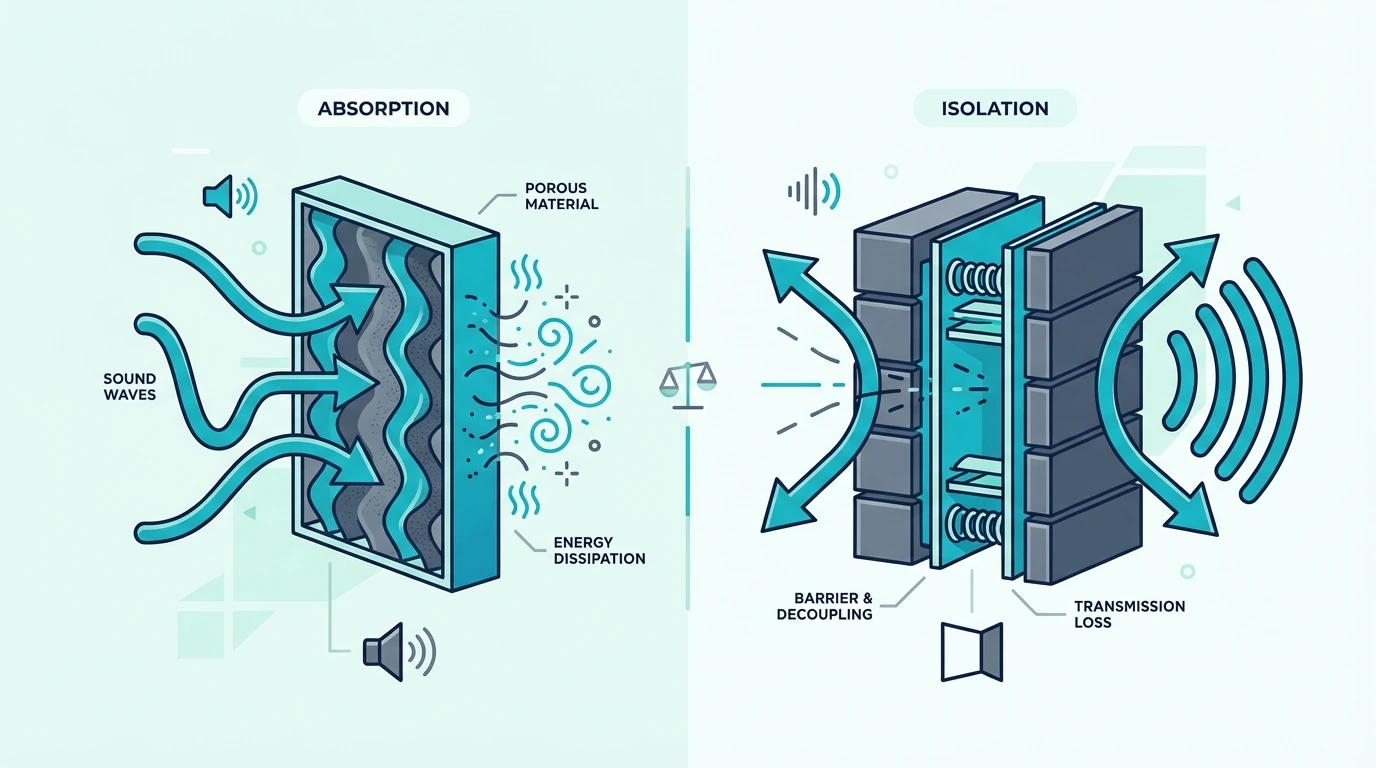
This is the question behind the primary keyword, and the direct answer is no — bass traps cannot block outside noise. Here’s the physics of why.
Sound transmission through a wall depends on the wall’s mass, stiffness, and how well it’s sealed. A 100 Hz bass note from a neighbor’s subwoofer vibrates your shared wall like a drum head, and that vibration re-radiates as sound on your side.
To stop that transmission, you need to either add mass (so the wall is harder to vibrate), decouple the surfaces (so vibration can’t transfer between layers), or both. Dense materials like Trademark Soundproofing mass-loaded vinyl, extra layers of 5/8-inch drywall, and resilient channel mounting systems address sound transmission.
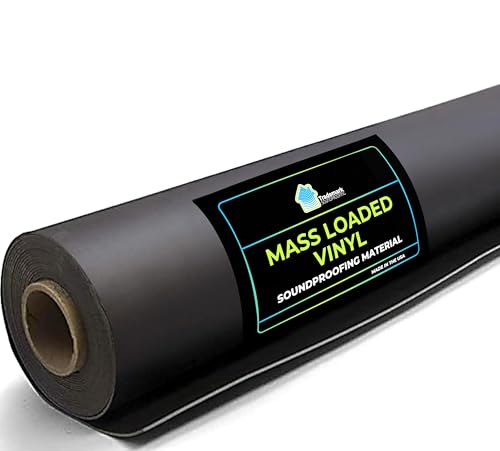
Trademark Soundproofing mass-loaded vinyl
A bass trap on your side of the wall absorbs reflected sound inside your room, but the original transmission still happens. The bass still enters — the trap just catches some of it after it’s already inside, which might reduce the perceived volume slightly but won’t solve the core problem.
If outside bass noise is your issue, start with sealing every air gap (outlets, door sweeps, window frames) — air gaps leak more bass than you’d expect. Then consider adding mass to the weakest surface, which is usually the door or window.
Do Foam Bass Traps Work As Well As Fiberglass?
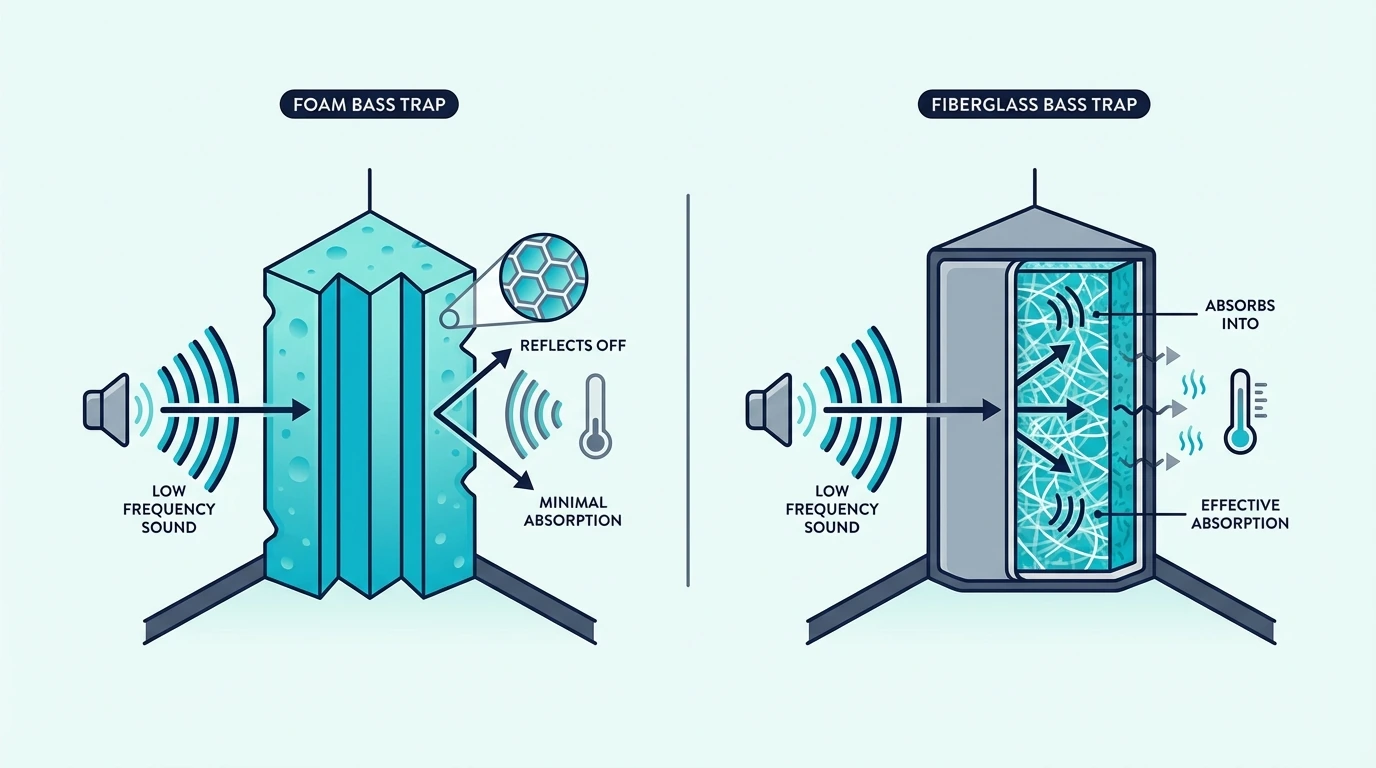
Foam bass traps work, but with a significant asterisk — they’re effective at mid-to-high frequencies and much less effective at actual bass frequencies below 200 Hz.
The triangular foam wedges you see marketed as “bass traps” typically absorb well from about 250 Hz upward. Below that, their density is too low and their thickness too shallow to interact meaningfully with long bass wavelengths.
Rigid fiberglass (like Owens Corning 703 or 705) and mineral wool (like Rockwool) are denser, which means more friction when sound passes through the material. A 4-inch rigid fiberglass panel absorbs meaningfully down to 100 Hz, while foam of the same thickness drops off sharply below 250 Hz.
That said, foam options like the 2 Pack Delta Bass Traps for Wall Corners still clean up the 250-500 Hz muddiness range in your corners. For budget-conscious setups where full fiberglass treatment isn’t feasible, foam traps combined with proper placement in tri-corners deliver noticeable improvement — just not deep bass control.
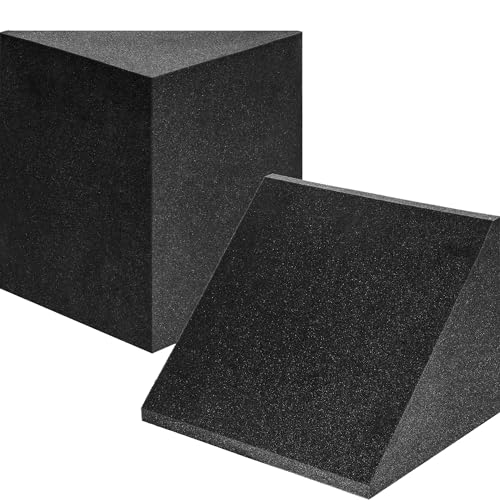
2 Pack Delta Bass Traps for Wall Corners
The honest recommendation: if your budget allows, go with rigid fiberglass or mineral wool at 4+ inches. If not, foam traps are better than nothing and far better than untreated corners.
Do Cheap Bass Traps Work?
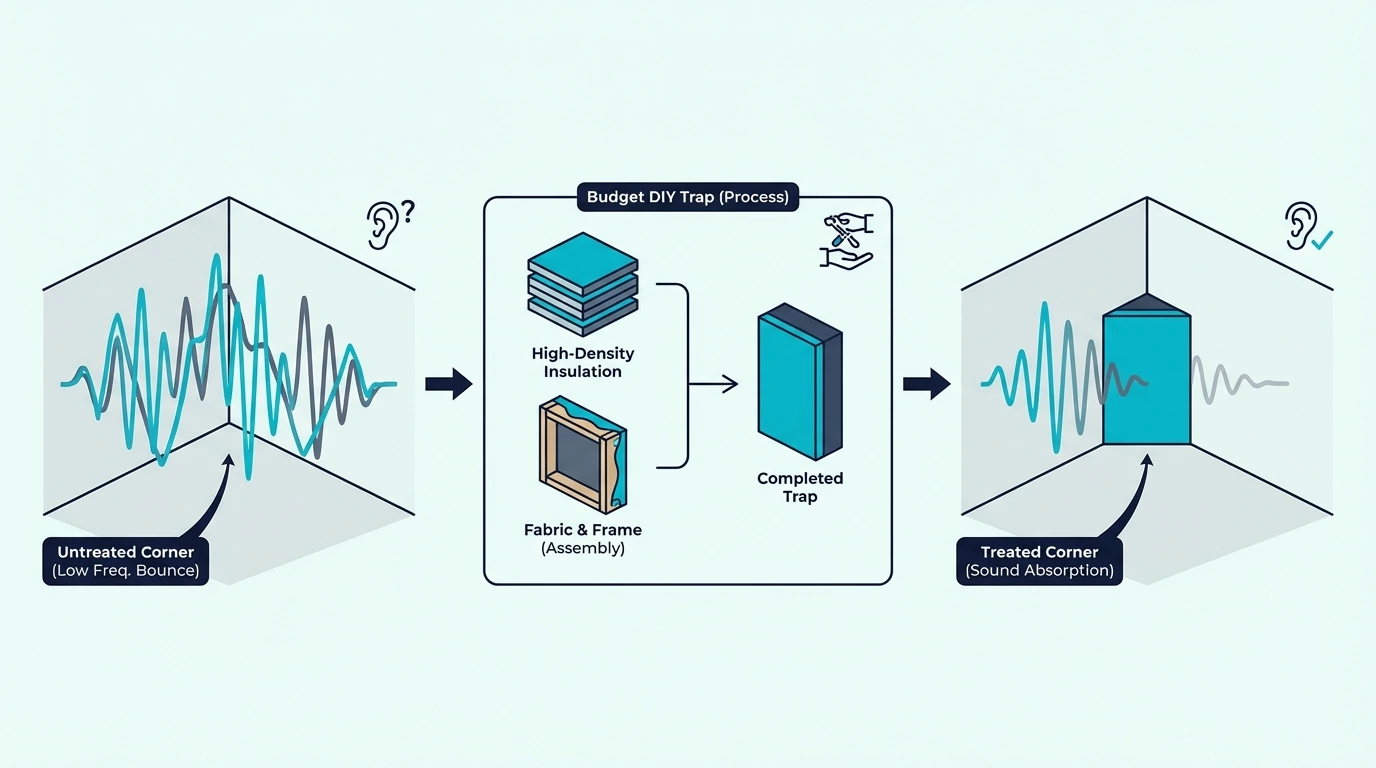
Cheap bass traps work — up to a point. The question is whether that point solves your specific problem.
Budget foam traps can still make a modest room sound cleaner, especially when you’re fighting upper-bass buildup in small corners. You’ll hear reduced muddiness, tighter vocal clarity, and less boxiness long before you solve true sub-bass problems.
But if your problem is a booming 60 Hz room mode that makes mixing impossible, those budget foam traps won’t reach that low. You’d need thicker treatment — 4-6 inches of rigid fiberglass or mineral wool, ideally with an air gap behind it.
The diminishing returns curve for bass traps is steep — going from zero treatment to basic corner traps delivers the biggest jump in quality. Going from basic foam to professional fiberglass yields a smaller but real improvement, while upgrading from good fiberglass to premium custom traps yields marginal gains that only matter in critical listening environments.
For home studios, the sweet spot is usually real depth and density in the corners, such as an ATS Acoustics 2-inch mineral wool panel straddled across each corner. A dense panel with an air gap behind it handles everything from low bass through the midrange far better than thin foam wedges, which is why stepping up pays off once accuracy matters.
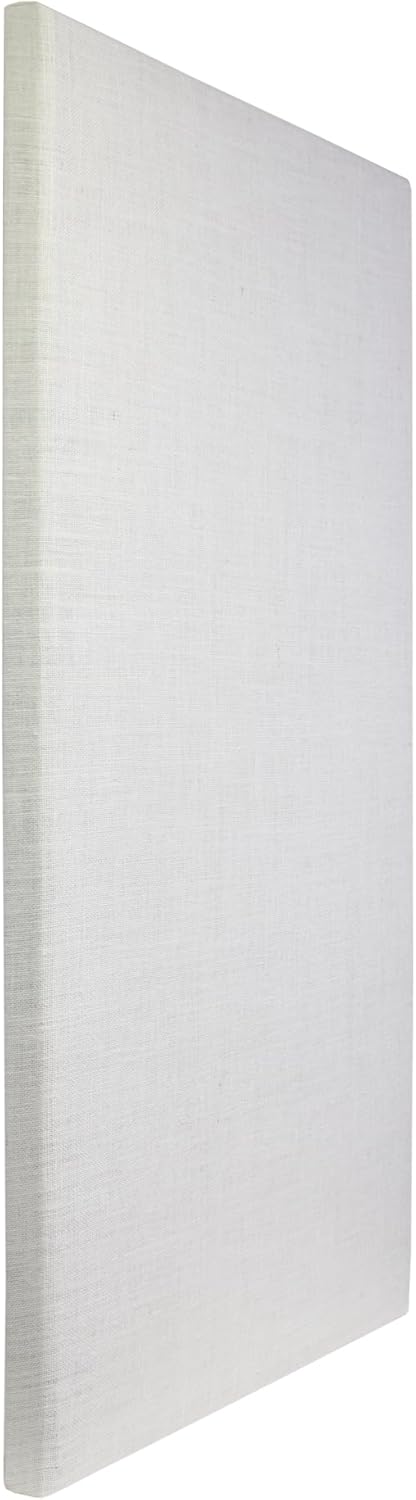
ATS Acoustics 2-inch mineral wool panel
The Bottom Line
Bass traps are one of the most effective acoustic treatments you can add to any room — but only for the problems they’re designed to solve. They tame internal room acoustics brilliantly and have zero effect on outside noise transmission.
If your room sounds muddy and boomy, bass traps are the answer. If your neighbor’s subwoofer is the problem, you need mass and isolation — not absorption.
Frequently Asked Questions
Do bass traps reduce noise?
Bass traps reduce internal acoustic problems — standing waves, boomy corners, and uneven bass response inside your room. They do not reduce noise from external sources like traffic, neighbors, or construction because that requires sound isolation, not absorption.
Where not to put bass traps?
Avoid placing bass traps flat against the center of a wall — bass energy is weakest there, and corners where two or three surfaces meet are where bass pressure accumulates most. Also avoid blocking HVAC vents or placing foam traps near heat sources.
How to reduce bass noise from neighbours?
Bass from neighbors travels through your shared wall structure, so you need mass-based solutions — not acoustic treatment. Add layers of 5/8-inch drywall with Green Glue between them, seal every air gap around outlets and door frames, and consider resilient channel mounting to decouple the new drywall from the existing wall.