Does Green Glue Soundproofing Work? What the Tests Show
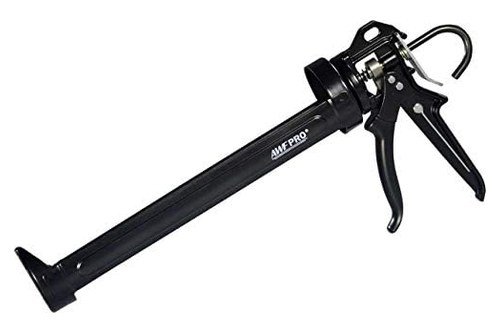
- ✓ Sold as a 29 oz caulk gun for industry-standard cartridges, per the listing
- ✓ 18:1 thrust ratio for thick caulks and adhesives, per the listing
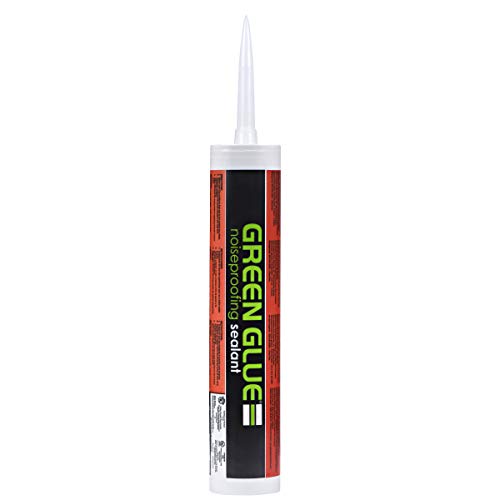
- ✓ An acoustical sealant by the Green Glue Company, per the listing
- ✓ Made to seal gaps at any break in the building, per the listing
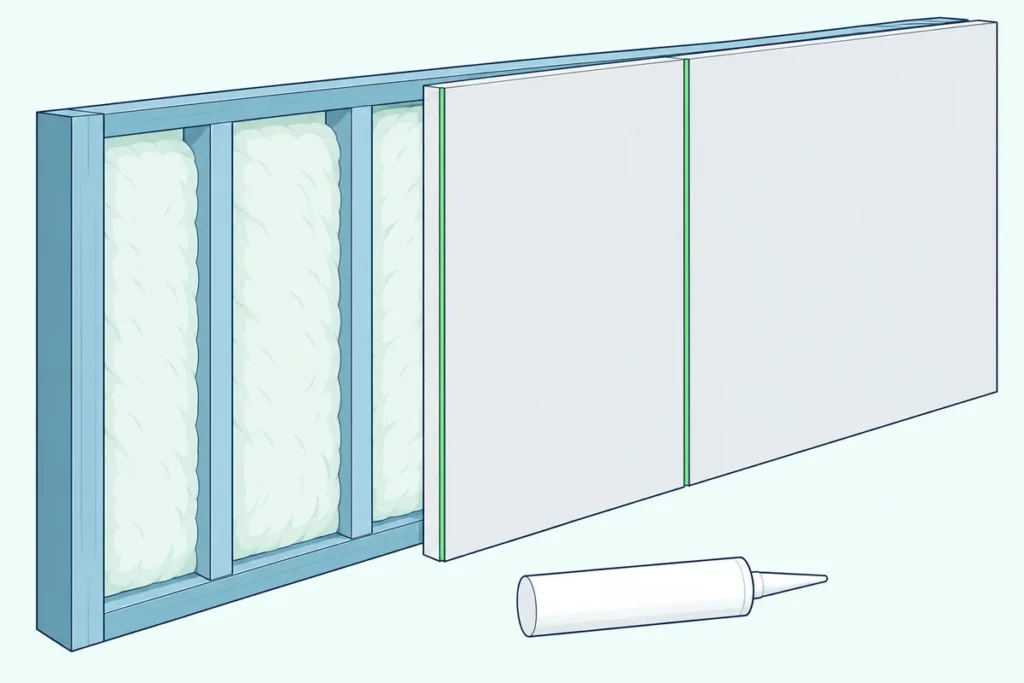
If you’re asking does Green Glue soundproofing work, an independent lab test of a damping compound like it says yes, but only as a layer screwed between two rigid sheets such as drywall.
Spread it on a single wall, use it as glue, or leave the gap under the door open, and you’ll pay for tubes that change almost nothing you can hear.
That test was at the National Research Council of Canada, where a wood-stud wall with two layers of 5/8-inch drywall on each side rated 8 STC points higher with the compound between the layers than without it.
This guide starts with that result, then explains what damping does to a wall and where it stops.
After that come the tube count, the 30-day cure and the three things you’ll actually buy, so you can tell whether your wall is ready for it.
Does Green Glue Soundproofing Work in Lab Tests?
Those 8 points are an independent result, from the National Research Council of Canada. A damping compound like Green Glue does work in the lab: in NRC’s test, a viscoelastic compound between two layers of 5/8-inch drywall on each side of a wood-stud wall raised the Sound Transmission Class (STC) from 44 to 52.
STC is the single number labs use for how well a wall blocks airborne sound, so higher is better. The table puts NRC’s wall with and without damping side by side.
| Wall, two layers of 5/8-inch drywall each side | Without damping | With damping | Who tested |
|---|---|---|---|
| 2×4 wood studs 24 in. apart, glass fiber batts | STC 44 | STC 52 | NRC Canada, compound not named |
The row comes from the National Research Council of Canada’s 2011 paper, which put a viscoelastic damping material between the gypsum layers and measured more than 10 dB more loss in the mid and high frequencies. NRC measured both walls to the ASTM E90 lab standard and didn’t name the compound.
So in that test, damping was worth 8 STC points with everything else about the wall unchanged. Each condition behind that number is also a way to lose it.
How Does Green Glue Work Between Two Layers of Drywall?
Every wall in that table had two rigid sheets on each side, and the product depends on that. Green Glue works as a constrained-layer damper: sandwiched between two sheets, it gets sheared every time the wall flexes, and the shearing turns vibration energy into a tiny amount of heat.
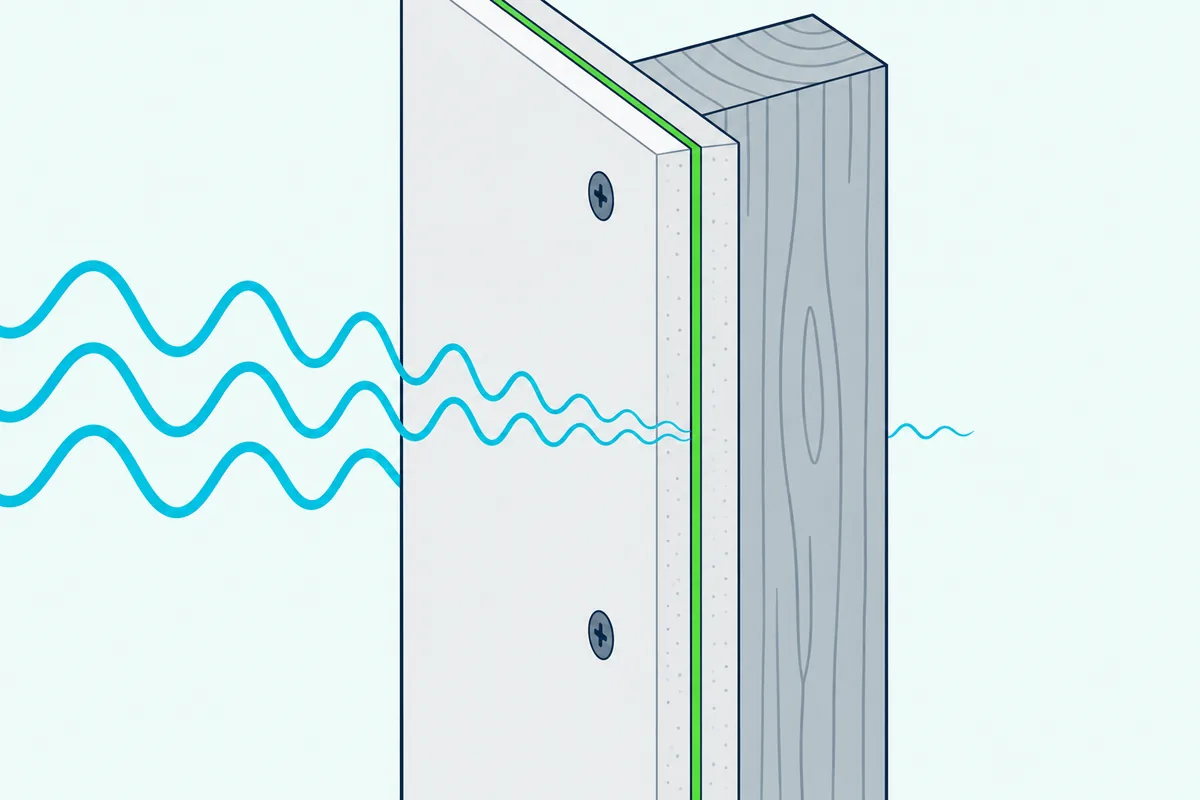
Think of two hands pressed together with honey between them: rub them and the honey resists, so less of the motion carries through.
That’s why it needs a partner layer. Green Glue’s data sheet says it must go between two rigid layers, one of them porous like drywall, plywood or OSB, and that it isn’t a sealant or an adhesive, so the sheets still need screws.
NRC Canada’s Canadian Building Digest 239 explains where damping pays off. Stiff panels have a coincidence dip, a band where they pass sound far more easily than their weight predicts, and the more energy a panel loses, the shallower that dip.
In NRC’s 2011 test, both walls kept the same critical frequency, 2,000 Hz. The compound added losses without making the boards any stiffer.
Why Does Construction Adhesive Make a Wall Worse?
That point about stiffness explains the most common substitution. Construction adhesive makes a wall worse because it bonds the two sheets into one stiff panel, while the damping layer in NRC’s test left the boards’ stiffness unchanged.
CBD-239 gives the physics. Layers glued firmly together behave like one thick layer with a lower coincidence frequency, while layers held with screws keep their own and lose a little extra energy to friction.
Green Glue’s data sheet says not to use the compound together with construction adhesive at all.
Where Does Green Glue Stop Helping?
Choosing the right compound still leaves the rest of the wall. Green Glue stops helping wherever sound goes around the damped sheets, through a gap, through the studs, or through the floor and ceiling, because the compound only treats the panel it sits in.
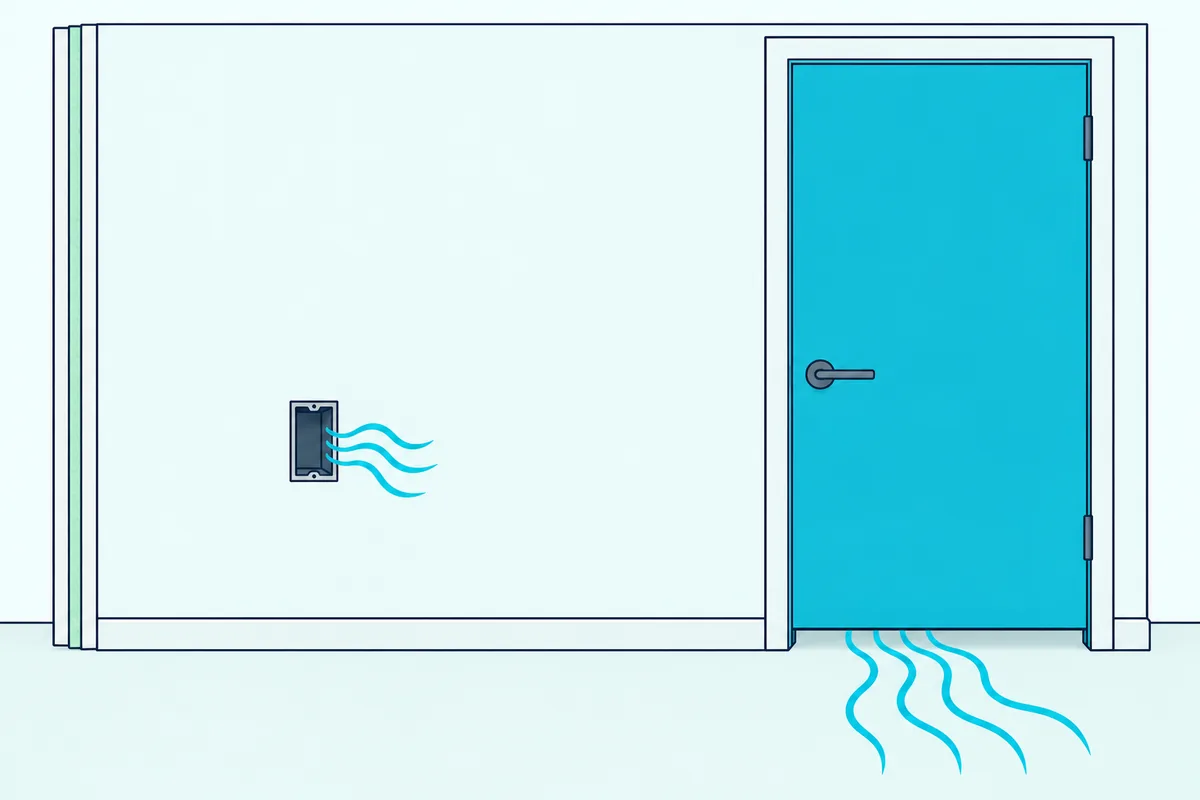
Gaps come first. In Green Glue’s sealant data sheet, a reference wall rated STC 24 before the sealant went on and STC 41 after, a bigger jump than damping gives a well-built wall.
For the sealing and door work that comes before the second layer, see which soundproofing jobs you can do yourself.
Studs come next. CBD-239 puts the usual single-family partition, drywall screwed straight to both sides of wood studs, at about STC 33, and insulation adds only about 3 points because sound crosses through the studs.
Damping doesn’t cut that rigid path, which NRC likens to an electrical short circuit. Decoupling does, which is why soundproofing an existing wall often means a damped layer plus a look at how the drywall is attached.
Does Green Glue stop bass?
It helps, but bass is where the limits show. In NRC Canada’s test, the damped wall filled in the bare wall’s deep dip at 100 Hz, yet at 80 Hz and below the two curves almost overlap.
CBD-239 explains why. Doubling a wall’s weight adds only about 6 dB, and a double wall has an air-spring resonance designers keep below 80 Hz, so the deepest bass needs mass and a well-built double wall, not damping alone.
How Much Green Glue Do You Need per Sheet?
Once the leaks and the frame are handled, the tube count decides how much of the lab result you get. Plan on two tubes per 4 by 8 foot sheet: the compound’s listing puts each 28 fl oz tube at 16 square feet, and its installation guide adds that three improve low frequencies around the wall’s main resonance.
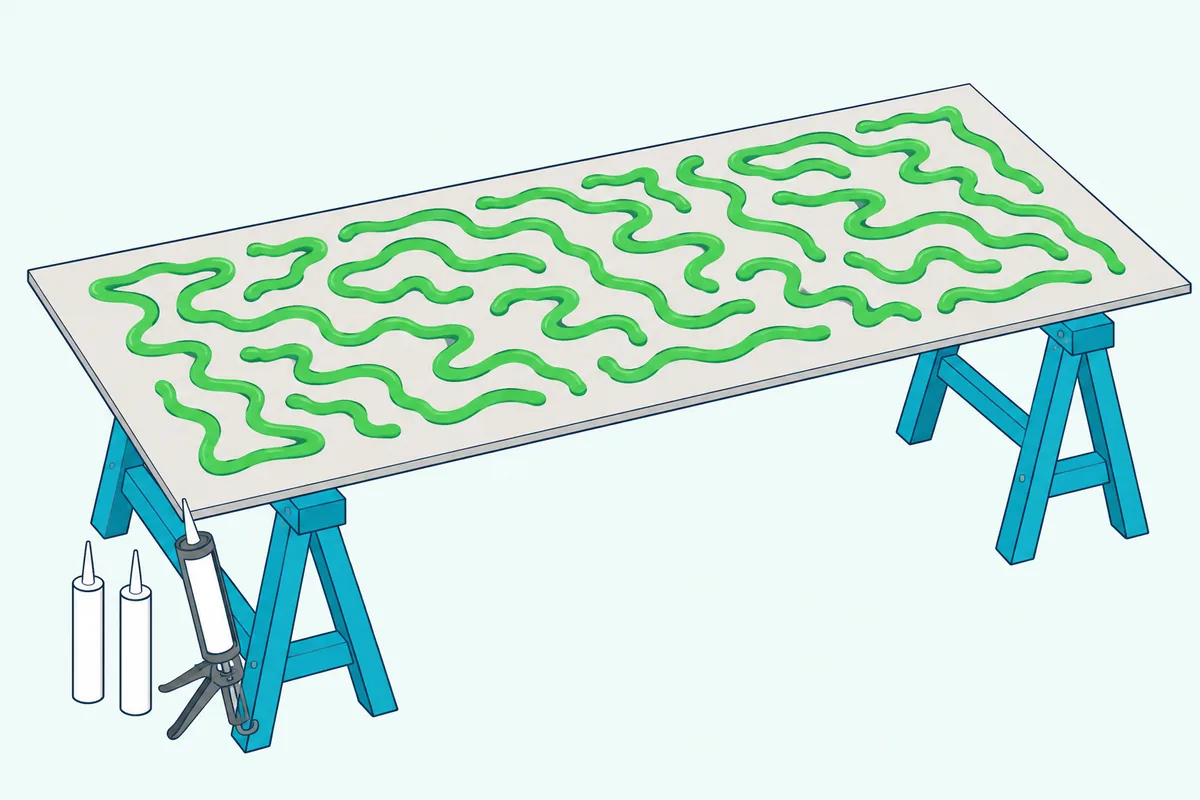
The installation guide Acoustical Surfaces publishes says not to go past three tubes, because too much compound lowers performance.
For a whole wall, the data sheet puts one 28 fl oz tube at 16 to 32 square feet. A wall 8 feet high and 12 feet long is 96 square feet, so it takes three sheets and six tubes at two per sheet, on each side you treat.
Ceilings work the same way. Soundproofing a ceiling under a noisy floor usually adds decoupling to that damped layer.
How do you apply it?
Once the first layer is up, Green Glue’s data sheet gives this order:
- Cut the nozzle to about 3/8 inch and apply the compound in a random pattern across the back of the second sheet, leaving a 2 to 3 inch border.
- Lift the sheet into place and screw it off within 15 minutes, before the compound starts to cure.
- Seal the cracks and seams with an acoustical sealant.
The 15-minute window and the screws are what you can’t skip.
When Does Green Glue Reach Full Strength?
That last step starts a slow clock. Green Glue reaches full strength after about 30 days: its data sheet lists a 30-day curing time, and the installation guide says sound isolation won’t start to improve until after 7 to 10 days of drying, longer in humid or cold rooms or with several layers.
So don’t judge the wall the morning after, and keep the building between 60 and 80°F, as the data sheet asks. The 48 hours you may have read about is the sealant’s drying time before mud or paint, not the compound’s.
Is Green Glue Worth It Compared With Other Options?
A month of curing is a fair trade if the numbers beat the alternatives. Green Glue is worth it when you’re already adding a second layer of drywall, because in NRC Canada’s test a damping layer added 8 STC points to a wall that already had two layers on each side.
If you’re weighing mass-loaded vinyl instead, does MLV soundproofing work covers where it fits.
Factory-damped drywall is the closest alternative. National Gypsum’s SoundBreak XP, for one, is two gypsum boards laminated with a viscoelastic polymer, and soundproof drywall vs regular drywall compares that route with plain board.
The cost side is easy to plan: one more sheet per sheet already on the wall, about two tubes for each, a caulk gun, sealant, and a month before you judge. It isn’t worth it for echo, since the data sheet says the product reduces sound between rooms, not how a room sounds.
Which Green Glue Products Do You Actually Need?
That shopping list is short. You need three things beyond the drywall and screws: the compound, a quart-size caulk gun and an acoustical sealant for the seams.
For the layer between the sheets, Green Glue Noiseproofing Compound comes in 28 fl oz tubes. Count two per sheet, as in the wall example above.
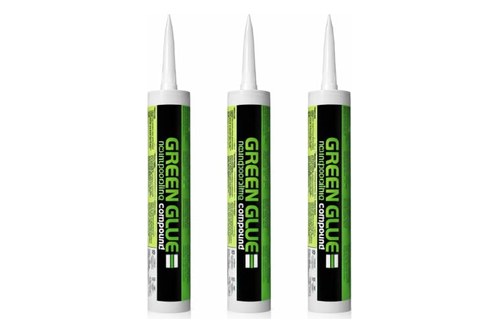
Green Glue Noiseproofing Compound
For those 28 fl oz tubes, AWF PRO’s Heavy Duty Caulk Gun is sold as a 29 oz gun. Its thrust ratio is built for thick material.
AWF PRO’s Heavy Duty Caulk Gun
For the perimeter and seams, use a tube of Green Glue noiseproofing sealant, not the compound. It’s the kind of product behind that STC 24 to 41 jump.
tube of Green Glue noiseproofing sealant
The Bottom Line
Green Glue can earn the kind of 8-point gain NRC measured only when it sits between two screwed-on sheets. It won’t fix a leak, a rigid stud path, the deepest bass or echo.
Seal the gaps first, decide whether the wall also needs decoupling, then use two tubes per sheet and give it 30 days. For the full picture, how mass, damping and decoupling work together puts the three in order, and Burton Acoustix’s room-within-a-room build combines them in one room.
Frequently Asked Questions
How long does Green Glue last?
Unopened, Green Glue’s data sheet gives the compound a shelf life of one year. Once it’s in a wall, the data sheet doesn’t say how many years the damping lasts. The data sheet does say it needs 30 days to cure, with the building kept between 60 and 80°F after installation.
Can you use Green Glue on a single layer of drywall?
No. Green Glue’s data sheet says the compound must go between two rigid layers. On an existing wall, the old drywall can be the first layer: spread the compound on the back of a new sheet and screw it over the top. A single sheet with compound on its face has nothing to constrain the layer, so it can’t shear and turn vibration into heat.
Does Green Glue have a smell?
A mild one while you apply it. The installation guide Acoustical Surfaces publishes says Green Glue isn’t odorless, compares the smell to fresh paint and recommends keeping the room ventilated. Green Glue’s data sheet lists the odor as mild, none after drying, and the guide says the smell won’t linger on furniture, clothing or carpet.
Does Green Glue work in floors?
It can, between two layers of subfloor. For footsteps, soundproofing between floors covers the ceiling-side fixes that add to that.