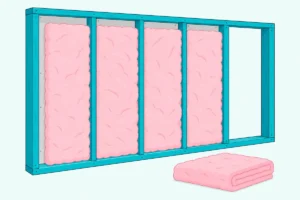
How to Soundproof a Wall, Including Existing Walls
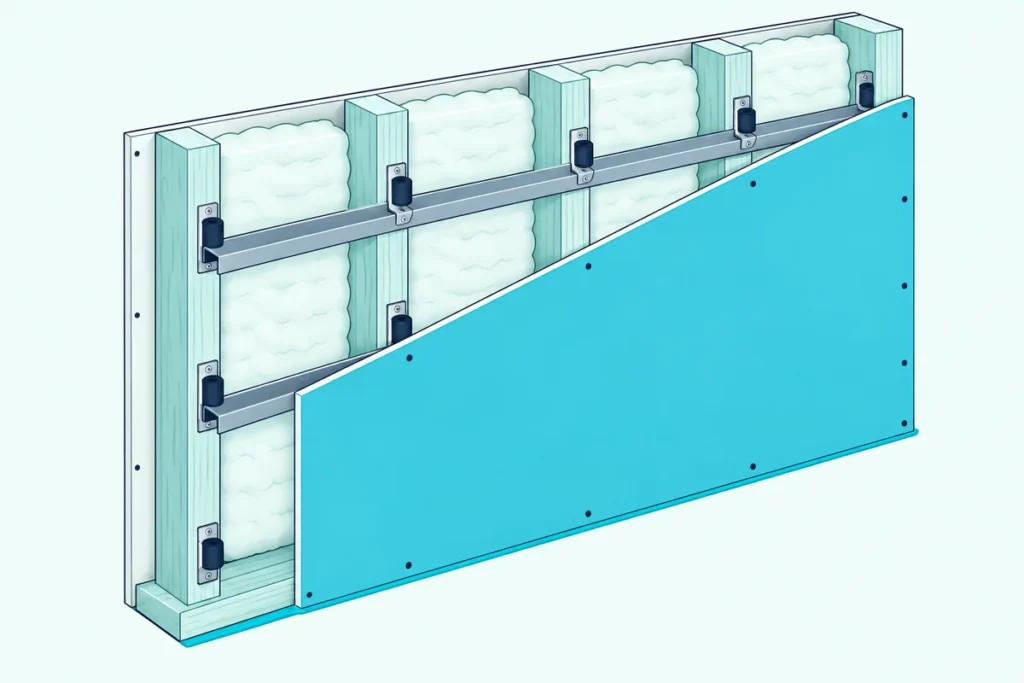
Learning how to soundproof a wall comes down to three jobs: seal the gaps, add mass and damping, and break the path through the studs.
That matters because drywall fastened straight to wood studs rates only about STC 33, low enough that loud speech next door stays fairly easy to follow.
Foam, blankets and soundproof paint barely move that number, yet walls rebuilt on resilient channels or clips reached the 50s in the makers’ own lab tests.
This guide ranks each upgrade by the STC gain that NRC Canada and gypsum, insulation and clip makers measured, from caulk at the baseboard to a damped second layer.
Start with the step order, then jump to the section for your wall, whether it’s finished, shared with neighbors or about to be rebuilt.
How to Soundproof a Wall in Six Steps
Those three jobs happen in a fixed order, and the table below puts a tested number on each step. To soundproof a wall, seal every air gap first, add a damped layer of drywall to the face you can reach, fill the cavity if it’s empty, and rebuild one face on resilient channels or sound clips if voices or bass still get through.
| Step | What to do | What the tests credit it with |
|---|---|---|
| 1 | Find where the sound gets through | Lab ratings are an upper limit, because buildings add side paths (ASTM E90) |
| 2 | Seal gaps at baseboards, trim, outlets and pipes | A 1-inch-square hole, or a 16-inch crack 1/16 inch wide, takes an STC 50 wall to 40 (HUD) |
| 3 | Add a damped layer over the drywall | A 2×4 wall with damped board added to one face rated STC 36 to 45 (National Gypsum) |
| 4 | Fill an empty cavity | About 3 points in an ordinary wall, about 8 once a face is decoupled (NRC Canada) |
| 5 | Rebuild one face on channels or clips | Insulated 2×4 walls rated 48 to 51 on channels and 58 on clips (NRC, ROCKWOOL, National Gypsum, PAC) |
| 6 | Frame staggered or double studs | About STC 50 staggered and 57 on two rows of studs, insulated (NRC Canada) |
Steps 1 to 3 keep the drywall you have, and sealing is often the only step a renter can take. Steps 4 to 6 open the wall or add framing, which is where the large numbers come from.
Order matters because one leak caps every upgrade after it, like double glazing on a window left open a crack.
How Does Sound Get Through a Wall?
That order follows the three ways sound crosses a wall. Sound gets through as air pressure that shakes the drywall, as vibration that crosses the studs to the far face, and through gaps and neighboring surfaces that let it skip the wall entirely.
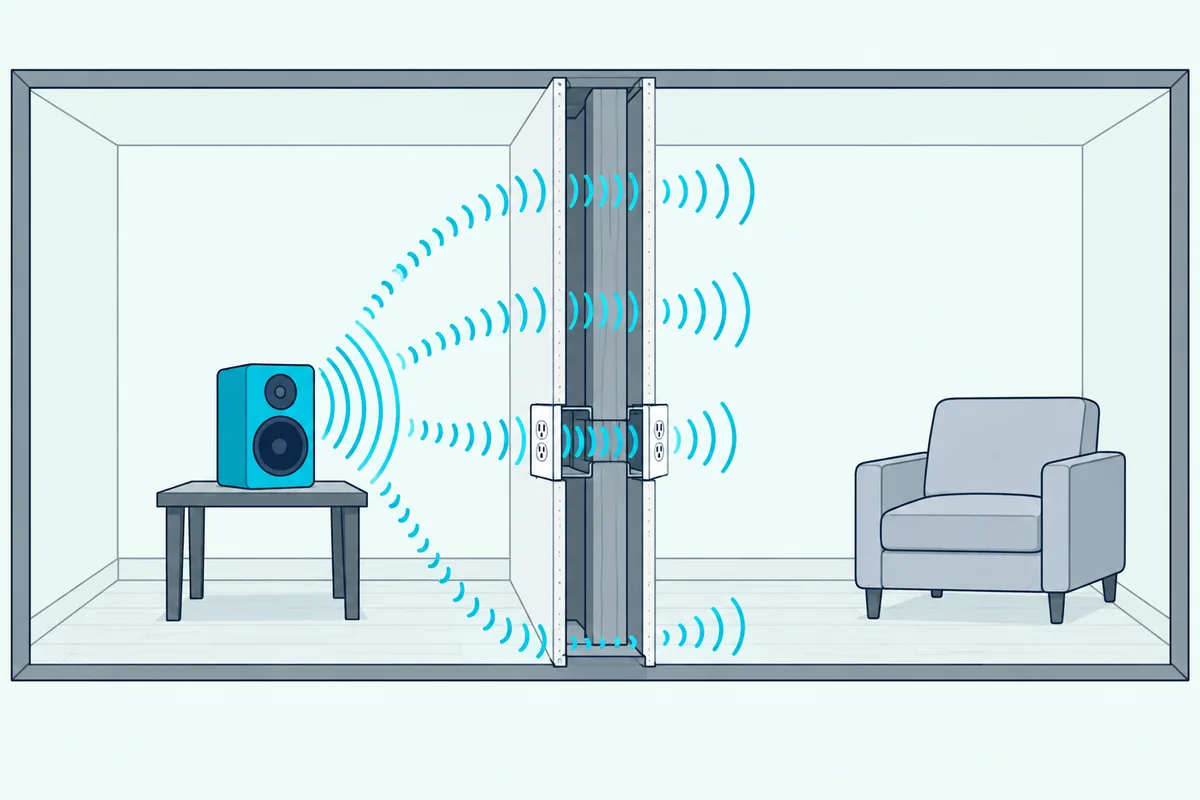
NRC Canada’s Building Digest 239 explains the first path with the mass law: each time a single layer’s weight doubles, its transmission loss rises by about 6 dB. Gaining 12 dB that way takes four times the weight, which is why better walls use two separated layers instead.
The studs are the second path. The same digest calls rigid connections between the two faces “the acoustical equivalent of an electrical short circuit” and rates the common house partition, drywall fastened straight to both sides of wood studs, at about STC 33.
Pitch decides how hard the job is. NRC’s Warnock wrote that low frequencies pass through walls much more easily than high ones, which is why bass guitar and drums are usually what you hear from the next apartment.
Side paths finish the picture. CBD-239 notes that in a poor design, sound traveling around a wall through the surrounding construction can carry more energy than the wall itself, so voices from everywhere implicate the ceiling and floor, and so do footsteps, which NRC’s CBD-236 describes as vibration carried through the structure.
Get Studio Tips Weekly
Join 5,000+ creators getting acoustic treatment advice every week.
No spam. Unsubscribe anytime.What Do STC Ratings Mean for a Wall?
Those paths are what an STC rating sums up in a lab. STC (sound transmission class) is one number for how well a wall blocks airborne sound, built from its transmission loss in 16 bands from 125 to 4,000 Hz, and HUD’s Noise Guidebook describes it as roughly the decibels the wall takes off a sound.
The National Bureau of Standards’ Handbook 119 translates the numbers into what you’d hear:
| STC | What you’d hear through the wall | Example wall in the handbook |
|---|---|---|
| 30 | Normal speech audible but not intelligible | 3/8-inch drywall on one side of 2×4 studs |
| 35 | Loud speech audible and fairly understandable | 5/8-inch drywall on both sides of 2×4 studs |
| 40 | Loud speech audible but not intelligible | Two layers of 5/8-inch drywall per side |
| 45 | Loud speech barely audible | Staggered studs, two layers per side |
| 50 | Shouting barely audible | Resilient channels on both sides of 2×4 studs |
| 55 | Shouting not audible | Metal studs, glass fiber, two layers per side |
The same handbook puts most interior walls in a typical home or apartment at STC 30 to 35. California’s building code asks for STC 50 between apartments in a lab test, or NNIC 45 measured on site.
For a room that holds calls, the wall targets federal offices use put a number on enough. The GSA’s office guide sets STC 40 for normal speech privacy and STC 45 for confidential conversations.
Two limits apply to every number here. STC uses only bands from 125 Hz up, and ASTM’s lab method, E90, calls its ratings an upper limit to what the same wall measures in a building.
Which Gaps Leak the Most Sound?
Lab walls are sealed at every edge, so the first job on a real one is finding its gaps. The worst leaks are usually along the edges at the floor, ceiling and corners, then at back-to-back outlets, pipes and cabinets, and HUD’s guidebook warns that a one-inch-square hole or a 1/16-inch crack 16 inches long cuts an STC 50 wall to 40.
Warnock’s NRC paper ranks them the same way: leaks at outlets are relatively minor, while leaks around the edges of a partition can be major. Outlet leaks mostly let high-frequency sound through, so back-to-back boxes are the ones worth fixing.
National Gypsum’s build rules show what sealed looks like. They call for a 1/4-inch gap around the wall’s perimeter filled with acoustical sealant, no more than one penetration per stud cavity, and sealant or putty pads at each one.
On a finished wall, that means pulling the baseboard to caulk the joint behind it, sealing the ceiling line and fitting putty pads behind outlet boxes. Handbook 119 also suggests moving an outlet that backs onto the neighbor’s into the next stud space and patching the old opening.
Find the leaks by ear first. With music playing next door, listen along the baseboard, the ceiling line and each outlet for spots where the sound turns sharper.
A door or window in the wall belongs to the same barrier, and HUD calls windows one of a wall’s weakest parts. Treat doors and windows in this step, before buying anything for the drywall.
For the perimeter and trim joints, TMS Acoustical Soundproofing Caulk is a sealant sold for exactly these joints. Each product in this guide had at least 4.0 stars and 50 reviews on Amazon and was in stock on 14 October 2026, and prices aren’t shown because they change.
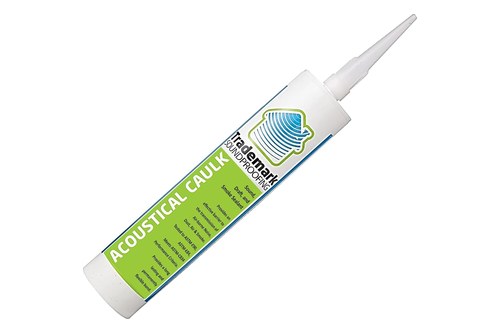
TMS Acoustical Soundproofing Caulk
How Do You Soundproof a Wall Without Removing Drywall?
Once the gaps are sealed, the drywall you have becomes the base for the next layer. To soundproof a wall without removing drywall, fasten a new layer over it with damping compound in between, leave a 1/4-inch gap at its edges for sealant, and bring outlet boxes and trim forward to the new surface.
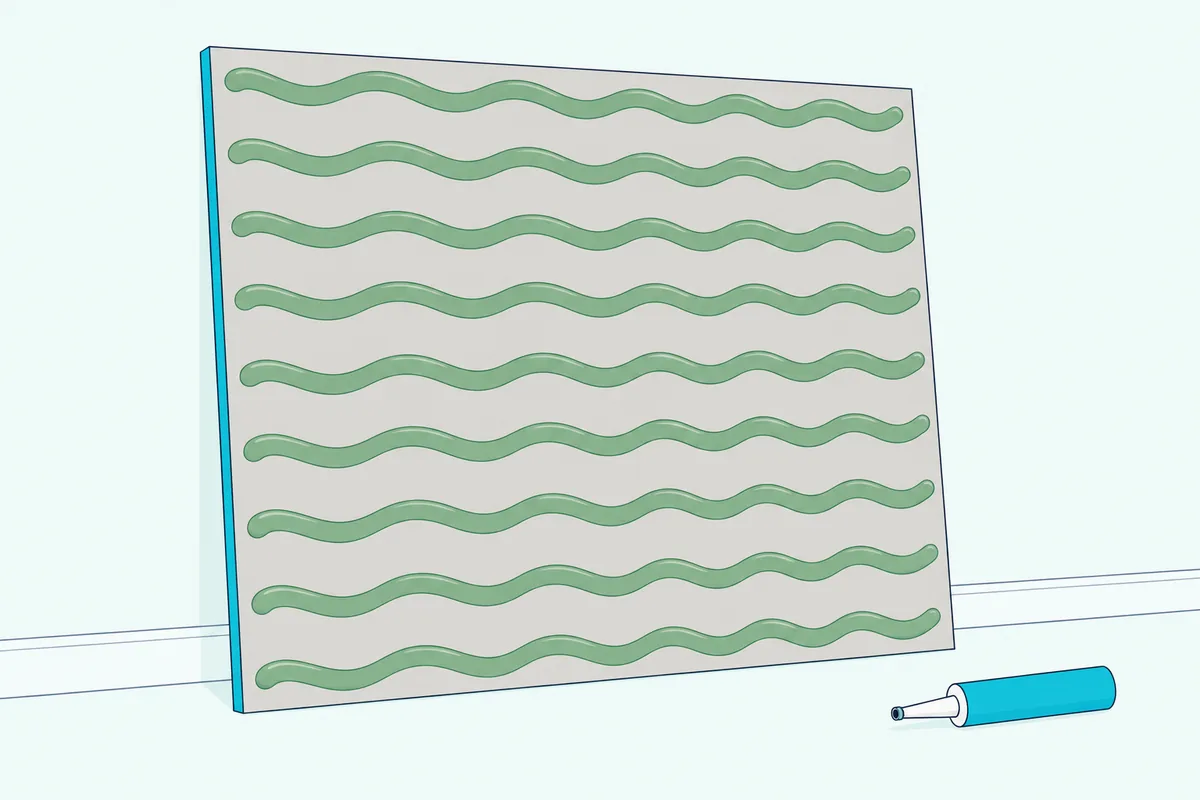
Handbook 119 shows the basic version. It laminates a 1/2-inch sheet to the existing wall with non-setting adhesive, fills a 1/4-inch gap at the floor and ceiling with resilient caulk, and recommends doing both sides if you can reach them.
National Gypsum tested the idea with its 5/16-inch SoundBreak XP Retrofit board, which carries a damping layer, added over 1/2-inch drywall on one face of a 2×4 wall:
| 2×4 wall, damped retrofit board on one face | Studs 16 inches apart | Studs 24 inches apart |
|---|---|---|
| Empty cavity | STC 36 | STC 39 |
| 3-1/2-inch glass fiber in the cavity | STC 40 | STC 45 |
For scale, Owens Corning’s assembly guide rates the plain wall, 1/2-inch drywall on each side with an empty cavity, at STC 32 in Canada’s code tables and 35 in its own test. So one damped layer over an empty wall bought only a few points, and the 45 came from wider stud spacing plus insulation.
A plain second layer adds mass the same way. In the same guide, an insulated 2×4 wall rates STC 34 with one layer of 1/2-inch Type X drywall per side and 38 with two, close to Owens Corning’s rule of 5 to 6 dB for every doubling of a wall’s weight.
Damping changes what that weight does. National Gypsum calls it constrained-layer damping, a viscoelastic layer between two stiff sheets that turns vibration into a little heat, and its damped board on one face of an insulated 2×4 wall raised it from STC 36 to 42, or 45 on both faces.
Damping compound builds the same kind of sandwich on site. Green Glue’s listing says it goes between an existing wall and an added layer, applied with a large caulk gun in a random pattern.
For that layer, Green Glue Noiseproofing Compound comes as a case of 12 tubes, and our page on how Green Glue works covers how to install it.
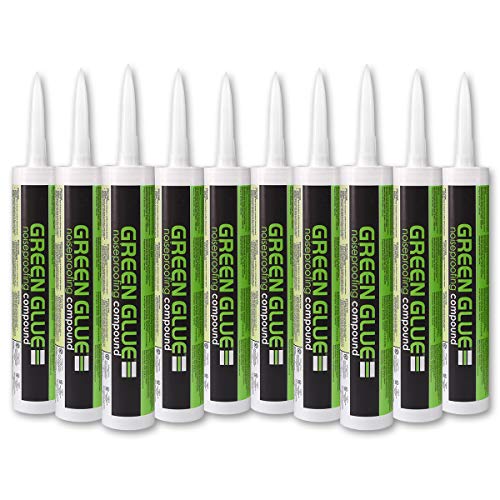
Green Glue Noiseproofing Compound
SoundBreak XP has that layer built in, the kind of panel sold as soundproof drywall, and soundproof drywall against regular drywall weighs when the factory version is worth it.
If the wall is lath and plaster, read about plaster walls in an older house first. That guide treats the plaster as worth keeping and builds on it rather than tearing it out.
Does Insulation Inside a Wall Help?
That damped layer works on the wall’s faces, and the cavity between them is the next question. Insulation helps a lot only once one face is decoupled: CBD-239 credits sound-absorbing material with about 3 points in an ordinary wall but about 8 in a wall on resilient channels, staggered studs or two rows of studs.
Burton Acoustix’s guide to insulation and soundproofing lines up the same comparison across empty and filled walls tested by Owens Corning, National Gypsum and NRC.
Owens Corning’s guide adds that a half-filled cavity measured about 5 dB worse than a full one, so the insulation should fill the space. A closed wall can only be filled by blowing material in, and NRC’s comparisons included blown-in cellulose.
Density matters less than most people expect. Warnock and Quirt’s NRC study of about 400 walls saw denser absorbers help at high frequencies but not at the low ones that decide STC, and Owens Corning, a fiberglass maker, reports glass fiber batts rating as well as or better than mineral wool batts of the same thickness.
ROCKWOOL’s own catalog shows the pattern from the mineral wool side. Its 3-inch Safe’n’Sound in a 2×4 wall with 5/8-inch drywall rated STC 38, and the same wall with resilient channels at 24 inches rated 51.
The full table of Rockwool’s listed walls runs from STC 36 to 66 for interior wood-stud walls. Batts are bulky and usually bought from a building supplier, and no mineral wool batt listing on Amazon met this guide’s standard on 14 October.
Are Resilient Channels or Sound Clips Worth It?
Those 8 points depend on decoupling, which is what channels and clips provide. Yes, if voices or bass still get through after sealing and a damped layer: one face on resilient channels raised insulated 2×4 walls to STC 48 to 51 in NRC, ROCKWOOL and National Gypsum tests, and PAC International rates a 2×4 wall with its RSIC-1 clips and furring channel on one side at STC 58.
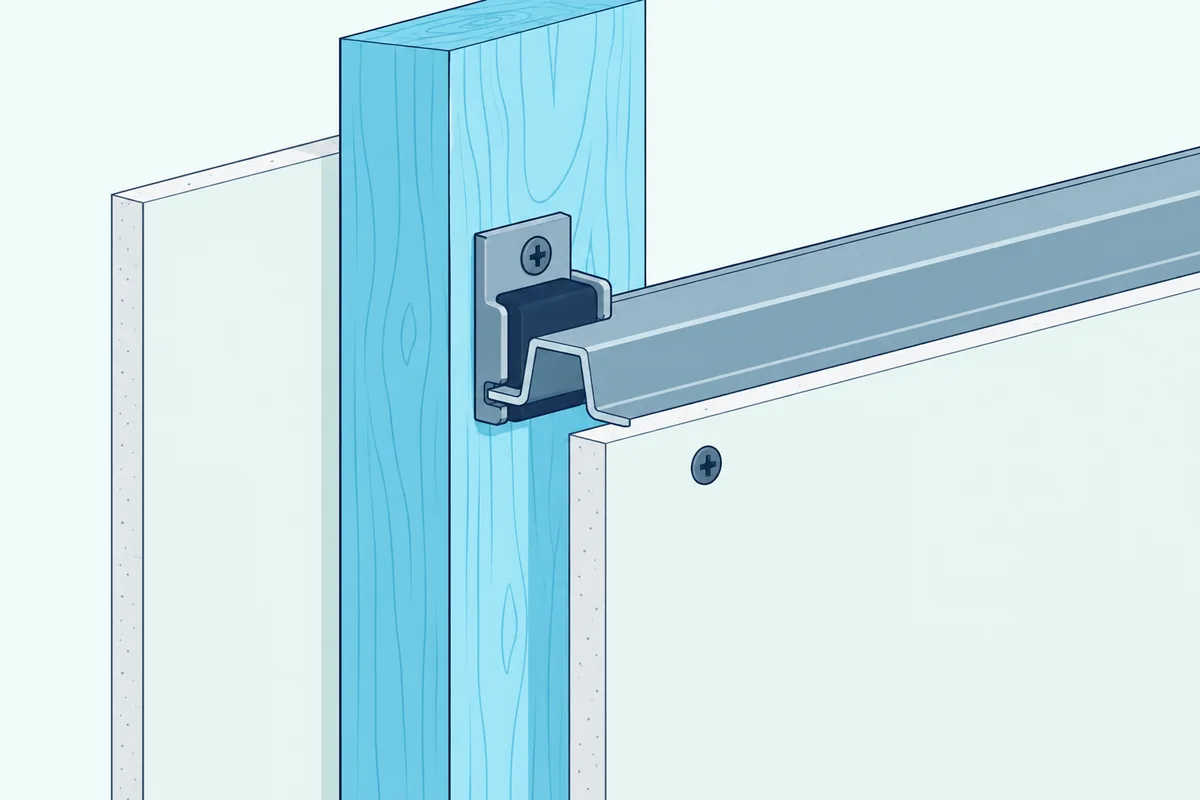
CBD-239 describes resilient channels as metal furring strips that support the two layers of drywall independently of each other. PAC’s clip instead grips a standard drywall furring channel and leaves a 1-5/8-inch cavity between the studs and the board.
Read those results as a range, not a ranking. They come from different labs and builds, and PAC’s wall used 6-inch batts, against 3 to 3-1/2 inches in the ROCKWOOL and National Gypsum walls.
The gain lasts only while nothing rigid bridges the gap. HUD warns that nails severely reduce a wall’s ability to stop noise, PAC says the furring channel must not touch the framing, and CBD-239 compares any rigid link to a short circuit.
PAC’s installation guide spaces the clips no more than 48 by 24 inches apart and leaves a 1/4-inch gap around the board for acoustical sealant. It also rules out hanging cabinets, shelves or TVs on the clip system.
One side is enough for room-to-room noise. PAC rated clips on both faces of a wood wall 2 points lower than clips on one face and recommends the noisy side, though on a shared wall you work with the side you have.
PAC lists the RSIC-1 for retrofit work as well as new walls. RSIC-1 resilient sound clips come 10 to a pack with mounting screws, and the furring channel and drywall are bought separately.
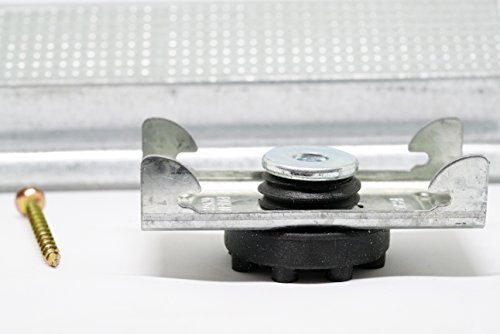
RSIC-1 resilient sound clips
When Does a Wall Need Staggered or Double Studs?
Channels and clips decouple one face, and new framing can decouple both. For a new or stripped wall that needs more than about STC 50, staggered or double studs come next: CBD-239 lists insulated walls at about STC 50 staggered and 57 on a double row with one layer per side, rising to 55 and 63 with two layers.
Owens Corning’s tables rate a double-stud wall at STC 45 with an empty cavity, 54 to 56 with one row insulated and 56 to 60 with both. Once the floor and ceiling are open too, a whole-room approach makes more sense than treating one wall.
When it gets to that point, the whole-room version of this build puts the same double studs on every wall and adds a clip-hung ceiling and a floating floor.
How Do You Soundproof a Shared Wall?
Those numbers assume you control both faces of the wall, which a party wall rarely allows. On a shared wall, seal and upgrade your own face, starting with the edges and back-to-back outlets, then add a damped or clip-mounted layer, and expect the floor and ceiling to cap the result.
NRC measured that cap in a test building. A double-stud party wall with two layers of 5/8-inch drywall per side measured only FSTC 52 while the wood subfloor ran continuously beneath it, and 66 once the subfloor was cut at the wall.
Over that continuous floor, NRC’s basic and superior walls differed by just 2 points, 50 and 52. If the noise comes through both the wall and the floor or ceiling, treating only the wall won’t solve it.
Inside one home, blocking sound between adjoining rooms means treating the door, ducts and ceiling the rooms share. Between homes, soundproofing a party wall from one side covers what one owner can add, and a noisy neighbor’s wall gets its own walk-through.
If you own a townhouse, how townhouse party walls score in lab tests covers the code ratings to ask a builder about. In apartments, the ceiling and floor often matter as much as the wall.
Renters usually can’t add drywall, so the realistic list is sealing outlet plates and edges with the landlord’s agreement and keeping beds and desks off the shared wall. For rental-specific strategies beyond walls, see our guide to soundproofing a rental room.
What Won’t Foam, Blankets, Paint or Wallpaper Do?
Every fix so far adds mass, damping or decoupling, and that’s the test the popular shortcuts fail. Foam panels, hanging blankets, soundproof paint and acoustic wallpaper absorb a little sound inside your room but add almost nothing to a wall’s STC.
Handbook 119 says absorbers are light and porous, shouldn’t be used on one room’s surface with the sole intention of keeping sound out of the next, and that their porosity actually helps sound pass. That’s why foam doesn’t block sound transmission.
Blankets fail the same test on weight. A pair of heavy moving blankets that Riverbank Acoustical Laboratories tested for VocalBoothToGo weighed 0.45 pounds per square foot, about a fifth of one sheet of 5/8-inch drywall at USG’s 2.2 pounds.
Paint is thinner still. A 28-mil coating of Coat of Silence on both faces of a steel-stud wall moved it from STC 39 to 42 at Orfield Laboratories, a change the same report’s chart calls barely perceptible.
Acoustic wallpapers are rated for absorption, not blocking. Momentum’s 3/8-inch “silence” wallcovering lists NRC 0.20, and what so-called soundproof wallpaper is rated for covers the rest of the field.
The confusion starts with the words, since absorbers and barriers both get called acoustic treatment. Deadening sound versus blocking it untangles the two.
Which Upgrade Fits Your Wall?
Those shortcuts aside, the choice comes down to the noise and the wall you have. Voices and TV are what sealing and a damped layer handle best, since speech sits inside the range STC covers, and that’s often enough for bedrooms and home offices.
Bass from a home theater or a neighbor’s speakers needs decoupling and a filled cavity, and even then the floor and ceiling may carry it, as they did in NRC’s test building. Brick, block and concrete walls start heavy and need a different build, which how brick and block walls are lined covers.
For more product choices than the three here, Burton Acoustix’s wall soundproofing picks rank materials for walls. Whatever the wall, the order holds: seal first, then mass and damping, then decoupling, and stop when the noise stops bothering you.
Frequently Asked Questions
Can you soundproof just one wall?
Yes, and for voices or TV coming through one partition, that’s often all you need. The catch is flanking: in NRC’s test building, doubling the drywall and insulation in a double-stud party wall raised its field rating only from FSTC 50 to 52 while the subfloor ran continuously under it. If the sound seems to come from the ceiling or floor too, one wall won’t fix it.
Does Rockwool soundproof a wall?
Only as part of a wall. ROCKWOOL rates 3-inch Safe’n’Sound in a 2×4 wall with 5/8-inch drywall at STC 38, and the same wall with resilient channels at 51. NRC’s Building Digest 239 credits insulation with about 3 points when the drywall is fastened straight to the studs and about 8 when one face is decoupled, so the batts pay off mainly in a decoupled wall.
What is the cheapest way to soundproof a wall?
Sealing is the way to soundproof a wall cheaply. Acoustical caulk along the baseboard and ceiling line, putty pads behind outlet boxes and sealed pipe openings cost little, and HUD’s guidebook shows why they matter: a one-inch-square hole or a 1/16-inch crack 16 inches long can take an STC 50 wall down to 40. Sealing won’t add mass, though, so it won’t stop bass, which needs a damped layer or decoupling.