Sonos vs Samsung Soundbar: Which Brand Fits Your Setup? [2026]

The sonos vs samsung soundbar comparison is really a choice between two completely different product philosophies, but most buyers frame it as a simple sound quality contest and miss the actual deciding factor.
Sonos builds premium streaming-first soundbars that work identically with any TV brand and excel at multi-room music, while Samsung builds ecosystem-first soundbars designed to unlock their best features exclusively with Samsung TVs.
Choosing between them without understanding this fundamental difference means either paying Sonos premium prices for features you won’t use or missing Samsung ecosystem advantages that genuinely improve your daily TV audio experience.The problem is that music-focused households who choose Samsung lose Sonos’s seamless AirPlay 2 multi-room streaming, native Spotify and Apple Music integration. The ability to group soundbar audio with speakers throughout your entire home.
TV-focused Samsung households who choose Sonos lose Q-Symphony (where Samsung TV speakers and soundbar play simultaneously for wider sound) and SmartThings integration.
Because each brand’s core strengths serve completely different primary use cases, choosing based on specs or reviews alone means optimizing for the wrong listening scenario.
Understanding whether your main use case is TV audio or whole-home music streaming is the real first move.
How each brand’s ecosystem serves that priority helps you avoid the wrong pick. That way you can stop comparing channel counts and focus on the features that will actually change your daily listening.
Below, we’ll compare Sonos and Samsung soundbars across streaming capabilities, TV ecosystem features, model range, and price positioning so you can pick the brand that delivers the best real-world value for how you actually listen at home.
Choose Samsung if you own a Samsung TV and care most about TV-first features like Q-Symphony.
Choose Sonos if music streaming, multi-room audio, and platform flexibility matter more.
Samsung is the better TV-first play. Sonos is the better music-first platform.
Streaming and Ecosystem: The Core Difference
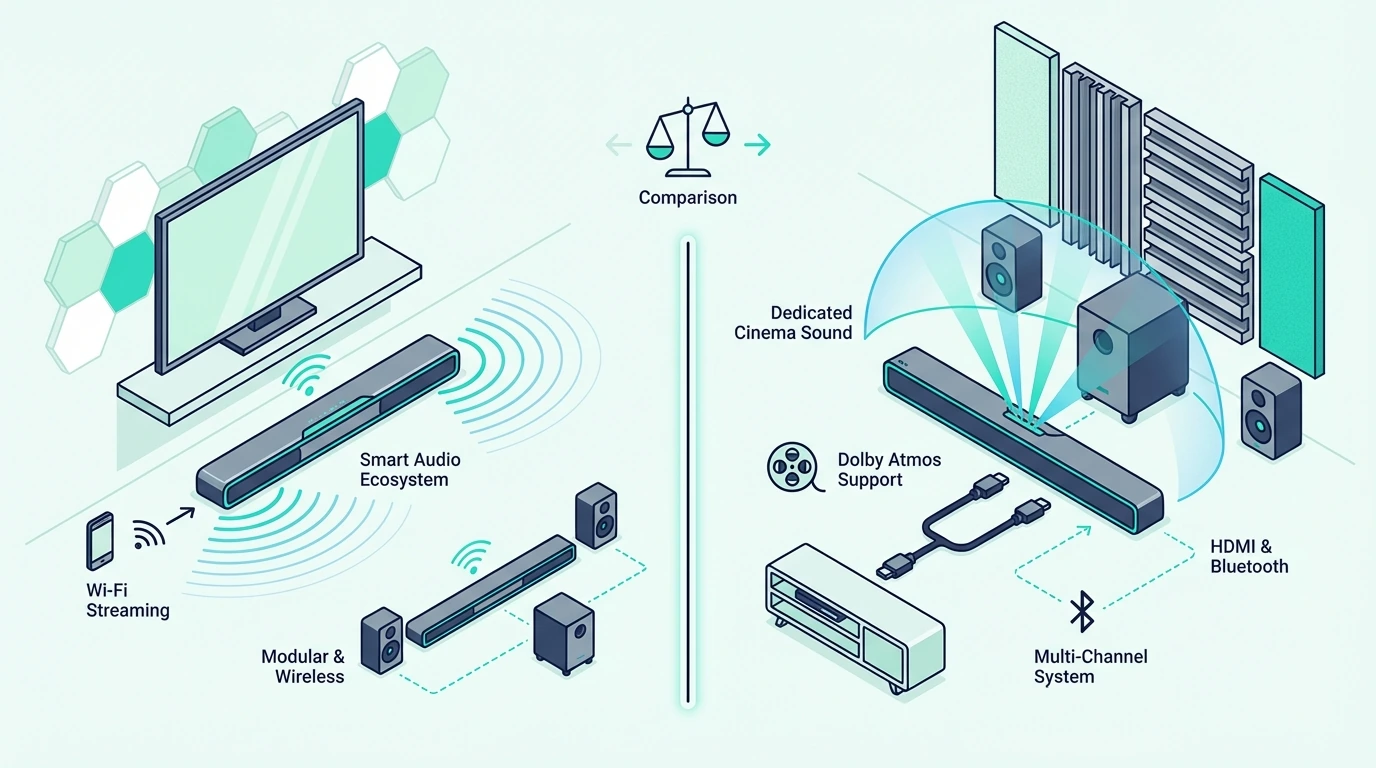
The fundamental difference between Sonos and Samsung soundbars isn’t sound quality or channel count.
Sonos prioritizes being the best music streaming platform in your home. Samsung prioritizes being the best audio extension of your Samsung TV.
Understanding which priority matches your household determines which brand delivers significantly more daily value.
Most shoppers default to specs and reviews. That shortcut tends to bury the feature you will actually use most nights.
Sonos: Music-First, Platform-Agnostic Design
Sonos’s flagship Arc Ultra ($999) uses proprietary Sound Motion woofer technology. It produces remarkably deep bass from a single bar without a separate wireless subwoofer.
That is an engineering achievement that lets you get powerful bass in a cleaner single-unit setup.
Every Sonos soundbar works identically with Samsung, LG, Sony, or any other TV brand because Sonos deliberately avoids ecosystem lock-in, treating your TV as just one of many audio sources rather than the primary design focus.
That flexibility is especially valuable for households that change TVs over time, because the soundbar keeps the same streaming workflow even if the screen brand changes later. That continuity matters.
Our Sonos vs Bose soundbar comparison covers how Sonos competes against Bose’s dialogue-first approach, and our soundbar vs speakers guide explains when dedicated speakers outperform soundbar solutions for music listening.
Samsung: TV-First, Ecosystem-Integrated Design
Samsung soundbars are engineered as dedicated TV audio enhancement devices. They unlock their most impressive features exclusively when paired with Samsung televisions.
A current value example is Samsung Q-Symphony 5.1 Soundbar, which is a strong fit for Atmos movies and TV with stronger bass.
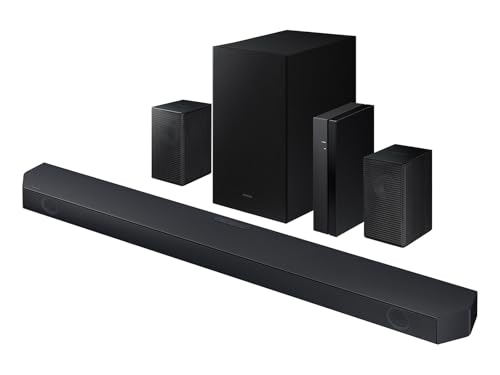
Samsung Q-Symphony 5.1 Soundbar
Samsung’s flagship HW-Q990D ($1800) delivers true 11.1.4-channel Dolby Atmos. It adds discrete rear speakers, a wireless subwoofer, and SpaceFit Sound room calibration.
That is more physical surround channels than any Sonos system can match. It is the superior choice for dedicated home theater audio where surround immersion matters most.
Our Bose vs Samsung guide covers Samsung’s strengths against another major brand, and our Samsung vs LG guide explores the ecosystem integration comparison with LG.
Model Range, Price, and Long-Term Value
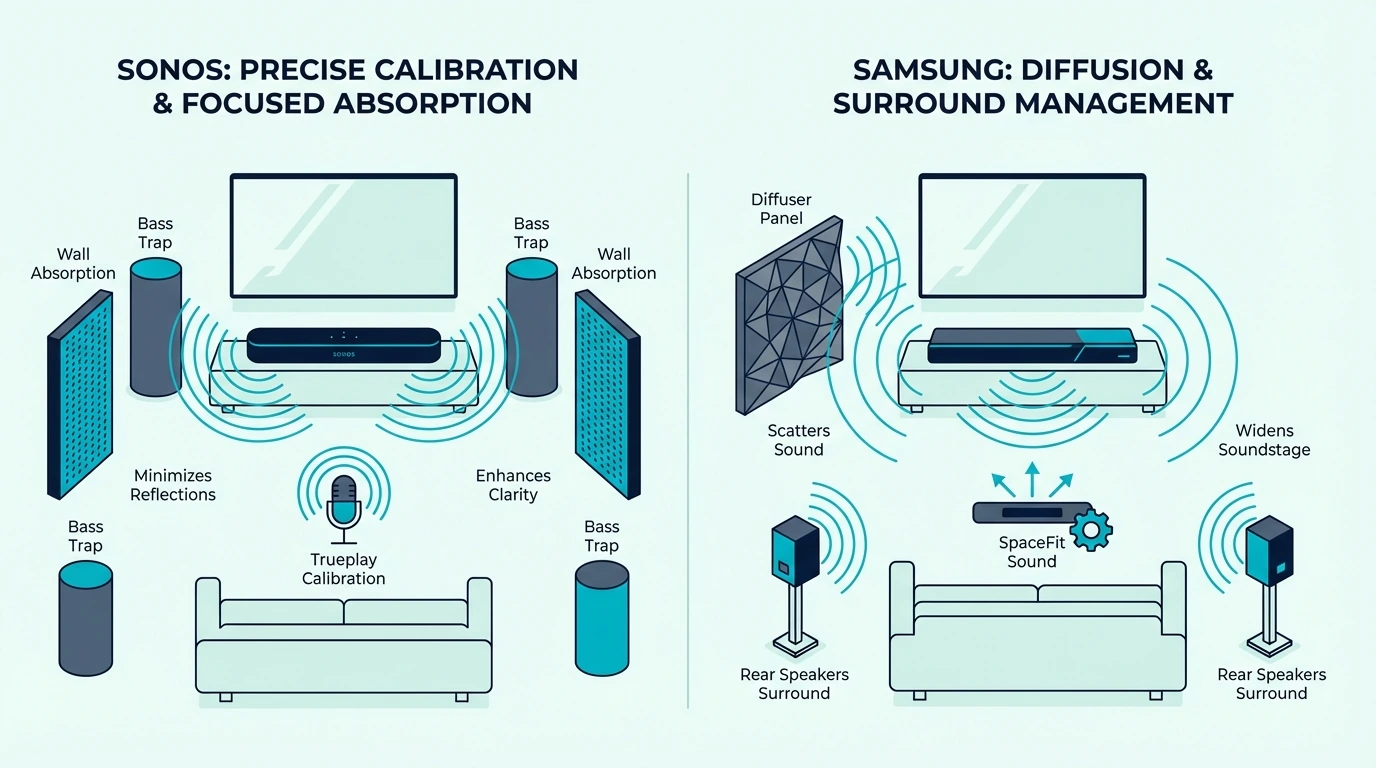
Beyond the streaming-versus-ecosystem divide, Sonos and Samsung also differ in pricing strategy and model range.
Long-term ownership value also matters. These are practical factors that affect which brand delivers more value over years of daily use.
Pricing: Premium-Only vs Every Budget
Sonos offers exactly three soundbar models: Beam Gen 2 at $449, Arc at $799, and Arc Ultra at $999. There are zero options under $400 and no budget tier at all.
Samsung offers the widest soundbar lineup in the industry. It spans from basic 2.0-channel bars at $100 to the flagship 11.1.4-channel HW-Q990D at $1800.
With models at virtually every $50 price increment in between covering every possible budget tier.
For budget-conscious buyers under $300, Samsung is the only realistic option since Sonos doesn’t compete at this price tier at all. That gap is real.
If you are willing to step outside both brands, a value alternative is the Amazon Fire TV Soundbar Plus at $190. It delivers Atmos and a built-in sub at a fraction of the Sonos Beam’s price.
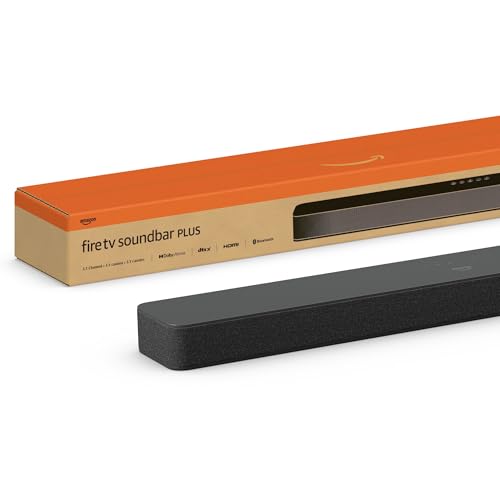
Amazon Fire TV Soundbar Plus
For premium buyers willing to spend $450+, Sonos delivers superior music streaming features and longer software support.
Buyers sitting between $300 and $450 often end up with a mid-tier Samsung bar plus a cheap sub. That package tends to beat an entry-level Sonos bar on pure TV-audio impact.
Our is a soundbar worth it guide helps evaluate whether premium Sonos pricing is justified.
Our 2.1 vs 5.1 soundbar comparison covers when extra channels improve listening over single-bar solutions.
Long-Term Software Support and Resale Value
Sonos soundbars receive software updates for years longer than Samsung models. Sonos regularly adds features and maintains support for products 5-7+ years after purchase, while Samsung soundbars typically receive firmware updates for 2-3 years before support ends.
Sonos products also maintain significantly stronger resale value on the secondary market, making the higher upfront cost more palatable when you factor in the total cost of ownership over the product lifespan.
For households that upgrade room by room over several years, that longer platform life can matter as much as the initial sound quality.
A Samsung bar that loses firmware support after three years still plays sound. It just stops gaining features, which is a real cost only some households will feel.
Our soundbar fundamentals guide covers what to expect from soundbar technology in general, and our soundbar to TV connection guide explains how both brands connect via standard HDMI eARC for TV audio.
Surround Sound Expandability
Both brands offer surround expansion, but the approaches differ in cost and capability.
Samsung includes wireless subwoofers and rear speakers with many mid-range and premium models out of the box. Sonos requires a separate Sonos Sub at $799 and Era 100 surrounds at $249 each to build a comparable system.
Pushing the total Sonos system cost well above Samsung’s bundled alternatives.
Our soundbar vs surround sound guide explains when surround expansion genuinely improves your listening experience, and our what soundbar channels mean guide covers channel configurations for both brands.
Get Studio Tips Weekly
Join 5,000+ creators getting acoustic treatment advice every week.
No spam. Unsubscribe anytime.The Bottom Line
Choose Samsung if you own a Samsung TV and primarily want better TV audio.
Q-Symphony ecosystem integration, the widest model range from $100 to $1800, and bundled surround packages make Samsung the practical choice for TV-focused households.
Our best Samsung soundbar guide covers the top picks at every budget.
Choose Sonos if music streaming is your primary use case and you’re willing to pay premium prices starting at $449.
AirPlay 2, native music service integration, multi-room whole-home grouping, and longer software support make Sonos the superior music-first platform.
Our best Sonos soundbar guide ranks every current Sonos bar by room size and use case.
Our do you need a soundbar for smart TV guide covers whether your TV genuinely benefits from either brand’s upgrade, and our soundbar setup guide walks through optimal placement and configuration for both Sonos and Samsung soundbar models.
Frequently Asked Questions
Is Sonos one of the best soundbars?
Sonos makes some of the highest-rated soundbars available.
The Arc Ultra consistently ranks among the best premium soundbars. It stands out for Dolby Atmos processing and deep bass from the proprietary Sound Motion woofer.
It also offers unmatched multi-room music streaming that no Samsung or traditional TV-focused soundbar brand can match.
Is Samsung Q990D better than Sonos Arc Ultra?
The Samsung HW-Q990D at $1800 delivers more surround channels than the Sonos Arc Ultra, at 11.1.4 versus virtual processing. It includes discrete rear speakers and a wireless subwoofer.
That makes it superior for dedicated home theater surround immersion.
The Sonos Arc Ultra at $999 costs significantly less. It produces impressive bass from a single bar without a separate subwoofer.
It also offers dramatically better music streaming with AirPlay 2 and multi-room grouping that Samsung cannot match.
What brand is best for soundbars?
No single brand dominates every soundbar use case.
Samsung leads in TV ecosystem integration. Sonos leads in music streaming and multi-room audio.
Bose leads in dialogue clarity, Sony in cinematic Atmos, LG in Meridian-tuned refinement, and JBL in bass per dollar.
The right brand for your specific situation depends on matching your primary use case, TV manufacturer, and budget to each brand’s core engineering strengths and ecosystem advantages.
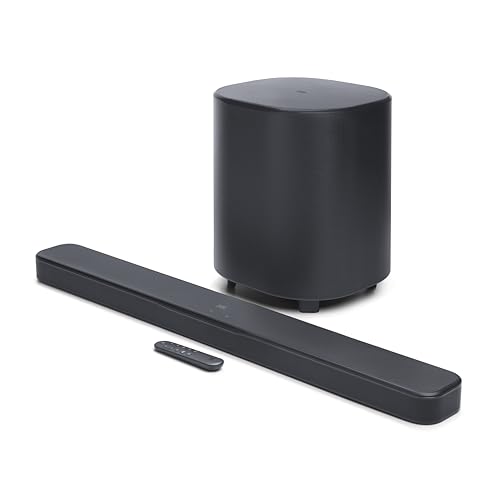
For a bass-forward pick that skips the Sonos premium, a current JBL example is the JBL Bar 500 MK2. It leans into the bass-per-dollar advantage the FAQ above calls out for JBL.