Sonos vs Bose Soundbar: Same Price, Different Ecosystems — Here’s What Matters
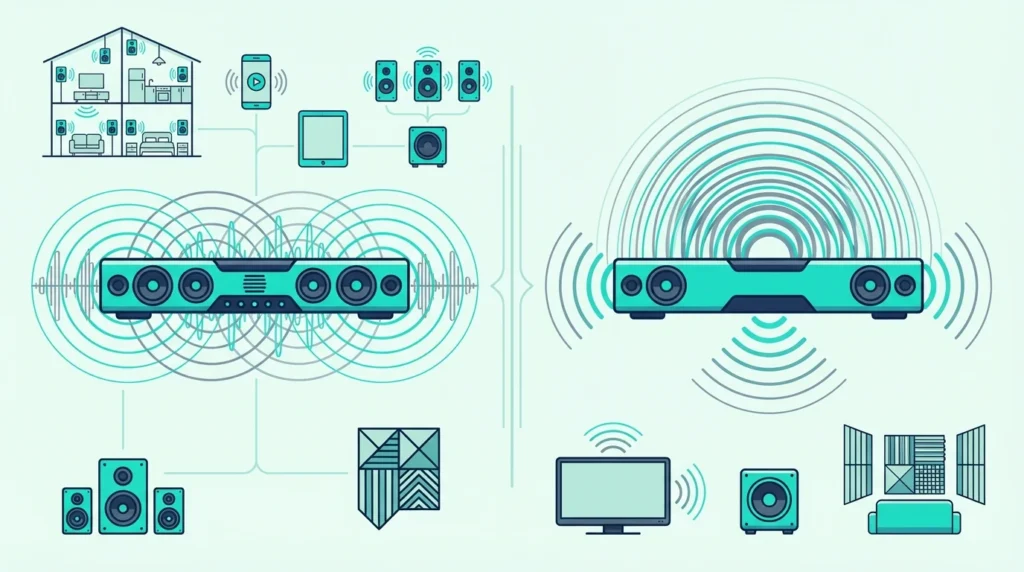
The sonos vs bose soundbar debate comes down to ecosystem, not audio quality. Both brands deliver Dolby Atmos from premium hardware at overlapping price points, so the sound itself won’t settle the decision.
What separates them is how each platform handles streaming, multi-room audio, and room calibration. Buying into either brand means buying into its entire ecosystem.
Sonos builds around WiFi-first multi-room audio where every speaker joins one synchronized system.
Bose builds around streaming flexibility instead. Bluetooth and WiFi both work out of the box.
Bose also adds private headphone pairing and room calibration that runs on any phone.
Those differences matter more than the marginal gap between driver counts or frequency response specs.
Knowing where Sonos earns its multi-room lead and where Bose earns its streaming flexibility helps you avoid the wrong ecosystem before you spend hundreds on a brand that will not fit your household.
Below, we’ll break down each brand’s lineup, compare them head-to-head across the features that actually affect daily use, and help you decide which ecosystem fits your setup.
Sonos wins on multi-room audio and expandable surround — its WiFi ecosystem lets you group any Sonos speaker for whole-home music and add wireless surround channels. Bose wins on streaming flexibility and private listening — Bluetooth works without WiFi, ADAPTiQ calibration runs on any phone, and SimpleSync pairs headphones to the soundbar.
Both offer Dolby Atmos bars from $219 to $1,069 across the two brands.
Choose Sonos for multi-room. Choose Bose for Bluetooth or private headphone pairing.
The Sonos Ecosystem: What You’re Buying Into
Sonos soundbars are WiFi-connected bars built for the Sonos multi-room ecosystem. Every Sonos bar connects to your TV via HDMI eARC or optical.
Music streams over WiFi through AirPlay 2, Spotify Connect, or the Sonos app.
Any Sonos soundbar can be grouped with other Sonos speakers for synchronized whole-home audio.
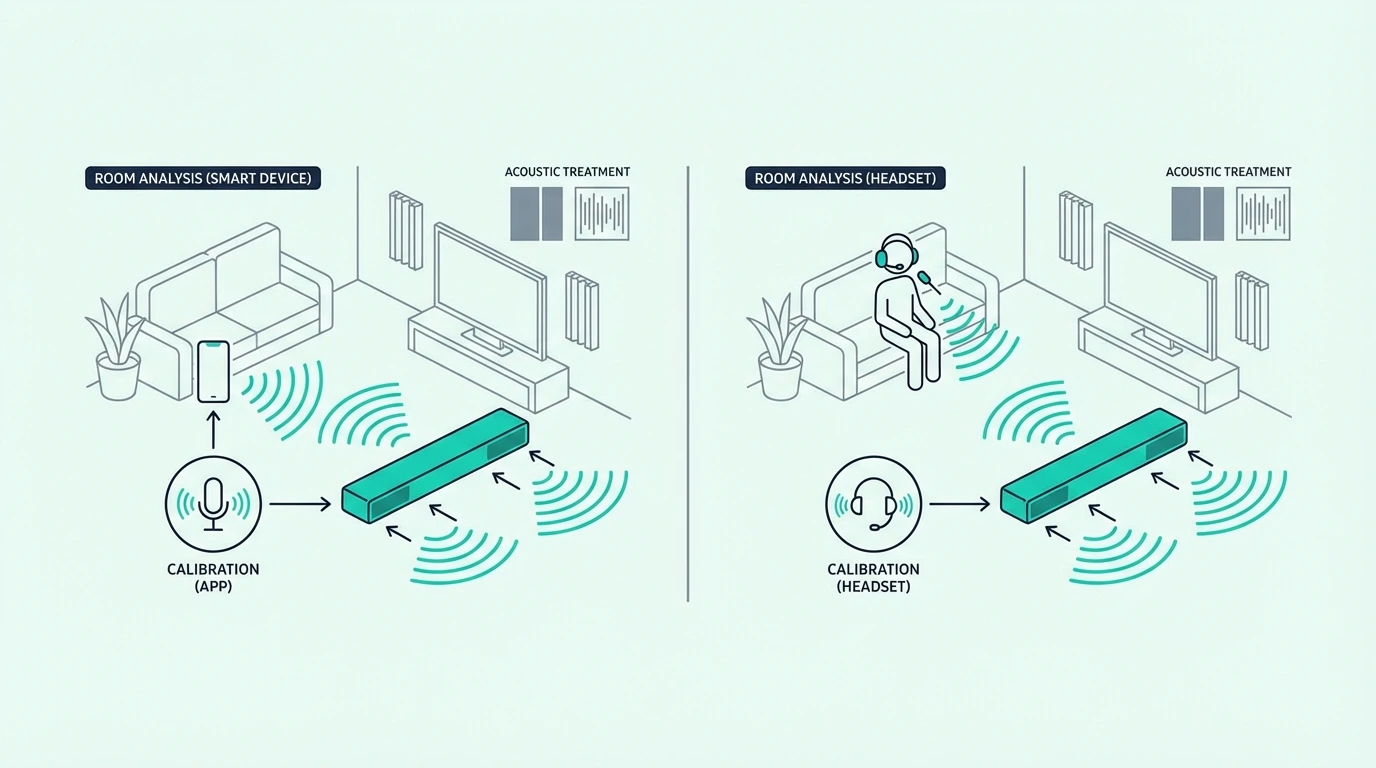
The defining Sonos feature is Trueplay room calibration. It uses your iPhone’s microphone to tune the soundbar to your room’s acoustics.
Trueplay requires an iPhone — Android users cannot run it.
Sonos does not include Bluetooth on any of its soundbars. This is intentional, because Sonos prioritizes lossless WiFi streaming and synchronized multi-room playback.
If your WiFi drops, your music stops.
Sonos Soundbar Lineup
The Sonos Arc Ultra is the flagship. It is a 14-driver bar with 9.1.4 Dolby Atmos, Sound Motion woofer technology, and the widest soundstage in the Sonos lineup.
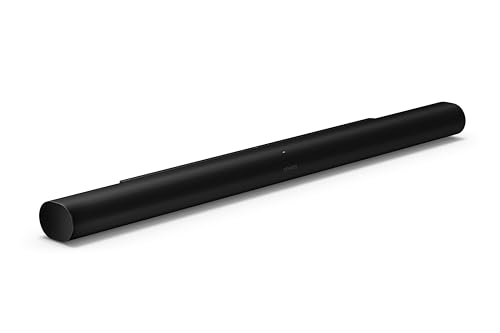
Sonos Arc Ultra
At $1,069, it’s built for large rooms that want theater-grade audio from one bar. You can add wireless surround speakers and a Sub later.
The Sonos Beam Gen 2 is the mid-range option at $369. It is a compact Atmos bar that fits under smaller TVs while supporting Sonos multi-room and wireless surround.
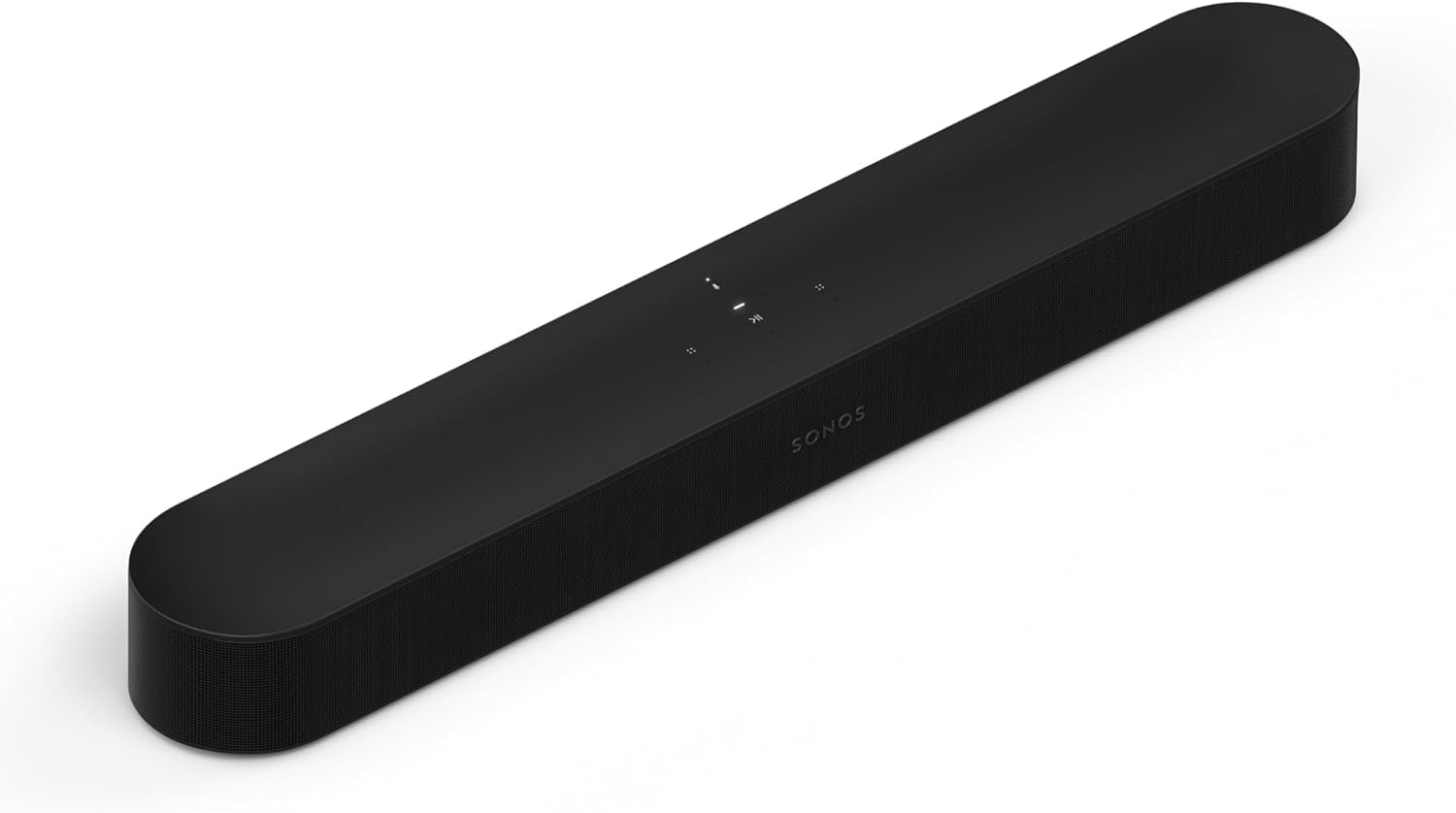
Sonos Beam Gen 2
For most rooms under 300 square feet, the Beam delivers Atmos performance close to the Arc at a fraction of the price.
The Sonos Ray is the entry-level bar at $219. It is stereo-only with no Dolby Atmos, but it still plugs into the full Sonos multi-room ecosystem.
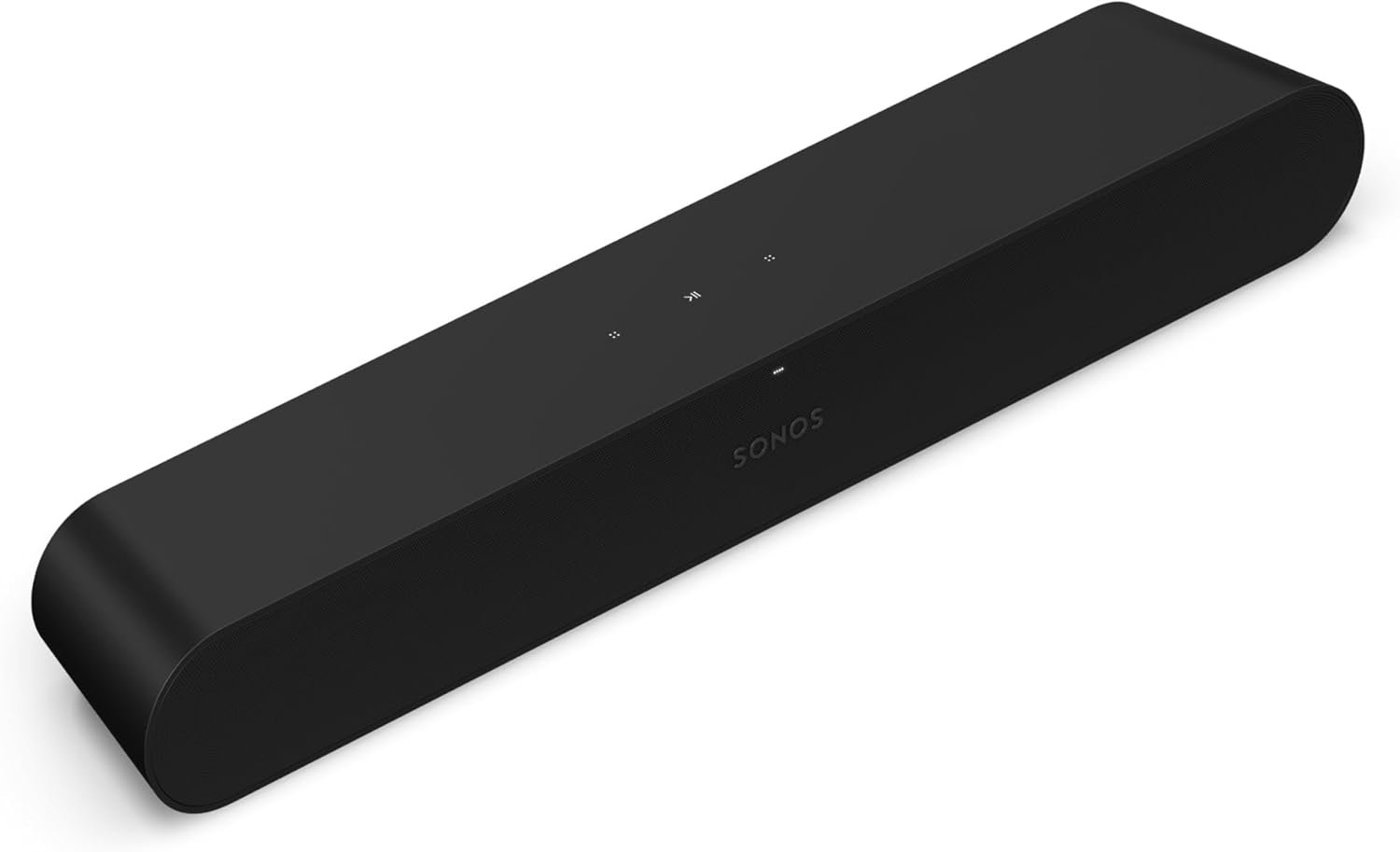
Sonos Ray
That makes it the most affordable way to start a Sonos setup in a bedroom or secondary TV room.
The Bose Ecosystem: What You’re Buying Into
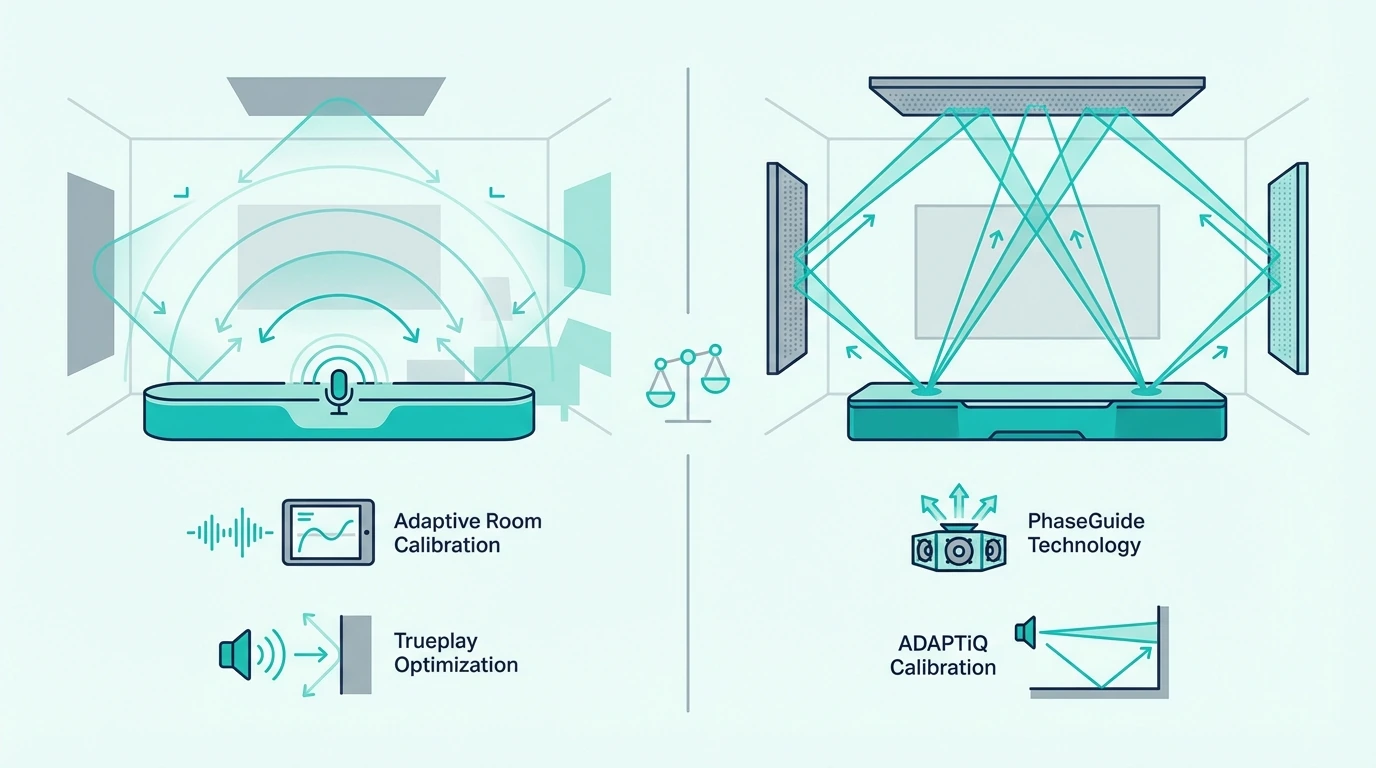
Bose soundbars combine WiFi and Bluetooth streaming with proprietary room calibration. Unlike Sonos, every Bose bar includes Bluetooth.
That means you can stream from any phone, tablet, or laptop without being on the same WiFi network.
This makes Bose bars more versatile for guests, mixed-device households, and situations where WiFi is unreliable.
The defining Bose feature is ADAPTiQ room calibration. It uses a dedicated measurement headset placed at five positions in your room.
ADAPTiQ works on any phone platform, Android or iPhone. It measures from multiple listening spots for precise tuning in unusual rooms.
Bose also offers SimpleSync. It pairs compatible Bose headphones like the QuietComfort Ultra to the soundbar for private listening.
You hear the TV audio in your headphones while the soundbar plays at a different volume for the room.
Sonos has no equivalent feature. For understanding how soundbars fit into larger audio setups, our fundamentals guide covers the basics.
Bose Soundbar Lineup
The Bose Smart Soundbar 600 is the Dolby Atmos option at $419. It is a compact bar with TrueSpace spatial processing, Bluetooth plus WiFi streaming, and ADAPTiQ calibration.
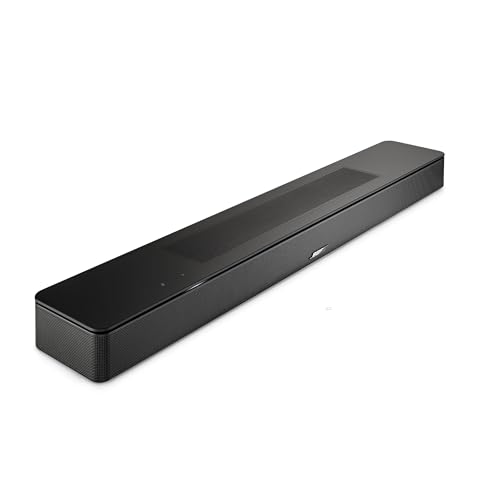
Bose Smart Soundbar 600
It supports Amazon Alexa and Google Assistant. That makes it the only bar in this comparison that works with Google Home ecosystems.
The Bose TV Speaker is the budget entry at $279. It has no Dolby Atmos, but it delivers clear dialogue from a dedicated center tweeter and pairs via Bluetooth without any app setup.
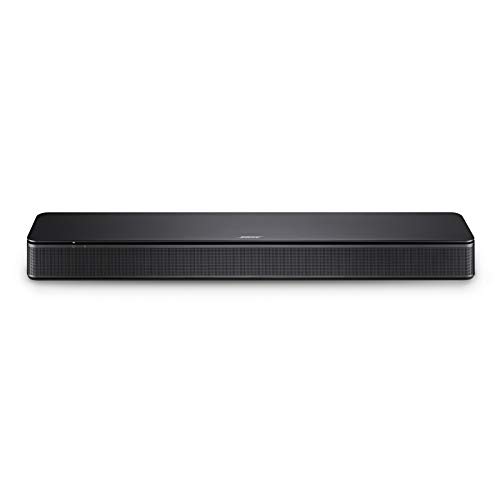
Bose TV Speaker
For bedrooms, offices, or secondary TVs where you just want better audio than your TV speakers, it is the simplest plug-and-play option from Bose.
Get Studio Tips Weekly
Join 5,000+ creators getting acoustic treatment advice every week.
No spam. Unsubscribe anytime.How Do Sonos and Bose Soundbars Compare?
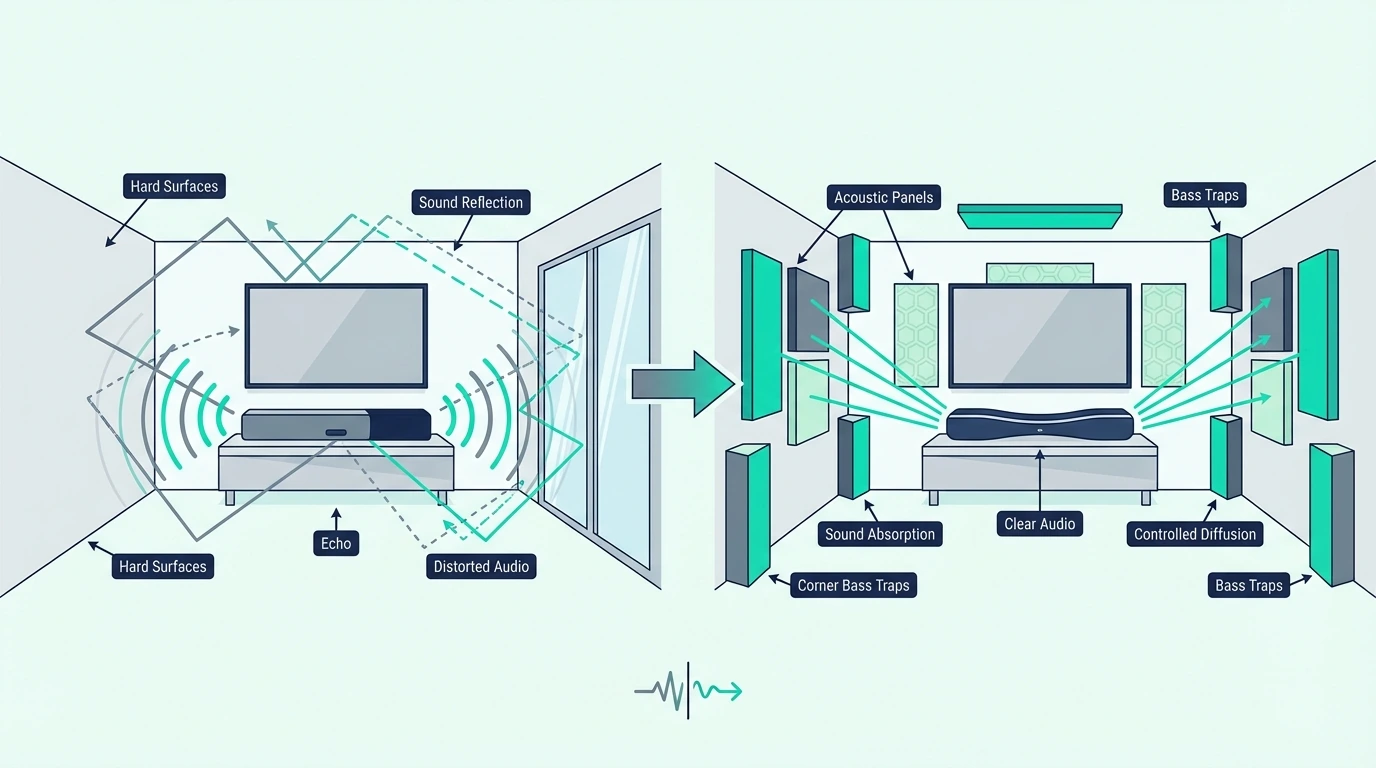
Both brands make premium soundbars, but they prioritize different things. Here’s how they compare across the features that affect daily use.
Sound Quality
Both the Sonos Arc Ultra and Bose Soundbar 600 deliver Dolby Atmos. The architectures differ, though.
The Arc Ultra’s 14-driver array with dedicated upfiring height channels produces a wider, more enveloping soundstage. It is especially noticeable in large rooms with high ceilings.
The Bose 600’s TrueSpace processing creates convincing spatial audio from fewer drivers. It uses digital signal processing to simulate height channels.
At the entry level, the Sonos Ray and Bose TV Speaker are both stereo bars without Atmos. The Ray has a slightly warmer sound signature; the Bose TV Speaker emphasizes dialogue clarity through its dedicated center tweeter.
The honest answer: in a blind test at the same price tier, most listeners wouldn’t pick a clear winner. The ecosystem differences matter more than the marginal audio gap.
Room Calibration
Sonos Trueplay uses your iPhone’s microphone. You walk around the room while the app plays test tones and adjusts the output to match your room.
It is accurate and simple, but it only works on iPhones. Android users get no room calibration at all with Sonos.
Bose ADAPTiQ uses a physical measurement headset placed at five positions around your room. It works on any phone platform and measures from multiple listening spots, producing more consistent results in rooms with asymmetric layouts or unusual furniture arrangements.
For connection setup details, our HDMI ARC guide covers the TV-to-soundbar link.
Streaming and Connectivity
Bose wins on streaming flexibility. Every Bose soundbar includes Bluetooth, so any device can stream without WiFi or an app.
WiFi streaming through the Bose Music app adds higher-quality options. Bluetooth is the fallback that always works.
Sonos requires WiFi for everything. That means AirPlay 2 or the Sonos app, with no Bluetooth fallback.
If your WiFi goes down, your soundbar goes silent. But that WiFi-only approach is what enables Sonos’s perfectly synchronized multi-room audio.
Voice Assistants
Sonos soundbars support Amazon Alexa and Sonos Voice Control (a privacy-focused assistant that processes commands locally). Google Assistant support was removed from Sonos products in 2024.
Bose soundbars support both Amazon Alexa and Google Assistant. If you’re in a Google Home household, Bose is the only option between these two brands that integrates with your existing voice ecosystem.
Multi-Room Audio
Sonos dominates multi-room audio. Every Sonos speaker from the $219 Ray to the $1,069 Arc Ultra can be grouped for synchronized playback.
You can play the same music in every room or different tracks in each zone from one app.
Sonos also lets you create a full surround setup by adding two Era speakers as wireless rears and a Sonos Sub for bass.
Bose offers multi-room through the Bose Music app, but the compatible speaker lineup is smaller. SimpleSync connects two Bose products at a time, which is more limited than Sonos’s whole-home grouping capability.
Surround Expansion
Both brands support wireless surround speakers, but the philosophy differs.
Sonos lets you add any two matching Era speakers (Era 100 or Era 300) as surround channels. Those same speakers work as standalone music speakers when you’re not watching TV.
Bose uses the Bose Surround Speakers 700 ($799/pair) as wireless rear channels. They connect wirelessly to any compatible Bose soundbar with no cables running from the front of the room to the back.
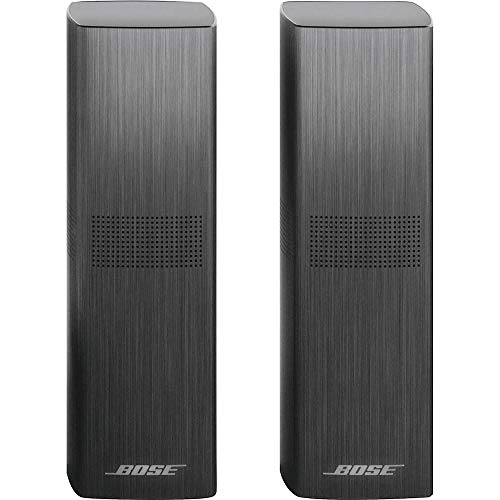
Bose Surround Speakers 700
For bass, the Bose Bass Module 700 ($799) adds a wireless 10-inch subwoofer that pairs directly with the soundbar.
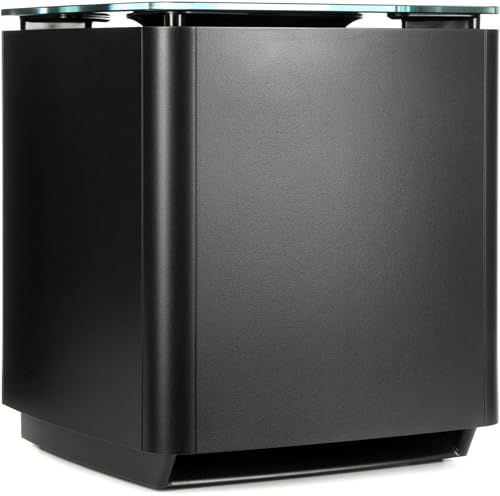
Bose Bass Module 700
Together, the surround speakers and bass module turn any Bose bar into a full wireless home theater.
These are purpose-built components. They have less standalone versatility than Sonos Era speakers.
For the broader surround question, our soundbar vs surround sound guide covers when a discrete system outperforms a soundbar-based setup. Our adding surround speakers guide walks through the expansion process.
When to Choose Sonos
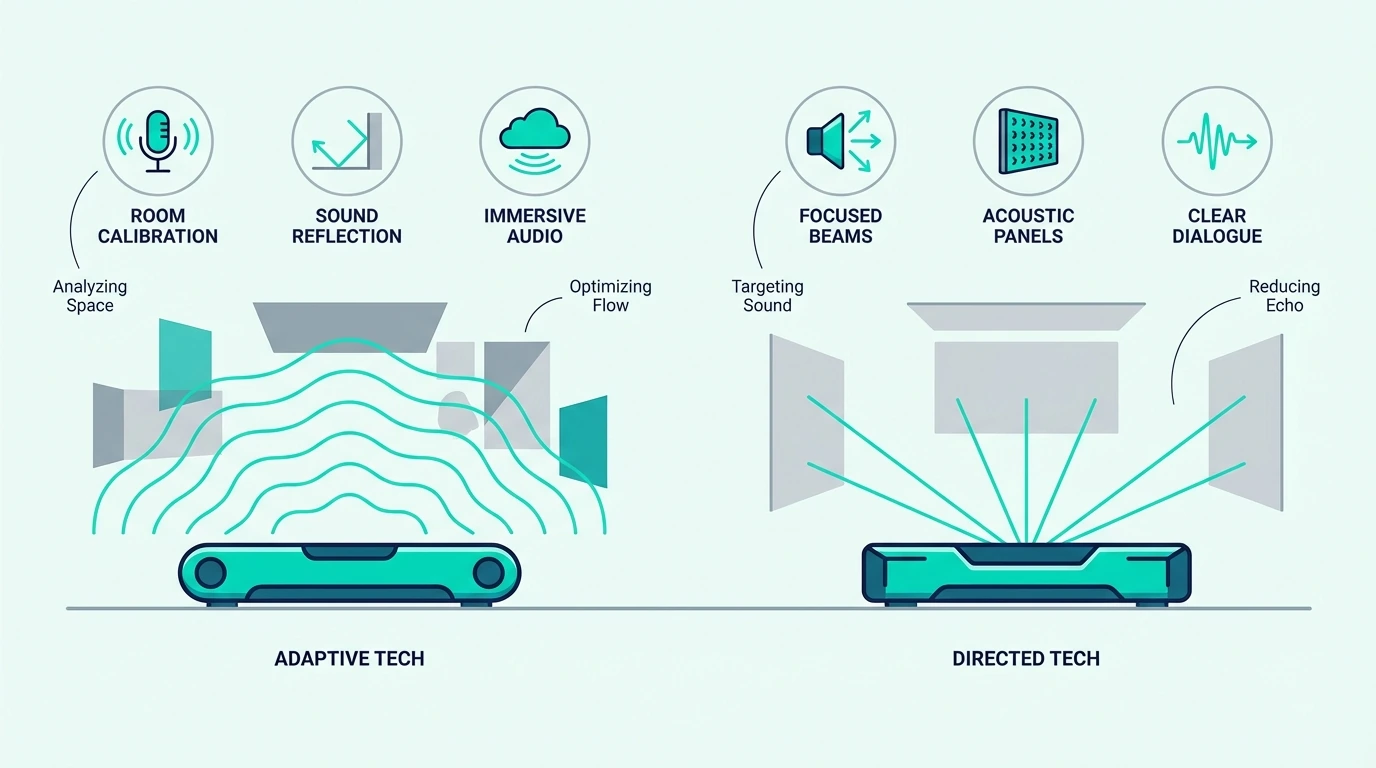
Sonos is the stronger platform when multi-room audio and long-term expandability are priorities.
You want whole-home audio. Sonos is the only option between these two brands with a deep enough product lineup to cover every room at different price points. The Arc Ultra handles the living room, the Beam covers a bedroom, and the Ray fills a home office — all synchronized.
You’re in an Apple household. Sonos’s AirPlay 2 integration means any iPhone, iPad, or Mac can stream directly to any Sonos speaker without opening the Sonos app. If everyone in your household uses Apple devices, the WiFi-only limitation barely matters. Sonos does make setup its own puzzle, though, because the light on top tells you the pairing state and nothing else does.
You want surround speakers that double as standalone speakers. Sonos Era 100 and Era 300 speakers work as surround channels when you’re watching TV and as standalone music speakers the rest of the time. Bose surround speakers are single-purpose units.
You value long-term ecosystem depth. Sonos has a broader product lineup — soundbars, standalone speakers, subwoofers, and portable speakers — with more price tiers at each budget level. To understand whether the premium is justified for your room size, our is a soundbar worth it guide covers the value equation.
When to Choose Bose
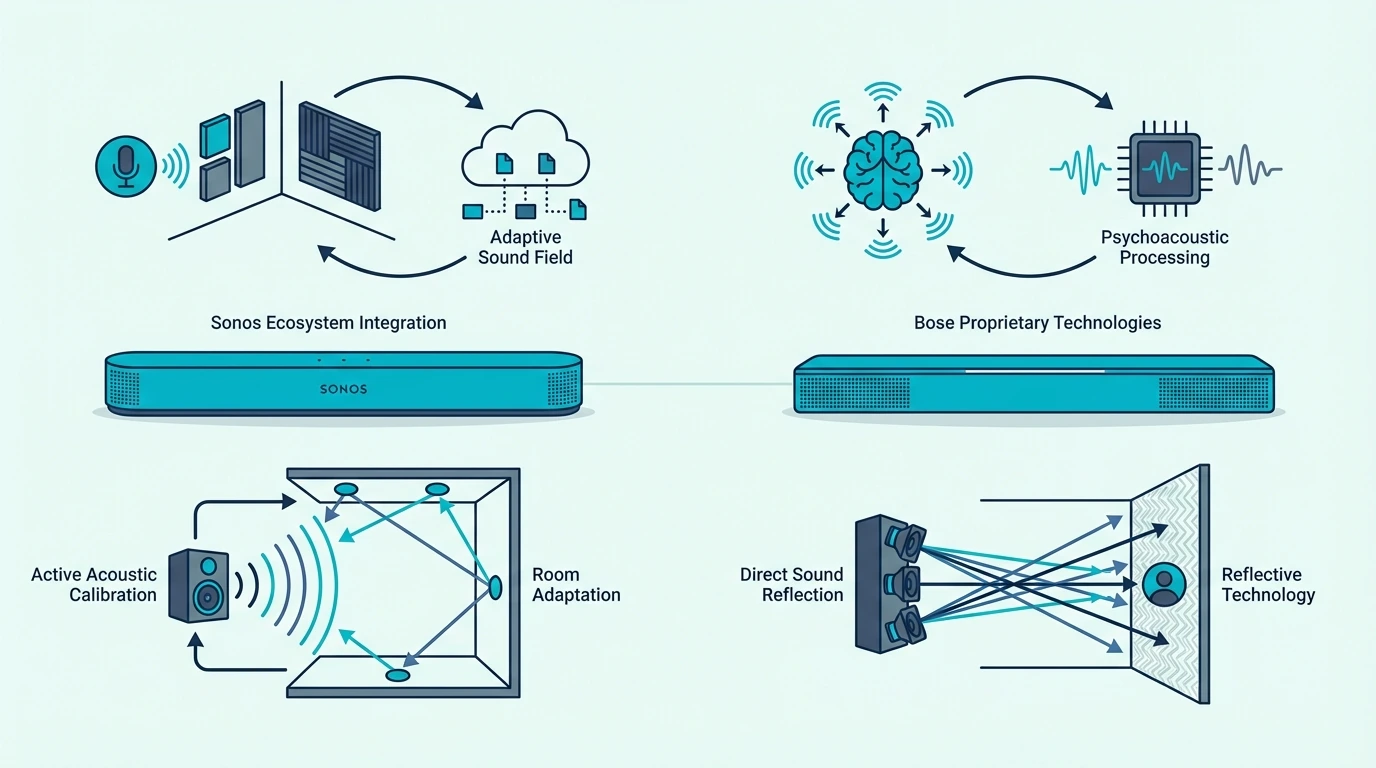
Bose is the stronger platform when streaming flexibility, device compatibility, and private listening matter.
You need Bluetooth. If your WiFi is unreliable, if guests regularly want to play music from their phones, or if you use the soundbar in a space without WiFi (like a garage or patio), Bluetooth is essential. Every Bose soundbar has it; no Sonos soundbar does.
You’re on Android. Sonos Trueplay room calibration only works with iPhones — if your household runs Android devices, you get zero room calibration from Sonos. Bose ADAPTiQ works on any phone platform with its dedicated measurement headset.
You want private headphone listening. Bose SimpleSync lets you pair QuietComfort Ultra headphones to the soundbar for late-night watching or shared spaces. You hear the TV audio in your headphones at your preferred volume while the soundbar plays at a different volume for the room — Sonos offers no equivalent feature.
You’re in a Google Home household. Sonos dropped Google Assistant in 2024. If your smart home runs on Google Assistant, Bose is the only brand here that integrates with your voice ecosystem.
You prioritize dialogue clarity on a budget. The Bose TV Speaker at $279 has a dedicated center tweeter specifically tuned for voice reproduction. For bedrooms or secondary TVs where clear dialogue matters more than Atmos, it’s one of the best simple options available.
Sonos vs Bose: Quick Comparison
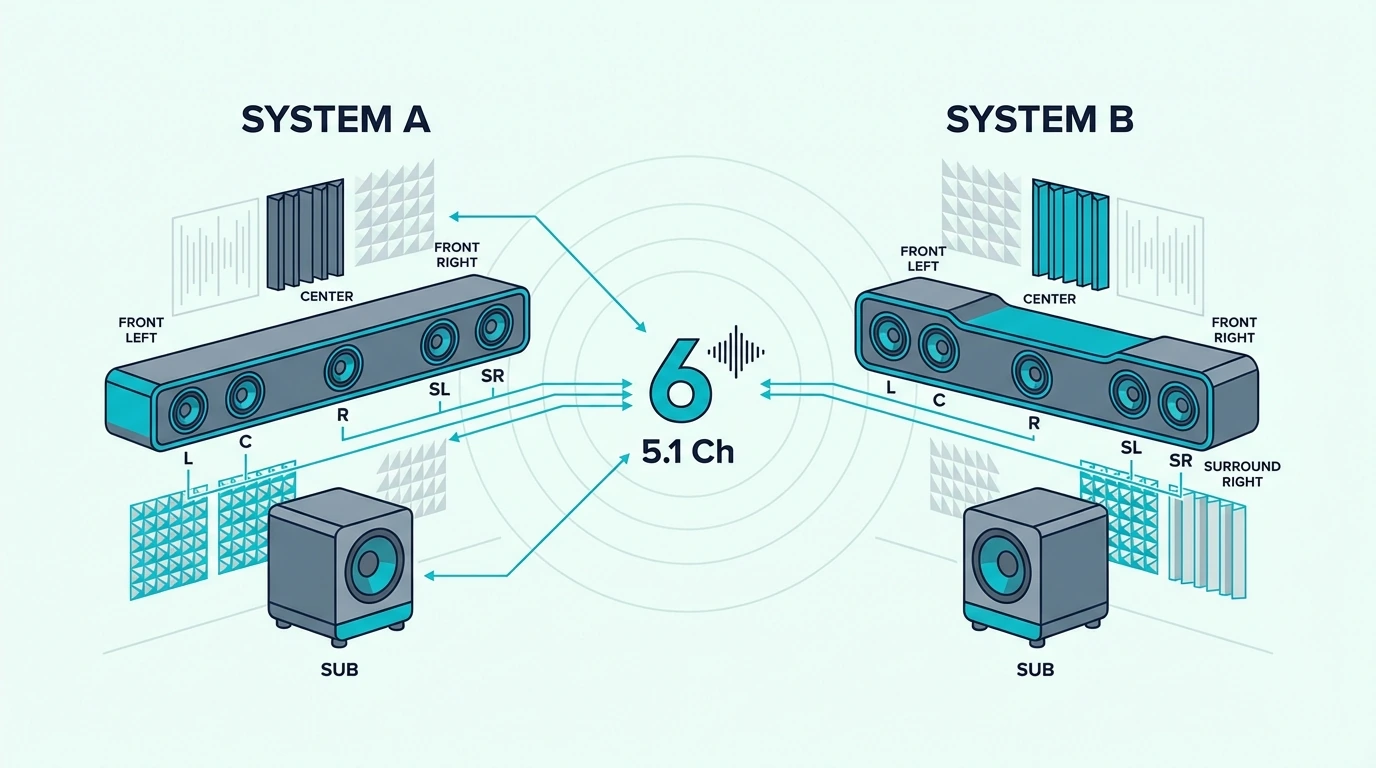
| Feature | Sonos | Bose |
|---|---|---|
| Dolby Atmos models | Arc Ultra ($1,069), Beam Gen 2 ($369) | Smart Soundbar 600 ($419) |
| Budget entry | Ray ($219) | TV Speaker ($279) |
| Bluetooth | ❌ No | ✅ Yes (all models) |
| WiFi streaming | ✅ AirPlay 2, Spotify Connect, Sonos app | ✅ Bose Music app |
| Room calibration | Trueplay (iPhone only) | ADAPTiQ (any phone) |
| Voice assistants | Alexa, Sonos Voice Control | Alexa, Google Assistant |
| Multi-room | ✅ Full whole-home grouping | ⚠️ Limited (SimpleSync, 2 devices) |
| Surround expansion | Era 100/300 (dual-use) | Dedicated surround speakers |
| Headphone pairing | ❌ No | ✅ SimpleSync |
| HDMI eARC | Arc Ultra, Beam Gen 2 | Soundbar 600 |
For a broader comparison of how soundbars stack up against full speaker systems, our soundbar vs speakers guide covers that decision. Our soundbar vs home theater guide explains when a full component system is worth the complexity.
If you’re comparing soundbar connection types, our HDMI vs optical guide breaks down the tradeoffs.
The Bottom Line
Sonos and Bose both make excellent soundbars — the audio quality gap between them at any given price tier is smaller than the ecosystem differences that shape your daily experience.
Choose Sonos if you want a multi-room audio system, surround speakers that double as music speakers, and an Apple-heavy household.
The Beam Gen 2 at $369 is the sweet spot for most rooms. The Arc Ultra at $1,069 is for large spaces where you want the widest possible soundstage.
For a full breakdown of each Sonos model, our best Sonos soundbar guide covers every current pick.
Choose Bose if you need Bluetooth, platform-independent calibration, Google Assistant, or private headphone listening.
The Smart Soundbar 600 at $419 is the most capable Bose option. The TV Speaker at $279 is the simplest upgrade for dialogue clarity.
Our best Bose soundbar guide ranks every Bose option by room size and use case.
If you already own speakers from either brand, staying in that ecosystem is the practical choice. Neither brand’s products work with the other’s.
If you’re starting fresh, Sonos offers a deeper lineup with more room-to-room expansion options.
Our soundbar vs receiver guide covers when a traditional receiver setup might be a better fit than either ecosystem.
Frequently Asked Questions
Does Sonos have better sound quality than Bose?
At the flagship level, the Sonos Arc Ultra produces a wider soundstage from its 14-driver array with Sound Motion technology. Bose’s TrueSpace processing creates convincing spatial audio from fewer drivers.
In practice, the sound quality difference at any given price tier is subtle. Most listeners won’t identify a clear winner without a side-by-side comparison, and the ecosystem differences matter more than the marginal audio gap.
Which is better for a small room — Sonos Beam or Bose 600?
Both deliver Dolby Atmos in a compact form factor.
The Sonos Beam Gen 2 at $369 is better if you want a Sonos multi-room system or iPhone Trueplay calibration.
The Bose Soundbar 600 at $419 is better if you need Bluetooth or ADAPTiQ calibration on an Android phone.
Can I mix Sonos and Bose products in the same system?
No. Sonos speakers only work within the Sonos ecosystem, and Bose speakers only work within Bose’s system.
You cannot use a Bose subwoofer with a Sonos soundbar or add Sonos speakers as surround channels for a Bose bar. Choose one ecosystem and build within it.
Is the Sonos Arc Ultra worth $1,069?
The Arc Ultra makes sense for large rooms of 300+ square feet where you want the widest possible Atmos soundstage from a single bar. It also fits if you plan to expand with Sonos surround speakers and a Sub.
For rooms under 300 square feet, the Sonos Beam Gen 2 at $369 delivers close to the same Atmos performance at a third of the price.
Our is a soundbar worth it guide covers the full value calculation.
Which brand is better for someone starting from scratch?
If you don’t own any speakers from either brand, Sonos offers a more future-proof platform. It has more product tiers and broader multi-room capability.
Bose is the better choice if Bluetooth or headphone pairing are non-negotiable requirements for your setup.