Sonos vs Sony Soundbar: Which Premium Brand Fits Better? [2026]

Sonos vs Sony soundbar looks like a straight premium-brand showdown, but the real choice is whether you want the best streaming ecosystem or the best cinematic home theater.
Sonos builds soundbars as the centerpiece of a whole-home streaming system with the most polished multi-room app in the industry.
Sony builds soundbars as premium home theater components with cinematic Dolby Atmos and deep Bravia TV integration.
The real decision isn’t which sounds better. It’s whether you prioritize streaming or cinema.
The Sonos Arc Ultra at $999 delivers exceptional multi-room streaming with Trueplay room calibration and seamless expansion.
Its closed ecosystem means every expansion component must be Sonos hardware at Sonos prices. Your upgrade path is locked to one brand.
Sony’s Bravia Theater Bar 9 at $899 leverages 360 Spatial Sound Mapping, HDMI passthrough, and deep Bravia TV integration.
Movie enthusiasts get cinematic spatial audio that Sonos’s music-first approach does not prioritize. Sony’s multi-room ecosystem is less polished than Sonos’s.
Understanding whether multi-room streaming or cinematic Dolby Atmos better matches your daily use helps you avoid overpaying at these premium prices.
You will avoid paying for Sonos’s ecosystem when movies are your priority. You will also avoid missing Sonos’s streaming polish by defaulting to Sony.
Below, we’ll compare Sonos and Sony soundbars across audio performance, ecosystem integration, and expansion options.
The goal is to pick the premium brand that matches your listening priorities.
Choose Sonos if you care most about multi-room streaming, app polish, and gradual ecosystem expansion.
Choose Sony if you want cinematic Atmos performance, HDMI passthrough, and tight Bravia TV integration.
Sonos is the stronger music-and-ecosystem play. Sony is the stronger movie-first option.
Audio Performance: Streaming vs Cinema

Both the Sonos Arc Ultra and Sony Bravia Theater Bar 9 are premium flagships with exceptional audio. Their tuning priorities differ in ways that matter depending on whether you primarily stream music or watch movies.
Sonos Arc Ultra: Music-First Excellence
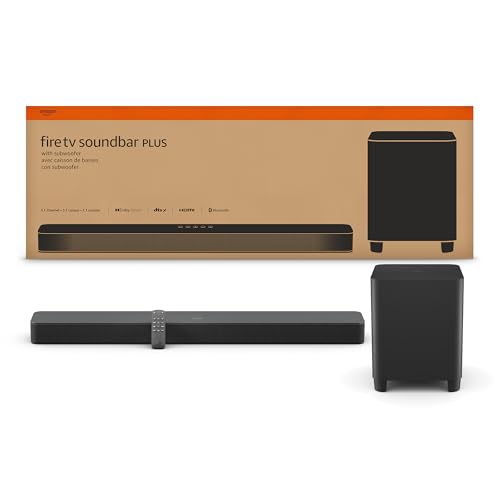
For large-room movie use, a current example is Amazon Fire TV Soundbar Plus with built-in subwoofer, which is a strong fit for Atmos movies and TV with stronger bass.
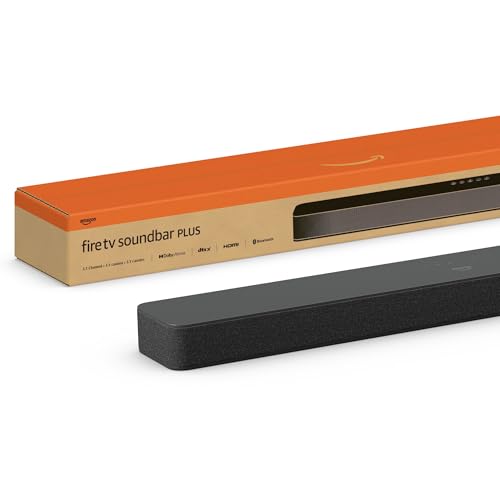
Amazon Fire TV Soundbar Plus with built-in subwoofer
Its sound signature prioritizes musical clarity and vocal presence. The warm, detailed presentation makes streaming music sound genuinely engaging.
Trueplay room calibration uses your iPhone’s microphone to measure your room’s acoustics. It then adjusts the output to compensate for reflections and standing waves.
The result is a sound profile optimized for your exact environment rather than a generic EQ preset.
For music listening, this calibration makes a dramatic difference.
The Arc Ultra handles Dolby Atmos competently, but its spatial processing prioritizes wide, enveloping sound over precise overhead object placement. Movies sound immersive and expansive but slightly less spatially precise than Sony’s cinema-focused approach.
Our Sonos vs Bose soundbar comparison covers how Sonos competes with another ecosystem-focused brand, and our soundbar fundamentals guide explains how all soundbar types work.
Sony Bravia Theater Bar 9: Cinema-First Power
The Sony Bravia Theater Bar 9 uses 13 speakers — seven tweeters and six midrange drivers — arranged for precise Dolby Atmos object placement. Sounds move through three-dimensional space with accuracy that makes movies feel genuinely cinematic.
Sony’s 360 Spatial Sound Mapping uses built-in microphones to measure your room and create virtual speakers throughout the space.
The surround immersion is specifically engineered for movie watching.
Sony’s sound signature emphasizes dynamic range and cinematic impact.
Explosions hit harder. Dialogue anchors precisely to the center of the screen.
Overhead Atmos effects render with clearer height placement than Sonos’s more diffuse approach.
For dedicated Dolby Atmos movie watching, Sony delivers a more theatrical experience.
If the Bar 9 price is out of range, a current step-down example is the Sony HT-S40R 5.1ch home theater soundbar system, which still gives a bundled-surround Sony package at a much lower price.
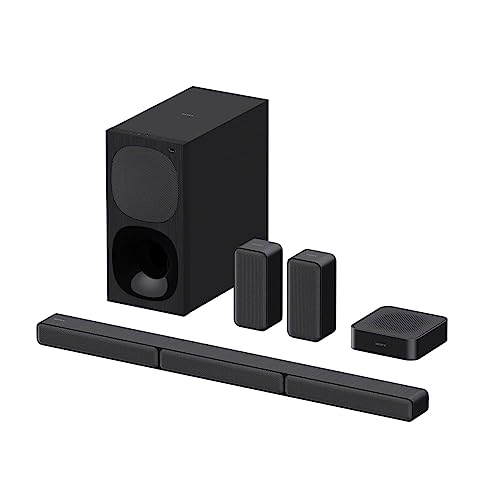
Sony HT-S40R
The Bar 9 also includes HDMI input passthrough for 4K HDR game consoles and media players. Sonos lacks this entirely, making Sony the better choice for setups with multiple HDMI sources.
Bravia-branded TVs also unlock Acoustic Center Sync. The TV’s own speakers handle the center channel, which helps dialogue lock onto the screen.
That one feature alone can outweigh a few dollars of price difference if you watch a lot of dialogue-heavy content.
For broader context on how channel layouts affect that experience, see our what soundbar channels mean guide.
Ecosystem, Expansion, and Value
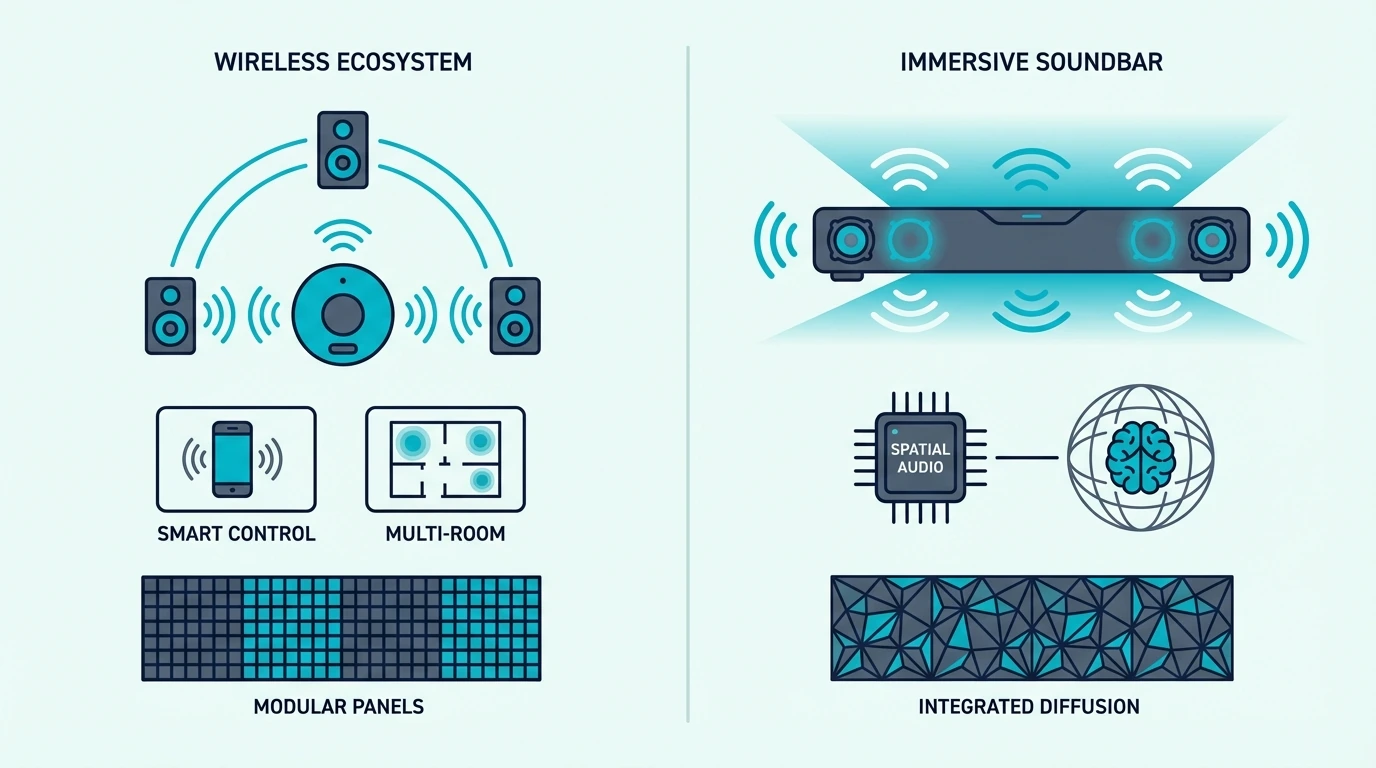
Beyond raw audio performance, Sonos and Sony differ dramatically in expansion options and app quality. These factors often matter more than sound quality for daily satisfaction.
A polished app turns a good soundbar into a platform you actually want to use every night. A clunky app turns a great soundbar into a box you poke at through the remote.
Sonos owns this daily-use experience. Sony owns the TV-side experience instead.
Sonos Ecosystem: Unmatched Multi-Room
Sonos’s biggest advantage is its multi-room streaming ecosystem.
The Arc Ultra connects seamlessly with Sonos speakers in every room through the Sonos app.
You can play the same music everywhere, group rooms, or play different content in each room.
Adding Era 300 speakers as wireless surrounds and a Sonos Sub turns the Arc Ultra into a full Atmos surround system without any wire runs.
The Sonos app is consistently rated as the most polished multi-room control interface in the industry.
It integrates directly with Spotify, Apple Music, and Amazon Music.
For households that value music throughout the home, Sonos’s ecosystem is unmatched.
The tradeoff is cost. Sonos Sub runs $799 and Era 300 surrounds cost $449 each.
The ecosystem only works with Sonos hardware, locking you into one brand for every expansion.
That lock-in is not necessarily a bad thing for buyers who value consistency. It becomes a problem only if you want to mix brands or hunt for deals on third-party bass and surround hardware.
For shoppers who want the option to swap or resell gear without replacing the whole system, that constraint is worth factoring into the long-term cost.
Sony Ecosystem: TV Integration Focus
Sony’s ecosystem strength is Bravia TV integration rather than multi-room expansion. The Bar 9 communicates with Sony Bravia TVs through proprietary protocols that enable acoustic center sync, automatic sound mode switching, and seamless remote control.
For Sony TV owners, the soundbar and TV work as one unified system.
Sony offers wireless surround speakers and a subwoofer for expansion.
The multi-room streaming experience is less polished. Sony’s app lacks the intuitive elegance and broad streaming integration that define Sonos.
If whole-home audio is not a daily priority, that gap rarely matters. Most Sony buyers are building a single-room movie system, not a multi-room audio platform.
For help deciding whether a bigger surround build is worth it, our soundbar vs home theater guide covers the tradeoffs.
Get Studio Tips Weekly
Join 5,000+ creators getting acoustic treatment advice every week.
No spam. Unsubscribe anytime.The Bottom Line
Choose Sonos for multi-room streaming excellence, the most polished audio app, and Trueplay calibration. The Arc Ultra delivers exceptional music streaming with warm musical clarity.
Sonos also wins when you expect to keep growing the system. Every added speaker behaves the same way and the app does not change on you.
Our best Sonos soundbar guide ranks every current Sonos bar by room size and budget.
Choose Sony for cinematic Dolby Atmos precision, 360 Spatial Sound Mapping, and deep Bravia TV integration. The Bar 9 delivers spatial audio and movie immersion that edges out Sonos for dedicated home theater setups.
Sony is also the safer pick if your daily use is mostly streaming services on a 4K TV. The HDMI passthrough and Bravia sync features add up quickly.
Our best Sony soundbar guide covers the current Sony picks by room type.
If you are still unsure whether any premium bar is worth the spend, our with vs without a soundbar guide compares TV-speaker sound with bar sound in plain terms.
Our do you need a soundbar for smart TV guide helps evaluate whether either premium brand justifies its investment, and our soundbar setup guide covers optimal placement for premium soundbar systems.
Frequently Asked Questions
Are Sonos soundbars better than Sony?
Neither is universally better. Sonos excels at multi-room streaming, ecosystem expansion, and music listening with the most polished app experience.
Sony excels at cinematic Dolby Atmos precision, HDMI passthrough, and Bravia TV integration. Choose Sonos for music and multi-room; choose Sony for movies and spatial audio.
Is Sonos Arc Ultra better than Sony Bravia soundbar?
The Sonos Arc Ultra delivers superior multi-room streaming and a more polished app. It also has warmer music reproduction.
The Sony Bar 9 delivers more precise Dolby Atmos spatial audio.
It also adds HDMI passthrough and deeper Bravia TV integration for Bravia owners.
For music-first listeners, Sonos wins; for movie-first viewers, Sony wins.
For large-room movie use, a current example is Amazon Fire TV Soundbar Plus with subwoofer (newest model), which is a strong fit for Atmos movies and TV with stronger bass.
What brand is best for soundbars?
No single brand is best for everyone. Sonos leads in multi-room ecosystem.
Sony leads in cinematic spatial audio. Samsung leads in TV integration and variety.
Bose leads in compact room-filling sound. JBL leads in mid-range value.
The best brand depends on your priorities and budget.
For most buyers, the smart first move is to name one priority. Name the thing you will use every day, then choose the brand that owns that priority.
That framing saves hours of spec-sheet comparisons and usually leads to a cleaner ownership experience. For a broader look at how soundbars fit into an audio setup, our soundbar fundamentals guide helps set expectations.