Sony vs Samsung Soundbar: Which Brand Gives Better Value? [2026]
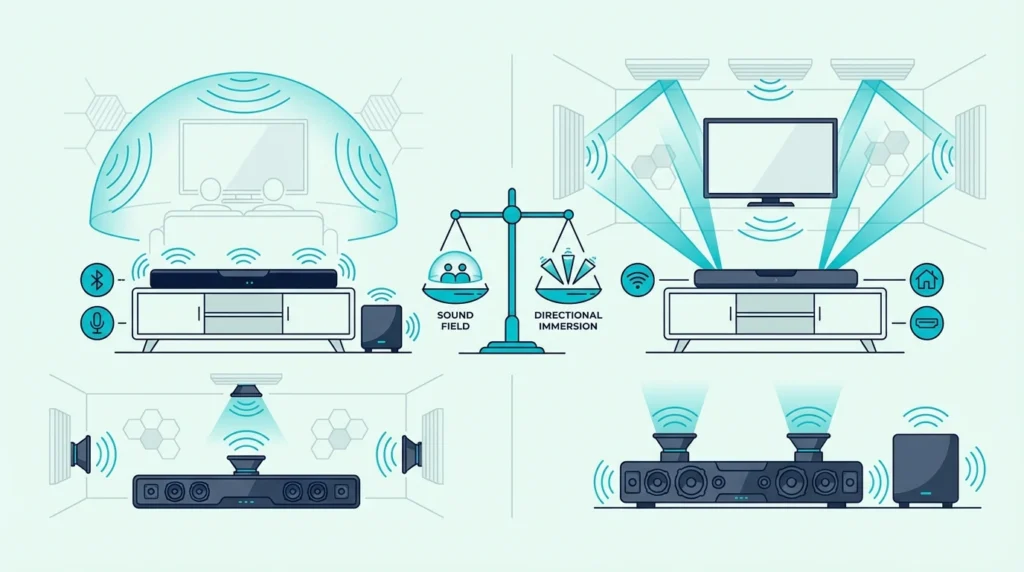
Sony vs Samsung soundbar looks like a straight flagship duel, but the real tradeoff is cinematic precision at the top versus variety and value at every other price point.
Sony builds a focused lineup of premium soundbars tuned for cinematic Dolby Atmos and deep Bravia TV integration.
Samsung builds the broadest soundbar lineup in the industry. It spans budget to flagship with Q-Symphony TV integration.
The wrong choice means overpaying for Sony’s premium approach or settling for Samsung when Sony’s precision would transform your movie watching.
Sony’s premium-focused lineup means fewer choices at mid-range and budget prices. Samsung’s lineup starts Dolby Atmos bars well under $300.
Budget-conscious buyers often get more features per dollar from Samsung. Samsung’s processing still does not match Sony’s cinematic precision at the flagship level.
Knowing whether you prioritize cinematic Atmos precision or product variety at every tier helps you avoid overpaying for the wrong brand strategy.
Below, we’ll compare Sony and Samsung across sound philosophy, product lineup, and TV integration.
The goal is to pick the brand that matches both your ears and your budget.
Choose Sony if your main priority is cinematic Atmos precision and deeper Bravia TV integration. Choose Samsung if you want more choices at every budget, stronger mid-range value, and Q-Symphony with a Samsung TV.
Sony is the movie-first pick. Samsung is the broader value-and-ecosystem pick.
Sound Philosophy: Cinematic Precision vs Adaptive Processing
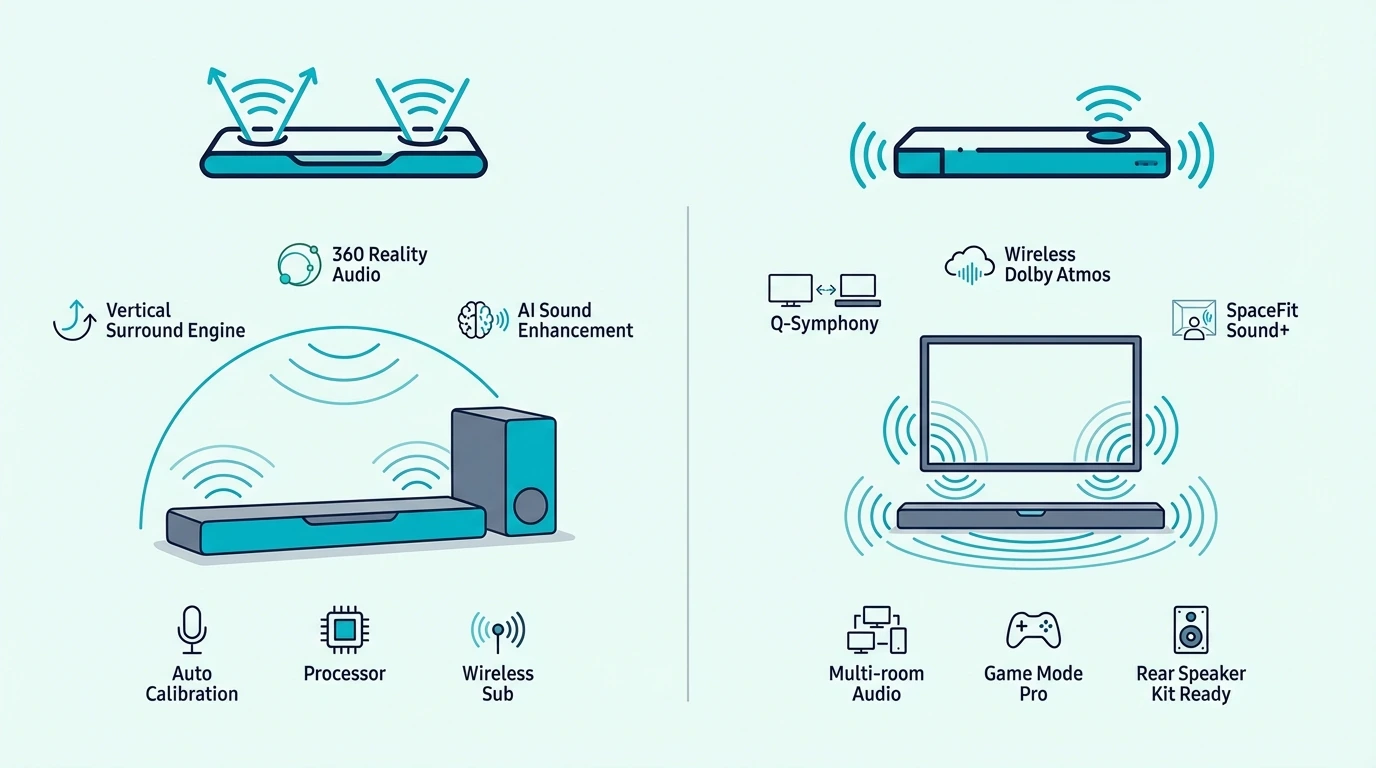
The core difference between Sony and Samsung soundbars isn’t just sound quality — it’s the engineering philosophy that shapes how each brand designs audio processing across their entire lineup.
Sony: Cinematic Atmos Precision
Sony engineers its soundbars as dedicated home theater components. The flagship Bravia Theater Bar 9 ($899) uses 13 speakers arranged for precise Dolby Atmos object placement.
Audio objects move through three-dimensional space with accuracy that makes movies feel genuinely cinematic.
Sony’s 360 Spatial Sound Mapping uses built-in microphones to measure your room and create virtual speaker positions throughout the space. It optimizes spatial audio for your specific listening environment.
Sony’s HDMI passthrough allows 4K HDR sources to connect directly through the soundbar to the TV. Samsung’s mid-range lineup often lacks this, making Sony the better choice for setups with multiple HDMI sources.
For large-room movie use, a current example is JBL Bar 300MK2-5.0 Channel All-in-one soundbar with Dolby Atmos, which is a strong fit for Atmos streaming and immersive TV audio.
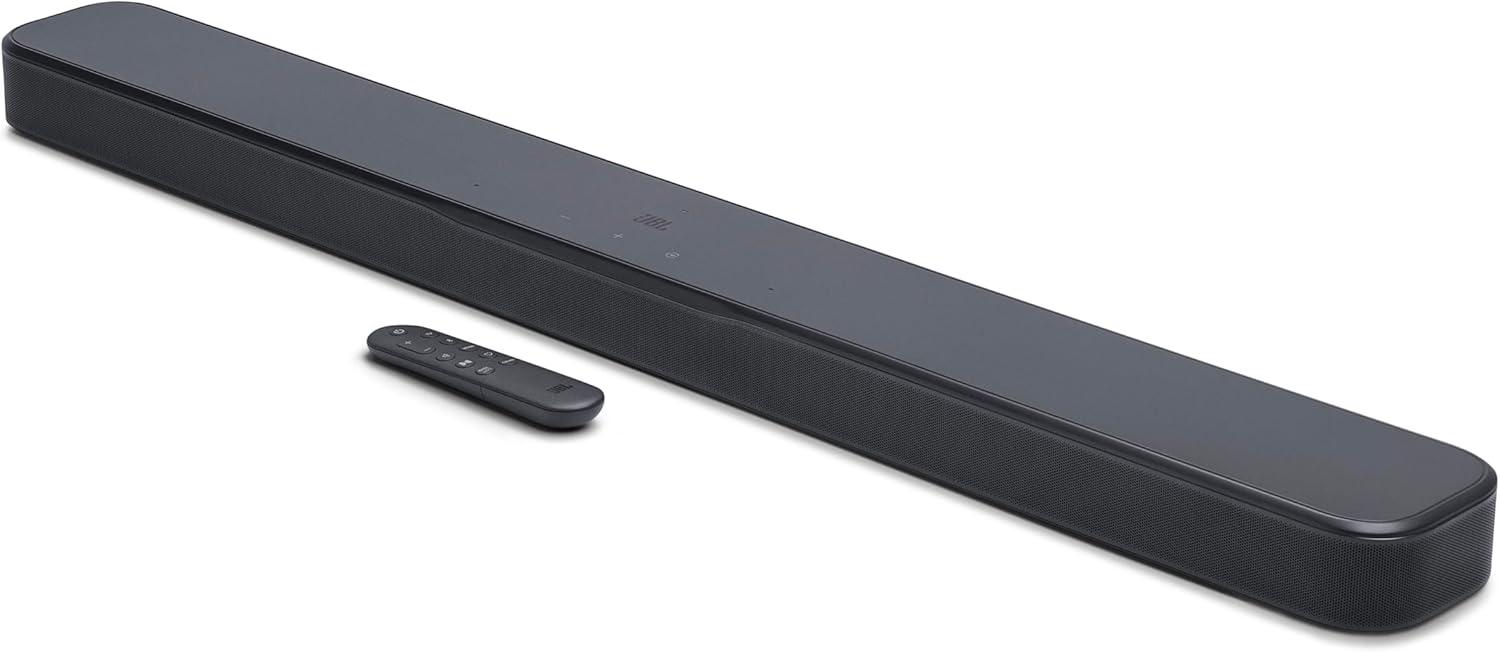
JBL Bar 300MK2-5.0 Channel All-in-one soundbar with Dolby Atmos
Our Sonos vs Sony soundbar comparison covers how Sony competes with Sonos’s ecosystem, and our soundbar fundamentals guide explains how all soundbar types work.
Samsung: Adaptive Processing and Product Breadth
Samsung engineers its soundbars as TV ecosystem accessories designed to work seamlessly with Samsung TVs through Q-Symphony. This proprietary feature synchronizes the TV’s speakers with the soundbar to create a wider, taller soundstage than either produces alone.
Samsung’s adaptive sound processing analyzes audio in real-time. It adjusts EQ, surround width, and dialogue enhancement based on content type.
It optimizes for movies, music, news, and gaming without manual mode switching.
For large-room movie use, a current example is Polk Audio Signa S4 TV Sound Bar with Subwoofer, which is a strong fit for Atmos movies and TV with stronger bass.
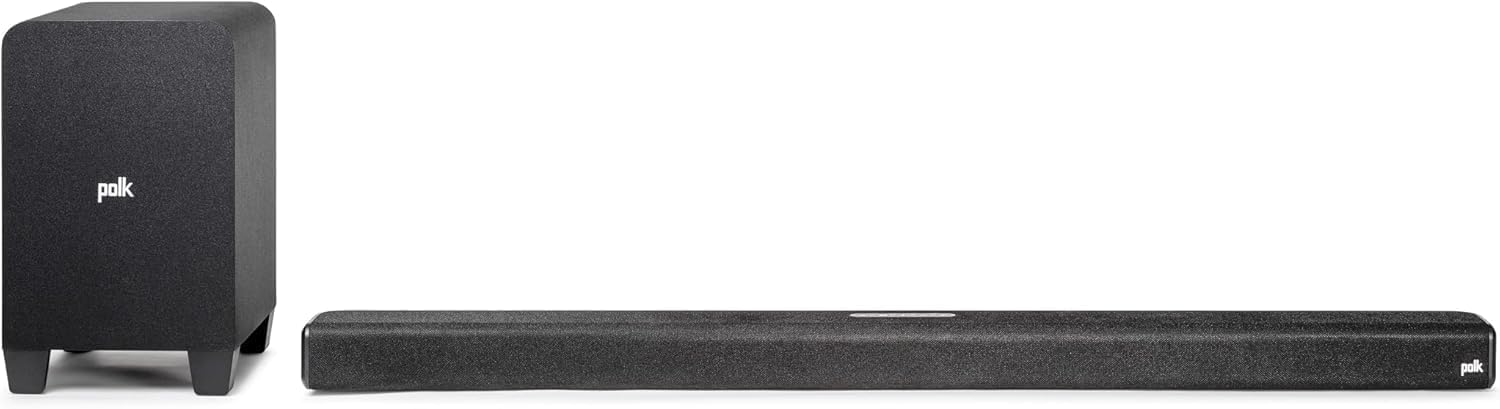
Polk Audio Signa S4 TV Sound Bar with Subwoofer
A current value example is JBL Bar 300MK2-5.0 Channel All-in-one soundbar with Dolby Atmos, which is a strong fit for Atmos streaming and immersive TV audio.
Our Samsung vs LG soundbar comparison covers how Samsung competes with LG, and our is a soundbar worth it guide evaluates the overall soundbar investment.
Product Lineup, TV Integration, and Value
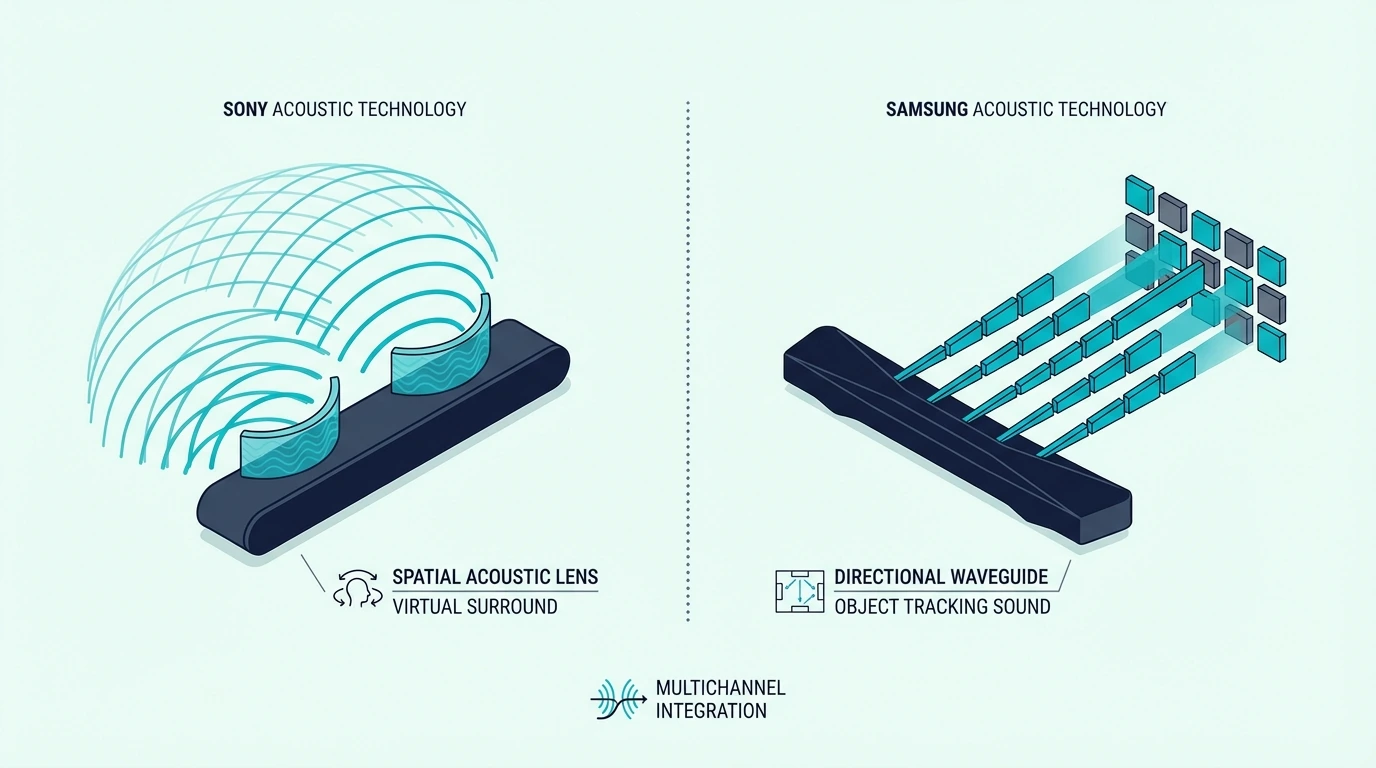
Beyond sound philosophy, Sony and Samsung differ dramatically in how many options you get at each price tier and how deeply each brand integrates with its own TV ecosystem.
Samsung’s Lineup Advantage: Options at Every Budget
Samsung offers soundbars from roughly $100 to the $1,800 HW-Q990D flagship surround system. That is an unmatched range with a competitive option at virtually any budget.
Sony’s lineup is smaller and more premium-focused, with fewer mid-range and entry-level options.
For buyers who want Dolby Atmos under $300, Samsung’s selection is significantly broader — this price tier is Samsung’s strongest advantage. At the flagship level above $800, Sony’s Bravia Theater Bar 9 competes more directly.
But Samsung’s HW-Q990D offers a full 11.1.4-channel wireless surround system with rear speakers included.
Our soundbar vs home theater comparison covers when full systems outperform single bars, and our 2.1 vs 5.1 soundbar guide explains channel configurations at every price point.
TV Integration: Match Your TV Brand
If you own a Samsung TV, Samsung soundbars deliver Q-Symphony integration no other brand can match.
The TV speakers and soundbar work as a unified audio system. They create a taller, wider soundstage.
Samsung’s OneRemote also controls the soundbar seamlessly through the TV interface.
If you own a Sony Bravia TV, Sony soundbars deliver equivalent deep integration. Acoustic center sync uses the TV speakers alongside the soundbar, and the TV remote controls everything through a unified interface.
For non-Samsung and non-Sony TV owners, neither brand’s ecosystem advantage applies. The decision becomes purely about sound quality and value.
In mixed-brand setups, Samsung’s broader lineup usually wins on sheer price choice. Sony wins only when you are specifically chasing Atmos precision on a 4K HDR TV.
That shift happens more often than buyers expect. Many households assume brand matching is the whole point, but the TV-side ecosystem perks rarely change daily listening much on bars under $400.
Below $400, the decision is mostly about price and channel count.
Above $800, the decision swings back to Sony for cinema and Samsung for full surround packages.
For large-room movie use, a current example is JBL Bar 300MK2-5.0 Channel All-in-one soundbar with Dolby Atmos, which is a strong fit for Atmos streaming and immersive TV audio.
Our HDMI vs optical guide explains connection options, and our soundbar to TV connection guide covers setup for both brands.
Sound Quality vs Value: The Real Tradeoff
At the same price point, Sony typically delivers more precise spatial audio and cinematic Atmos.
Samsung delivers more features, broader connectivity, and adaptive processing convenience.
Sony’s fewer, more focused models mean each represents their best engineering at that price tier. Samsung’s broader lineup means more internal competition but also more variety for buyers.
Our soundbar vs surround sound guide covers broader surround options, and our soundbar vs speakers comparison explains when dedicated speakers outperform soundbar systems from either brand.
Subwoofer and Expansion Options
Both brands offer wireless subwoofer and surround speaker expansion. Samsung’s Q-series flagships include wireless rear speakers in the box, creating a complete surround system.
Sony’s expansion requires buying surround speakers separately, adding to total system cost.
Our soundbar vs receiver comparison covers when dedicated AV receivers with separate components outperform integrated soundbar ecosystems, and our what does a subwoofer do for a soundbar guide explains the bass benefit.
Get Studio Tips Weekly
Join 5,000+ creators getting acoustic treatment advice every week.
No spam. Unsubscribe anytime.The Bottom Line
Choose Sony for cinematic Dolby Atmos precision with 360 Spatial Sound Mapping, HDMI passthrough, and deep Bravia TV integration. Sony delivers the most spatially accurate soundbar audio for dedicated movie watching.
Our best Sony soundbar guide ranks the current Sony picks by room type.
Choose Samsung for the broadest product selection at every price, Q-Symphony TV integration, and unmatched mid-range value. Samsung’s extensive lineup means there is an excellent option at any budget.
Our best Samsung soundbar guide covers the top Samsung picks at every budget.
Our do you need a soundbar for smart TV guide helps evaluate whether either brand is the right upgrade, and our soundbar setup guide covers optimal placement.
Frequently Asked Questions
Which sound bar is best, Sony or Samsung?
Neither is universally best. Sony delivers superior cinematic Dolby Atmos precision with 360 Spatial Sound Mapping for dedicated movie watching.
Samsung delivers more variety, better mid-range value, and Q-Symphony TV integration for everyday viewing. Choose Sony for cinema precision; choose Samsung for value and breadth.
Which one is better, Sony or Samsung?
Sony is better for cinematic home theater audio with precise spatial processing and Bravia TV integration. Samsung is better for everyday value with adaptive sound, broader selection, and Q-Symphony with Samsung TVs.
Your TV brand and budget often determine which delivers more value.
Do Sony TVs have better sound than Samsung?
Sony TVs generally deliver slightly better built-in speaker audio than Samsung at comparable price points. Sony’s Acoustic Surface Audio (on OLED models) uses the screen itself as a speaker for more natural sound.
However, both brands benefit dramatically from adding a soundbar — the soundbar upgrade is far greater than any difference between TV speakers.
What brand has the best soundbars?
No single brand dominates all categories. Sony leads in cinematic spatial precision.
Samsung leads in product variety and mid-range value. Sonos leads in multi-room streaming.
Bose leads in compact room-filling sound. The best brand depends on your specific priority: cinema quality, TV integration, or budget.
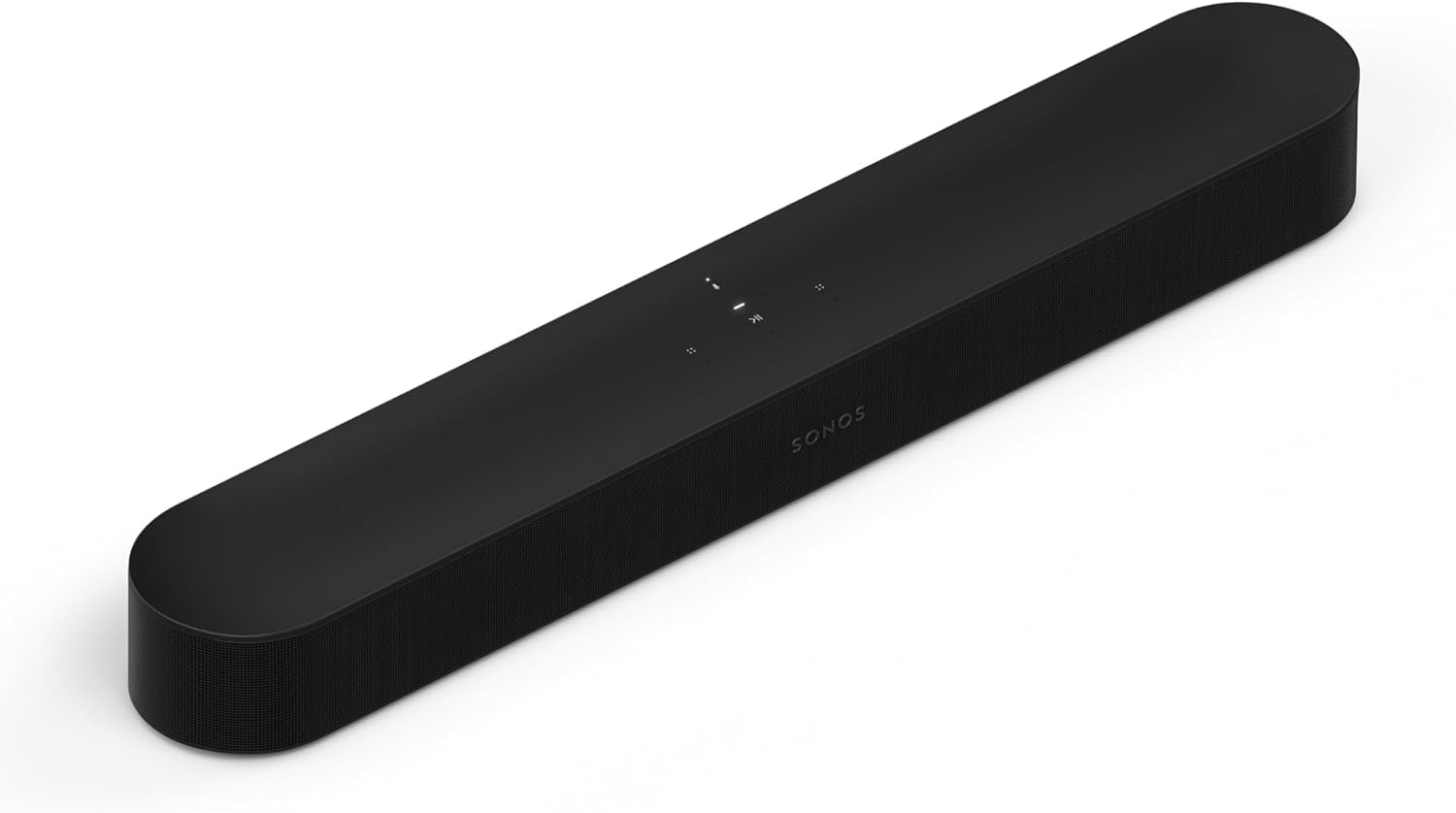
For this kind of small-room, dialogue-first setup, a current example is Sonos Beam Gen 2, which is a strong fit for Atmos streaming and immersive TV audio.