How to Soundproof an Apartment Door as a Renter
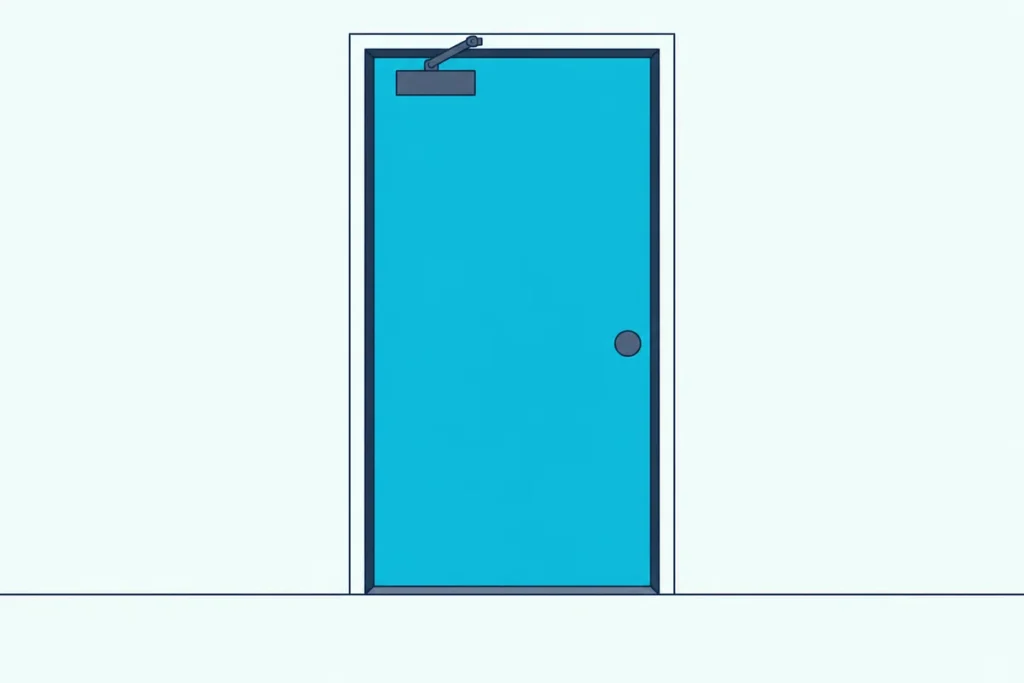
Here’s how to soundproof an apartment door: close the gaps around and under it, but first check whether it’s a fire door, because then the building decides what goes on it.
Hallway voices and footsteps come through those gaps, and NFPA 80, the fire door standard, lets a rated door keep up to 3/4 inch of open air underneath.
Sealed with the right parts, that kind of door tests at about STC 28 to 36, against 15 to 20 for doors with no gaskets, by National Guard Products’ figures.
Your first two moves cost nothing: a light test after dark and a look at the hinge edge for a fire label.
From there, this guide sorts what you can do yourself, what to ask your landlord for and which seals have test numbers behind them, so the door gets quieter without risking your deposit.
How to Soundproof an Apartment Door in Five Steps
Those two free checks decide who does each of the five steps. You soundproof an apartment door by finding the leaks, checking for a fire label, asking the landlord, sealing the head, jambs and bottom, and adding mass only where the rules allow it.
| Step | What to do | Who decides on a fire-rated door |
|---|---|---|
| 1. Find the leaks | Turn your lights off with the hall lit and look for light at the edges and under the door | You |
| 2. Check the label | Look for a fire label on the hinge edge and a closer at the top | You |
| 3. Ask first | Describe the noise and the gaps to the landlord before anything touches the door | The landlord or building |
| 4. Seal it | Gaskets at the head and jambs, then a door bottom | The building, with parts listed for fire doors |
| 5. Add mass | A heavier door, or a blanket where it’s allowed | The building |
On a door with no fire label, steps 4 and 5 can be yours, with the landlord’s OK and parts that come off cleanly. On a labeled door they become requests, and the sections below show why and what to ask for.
Why Does Hallway Noise Get Through the Door?
That light test usually answers this one before you read any further. Hallway noise gets in through the gaps around and under the door far more than through the slab, because sound passes through an opening in a barrier with very little loss, as Zero International, a maker of door seals, puts it.
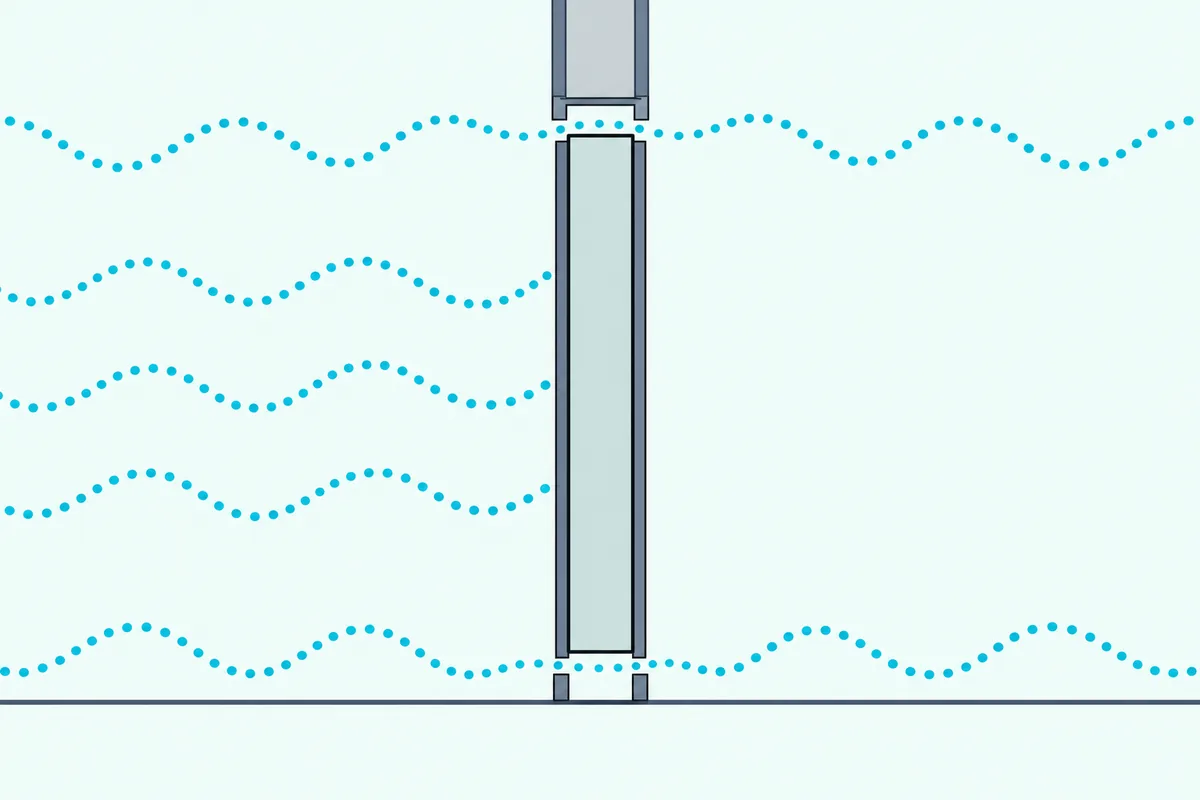
It doesn’t take much of an opening. HUD’s Noise Guidebook says a one-inch square hole, or a crack 1/16 inch wide and 16 inches long, takes a wall rated STC 50 down to 40.
A fire door is allowed far more than that. The Fire Protection Research Foundation, part of NFPA, reports that NFPA 80 allows up to 1/8 inch at the top and sides of a swinging fire door and up to 3/4 inch at the bottom, and that clearances under these doors are often found to be larger still.
At 3/4 inch, the gap under a 36-inch door is 27 square inches of open air by our arithmetic. Zero adds that unsealed gaps cancel out the benefit of even the highest-rated sound doors, so a heavier slab can’t block noise while those paths stay open.
The hallway itself adds to the problem. A 1967 guide to noise in apartment buildings from HUD and the National Bureau of Standards says corridors and hallways are usually excessively noisy because they’re reverberant, and it treats the entrance door as the acoustically weakest link in the corridor wall.
That same guide wanted solid-core entrance doors with proper gasketing, which is the gap problem again. Note where the light came through in that test: a bright line at the bottom or along the latch side tells you which seal matters most.
Get Studio Tips Weekly
Join 5,000+ creators getting acoustic treatment advice every week.
No spam. Unsubscribe anytime.What Changes When the Door Has a Fire Label?
Those gaps are also where the fire rules start. A fire label means the door belongs to a fire door assembly whose frame and hardware must be listed too, so the door must always close and latch, and anything added to it has to be listed for fire doors or left to the building.
In US apartment buildings, the doors from an interior corridor into each unit are typically required to be 20-minute fire door assemblies, writes Lori Greene, Allegion’s codes manager, on iDigHardware. Doors in older buildings that predate that rule are often treated as their equivalent, and they still need to close and latch on their own.

To spot one, Georgetown University’s safety office says to look on the hinge edge for a metal identification tag, which is sometimes painted over, and to treat a door closer as another clue. New York City goes further: every door onto an interior corridor in an apartment building must swing shut and self-latch, labeled or not.
The label covers smoke as well. National Guard Products, a maker of door seals, says fire doors in corridors must pass an air leakage test and carry an “S” on the label, which counts only “when listed or labeled gasketing is also installed.”
None of that makes the door quiet on its own, and our guide to how much sound a fire door blocks covers what the label does and doesn’t tell you about noise.
What Can a Renter Change on an Apartment Door?
That label decides how much of the door is yours to work on. On a door with no fire label, you can usually add seals that come off cleanly, with the landlord’s OK; on a labeled door, don’t drill, stick, hang, wedge or adjust anything, because the rules below put those changes in the building’s hands.
| On a labeled hallway door | The rule | Whose rule |
|---|---|---|
| Screws, hooks or new hardware | Holes are limited, and old fastener holes must be filled with steel fasteners, the same material or a listed filler | NFPA 80, as Intertek summarizes the 2016 edition |
| Stick-on gaskets, sweeps or door bottoms | Must be listed for use on a fire door | iDigHardware (Allegion) |
| Anything that stops the door closing | The opening must be kept clear of anything that interferes with the door | NFPA 80 |
| Propping, wedging, taping the latch or overriding the closer | Not allowed | NFPA; New York City’s housing agency |
| Painting over or removing the label | Labels must stay legible | NFPA |
Even the gasket makers draw this line. National Guard Products marks its quick-fit two-way tape mounting “not classified for use on fire doors,” while its listed self-adhesive smoke seal uses an adhesive made for permanent mounting.
Outside the US the line looks similar. England’s fire door guidance says residents shouldn’t tamper with self-closing devices and should change a flat’s front door only with the knowledge and agreement of the building’s Responsible Person.
Bedroom and bathroom doors inside the unit are a different case. If they carry no label, the full method for soundproofing a door applies to them as written.
What Should You Ask Your Landlord to Fix?
Those limits still leave plenty to ask for, because keeping a fire door in working order is the owner’s job. Ask the landlord to make the door close and latch onto its stops, to seal the head and jambs with gasketing listed for fire doors, and to close an oversized bottom gap with a door bottom listed for that gap.
Greene writes that building owners are responsible for keeping fire door assemblies code compliant, and that deficiencies found in an inspection must be corrected “without delay.” NFPA says fire doors need inspecting at least once a year by a qualified person, who can be the building owner or a third party.
Put the request in writing and describe what you saw in the light test. New York City’s housing agency lists “a large gap at the bottom of the apartment door” among the faults tenants should note, tells owners to make prompt repairs, and points tenants to 311 if nothing is fixed.
For the seals themselves, National Guard Products recommends a perimeter seal, an extra seal at the head where a parallel arm closer is fitted, and an automatic door bottom used with a threshold. Its self-adhesive 5050 silicone seal is one gasket classified for smoke and draft control on fire doors.
If the building asks for a part, the Pemko S88 SiliconSeal is an adhesive-backed fire and smoke gasket. Its listing says Pemko gasketing is tested for sound resistance, smoke and draft control and fire rating.
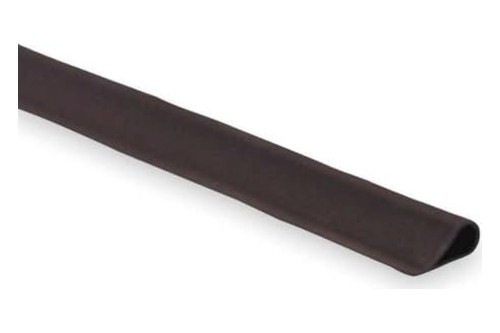
Pemko S88 SiliconSeal
A gap bigger than NFPA 80 allows needs more than an ordinary listed seal. Greene notes that most listed gaskets and door bottoms are tested only on doors within NFPA 80’s clearances, that several products are listed for larger gaps, and that once any of them goes on, the door must be tested to make sure it still closes and latches.
Which Seals Block the Most Hallway Noise?
Those listed parts are also the ones with sound numbers behind them. The seal that blocks the most is a complete one around the head, both jambs and the sill: Zero International says that if all sides of a door aren’t sealed, the gasketing gives “little or no sound-control value.”
National Guard Products puts numbers on standard doors without special acoustic cores, and the table shows how far gaskets move them.
| Door type | Without gasketing | With gasketing |
|---|---|---|
| Solid core wood | STC 15 to 20 | About STC 28 to 30 |
| Mineral core wood | STC 15 to 20 | About STC 32 to 36 |
| Honeycomb core hollow metal | STC 15 to 20 | About STC 32 to 36 |
On NGP’s own scale, STC 25 to 30 still lets normal speech through easily and distinctly, while 30 to 35 means loud speech is understood fairly well. So a sealed hollow metal door gets further than a sealed solid wood one, and an unsealed door of either kind has, in NGP’s words, no sound control.
The bottom needs a hard surface to seal against. The Steel Door Institute says door bottom gaskets must compress against a solid object, which carpet doesn’t provide, and NGP recommends a nylon brush where carpet runs under the door with no threshold.
If a knock on your door sounds hollow, Burton Acoustix’s guide to hollow doors covers what the slab adds once the gaps are sealed.
Can You Seal the Bottom Without Touching the Door?
That bottom gap is the one most renters want to close first. On a door with no fire label you can, with a slide-under draft stopper that moves with the door, but on a labeled door anything at the bottom has to be listed for fire doors and fitted by the building.
For an unlabeled door over a hard floor, the MAXTID twin draft stopper puts a foam roll on each side of the door that slides with it. Its listing photos say it fits gaps of 1/2 to 1 2/5 inches and isn’t for carpet, glass doors or doors with a threshold.
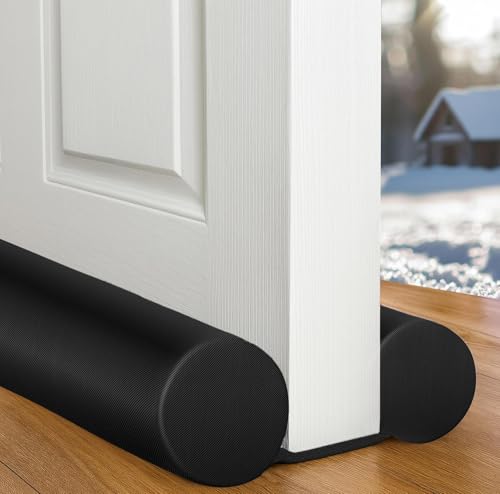
MAXTID twin draft stopper
It still sticks to the door with clear tabs and a hook patch, so ask the landlord first. Then check that the door swings fully shut and latches from fully open, the test New York City’s housing agency gives tenants.
Ask about the gap’s purpose too. NBS Handbook 119 explains that doors are often undercut about an inch to pass return air, and calls those gaps “extremely efficient flanking noise paths,” so ask whether your building’s air system relies on yours.
For the doors inside the unit, our roundup of door sweeps that are worth buying compares sweep types and how to measure the gap.
Do Door Blankets and Acoustic Panels Help?
Those seals deal with air paths, while blankets and panels promise mass and absorption. A heavy blanket can add some blocking to a door without a fire label if it overlaps the frame on every side, but acoustic panels and foam mostly absorb echo in your own room.

The weight is the point and the problem. Acoustical Surfaces rates its BBC-13X-2″ sound blanket, a two-inch-thick fiberglass quilt bonded to 1 lb per square foot of loaded vinyl, at STC 32 in its ASTM E90 test, and at 1.45 lb per square foot a 3-by-7-foot piece weighs about 30 pounds by our arithmetic.
That rating comes from a lab test of the blanket itself, so open edges cost it the way the door’s gaps do. On a labeled door, NFPA 80 caps even a combustible sign at 5 percent of the door’s face, about a 12-inch square on a 36-by-80-inch door, so a blanket over the whole face is the building’s decision.
In New York City there’s one more reason to leave it off. Owners must post a fire escape plan on the inside of every apartment door, and a blanket would cover it.
Heavy curtains on a rod beside the door follow the same logic as a blanket. They have to overlap the frame to block anything, and on a fire door they can’t get in the way of it closing.
Panels and foam don’t block sound. NBS Handbook 119 says acoustic tile on a ceiling “will not improve the sound insulation,” only the noise level in its own room, and acoustic panels on a door work on the same principle.
How Much Quieter Will the Door Get?
Those ratings matter most next to the wall the door sits in. HUD’s Noise Guidebook shows a hollow core door at STC 17 dragging a 48 STC wall down to 24, while a solid core door with vinyl edge seals, and carpet on the floor, leaves the same wall at 33.
So sealing doesn’t make the door as good as the wall, but it stops the door from undoing most of it. England’s Approved Document E sets a bar for doors between corridors and flats: good perimeter sealing, including the threshold where practical, and at least 29 dB Rw or 25 kg per square meter.
Check your result the way you found the problem: repeat the light test, then listen at the same hour as before, ideally the one when hallway noise breaks your sleep. If voices are still clear with no light showing, the slab or the wall is the path, and that’s where the landlord comes back in.
If the noise is loudest at the windows instead, it’s coming from outside rather than the hall, and no door seal will touch it.
When Is a New Door the Landlord’s Job?
That point, where the slab or the wall is the path, is where replacement starts. A new door is the landlord’s job whenever the slab itself is the weak point, because a fire-rated opening gets a new labeled assembly, not layers screwed to the old door.
NFPA 80, as Intertek summarizes it, doesn’t let a field modification turn an unrated door into a rated one unless it’s done under a label service. Where an opening with an unrated door needs a fire door, the whole assembly is replaced.
The 1967 HUD and NBS guide already pointed to solid-core entrance doors with proper gasketing, and NGP’s figures put gasketed mineral core wood and hollow metal doors at about STC 32 to 36. For a building with 75-year-old apartment doors, Greene’s advice to a reader was to check with the fire marshal, since local rules may apply.
If the landlord is choosing a new slab, how much more a solid core door blocks sets out the ratings behind the swap.
The Bottom Line
That light test and a look at the hinge edge tell you whose job the door is. On a door with no fire label, seal the bottom and edges with parts that come off cleanly, and add mass where the landlord agrees.
On a labeled hallway door, leave the slab and the closer alone and send the landlord a written request for listed gaskets, a listed door bottom and a door that closes and latches. That’s the quietest route that also keeps the door doing its real job in a fire.
Frequently Asked Questions
Can I put a door sweep on my apartment door?
If the door has no fire label, usually yes, with the landlord’s OK, and a slide-under stopper is the least permanent choice. If it’s labeled, only a sweep or door bottom listed for use on fire doors belongs there, and that goes for each part of a door seal kit too: Lori Greene of iDigHardware writes that gasketing, sweeps, door bottoms and thresholds on a fire door must be listed for that purpose. The building fits it, then checks that the door still closes and latches.
How do you soundproof a door in a rental without damaging it?
On a door with no fire label, use a slide-under draft stopper and removable seals the landlord approves, and avoid screws. On a fire-rated door, the damage-free route is a written request to the landlord. NFPA 80 requires holes left by removed hardware to be filled with steel fasteners, the same material or a listed filler, so even a hook you take down leaves a repair for the building.
Can you soundproof an apartment door from the hallway side?
Not as a tenant. The hallway face of the door and the corridor belong to the building, and on a fire door NFPA limits even a combustible sign to 5 percent of the face. The building can quiet the corridor itself, though: the 1967 HUD and NBS guide recommends carpet or acoustical ceilings in hallways, which it calls usually excessively noisy because they’re reverberant.
Do you need your landlord’s permission to soundproof the door?
For anything that attaches to the door or frame, assume yes. Owners carry the duty: New York City’s law makes the owner keep self-closing doors in good repair, and England’s fire door guidance says a resident should change a flat’s front door only with the Responsible Person’s agreement. Your lease may add its own rules, so check it before buying anything that sticks or screws on.