Is Acoustic Foam Reusable? How to Remove, Store & Reinstall Panels
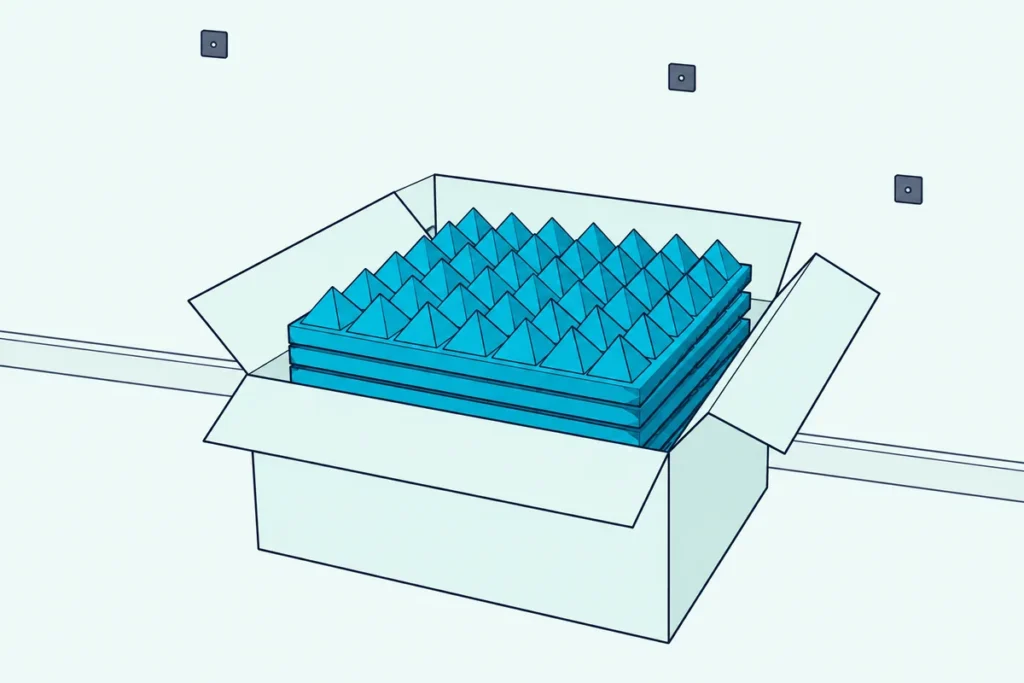
Is acoustic foam reusable? Yes, but only if the panels peel off cleanly and the foam itself hasn’t started to break down. The wrong removal method can damage both the foam and the wall.
Reusing foam can feel like an easy win when you’re moving or repainting. The problem is that most adhesive-mounted panels won’t survive removal intact, and crumbling foam just moves the mess into your new room.
Start with the mounting method (because that’s usually the make-or-break factor), then a quick condition check, then removal, storage, and reinstall options that keep your next setup clean and removable.
Foam mounted with removable strips or clips usually comes off intact and can be remounted with fresh hardware. Foam glued with spray or construction adhesive often tears, so plan for a hybrid approach (reuse the survivors, replace the rest). If you want future reuse, remount with a removable method and treat foam like a consumable that lasts a few years — not a forever material.
How does your mounting method affect whether acoustic foam is reusable?
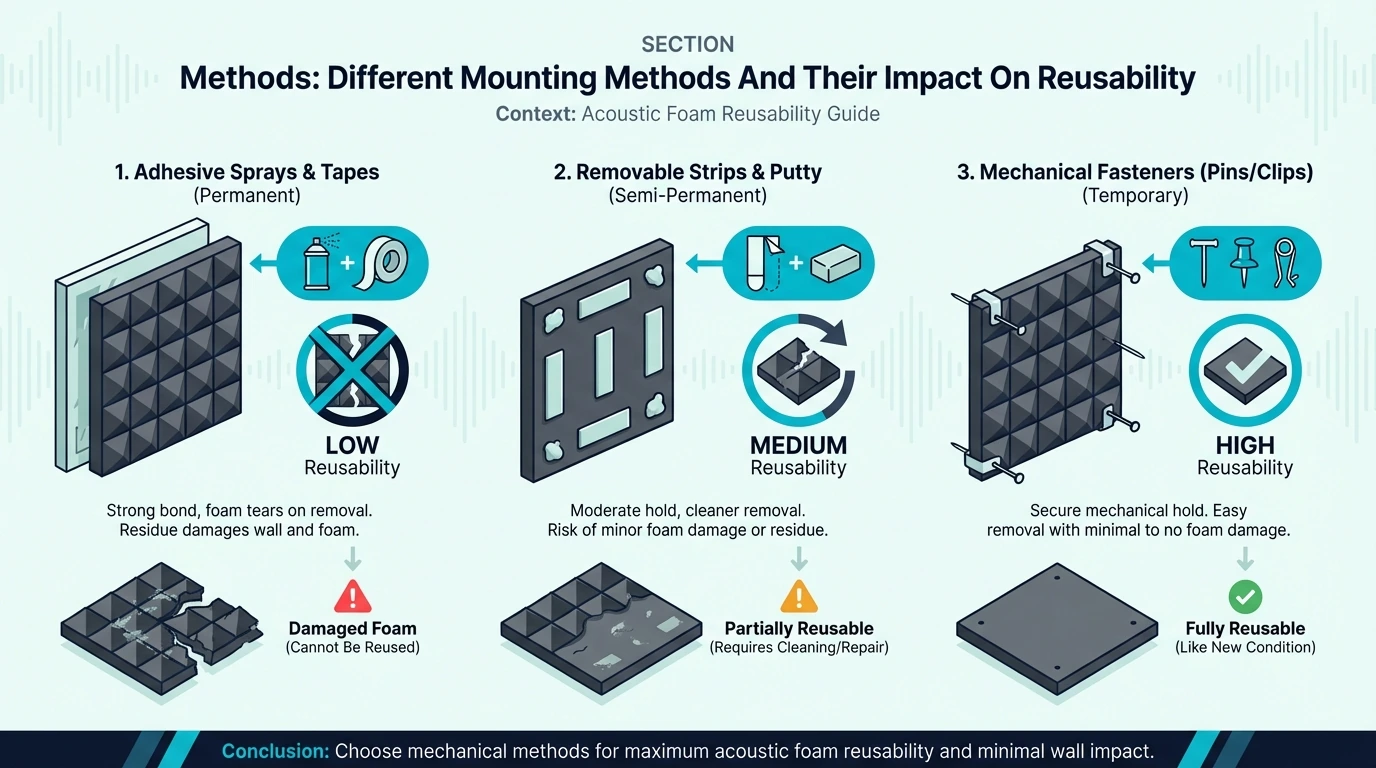
The quick takeaway is true, but it hides the real rule: your mounting method is the whole game. Acoustic foam tears easily from the back, and most “permanent” adhesives bond deeper than people expect.
If you can’t remember what you used, check one corner first. Clean pull-tabs or distinct strip shapes usually mean removable mounting, while smeared residue across the whole back usually means glue.
Removable strips (Command-style): the best-case scenario
If your foam is mounted with pull-tab strips, you’re in great shape. The trick is to remove the strips the way they’re designed to release, not the way your instincts want to yank them off.
Hold the foam panel with one hand so it doesn’t flex and tear. Then pull the release tab straight down (parallel to the wall), slowly, until the strip stretches and lets go.
Once a panel comes off cleanly, assume the old strips are “one-and-done.” You’ll usually want fresh strips for reinstalling.
Removable picture-hanging strips like Command picture hanging strips keep it damage-free as long as you pull the tab correctly. That’s still far less drama than scraping glue.
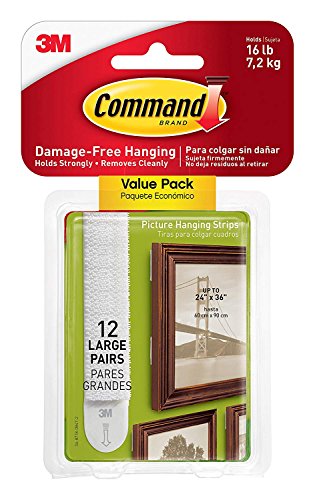
Command Picture & Frame Hanging Strips (Large, 12 Pairs)
If you’re deciding how to mount foam in the new room, start with how to put acoustic foam on a wall.
Impaling clips and pins: reusable, but expect small holes
Clips are a solid option for reuse because the wall hardware takes the beating instead of the foam’s backing. The foam will have small holes, but that usually doesn’t affect performance in any noticeable way.
If you want a hardware kit that lets you pop panels on and off, push-on impaler mounts keep the wall hardware separate from the foam. You’ll still get small punctures, but you avoid glue entirely.
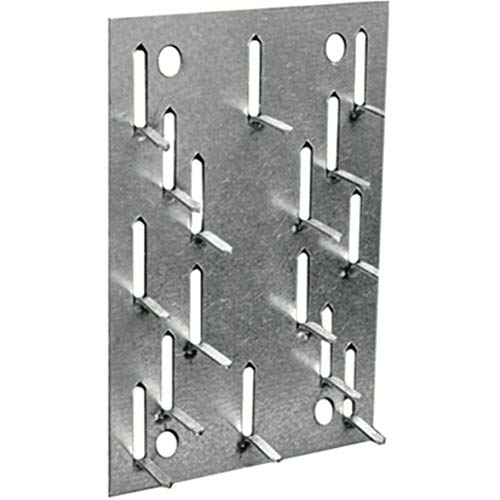
Primacoustic Push-On Impaler Mount (24 Pack)
The main failure mode is tearing when you twist the panel off at an angle. Pull straight out with two hands, and work one corner free at a time so the foam doesn’t “zip” open.
If you liked the convenience of clips, reinstalling with new hardware is usually the cleanest move. It also keeps you from asking this reuse question again the next time you move.
Spray adhesive: possible to reuse, but plan for damage
Spray adhesive usually soaks into the foam and bonds unevenly, which is why panels tear in random chunks. You can sometimes salvage panels, but you should expect some casualties even if you go slow.
Start by trying to separate the foam with a thin plastic putty knife or dental floss instead of pulling with brute force. If the foam is fighting you hard, it’s better to “save what you can” than to rip the drywall paper off the wall.
If your current install was glued and you want the next one to be removable, it’s worth switching methods. The acoustic foam adhesive guide also explains which options are meant to be permanent vs removable.
Construction adhesive: treat it as permanent
Construction adhesive is designed to be permanent, so the foam usually fails before the bond does. In a lot of cases, you’ll damage the wall too.
If that’s what you’re dealing with, your goal isn’t “perfect reuse.” It’s “salvage a few clean panels, then replace the rest with a removable mounting plan.”
How can you tell if your acoustic foam is still worth reusing?
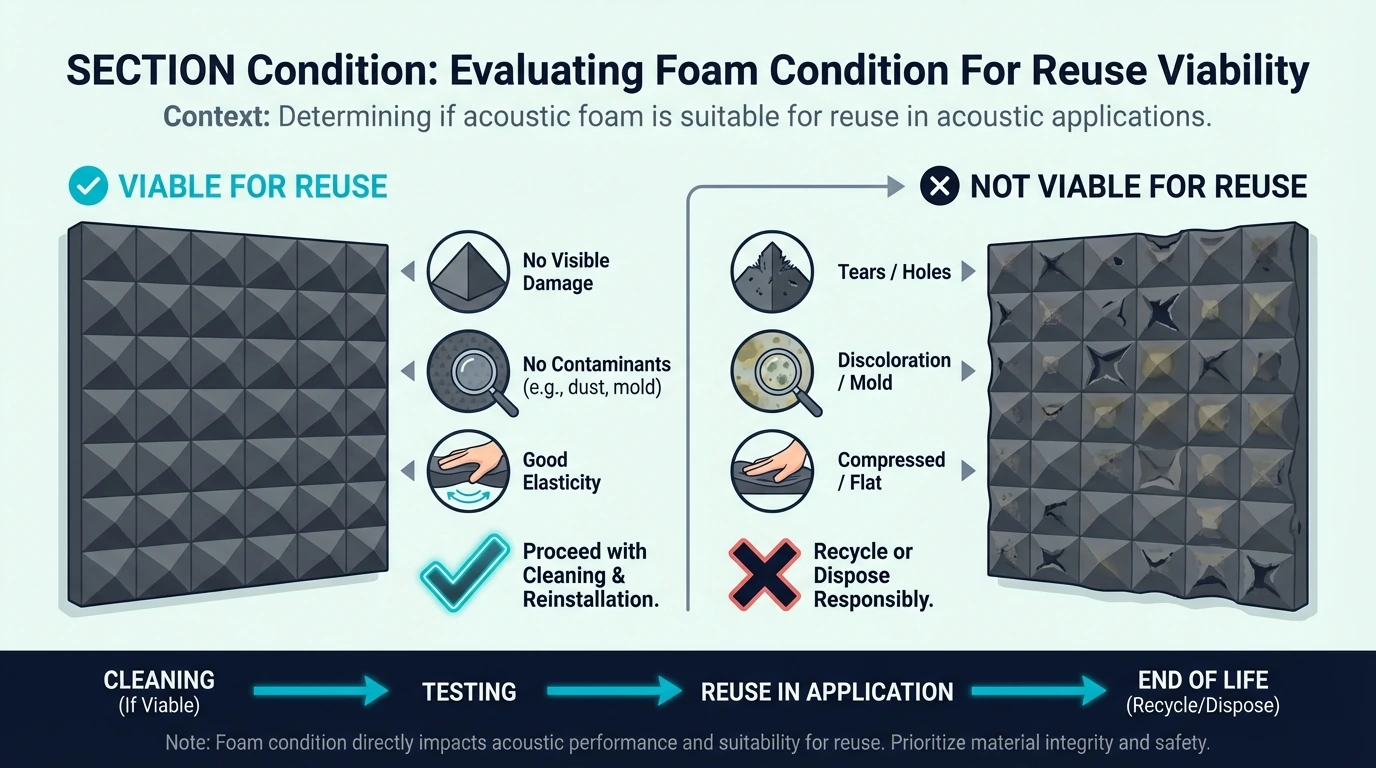
Once you’ve identified the mounting method, the next gate is the foam itself. Reinstalling foam that’s already crumbling just moves the problem into your new room.
Do a quick “squeeze, sniff, crumble” test
You don’t need lab gear to judge foam condition. You just need to be honest about what your hands and nose are telling you.
- Squeeze test: compress a corner and see if it springs back instead of staying flattened.
- Crumble test: lightly rub an edge—if it sheds dust or flakes, it’s breaking down.
- Smell test: musty or sour odor is a red flag for moisture and possible mold.
- Surface check: look for brittleness, cracking, or sticky degradation.
If you’re not sure how long your foam typically lasts, can acoustic foam get old? walks through the most common failure modes and when replacement is the smarter call.
Yellow foam: cosmetic or end-of-life?
Yellowing by itself is usually cosmetic, and mildly yellowed foam can still work fine. The bigger question is whether yellowing came with stiffness and brittleness, which often points to UV damage.
If it’s still flexible and rebounds well, reuse it and keep it out of direct sunlight in the new room. If it feels dry, brittle, or cracks when you bend it, treat it as end-of-life.
If you want a deeper breakdown of materials (and why some foams age faster), see what type of foam acoustic foam is.
How do you remove acoustic foam without tearing it?
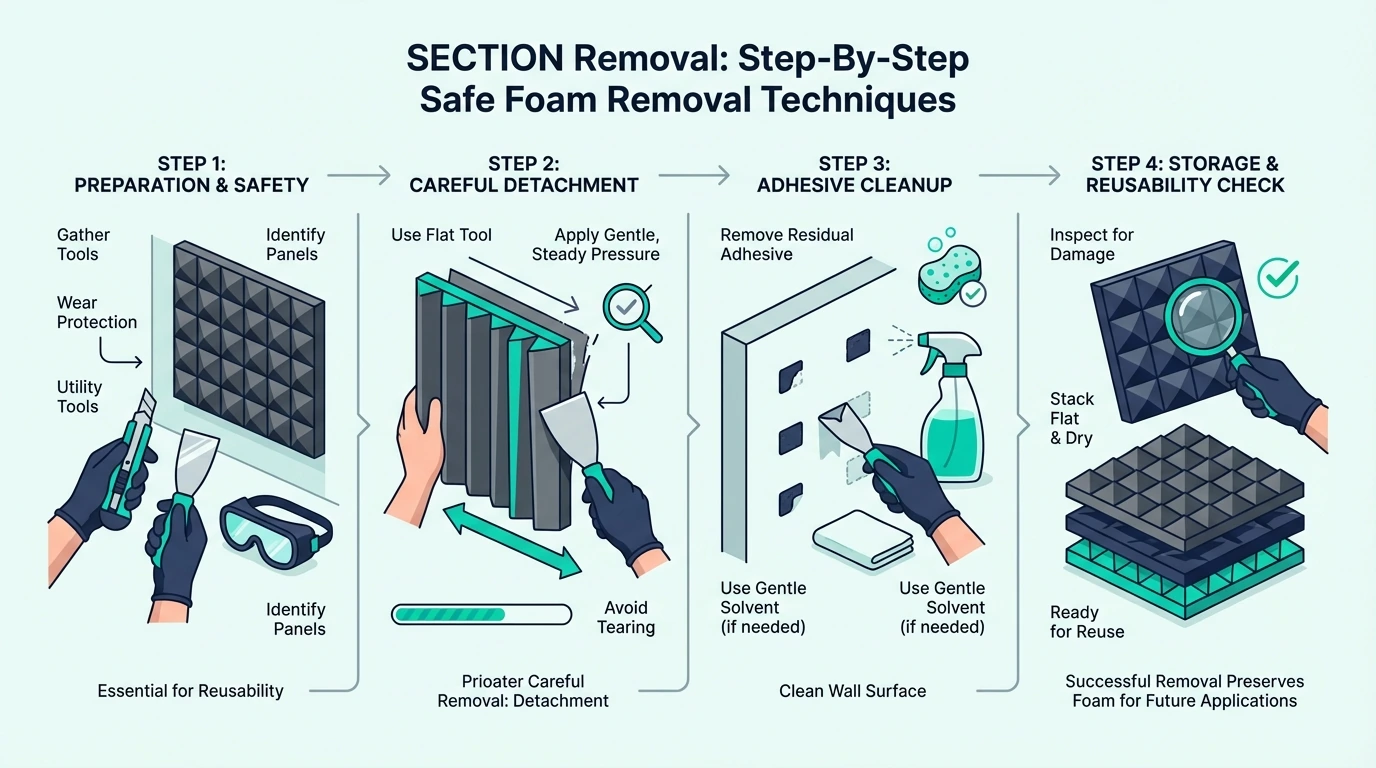
If your foam passes the condition test, removal is where you either preserve it or destroy it. The goal is controlled separation, not “get it off the wall fast.”
Before you start: protect the wall and the foam
Pick one panel you care least about and test your method there first. Walls vary a lot (flat paint vs textured paint vs older drywall), and you don’t want your best panels to be your experiment.
If you’re removing foam in a rental or you care about the paint finish, bookmark how to remove acoustic foam from walls without damaging paint. It’s a deeper dive on avoiding wall damage when the adhesive is the real enemy.
For removable strips: remove the strip, not the foam
With pull-tab strips, don’t pry the panel off the wall like a sticker. You want the strip to release, because the strip is the “sacrificial layer.”
Support the foam, pull the tab straight down slowly, and be patient. If you yank the foam outward, you can tear the back even with “removable” mounting.
For glued foam: separate first, then peel
With adhesive-mounted foam, pulling first is how you tear it. Instead, start separation with a plastic putty knife or floss/fishing line behind the panel, then peel only after the bond is already failing.
Work in small sections and keep the panel supported so it doesn’t stretch under its own weight. If you feel the drywall paper starting to lift, stop and change tactics before you turn one panel into a wall-repair project.
How should you store acoustic foam so it stays usable?
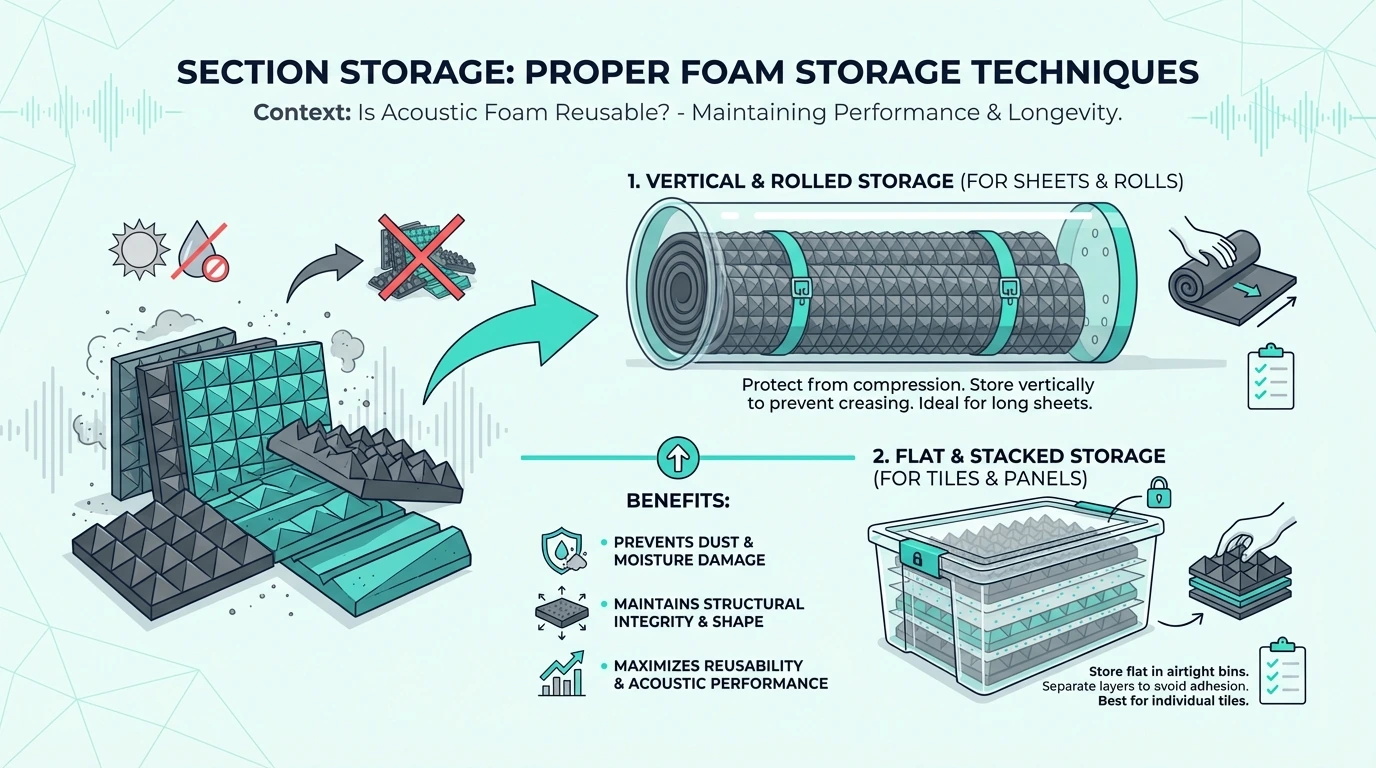
Once the foam is off the wall, storage is the silent killer. Foam hates compression, UV, and damp air, and it will happily “take a set” if you stack heavy boxes on it for a month.
Store it flat, dry, and breathable
Store panels flat when you can, ideally in a clean cardboard box or between two sheets of cardboard. If you have to roll foam, roll it loosely with a big radius so you don’t crease it.
Avoid sealing foam in airtight plastic if there’s any chance it’s damp. Foam that can’t breathe is foam that starts smelling weird.
If the foam got wet: dry it fully before storage
Even if the foam looks fine, trapped moisture can turn into musty odor later. Let it dry fully before packing it away, especially if it was near a window or exterior wall.
If you’re dealing with damp foam right now, can you put acoustic foam in the dryer? shows safer ways to dry it without melting or warping it.
Short-term vs long-term storage
For short-term storage (days to a few weeks), the goal is mostly shape protection. Keep it flat, keep it clean, and keep it out of the sun.
For long-term storage (months), add a quick monthly check for odor, softness, and any new brittleness. If it’s degrading in the box, it’s not going to magically improve on your wall.
How do you prep old acoustic foam before reinstalling it?
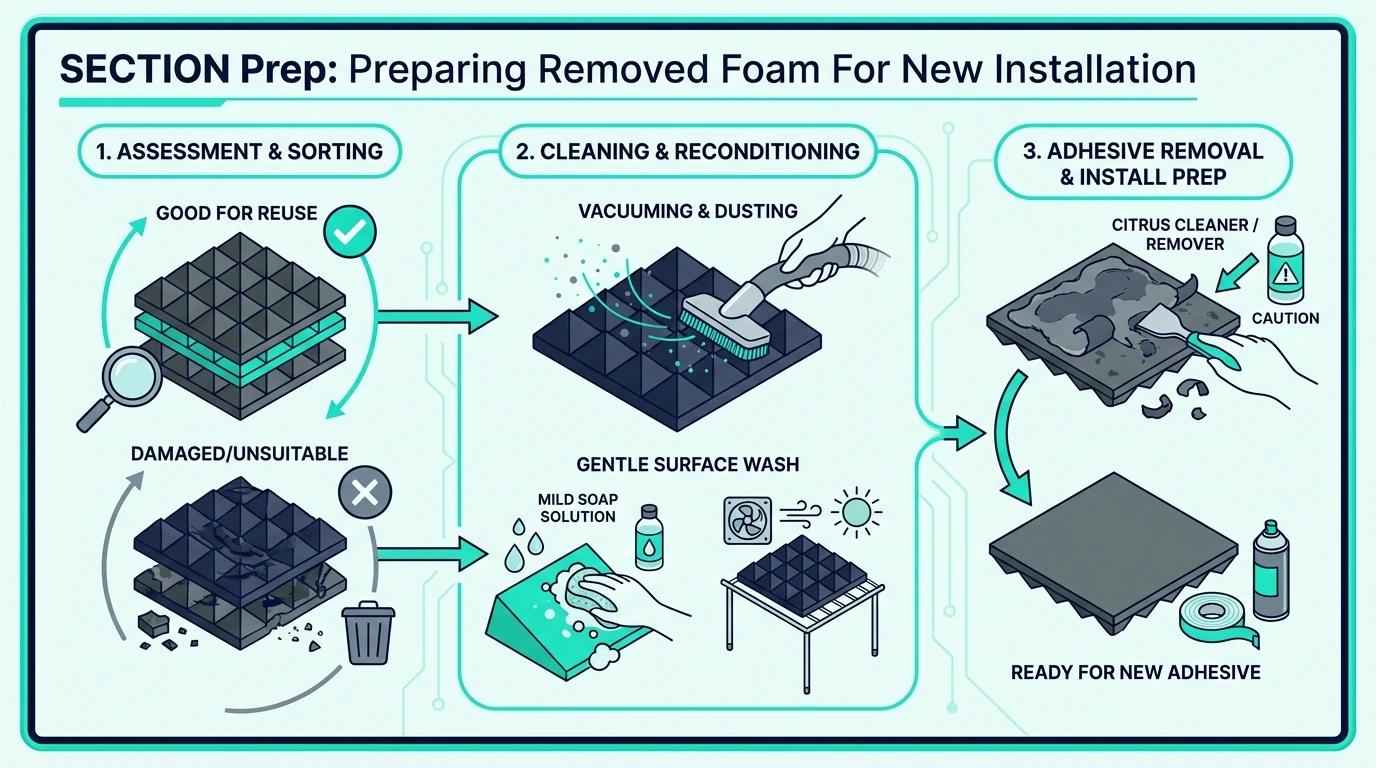
Good storage keeps foam from getting worse, but prep is what makes it install cleanly. A little time here prevents panels from falling off later or transferring grime onto your new walls.
Clean it gently (and let it air out)
Vacuum foam with a brush attachment to remove dust without shredding the surface. If it has any odor, let it air out in a dry room before you reinstall it.
If you want a deeper cleaning walkthrough (and what not to do), use how to clean acoustic foam safely.
Deal with the back: residue matters
If you’re reusing foam that had adhesive on the back, remove any loose residue so your new mounting method can actually grip. Don’t try to make the back “perfect”—just get rid of the flaky bits that prevent contact.
On the wall side, a surface-safe remover like Goo Gone adhesive remover can help lift residue without aggressive scraping. Spot-test first and wipe it clean, especially on matte paint.
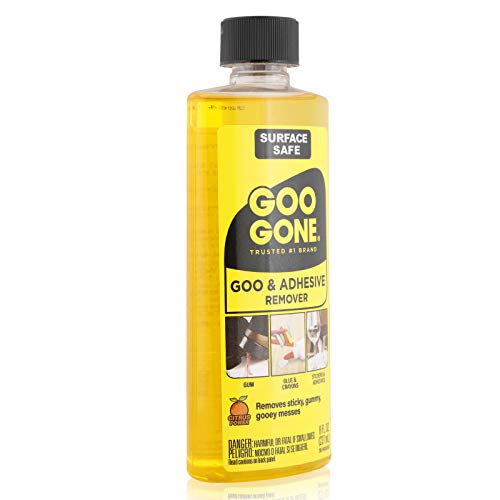
Goo Gone Adhesive Remover (8 oz)
If the back is shredded, that’s your cue to switch to a mounting method that doesn’t depend on a pristine foam surface. The reinstall section below covers the cleanest options.
Fix minor damage instead of forcing a perfect panel
Small tears are mostly cosmetic, and a slightly ragged edge won’t ruin acoustic performance. Trim only if it helps the panel sit flat, and treat the ugliest panels as “fill panels” for less visible spots.
This is also a good moment to reassess how much foam you actually need in the new room. Most people overbuy early, and too much acoustic foam explains the “over-deadened room” problem and how to avoid it.
What’s the best way to remount reused acoustic foam?
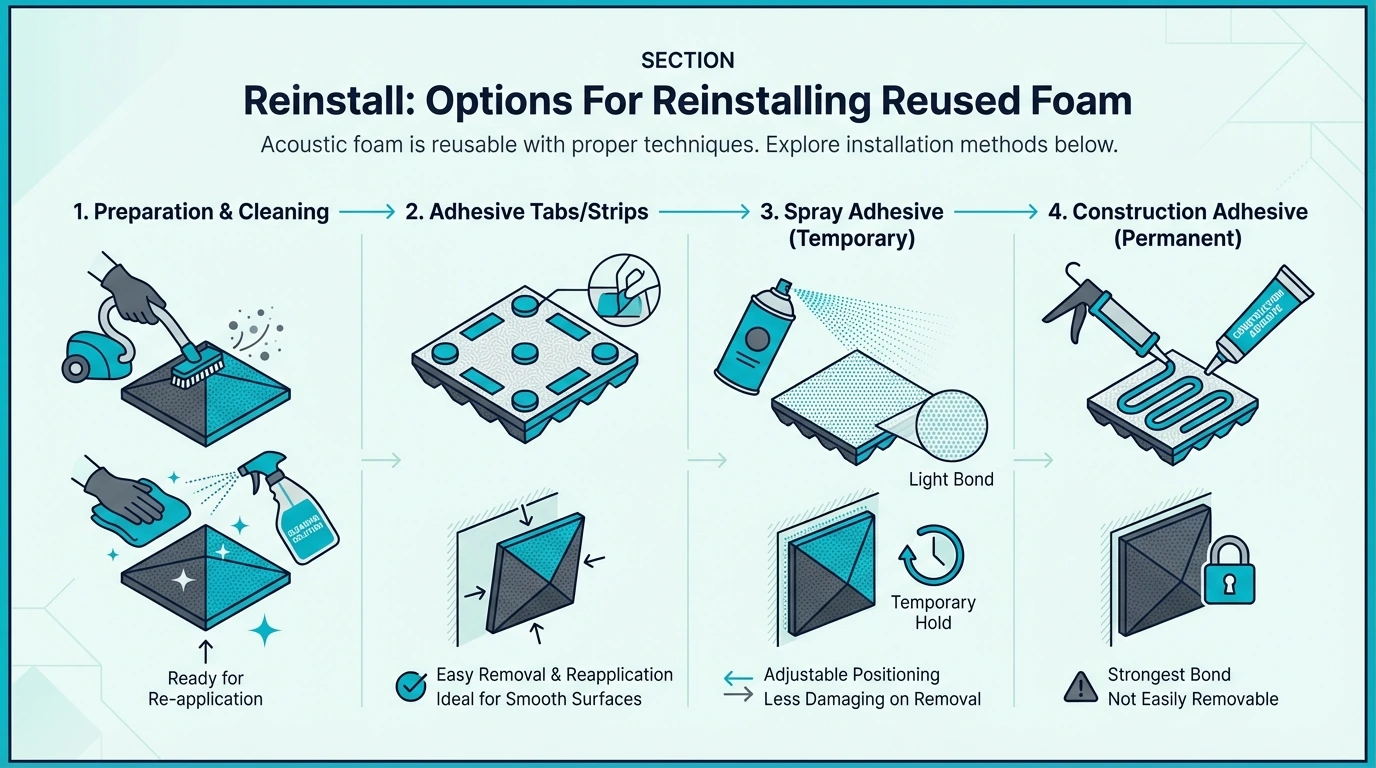
This is where you decide whether you’re going to ask the “reusable” question again next time you move. The best reinstall method is usually the one that stays removable and doesn’t rely on a perfect foam backing.
If you want future reuse: choose a removable mount
For most people, a removable method is the sweet spot: it holds well enough for daily use, but you can take it down without destroying the foam. That’s especially important if you’re in a rental, or if you’re still experimenting with placement.
If you’re unsure what to buy, how to choose acoustic foam also covers the “mounting reality” part of foam quality, not just shapes and thickness.
If the back is damaged: go mechanical or use a backing panel
When the foam’s back is rough or torn, adhesive tends to fail early. Mechanical mounting (clips, pins, screws + washers on thicker foam) avoids that problem because the wall hardware does the holding.
Another clean approach is to attach foam to a thin backing panel, then mount the backing panel like a single piece. It’s more work, but it makes removal and reinstallation painless.
Quick placement reminder for your new room
Reusing foam doesn’t change what foam does: it helps with reflections and reverb inside the room, not soundproofing between rooms. The biggest improvement still comes from placing it where your mic or speakers “see” hard reflections first.
If you want a practical placement roadmap, how to arrange acoustic foam walks through the highest-impact spots before you start covering random walls.
When should you replace acoustic foam instead of reusing it?
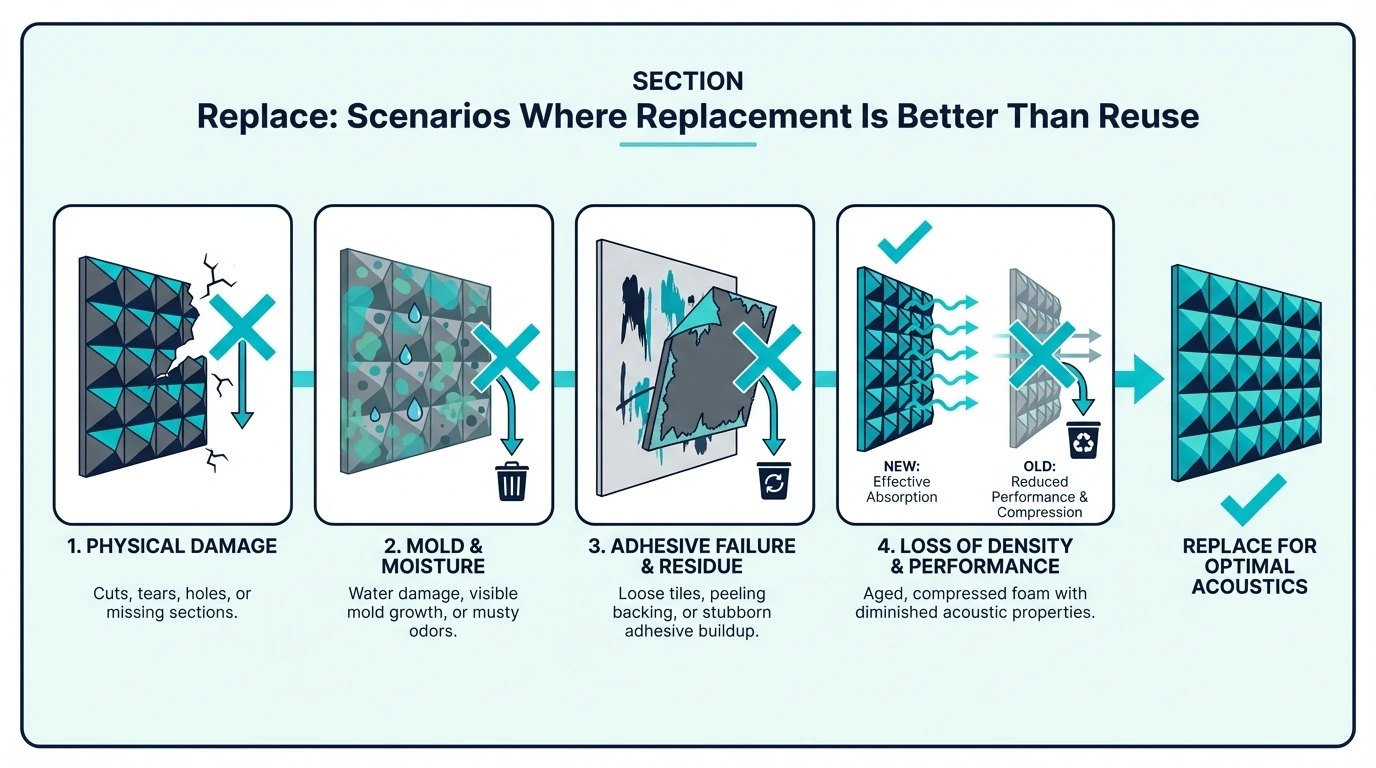
At some point, reuse becomes false economy. If the foam is already breaking down, you’ll spend time reinstalling something that won’t look good, won’t hold well, and may smell worse in a new room.
Replace if the foam is degrading or contaminated
Replace foam if it crumbles when you touch it, stays permanently compressed, or smells musty even after airing out. Those are signs the foam’s structure is failing, and that’s not something “better mounting” can fix.
If you’re upgrading anyway, consider starting over with higher-quality foam or switching to a different approach. what acoustic foam panels are is a solid refresher on what “good foam” looks like versus the stuff that dies early.
Reuse if it still behaves like foam
Reuse makes sense when the foam is flexible, rebounds well, and comes off the wall in mostly one piece. In that case, you’re not sacrificing much performance by moving it.
This is especially true if you’re using foam as a budget treatment layer and you’re realistic about its limits. If you want the honest downside list, the cons of acoustic foam will keep expectations grounded.
A hybrid approach is usually the smartest
Most real-world moves end up hybrid: you reuse your best panels, replace the damaged ones, and fill gaps based on the new room layout. That gives you a clean-looking install without wasting decent foam.
If you need to replace a chunk of panels, best beginner acoustic foam is a helpful shortlist to restart without overthinking it.
Is reusing acoustic foam actually worth it (time vs replacement)?
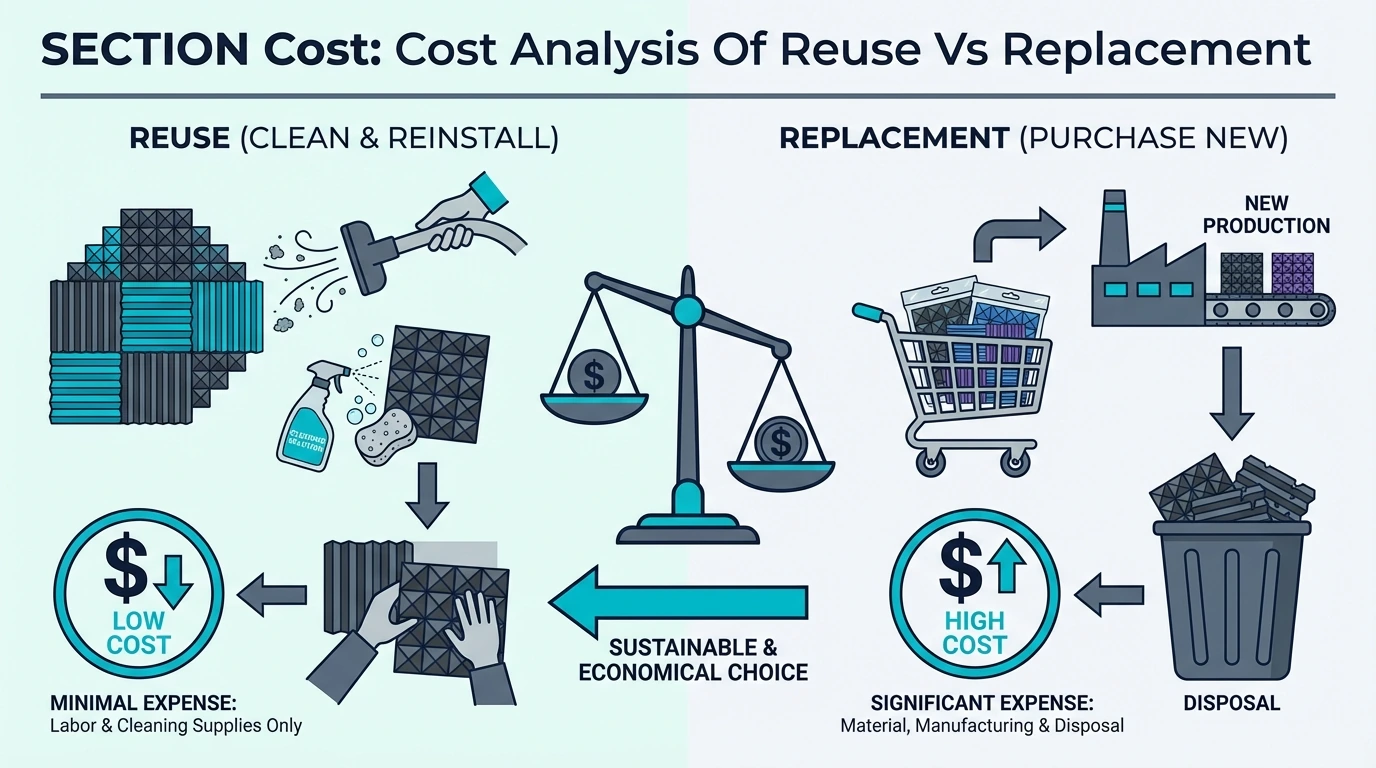
This decision isn’t just “foam cost” versus “new foam cost.” It’s also time, wall repair, and the friction of reinstalling panels you secretly don’t like anymore.
The real costs people forget
Reusing foam usually means new mounting materials, some wall cleanup, and more time than you expect. If you’re peeling glue off painted drywall, the wall repair can take longer than mounting the foam in the first place.
Replacing foam costs more, but it can be faster and cleaner if your current panels are degraded or glued on permanently. That’s why the mounting-method check from earlier matters so much.
A simple decision rule
If the foam comes off cleanly and still feels springy, reuse it and spend your money on better mounting. If it’s tearing, crumbling, or smelly, replace the worst panels and move forward with a removable install.
Either way, treat this as a chance to build a setup you can actually live with. Foam is only helpful when it stays on the wall and stays in the right place.
The Bottom Line
Acoustic foam is often reusable, but the outcome is decided by two gates: how it was mounted, and whether the foam has started to degrade. If you used removable strips or clips and the foam still feels springy, reuse is usually the easier path.
If the foam was glued or it’s already crumbling, plan on a hybrid approach—reuse the survivors, replace the rest, and remount everything with a method you can undo. That way, your next move is a reinstall, not a demolition.
Frequently Asked Questions
Can I reuse acoustic foam that was glued to the wall?
Sometimes, but plan for damage. Spray adhesive can let you salvage panels if you separate slowly, while construction adhesive usually destroys the foam before it releases.
How do I remove acoustic foam without damaging it?
Go slow and separate before you peel. A plastic putty knife or floss behind the panel works better than pulling, and a test panel first can save your best foam from becoming your experiment.
Do I need new adhesive to reinstall reused foam?
Yes, you’ll need fresh mounting materials. Old adhesive won’t bond well again, and reused foam often holds better with removable strips or mechanical mounting.
Is it worth reusing cheap acoustic foam?
It depends on the condition and how it was mounted. If it comes off cleanly and still rebounds well, reuse it, but don’t spend hours rescuing panels that are already crumbling.
How long can I store acoustic foam before reinstalling?
You can store it for a long time if it’s kept flat, dry, and out of sunlight. The risk is gradual degradation, so check it occasionally if it’s stored for months.
Can I reuse foam that has yellowed?
Usually, yes, if it’s still flexible and springy. Yellowing alone is often cosmetic, but yellowing plus brittleness is a sign it’s time to replace.