Acoustic Curtains vs Panels: Which Is Better? [2026]
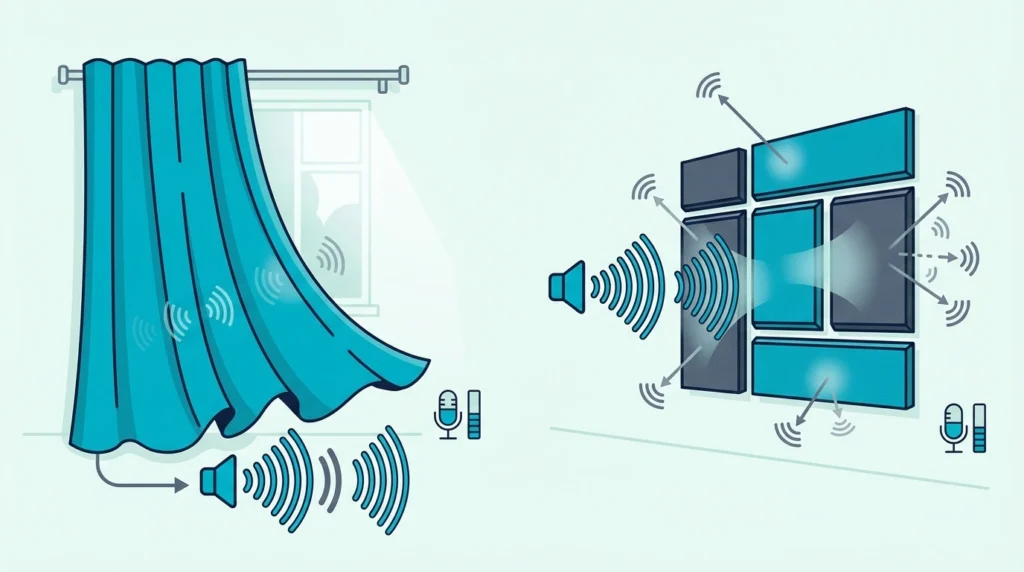
Acoustic curtains vs panels can both help with echo, but they aren’t interchangeable.
If your room still sounds harsh on calls or roomy on recordings, the usual culprit is hard, flat stuff near your mic: glass, drywall, and bare corners throwing early reflections right back at you.
Pick the right treatment and your voice (or instruments) stops sounding like it was recorded inside a bathroom. Start with the surface you can’t ignore – windows vs walls – then use the breakdown below to choose, or mix both in a simple hybrid setup.
Acoustic panels absorb more (often NRC ~0.8-1.0) and are the go-to for first reflection points on walls and ceilings. Acoustic curtains absorb less (often ~0.4-0.6) but shine on windows, rentals, and temporary setups where mounting panels isn’t realistic.
What Are Acoustic Panels and Acoustic Curtains?
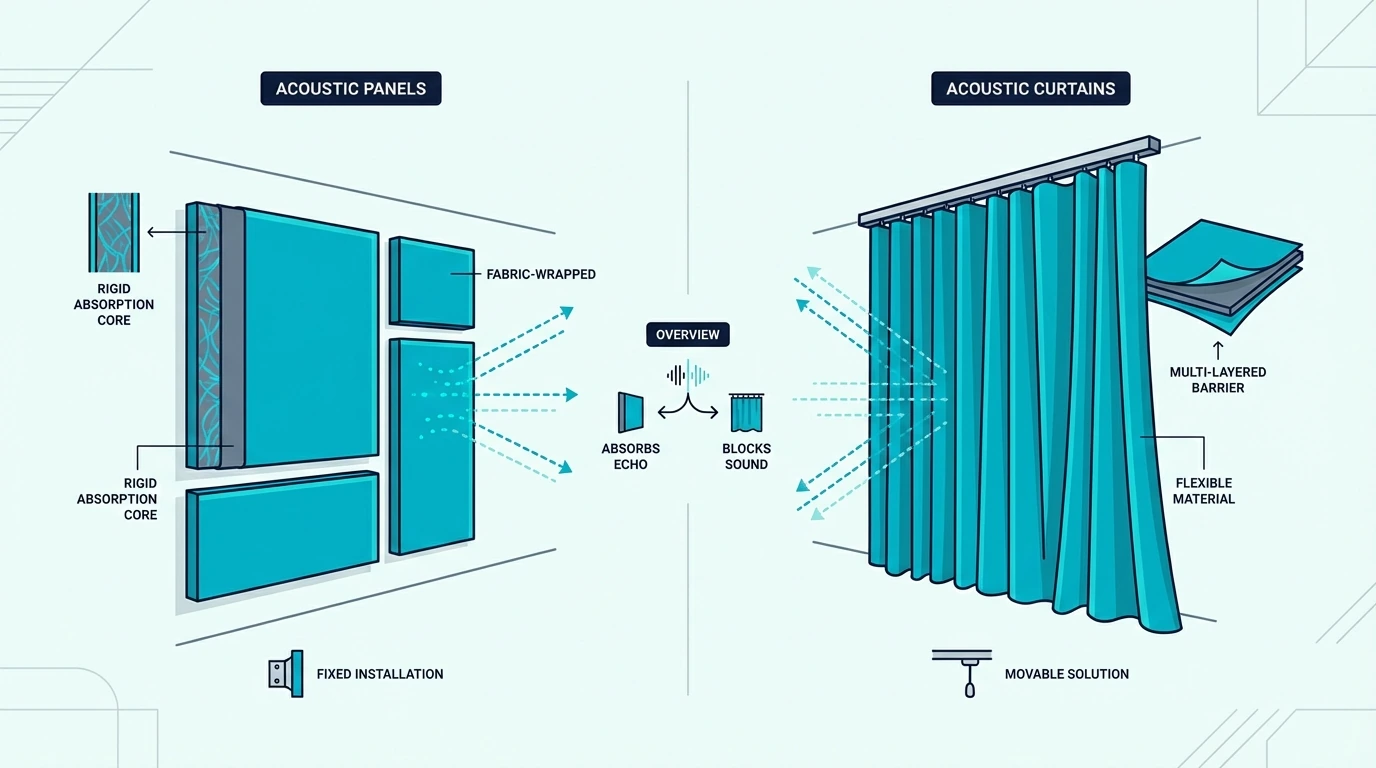
Both can make a room less “ping-y,” but they do it in very different ways.
Three things separate them: what they’re made of, how they absorb sound, and why depth changes everything.
What Are Acoustic Panels?
Acoustic panels are rigid absorbers, usually built from fiberglass or mineral wool in a simple wood frame. That core is wrapped in breathable fabric so sound can get in, but fibers stay contained.
Most “real” panels are 2-4 inches thick, and that thickness is why they can absorb more than just the bright top end that makes rooms feel harsh.
If you want the fundamentals first, the acoustic panel NRC rating guide explains what the absorption numbers mean and how panel materials affect them.
What Are Acoustic Curtains?
Acoustic curtains are heavy, multi-layer drapes designed to add mass and texture over a reflective surface. You’ll also see them sold as “soundproof curtains,” but that label is mostly marketing.
In the real world, curtains mainly reduce reflections and soften high-frequency bleed through windows. They don’t replace actual soundproofing, and they won’t fix a boomy room by themselves.
Lab tests on curtain fabrics, including their STC scores, answer the question of whether soundproof curtains work with numbers.
The reason people still love them is simple: curtains can cover glass while still letting you use the window like a window.
How They Absorb Sound (and Why Depth Changes Everything)
Panels absorb sound by letting air move through a dense, porous core. That air movement turns into heat, which is why absorption goes up as thickness and density go up.
Curtains absorb by friction in the fabric and by putting a softer surface in front of glass. They can help a lot with bright reflections, but they don’t have the same depth as a 2-4 inch core.
That’s why curtains usually tame highs first, while panels do more in the mids and (when thick enough) the low-mids that make rooms sound boxy.
Do Curtains or Panels Soundproof a Room?
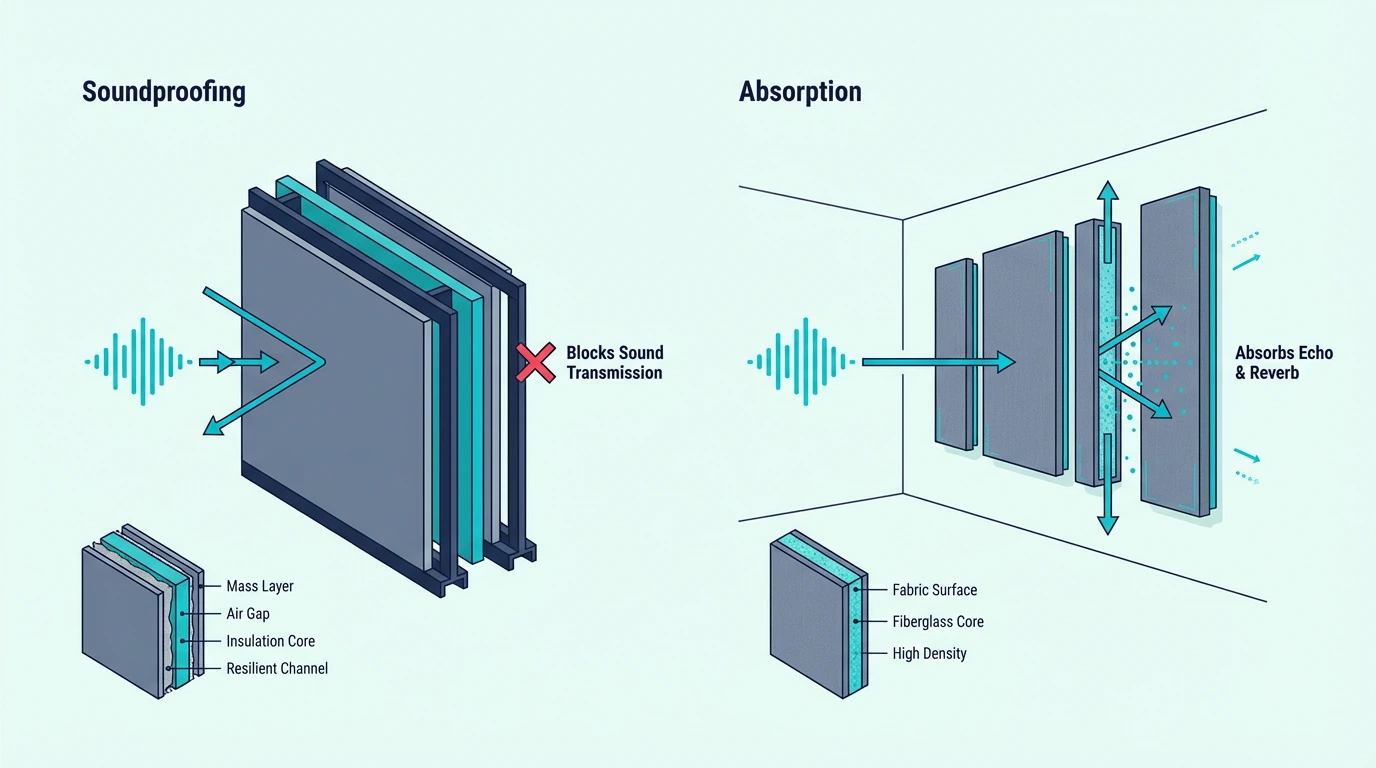
No – acoustic curtains and panels are for absorption inside the room, not stopping sound between rooms. If you need real isolation from neighbors, you’re in the world of mass, sealing, and decoupling.
A fast way to sanity-check your goal: if sound is leaking through the wall, treatment on your side won’t magically block it.
The acoustic panels vs soundproofing guide explains the difference so you don’t waste money chasing the wrong fix.
How Do Acoustic Curtains vs Panels Compare in Real Rooms?
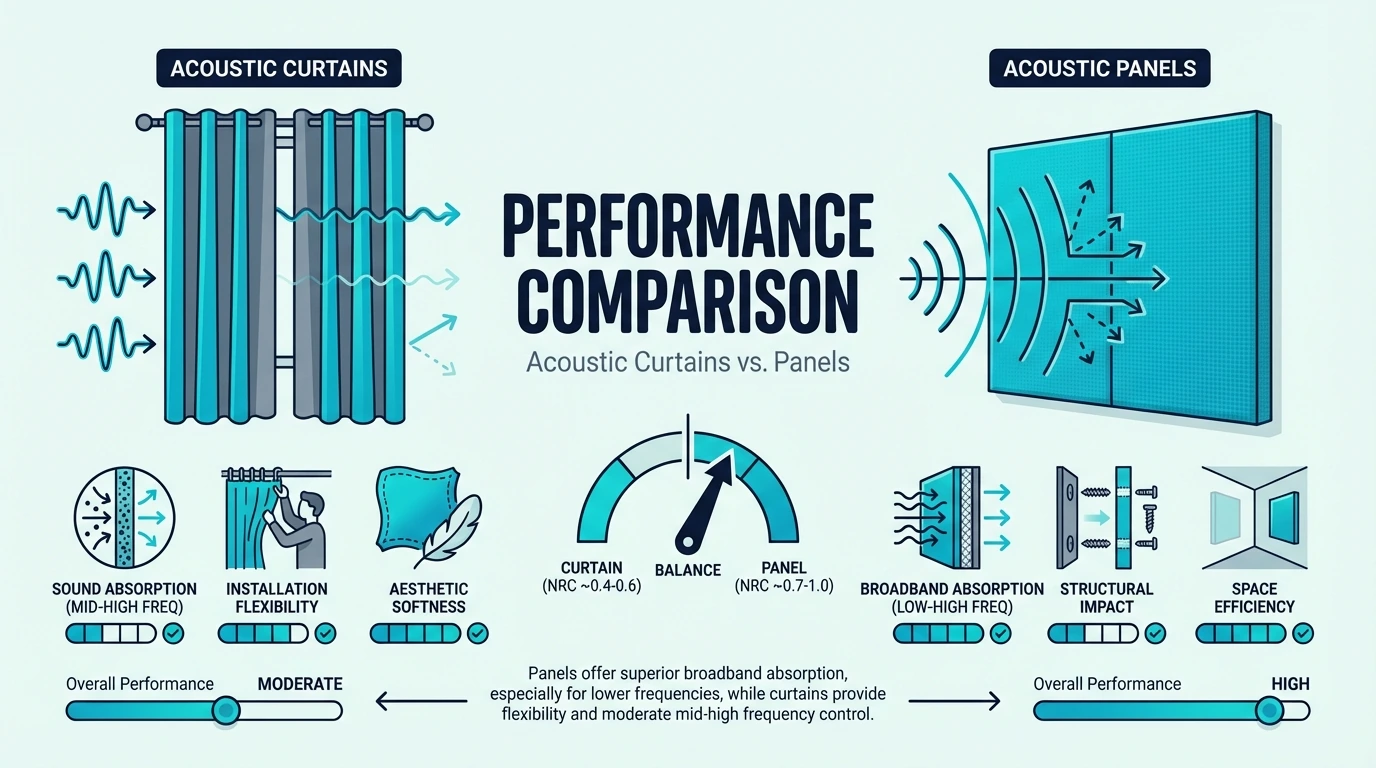
With the soundproofing myth out of the way, the comparison that actually matters is what you hear after you install each one.
Five factors separate curtains from panels in practice: absorption, coverage, installation, aesthetics, and cost.
Performance (Absorption)
Panels win on raw absorption because the core is doing most of the work. A good panel often tests around NRC ~0.8-1.0, while heavy curtains are commonly closer to ~0.4-0.6.
If you want a reference point for a dense panel core rather than decorative wall softening, the Rockboard 60 Mineral Wool Rigid Acoustic Insulation Board 2 Inch, 4 Pack is a better example of what “real panels” are built around.
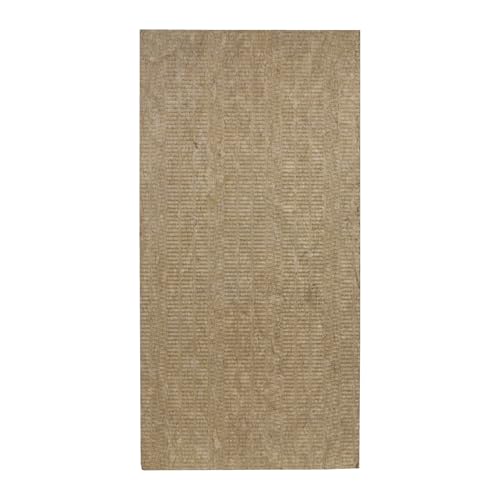
Rockboard 60 Mineral Wool Rigid Acoustic Insulation Board 2 Inch, 4 Pack
That gap is obvious in a clap test. Clap in the middle of the room, then clap again right next to your window and listen for the “tail.”
Curtains shorten that tail near glass. Panels shorten it at the exact spots where reflections hit your mic or ears first.
The bigger difference shows up lower in frequency. Curtains mostly calm highs, while thicker panels (and panels with an air gap) reach further into the low-mids that make rooms feel boxy.
If you’re choosing thickness, the 1-inch vs 2-inch acoustic panels and 2-inch vs 4-inch acoustic panels comparisons explain what changes and what doesn’t.
Windows vs Walls (What Each Can Cover)
Curtains are unbeatable on glass because they can cover a window without turning it into a permanent wall.
If your room has a big sliding door or a wall of windows, the acoustic panels for windows guide explains why curtains usually do the heavy lifting there.
For the door itself, how to soundproof a sliding glass door adds the seals and glass upgrades that curtains can’t replace.
Panels win on walls and ceilings because you can place them exactly where reflections hit first. That’s why a handful of panels at first reflection points can beat “softening the room” with random fabrics.
Installation and Flexibility
Curtains install like normal drapes. You can move them, open them, close them, or take them down in minutes.
That flexibility is why curtains are popular in rentals and multipurpose rooms. Panels take more planning because placement matters.
If you’re trying to fix call audio or recordings, the acoustic panels placement guide helps you treat the right surfaces first instead of guessing.
If you’re renting and you want treatment without wall damage, the acoustic panel installation guide covers renter-safe mounting methods.
Aesthetics (And Being on Camera)
Curtains look like decor. Even when they’re heavy, most people just read them as “nice drapes.”
Panels look like acoustic treatment, which can be a vibe or a dealbreaker.
If you want panels that blend in, acoustic art panels are a good direction — the best acoustic art panels guide compares styles that double as decor.
Cost and Value (Without the Marketing Spin)
Curtains can cover a lot of square footage quickly when the main issue is a big window.
Panels usually deliver a higher “sound quality per square foot” return when the problem is reflections off nearby walls.
Panels also tend to be a longer-term investment because they don’t sag, wrinkle, or wear the way fabric can. Curtains win on convenience, especially if you need to set up and tear down.
When Should You Use Acoustic Curtains Instead of Panels?
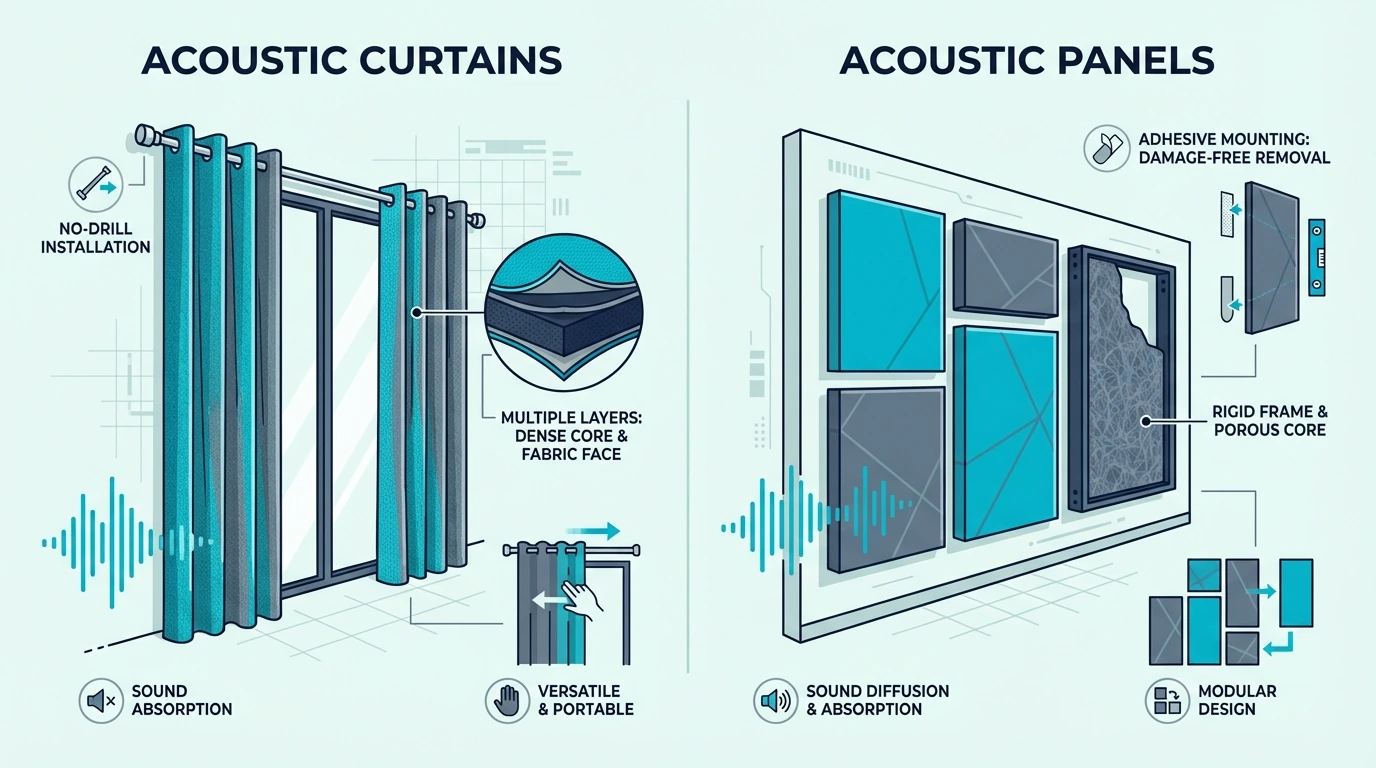
Curtains are the right tool when the reflective surface is glass, or when you need a setup that disappears after the session.
Two things decide whether curtains actually help: where you hang them and how you hang them.
Best Use Cases for Curtains
Windows and sliding doors are the obvious use case. Glass reflects sound aggressively, and you can’t mount panels over windows you actually use.
Curtains also make sense as room dividers. A ceiling track can turn a corner of a room into a “soft booth” that you can open up later.
For a heavier divider-style curtain that can work on big windows and as a room separator, RYB HOME 3 in 1 Soundproof Blackout Insulation Linen Curtains is a solid baseline.
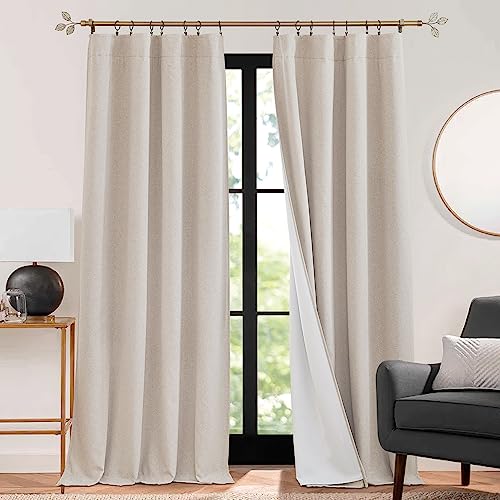
RYB HOME 3 in 1 Soundproof Blackout Insulation Linen Curtains
Curtains can also be the most realistic option in rentals. If you can’t drill, some treatment on glass is better than no treatment anywhere.
How to Hang Curtains for More Absorption
The “secret” isn’t a brand – it’s how you hang them. Try these moves before you decide curtains “don’t work.”
- Go floor-to-ceiling so you’re covering the reflection path, not just the middle of the wall.
- Use extra width (about 1.5-2x the window width) so the curtain has real folds instead of hanging flat.
- Leave an air gap of a few inches from the glass, because that gap increases effective absorption more than people expect.
A wider set like KOUFALL Extra Wide 70 Inch Linen Soundproof Blackout Curtains makes that second step easier because you get more fabric to work with before the curtain goes flat.
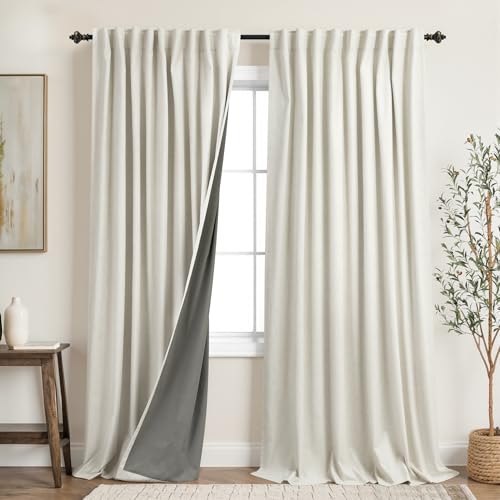
KOUFALL Extra Wide 70 Inch Linen Soundproof Blackout Curtains
Those folds and that air gap are the same reason a thick jacket feels warmer than a tight t-shirt. More trapped air plus more fiber means more energy gets lost before it bounces back into the room.
When Are Acoustic Panels Better Than Curtains?
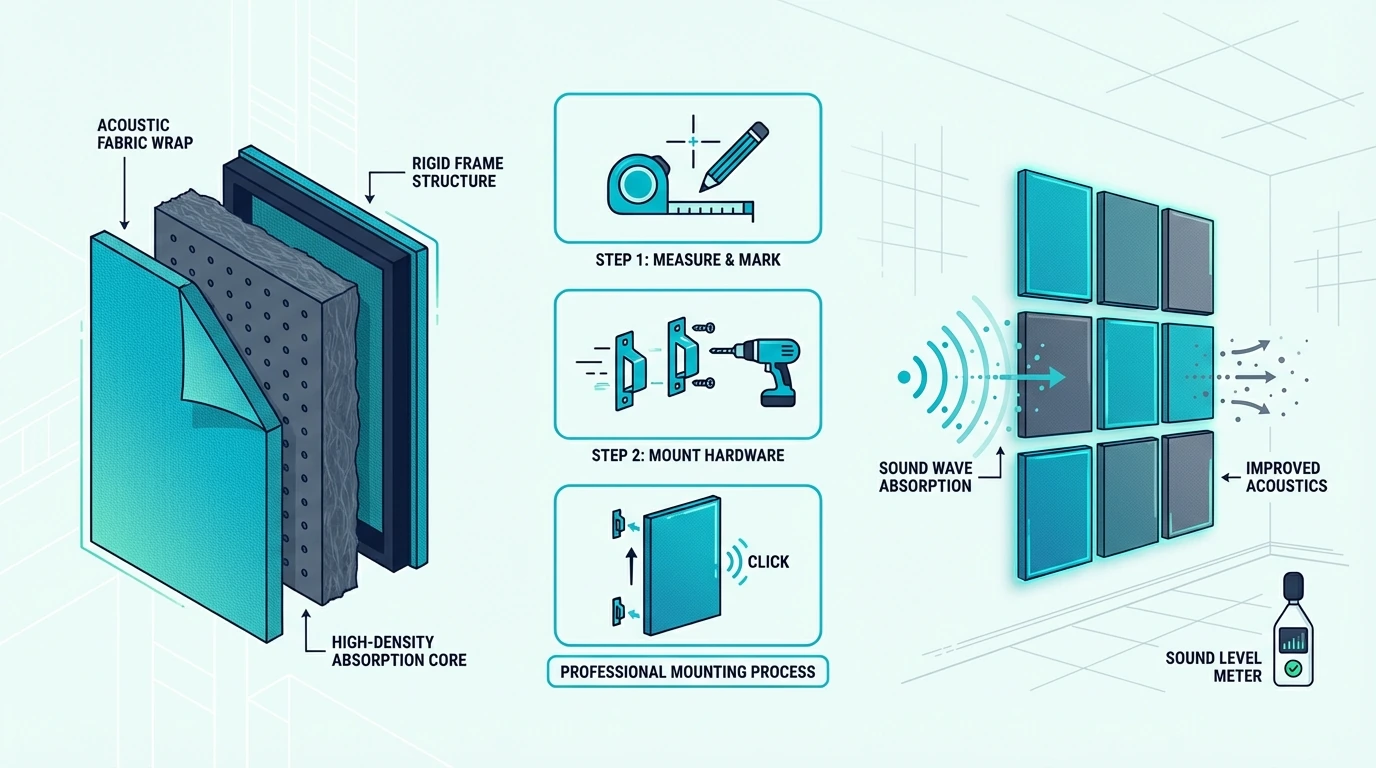
If the goal is cleaner recordings, clearer dialogue, or better speaker imaging, panels are usually the main event.
Three factors explain why: where panels work best, how air gaps multiply their effect, and how renters can mount them without damage.
Best Use Cases for Panels
Panels make the biggest difference in dedicated home studios. They also matter in home theaters, where early reflections smear dialogue and surround imaging.
For offices and bedrooms, panels shine when the walls near you are bare and reflective. The fastest win is almost always first reflection points.
That’s the wall behind your mic, the side wall reflections, and (in some rooms) the ceiling.
If you want product direction after you understand placement, the best acoustic panels guide is a solid next step.
Air Gaps and Why One Panel Can Beat Two
A panel with a small air gap behind it often absorbs better than the same panel pressed flat to the wall.
The extra space increases effective depth, which is why a 2-inch panel with a 2-inch gap can outperform a 4-inch panel flat on drywall. The acoustic panel air gap guide covers simple mounting options.
Renter-Friendly Panel Mounting
If you can’t drill, you still have options. Freestanding panels and renter-safe hanging methods can get you most of the benefit without permanent holes.
If you want a smaller fiberglass set that’s easy to place at first reflection points, Olanglab Fiberglass Panels is a good example of that size category.
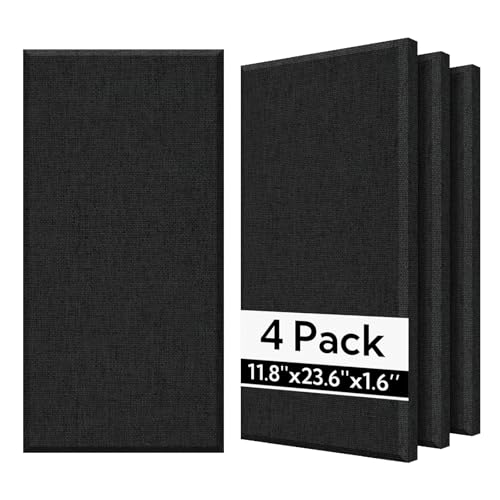
Olanglab Fiberglass Panels
The how to hang acoustic panels guide covers practical ways to do this without turning it into a project.
Can You Use Curtains and Panels Together?
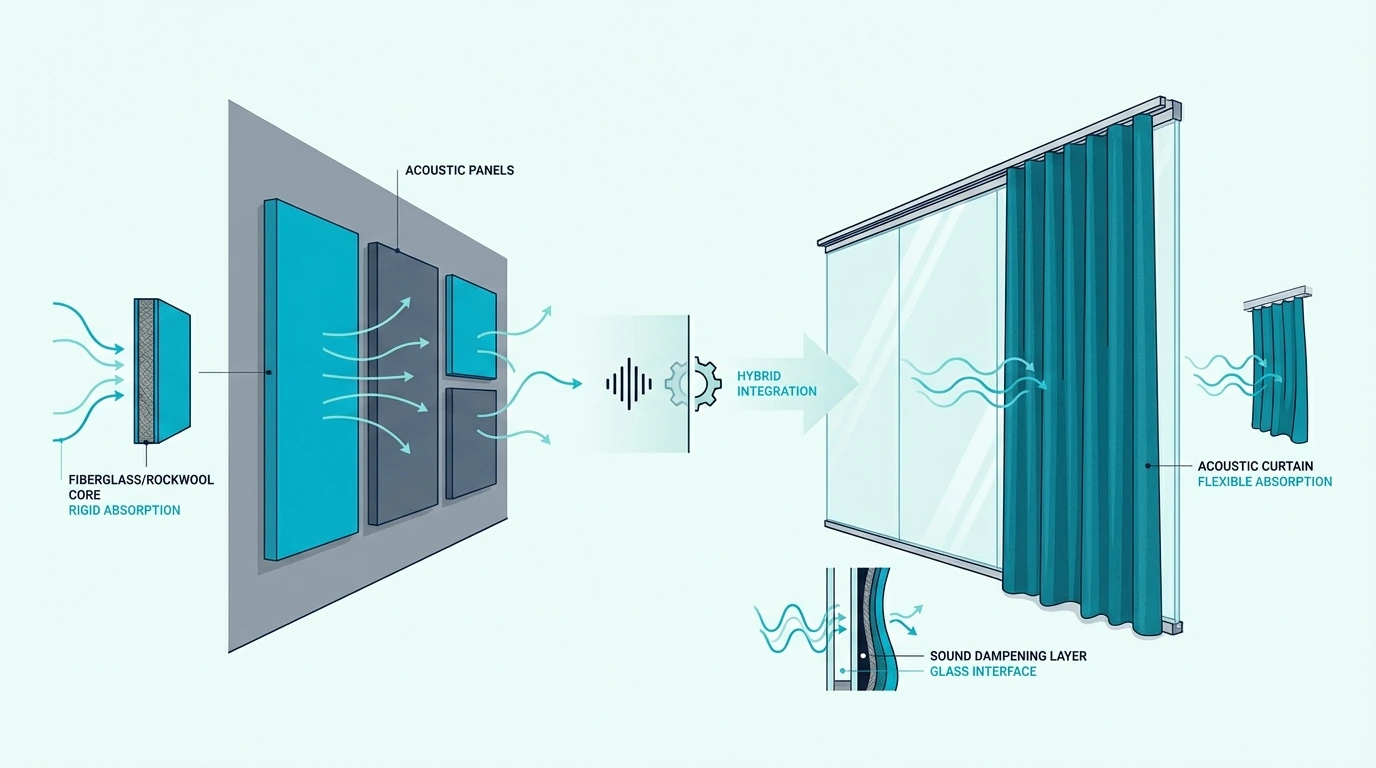
If you’re stuck between curtains and panels, you usually don’t have to choose. The best real-world setup is often: curtains where the room is glass-heavy, panels where reflections hit first.
A simple three-step plan works in most bedrooms and home offices.
- Curtains first if the window is near your mic or desk, because glass is a reflection factory.
- Panels next at first reflection points, especially the wall behind the mic and the side walls near your head.
- Add depth (or an air gap) only if the room still feels boxy after steps 1 and 2.
If you want another comparison that fits the same “temporary vs permanent” idea, the rugs vs acoustic panels guide covers similar trade-offs.
How Do Curtains and Panels Compare Side by Side?
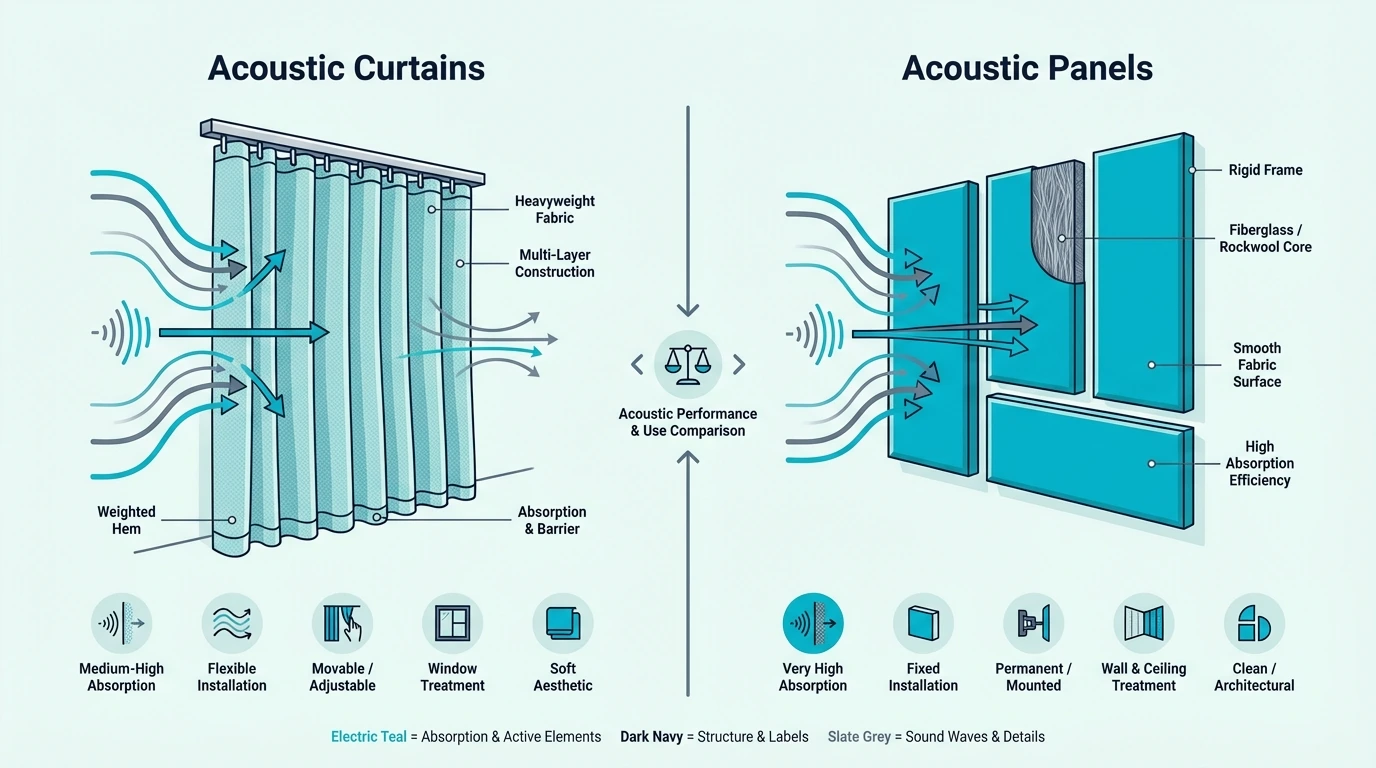
The table below puts every major factor in one place so you can compare without scrolling back through each section.
Pay attention to the NRC and frequency rows — that’s where the performance gap is widest and where most buying decisions should start.
| Factor | Acoustic Curtains | Acoustic Panels |
|---|---|---|
| Typical NRC | ~0.40-0.60 (varies by fabric + folds) | ~0.85-1.0 (varies by core + thickness) |
| Frequency Range | Mostly high + some mid | Mid-high (more low-mid with thickness + air gap) |
| Installation | Curtain rod / track (easy) | Wall/ceiling mounting (moderate) |
| Portability | Excellent | Low (unless freestanding) |
| Wall Damage | None to minimal | Mounting holes (unless renter-safe) |
| Cost Range | Budget-friendly to premium | Budget-friendly to premium |
| Window Coverage | Excellent | Not ideal |
| Lifespan | Good (fabric wear over time) | Excellent (often 10-20+ years) |
| Best For | Windows, rentals, temporary setups | First reflection points, serious treatment |
The biggest takeaway is the NRC gap: panels absorb roughly twice as much sound energy as curtains, and they reach further into the low-mids that make rooms feel boxy. If you only treat one surface, panels at first reflection points give you more return per square foot than curtains on glass.
Curtains pull ahead on portability and window coverage — two things panels simply can’t do well. If your room has large windows near your mic or desk, curtains handle that surface while panels handle the walls.
The Bottom Line
Acoustic curtains are the practical choice when the main reflection problem is glass, or when you need a setup you can take down without touching the walls. Acoustic panels are the performance choice when you’re chasing cleaner recordings, clearer dialogue, or better speaker imaging.
If you want the “best of both” without overthinking it, use curtains on windows and panels at first reflection points, then expand only if the room still sounds boxy.
Frequently Asked Questions
Are Acoustic Curtains as Good as Panels?
No – panels absorb more sound across a wider range, and the difference is obvious once you treat first reflection points. Curtains still win on windows, because they can cover glass without turning your room into a permanent build.
Do Blackout Curtains Help With Echo?
They can help, especially if they’re heavy and have deep folds.
Think “less slapback off the window,” not “studio-level absorption.”
How Many Panels Do I Need If I Already Have Curtains?
If your windows are handled, start with a small set for first reflection points.
A few well-placed panels can outperform a “cover everything” approach, which is why placement matters more than volume.
Can Curtains Reduce Noise From Neighbors?
They might soften a little high-frequency noise, but they won’t solve serious neighbor bleed.
For windows specifically, curtains reduce reflections inside the room — they don’t add meaningful mass to the glass itself.
If you need real isolation, the acoustic panels vs MLV guide covers mass-loaded barriers designed for that job.