Are Bass Traps Necessary — Or Can You Get Away Without Them?
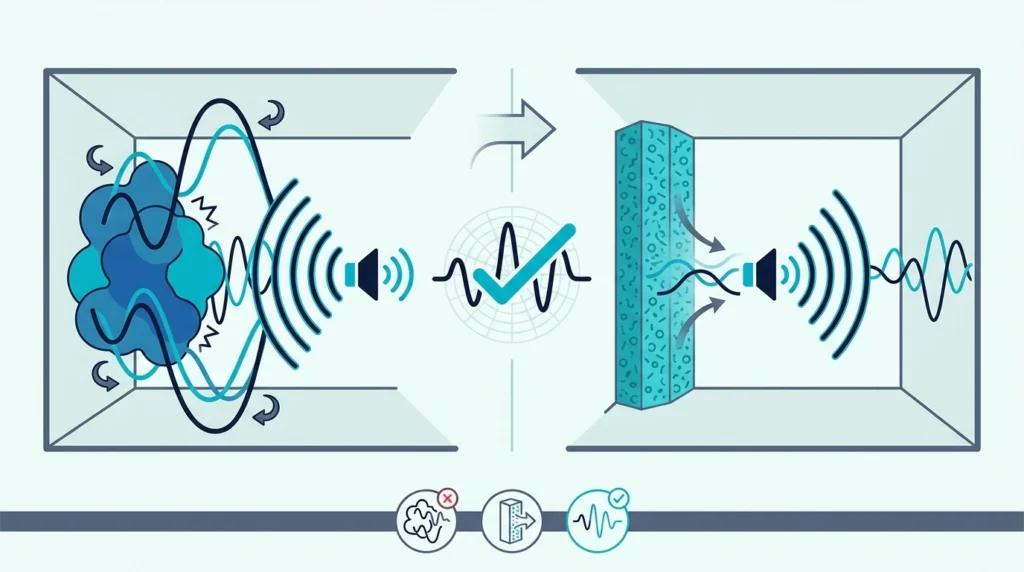
Are bass traps necessary — yes, but only if you care about accurate sound in any enclosed space, and skipping them is the single biggest acoustic treatment mistake people make in home studios, listening rooms, and home theaters.
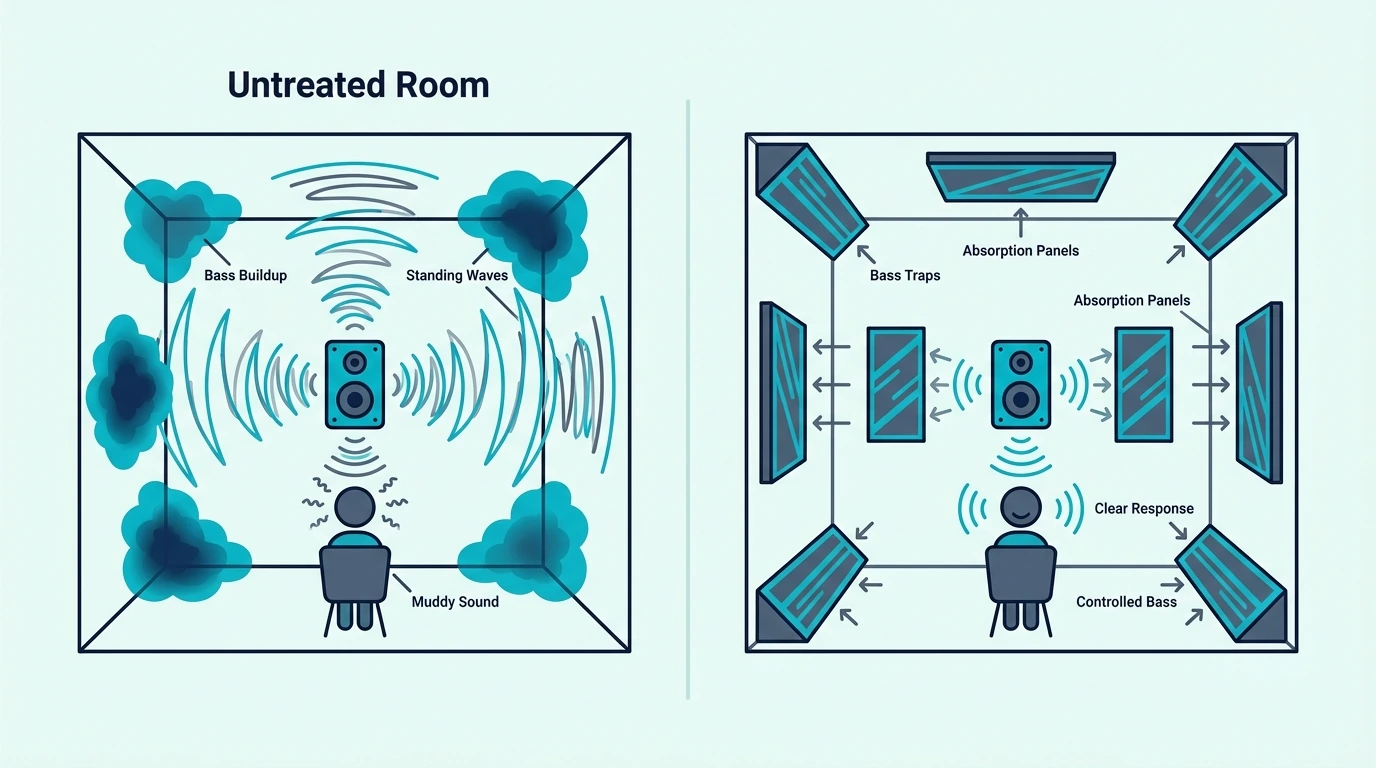
Every room has bass problems caused by its own geometry. Low frequencies bounce between walls and pile up in corners, creating spots where bass booms out of control and other spots where it nearly vanishes.
Bass traps absorb that excess energy so your room stops lying to you about what the bass actually sounds like. The difference between a treated and untreated room isn’t subtle — it’s the difference between guessing at your mix and hearing it accurately.
Below, this guide helps you figure out whether your specific room needs bass traps, what happens if you skip them, whether vocal booths need them, and what the realistic alternatives look like.
Bass traps are necessary for any room where accurate listening matters — recording studios, mix rooms, home theaters, and critical listening spaces. Without them, room modes create uneven bass response that no amount of EQ or speaker repositioning fully fixes. Start with porous absorber traps in the corners where walls meet, and you’ll hear the improvement immediately.
Are Bass Traps Necessary — And Why Does It Matter?
The question isn’t really whether bass traps work — they absolutely do. The real question is whether your room’s bass problems are bad enough to justify the investment.
The short answer: if you’re doing anything that requires accurate sound — mixing music, mastering, critical listening, or even watching movies where you want consistent bass across multiple seats — then yes, bass traps are necessary. Room modes exist in every enclosed rectangular space, and they distort your perception of bass frequencies whether you realize it or not.
The longer answer depends on what you’re doing. A casual podcast recording in a treated vocal booth may not need dedicated bass trapping, and a bedroom producer mixing on headphones 90% of the time has different priorities than someone mixing on studio monitors in a dedicated room.
But if you’re making decisions based on what you hear from speakers in a room, untreated bass is actively working against you.
How Do You Know If You Need Bass Traps?
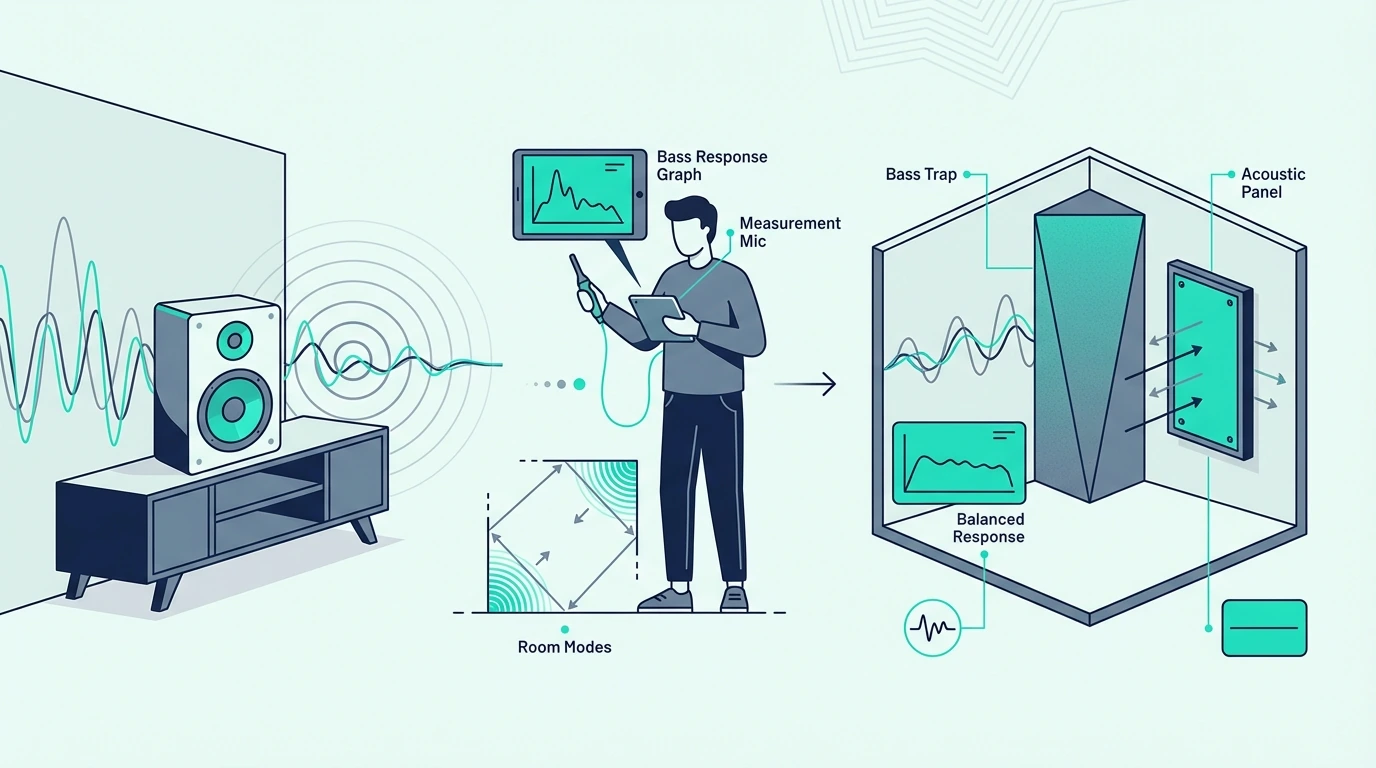
Before spending money, run a few quick tests that tell you exactly how bad your room’s bass problems are.
Play a bass frequency sweep (20-200 Hz) through your monitors at moderate volume and walk slowly around the room while it plays. If the bass gets dramatically louder in corners and near walls, then drops when you move toward the center, you’re hearing room modes in action.
Try the clap test — stand in the center of your room and clap once, hard. If you hear a low-frequency ring or sustained rumble after the clap, that’s modal energy decaying slowly because nothing in the room is absorbing it.
A more precise approach: use a free room analysis tool like REW (Room EQ Wizard) with a calibrated USB mic such as the miniDSP UMIK-1 USB Measurement Calibrated Microphone. It shows you exactly which frequencies are boosted or cut at your listening position, and by how much.
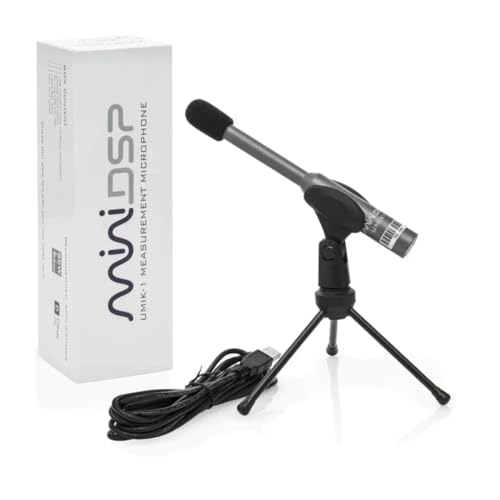
miniDSP UMIK-1 USB Measurement Calibrated Microphone
If your measurements show peaks and dips of 10 dB or more in the bass range, bass traps will make a dramatic difference. Even 6 dB swings are worth treating if you’re mixing or mastering.
The bottom line on testing: if any of these methods reveal uneven bass in your room, the right number of traps placed in the right corners solves most of the problem.
Get Studio Tips Weekly
Join 5,000+ creators getting acoustic treatment advice every week.
No spam. Unsubscribe anytime.What Happens If You Skip Bass Traps?
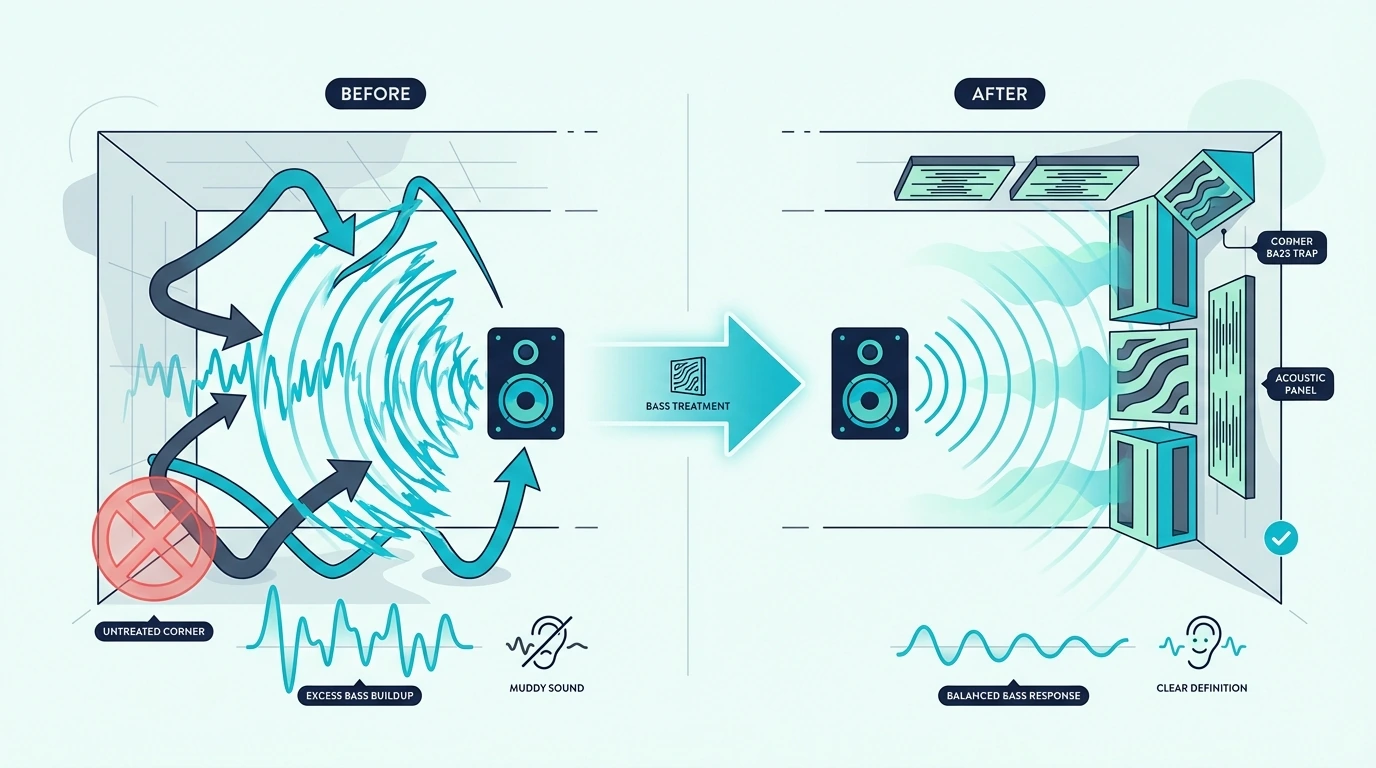
Skipping bass traps doesn’t mean your room sounds “a little off.” It means your room is actively distorting the bass frequencies you hear, and every decision you make based on that distorted sound carries the error forward.
Signs Your Room Has Bass Problems
The most obvious sign is inconsistent bass — a track sounds bass-heavy at your desk but thin when you stand up or move two feet to the side. That’s a standing wave creating a pressure zone at your listening position.
Mixes that sound great in your room but fall apart on car speakers, headphones, or other systems are another red flag. You’re compensating for what your room adds or subtracts, and those compensations become errors everywhere else.
Vocal recordings that sound muddy or boomy even with a good microphone and pop filter often trace back to low-frequency buildup in the recording space. The mic captures everything the room is doing, including the modal resonances you might not consciously notice.
Headphone mixes that translate perfectly everywhere except your monitors are another telltale sign. Your headphones bypass the room entirely, so when the monitor version sounds different, the room is the variable — not your mix decisions.
Even a few well-placed traps in two or four corners eliminate the worst of these problems. DIY builds based on Rockboard 60 Mineral Wool Rigid Acoustic Insulation Board are one of the most cost-effective ways to get there. The improvement from zero treatment to basic corner trapping is the single biggest jump in room accuracy you can make.
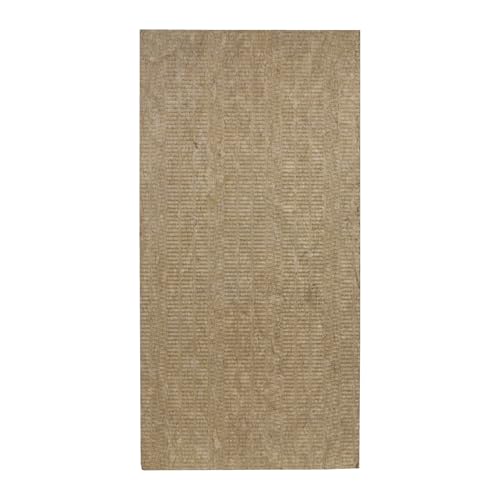
Rockboard 60 Mineral Wool Rigid Acoustic Insulation Board
Are Bass Traps Necessary For A Vocal Booth?
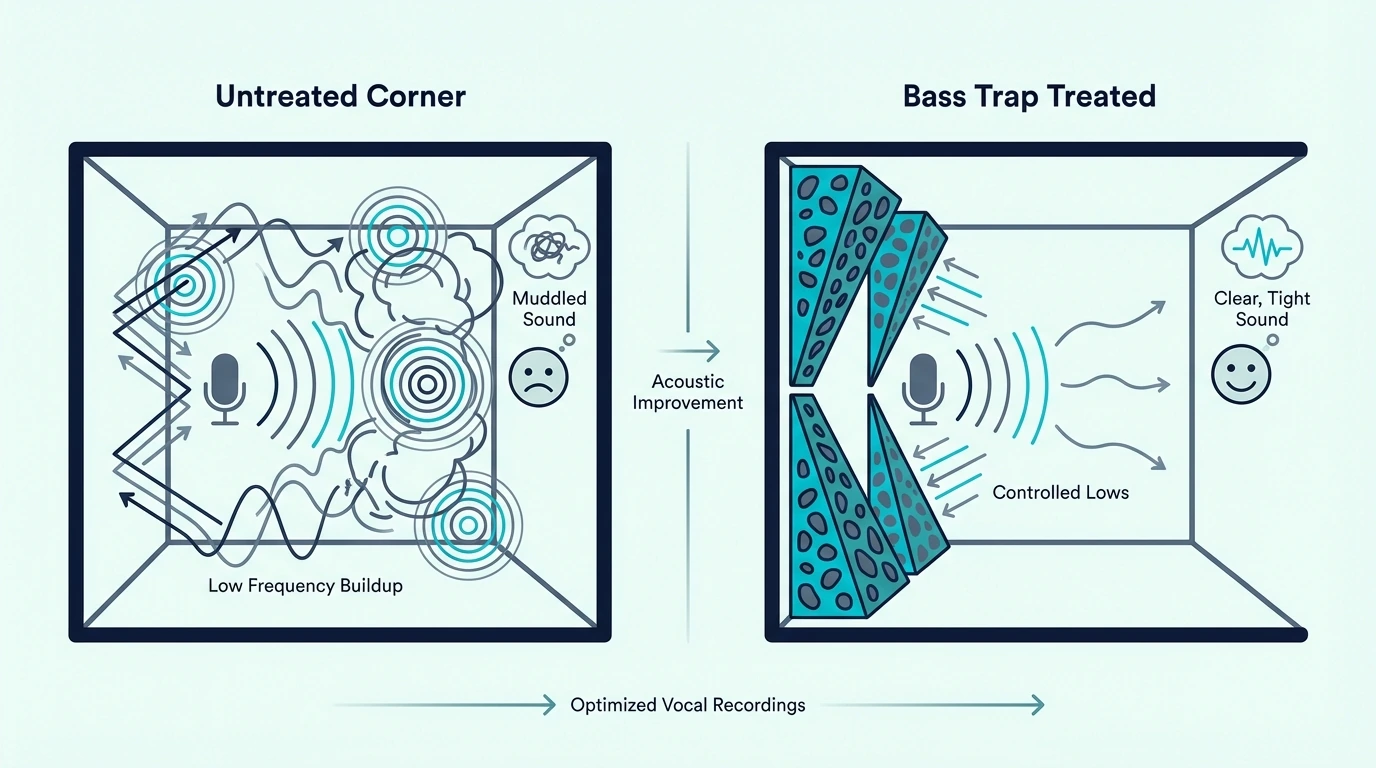
Vocal booths present a counterintuitive problem — because they’re small, their room modes are actually at higher frequencies than a large room, which means bass buildup happens in a range that directly affects the human voice.
A typical 4×6-foot vocal booth has its fundamental axial mode around 94 Hz and harmonics at 188 Hz and 282 Hz. That 188 Hz harmonic sits right in the low-mid range where male voices carry warmth and weight.
Without bass trapping, that booth resonates at those frequencies and adds a boxy, boomy quality to every vocal recording. You can high-pass filter it out later, but that also removes the natural chest resonance that makes a vocal sound full and present.
The fix is simple: 4-inch thick porous absorber panels in at least two corners of the booth. Even in a space that small, corner trapping smooths out the modal response and gives you cleaner vocal takes that need less corrective EQ.
For budget builds, a foam pack like the 12-pack of foam corner blocks fits easily into booth corners and gives you enough pieces to treat multiple tri-corners without building a full custom set.
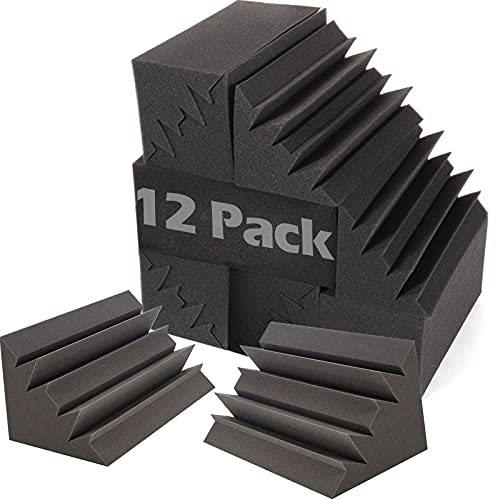
12-pack of foam corner blocks
What Are The Alternatives To Bass Traps?
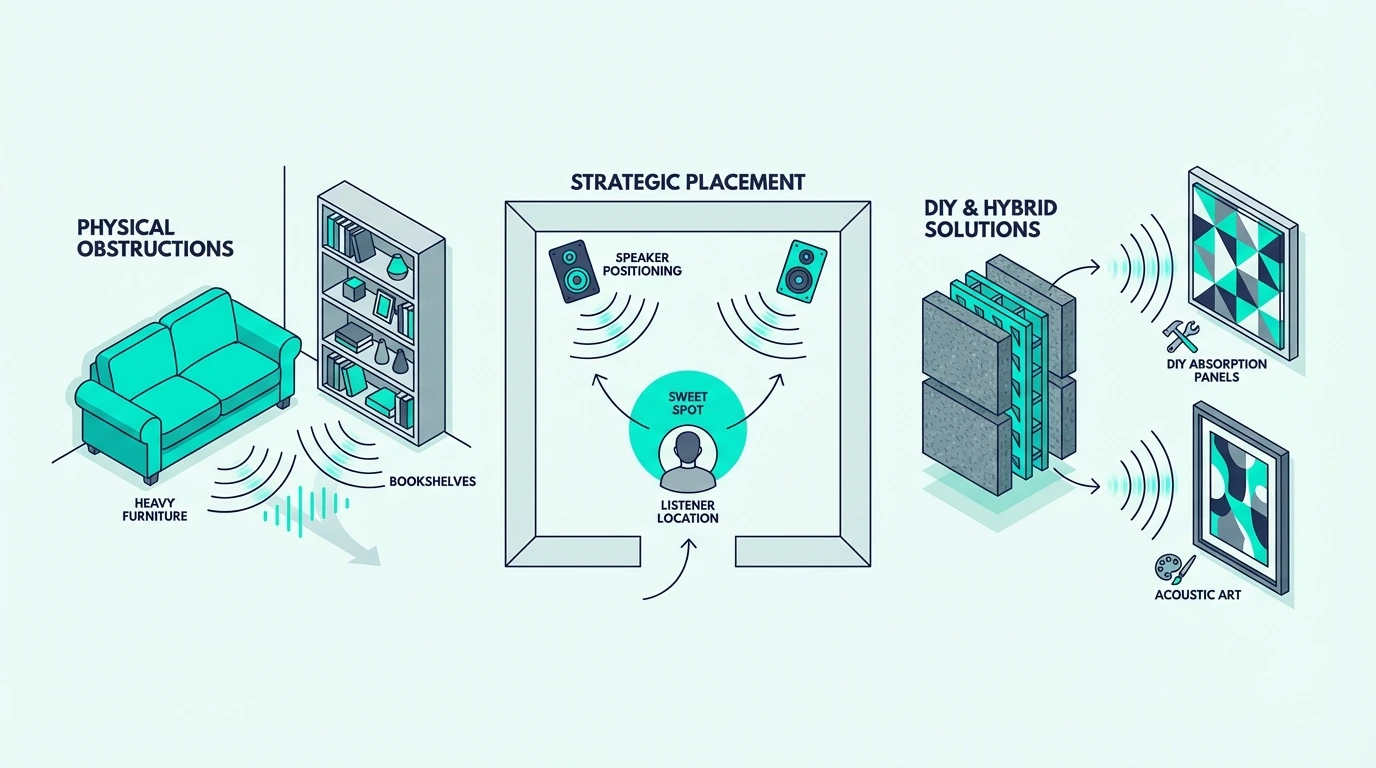
Several alternatives get mentioned in forums and Reddit threads, and while some have merit, none fully replace what bass traps do.
EQ correction software (like Sonarworks Reference or IK Multimedia ARC) measures your room’s frequency response and applies inverse EQ to flatten it digitally. This works at your exact measurement point but doesn’t fix the room — move your head six inches and the correction falls apart.
EQ correction also can’t fix nulls (frequency dips) because boosting a null just adds energy the room immediately cancels.
Speaker repositioning using the 38% rule (placing your listening position 38% of the room’s length from the front wall) can minimize the worst modal peaks at your ears. This helps, but it only addresses what you hear at one position — the modes still exist everywhere else.
Furniture and soft furnishings absorb some high-frequency reflections but have almost zero effect on bass. A couch doesn’t absorb 80 Hz — the wavelength is over 14 feet long and passes right through fabric and foam cushions.
A little foam in obvious corners can take the edge off boxiness, but that’s still partial treatment rather than a true replacement for bass traps.
Once you move to denser mineral wool or fiberglass and thicker corner coverage, you’re no longer using an alternative at all — you’re simply building more effective bass traps.
The honest conclusion: alternatives can complement bass traps, but none replace them. EQ correction plus bass traps is better than either alone, and proper placement with the right materials solves what software and furniture simply cannot.
The Bottom Line
Bass traps are necessary for any room where you need to trust what you hear. The physics of enclosed spaces guarantees bass problems, and no amount of software correction or furniture rearrangement eliminates what physical absorption solves.
Start with two to four porous absorber bass traps in the corners where your walls meet the ceiling, as thick as your space allows. That single step delivers the largest improvement in room accuracy per dollar spent.
Frequently Asked Questions
What do corner bass traps do?
Corner bass traps absorb low-frequency sound energy that accumulates where two or three room surfaces meet. Corners see the highest bass pressure because multiple room modes converge at those points, making them the most effective placement for any type of bass absorption.
Do foam corner bass traps work?
Foam corner bass traps work for frequencies above about 250 Hz, which helps with muddiness and boxiness. They’re less effective below 200 Hz compared to rigid fiberglass or mineral wool traps, so they’re a good starting point but not a complete solution for deep bass problems.
Do home theaters need bass traps?
Home theaters benefit significantly from bass traps because movie soundtracks rely heavily on deep bass effects. Without treatment, the bass response varies wildly between seats — one spot booms while another sounds thin.
Even in small rooms, corner bass traps smooth out the response so every seat gets consistent, impactful bass.