Bass Traps Ceiling — Why Overhead Treatment Controls The Low End Most People Miss
Bass traps ceiling installations target the wall-ceiling junctions and overhead zones that most people ignore when treating a room, but these locations hold some of the highest bass pressure in any rectangular space — and skipping them leaves vertical room modes completely untreated.
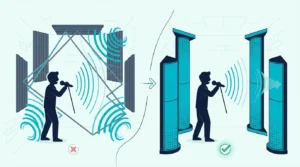
Most studio owners start with corner traps on the walls and stop there. The ceiling-wall edges where vertical and horizontal surfaces meet create the same kind of pressure buildup as wall-wall corners, and vertical standing waves (floor-to-ceiling modes) are often the worst offenders in rooms with standard 8-foot ceilings.
Ceiling bass traps address the dimension most rooms struggle with most. An 8-foot ceiling height produces a fundamental mode at 70 Hz — right in the problem range for music production — and the only way to absorb that mode is with treatment at or near the ceiling surface.
Below, you’ll find where to place ceiling bass traps, how to hang them securely, how many you need, and whether ceiling clouds or edge-mounted traps give you better results.
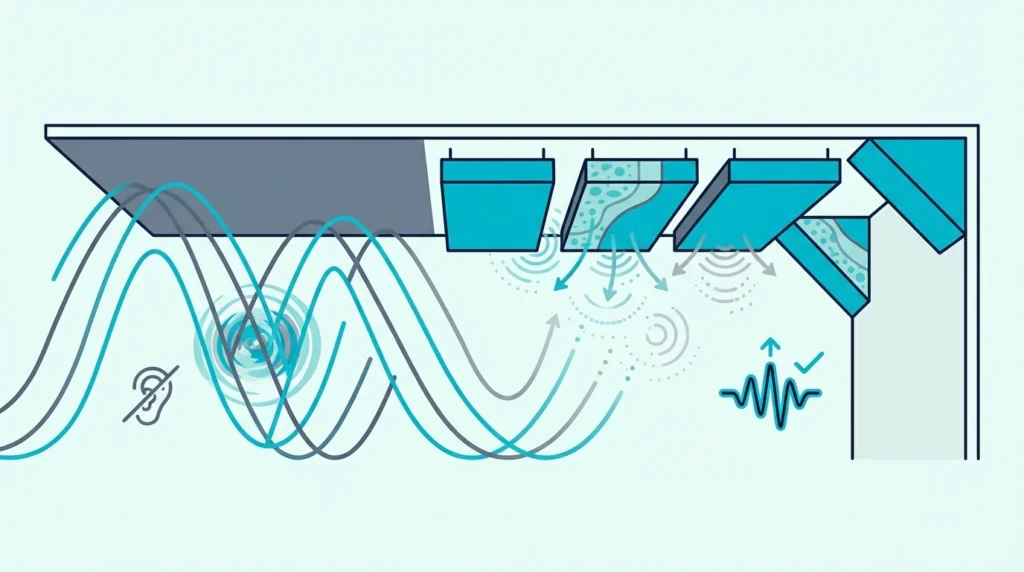
Ceiling bass traps belong at the wall-ceiling edges first (where walls meet the ceiling), then as suspended cloud panels above the listening position. Mount them with eye hooks into ceiling joists using wire or chain, leaving a 2-4 inch air gap for better low-frequency absorption. Four edge traps covering the front and side wall-ceiling junctions make the biggest difference in most rooms.
Why Put Bass Traps On The Ceiling?
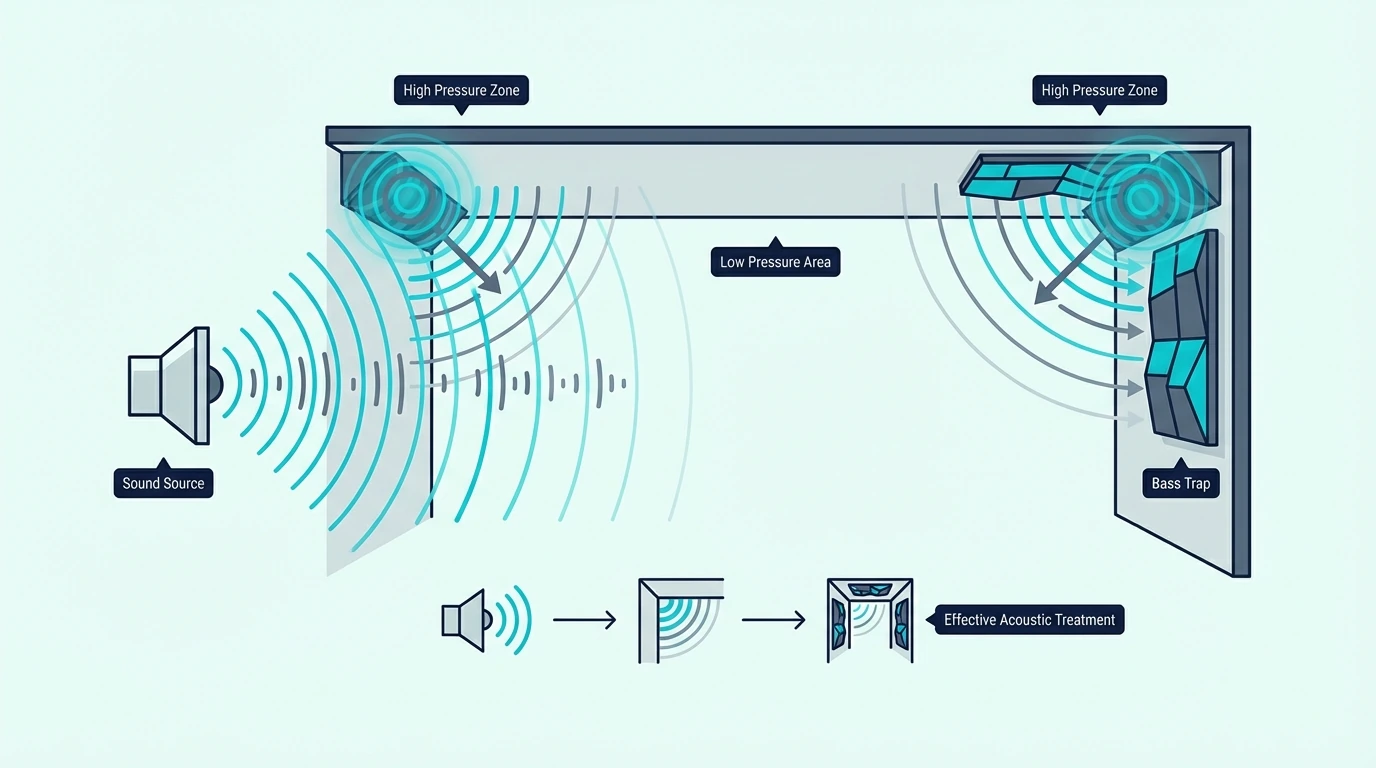
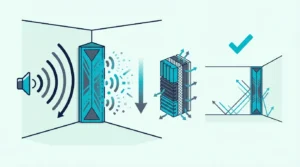
Every rectangular room has three sets of standing waves — length modes (front-to-back), width modes (side-to-side), and height modes (floor-to-ceiling). Wall-mounted bass traps in corners address the length and width modes effectively, but height modes need treatment at the ceiling or floor boundaries.
An 8-foot ceiling creates its fundamental axial mode at approximately 70 Hz, with harmonics at 141 Hz, 211 Hz, and so on. These frequencies have their pressure maxima at the floor and ceiling surfaces — the only places where absorptive treatment can intercept them.
The wall-ceiling junction is where height modes overlap with length and width modes simultaneously, creating intense bass pressure concentrations that rival the tri-corners where three walls meet. Treating these junctions addresses multiple mode families with a single trap.
Ceiling treatment also reduces the vertical component of flutter echo and comb filtering that affects recordings and monitoring accuracy. A room with thorough wall treatment but no ceiling treatment often sounds tight in the horizontal plane but loose and uncontrolled vertically.
Where To Place Bass Traps On The Ceiling
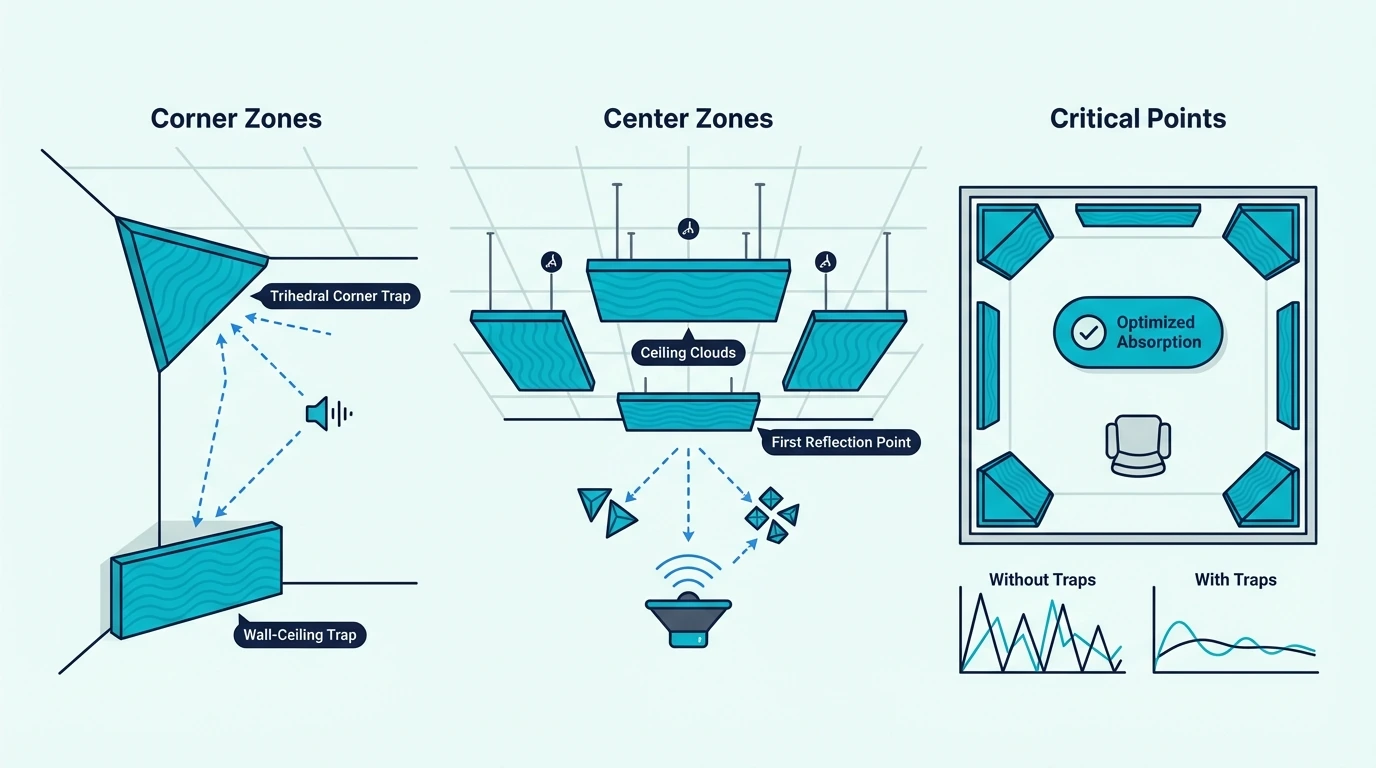
Ceiling bass trap placement follows the same pressure-based priority as wall placement — treat the highest-pressure zones first.
Priority 1: Front wall-ceiling edge. The junction where your front wall meets the ceiling sits directly above your monitors and catches both the ceiling height mode and the front wall length mode. This is the single most impactful ceiling position for mixing accuracy.
Priority 2: Side wall-ceiling edges. The two side junctions running the length of the room catch height modes plus width modes. Treating these edges on both sides maintains symmetrical absorption for stereo imaging.
Priority 3: Rear wall-ceiling edge. The back junction addresses rear reflections that bounce off the ceiling and return to the listening position. Treat this after the front and sides are covered.
Priority 4: Center ceiling (cloud position). A suspended panel directly above the listening position catches first-ceiling reflections and contributes to overall bass absorption.
Wall-Ceiling Edge Traps
Edge traps sit in the 90-degree angle where the wall meets the ceiling, running along the junction line. These are the most effective ceiling positions because they sit at the pressure maximum of both the height mode and the adjacent wall’s modes.
A typical edge trap is a 2-4 foot section of 4-6 inch thick rigid fiberglass or mineral wool, either straddled across the junction at 45 degrees or mounted flat against the ceiling near the wall. Straddling creates an air gap and absorbs deeper into the bass range.
For full coverage, run edge traps along the entire front wall-ceiling junction and at least 4-6 feet along each side wall junction from the front. This covers the critical zone around your monitoring position.
Ceiling Cloud Bass Traps
Ceiling clouds are panels suspended below the ceiling surface with an air gap between the panel and the ceiling. The air gap dramatically improves low-frequency absorption — a 4-inch cloud panel hung 4 inches below the ceiling absorbs roughly as deep as an 8-inch panel mounted flush.
Clouds work best directly above the listening position (the “sweet spot”) where they catch the first ceiling reflection before it reaches your ears. A cloud panel 4-6 feet wide and 2-4 feet deep centered above the mix position handles this reflection effectively.
The tradeoff with clouds is that they only treat the area directly above them, while edge traps treat the entire junction line. For bass absorption specifically, edge traps give you more coverage per dollar — clouds excel at controlling the first reflection point, which is more of a mid/high-frequency concern.
Get Studio Tips Weekly
Join 5,000+ creators getting acoustic treatment advice every week.
No spam. Unsubscribe anytime.How To Hang Bass Traps On The Ceiling
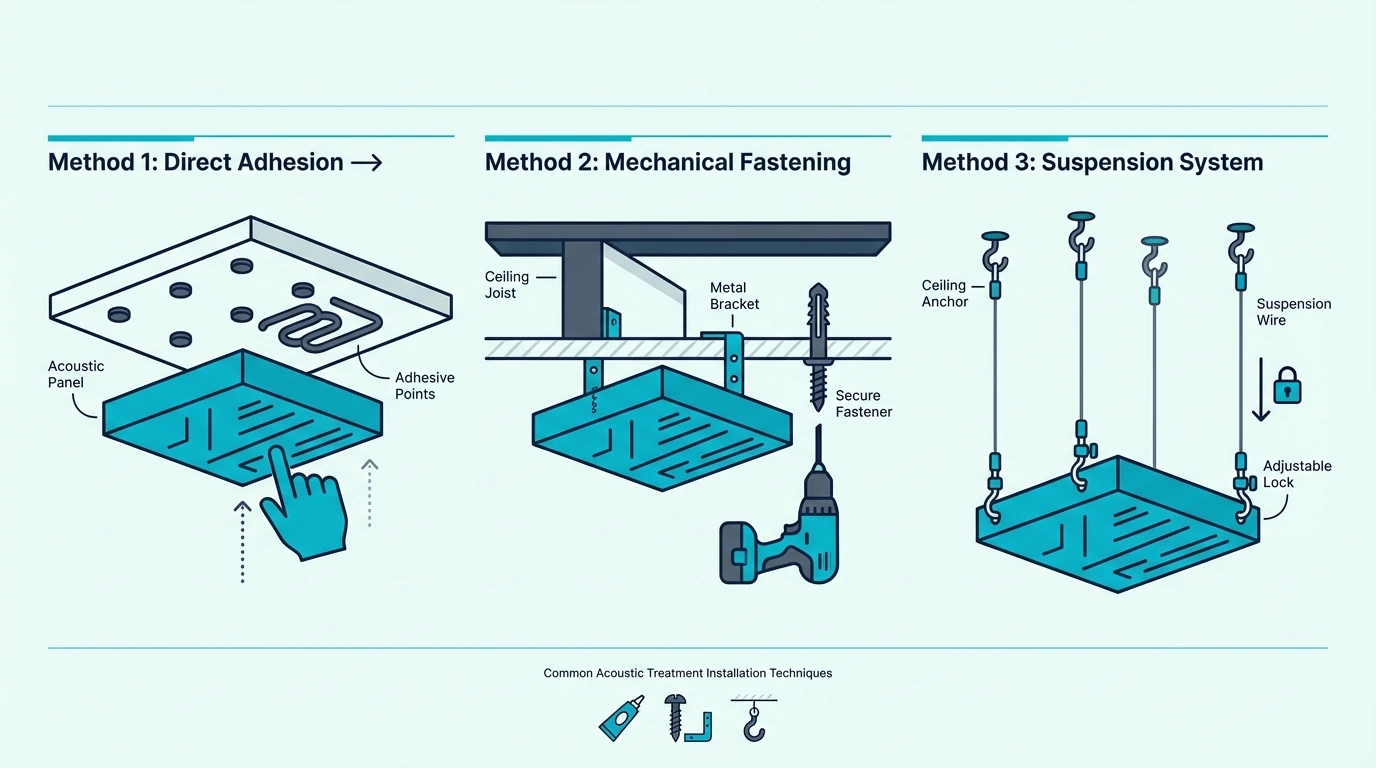
Ceiling mounting requires more robust hardware than wall mounting because gravity works against you. Every fastener must support the full weight of the panel with a safety margin.
The safest approach: screw eye hooks directly into ceiling joists (not just drywall), then hang the trap from the hooks using aircraft cable or chain. That setup supports 50+ lbs per hook and won’t pull out over time.
For lighter foam traps like the 4 Pack Bass Traps for Ceiling Corner, adhesive can work for edge-mounted installations where the foam wedges into the corner junction. The corner shape itself helps hold the foam in place while the adhesive cures.
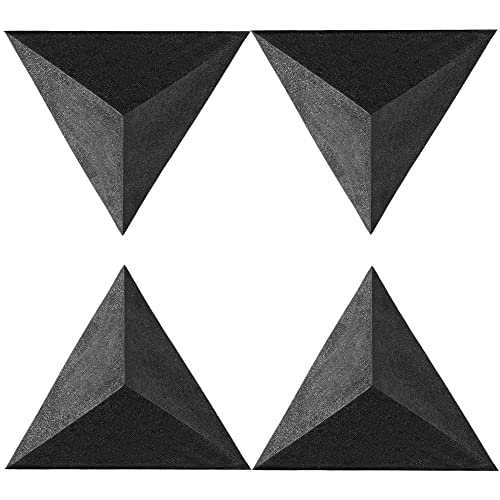
4 Pack Bass Traps for Ceiling Corner
The JBER 16-pack of column bass traps gives you enough pieces to run along the ceiling-wall edges.
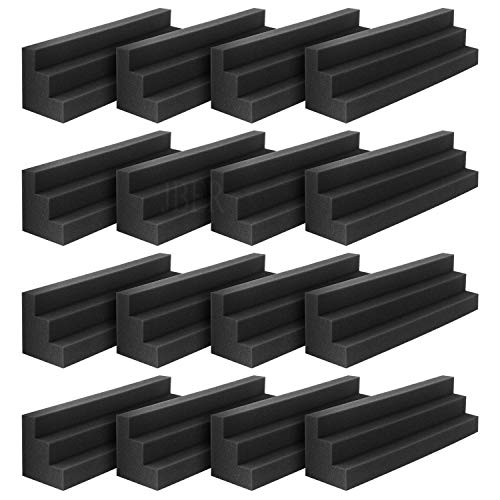
JBER 16-pack of column bass traps
Mounting Into Drywall vs Joists
Ceiling joists (the structural wood framing behind the drywall) are the only reliable anchor points for heavy ceiling panels — use a stud finder to locate joists, then drive lag screws or heavy-duty eye hooks directly into the wood. Each joist anchor point supports 30-50+ lbs.
Drywall alone cannot hold acoustic panels long-term — toggle bolts rated for 15-20 lbs can hold lightweight foam panels temporarily, but they may pull through over months as the drywall fatigues. Never hang rigid fiberglass panels heavier than 5 lbs from drywall-only anchors.
If your joists don’t align with where you need the trap, install a French cleat or mounting board that spans between two joists, then hang the trap from the board. This gives you mounting flexibility without compromising structural support.
Hanging With An Air Gap
Suspend ceiling panels below the surface using wire or chain to create an air gap that extends low-frequency absorption. The gap between the panel back and the ceiling surface lets air move freely, increasing the trap’s effective acoustic depth.
A 2-4 inch air gap is the sweet spot for most installations — cut four equal lengths of aircraft cable or light chain, attach one end to each corner of the panel frame and the other end to ceiling-mounted eye hooks. Adjust the cable length until the panel hangs level with the desired gap.
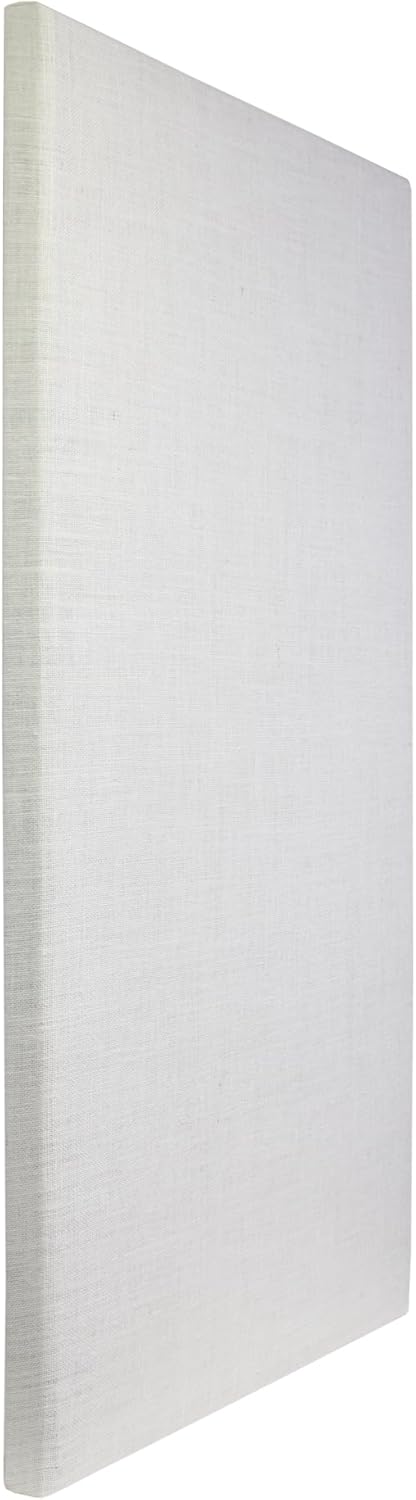
For DIY cloud panels, build a simple wooden frame from 1×3 lumber, fill it with rigid fiberglass insulation, wrap it in acoustically transparent fabric, and hang it from four points. The frame adds rigidity that prevents the panel from bowing under its own weight.
How Many Ceiling Bass Traps Do You Need?
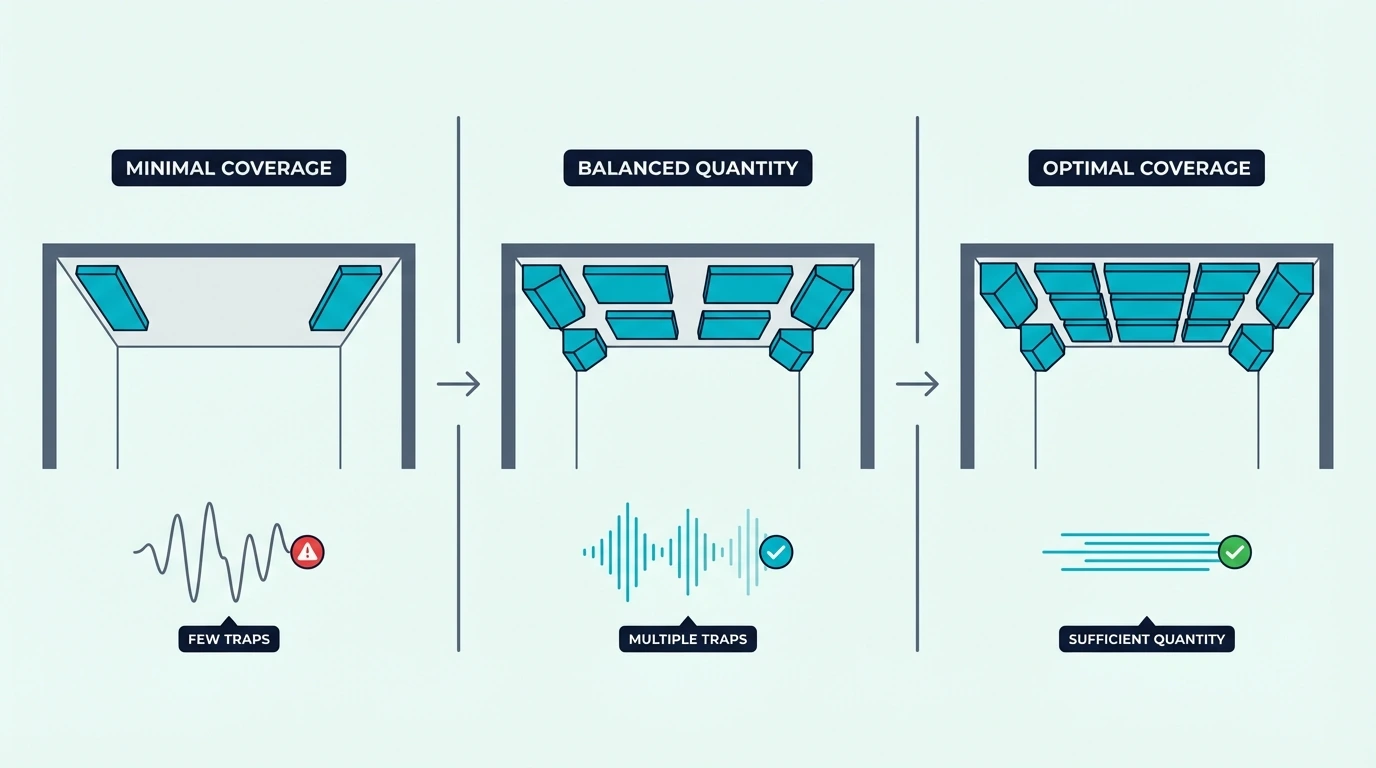
The number of ceiling bass traps depends on your room size and how much wall treatment you already have. Ceiling treatment supplements wall corner traps — it doesn’t replace them.
Minimum effective setup (2-4 traps): Cover the front wall-ceiling edge with 2 traps straddling the junction. This addresses the most critical ceiling zone for monitoring accuracy.
Strong setup (4-6 traps): Front edge (2 traps) plus side edges (1-2 traps per side starting from the front). This covers the primary reflection zone around the listening position.
Comprehensive setup (6-8+ traps): All four edges plus a ceiling cloud above the listening position. This level of treatment addresses the majority of vertical mode energy in a typical room.
For rooms that already have thorough corner treatment on the walls, adding ceiling edge traps is the logical next step. If your room has minimal wall treatment, invest in wall corners first — they give you more bass reduction per trap than ceiling positions.
The 8 Pack Bass Traps Acoustic Foam Corner provides enough pieces to cover multiple ceiling edge positions in a single purchase, making it a practical starting point for ceiling treatment. For a denser ceiling option, an ATS Acoustics 2-inch panel hung as a cloud with an air gap above it treats more of the low end than foam.
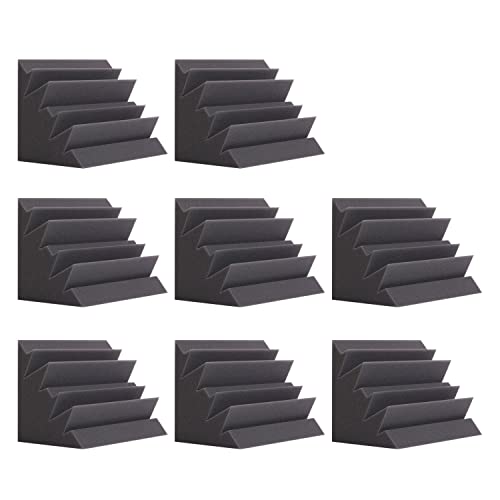
8 Pack Bass Traps Acoustic Foam Corner
The Bottom Line
Ceiling bass traps address the vertical room modes that wall-only treatment misses entirely. Wall-ceiling edge junctions are the highest-priority ceiling positions, followed by suspended cloud panels above the listening position.
Mount ceiling traps into joists (never drywall alone) using eye hooks and wire, with a 2-4 inch air gap for extended bass absorption. Prioritize the front wall-ceiling edge and work outward as budget allows — even two edge traps at the front make a noticeable difference in bass accuracy.
Frequently Asked Questions
Can you use regular acoustic panels on the ceiling for bass?
Regular 2-inch acoustic panels absorb mid and high frequencies effectively but don’t reach deep enough for bass control. You need at least 4-inch thick panels made from rigid fiberglass or mineral wool to absorb meaningfully below 200 Hz, and 6 inches is better for reaching the 80-125 Hz range where most ceiling modes fall.
Do ceiling bass traps need to be in corners?
Ceiling bass traps work best at the wall-ceiling edge (which is a corner — just a horizontal one), but suspended cloud panels hung away from any wall also absorb bass effectively. The edge positions absorb more bass per trap because they sit at pressure maxima, while clouds rely on their air gap to extend frequency reach.
How far below the ceiling should a bass trap hang?
A 2-4 inch air gap between the panel and the ceiling surface is ideal for most ceiling installations. This gap extends the trap’s effective acoustic depth without the panel hanging low enough to feel intrusive in rooms with standard 8-foot ceilings.