JBL vs Bose Soundbar: Bass and Value or Dialogue Clarity? [2026]
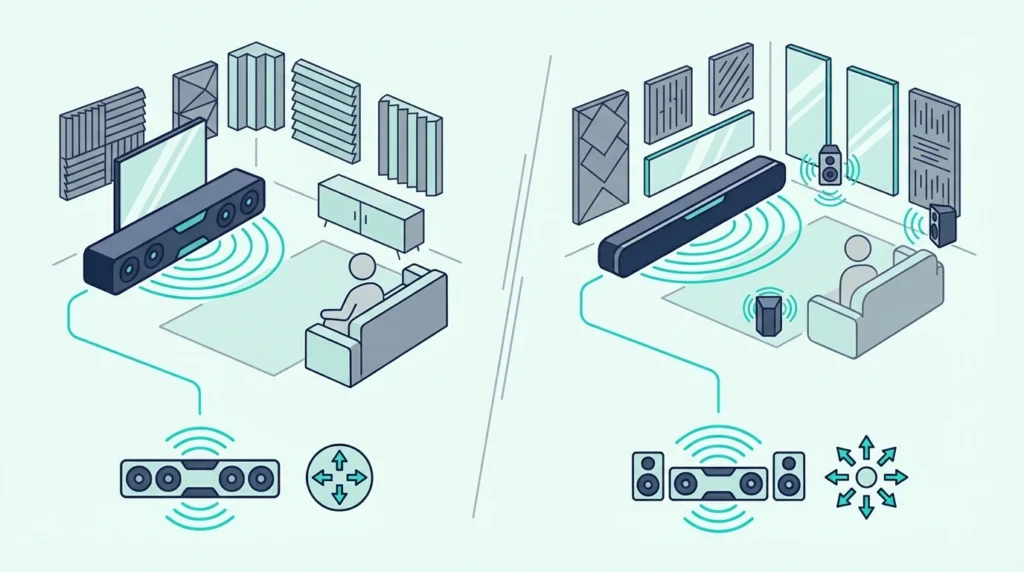
The JBL vs Bose soundbar comparison looks simple at first: JBL feels like the bass-and-value brand, while Bose feels like the dialogue-and-premium brand. That split is directionally true, but it still hides the decision that actually matters once the sound hits your room.
Buy the wrong brand and the mismatch shows up fast, because JBL can feel too bass-forward when your real problem is muddy speech. Bose can feel too restrained when you want bigger low-end punch and more hardware for the money.
The good news is that this choice gets much easier once you match each brand to the problem you are trying to solve. Below, we’ll compare JBL and Bose soundbars across sound quality, features, price tiers, and real-world use cases so you can pick the brand that fits how you actually watch TV.
Choose JBL if you want more bass, more surround channels, and more hardware per dollar. It usually makes the stronger case when you want impact, scale, and extra features before you care about the cleanest dialogue tuning.
Choose Bose if dialogue clarity is your top priority above everything else. It is usually the safer pick when you want a cleaner single-bar setup and easier-to-follow speech rather than the biggest bass hit.
Which Brand Sounds Better: JBL or Bose?
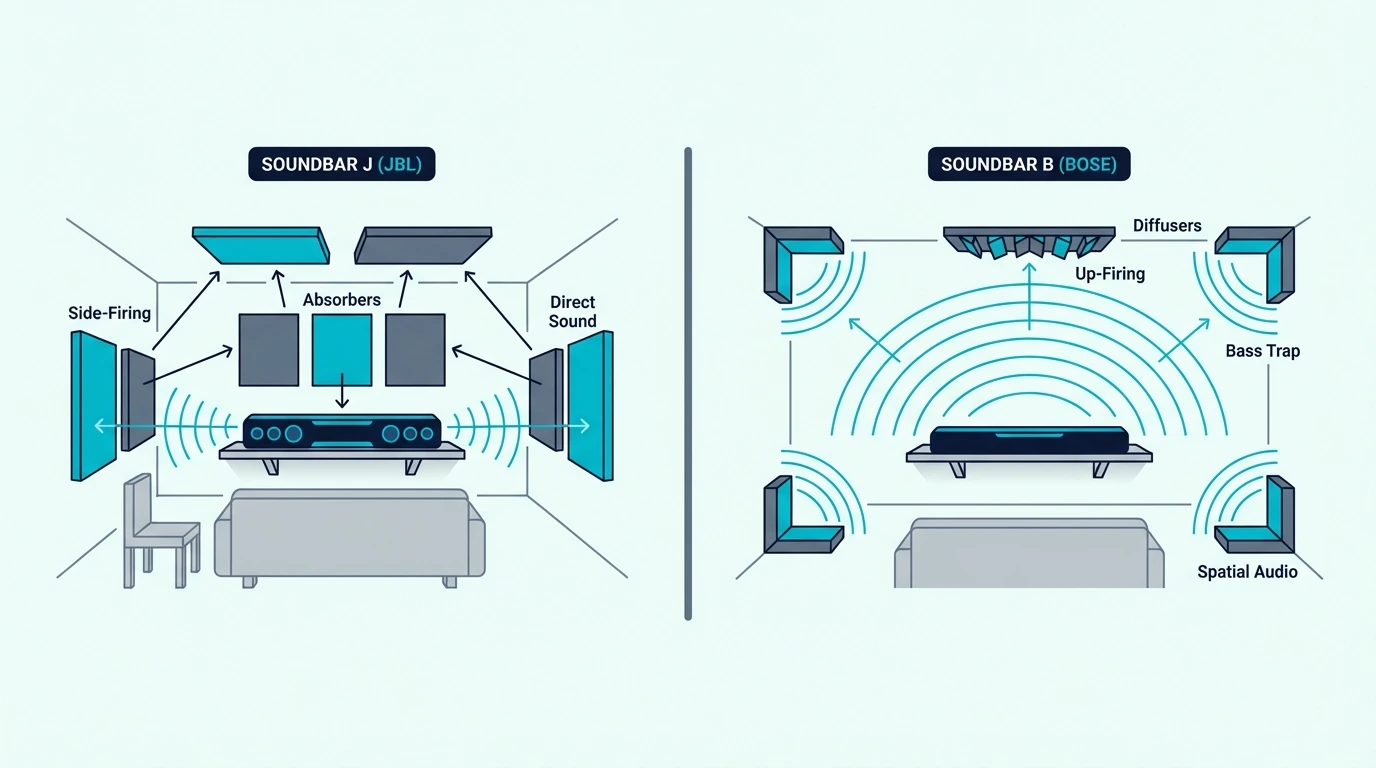
The most important difference between JBL and Bose is what each brand treats as the first job of a soundbar. Once you hear that priority clearly, the rest of the comparison starts to feel much less confusing.
What Does JBL Sound Like in Real Rooms?
JBL’s heritage in professional audio and concert speakers gives their soundbars a bass-forward, energetic signature. Action movies, gaming, and music feel more impactful than most competitors at the same price, which is why JBL usually feels bigger right away.
That tuning makes JBL especially good for sports fans, action-movie households, and anyone who wants a soundbar to double as a music speaker. It is usually less appealing if your main frustration is constantly missing dialogue during busy scenes.
For large-room movie use, a current example is JBL Bar 700MK2, which is a strong fit for Atmos movies and TV with stronger bass. It is the kind of JBL option that immediately shows why the brand leans harder into excitement and scale.
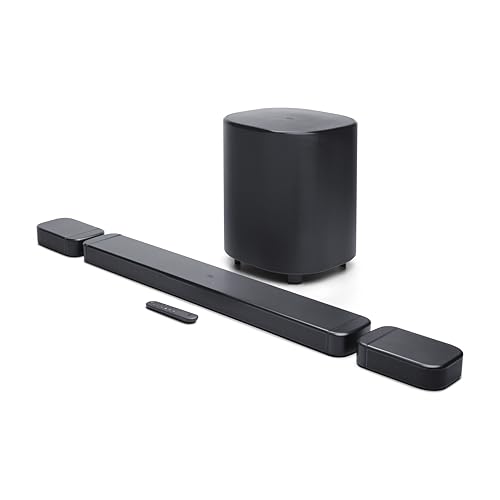
JBL Bar 700MK2
JBL is a weaker fit if you mostly watch talk-heavy dramas, news, or late-night TV at modest volume. In that use case, the extra bass and wider presentation can matter less than having dialogue locked dead center.
JBL’s flagship Bar 1000 takes this further with detachable rear speakers for true wireless 7.1.4-channel surround, while Bose’s Smart Ultra Soundbar aims for a similar immersive effect through virtual processing from a single bar. That hardware gap matters most for movie fans who want sound coming from behind and above instead of feeling widened only through processing.
Our JBL vs Polk soundbar comparison covers how JBL stacks up against another mid-range brand. The best Dolby Atmos soundbar guide explains when physical rear speakers and height channels are worth chasing.
What Does Bose Sound Like in Real Rooms?
Bose takes the opposite engineering approach — every soundbar in the lineup is tuned first to keep speech intelligible no matter what else is happening in the mix. For large-room movie use, a current example is Bose Smart Ultra Soundbar, which is a strong fit for Atmos streaming and immersive TV audio.
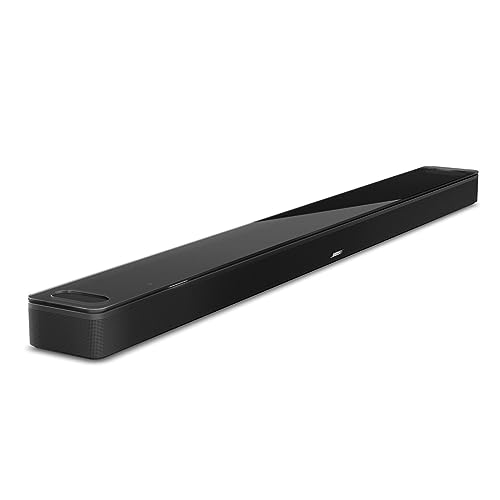
Bose Smart Ultra Soundbar
Bose tends to make more sense in smaller rooms where you sit closer to the screen and care more about hearing every word than feeling extra bass weight. It also suits buyers who want a cleaner single-bar setup before they think about adding more speakers later.
Bose’s proprietary ADAPTiQ room calibration uses a headset microphone to measure your room’s acoustics and optimize voice frequencies for your specific space. That tradeoff makes Bose especially appealing in apartments and bedrooms where clear speech matters more than shaking the room with deep bass.
Bose is a weaker fit if you expect one compact bar to replace the feel of a subwoofer-and-rear-speaker package. The best soundbars for dialogue guide shows where Bose-like tuning matters most, and our Bose vs Sony guide explores a similar premium-tier matchup.
Which Brand Gives You Better Features and Value?
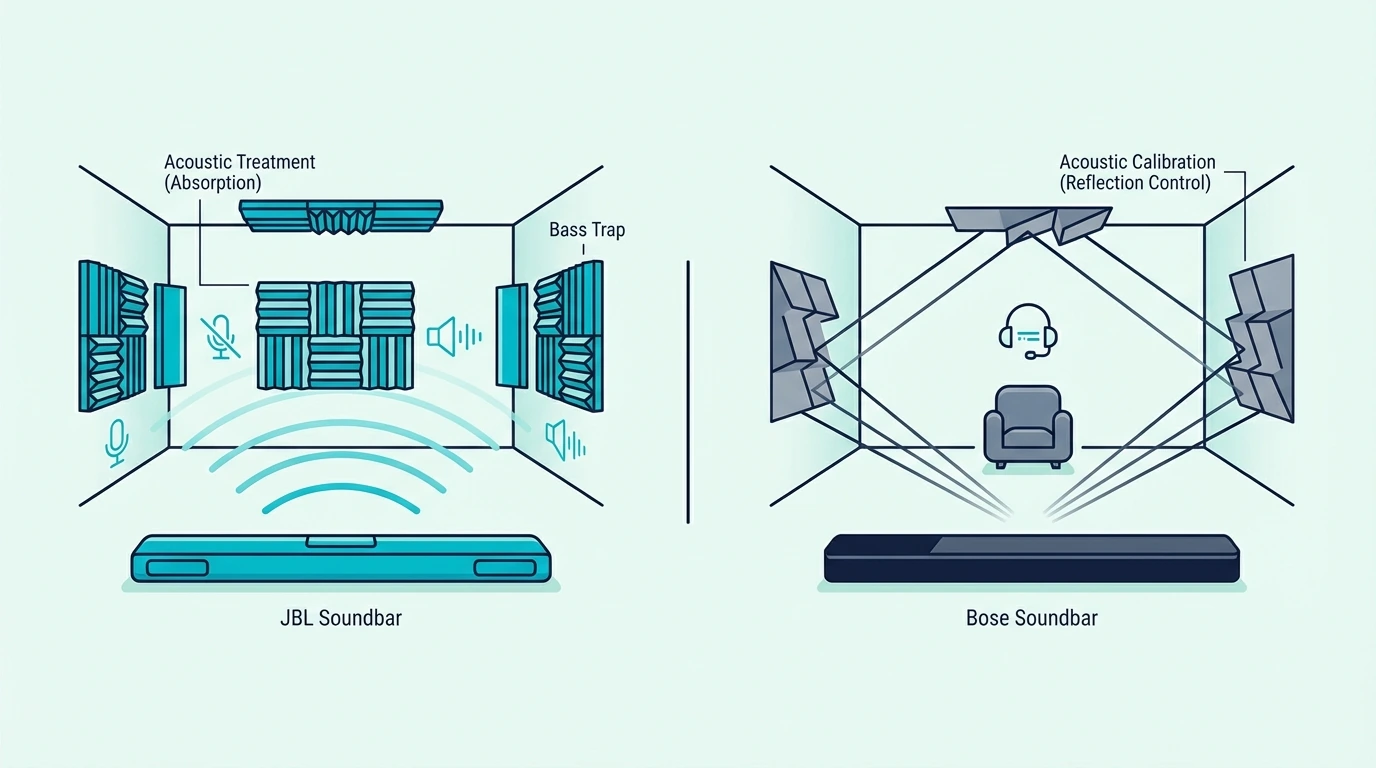
Beyond sound quality, JBL and Bose differ dramatically in pricing strategy and included features. This is where JBL’s value edge becomes easiest to see if you care about getting more hardware inside the same budget.
Why Does JBL Usually Win on Hardware Value?
JBL’s soundbar lineup spans from simple entry-level bars to premium Atmos packages with meaningful upgrades at each step. Wireless subwoofers, Dolby Atmos, DTS:X, and detachable rear speakers show up in parts of the lineup where Bose still offers simpler configurations.
That is why JBL usually looks stronger on a side-by-side spec sheet. You reach bigger hardware, more surround channels, and broader format support faster without jumping straight to the top of the range.
JBL also supports both Dolby Atmos and DTS:X across more of its lineup, while Bose supports only Dolby Atmos. The soundbar buying guide explains how channel counts and format support change what you actually hear, and the best overall soundbar guide helps frame when those upgrades justify the money.
Why Do Some Buyers Still Prefer Bose?
Bose keeps the lineup tighter, with a smaller number of bars positioned around simplicity, dialogue performance, and app polish. Every model leans into refined speech processing and a cleaner user experience instead of chasing the longest spec sheet.
The trade-off is fewer hardware features per dollar compared to JBL, but the experience stays consistently polished. Bose SimpleSync also lets you pair Bose headphones with the soundbar for private listening, which is a genuinely useful late-night feature JBL does not match the same way.
The soundbar-to-TV connection guide explains the setup basics both brands still need. The dialogue-focused roundup helps you judge whether Bose’s speech-first tuning is the real reason to pay more.
How Do the Key JBL and Bose Price Tiers Compare?
For large-room movie use, a current example is JBL Bar 500MK2, which is a strong fit for Atmos streaming and immersive TV audio. In the mid-range tier, JBL usually gives you a wireless subwoofer and more surround ambition, while Bose usually gives you a simpler bar with stronger dialogue focus.
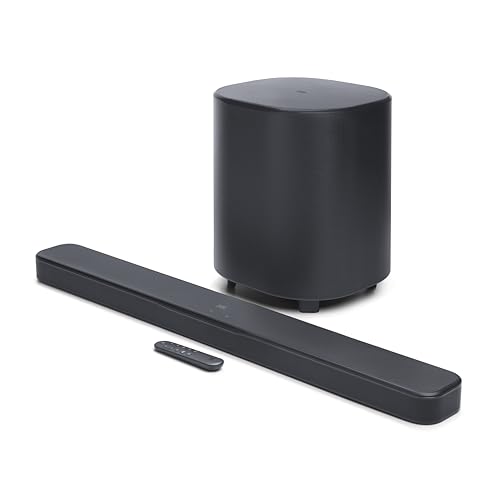
JBL Bar 500MK2
In practice, that choice is pretty straightforward. JBL wins if you want theater feel and bass per dollar, while Bose wins if you want clearer speech from a simpler bar that asks less of the room.
Room size changes the value math more than most spec sheets admit. In a larger living room, JBL’s bundled subwoofers and rear-speaker options can save you from needing upgrades later, while Bose makes more sense when the listening distance is short and speech clarity matters more than scale.
At the flagship end, the JBL Bar 1000 includes detachable rear speakers, a wireless subwoofer, and true 7.1.4-channel Atmos with physical height channels while the Bose Smart Ultra relies on virtual Atmos from a single bar. That leaves JBL ahead on raw hardware and Bose ahead on dialogue-first simplicity.
The flagship choice follows the same pattern, just with more money on the line. JBL gives you more physical hardware to justify the spend, while Bose bets that cleaner dialogue and a sleeker setup are the real premium features.
Our Bose vs Samsung guide covers another common premium-brand comparison. The soundbar-to-TV connection guide walks through setup for both JBL and Bose.
Get Studio Tips Weekly
Join 5,000+ creators getting acoustic treatment advice every week.
No spam. Unsubscribe anytime.The Bottom Line
Choose JBL if you want more bass impact, more surround channels, and more hardware per dollar. Choose Bose if dialogue clarity is your top priority and you value a cleaner single-bar experience more than raw hardware.
The best soundbars for TV guide helps narrow the field if you want to compare these brands against the rest of the market. Our soundbar setup guide walks through placement and configuration once you pick a direction.
If you mostly watch action movies in a larger room, JBL usually makes the easier case. If you mostly watch dialogue-heavy TV in a bedroom or apartment, Bose usually ends up feeling like the safer buy.
It also helps to think about your upgrade path before you buy. If you want the box to include most of the theater feel on day one, JBL is easier to justify, while Bose fits better when you want to start with a compact bar and keep the system visually simple.
Music habits matter too. JBL usually sounds more immediately lively for playlists and casual parties, while Bose feels more controlled and less fatiguing for low-volume nightly TV.
Frequently Asked Questions
Which is the best, Bose or JBL?
Bose is the better pick if your daily frustration is understanding actors during loud scenes, because its tuning pushes speech clarity to the front. JBL is the better pick if you care more about bass impact, surround immersion, and overall hardware value for the money.
Which is better, JBL or Bose or Sony?
Each brand excels at a different listening priority. JBL wins on bass impact and value, Bose wins on dialogue clarity and polish, and Sony usually makes the strongest case for cinematic Atmos with deeper TV ecosystem integration.
If you are deciding between brands and a new TV at the same time, the soundbar hub is the best place to map the next step.