JBL vs Polk Soundbar: Which Brand Fits Your Listening Style? [2026]

The JBL vs Polk soundbar debate looks simple but comes down to two fundamentally different design philosophies. JBL builds around bass impact and immersive sound while Polk builds around dialogue clarity and value at every price tier.
Most comparison articles treat the two brands as interchangeable mid-range options. They rarely explain what each brand actually prioritizes in its hardware design.
JBL uses MultiBeam DSP and large bass radiators to create a wide and punchy soundstage that favors movies and music. Polk uses patented VoiceAdjust with dedicated center channel drivers that prioritize clear speech.
The problem is picking the wrong brand means optimizing for the wrong thing. JBL and Polk engineer their soundbars for different primary use cases.
Choosing a JBL when you mostly need dialogue leaves you with a soundbar that is good but not great at the thing you care about most. The same applies to picking Polk when you want maximum bass impact.
Understanding what each brand’s engineering philosophy actually delivers helps you match the right soundbar to your primary listening habits, so you can avoid spending $200-400 on a soundbar that excels at something you rarely use while underperforming at what you need daily.
Below, we’ll compare JBL and Polk soundbars across sound quality priorities, feature sets, price tiers, and specific use cases to help you decide which brand fits your setup.
Choose Polk if dialogue clarity is your top priority — their VoiceAdjust technology and dedicated center-channel approach keep voices crisp during loud scenes, and they often undercut JBL at comparable feature tiers. Choose JBL if bass impact and immersive soundstage matter most — their MultiBeam tuning and larger driver arrays create a wider, more cinematic presentation that favors movies and music over pure dialogue focus.
Sound Quality: Different Engineering Priorities

JBL and Polk both make good soundbars. They simply engineer them to excel at different aspects of audio reproduction.
Understanding these priorities makes the choice straightforward based on what you listen to most. The difference isn’t about one brand being objectively better — it’s about which design philosophy aligns with your use case.
JBL: Bass-Forward and Immersive
JBL soundbars are engineered for impact. Their Bar series uses large oval racetrack drivers and dedicated bass radiators.
Those drivers produce deep room-filling low-frequency output from the main bar even before you add a subwoofer. That alone separates JBL from most flat-response competitors.
MultiBeam technology uses side-firing and angled drivers to bounce sound off walls. The result is a wider perceived soundstage than the physical bar width suggests.
A current JBL example is the JBL Bar 300. It’s a strong fit for Atmos streaming and immersive TV audio.
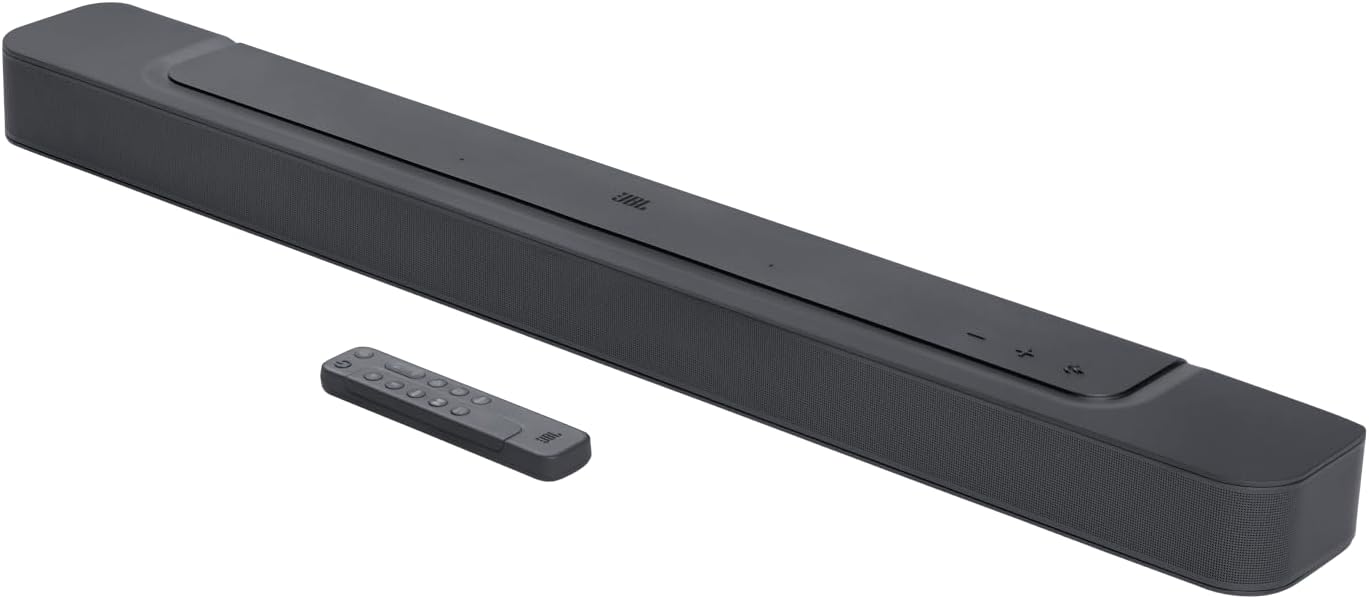
JBL Bar 300
JBL’s approach delivers a more exciting experience for movies with big soundtracks or music listening.
However, JBL relies on DSP processing for dialogue enhancement. Voices can get slightly buried during complex audio mixes.
Soundbars with dedicated center channel hardware keep voices more intelligible. Our best soundbar for dialogue guide explains how channel configurations affect dialogue separation.
Polk: Dialogue-First and Value-Oriented
Polk soundbars are engineered for voice clarity. Their patented VoiceAdjust is a hardware-level dialogue enhancement system.
VoiceAdjust works with physically dedicated center channel drivers instead of just DSP applied to shared drivers. Speech lives on its own speaker from the start.
Dialogue stays clear regardless of what is happening on the left and right channels. That consistency is the whole point of Polk’s engineering choice.
A current Polk example is the Polk MagniFi Mini AX. It’s a strong fit for Atmos movies and TV with stronger bass.
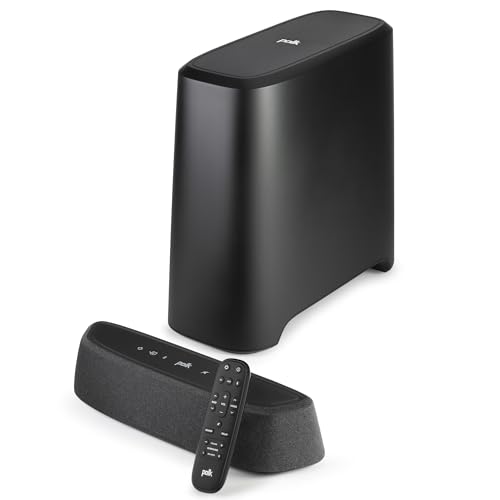
Polk MagniFi Mini AX
Polk often prices its soundbars below JBL equivalents with similar feature sets.
However, Polk’s bass output is controlled and accurate rather than room-shaking. JBL’s larger drivers and bass radiator design deliver more visceral impact.
Polk’s sound signature is tighter and more neutral, which audiophiles often prefer. Our soundbar fundamentals guide covers how different driver types affect bass response.
Features, Price, and Practical Differences
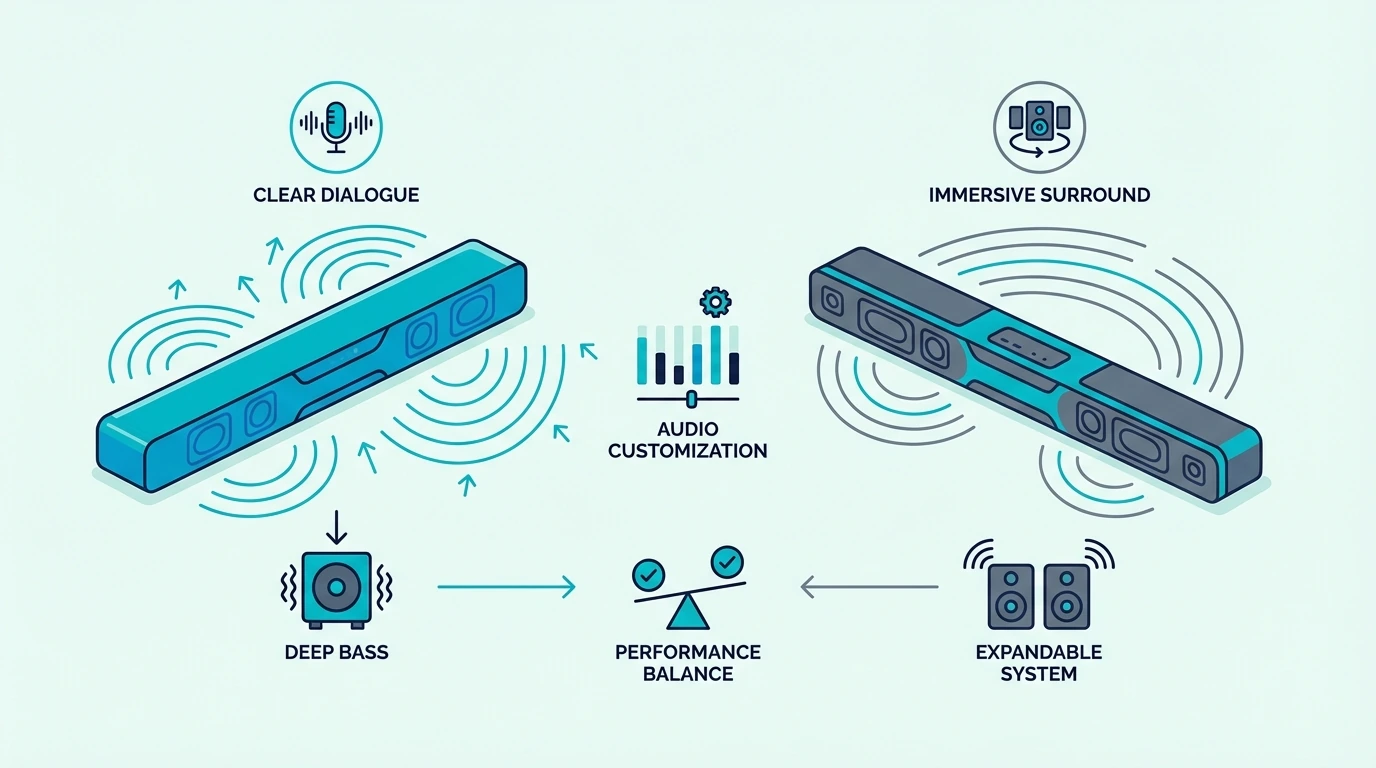
Beyond sound quality philosophy, JBL and Polk differ in pricing strategy, app ecosystem, and feature availability at each price tier — and these practical differences can matter as much as the audio performance when you’re living with a soundbar daily.
Price Tiers: Polk Wins on Value
At the budget tier, the Polk Audio Signa S2 shows Polk’s value approach with a wireless subwoofer and TV-first tuning. JBL often asks more money for a bigger but less dialogue-focused presentation.
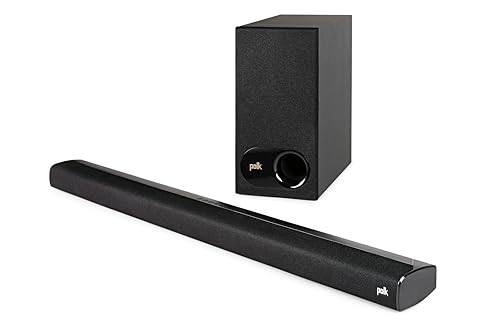
Polk Audio Signa S2
This pattern repeats up the lineup. Polk consistently includes features like a center channel and Atmos and a wireless sub at a lower price point than JBL.
In the mid tier, Polk’s Signa S4 delivers 3.1.2 Dolby Atmos with a wireless subwoofer.
JBL’s equivalent Atmos model, the Bar 300, uses a 5.0 all-in-one configuration without a separate sub.
Our guide to choosing a soundbar covers value calculations at each price tier. Our Sonos vs Bose soundbar comparison covers the premium brand alternatives.
At the premium tier, JBL’s Bar 1000 with detachable surround speakers competes with Polk’s MagniFi Max AX SR. JBL has the edge in immersive surround with physically detachable wireless rear speakers.
Polk still maintains its dialogue clarity advantage at this tier. Our soundbar vs surround sound guide explains when stepping up to premium multi-speaker configurations is worth it.
Connectivity and App Ecosystem
Both brands support HDMI eARC plus optical and Bluetooth and WiFi across their mid and premium tiers. JBL’s One app offers detailed EQ customization alongside firmware updates and multi-room speaker grouping with other JBL products.
Polk’s Sound app provides EQ adjustment and VoiceAdjust level control. It has a simpler interface with fewer features.
Both apps also support basic night mode and voice enhancement toggles on the go. Neither matches the depth of a standalone receiver app.
If you already own JBL portable speakers or headphones, the JBL ecosystem integration adds value through multi-room audio grouping. Polk does not offer comparable ecosystem integration and each Polk soundbar is more of a standalone purchase.
Our soundbar to TV connection guide covers HDMI eARC setup for both brands. Our HDMI vs optical guide explains connection options.
Use Case Recommendations
For movie-focused setups where bass impact and spatial immersion matter most, JBL’s MultiBeam technology and larger driver arrays create the more cinematic experience. You get deeper low-end and a wider perceived soundstage.
For TV drama and news viewing, Polk’s VoiceAdjust and center channel hardware make dialogue effortless at any volume. That is particularly valuable for households where family members have different hearing sensitivities.
For music listening, JBL’s wider soundstage and bass emphasis favor genres like hip-hop / electronic / orchestral scores. Polk’s balanced approach works better for vocal-heavy genres like folk / jazz / podcasts.
For gaming setups, JBL’s wider soundstage helps you locate enemy footsteps and ambient sound effects in first-person shooters. Polk’s cleaner dialogue keeps in-game voice chat and tutorial audio crisp during chaotic action.
Competitive gamers often pair either bar with a headset so this difference matters less than it does for casual TV viewing.
Our soundbar vs speakers guide covers how soundbars compare to dedicated speakers for music. Our soundbar vs bookshelf speakers comparison explains when separate speakers might be better than either brand’s soundbar.
Get Studio Tips Weekly
Join 5,000+ creators getting acoustic treatment advice every week.
No spam. Unsubscribe anytime.The Bottom Line
Choose Polk if dialogue clarity and value are your priorities. You will get better speech intelligibility and more features per dollar at every price tier.
The VoiceAdjust technology is genuinely best-in-class for keeping voices clear during loud content.
Choose JBL if bass impact and spatial immersion and ecosystem integration matter most. MultiBeam technology and larger drivers create a more cinematic experience than Polk’s more controlled profile.
The JBL One app ecosystem adds value if you already own other JBL audio products.
Our soundbar vs receiver guide covers when stepping beyond soundbar brands to a receiver-based system makes sense, and our soundbar setup guide covers configuration for whichever brand you choose.
Frequently Asked Questions
Is Polk soundbar good?
Polk soundbars are excellent for dialogue clarity and value. Their VoiceAdjust technology and dedicated center channel drivers make them among the best options for TV viewing where hearing voices clearly is the top priority.
Most Polk bars ship with a wireless sub in tiers where JBL still sells bar-only models.
Is JBL or Polk better for movies?
JBL is generally better for movies if you prioritize bass impact and immersive surround effects. Their MultiBeam technology and larger driver arrays create a more cinematic soundstage.
Polk is better for movies if dialogue clarity matters more than bass punch. Their center channel hardware keeps voices intelligible during complex action scenes.
Are JBL soundbars worth the premium over Polk?
The JBL premium is worth it if you value bass impact plus wider soundstage and JBL ecosystem integration with other JBL speakers. Dialogue-first buyers get a different answer.
If dialogue clarity and value are your priorities, Polk delivers comparable or better performance at each tier. That makes the JBL premium harder to justify purely on audio quality.