How to Soundproof a Boiler Room or Cupboard Safely
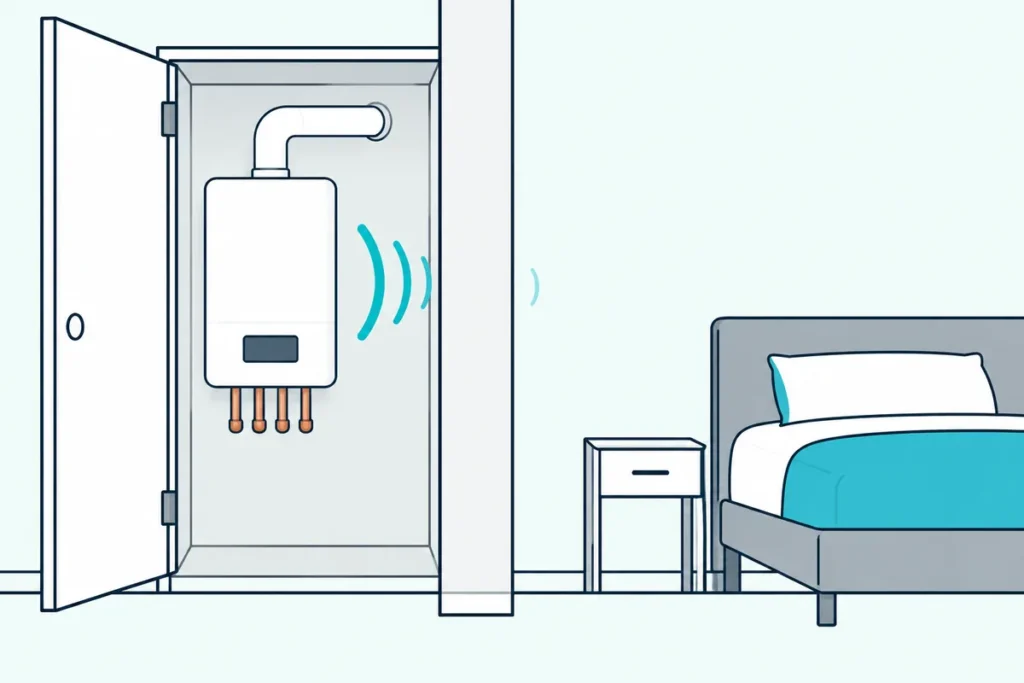
If you’re working out how to soundproof a boiler room or cupboard, fix the noises a healthy boiler shouldn’t make first, then add mass and seals around it without touching the clearances and air openings in its manual.
That gurgle, whistle or hum through a bedroom wall can come from trapped air, limescale or a failing pump, and sealing the cupboard tight can break the maker’s rules on space and air.
Done in that order, the work cuts the boiler sound you hear while the boiler keeps the air and service space it needs.
The first check costs nothing: Glow-worm and Viessmann both name trapped air as a cause of a gurgling boiler, and both suggest bleeding the system.
The steps below run from that check to the door and walls, then show what UK and US makers allow around their boilers.
How to Soundproof a Boiler Room in Eight Steps
That order matters because the early steps quiet the boiler itself, while the later ones only slow its sound on the way out.
| Step | What to do | Why it helps |
|---|---|---|
| 1 | Bleed trapped air and check the pressure | Viessmann and Glow-worm name air as a cause of gurgling |
| 2 | Call an engineer for whistling, banging or a loud hum | Ideal says kettling fixes aren’t DIY jobs |
| 3 | Look up your boiler’s clearances | Each maker sets its own |
| 4 | Find out whether the room needs air openings | Weil-McLain sizes them for every appliance in the room |
| 5 | Seal the door, if the maker allows a closed space | HUD rates a hollow-core door at STC 17 |
| 6 | Isolate the pipes from a wall you share with a bedroom | NRC Canada wants pipes resiliently supported |
| 7 | Upgrade that wall | HUD credits resilient clips with 2 to 5 STC points |
| 8 | Fit a carbon monoxide alarm | Burnham, Viessmann and Ideal all suggest one |
Nothing on the list wraps the boiler, because its clearances keep that space open. If it shares a utility room with a washing machine, soundproofing a laundry room starts with the washer’s shipping bolts and feet.
Which Boiler Noises Mean a Fault You Should Fix First?
Steps 1 and 2 split the noises into the ones you can fix and the ones a professional should. Glow-worm calls a faint whirr normal when the heating or hot water runs, but treats whistling, banging, loud vibration and a sound like a plane taking off as signs of a problem.
| What you hear | Likely cause | What to do |
|---|---|---|
| Gurgling | Trapped air (Glow-worm, Viessmann) or a blocked condensate pipe (Worcester Bosch) | Bleed the radiators; ask the installer about the condensate pipe |
| High-pitched whistling | Kettling from limescale or debris, or trapped air (Glow-worm) | Bleed first, then book an engineer |
| Banging or knocking | Kettling, a faulty pump or sensor, or loose pipework (Glow-worm) | An engineer; check any pipework you can reach |
| Loud vibration | A damaged pump or a blocked flue (Glow-worm) | Clear leaves from a flue terminal you can reach |
| Loud humming | Water pressure or flow, the fan or loose components (Glow-worm) | An engineer |
| Noise from a US hot-water system | Air in the system, which Weil-McLain says causes noise | Vent the air as the boiler manual describes |
Ideal explains kettling this way: water in a boiler’s loop normally reaches about 70°C (158°F), but limescale, sludge or a weak pump can slow it until it boils into steam bubbles, and a faulty thermostat can let it overheat. Modern boilers should detect the overheating and shut down, Ideal adds, but none of the cures is a DIY job.
The Wal-Rich R20002 radiator key is a nickel-plated brass bleeder key whose listing says it releases air and water from radiators, baseboard radiators and central heating systems. Viessmann notes that a screwdriver opens some vents, so look at yours first.
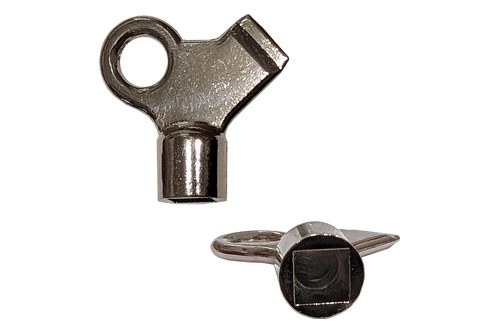
The Wal-Rich R20002 radiator key
Glow-worm puts a healthy pressure at about 1.5 bar with the radiators cold and between 1 and 2 bar with the heating on. If bleeding doesn’t stop the noise, call for a repair, since Glow-worm says not to open the boiler casing yourself.
Get Studio Tips Weekly
Join 5,000+ creators getting acoustic treatment advice every week.
No spam. Unsubscribe anytime.What Clearances Does a Boiler Cupboard Need?
Once the faults are out of the way, the space around the boiler sets the limits for everything else. Use the figures in your boiler’s own manual, because they differ from one boiler to the next:
| Boiler | Above | Below | Sides | Front |
|---|---|---|---|---|
| Worcester Bosch Greenstar 24/28/30 combi | 170 mm (210 mm with an 80/125 flue) | 200 mm | 10 mm | 20 mm to a removable door, 600 mm for servicing |
| Vaillant ecoTEC plus 938 | 165 mm (275 mm with an 80/125 flue) | 180 mm | 5 mm | 500 mm for maintenance, which an opening door can provide |
| Baxi 800 Combi 2 | 178 mm | 200 mm | 2.5 mm | 5 mm in use, 450 mm for servicing |
| Navien NCB-E combi (US) | 9 in | 12 in | 3 in | 4 in |
| Weil-McLain WM97+ (US), for service | 12 in | 12 in | 3 in | 24 in |
Viessmann’s rule of thumb, about 30 cm above and 10 cm below, is too tight under the Baxi or the Greenstar, so check your guide, as Viessmann says. Anything you add, a lining, a thicker door or a shelf, has to sit outside those figures.
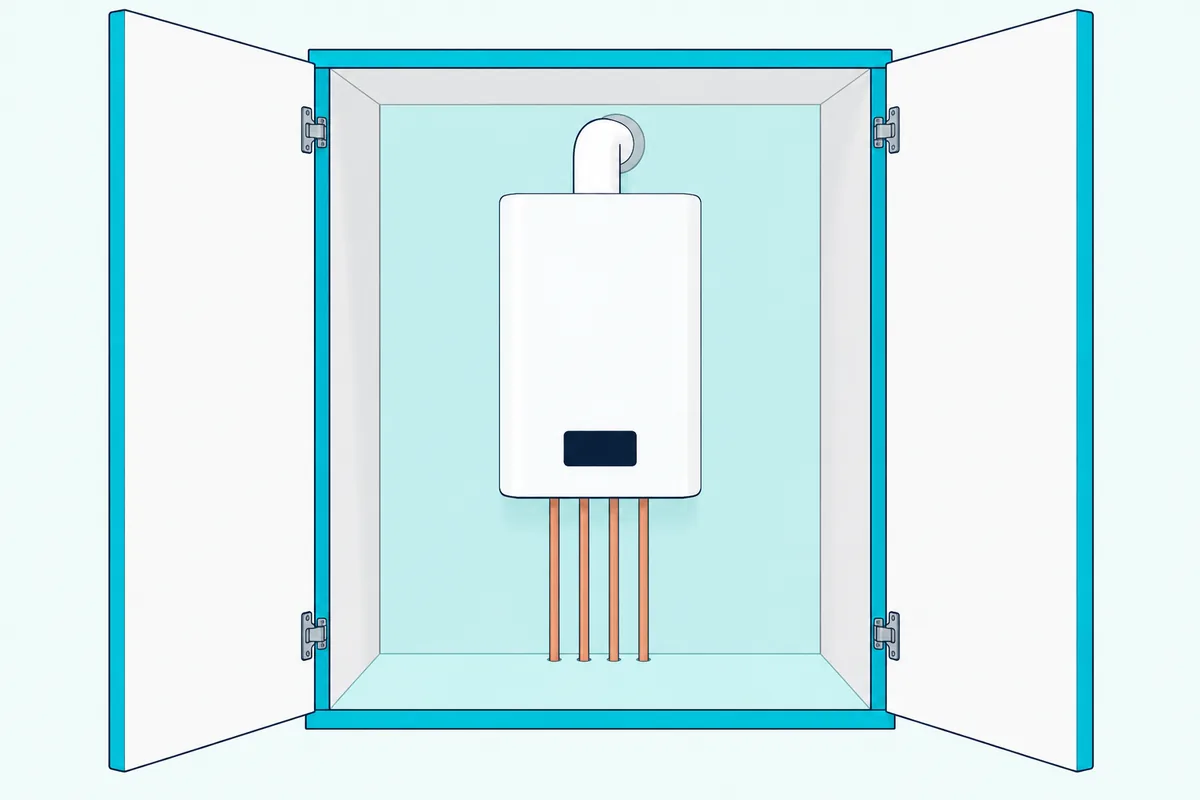
Worcester Bosch also requires an access door, and in an airing cupboard a non-combustible panel between the boiler and the airing space, with holes no bigger than 13 mm. Ideal adds: keep the area clear so the door opens easily.
Does a Boiler Room or Cupboard Need Air Openings?
Clearances are half the story, and the other half is air. A room-sealed boiler, called direct-vent in the US, takes its air through the flue, so Vaillant says its ecoTEC plus needs no compartment ventilation, but a boiler, furnace or water heater that burns room air needs openings sized by code, and they stay open.
Weil-McLain’s Ultra manual, following the National Fuel Gas Code, asks for two openings into a boiler room that draws its air from the rest of the house and holds other appliances, each with 1 square inch of free area per 1,000 Btu/h of every appliance in the room, within 12 inches of the ceiling and the floor. By that rule, a 100,000 Btu/h boiler sharing the room with a 40,000 Btu/h water heater needs two openings of at least 140 square inches each.
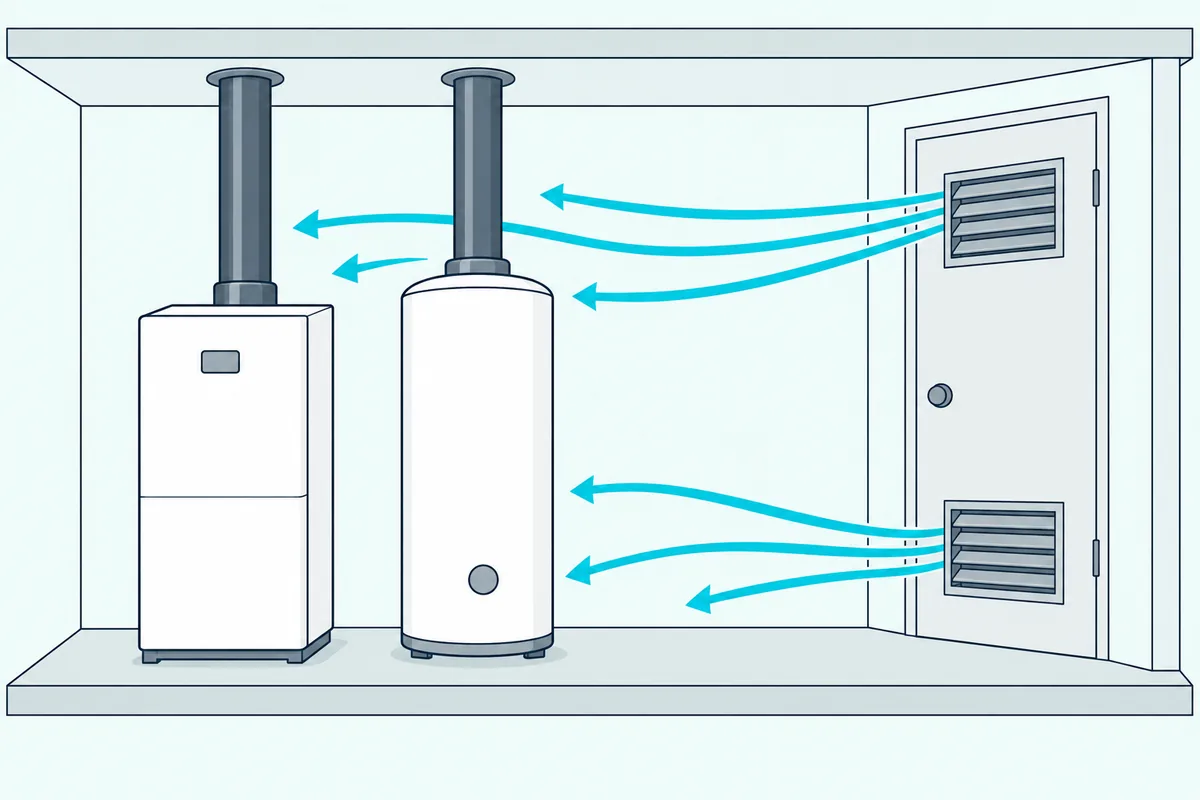
Those openings also prevent overheating of the boiler’s controls, Weil-McLain says, and it counts free area after any louver or grille, so a baffle added for quiet eats into it. For a boiler that draws room air, Burnham’s ES2 manual only counts rooms joined to the boiler room by passageways without doors, so our reading is that a new solid door can leave a room short: a 100,000 Btu/h appliance needs 625 square feet under an 8-foot ceiling, or an opening to outdoor air.
Even a direct-vent boiler can need openings in a tight closet: Weil-McLain’s WM97+ manual asks for two in the front of the enclosure, each 1 square inch per 1,000 Btu/h, when the closet doesn’t give its service clearances. Burnham’s warning is plain: insufficient air may cause a boiler to produce carbon monoxide or start a fire.
In UK homes, Ideal says some boiler cupboards need vents for cooling air, as the maker’s guidance sets out. Where an opening must stay, ask the heating engineer whether it can be lined or rerouted without losing free area; NRC Canada’s digest wants noise filters in ventilating louvers, much like the lined, bent path that quiets a noisy vent.
Can You Line a Boiler Cupboard With Soundproofing?
With those air openings settled, the next question is what can go on the walls around the boiler. Yes, outside the clearance zone and never on the boiler: Viessmann suggests acoustic panels, fiberglass, carpet tiles or an acoustic blanket for a boiler cupboard, while keeping the gaps above and below the boiler.
Those absorbent linings soak up sound inside the space, while HUD’s Noise Guidebook puts the blocking on mass and sealed gaps. In a stud wall, HUD says mineral wool or fiberglass blankets in the cavity can cut noise by as much as 10 dB, mostly in lightweight construction.
Burnham’s manual says to keep the boiler area clear of combustible materials and not to install its floor-standing boiler on carpet. Panels or mass loaded vinyl belong on the far side of the clearance zone, never against the casing or over a vent.
Is the Cupboard Door the Weak Point?
Linings deal with the sound inside, and the door is the next thing to check. Usually, yes: HUD’s Noise Guidebook calls doors acoustically weaker than windows and rates a hollow-core door at STC 17, enough to drag a wall rated STC 48 down to 24 when the door takes up a fifth of it.
HUD’s fix is a solid-core door with seals around its edges, which brings that wall back to 33 with carpet on the floor, and gasketed stops or a drop-bar threshold closer add more. NRC Canada agrees: a solid, carefully fitted door with a refrigerator-type gasket at the top and sides and a sill or drop strip at the floor.
Seal it only where the maker allows a closed space, and keep any opening the manual or code asks for at full size. Our guide to soundproofing an existing door covers seals and solid-core slabs in order.
Why Does Boiler Noise Come Through the Wall?
A sealed door stops sound in the air, but some boiler noise never takes that route. Pipes can carry it into the wall: NRC Canada calls service pipes an efficient direct path between homes, and wants them resiliently supported and kept off walls that need to be quiet.
A wall-hung boiler must sit on a fixed, rigid surface that can carry its weight, Worcester Bosch says, so the isolation goes into the pipe clips and the wall instead. WorkSafe Victoria’s enclosure guidance makes the same point for machinery: keep pipes from touching the enclosure, or use flexible pipe sections and sealants around them.
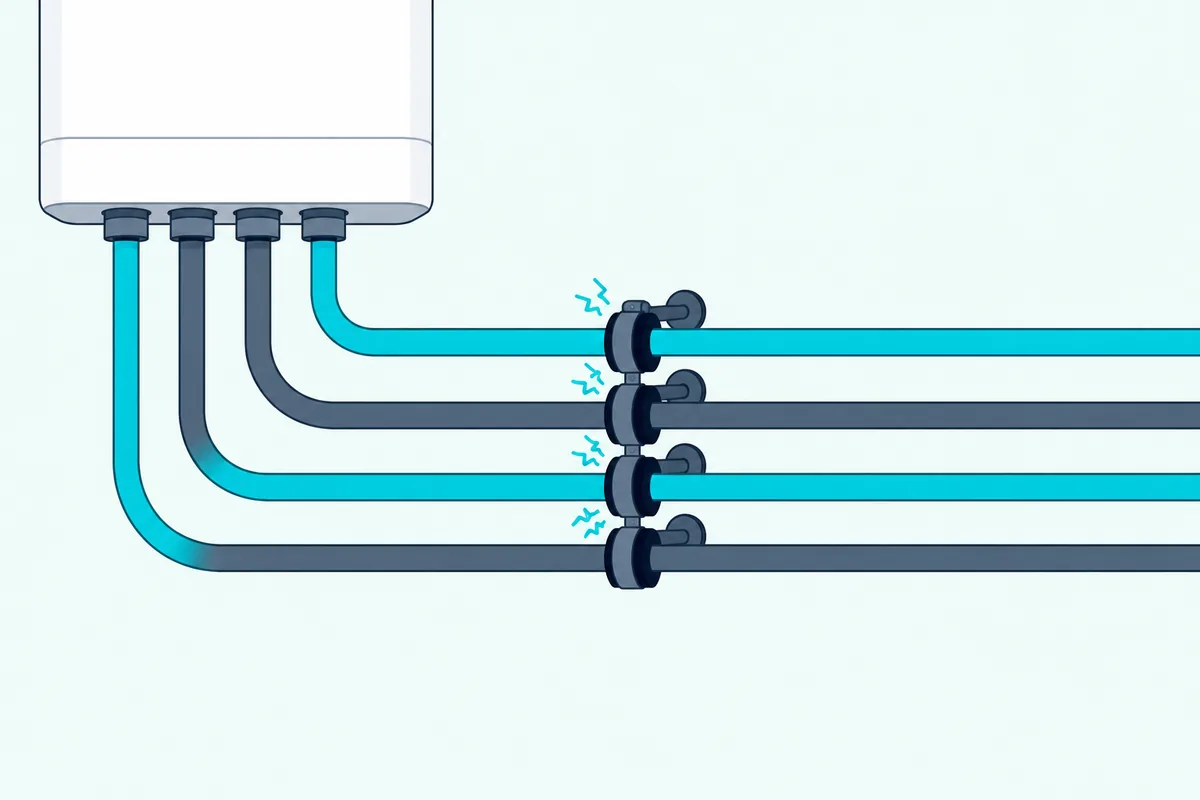
For the wall, HUD credits resilient clips with 2 to 5 STC points and warns that a 1-inch-square hole or a 1/16-inch crack 16 inches long pulls an STC 50 wall down to 40. Burton Acoustix’s wall soundproofing guide covers those layers on the bedroom side.
Can an Engineer Make the Boiler Itself Quieter?
Pipes and walls deal with noise after it leaves the boiler, but an engineer can sometimes lower it at the source. Yes, in some cases: Worcester Bosch’s fault table answers flow noise by setting the pump stage to match the boiler’s output, and Vaillant’s manual has the installer lower the bypass valve’s pressure when radiators or their valves are noisy.
For kettling, Ideal lists cleaning or replacing the heat exchanger, a chemical in the system water and a magnetic filter on the return pipe. Ideal also says modern boilers run much more quietly than older models, and Weil-McLain fits its WM97+ with an air inlet silencer to cut fan noise.
How Do You Check the Fix Worked and Stay Safe?
Whichever of those fixes you choose, measure the result rather than trusting your ears. Take a phone reading from the same spot before and after, with the boiler doing the same job, and compare it with the Federal Highway Administration’s noise primer: 3 dB is barely perceptible, 5 dB readily perceptible and 10 dB half as loud.
A quieter boiler is one you hear less, so Ideal and Viessmann suggest listening to it now and then, and Glow-worm suggests you inspect it between services. Viessmann suggests a carbon monoxide detector when a boiler sits out of sight, and Burnham suggests CO alarms near bedrooms on every level.
Kidde’s battery-powered COB alarm runs on two AA batteries, so it keeps working in a power cut, and its listing says it’s tested to UL 2034 and sounds an 85-decibel alert. HSE’s signs of a gas appliance burning badly are yellow or orange flames, soot or staining, a pilot light that keeps going out and more condensation inside windows.
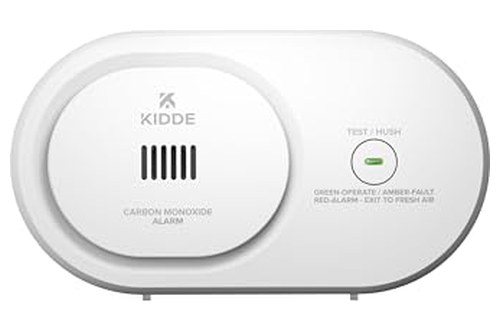
Kidde’s battery-powered COB alarm
The Bottom Line
Fix the faults first: bleed trapped air, check the pressure and leave kettling, pumps and settings to an engineer, with an annual service and inspection.
Then quiet the space within the manual: keep every clearance and air opening, seal the door only where that’s allowed, isolate the pipes and fit a CO alarm.
Frequently Asked Questions
Can you soundproof a boiler?
Not the boiler itself, but you can quiet the space around it. Bleed trapped air and have an engineer fix kettling or pump noise first, then seal and add mass to the door and walls while keeping the clearances and air openings the manual sets.
Does a boiler cupboard need ventilation?
It depends on the boiler. Vaillant says its room-sealed ecoTEC plus needs none, Weil-McLain’s WM97+ needs two front openings in a closet tighter than its service clearances, and boilers that burn room air need openings sized by the National Fuel Gas Code in the US. Ideal’s advice is to check the maker’s guidance for your model.
Can you put acoustic foam around a boiler?
Not on it or inside its clearances. Viessmann suggests acoustic panels or fiberglass on a boiler cupboard’s walls, clear of the gaps above and below the boiler, and Burnham says to keep combustible materials away. Linings soak up echo; the door, walls and seals do the blocking.
Is a noisy boiler dangerous?
Usually not right away: Glow-worm says many modern boilers switch off when they have a critical fault, and Ideal says they should shut down before kettling turns dangerous. New noises still mean an engineer’s visit, and if you suspect carbon monoxide, HSE says to switch the appliance off, call the gas emergency line and open the windows.