How to Soundproof Windows, With or Without Replacing Them
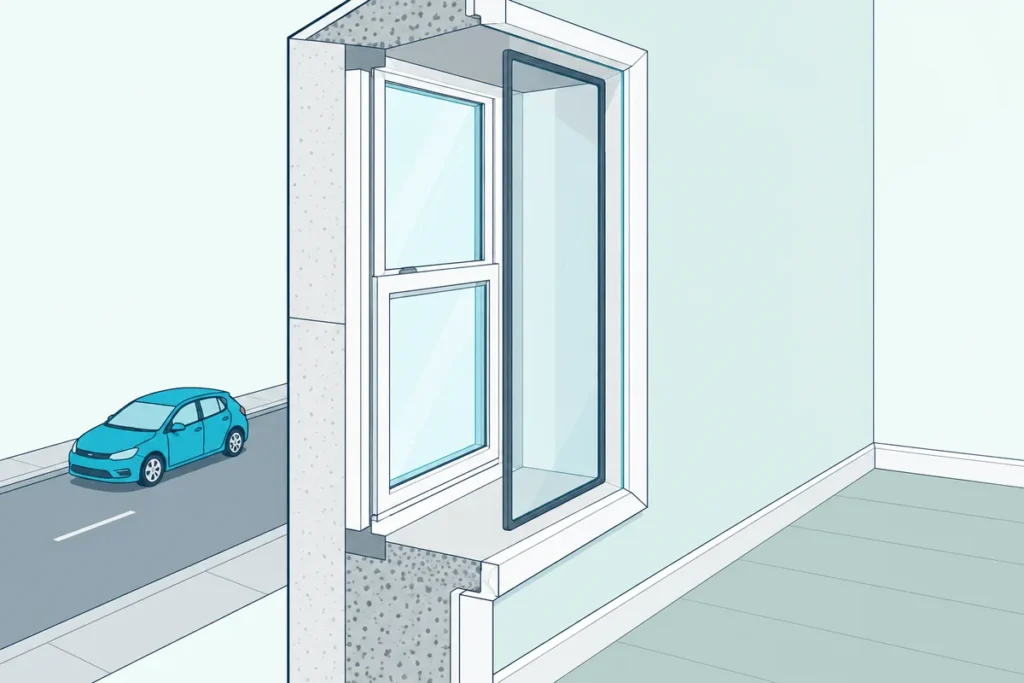
If you’re working out how to soundproof windows, seal the gaps around the sash first, because a window that leaks air leaks sound whatever glass is in it.
In National Bureau of Standards tests, one aluminum casement window rated STC 31 when sealed shut but only 17 when simply closed, a bigger swing than most glass upgrades buy.
Close those leaks and add a second pane on its own deep air space, and the same opening can climb from the high 20s into the mid-40s on that scale.
This guide takes the fixes in order, from caulk and weatherstripping to inserts, secondary glazing, better glass, curtains and plugs, and finally replacement.
Each step comes with the lab or maker figures behind it, so you can stop at the step that quiets your room.
How to Soundproof Windows: Which Fix Comes First?
That order runs from the cheapest fix to the most involved, and the table below sums up what each step is worth. To soundproof windows, seal the frame and sash, add an insert or secondary glazing on a deep air space, upgrade the glass only when you’re replacing anyway, and treat curtains as a finishing layer.
| Step | What to do | What the numbers say |
|---|---|---|
| 1 | Caulk the trim joints, fix the locks and renew worn weatherstripping | One aluminum casement rated STC 31 sealed, 21 locked and 17 unlocked (NBS data) |
| 2 | Add an interior insert or a storm window several inches from the glass | A casement went from STC 29 to 46 with an interior sash on a 4 1/4-inch air space (Marvin) |
| 3 | Choose laminated glass when you replace | Andersen’s laminated windows rate STC 29 to 35, its standard dual pane 26 to 30 |
| 4 | Skip a third pane bought only for noise | Triple glazing rates about the same as double unless both gaps are very wide (NRC Canada) |
| 5 | Add heavy curtains last | Curtains in a university lab rated STC 13 to 21, below the window they cover (NUS) |
| 6 | Replace the window when it’s failing or can’t take a second pane | Windows that open top out near STC 43, and only sealed ones go higher (HUD) |
Steps 1 and 2 do most of the work in most homes, and neither touches the outside of the building. Steps 3 and 6 only make sense when the window is coming out anyway or can’t take a second pane.
A word on the numbers: STC, the sound transmission class from a lab test under ASTM’s E90 method, rates how much airborne sound a window or wall blocks, and ASTM’s E413 says it tracks speech, radio and TV best. OITC, its outdoor counterpart, gets its own section below because it matters most for traffic.
If the budget decides how far you go, the guide to window soundproofing costs works through the math by window type.
Where Does Noise Get Through a Window?
Sealing comes first because most windows leak sound through their edges before the glass gives up. Air gaps pass sound almost freely, and HUD’s Noise Guidebook says a 1/16-inch crack 16 inches long can drag a wall rated STC 50 down to 40 (HUD).
A window that holds an air conditioner has more edges to close, and quieting a window AC unit starts with its side panels and the gap between the sashes.
The National Bureau of Standards measured the same effect on whole windows, in data reprinted in Owens Corning’s assembly guide. An aluminum operable casement rated STC 31 sealed, 21 closed and locked, and 17 closed but unlocked, while a wood double-hung with insulating glass went from 28 sealed to 22 unlocked.
Here’s the full set of window results from that NBS data, in STC:
| Window in the NBS data | Sealed | Closed and locked | Closed, unlocked |
|---|---|---|---|
| Wood double-hung, single-strength glass | 29 | Not given | 23 |
| Wood double-hung, 7/16-inch insulating glass | 28 | 26 | 22 |
| Aluminum slider, single-strength glass | 28 | 24 | Not given |
| Aluminum operable casement, double-strength glass | 31 | 21 | 17 |
| Aluminum single-hung, 7/16-inch insulating glass | 30 | 27 | 25 |
Two patterns stand out in that table. Every window lost points on the way from sealed to locked to unlocked, and the casement that rated best when sealed rated worst once it was merely closed.
The other surprise is the glass. The wood double-hung with insulating glass rated no better sealed than the same window with a single sheet, 28 against 29, for a reason the traffic section below explains.
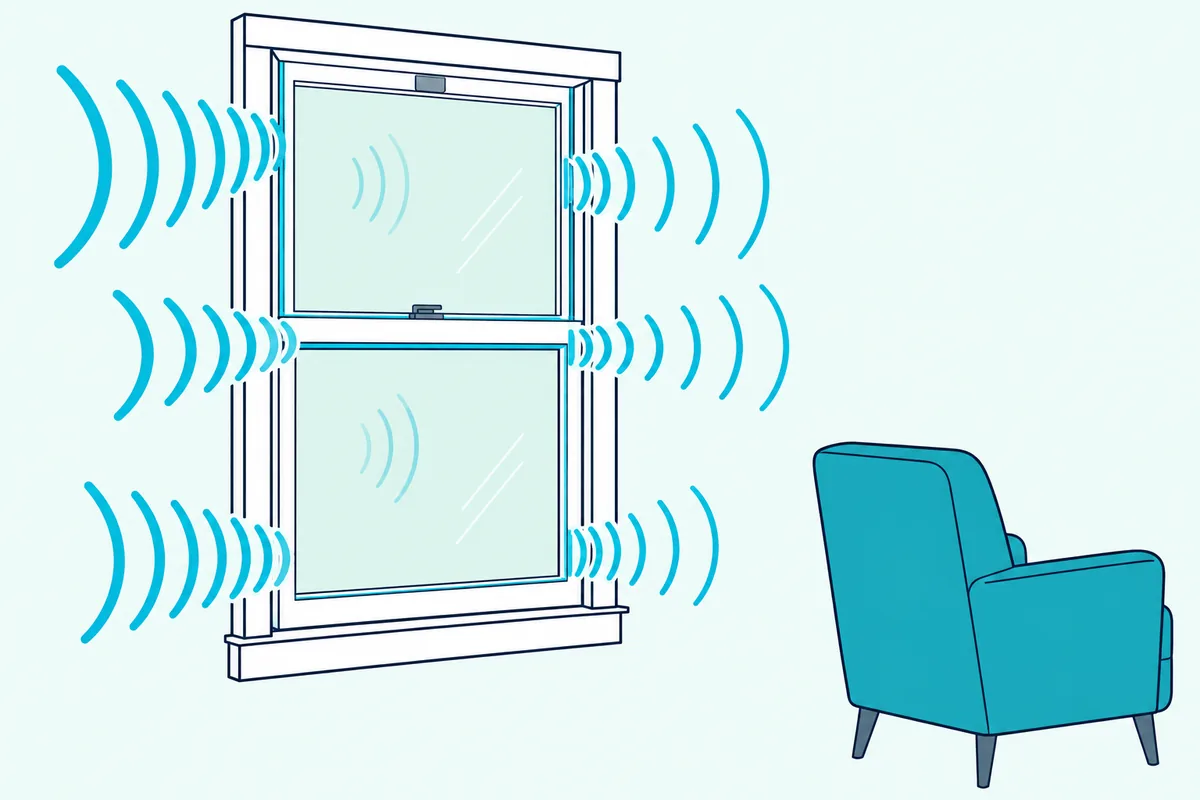
Locking most likely helps because a latched sash presses harder against its seals. NRC Canada’s digest on windows adds that even a window with good weatherstripping usually rates 3 to 5 STC below the same window sealed shut, and the better the window, the more a given leak costs it (NRC Canada, via MIT’s copy).
The glass is the other path, and it’s the one sealing can’t fix. HUD’s guidebook gives ordinary 3/16-inch glass about STC 25, and Andersen’s standard dual-pane windows rate STC 26 to 30 in its lab report.
You can find the weak path with a simple check on a windy or noisy day. Run the back of your hand around the closed sash and listen close to the frame, then to the middle of the glass: a draft or a louder edge points to gaps, and an even hum across the pane points to the glass.
Shrinking the window doesn’t get you far, either. HUD’s example wall of STC 45 drops to 35 overall with an STC 26 window over 30% of its area, and cutting the window from 50% to 20% of a wall gains only about 3 decibels.
So in HUD’s example the window sets the limit for the whole wall, and the next question is what kind of noise you’re trying to stop.
Get Studio Tips Weekly
Join 5,000+ creators getting acoustic treatment advice every week.
No spam. Unsubscribe anytime.Why Does Traffic Noise Get Through When Voices Don’t?
That kind of noise matters because the usual window rating, STC, was built around speech. Traffic and aircraft carry strong low-frequency sound that glass blocks poorly, and NRC Canada’s digest says STC isn’t sufficient for rating exterior walls and windows against them.
OITC, the outdoor-indoor transmission class, fills that gap. ASTM’s E1332 standard calculates it from one-third-octave data down to 80 Hz against a sound spectrum built for transportation noise, and it says the 80 Hz band is needed to rate those sources well (ASTM E1332).
Expect a window’s OITC to sit several points below its STC. In Andersen’s 400 Series report, all 83 windows and doors rated lower on OITC than on STC, and its standard dual-pane windows run STC 26 to 30 but OITC 21 to 26 (Andersen).
These published ratings show how the two numbers move apart:
| Window or glass | STC | OITC | Source |
|---|---|---|---|
| Andersen casement, standard dual pane | 26 | 22 | Andersen 400 Series report |
| Andersen casement, laminated glass | 32 | 28 | Andersen 400 Series report |
| Marvin casement, two 1/8-inch panes | 29 | 23 | Marvin product performance tables |
| The same Marvin casement with an interior sash | 46 | 34 | Marvin product performance tables |
| Triple pane, center of glass | 37 | 29 | Guardian Glass estimate |
The interior sash raised the Marvin casement’s STC by 17 points but its OITC by 11. Guardian’s triple pane gains 3 points of STC over its double pane and no OITC at all, which is why a third pane does little against traffic.
Double glazing has a specific weak spot here. NRC Canada explains that the thin air layer in a factory-sealed unit acts like a spring between the panes, creating a resonance between 200 and 400 Hz, where much of the sound energy from road traffic and aircraft falls.
Below that resonance, a double pane blocks no more than a single sheet of the same total glass thickness. So on a busy road, the rumble keeps coming through long after the voices on the sidewalk have faded.
When you compare products for traffic or aircraft noise, ask for the OITC, and compare STC only with STC. Andersen’s own guidance draws the same line: STC for indoor sounds like talking, TV and music, OITC for traffic, airplanes and construction.
The same low-frequency problem runs through the walls and roof, and the wider guide to reducing outside noise covers those paths. The window steps below come first because they’re usually the cheapest points to win.
How Do You Seal a Window Against Noise?
Those numbers make the cheapest step the obvious first one, because a sealed window keeps every point of its rating. NBS Handbook 119, the National Bureau of Standards’ guide to quieting a home, tells owners to caulk existing windows or fit them with gaskets so they close airtight (NBS Handbook 119).
Start inside, where the trim meets the wall and the window frame meets the trim. The same handbook asks for a resilient, non-setting caulking compound on gaps around window framing, which is what an acoustical sealant is made to be.
For those trim joints, TMS’s acoustical caulk is a flexible sealant sold for exactly this kind of gap. Each product in this guide had at least 4.0 stars and 50 reviews on Amazon and was in stock on 14 October 2026, and prices aren’t shown because they change.
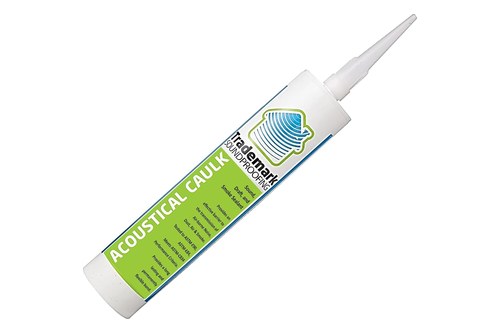
TMS’s acoustical caulk
Then check the locks. In the NBS data above, locking the casement raised it from STC 17 to 21, so a latch that pulls the sash tight against its seals is worth adjusting or replacing early.
Worn weatherstripping is the next gap. Owens Corning’s guide notes that weatherstripping lets windows close tightly and so cuts outside sound, and NRC Canada’s 3-to-5-point penalty for even good weatherstripping is why glass that opens usually rates below the same glass sealed shut.
For sliding sashes, this 33-foot pile weatherstrip is a self-adhesive brush seal, and its listing photos show it on sliding window frames. Its size chart pairs this 0.2-inch-thick strip with gaps of about 0.1 to 0.18 inches, so measure the gap first.
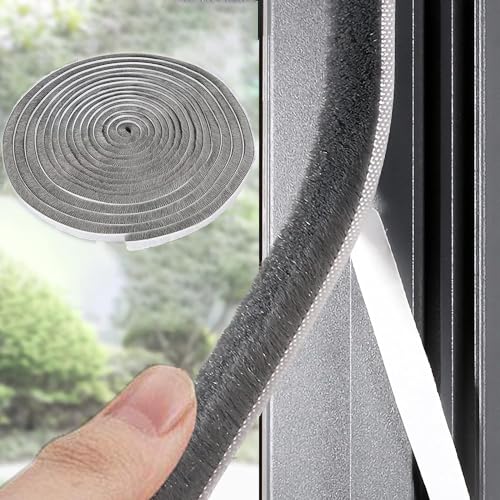
this 33-foot pile weatherstrip
A strip that’s too thin leaves a leak, and one that’s too thick can stop the sash from closing. Press it onto a clean, dry surface, and run it where the moving sash meets the frame.
HUD notes that the best results come from windows sealed permanently, which means relying on mechanical ventilation instead of opening them. Keep that for fixed glass you never open, and never seal a bedroom’s escape window shut.
If the windows are original to an old house, our guide on how to soundproof an old house covers storm windows, sash repairs and the preservation rules that come with them.
Sealing has a ceiling, though. NBS Handbook 119 estimates that caulking both a window and its storm window adds about 3 dB at the higher frequencies, so once the leaks are closed, the next gain has to come from a second layer of glass.
How Much Noise Does a Window Insert Block?
That second layer is what a window insert adds, from inside and without touching the existing window. Makers’ published figures say a good insert cuts about 10 to 19 dBA, or reaches STC 42 to 54 for the pair of panes, depending on the glass behind it and the gap.
Soundproof window inserts are panes of acrylic or glass in their own frame or seal, set inside the window opening, so the old window and the insert trap an air space between them.
Indow, which makes acrylic inserts, says its Acoustic Grade uses nominal 1/4-inch acrylic edged in silicone compression tubing that presses into the frame with no hardware. Indow reports 18.9 dBA of noise reduction over single-pane windows, citing a Portland State University lab study, and 10.2 dBA over double-pane ones.
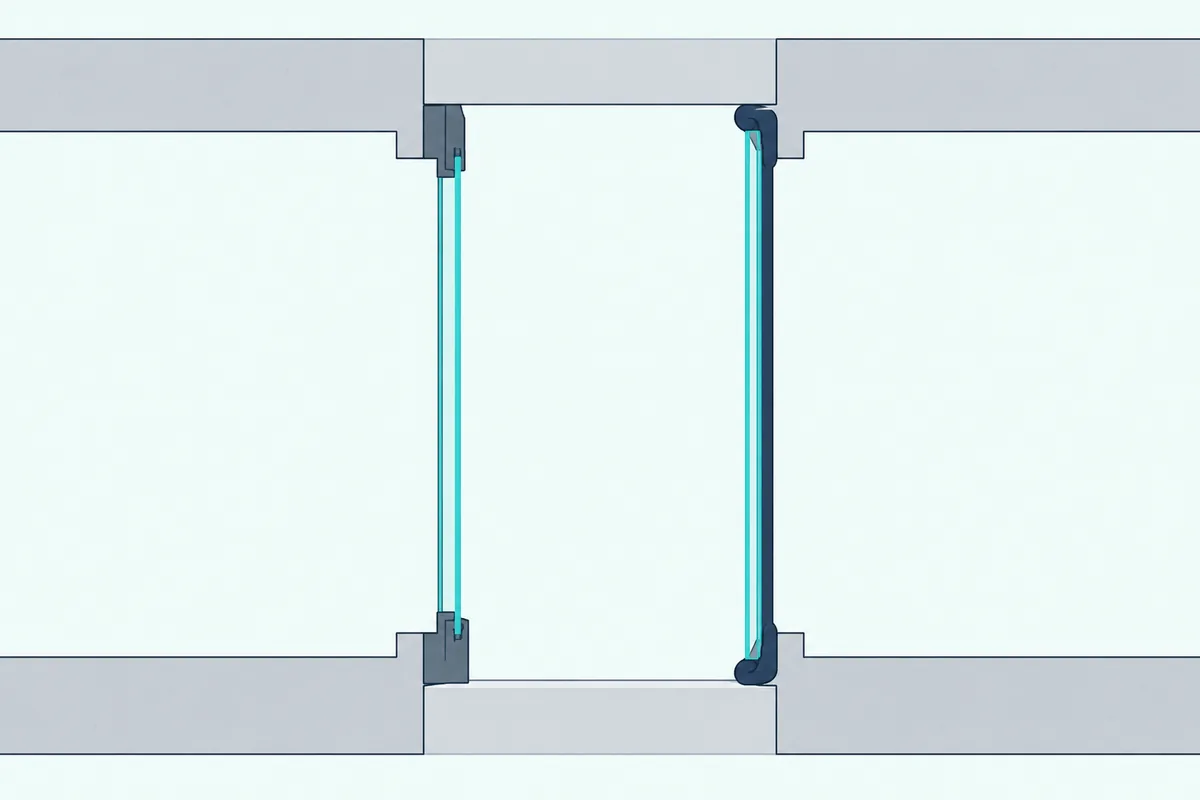
Indow also cites British Columbia Institute of Technology tests in which its inserts, set 3 and 6 inches from double-pane glass, brought the pair to STC 42 to 45. That’s well above the STC 26 to 30 of the standard dual-pane windows in Andersen’s report.
Glass inserts sold as secondary windows claim more. CitiQuiet, a New York maker, says its interior windows sit on the sill a few inches inside the existing window and reach STC 45 to 48 or higher as a system, and Soundproof Windows, Inc. lists STC 48 to 54 for its second windows over single- or dual-pane glass.
Read those figures as makers’ claims rather than independent tests. Neither company’s rating pages list an OITC, and Guardian Glass warns of a potential 6 dB loss between a lab specimen and a pane installed on site.
Both glass makers build on the same three ideas: laminated glass, a wide air space and tight seals. Soundproof Windows says its frames squeeze the glass with spring-loaded seals, and CitiQuiet’s own table lists its interior window with 1/4-inch laminated glass at STC 35, against 31 with plain 1/4-inch glass.
Here’s how the published figures line up, with the caveat that each maker tested its own way:
| Product or setup | Published result | Where it comes from |
|---|---|---|
| Indow Acoustic Grade over single pane | 18.9 dBA quieter | Indow, citing a Portland State University lab study |
| Indow Acoustic Grade over double pane | 10.2 dBA quieter; STC 42 to 45 for the pair | Indow, citing BCIT tests at 3 and 6 inches |
| CitiQuiet interior window | STC 45 to 48 or higher as a system | CitiQuiet |
| Soundproof Windows second window | STC 48 to 54 over single or dual pane | Soundproof Windows, Inc. |
| Marvin interior sash on a 4 1/4-inch space | STC 46, OITC 34 | Marvin product performance tables |
| Storm window on a locked double-hung | About 24 dB, up from about 18 | NBS Handbook 119 |
Only the Marvin row gives an OITC, so it’s the best guide to traffic noise in that table. The NBS row is a plain storm window, the low end of the same idea.
What the makers agree on most is depth. Indow says a deeper window frame leaves a bigger air pocket and better performance, and CitiQuiet says gaps under 2 inches are unlikely to deliver meaningful results against serious urban noise.
Our roundup of the best window inserts for soundproofing compares the options worth a quote.
How Wide Should the Air Gap Be for Secondary Glazing?
That air space is the whole trick, and secondary glazing, a second window fixed inside or outside the first, works on the same idea as an insert. Aim for at least 2 to 4 inches between the panes, the minimum HUD’s guidebook gives for more than STC 40, and NRC Canada’s rule is about 3 more STC for each doubling of the space.
Marvin’s published ratings put a number on it. Its Ultimate Casement with two 1/8-inch panes on a 1/2-inch space rates STC 29 and OITC 23, and the same casement with an interior sash on a 4 1/4-inch air space rates STC 46 and OITC 34.
HUD’s table shows what a thin space does, since an aluminum slider with a storm sash just 1/8 inch out rated STC 22, while a sealed wood double-hung with a storm sash 2 1/8 inches out rated 35, though the two windows differ in more than the gap.
NBS Handbook 119 lays out the same ladder for a double-hung window: about 18 dB locked, about 24 dB with a storm window at least 2 inches out, and about 37 dB as a fixed, sealed pair of 1/4-inch panes 4 inches apart. That last version also lines the frame between the panes with sound-absorbent material.
The lining is a cheap extra if you build your own. NRC Canada found that absorptive material around the edges of the cavity adds only slightly to the STC but can add up to 10 dB at high frequencies.
Mismatched glass helps the pair as well. NRC Canada recommends panes of different thicknesses, ideally about 2 to 1, so each layer’s weak frequency falls in a different place, and HUD gives the same advice for double glazing.
Storm windows count as secondary glazing too, but only as far as their gap allows. Andersen’s Tilt-Wash double-hung rates STC 29 and OITC 24 alone and 33 and 25 with its storm window and screen combination unit, a much smaller gain than the deep interior sash in Marvin’s test.
Slanting one pane doesn’t help, despite its use in studio windows. NRC Canada found slanted glass performs essentially like parallel glass with the same average spacing, so spend the depth on a wider gap instead.
Which Second Pane Suits Your Window: Insert, Storm or Secondary Glazing?
Those gap rules apply to every kind of second pane, so the choice comes down to where it goes and who owns the window. Renters usually want a removable insert on the room side, owners can add a glass interior window or an exterior storm window, and a replacement can build the second sash into the new unit.
| Option | Where it goes | Who it suits | What to check |
|---|---|---|---|
| Acrylic insert, Indow-style | Pressed into the inside of the frame | Renters, historic windows, arches and odd shapes | Frame depth for the air space |
| Glass interior window, CitiQuiet- or Soundproof Windows-style | Inside the opening, in front of the old window | Owners and long leases on loud streets | Sill depth, and whether it opens for cleaning and escape |
| Exterior storm window | Outside the existing sash | Owners, especially of old wood windows | At least 2 inches of gap and sealed edges |
| Interior sash built into a new window | Part of the replacement unit | Replacement projects | The tested STC and OITC for that build |
Where the table describes a product, it follows the maker: Indow sells custom shapes like arches and rounds, CitiQuiet installs on the sill a few inches inside, and Soundproof Windows says its second windows open and close like the existing ones, while the ‘who it suits’ column is our own judgment. The storm-window row follows NBS Handbook 119’s drawing, which shows a storm sash at least 2 inches out with every open joint caulked.
Acrylic and glass behave alike for a given weight. NRC Canada notes that clear plastic blocks about as much as glass of the same mass, so an 8 mm plastic sheet performs like 4 mm glass, which is why thin acrylic inserts lean on the air space more than the pane.
Whatever goes in, its edges decide how much of the air space you keep. A second pane with gaps around it leaks for the same reason the first one did, so check the seal as carefully as the glass.
Is Laminated Glass Better Than Double or Triple Pane?
That leaves the glass itself, which matters most when the window is being replaced anyway. For noise, laminated glass is the better buy: in Andersen’s lab report, its laminated windows beat its triple-pane ones on every window tested both ways, and both beat standard dual pane.
Here’s how Andersen’s own glass options compare, shown as STC / OITC from its 400 Series report:
| Andersen 400 Series window | Dual pane | Triple pane | Laminated |
|---|---|---|---|
| Casement | 26 / 22 | 29 / 25 | 32 / 28 |
| Awning | 26 / 21 | 29 / 24 | 31 / 27 |
| Picture window | 29 / 25 | 30 / 25 | 34 / 28 |
| Tilt-Wash double-hung | 29 / 24 | Not tested | 32 / 28 |
On the three windows in that table tested both ways, laminated glass beat triple pane by 2 to 4 points of STC and 3 points of OITC. Andersen labels its triple pane the option for improved thermal performance, and says going from dual to triple pane won’t necessarily give the dramatic result of going from single to dual.
Guardian Glass’s center-of-glass estimates point the same way for traffic. A standard double pane of two 6 mm sheets rates OITC 29, a triple pane of the same glass also rates OITC 29, and replacing the inner sheet with a laminate of two 6 mm sheets and an acoustic interlayer lifts it to OITC 35.
NRC Canada’s measurements explain the triple-pane result. Below the resonance, the third pane adds about 3 dB, while above it the double and triple curves are almost identical and the two windows share the same STC.
Laminated glass works by damping instead. NRC Canada says the plastic interlayer dissipates vibration, though the effect is temperature dependent and may drop sharply at Canadian winter temperatures.
Andersen notes that its laminated option usually laminates only one pane of the unit. Its STC upgrade, two panes of different thicknesses, works on NRC Canada’s mismatch principle instead.
Even so, none of Andersen’s laminated windows reaches the STC 42 and up published for deep second panes. That’s the main reason the insert step comes before the glass step in this guide.
For the full lab tables, our guide to how much a double pane window really blocks covers double and triple glazing. If you’re comparing glass types, what laminated, tempered and double glazed glass really score puts Guardian’s and Marvin’s numbers side by side.
Hurricane-rated windows show the same OITC gap, and our answer to whether impact windows reduce noise traces it through Andersen’s ratings. There, every impact window scores 3 to 6 points lower against traffic than against voices.
Do Soundproof Curtains Help a Noisy Window?
Glass and air do the blocking, so curtains come after both, as a supporting layer. A team at the National University of Singapore measured curtain materials and found a standard polyester hospital curtain blocked only about 5 dB between 400 and 1,600 Hz, while a PVC-coated polyester reached about 15 to 22 dB in the mid-to-high range.
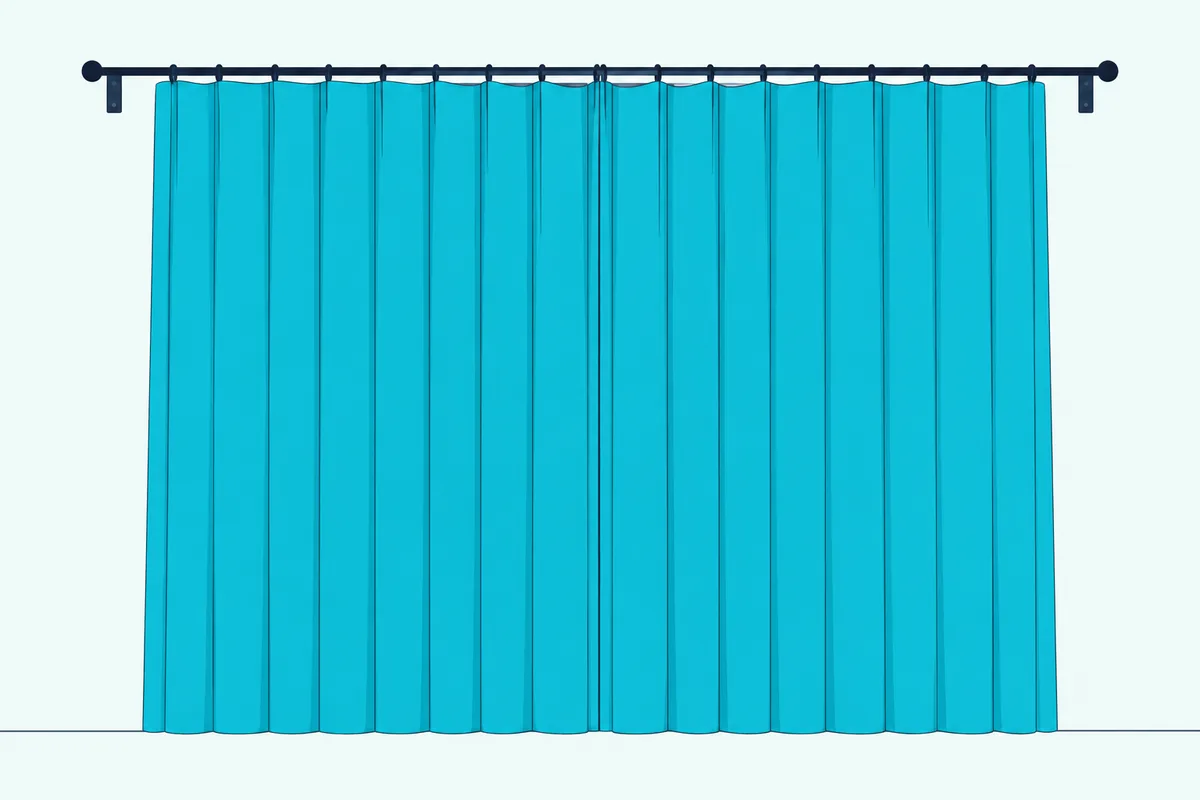
As whole barriers, the curtains in that study rated STC 13 to 21, from a commercial dual-layer drapery up to pure PVC sheet. That’s below the STC 26 to 30 of a standard dual-pane window, so a curtain softens the sound coming through the glass rather than stopping it.
Coverage decides how much of that you get. Hang the rod wide and high so the fabric overlaps the wall on every side, and let it reach the floor, since sound slips around the edges the same way it slips through a crack.
If you want a heavy curtain for that job, RYB HOME’s three-layer soundproof curtains put a felt liner between two fabric layers, per the listing, and come as a pair of 84-inch panels. The listing gives no lab sound rating, so judge it, like any curtain, by its weight and layers rather than a percentage on the box.
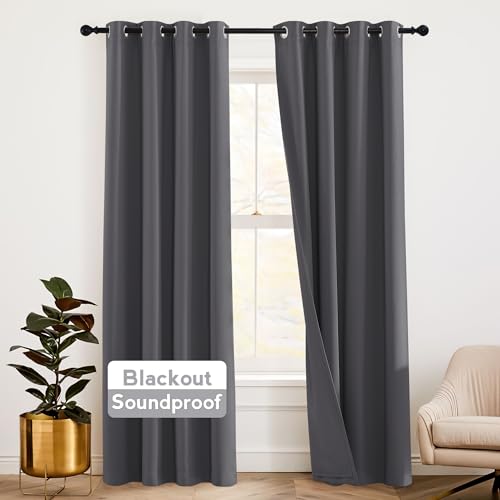
RYB HOME’s three-layer soundproof curtains
University tests and the numbers behind those limits are in the measured limits of soundproof curtains. The short version is that a curtain is worth adding after the seals and the second pane, not instead of them.
What About Blankets, Plugs and Panels Over the Glass?
Those curtain limits carry over to the other soft fixes people try. A moving blanket over a window is a layer of quilted fabric, the porous kind of material that did worst in the NUS curtain tests.
A window plug goes further: a panel of dense board, often faced with foam, cut to fit snugly inside the frame. It closes the whole opening while it’s in, but it blocks all light and air, so it only suits rooms you can keep dark.
That trade-off makes plugs practical for music rooms and home studios where blackout is fine, and a poor fit for a bedroom you want to wake up in. A plug also helps only if its edges fit tight, for the same reason a crack ruins a wall.
Acoustic panels on the glass are the other common mix-up. Panels absorb echo inside the room and add little mass, and our page on acoustic panels over a window explains when they help a room’s acoustics and why they won’t stop traffic.
Window film is the cheapest-looking fix of all, but none of the window makers or labs in this guide publishes a sound rating for it. HUD explains that glass reduces noise by mass, and a film adds almost none.
What Can Renters Do Without Replacing Windows?
Those soft fixes are often all a lease seems to allow, but renters have a better option than curtains alone. Interior inserts are the main one, because Indow says its inserts press in with no hardware and don’t damage the existing window, and it names rental homes among their uses.
CitiQuiet says its interior windows are removable and need no building approval, though that comes from a New York company describing its own product, so check your lease and building rules first. Its FAQ also suggests asking the landlord, who may assume that soundproofing means replacing the windows.
Removable seals are the cheap half of a renter’s kit. A self-adhesive strip on a sliding sash and a heavy curtain both come down at move-out, though it’s worth testing the adhesive on a hidden spot first.
Moving the bedroom can rival any product. NBS Handbook 119 estimates that a bedroom on the side of the house away from the road can be about 10 dB quieter, and our guides to bedroom windows and apartment windows cover the rest of each room.
Owners can do everything renters can and more, starting with the gaps behind the trim. NBS Handbook 119 says gaps around the framing of windows should be caulked with a resilient, non-setting compound, and it lists storm windows with caulk or gasket seals among its first steps against neighborhood noise.
Whichever route you take, keep a bedroom’s escape window easy to open. That rules out sealing it shut or fitting an insert you can’t pull out quickly.
When Are Replacement Windows Worth It?
Those retrofits cover most rooms, so replacement earns its place in a few specific cases. Andersen says replacing single-pane windows with dual-pane ones makes a noticeable difference in sound as well as energy use, which makes old single glazing the clearest case.
The catch is the ceiling of a standard unit. Andersen’s standard dual-pane windows rate STC 26 to 30, its laminated windows 29 to 35 and its laminated double-hung with a combination unit 37, all short of the 42 to 54 that the insert and secondary-window makers claim.
HUD adds a hard limit for windows that open: special frames and seals allow up to about STC 43, and going higher means sealing the window permanently. Soundproof Windows, which sells second windows rather than replacements, goes further, saying that a thick dual-pane window rated STC 35 replacing a single pane rated 27 won’t reduce the sound much.
So replacement makes most sense when the frames are failing, the glass is single, the opening is too shallow for an insert, or you want laminated glass and better seals in one job. Louvered windows are a special case, since Soundproof Windows says they can rate below STC 18.
Frames matter in that job. NRC Canada found that some lightweight metal frames tested lower, apparently because vibration traveled through the frame, and it advises avoiding lightweight frames in general.
If you do replace, ask for the tested STC and OITC of the whole window in the type and glass you’re buying, not a glass-only figure. Ask about laminated glass and panes of different thicknesses, the two sound options Andersen describes.
Burton Acoustix’s guide to quiet replacement windows compares the window types worth shortlisting. For the budget across a whole room, the breakdown of soundproofing costs adds the walls and doors.
How Much Quieter Will Each Fix Sound?
Those STC and OITC numbers translate into loudness in a simple way. Guardian Glass explains that each 10 dB of reduction roughly halves the perceived volume, so a rating of 30 cuts it to about an eighth and a rating of 40 to about a sixteenth.
Andersen’s scale puts the same thing in everyday terms. At STC 30 you’d hear and understand a loud conversation outside, at 30 to 35 you’d hear it but not follow it, and at 36 to 40 it would hardly be audible.
So the sealing step, worth up to 14 points on the leakiest window in the NBS data, and a deep second pane, worth 17 points on Marvin’s casement, are the jumps you’ll hear most. A curtain is the smallest step.
Picture a bedroom over a busy street with an old aluminum slider, which HUD’s table rates at about STC 24 latched. Sealing its sashes and then adding a deep insert attacks the two weakest numbers on this page before any curtain goes up.
Expect less than the lab number, though. Guardian warns of a potential 6 dB loss from lab specimen to installed pane, which it says amounts to losing about a third of the perceived reduction.
The wall around the window caps the result as well. HUD’s table rates a typical frame wall at STC 39 and a brick veneer wall at 56, so a window raised into the 40s already beats a frame wall, and from then on the wall, the door and the vents decide what you hear.
What Works Against Aircraft or Train Noise?
Those loudness numbers get harder to reach near an airport or a rail line, where the noise is louder and lower. What works is the traffic plan pushed further: sealed windows and the deepest second pane you can fit, chosen on OITC, which ASTM’s E1332 bases on an average of aircraft takeoff, road traffic and diesel locomotive noise.
NBS Handbook 119’s 1976 section on aircraft noise sets out a ladder for windows: seal them, add storm windows, and if aircraft noise still comes through, replace them with fixed, sealed double windows of 1/4-inch glass 4 inches apart. It also warns that soundproofing an existing home against intense aircraft noise is exceedingly costly and does nothing for the yard or the patio.
ASTM adds a caution in the other direction. For stage 3 jets, freeway noise dominated by tire roar, sirens and train horns, it says the OITC spectrum can demand more low-frequency blocking than the situation needs, so listen to what the noise actually is before paying for the deepest bass performance.
Windows that stay shut need fresh air from somewhere else. HUD points out that keeping windows closed means installing mechanical ventilation, so budget for that along with the glass.
What If Noise Still Gets In After the Windows Are Done?
That leaves the rest of the house once the windows stop being the weak link. NBS Handbook 119 rates a light-frame house shell at about STC 30 to 35, and its list of fixes runs past the windows to doors, vents, pipe and cable openings, mail slots and the fireplace damper.
Even perfectly soundproofed windows won’t help if the door or walls are leaking noise. HUD’s guidebook calls doors acoustically even weaker than windows, so the door is usually the next leak to chase.
A sliding glass door is the hardest case, and Owens Corning’s guide advises avoiding sliding doors where noise control matters most. If you have one, this sliding-door guide applies the same seal, insert and glass logic to it.
Low-frequency noise is the hardest case for every surface, which is worth remembering when choosing soundproofing materials for the walls and ceiling. For the whole job in order, see our guide to soundproofing a room.
The Bottom Line
Every fix in this guide comes back to the two paths from the start: air leaks and thin glass. Seal the frame and sash first, then add a second pane on the deepest air space you can fit, and choose laminated glass only when the windows are being replaced anyway.
Compare products on OITC when traffic or aircraft is the problem, and treat curtains, blankets and plugs as extras with clear limits. Then check the door and walls, since a window can only be as quiet as the wall it sits in.
Frequently Asked Questions
Can you completely soundproof a window?
No, and Andersen says there’s no such thing as a soundproof window. The highest figures in this guide are makers’ claims of STC 48 to 54 for a second window over the existing one, while HUD rates a typical frame wall at STC 39, so at that point the wall, not the window, decides what you hear. Low rumble is the last thing to fade, because every window in Andersen’s report rates lower on OITC, the traffic-weighted rating, than on STC.
How do I stop traffic noise through my windows?
Seal the gaps first, then add a second pane with a deep air space, and compare options on OITC, which ASTM built around transportation noise. NRC Canada explains that ordinary double glazing has a resonance between 200 and 400 Hz, where much road noise sits, so a wider gap does more than a thicker sealed unit. Marvin’s casement with an interior sash on a 4 1/4-inch space rates OITC 34, against 23 without it, and Indow cites BCIT tests of STC 42 to 45 for its inserts over double-pane windows.
What’s the cheapest way to soundproof a window?
Caulk the trim joints, adjust the lock so the sash pulls tight, and replace worn weatherstripping, which is how to soundproof windows cheaply before buying anything bigger. In the NBS data, an aluminum casement rated STC 17 closed, 21 locked and 31 sealed, so the cheapest step can also be the biggest. A heavy curtain is the next cheapest layer, though curtains rated only STC 13 to 21 in the NUS lab tests, well below the window itself.
Is it better to replace windows or add inserts for noise?
For noise alone, a deep second pane usually wins: Indow cites STC 42 to 45 for its inserts over double-pane windows, and Marvin’s casement with an interior sash rates STC 46, while Andersen’s standard dual-pane windows rate 26 to 30 and its laminated ones 29 to 35. Replace when the frames are failing, the glass is single, the opening is too shallow for an insert or you want new windows anyway, and specify laminated glass when you do.
Can you soundproof a window yourself?
Most of it, yes. Caulk, weatherstripping, lock adjustments and curtains are ordinary weekend jobs, and Indow’s inserts press into the frame with no hardware after you measure each window with its own measuring software. A storm sash is a bigger job, and NBS Handbook 119’s drawing of one shows the details that make it work: at least 2 inches of air space and every open joint around the frame caulked. Leave permanently sealed or replacement windows to a fitter, since HUD notes that windows kept shut need mechanical ventilation instead.
Does acoustic caulk work on windows?
Yes, for the gaps it fills, which is why sealing comes first. HUD’s guidebook shows how much a small leak costs, with a 1/16-inch crack 16 inches long taking an STC 50 wall down to 40, and NBS Handbook 119 asks for a resilient, non-setting compound around window framing. Caulk won’t make thin glass block more, though, so once the joints are sealed, the next gain comes from a second pane on a deep air space.