How to Soundproof a Room for Music (Without Fooling Yourself)

How to soundproof a room for music sounds simple, but music will not stay contained unless you treat the room like a shell problem instead of a foam problem.
That is the mistake that wastes money in bedroom studios, practice rooms, and home listening spaces, because the door leaks, the window leaks, the wall flexes, and bass keeps moving through the structure.
The good news is that you do not need the same answer for vocals, monitors, guitars, and drums, so you can stop overspending on fixes that do not match the way the room is actually used.
Below, you’ll sort the room by music use, leak path, and isolation goal so you can tell when sealing is enough, when the wall or floor has become the real problem, and when recording quality or neighbor pressure requires a deeper build.
To soundproof a room for music, start by matching the room to the use case: vocals and light practice usually fail at the openings first, while loud monitors, bass, and drums quickly turn into wall, floor, and ceiling problems. Sealing and weak-point upgrades can help lighter rooms, but once bass, neighbor complaints, or recording isolation are on the table, real progress usually comes from more mass, better sealing, damping, and sometimes structural separation.
Music Rooms Fail Differently Depending On The Source
The first move is to classify the room before you buy anything.
Music rooms fail when people chase one generic fix instead of matching the room to the source, the volume, and the neighbor pressure.
Quiet Tracking Rooms And Loud Practice Rooms Break For Different Reasons
Casual listening, vocal tracking, guitar practice, monitor mixing, bass-heavy playback, and drum rehearsal do not stress a room in the same way. A quiet vocal booth can be ruined by street noise at the window, while a monitor-based bedroom studio may seem fine until late-night bass starts flexing the shared wall.
If the room is mostly for vocals, acoustic instruments, or voiceover, the top priority is usually keeping outside noise from contaminating the take and stopping obvious leakage at the door or window. That is a more opening-driven problem than a full shell rebuild, which is why it often starts closer to soundproofing a bedroom than to building a rehearsal room.
A room built around loud monitors, amps, or daily practice usually shifts the priority toward the wall, floor, and ceiling once the easy leaks are sealed. That is where people realize the room itself is too light for the amount of energy they are putting into it.
Drums and deep bass change the whole equation because they inject more low-frequency energy and more physical vibration into the structure. In those rooms, the floor and the surrounding assemblies stop being secondary details and start acting like part of the instrument.
Music Stays Longer And Hits More Of The Structure Than Speech
Conversation rises and falls quickly, and most people tolerate a little speech spill more easily than repeated music. Music stays on longer, spans more frequencies, and often includes bass notes or drum hits that keep pushing the same weak surfaces again and again.
Low-frequency energy is the part people underestimate. A room can seem fine for vocals or acoustic guitar and then fall apart the moment a subwoofer, kick drum, or bass amp starts loading the wall and floor.
Music setups also create structure-borne paths that speech rarely exposes as hard. Speaker stands, keyboard stands, pedal boards, amps on the floor, and drum hardware can feed vibration into the building before the airborne side is even controlled.
That is why “I already treated the room” often translates to “I made the room sound better to me, but the shell is still weak.” Music punishes that gap between internal acoustics and true isolation much faster than normal conversation does.
The First Leak Usually Depends On Where The Complaint Comes From
The first leaks are usually the openings because they are thinner and less airtight than the rest of the shell. A hollow door, a visible threshold gap, or a drafty window can undercut heavier upgrades on the wall beside it.
After the openings, the next question is adjacency. In apartments, duplexes, and bedroom studios, the shared wall often becomes the main failure point because the neighbor is close and the partition is light.
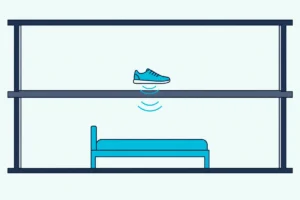
Floors and ceilings move up the list when the complaint comes from above or below, or when the setup includes bass, stands, or drums. An upstairs music room can bother the room below through vibration even when the wall seems quieter.
Recording rooms have the same map running in reverse. If traffic, voices, or HVAC noise are getting into the microphone, the door and the windows are often the first weak points to prove before you blame the whole room.
The Upgrade Order Starts With The Weakest Opening
Once you know how the room is failing, the next job is ranking the fixes in the right order.
Music projects get expensive when you start with deep wall work before proving the door, window, floor, or ceiling is really the bottleneck.
Openings Usually Give You The Fastest Honest First Win
Yes, in most music rooms, because weak openings leak in both directions. They let your practice spill out, and they also let outdoor noise ruin vocals, acoustic takes, or quiet monitoring sessions.
Start with the simple proof tests. If you can see light under the door, feel air at the jamb, or hear a sharp jump in outside noise when you stand near the glass, the room is telling you exactly where to begin.
For perimeter leakage, a product like 33 Ft Gray Self-Adhesive Soundproofing Weather Stripping makes sense because it matches the actual failure point instead of pretending the wall is already the problem.
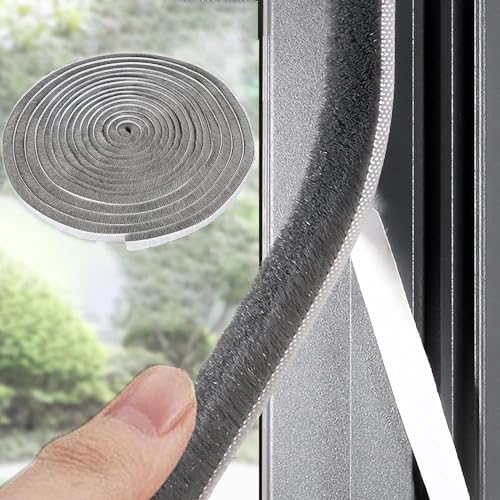
33 Ft Gray Self-Adhesive Soundproofing Weather Stripping
If the room also has cracks around casing, trim, or the frame-to-wall joint, flexible sealing matters more than another decorative panel. That is the same opening-first logic behind how to soundproof a door and how to soundproof windows, and it is usually the cleanest first win in a bedroom studio.
Shared Walls Take Over Once The Easy Leaks Are Proven
Shared walls become the main problem when the openings are improved and the neighbors still hear clear musical content instead of just a faint presence. That usually means the partition itself is too light for the amount of sound you are making.
This shows up fastest with monitor playback, guitar amps, bass, and any room that backs directly onto a bedroom, office, or next-door apartment. The wall may be acceptable for speech and still fail badly once music stays loud for an hour.
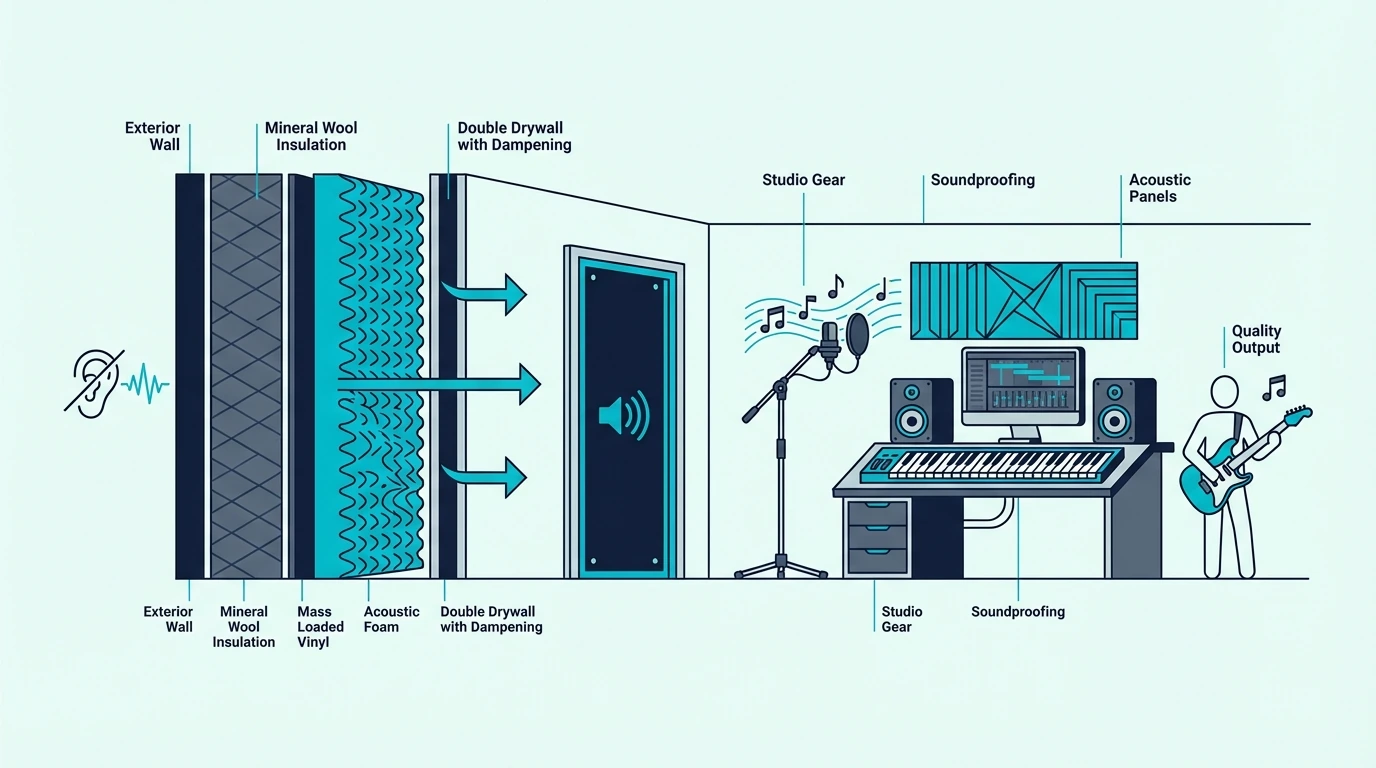
At that point the upgrade path shifts from sealing to assembly strength. If you are already layering or rebuilding the wall, a barrier product like Soundsulate 1 lb MLV belongs there because it adds real mass inside a deliberate build instead of acting like a decorative afterthought.
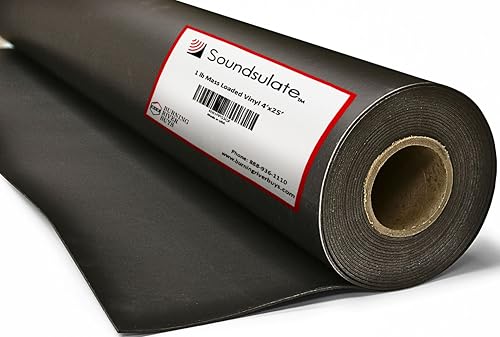
Soundsulate 1 lb MLV
That is the point where how to soundproof a wall and how to soundproof a wall from noisy neighbours become the better supporting pages, especially for attached homes and apartments.
Vertical Complaints Usually Mean The Structure Is Involved
Floors and ceilings matter most when the person complaining is above or below you, or when the setup keeps feeding vibration into the structure. That is why upstairs rooms, basement studios under bedrooms, and music rooms with subs or drums need a different level of honesty.
If the obvious problem is top-side vibration from a keyboard stand, subwoofer corner, or small practice setup on a hard floor, a removable first-step product like TroyStudio Thick Sound Absorbing Interlocking Floor Mats is one of the few surface fixes that actually matches the source-side problem.
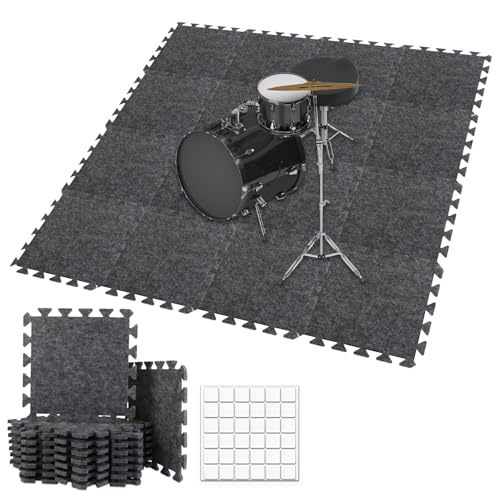
TroyStudio Thick Sound Absorbing Interlocking Floor Mats
The ceiling becomes the priority when the room below is hearing more than the room beside you, or when bass is bypassing the wall work you already did. That is when a music room starts overlapping with how to soundproof a floor, how to soundproof a ceiling, and sometimes how to soundproof between floors.
In other words, the “wall vs floor vs ceiling” question is not academic. The complaint location tells you which assembly is actually carrying the music.
Get Studio Tips Weekly
Join 5,000+ creators getting acoustic treatment advice every week.
No spam. Unsubscribe anytime.Budget Soundproofing Only Works When The Room Is Mostly Leaky
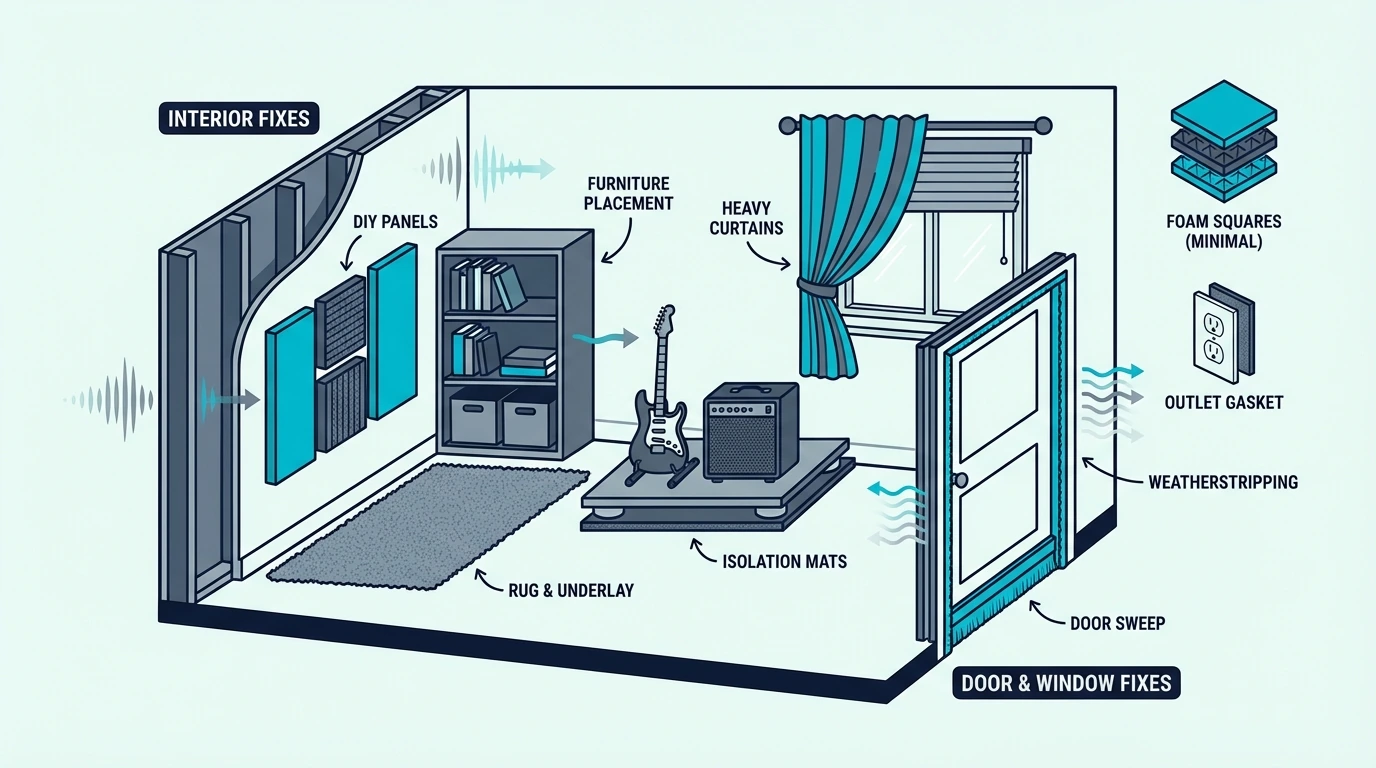
Once the priority order is clear, the budget conversation gets easier to judge honestly.
Cheap fixes can help a music room, but only when they are aimed at the right leak path and matched to modest expectations.
Cheap Wins Usually Come From Sealing And Source Control
The best cheap fixes are almost always sealing, room choice, and source-side control rather than fake “soundproof” décor. If you can move the setup away from the shared wall, lower the monitor level, or avoid putting speakers and stands directly on a lively floor, that often buys more than another random panel.
For the shell itself, perimeter sealing is still the cheapest real upgrade. A product like Acoustical Caulk (29 oz) makes sense around trim joints, frame edges, and visible cracks because music will use those little leak paths much more aggressively than people expect.
Acoustical Caulk (29 oz)
Cheap fixes also help differently depending on the room use. A vocal room may improve a lot from better door and window sealing, while a bass-heavy practice room may only get a small reduction until the wall or floor build changes.
That is why budget soundproofing should be treated as a screening phase. You are trying to identify whether the room is basically leaky or fundamentally too light.
Foam And Fake Soundproofing Products Solve A Smaller Problem
Foam-only advice is still the biggest trap because it addresses reflections far more than escape. Foam can make a room sound less harsh at the mic position or at your ears without meaningfully reducing what reaches the other side of the wall.
The same is true of egg cartons, thin peel-and-stick products, and anything sold as “soundproof” without explaining whether it seals, adds mass, damps vibration, or changes the assembly. If the mechanism is vague, the result usually is too.
Soft finishes can still be useful for room comfort, but that is a different job. In a music room, you have to separate “the room sounds calmer inside” from “the shell leaks less outside.”
A simple test keeps this honest. If the neighbor or the hallway still hears the same song clearly, the cheap treatment is not doing the real containment job.
Budget Fixes Stop Working When The Assembly Is Too Light
A budget fix is good enough when the room use is lighter, the schedule is reasonable, and the goal is reducing nuisance instead of creating true studio isolation. That can be enough for vocals, acoustic instruments, moderate monitors, or casual practice in a reasonably forgiving house.
It is usually not enough when the room shares a party wall, sits above another bedroom, or has to contain bass late at night. In those cases, the limit is not your effort but the assembly.
Recording use changes the threshold too. If outside traffic, neighbors, or household noise are still landing in the microphone, a “good enough” practice-room fix may not be good enough for takes you actually want to keep.
If the room lives inside a rental or shared building, the ceiling for cheap fixes often looks more like how to soundproof an apartment than like a blank-check studio build. The structure and your permission level decide a lot.
Most Music-Room Mistakes Come From Confusing Acoustics With Isolation
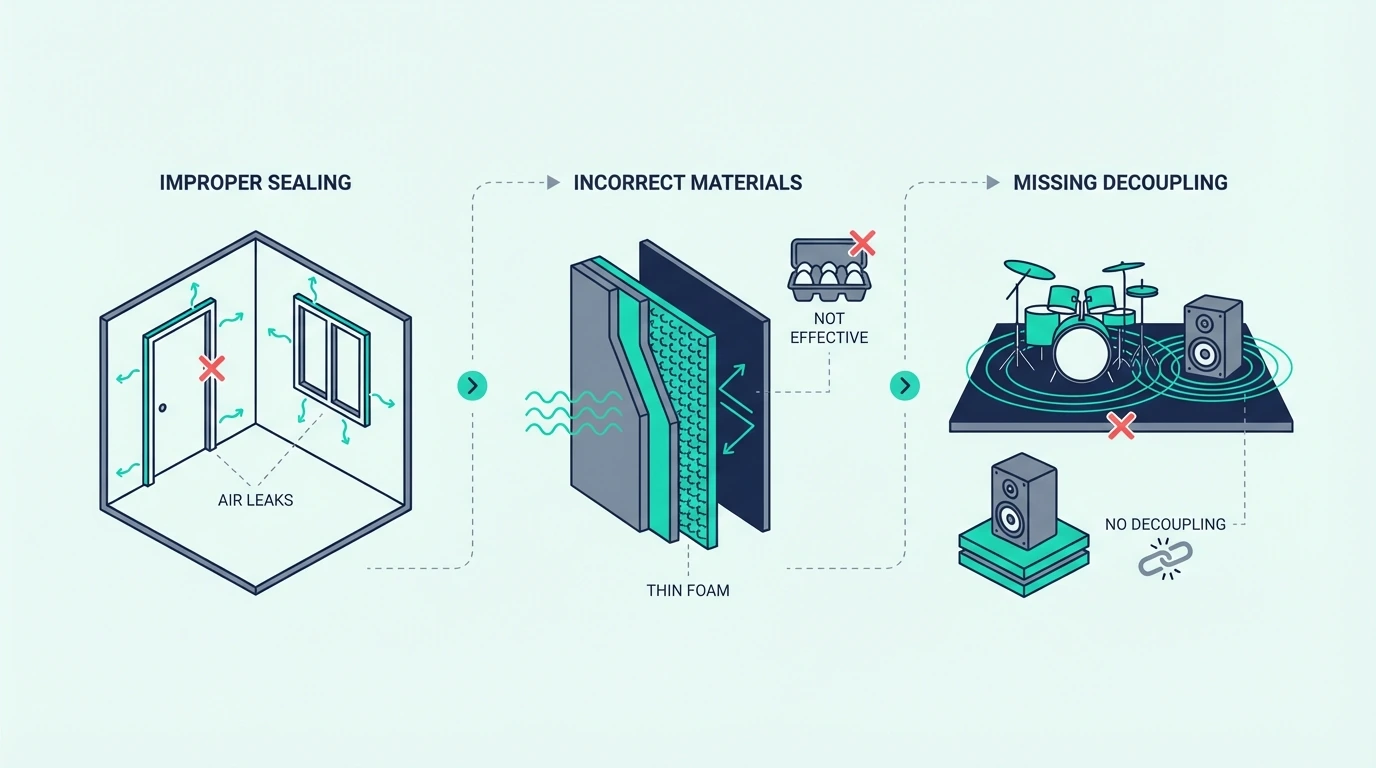
By now the pattern should be obvious: most bad music-room projects fail because the diagnosis was wrong before the buying started.
The last step is clearing up the mistakes that keep people confusing better sound inside the room with real isolation outside it.
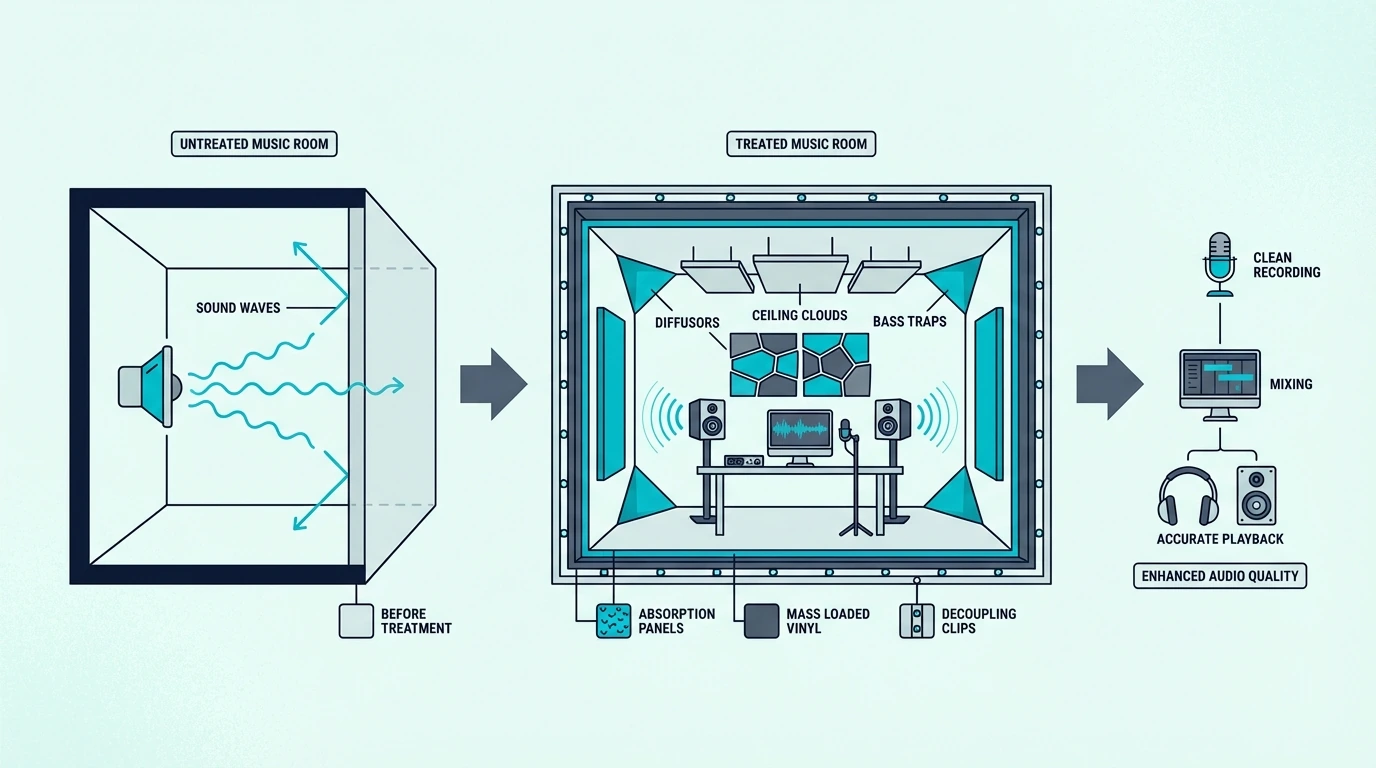
Acoustic Treatment Helps The Room More Than The Boundary
Acoustic treatment changes reflections, ringing, and monitoring accuracy inside the room. That matters for recording and mixing, but it is not the same as making the shell harder for sound to cross.
This confusion shows up all the time in home studios. A room can sound cleaner at the microphone or the listening position after panels go up and still leak almost the same amount through the door, window, or shared wall.
Treatment becomes valuable once the containment plan is honest. If you need the clean boundary on that distinction, compare your setup against do soundproof panels work and best soundproofing panels so you do not ask an absorber to do a barrier’s job.
Recording rooms especially need that separation. Good acoustics help you capture a cleaner take, but they do not stop traffic or neighbor noise from entering the room in the first place.
Bass Exposes Weak Assemblies Faster Than Almost Anything Else
Bass is hardest because low-frequency waves carry more energy and excite larger parts of the structure. Once the wall, floor, or ceiling starts moving with the music, light add-ons struggle to make a meaningful dent.
That is why bass problems often survive the same fixes that work for vocals or acoustic practice. The room can seem improved at midrange frequencies while the low end still reaches the next room almost unchanged.
When you are already building up a wall, door, or ceiling assembly, a real mass layer like Soundsulate 1 lb MLV belongs in the conversation because it adds barrier weight where the shell needs it.
Bass also forces harder choices about volume, room selection, and schedule. Sometimes the smartest fix is admitting the current room will never contain a subwoofer or drum-heavy playback gracefully without deeper construction.
Serious Isolation Starts When The Shell Has To Change
Call a professional or plan a rebuild when the room is for drums, loud band practice, serious vocal isolation, or repeated bass-heavy work that keeps generating complaints after the obvious leaks are fixed. Multiple failing surfaces usually mean you are past the point where accessories can carry the project.
That is also the right time when the goal is not just “less annoying” but dependable recording isolation from outdoor noise, household noise, or nearby neighbors. Once you need the room shell itself to behave differently, the job has moved from tweaking to building.
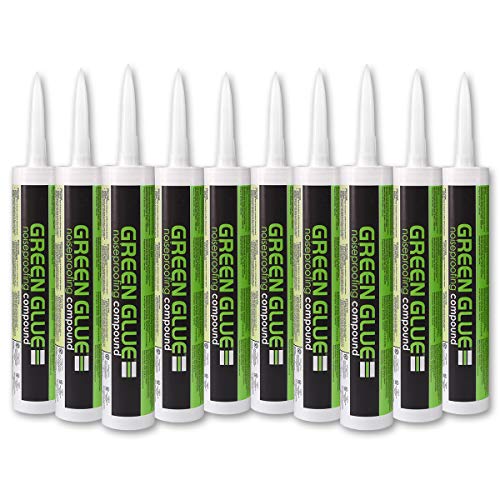
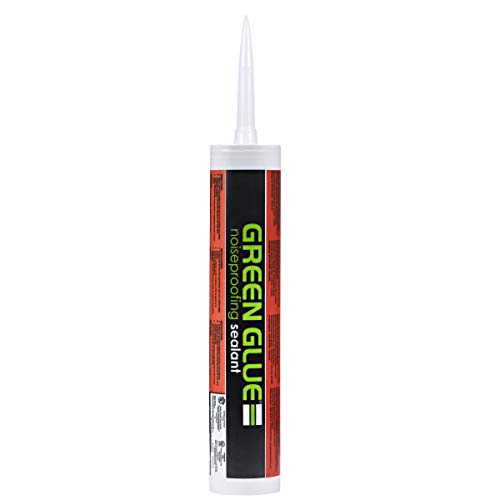
In those serious builds, a damping product like Green Glue Noiseproofing Compound makes sense because it belongs between layered surfaces in a deliberate assembly.
If you need the bigger framework behind that decision, use how to soundproof a room for the full shell workflow and how much it costs to soundproof a room when budget becomes the real next constraint.
The Bottom Line
How to soundproof a room for music gets easier once you stop asking for one universal fix and start matching the room to the actual use. A vocal room, a late-night monitor room, and a drum room can share the same address but need completely different priorities.
The most useful rule is simple: fix the weakest opening first, then follow the complaint to the wall, floor, or ceiling that is actually carrying the music. When bass, neighbor pressure, or recording isolation keep surviving those steps, you are no longer shopping for room treatment and you are strengthening the shell.
Frequently Asked Questions
How do I cheaply soundproof my room?
Start with the openings, because leakage is the cheapest real problem to fix. Weatherstripping, perimeter sealing, and smarter room placement usually beat another decorative panel when the goal is containing music.
What materials block high frequency sound?
High frequencies are easier to tame than bass, so airtight seals, denser surfaces, and added layers usually help more quickly. That is why doors, windows, and lightweight wall sections often show improvement earlier than a bass-heavy floor or ceiling path.
How do I block noise on a shared wall?
Confirm first that the wall is truly the weak point and not the door, window, or ceiling path. If the wall is the culprit, the stronger answers are usually more mass, damping, and a better assembly rather than treatment-only products.
How do you block sound in a room?
You block sound by sealing air leaks, adding mass, damping vibration, and reducing direct structural transmission where possible. The louder and bass-heavier the music becomes, the more the room has to behave like a stronger shell instead of a lightly treated space.