Why Is My Pool Pump So Loud? Match the Sound to the Fix
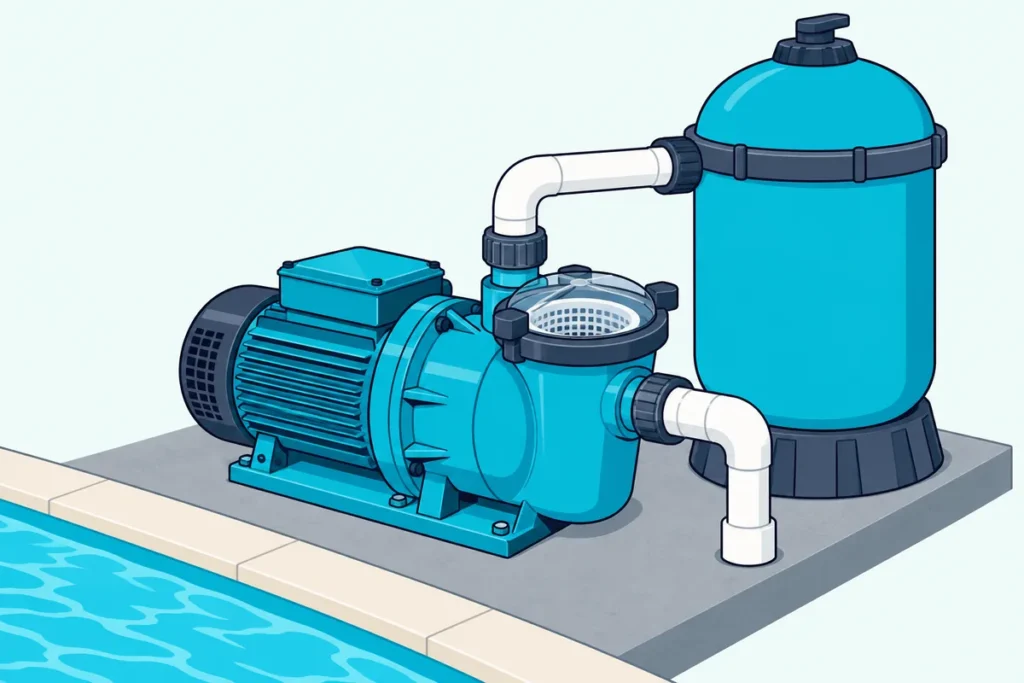
If you’re asking “why is my pool pump so loud?”, Hayward’s Super Pump VS manual lists four causes: air or cavitation on the suction side, improper mounting, debris in the housing and worn motor bearings.
Each one gives itself away differently, from bubbles in the strainer basket to a pump that shakes on its pad or a whine from the motor.
Many of the fixes are small, like an emptied basket or a reseated lid, and the rest tell you when to stop.
Start at the basket and the water level, because Hayward lists air and restricted flow first and Pentair and Jandy both send you there.
The checks below run from the ones you can do at the pad to the jobs for a pool professional or an electrician.
Why Is My Pool Pump So Loud, and Which Noise Is It?
Those four causes don’t look or sound alike, so start with what you notice at the pad. A pool pump is usually loud because of air, a shortage of water, loose debris, loose mounting or worn bearings, and this table matches each sign to its likely cause.
| What you notice | Likely cause | Source | First move |
|---|---|---|---|
| A steady whir from the motor’s fan end | The cooling fan, which is normal | Hayward, Century | Keep the vents clear |
| Bubbles in the strainer basket or from the return jets | Air leaking in on the suction side | Jandy, Hayward | Check the water level and lid seal |
| Noise with a full strainer basket or low water | Cavitation, or air drawn in at the skimmer | Pentair, Hayward | Empty the baskets, top up the pool |
| The pump shakes on its pad | Improper mounting | Hayward, Jandy | Level it and secure it |
| Stones or debris hitting inside the pump | Debris at the impeller or the fan | Hayward, Pentair | Power off, then clear it |
| A whine or a high-pitched whistle | Water in the motor bearings | Hayward | Call a dealer |
| A hum, but the motor won’t turn | A jammed impeller, wiring, voltage or the capacitor | Hayward, Century | Power off, call a pro |
Work down the rows in that order. You can check the first four by eye, while the last three need the breaker off.
Is Some Pump Noise Normal?
The first row of that table is the one sound you shouldn’t try to fix. Yes, some noise is normal: Hayward’s noisy-pump help page says the motor’s cooling fan can be heard, and the Century Pool & Spa Motor Manual calls air noise normal.
The same manual warns that an excessively high sound level or rough operation can mean trouble. Hayward’s UK site says a low-frequency thrum is often a motor or ventilation issue, and Hayward’s help page on hot-running pumps says debris in the motor’s air intake vents makes it run hot.
Century’s manual says to clean the air inlets with the power off. If a healthy pump simply sits under a bedroom window, which Hayward says may not be ideal, soundproofing a healthy pool pump is a separate job.
Could Air Be Leaking Into the Suction Side?
Air is the first cause on Hayward’s list, and it often leaves a clue you can see. It could be, and bubbles are the giveaway: Jandy’s VS FloPro manual reads bubbles in the pump basket as air in the system, and Hayward’s help page on air bubbles reads bubbles at the returns as a possible suction-side leak.
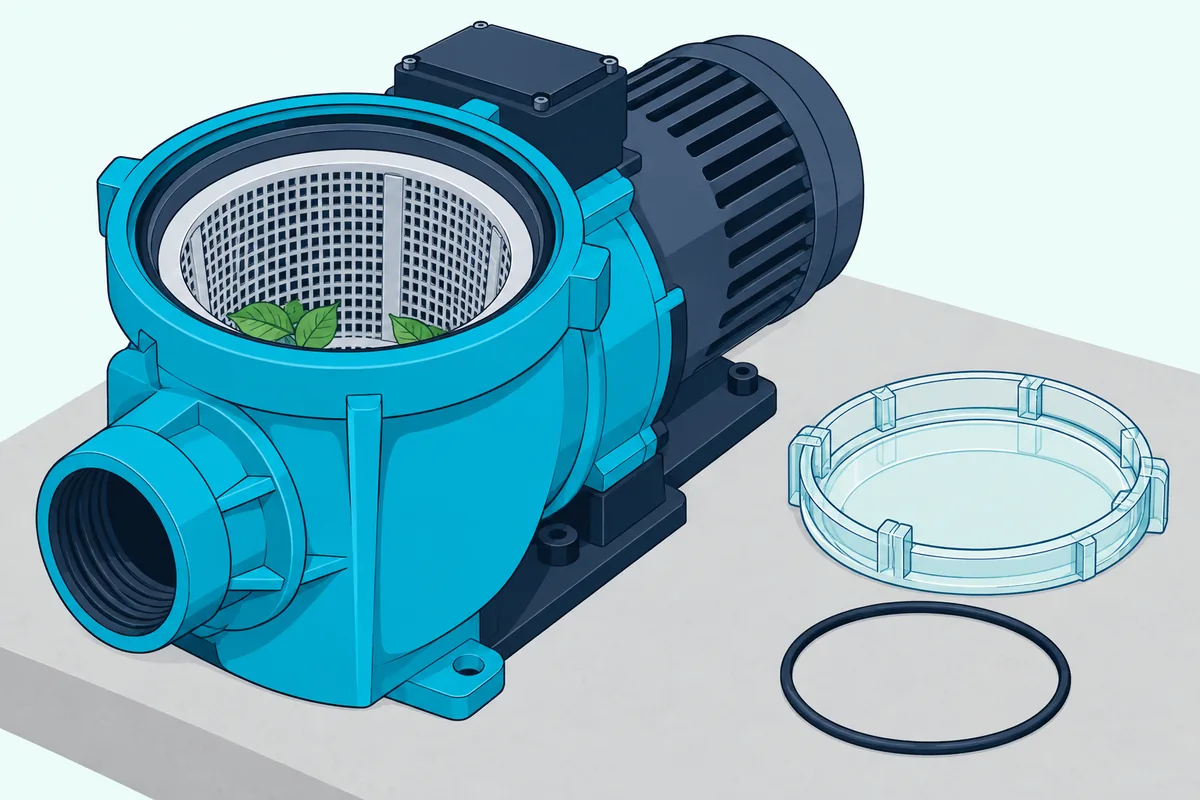
Think of a drinking straw with a pinhole: the pump pulls air through the gap along with the water. Jandy checks the water level first, then has you switch off, remove the lid and look for debris on the lid seal’s seat or a seal that isn’t seated right.
Clean the seal and refit the lid hand-tight, since Jandy says not to use tools. Hayward’s manual wants the lid O-ring lubricated, and its lubricant advice calls for a silicone or Teflon-based lubricant, never petroleum jelly, whose oils break down the rubber.
If the lid is sound, Hayward’s bubbles page lists the other suction-side leak points:
- The drain plugs on the pump’s strainer housing
- Threaded fittings with poor sealant, and failed glue joints
- Valves, where stem O-rings are a common leak point
- Cracks in the pump housing
Jandy adds the pipe unions. Try tightening the suction-side union with the pump running, and if the leak doesn’t stop, switch off, slide the pump aside, then clean and refit both union O-rings without over-tightening.
Is the Pump Short of Water?
A leak isn’t the only way a pump runs short of water, and Hayward ties cavitation, another common noise, to water flow. It may well be: Hayward’s noisy-pump page says a noisy pump many times comes from cavitation, and Pentair’s IntelliFlo3 VSF installation and maintenance guide blames too much debris in the strainer basket for cavitation in a noisy pump.
So the baskets come first: switch off, empty the strainer and skimmer baskets and check the water line. Pentair wants the water halfway up the skimmer opening, and warns that below it the pump draws air, loses its prime and runs dry.

Running dry is the costly version of this noise, because Hayward’s help page on dry running says the seal is cooled by the pool water and will overheat and melt without it. Hayward’s bubbles page adds a skimmer weir stuck in the up position, which mixes air and water in the skimmer.
If the baskets and water line are fine, Hayward’s Super Pump VS manual points to the plumbing: a restricted or undersized suction line, or return lines with nothing restricting them. Holding your hand over a return fitting will sometimes prove it, Hayward says, as will a smaller eyeball fitting, and the fix is to correct the suction side or throttle the returns where practical.
For an undersized suction pipe, Hayward’s noisy-pump page offers a bigger pipe or a smaller impeller, and for a water feature with too little back-pressure, a valve.
What Happens When Debris Gets Inside the Pump?
A clean basket doesn’t mean a clean pump, because whatever slipped past it can reach the impeller. Debris makes noise by hitting the impeller, clogging it or touching the cooling fan: Hayward’s manual names loose stones or debris hitting the impeller, and Pentair’s guide names a clogged impeller and debris touching the fan.
The fan is the easy side, since Pentair says to keep the fan guard clean and blow it out with compressed air. Do it with the power off at the circuit breaker, which Pentair requires before any service.
The impeller means opening the pump: Pentair says to take it apart and clear the impeller, and Hayward gives a jammed one to a qualified repair professional.
Century’s motor manual adds a loose motor coupling, a loose or damaged impeller and a clogged filter or strainer to the pump faults behind a noisy motor.
Does the Pump Shake on Its Pad?
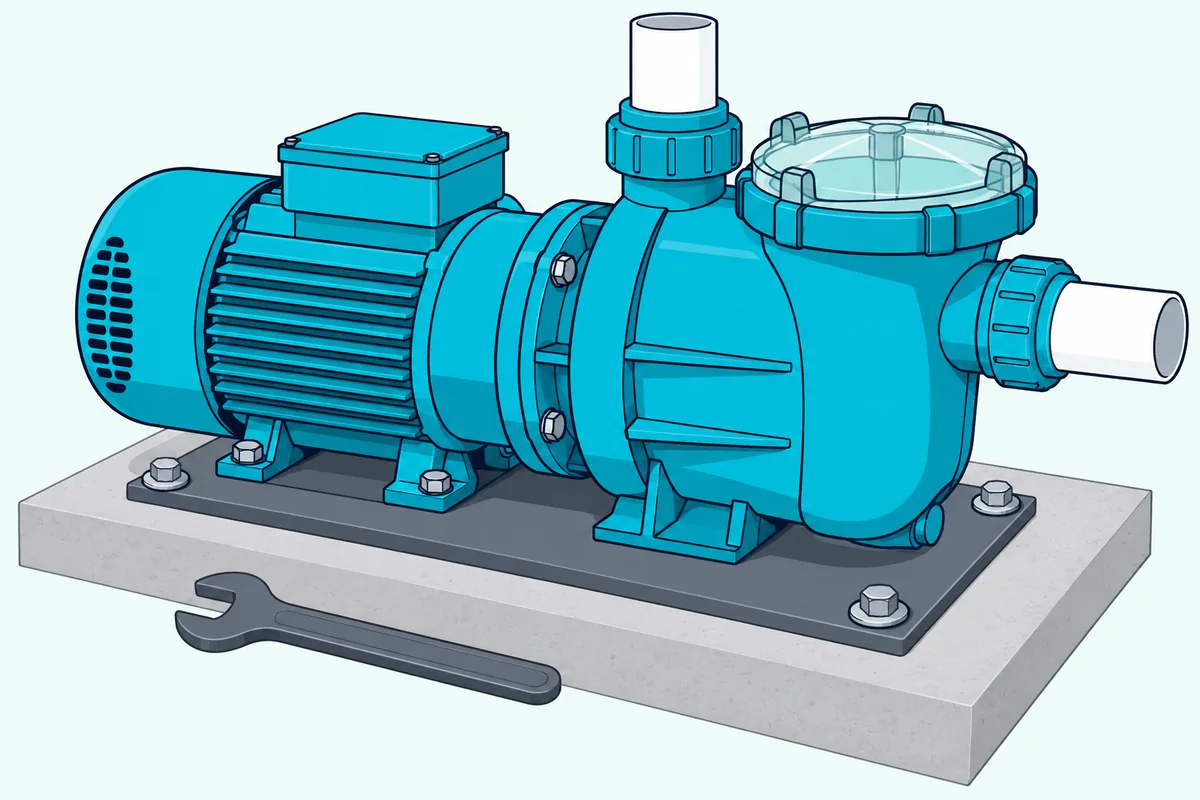
Not every rattle starts inside the pump, because a pump that isn’t fixed down can buzz against its base. If it shakes, the mounting is the likely cause: Hayward’s manual lists vibration from improper mounting and says to mount the pump level and secure it to the equipment pad.
Hayward asks for a level concrete slab or other rigid base, with screws or bolts to cut vibration and stress on the pipe joints. Jandy’s manual lets you bolt the pump to a solid foundation or set it on a rubber mat, and Zodiac, Jandy’s maker, recommends the bolts.
Hayward’s noisy-pump page adds that old carpet or rubber between the base and the pad might reduce the noise, and that the suction lines shouldn’t sit higher than the pump.
This 4-pack of UPE Group rubber isolation pads gives you four ribbed pads, 4 by 4 inches and 3/8 inch thick, for the rubber route. Hayward’s manual still wants the pump fixed down with screws or bolts, so pads don’t replace that where your manual asks for it.
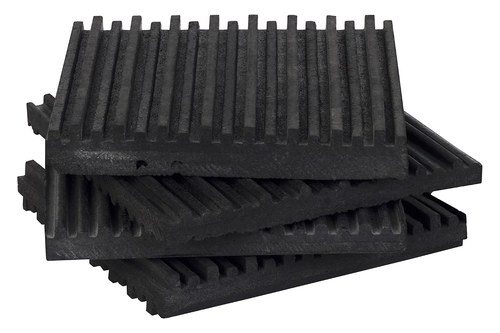
This 4-pack of UPE Group rubber isolation pads
Century’s manual adds the motor’s own hardware: tighten any loose nuts, bolts or set screws on the mounting, the motor coupling and the brackets.
Do a Whine and a Whistle Mean Worn Bearings?
With the pump sitting solid, a sound from the motor end itself is the next suspect. Usually, yes: Hayward’s manual says chlorinated water seeping past a damaged seal wipes the grease out of the bearings and makes them whine, and Hayward’s UK site says high-pitched whistling indicates water in the bearings.
Hayward also lists normal wear, rust and overheating behind noisy bearings, and its help page says a leaky pump seal could damage the front motor bearing. That’s why Hayward wants seal leaks fixed at once: a leaking seal is how the chlorinated water gets in.
Century’s manual sends a motor with a noticeable drag to its bearings and bearing load spring. It says a noisy or rough-running bearing should be replaced, usually along with the other one.
That means taking the motor apart, and Hayward recommends replacement bearings or a whole new motor, fitted by an authorized Hayward dealer.
What If the Motor Hums but Won’t Start?
A humming motor that won’t spin is the one sound here that should send you straight to the breaker. Switch it off, because Hayward’s Super Pump VS manual blames an impeller jammed with debris and wants a qualified repair professional to open the pump, while Century’s manual checks the connections, the voltage, an overload and the capacitor.
Those checks include live-voltage work for an electrician. Century measures the voltage at the motor as it tries to start, and blames low voltage on undersized wiring, an overloaded circuit or a burned start winding.
It tests the capacitor only with the power off, discharging it across an insulated screwdriver first, and says a bulged capacitor indicates failure on most motors. Turning the shaft is part of the routine, and grinding there points to the bearings, a rotor rubbing the stator or a clogged fan.
Pentair’s variable-speed pump carries a sharper warning: its guide says never to open the drive’s motor enclosure, because its capacitor bank holds a 230-volt charge even with no power to the unit.
A motor that cuts out and restarts later is a different case: Hayward says its thermal overload shuts a hot motor off until it cools, and lists blocked vents, undersized wire and power drops among the causes.
Which Checks Need a Pool Professional or an Electrician?
Those electrical checks mark the line between your work and a technician’s. Anything that needs the wet end opened, a gauge or a meter goes to a professional, and Hayward’s noisy-pump page ends by saying any of its fixes may need an authorized Hayward dealer.
| Job | Who does it | Source |
|---|---|---|
| Baskets, water level, the lid seal and the fan guard, power off | You | Hayward, Jandy, Pentair |
| Leveling the pump and bolting it down | You or a pool pro | Hayward, Jandy |
| Opening the pump to clear a jammed impeller | A qualified repair professional | Hayward |
| Checking for 5 to 6 inches of vacuum at the strainer cover | A pool dealer with a vacuum gauge | Hayward |
| Bearings, voltage, wiring and capacitor work | A dealer or an electrician | Hayward, Century, Pentair |
Hayward’s manual gives that vacuum figure in its priming checks, and says your pool dealer can confirm it.
Will a Slower Speed Quiet a Healthy Pump?
Once every fault in that table is ruled out, the noise left is the pump doing its job. On a variable-speed pump, often yes: Pentair says to consider reducing the speed when it’s too high, Hayward lists quiet operation among the benefits of low speeds, and ENERGY STAR says variable-speed pumps are quieter.
Slower costs hours instead. Hayward recommends filtering all the water at least once every 24 hours, so a lower speed may mean a longer run, and heaters, skimmers and chlorinators need their minimum flows.
Take a reading before and after, as Burton Acoustix’s decibel testing guide explains.
The Bottom Line
A loud pool pump is usually telling you where to look: bubbles mean air, a full basket or low water means a pump short of water, shaking means mounting, and a whine means bearings. If the noise comes from a spa’s equipment bay instead, quieting a hot tub motor covers that cabinet.
Frequently Asked Questions
Can a pool pump run without water?
No. Hayward says its pumps should never run without water, because the seal is cooled by the pool water and will overheat and melt, and a long dry run could damage the PVC pipe. Pentair’s guide adds that running dry damages the seal.
Is it safe to keep running a noisy pool pump?
That depends on the sound. A steady whir from the fan end is normal, but switch off a motor that hums without turning, since Hayward wants a professional to open a jammed pump. Repair leaks around the pump quickly to prevent extensive damage, as Hayward advises, and don’t let the pump run dry, which Pentair says could damage the seal, pump case and impeller.