In most cases, yes: a record weight steadies the record on the platter and cuts vibration, which helps most with slightly warped records.
Are you wondering if you should use a record weight to enhance your vinyl listening experience?
Should you use a record weight? Yes, in most cases, using a record weight can significantly improve your vinyl listening experience.
Record weights help stabilize the vinyl on the platter, reducing vibrations and resonance, which leads to better sound quality, improved tracking, and more stable playback. They’re especially beneficial for slightly warped records or turntables with lighter platters.
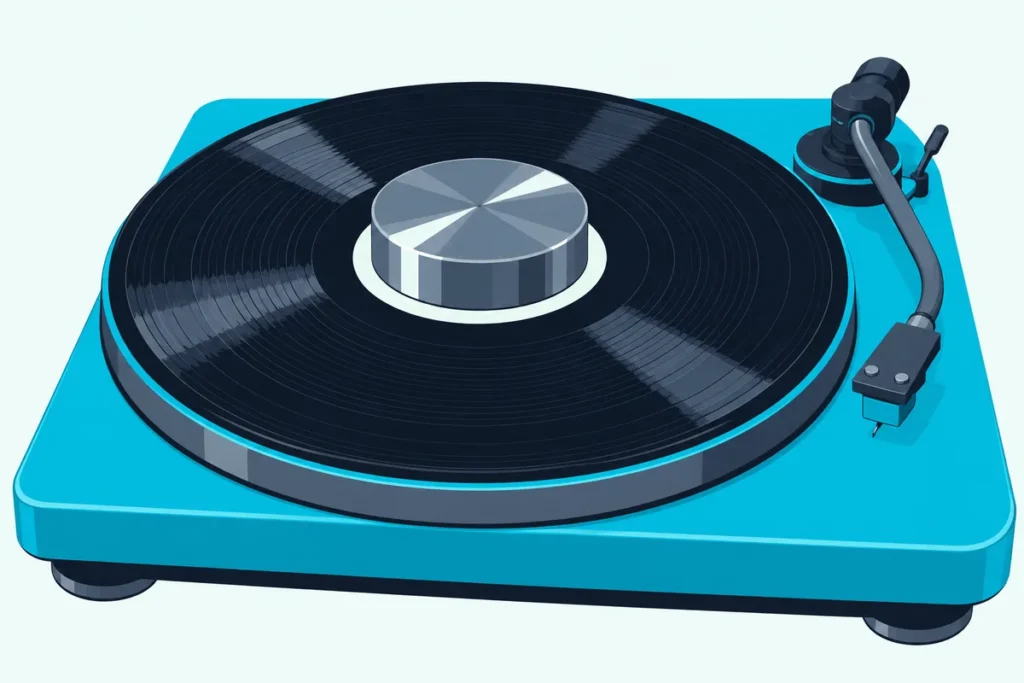
However, it’s essential to ensure your turntable can handle the additional weight without causing damage to the motor or bearings.
Why Use A Weight Over A Turntable?
Alright, let’s talk about why you might want to use a weight over your turntable. Picture this: you’re all set for a cozy evening with your favorite vinyl, but as soon as the needle hits the groove, you hear that annoying warp or flutter.
Ugh, talk about a mood killer! That’s where a record weight comes in handy.
Using a weight over your turntable can work wonders for your listening experience. First off, it helps press the record flat against the platter, which is super helpful for those slightly warped records.
This improved contact means better tracking and less distortion – music to any vinyl lover’s ears!
But that’s not all, folks! A weight also adds mass to the platter system, which helps dampen vibrations.
Think of it like adding shock absorbers to your car – suddenly, those bumps in the road (or in this case, imperfections in your vinyl) become way less noticeable. The result? Clearer sound, tighter bass, and an overall more stable playback.
“But won’t that extra weight hurt my turntable?” It’s a valid concern. For most modern turntables, the benefits of using a weight usually outweigh (pun intended!) any potential drawbacks.
What is a Record Weight?
Record weights are like the unsung heroes of the vinyl world.
A record weight, also known as a record clamp or stabilizer, is basically a heavy disk that sits on top of your vinyl record while it’s playing. They come in all shapes and sizes, from sleek metal discs to elaborate contraptions that look like they belong in a sci-fi movie.
But don’t let their looks fool you – their purpose is dead serious.
The main job of a record weight is to stabilize your vinyl as it spins. It’s like giving your record a big, heavy hug while it’s doing its thing.
This extra weight helps press the record firmly against the platter, which can work wonders for your sound quality.
Now, there are a few different types of record weights out there. You’ve got your basic weights that just sit on top of the spindle, and then you’ve got clamps that actually screw down onto the spindle.
Some audiophiles swear by one type over the other, but both can do the job well if used correctly.
So, how do these things actually work? Well, it’s all about physics, baby!
By adding mass to the record-platter system, a weight helps dampen vibrations and resonances. It’s like adding insulation to your walls – suddenly, all that outside noise (or in this case, unwanted vibrations) gets muffled.
But here’s where it gets really cool: a good record weight can actually help flatten out slightly warped records.
Should I use a record weight?
Yes, in most cases, you should use a record weight. Record weights can significantly improve your vinyl listening experience by stabilizing the record, reducing vibrations, and enhancing sound quality.
They’re particularly beneficial for slightly warped records or turntables with lighter platters. However, it’s crucial to ensure your turntable can handle the additional weight without causing damage to the motor or bearings.
While record weights offer many benefits, they’re not a one-size-fits-all solution.
Benefits of Using a Record Weight
The benefits are real, folks, and they can be pretty darn impressive.
First up, let’s talk about sound quality. This is the biggie, the reason most of us get into this hobby in the first place.
A good record weight can seriously up your audio game. By pressing the record firmly against the platter, it improves the coupling between the two.
What does that mean in English? Basically, it helps your stylus track the groove more accurately.
The result? Clearer highs, tighter bass, and an overall more detailed sound.
It’s like cleaning your glasses – suddenly, everything comes into focus!
But wait, there’s more! Another big benefit is the reduction in vibration and resonance.
You know that annoying thing where your speakers cause your turntable to vibrate, which then causes more distortion, which then… well, you get the picture. A record weight helps break this feedback loop by damping those pesky vibrations.
It’s like telling your audio setup, “Hey, chill out, man!”
And let’s not forget about playback stability. This can make a big difference with slightly warped records.
A good weight can help iron out those minor imperfections, leading to more consistent playback. No more speed wobbles or pitch variations – just pure, sweet music.
Potential Drawbacks of Record Weights
Record weights aren’t all sunshine and rainbows, though, and there are a few potential downsides you should be aware of.
First up, let’s talk about wear and tear on your turntable. Adding extra weight to your platter means your turntable’s motor and bearings have to work harder.
It’s like asking your car to carry a heavy load – sure, it can do it, but it might not be great for long-term health.
Then there’s the compatibility issue. Not all turntables are created equal, and some just don’t play nice with record weights.
But here’s the kicker – record weights can actually damage warped records if you’re not careful.
They do help with slight warps. But if you’ve got a severely warped record and you slap a heavy weight on it, you’re basically forcing it flat against the platter.
This can stress the vinyl and potentially cause even more damage.
So yeah, while record weights can be awesome, they’re not a magic bullet. You’ve gotta use them wisely and be aware of their limitations.
But hey, that’s half the fun of this hobby, right? Learning from our mistakes and all that jazz.
How to Choose the Right Record Weight
Alright, so you’ve decided to take the plunge and get yourself a record weight. Awesome!
But now you’re staring at a sea of options, wondering which one to choose.
First things first, you gotta consider your turntable’s compatibility. This is crucial, folks.
You don’t want a weight that’s too heavy for your poor turntable to handle. Check your turntable’s manual or manufacturer’s website for any weight limits or recommendations.
If in doubt, start with a lighter weight and work your way up.
Next up, let’s talk materials. You’ve got options ranging from aluminum to brass to fancy-pants carbon fiber.
Each material has its own properties that can affect sound.
Size matters too, folks! You want a weight that covers a good portion of the label area without hanging over the edge of the record.
Installation and use are pretty straightforward. Just place the weight gently on top of your record, centered around the spindle.
But here’s a pro tip: always lift the tonearm before removing the weight.
Oh, and one more thing – don’t forget to re-adjust your vertical tracking angle (VTA) if you’re using a particularly heavy weight. It can change the angle of your tonearm, which can affect sound quality.
It’s a small detail, but hey, in this hobby, the small details are what make the difference between good sound and great sound.
Do I Need Two Turntable Weights?
In most cases, no: one good quality weight will usually do the trick.
First off, let’s talk about what using two weights actually means: a second weight stacked on top of the first.
There are some serious cons to consider, though. For one, you’re adding a lot of extra weight to your turntable system.
This can put a real strain on your motor and bearings.
Then there’s the hassle factor. Adding and removing two weights every time you want to play a record can get old real fast.
The novelty wears off pretty quickly when you’re fumbling with weights between every song.
But if you’re dealing with a particularly problematic record, or if you’ve got a high-end turntable that can handle the extra mass, a second weight might be worth experimenting with.
Start with one weight and see how it goes.
If you’re still not satisfied, then maybe consider adding a second. But always, always check your turntable’s specs first.
The last thing you want is to damage your precious vinyl-spinning machine in pursuit of that perfect sound.
Alternatives to Record Weights
Okay, so maybe you’re not sold on the whole record weight thing. Or maybe your turntable just can’t handle the extra mass.
There are other ways to skin this cat.
Let’s start with record clamps. These bad boys work on a similar principle to weights, but instead of relying on mass, they use tension to hold the record in place.
They typically screw down onto your turntable’s spindle, pulling the record tight against the platter.
But clamps aren’t without their drawbacks. They can be a bit fiddly to use, especially if you’re changing records frequently.
And if you’re not careful, you can actually warp your records by over-tightening the clamp.
Next up, let’s talk about turntable mats. These unassuming little discs can make a big difference in your sound.
They come in all sorts of materials – rubber, cork, leather, even fancy-pants carbon fiber. Each material has its own sonic signature.
Cork mats, for example, aim for a balance of vibration damping and record coupling.
Plus, they look pretty cool!
Other gadgets and gizmos are worth a look, too.
A good set of isolation feet for your turntable is one. These little rubber or spring-loaded beauties help decouple your turntable from whatever surface it’s sitting on.
Another option worth considering is a record vacuum cleaner. “What does cleaning have to do with sound quality?”
But a really deep clean can make a world of difference.
Oh, and let’s not forget about cartridge alignment tools. These might not directly replace a record weight, but they can seriously improve your sound quality.
One more thing: a good quality phono preamp. If you’re using the built-in preamp in your turntable or receiver, you might be surprised at what an upgrade can do.
There’s no one-size-fits-all solution. What works magic for one setup might fall flat for another.
The key is to experiment, trust your ears, and most importantly, enjoy the music. After all, isn’t that what this hobby is all about?
Conclusion
Record weights can be a fantastic addition to your vinyl setup, potentially improving sound quality, reducing vibrations, and stabilizing playback. They’re especially helpful for slightly warped records or turntables with lighter platters.
However, they’re not without their drawbacks, including potential wear on your turntable and compatibility issues.
When choosing a record weight, remember to consider your turntable’s specifications, the weight’s material and size, and proper installation techniques. And hey, while two weights might seem like a good idea, for most setups, one high-quality weight will do the trick just fine.
But don’t forget, record weights aren’t the only game in town! Clamps, mats, isolation feet, cleaning tools, and even a good phono preamp can all contribute to better sound quality.
The key is to experiment and find what works best for your unique setup and listening preferences.
Remember, this hobby is all about enjoying the music. Whether you decide to use a record weight, try out some alternatives, or stick with your current setup, the most important thing is that it brings you joy when you drop that needle.
So go ahead, give some of these options a try. Who knows?
You might just discover a whole new dimension to your favorite albums. And isn’t that discovery what makes this vinyl journey so exciting?
Happy listening, folks!