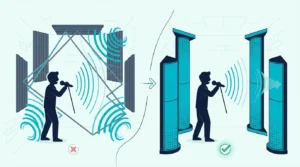
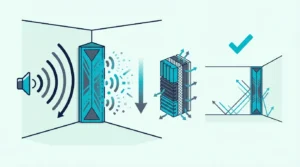
How Many Types Of Bass Traps Are There — And Which One Fits Your Room?
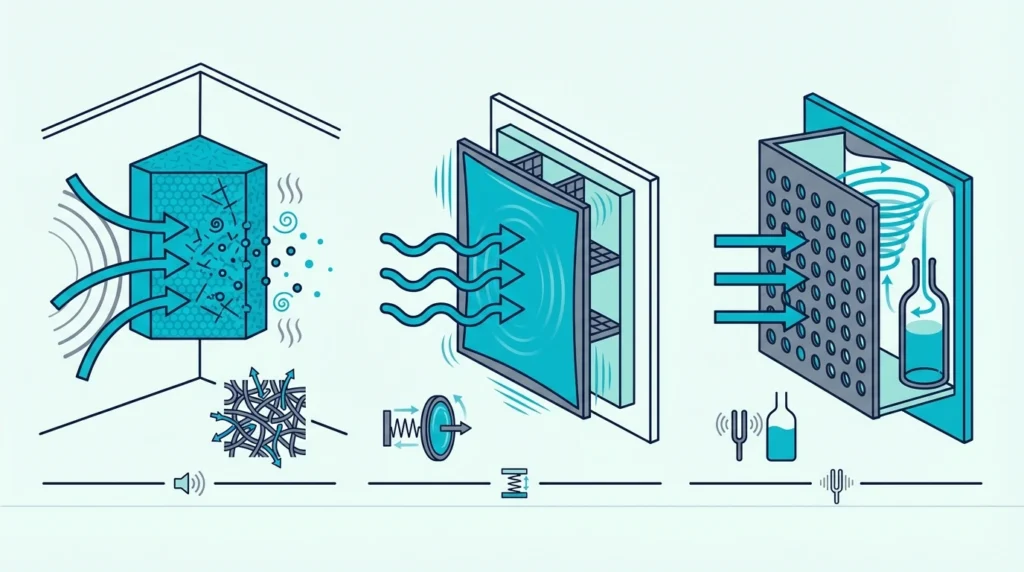
How many types of bass traps are there — three main categories exist, but most people only ever encounter one of them, and picking the wrong type for your specific room problem is how good money gets wasted on treatment that doesn’t solve anything.
The three types are porous absorbers, resonant absorbers, and active bass traps. Each handles low-frequency energy through a completely different mechanism, targets different frequency ranges, and works best in different situations.
Porous absorbers are the workhorses you see in most studios — fiberglass panels, mineral wool chunks, and foam wedges stuffed into corners. Resonant absorbers are the precision tools tuned to specific problem frequencies, while active traps use electronics to cancel bass but remain expensive and rare outside professional facilities.
Below, you’ll see exactly how each type works, what frequencies it covers, and a clear decision framework for choosing the right one based on your room, budget, and the specific bass problems you’re trying to solve.
There are three main types of bass traps: porous absorbers (broadband, most common), resonant absorbers (tuned to specific frequencies), and active bass traps (electronic cancellation). For most home studios and listening rooms, porous absorbers in 4-6 inch rigid fiberglass or mineral wool deliver the best results per dollar. Resonant absorbers add surgical precision for stubborn room modes that broadband treatment alone can’t tame.
How Many Types Of Bass Traps Are There — And Why Does It Matter?
Understanding the different types of bass traps matters because each one solves a different aspect of the low-frequency problem. Buying the wrong type is like using a hammer when you need a screwdriver — the tool works fine, just not for your job.
Bass traps fall into three categories based on how they convert sound energy into heat or cancel it out. The distinction isn’t academic — it determines which frequencies get absorbed, how much space the trap requires, and whether it treats your room’s problems broadly or targets one specific frequency.
Most rooms benefit from starting with porous absorbers because they handle the widest frequency range for the least cost. Resonant absorbers come into play when measurement data shows a stubborn mode that porous treatment alone can’t flatten, and active traps remain a niche solution for high-budget facilities chasing the last few dB of perfection.
What Are Porous Absorber Bass Traps?
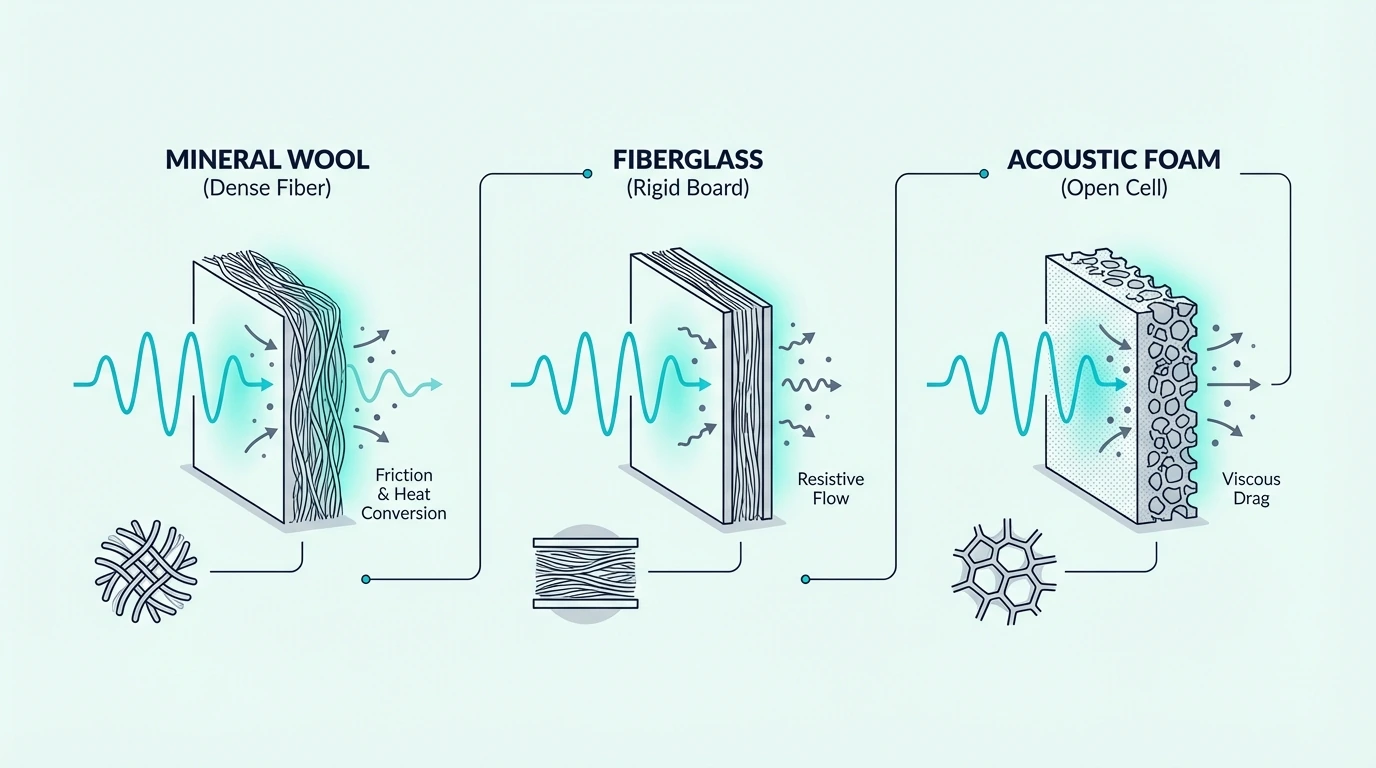
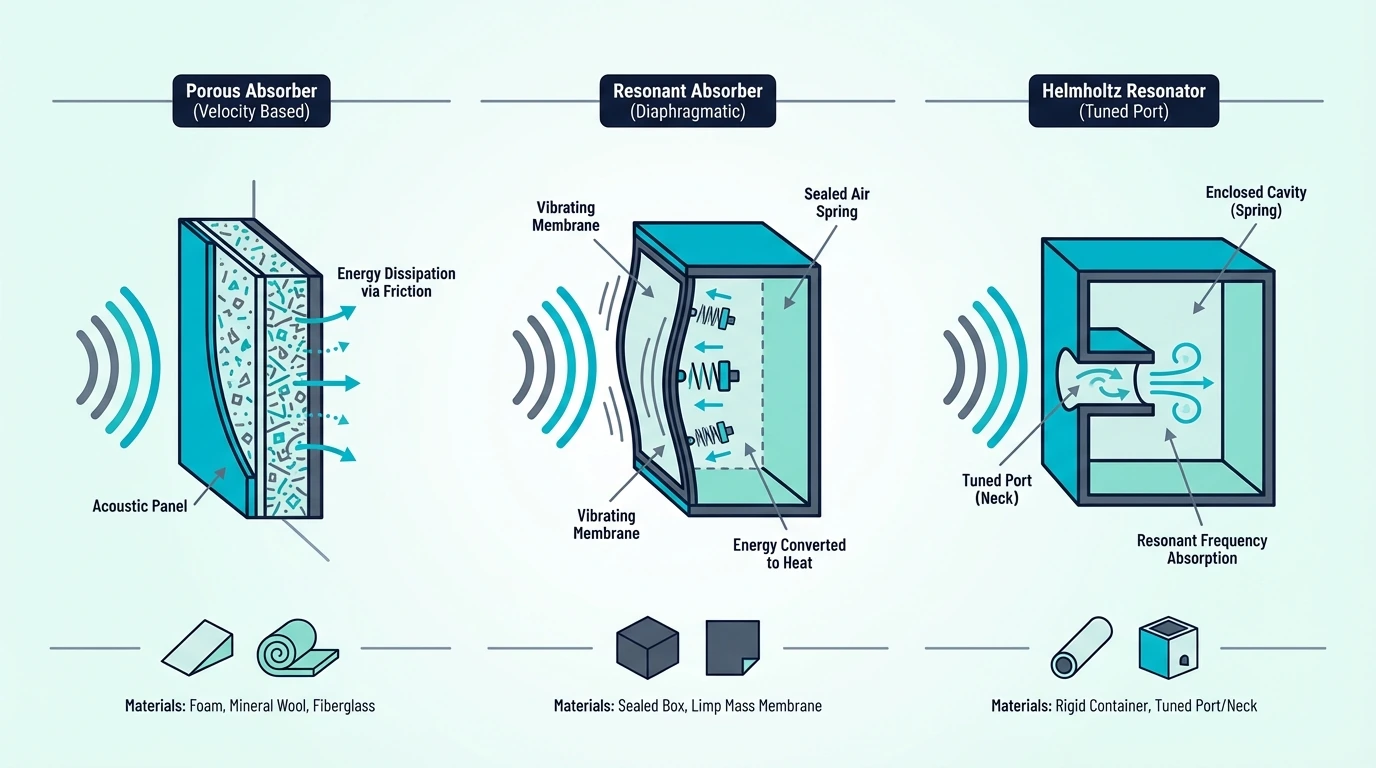
Porous absorbers are the most common type of bass trap and the one most people should start with. They work through velocity-based absorption — sound waves pass through the material’s tiny pores, and friction between the moving air and the pore walls converts acoustic energy into heat.
The key advantage of porous absorbers is broadband coverage — a single 4-inch rigid fiberglass panel absorbs everything from about 100 Hz up through the entire midrange and treble. One type of treatment handles bass problems, first reflection points, and general room liveliness simultaneously.
Panel-Style Porous Traps
Panel-style porous traps are flat rectangular panels made from rigid fiberglass (Owens Corning 703/705) or mineral wool (Rockwool). They mount on walls or straddle corners at a 45-degree angle, creating an air gap behind the panel that extends their low-frequency reach.
A 4-inch panel spanning a corner with 4-8 inches of air behind it absorbs meaningfully down to 80-100 Hz. Commercial versions from companies like GIK Acoustics and ATS Acoustics come pre-wrapped in fabric and ready to hang, while DIY builders can achieve identical acoustic performance at roughly half the cost.
A prebuilt option like the (4 Pack) Sound Absorption-Diffuse Corner Bass Trap Pulse shows what panel-style porous treatment looks like when you want real depth instead of a thin decorative foam wedge.
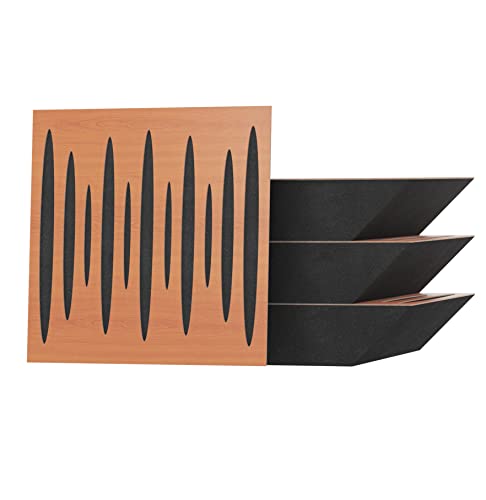
(4 Pack) Sound Absorption-Diffuse Corner Bass Trap Pulse
Superchunk Corner Traps
Superchunk traps fill an entire corner from floor to ceiling with stacked triangular wedges of rigid insulation. The name comes from the massive chunk of material — typically 24-inch right triangles cut from 2-inch batts and stacked alternating orientation.
The sheer depth of material (often 17+ inches from corner to face) gives superchunks absorption reaching down to 50-60 Hz. They’re the most effective porous absorber design for deep bass, but they consume significant room volume and only fit rooms where losing corner space is acceptable.
If you’re building them yourself, rigid stock like the Rockwool ComfortBoard 80 Rigid Stone Wool Insulation Board gives you the kind of dense mineral wool superchunks are built from once you cut and stack it into full-corner wedges.
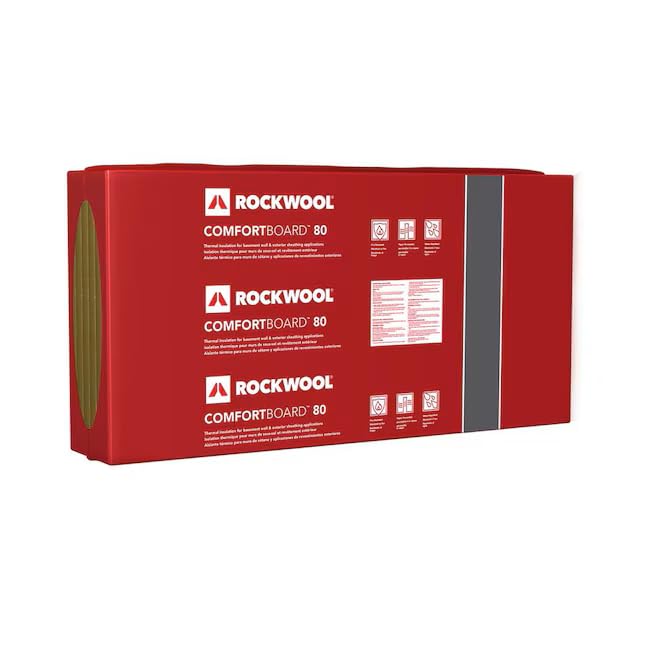
Rockwool ComfortBoard 80 Rigid Stone Wool Insulation Board
For small rooms where superchunks would dominate the space, panel-style traps with air gaps offer a practical compromise between bass absorption depth and room footprint.
Get Studio Tips Weekly
Join 5,000+ creators getting acoustic treatment advice every week.
No spam. Unsubscribe anytime.What Are Resonant Absorber Bass Traps?
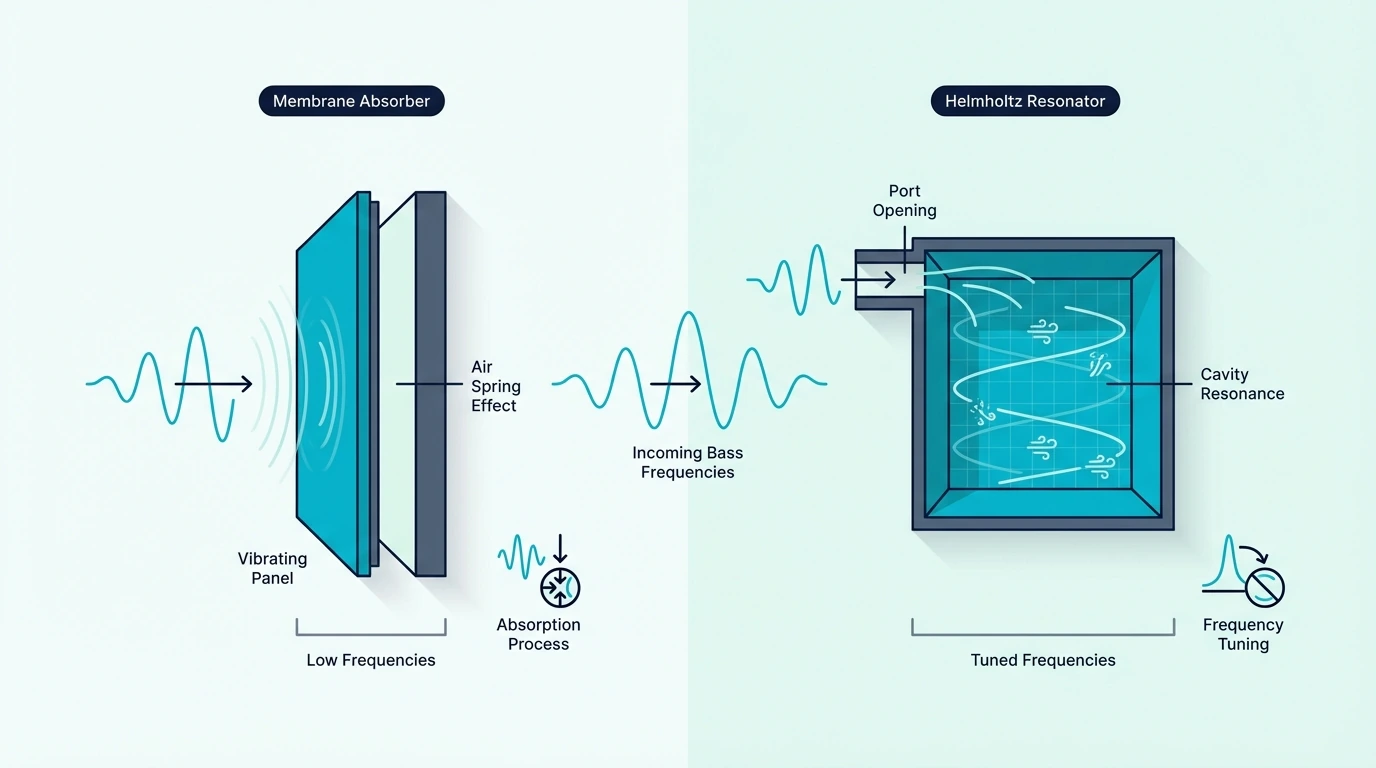
Resonant absorbers work through pressure-based absorption rather than velocity. Instead of letting sound pass through a porous material, they use a resonating element — a tuned cavity or a vibrating membrane — that oscillates at a specific frequency and dissipates that energy as heat.
The defining characteristic of resonant absorbers is narrow-band targeting. Where a porous absorber treats everything above its cutoff frequency, a resonant absorber focuses its absorption on a 20-40 Hz window centered on its tuning frequency.
Helmholtz Resonator Traps
Helmholtz resonators use a sealed cavity with a small port or neck opening. When sound at the resonant frequency hits the port, the air in the neck oscillates back and forth, and internal friction dissipates the energy.
The tuning frequency depends on the cavity volume, port diameter, and neck length. A well-built Helmholtz resonator can target frequencies as low as 30-40 Hz with high absorption at the tuned point — frequencies that would require impractically thick porous material to address.
The tradeoff is specificity — a Helmholtz trap tuned to 63 Hz absorbs strongly at 63 Hz but does almost nothing at 80 Hz or 50 Hz. You need to know exactly which frequency is your problem, which requires room measurement with software like REW (Room EQ Wizard).
A measurement mic like the miniDSP UMIK-1 USB Measurement Calibrated Microphone is what lets you find that exact problem frequency before you build or buy a tuned absorber.
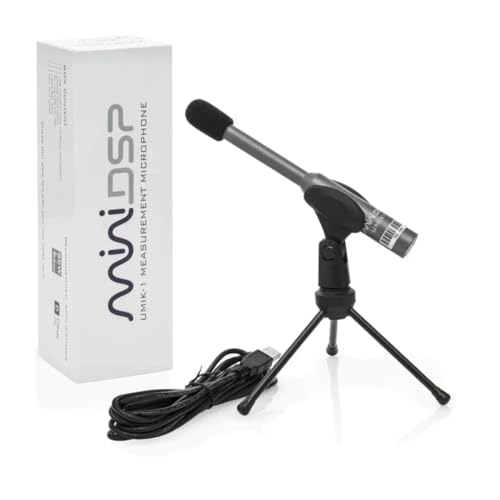
miniDSP UMIK-1 USB Measurement Calibrated Microphone
Membrane (Diaphragmatic) Traps
Membrane traps — also called diaphragmatic absorbers — use a thin, flexible front panel (typically MDF or plywood) mounted over a sealed air cavity filled with absorption material. When bass energy hits the panel, it vibrates at its resonant frequency, and the internal absorption converts that mechanical energy to heat.
Membrane traps typically target the 40-100 Hz range depending on panel mass, cavity depth, and internal damping. They’re broader than Helmholtz resonators (absorbing across a wider band) but narrower than porous absorbers.
Professional studios sometimes use tuned membrane traps from companies like Real Traps or RPG to address specific room modes that broadband porous treatment can’t fully control. For most home studios, they’re overkill unless measurement data reveals a severe mode that thicker porous treatment can’t flatten.
How Do Active Bass Traps Work?
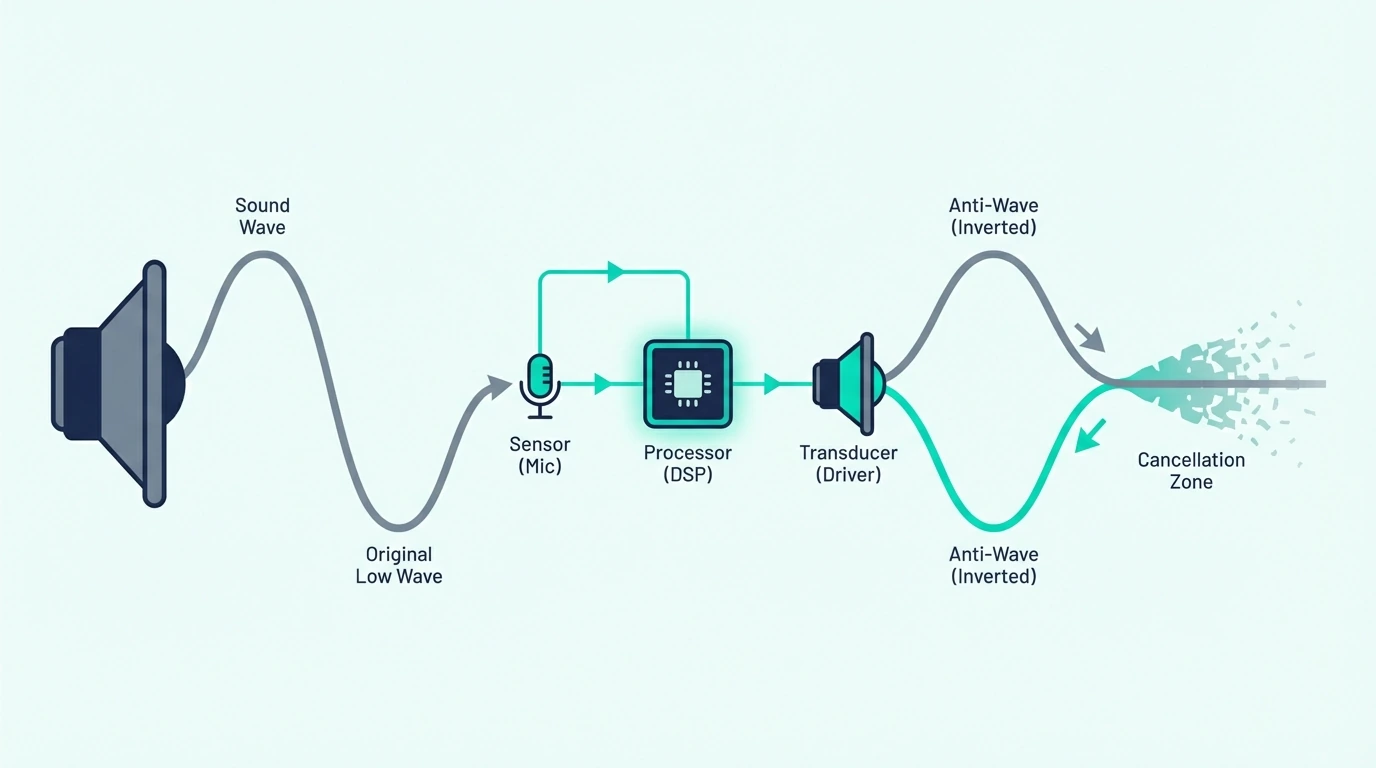
Active bass traps use electronics — microphones, processors, and speakers — to cancel low-frequency energy in real time. A microphone detects the bass buildup in a corner, a DSP processor calculates the inverse waveform, and a speaker outputs the cancellation signal.
The concept is identical to noise-cancelling headphones, scaled up to room acoustics. Active traps can target frequencies as low as 20 Hz with precision that passive treatment can’t match, and they take up far less physical space than the porous equivalent.
The downsides are cost (professional active traps run $1,000-3,000+ per unit), complexity (they require calibration and power), and the fact that they only cancel bass at a specific zone rather than treating the entire room. Products like the PSI Audio AVAA C20 represent the current state of the art, but they’re primarily found in mastering studios and broadcast facilities.
For home studio budgets, passive porous absorbers deliver 80-90% of the improvement at a fraction of the cost. Active traps are a finishing tool, not a starting point.
Which Type Of Bass Trap Should You Choose?
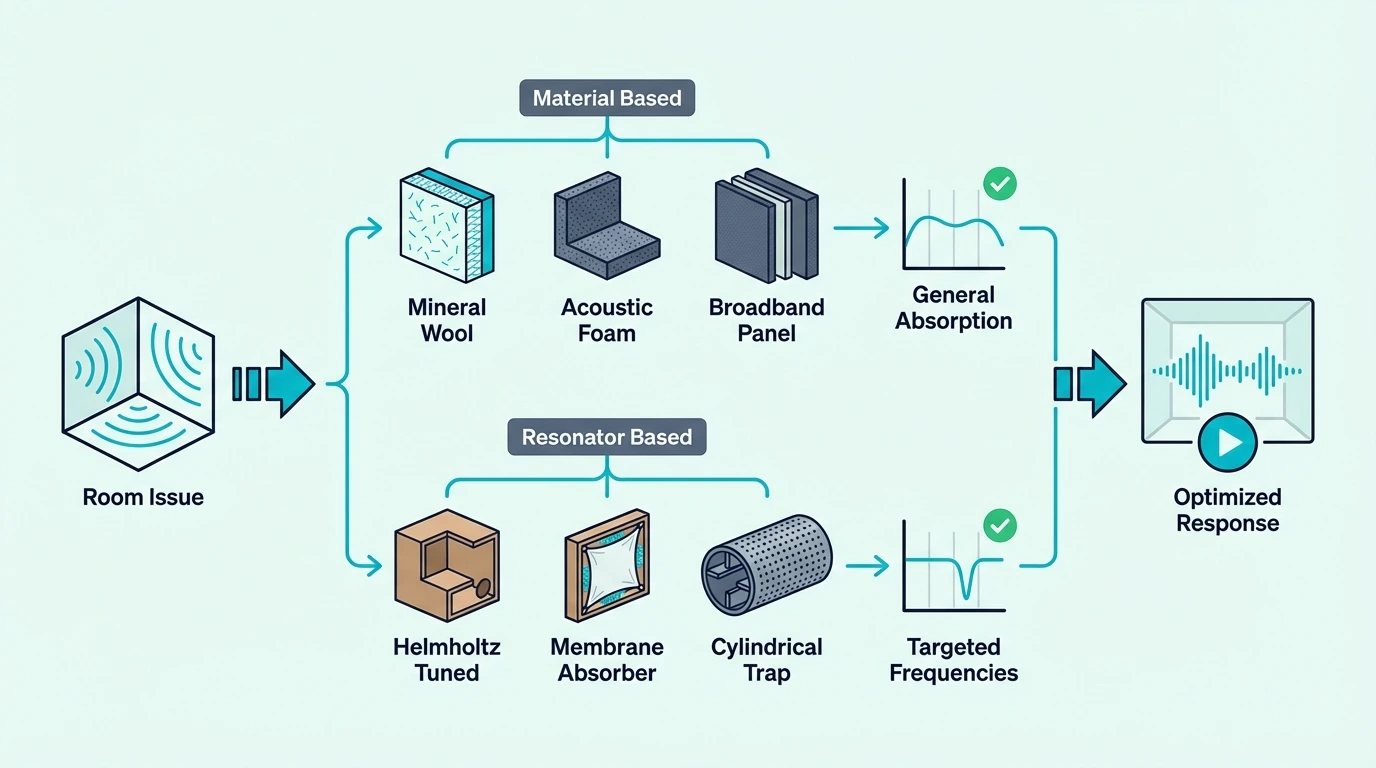
The right type depends on three factors: your budget, your room’s specific problems, and how much space you can dedicate to treatment.
Start with porous absorbers if you haven’t treated your room yet. Prebuilt corner panels and DIY mineral-wool builds both work, but denser 4-inch fiberglass or mineral wool still absorb deeper bass than entry-level foam.
Either way, corner-mounted porous absorbers solve the majority of room acoustic problems.
Add resonant absorbers only after measuring your room with porous treatment installed. If a specific frequency still shows a severe peak (10+ dB above the average), a Helmholtz resonator or membrane trap tuned to that frequency adds the surgical precision porous absorbers can’t provide.
Consider active traps only if you’re building a professional mastering or broadcast room with the budget to match. They’re the most effective tool for deep bass control but unnecessary for home studios, project studios, and home theaters.
The 80/20 rule applies strongly here: porous absorbers in your room’s corners deliver 80% of the total improvement. Proper placement matters more than trap type for most people — four well-placed porous corner traps outperform a single expensive resonant absorber in the wrong spot.
The Bottom Line
Three types of bass traps exist — porous absorbers, resonant absorbers, and active traps — and each serves a distinct role in acoustic treatment. Porous absorbers handle broadband bass problems, resonant absorbers target specific stubborn frequencies, and active traps provide electronic precision at premium cost.
For most rooms where bass traps are necessary, start with 4-inch porous absorbers in the corners. Measure after installation, and only add resonant or active treatment if measurement data shows specific problems that broadband absorption can’t solve.
Frequently Asked Questions
What are the different types of bass traps?
The three main types are porous absorbers (fiberglass, mineral wool, foam — broadband absorption), resonant absorbers (Helmholtz resonators and membrane traps — tuned to specific frequencies), and active bass traps (electronic systems that cancel bass using inverse waveforms).
What is the best shape for a bass trap?
Triangular wedges that fit into corners are the most effective shape because they place absorption material where bass pressure is highest. Superchunk configurations — stacked triangles filling the entire corner — provide the deepest bass absorption of any porous design.
How much of a difference do bass traps make?
Bass traps typically reduce room mode peaks by 6-15 dB, which is a dramatic improvement in bass accuracy. The difference between an untreated room and one with four corner bass traps is immediately audible — tighter, more even bass with less boominess and fewer dead spots.
How thick should bass traps be?
For porous absorbers, 4 inches is the minimum recommended thickness for meaningful bass absorption. Six inches reaches lower frequencies, and superchunk fills (17+ inches deep) provide the deepest broadband absorption available from porous materials.