Bass Traps Placement — Where To Put Them For Maximum Low-End Control
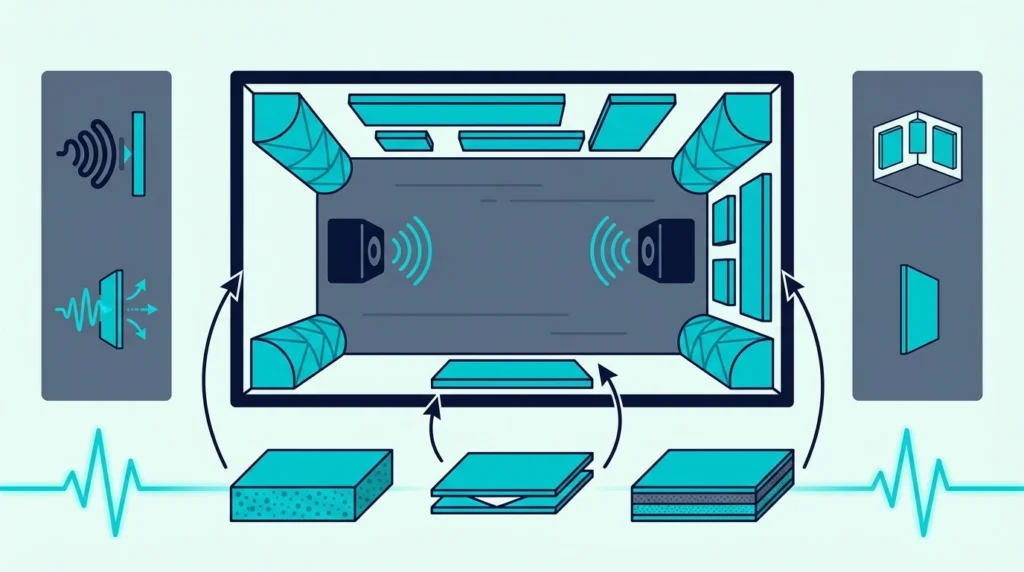
Bass traps placement determines whether your acoustic treatment actually solves your room’s problems or just decorates the walls, but most people get it wrong by spreading traps evenly around the room instead of concentrating them where bass energy is highest.
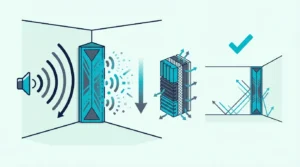
Corners are where bass energy accumulates most intensely in any rectangular room. Every room mode — the standing waves that cause boomy, uneven bass — has its maximum pressure at the room boundaries, and corners where two or three surfaces meet stack those pressure zones on top of each other.
Putting bass traps flat on wall centers or randomly around the room wastes absorption capacity on locations where bass pressure is moderate at best. The same trap in a corner intercepts dramatically more low-frequency energy, making placement the single biggest factor in how effective your treatment performs.
Below, you’ll find the exact priority order for bass trap placement, whether you need traps in every corner, how size and air gaps affect performance, and whether symmetrical placement actually matters for stereo imaging.
Place bass traps in corners first — tri-corners (where two walls meet the floor or ceiling) are the highest priority, followed by vertical wall-wall corners and wall-ceiling edges. Front wall corners behind your monitors matter most for mixing accuracy. An air gap of 2-4 inches behind the trap increases low-frequency absorption. Symmetrical placement preserves stereo imaging for critical listening.
Where Should You Place Bass Traps In A Room?
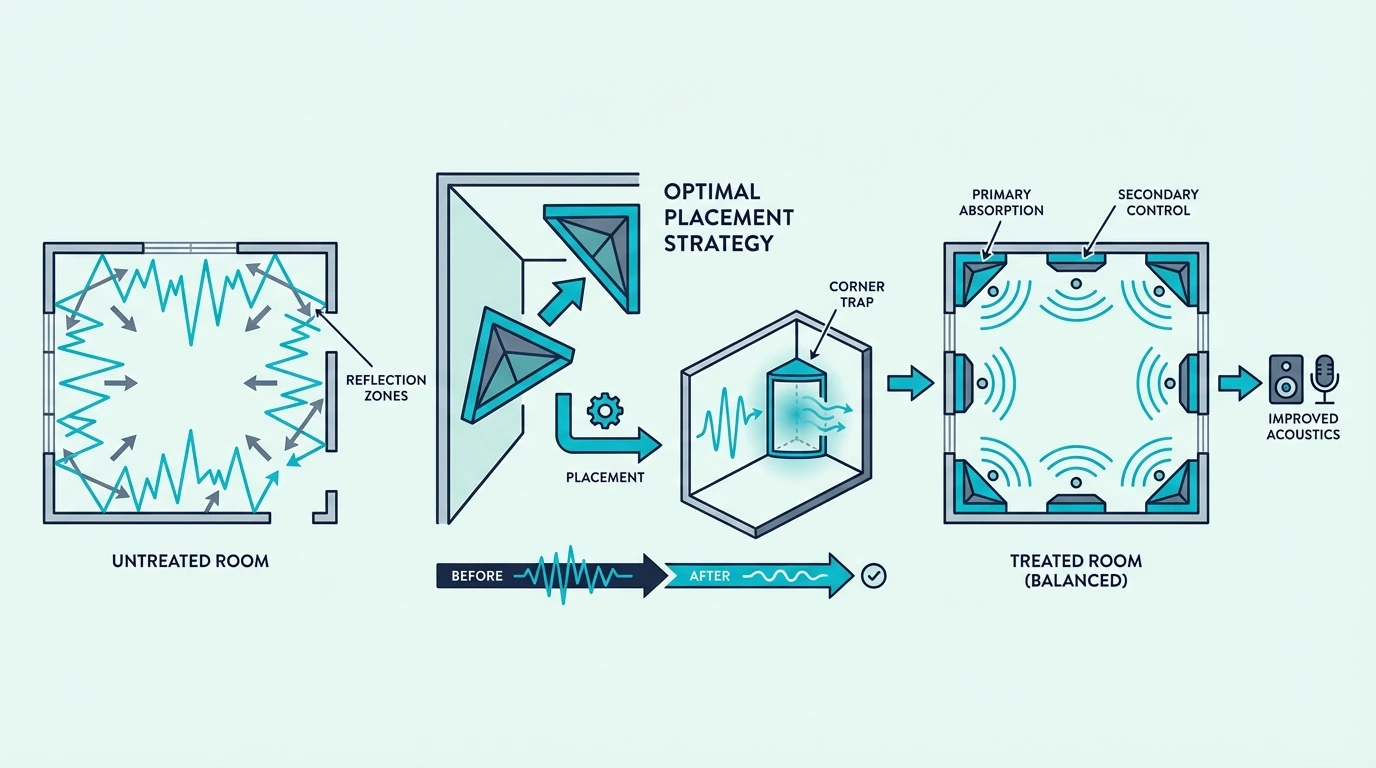
Bass traps placement follows one rule above all others: put them where bass energy is highest. In every rectangular room, that means corners — and not all corners are equally important.
The priority order for bass trap placement, from most effective to least:
- Tri-corners (where two walls meet the floor or ceiling) — highest bass pressure in the room
- Vertical wall-wall corners — second highest pressure zones
- Wall-ceiling edges (the long horizontal lines where walls meet the ceiling)
- Wall-floor edges (often impractical due to furniture)
- Wall centers (least effective for bass, better for mid/high reflection control)
This priority order isn’t opinion — it’s physics. Bass pressure maxima always occur at room boundaries, and corners where multiple boundaries intersect concentrate the most energy.
Tri-Corner Placement (Floor-Wall-Wall)
Tri-corners are where three surfaces converge — the two spots on each wall where it meets another wall and the floor, plus the two spots where it meets another wall and the ceiling. A typical rectangular room has eight tri-corners total.
These locations see the highest bass pressure of anywhere in the room because every axial mode (length, width, and height) has its pressure maximum at the boundaries. Where three boundaries converge, three sets of pressure maxima stack, creating the most intense bass energy concentration.
Placing any type of bass trap in a tri-corner delivers more absorption per square foot than any other position. If you can only afford four traps, put them in the four front tri-corners (the two upper and two lower corners of your front wall).
Wall-Ceiling Corners
Wall-ceiling corners — the long horizontal edges running the length and width of your room — are the second priority after tri-corners. These edges see pressure maxima from two axial modes simultaneously (the wall dimension and the ceiling height).
Ceiling-mounted bass traps along these edges are particularly effective because they treat both vertical and horizontal room modes with a single installation. Floor-to-ceiling vertical corner traps handle the same job from a different angle.
The front wall-ceiling edge (above your monitors) and the two side wall-ceiling edges closest to your listening position deserve treatment first. Rear wall-ceiling edges come after the front is handled.
Should You Put Bass Traps In All Corners?
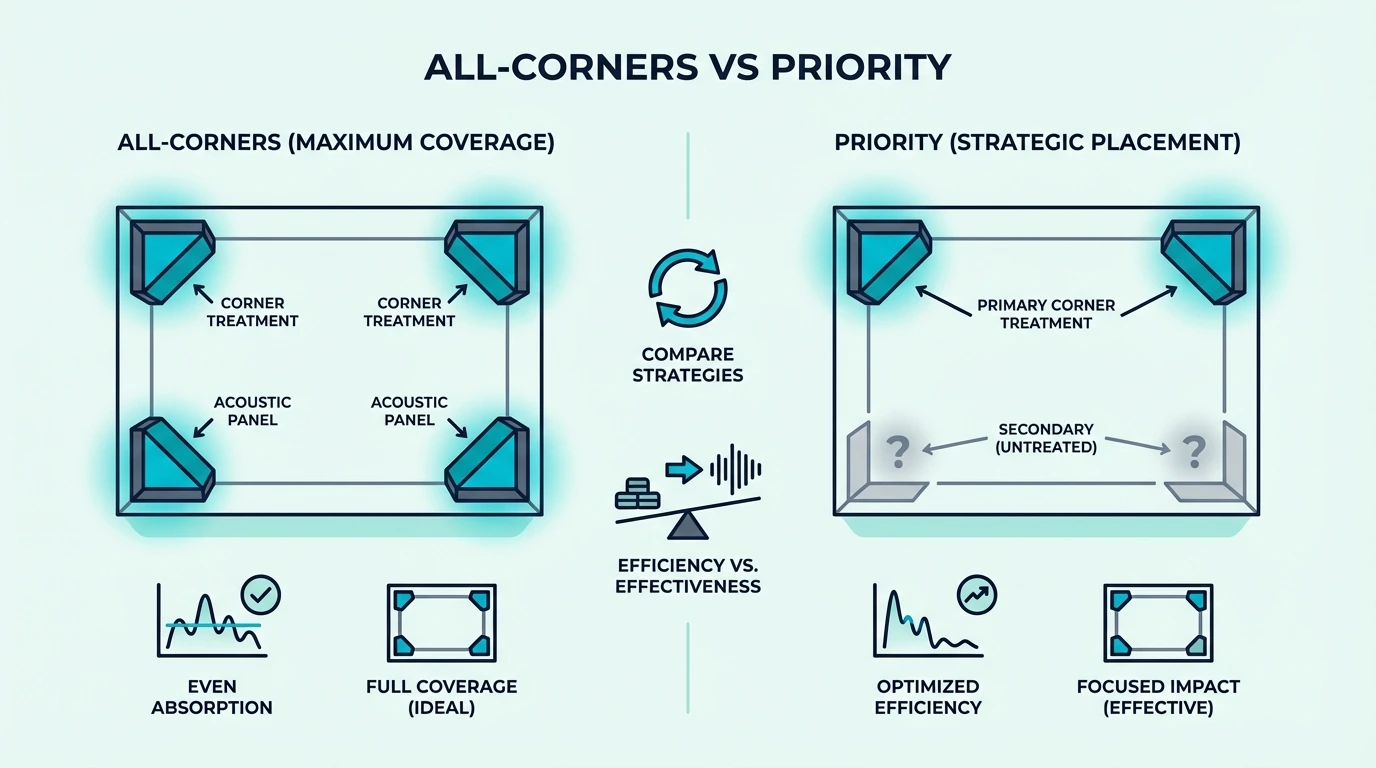
The ideal scenario is bass traps in every corner of the room — all eight tri-corners and all twelve edges. In practice, budget and space constraints force you to prioritize.
Here’s how to get the most impact from limited treatment:
- 4 traps (minimum effective setup): Front wall vertical corners, floor to ceiling. This handles the most critical bass buildup for mixing and listening.
- 8 traps (strong setup): Front wall corners + rear wall corners, all floor to ceiling. Treats all vertical corner modes.
- 12+ traps (comprehensive): All vertical corners + wall-ceiling edges along the front and sides. Covers the majority of modal energy in the room.
The front corners matter more than the rear because your monitors excite the front wall first, and the direct reflections from the front wall reach your ears before rear reflections. Treating the front wall corners and the wall behind your monitors makes the biggest audible difference in bass accuracy.
For small rooms where every corner trap feels like it’s eating your space, even two floor-to-ceiling traps straddling the front corners make a meaningful improvement. Two traps in the right spots outperform six traps in the wrong spots.
Get Studio Tips Weekly
Join 5,000+ creators getting acoustic treatment advice every week.
No spam. Unsubscribe anytime.How Big Should Bass Traps Be?
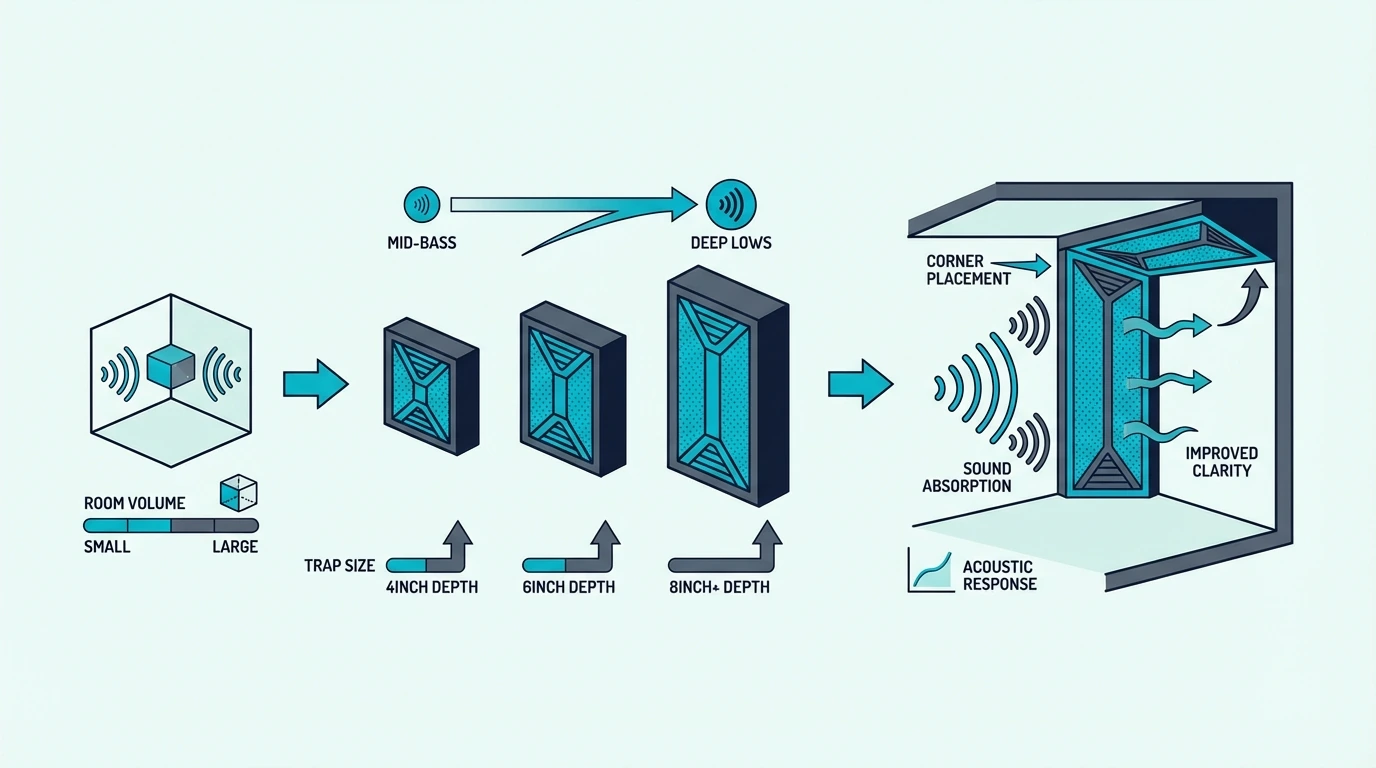
Bigger bass traps absorb lower frequencies more effectively — there’s no way around the physics. The size variables that matter are thickness (depth), height, and width.
Thickness is the most critical dimension — a 4-inch thick trap is the minimum for meaningful bass absorption when corner-mounted. Six inches reaches deeper into the bass range, and superchunk fills (17+ inches of triangular insulation filling the entire corner) provide the broadest low-frequency coverage.
Height determines how much of the corner’s modal energy the trap intercepts — floor-to-ceiling traps capture all vertical modes at that corner. A 4-foot trap mounted at ear height only treats the modes it physically overlaps with, missing the lowest modes that concentrate near the floor and ceiling.
Width (face dimension) matters for how much of the corner the trap spans. A 24-inch wide panel straddling a corner at 45 degrees creates a deeper effective air gap than a 12-inch panel, extending low-frequency reach.
How High Should Bass Traps Be?
Floor-to-ceiling installation is the gold standard for bass traps. This ensures the trap intercepts every room mode at that corner regardless of frequency, since different modes have pressure maxima at different heights.
If full-height installation isn’t possible, position traps at the top of the wall (touching the ceiling) rather than centered on the wall. Bass energy is often strongest in the tri-corners near the ceiling because heat rises and creates convection-driven pressure patterns that compound with modal pressure.
A partial-height trap (4 feet) mounted at the ceiling line outperforms the same trap centered at ear height for pure bass absorption. For combined bass and mid-frequency treatment at the listening position, a full-height approach covers both.
How Far Should Bass Traps Be From The Wall?
An air gap between the bass trap and the wall significantly increases low-frequency absorption. The air gap extends the effective acoustic depth of the trap without adding more material.
A 4-inch trap with a 4-inch air gap behind it absorbs roughly as well as an 8-inch trap flush-mounted. The air gap works because sound velocity is highest away from boundaries — the trap material sitting in this high-velocity zone converts more energy to heat.
The optimal air gap is 2-4 inches for most installations — beyond 4 inches, returns diminish and the trap begins to protrude too far into the room. Corner-straddled traps naturally create an air gap (the space behind the angled panel), which is one reason corner mounting is so effective.
Does Bass Trap Placement Need To Be Symmetrical?
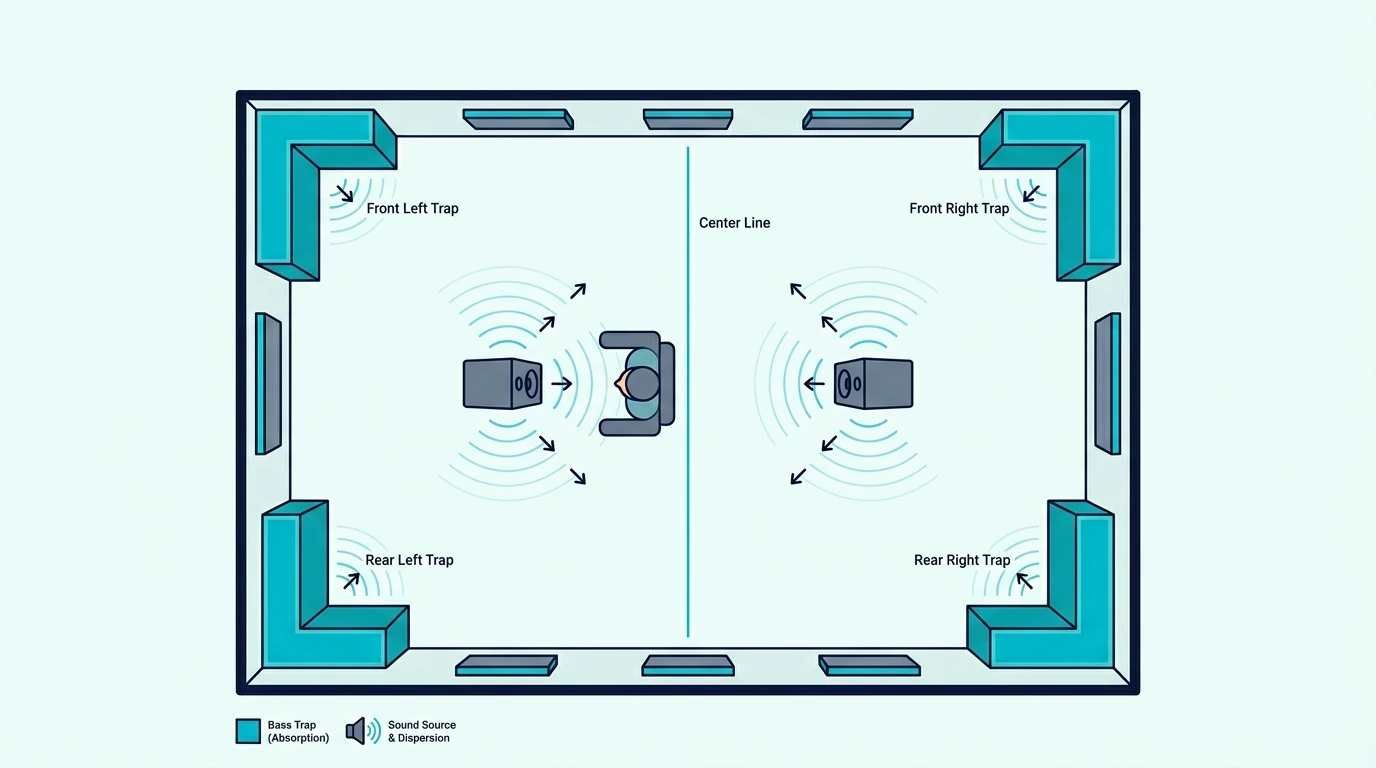
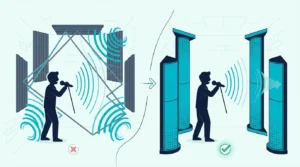
Symmetrical bass trap placement matters if you’re mixing music or doing any work that requires accurate stereo imaging. Asymmetric treatment causes one side of the room to absorb differently than the other, shifting the perceived stereo center.
For critical listening rooms (mixing studios, mastering suites), place traps symmetrically — what’s in the left front corner should match the right front corner. This applies to the number of traps, their size, and their position.
For home theaters, podcast rooms, and casual listening spaces, symmetry is less critical — bass mode reduction benefits your room regardless of whether the left and right sides match perfectly. Treat wherever you can, even if the result is asymmetric.
One exception: if your room is physically asymmetric (one wall has a large window, the other is solid drywall), you may need asymmetric treatment to compensate. The wall with the window reflects bass differently than the solid wall, and matching treatment levels may require different trap quantities on each side.
Bass Traps In Front Or Back Of The Room?
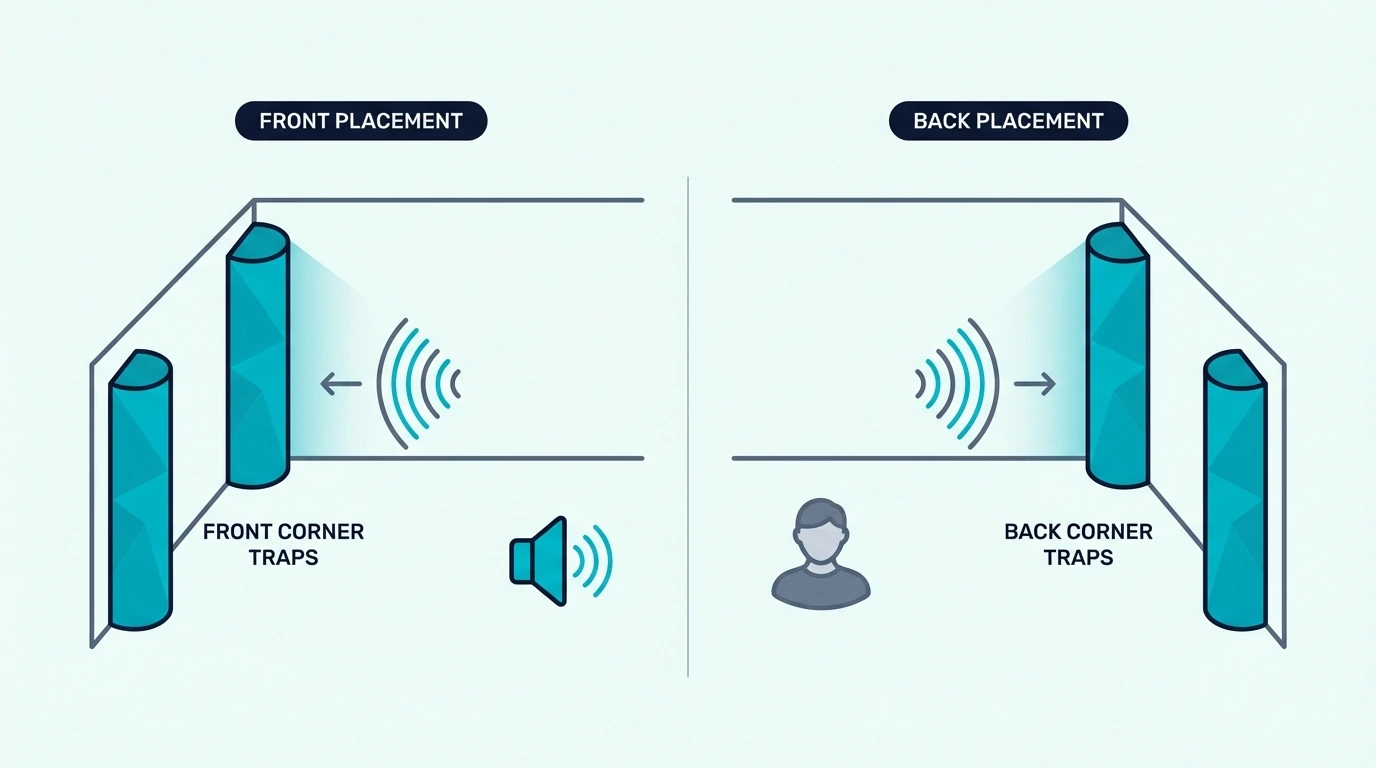
If you have to choose between front and back, treat the front wall first — especially behind and around your monitors. The front wall is the closest boundary to your speakers, and it creates the strongest early bass reflections that interfere with your direct sound.
The rear wall deserves treatment next because bass that passes your listening position reflects off the back wall and returns, creating a second set of interference patterns. Rear wall corner traps clean up this reflected energy.
A balanced approach distributes treatment between front and back: 60% of your traps on the front wall corners and edges, 40% on the rear. This ratio addresses both the initial reflections from the front wall and the return reflections from the rear.
Side wall corners are the third priority. They address lateral modes (width-based standing waves) that are typically higher in frequency than length-based modes and often partially handled by furniture, bookshelves, and other room contents.
For DIY builders on a budget, start with two corner traps on the front wall. Add rear corners next, then install ceiling edge traps last.
The Bottom Line
Bass traps placement follows a clear priority: tri-corners first, then vertical wall-wall corners, then wall-ceiling edges. Front wall corners matter most for mixing accuracy, and an air gap behind each trap extends low-frequency absorption without adding thickness.
Symmetrical placement preserves stereo imaging for critical listening. If budget is limited, four floor-to-ceiling traps in the front corners deliver the single biggest improvement in bass accuracy you can make to any room.
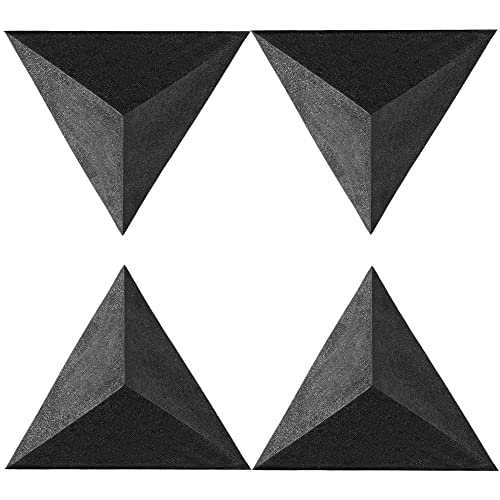
The 4 Pack Bass Traps for Ceiling Corner gives you a starting point for corner treatment on a budget.
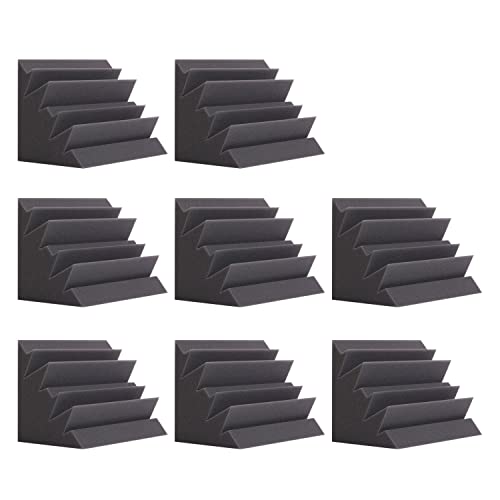
For broader coverage across more corners, the 8 Pack Bass Traps Acoustic Foam Corner covers multiple positions in a single purchase.
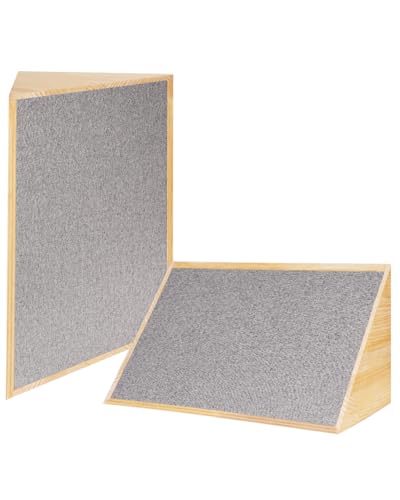
For the best absorption in corner positions, the 2 Pack Wooden Acoustic Bass Traps provide superior performance with their wooden construction.
Frequently Asked Questions
How thick should bass traps be?
Bass traps should be at least 4 inches thick for meaningful low-frequency absorption when mounted in corners. Six inches reaches lower frequencies, and superchunk fills (17+ inches) provide the deepest broadband bass absorption available from porous materials.
Should bass traps go in middle or top corners?
Top corners (where the wall meets the ceiling) are more effective than mid-wall positions because they’re tri-corner or edge locations where bass pressure is highest. If using partial-height traps, mount them touching the ceiling rather than centered on the wall for maximum bass absorption.
Do Auralex bass traps work in corners?
Auralex LENRD bass traps and similar foam corner traps work for mid-bass frequencies (200-500 Hz) when placed in corners but don’t reach as low as denser fiberglass or mineral wool alternatives. They’re a good starting point for treating upper bass muddiness, though rooms with severe low-frequency modes need thicker, denser treatment.