What Is A Sound Bar — Types, Differences, and How To Choose
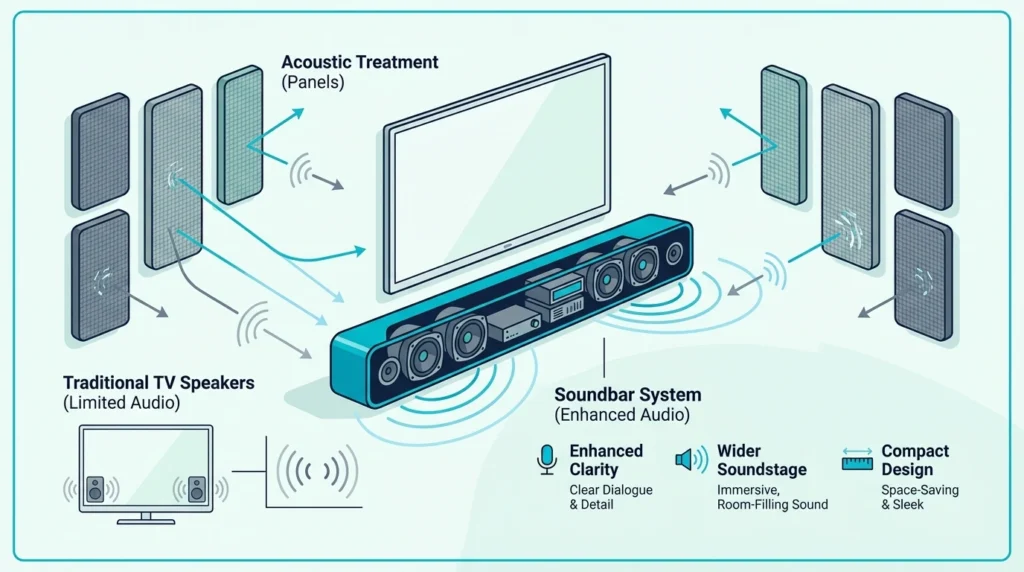
What is a sound bar? It is the easiest upgrade for weak TV audio, but it only pays off when you choose the right type for your room instead of buying whatever bar looks popular.
Most flat-screen TVs sound thin because their speakers are tiny, downward-firing, and trapped inside cabinets with almost no room to move air.
That is why dialogue gets buried, explosions feel flat, and turning the volume up often makes the sound harsher instead of clearer.
The right soundbar fixes that with cleaner voices, a wider front soundstage, and more satisfying bass without forcing you into a full home theater build.
Even a simple bar can be a big improvement when it matches the way you actually watch TV.
Start by separating the main types: compact bars, all-in-one bars, soundbars with subwoofers, and more immersive 3.1, 5.1, or Dolby Atmos models.
Once those differences are clear, choosing the right soundbar gets much easier.
This guide explains what a soundbar actually is, what the main types do differently, and which kind makes sense for your space and habits.
A soundbar is a compact TV speaker system that improves dialogue clarity, front soundstage width, and bass compared with built-in TV speakers. The most helpful way to shop is by type: compact bars suit basic upgrades, all-in-one bars suit cleaner setups, bars with subwoofers suit movie lovers, and 3.1, 5.1, or Dolby Atmos models suit buyers who care more about dialogue focus or immersion.
What a Soundbar Replaces and How It Works
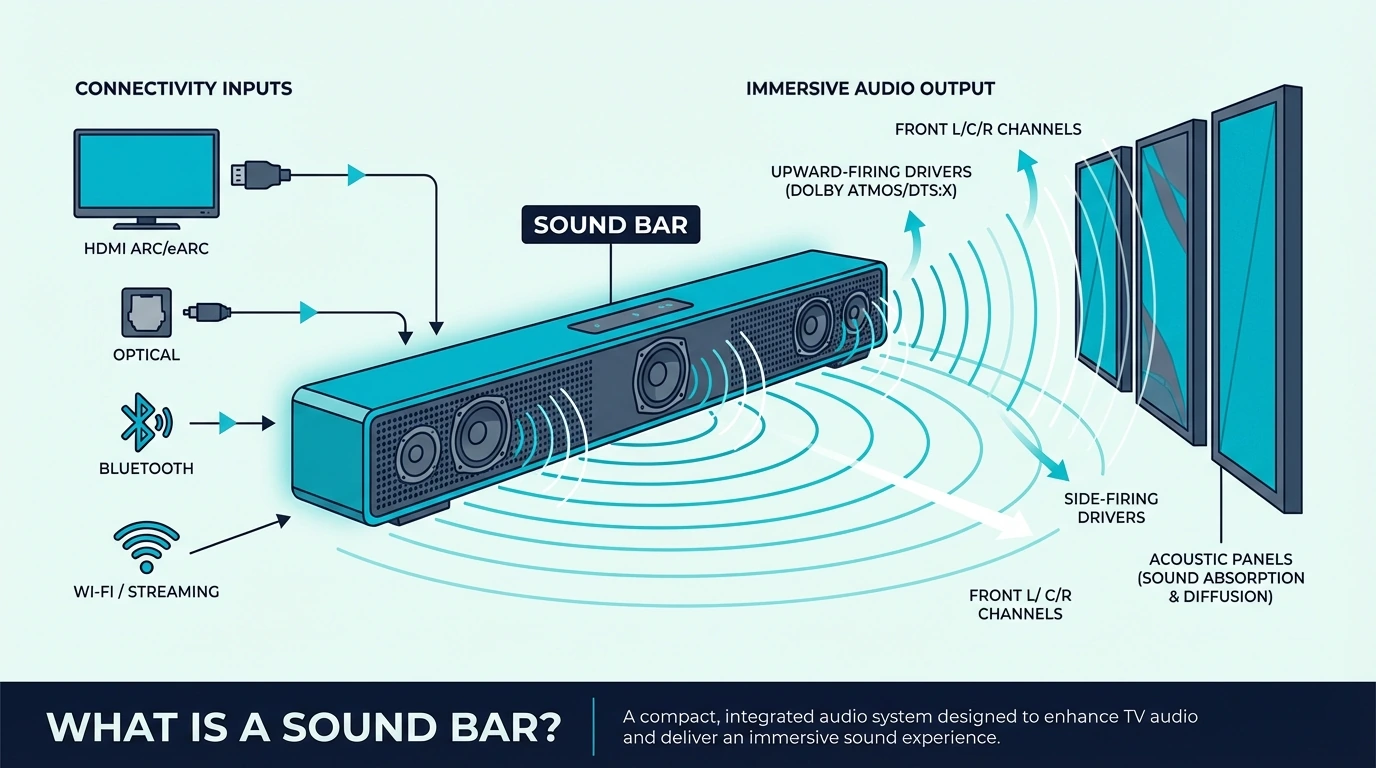
That question matters because a soundbar is not just one long speaker under a TV.
It is a category of TV-audio products built around the same goal — making weak TV sound better — but there are major differences in how each type handles dialogue, bass, surround effects, and setup complexity.
What A Soundbar Replaces
A soundbar replaces the part of a TV setup that is usually weakest: the built-in speakers hidden inside a thin panel.
Those speakers are often pointed downward or backward, so the sound reflects off furniture and walls before it reaches you.
That is why many people describe TV audio as distant, boxy, or hard to follow.
A soundbar moves the speakers into a better position and creates a wider front soundstage that is much closer to what your ears expect when voices are supposed to come from the screen.
How A Soundbar Works
Inside the cabinet, a soundbar uses multiple drivers instead of the tiny pair built into your TV.
Depending on the model, that may mean simple left-right stereo, a dedicated center channel for speech, side-firing drivers for extra width, upward-firing drivers for height effects, or a separate wireless subwoofer for low bass.
That is also why the channel count matters.
If you have never looked at the numbers before, our what soundbar channels mean guide breaks down how 2.0, 2.1, 3.1, and 5.1 soundbars differ in real use.
What A Soundbar Is Not
A soundbar is not soundproofing, and it is not automatically the best audio option for every room.
It is usually the best mix of convenience, footprint, and improvement over TV speakers, but it still sits between bare-TV audio and a larger speaker system.
If you are comparing categories, it helps to see where it fits against traditional speakers, full home theater setups, and doing nothing at all.
That context makes the rest of the buying decision much easier.
Soundbar Types: From Compact Bars to Surround Packages
The most useful way to think about soundbars is by type, not by brand alone. Once you understand the major categories, you can match the bar to the job you actually need it to do.
Compact And 2.0 Soundbars
This is the simplest category. Compact bars and 2.0 bars are built for people who mainly want clearer voices, a cleaner front soundstage, and a small footprint under a bedroom or apartment TV.
If the goal is simply to beat weak TV speakers on a tight budget, a starter model like the Sony S100F represents the kind of soundbar that makes sense for casual TV viewing, smaller rooms, and shoppers who do not want to overcomplicate the upgrade.

Sony S100F
All-In-One Soundbars
All-in-one soundbars keep everything in one cabinet, which means no separate subwoofer on the floor and fewer placement issues around the TV stand.
They work best for buyers who want a cleaner room, a simpler install, and more audio performance than a basic 2.0 bar can deliver.
An all-in-one option like the Bose Smart Ultra shows why this category appeals to so many people: it keeps the setup clean while still giving you wider, clearer TV audio than a cheap bar or built-in TV speakers.
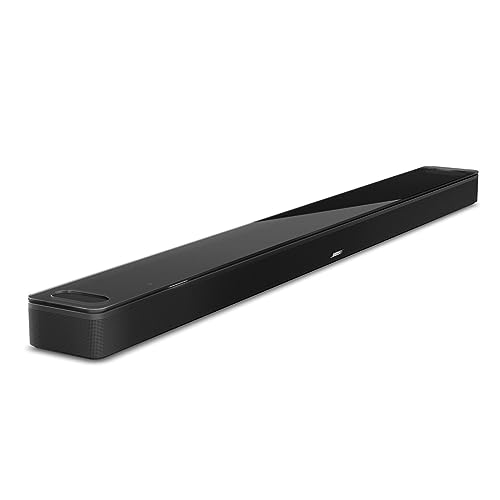
Bose Smart Ultra Dolby Atmos Soundbar
Soundbars With A Subwoofer
Once you add a subwoofer, the upgrade becomes less about simple clarity and more about impact.
Bass-heavy scenes feel fuller, the main bar can focus more on mids and dialogue, and the whole system sounds less strained at higher volume.
A balanced example is the Polk Audio Signa S4, which is the type of system that makes sense for people who watch movies often and want more than a basic dialogue fix.
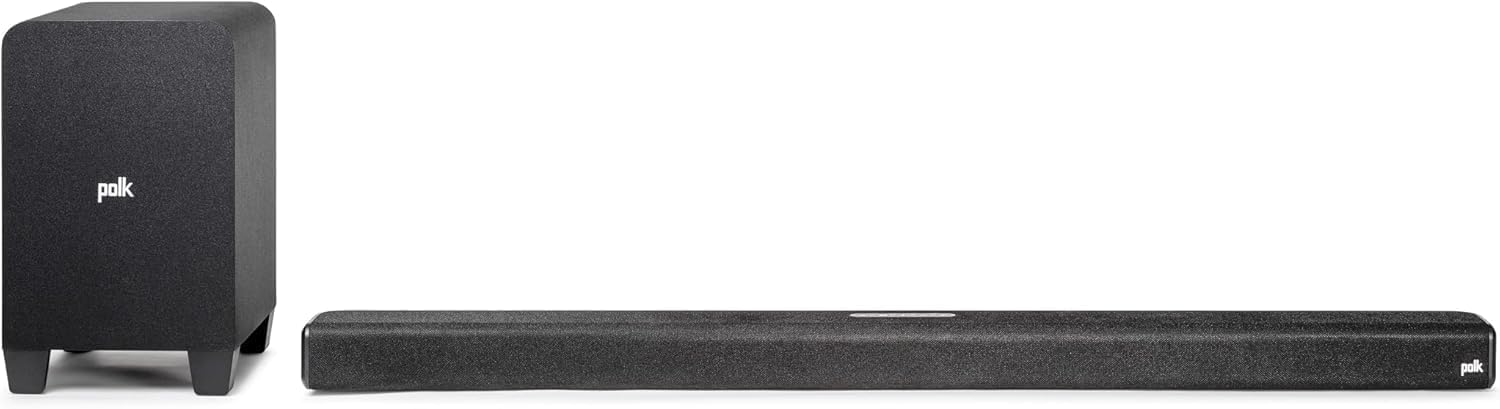
Polk Audio Signa S4
3.1, 5.1, And Dolby Atmos Soundbars
This is the category where soundbars start to separate sharply from each other.
A 3.1 soundbar usually makes the most sense when dialogue clarity is the priority, while 5.1 and Dolby Atmos models make more sense when you care about immersion, action scenes, or gaming effects.
If you want a more immersive step up, a model like the Sony BRAVIA Theater System 6 represents the kind of soundbar that is built for movie nights and bigger living-room expectations rather than basic TV cleanup.
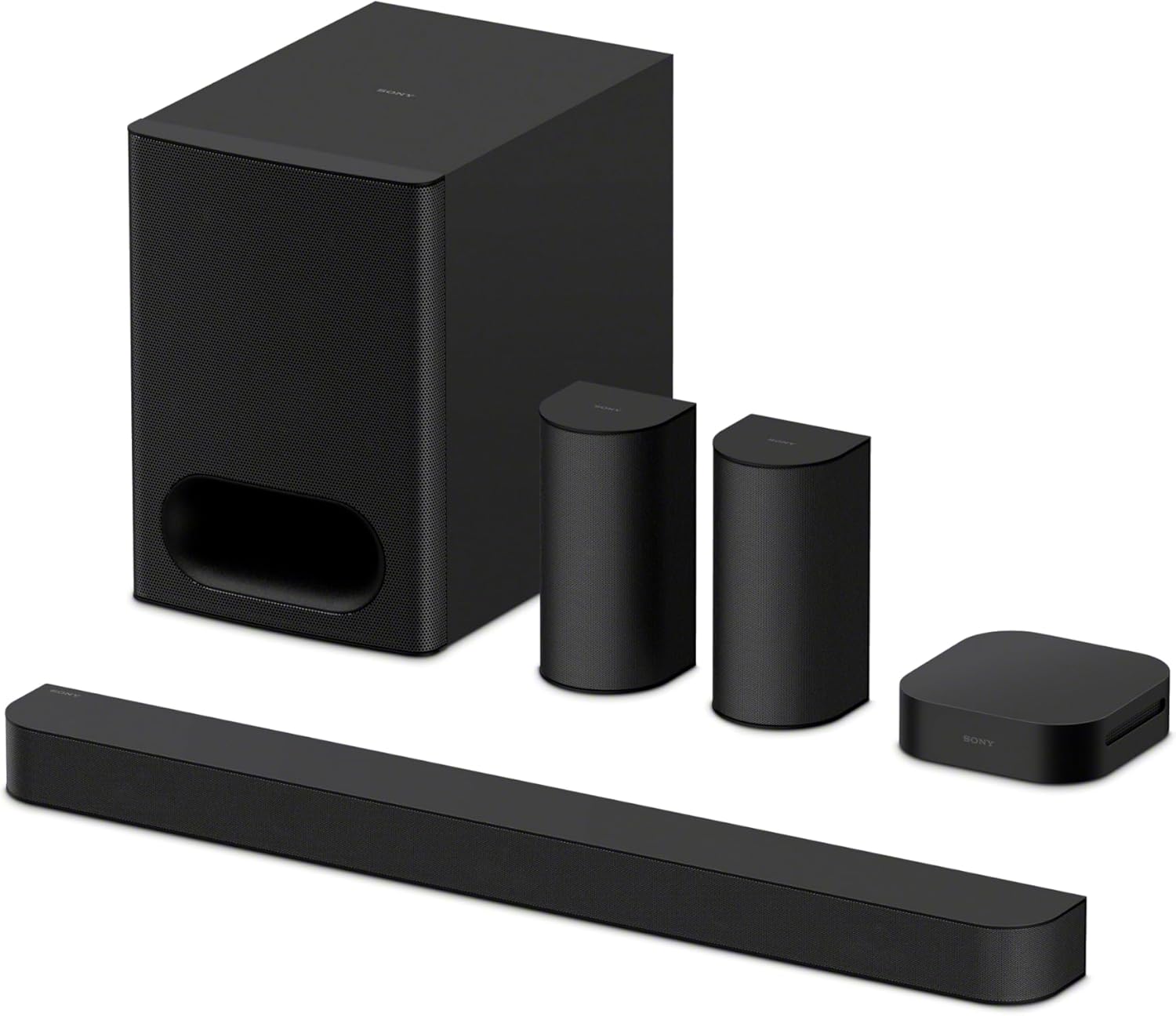
Sony BRAVIA Theater System 6 5.1ch Soundbar
If you want the deeper breakdowns, go next to what soundbar channels mean, 2.1 vs 5.1 soundbar, or Atmos soundbar vs 5.1.
If you are already leaning toward a specific category, the faster paths are best all-in-one soundbar, best soundbar with subwoofer, and best Dolby Atmos soundbar.
Get Studio Tips Weekly
Join 5,000+ creators getting acoustic treatment advice every week.
No spam. Unsubscribe anytime.Matching the Bar to Your Room and Habits
Most buyers do not need the “best” soundbar in the abstract. They need the soundbar that solves the problem they notice every day, in the room they actually have.
Start With The Problem You Want To Fix
If your biggest complaint is dialogue, prioritize a dedicated center channel or strong dialogue mode before you chase fancy marketing terms.
That is why many people are better served by a solid 3.1-style setup or a dialogue-focused bar than by paying for features they will barely notice.
If that is your priority, the next useful page is best soundbar for dialogue.
If your bigger frustration is weak low-end during movies, the more relevant decision is whether you need a subwoofer at all, which is exactly what what a subwoofer does for a soundbar helps clarify.
Match The Bar To The Room
A small bedroom, office, or apartment living room usually benefits more from a compact or all-in-one bar than from a big multi-box setup.
In those spaces, simplicity and easy placement often matter more than chasing the biggest bass or the most channels on the spec sheet.
Medium living rooms are where subwoofer bundles and stronger 3.1 or 5.1 options start to make more sense.
If your space is large, open-concept, or has vaulted ceilings, be especially careful with virtual surround and Atmos claims because the effect depends heavily on room shape and reflection surfaces.
Match The Bar To Your Daily Use
For news, sports, YouTube, and casual streaming, a simple bar often gets you 80 percent of the benefit with far less cost and clutter.
For movies, gaming, and bass-heavy content, the payoff from a subwoofer or a more immersive channel layout becomes much easier to hear.
That is where follow-up guides become more useful than generic specs.
Use how to choose a soundbar if you are still narrowing the category, best soundbar for small room if space is tight, and best soundbar for PS5 or best soundbar for music if your content mix pushes you toward a more specific use case.
When a Soundbar Makes Sense and When It Does Not
The right buyer for a soundbar is usually someone who wants a serious upgrade over TV speakers without turning the room into a full speaker project.
That is why soundbars dominate living rooms, bedrooms, apartments, and shared spaces where simplicity matters almost as much as better sound.
A Soundbar Is Usually The Best Choice When Convenience Matters
If you want one clean box, one HDMI cable, one remote, and a clear improvement on day one, a soundbar is hard to beat.
That is the strongest case for the category, and it is why even people who care about audio quality often choose a soundbar over a more complex setup.
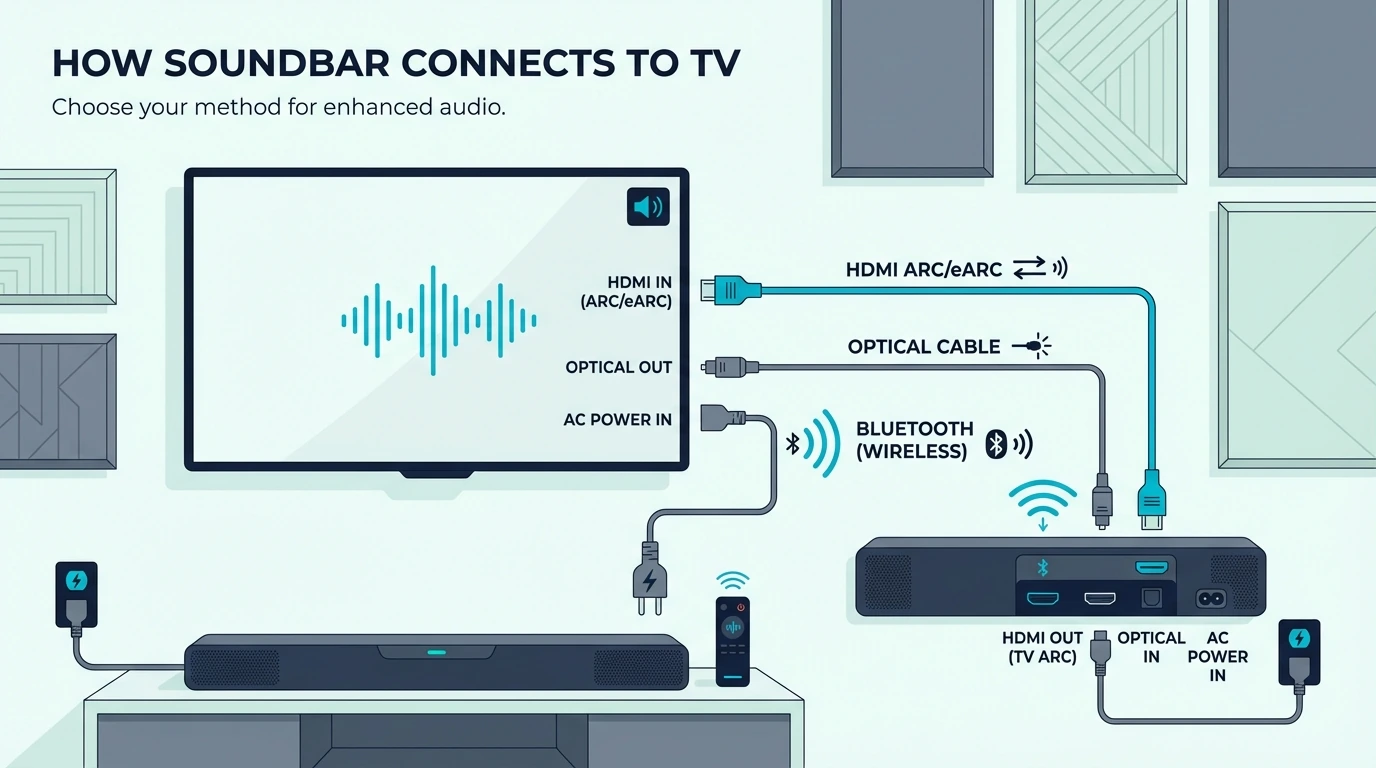
Most modern bars connect through HDMI ARC or eARC, which is the simplest and best starting point.
If your TV setup is the next thing you need to solve, go directly to how to connect a soundbar to a TV or compare HDMI vs optical for a soundbar before you buy cables you may not need.
A Soundbar Is Not Always The Best Choice
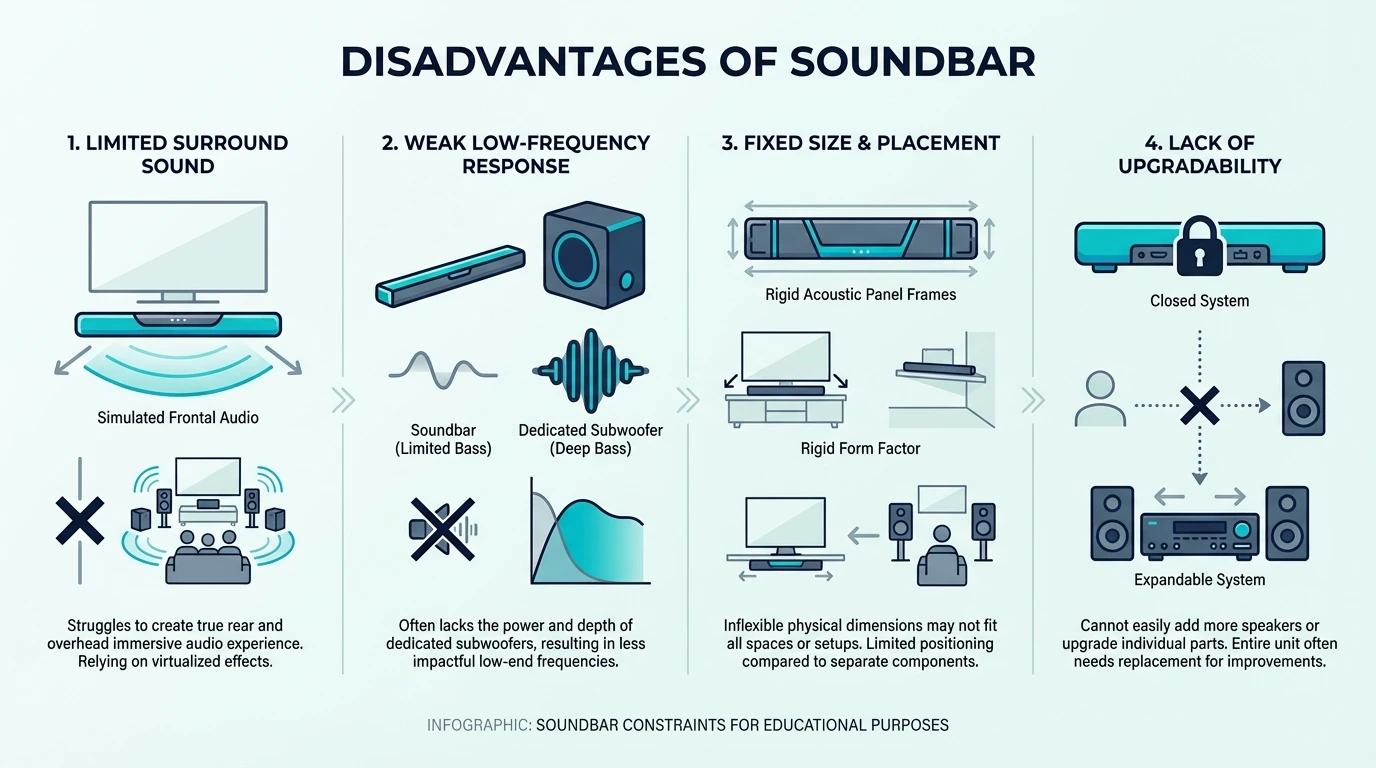
If your main priority is true rear surround, the widest possible stereo imaging for music, or a room-filling theater experience in a large open space, a soundbar has real limits.
Even the good ones are still convenience-first products compared with a properly placed AVR-and-speaker system.
That does not make soundbars bad. It just means you should compare them honestly against surround sound, bookshelf speakers, and home theater systems if you are on the fence.
Your Next Click Should Match Your Intent
If you now understand the category but still need product picks, jump to best soundbar.
If you already know you want a cleaner install, a subwoofer bundle, or stronger dialogue, use the more specific pages linked throughout this guide instead of forcing one article to answer every buying question at once.
That is the real purpose of a hub page like this one. It should help you understand what a soundbar is, separate the major types, and point you to the next decision instead of trapping you in vague advice.
The Bottom Line
A soundbar is the fastest practical way to improve TV audio, but the useful answer is not just knowing what a soundbar is.
The useful answer is knowing which type of soundbar fits your room, your habits, and your tolerance for extra boxes.
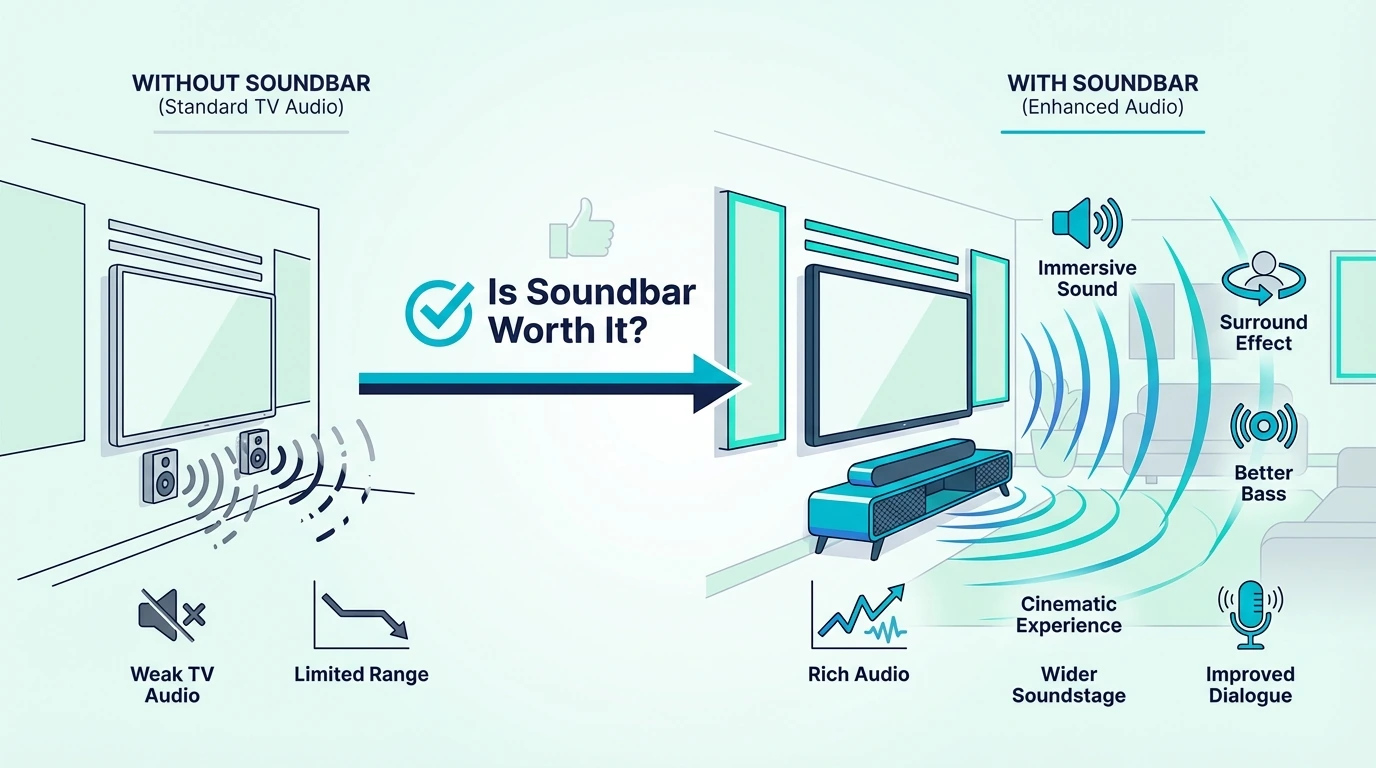
If you still need help deciding whether the category makes sense at all, start with is a soundbar worth it.
If you are ready for product picks, go to best soundbar or one of the more specific buyer guides linked above.
Frequently Asked Questions
What is a sound bar in simple terms?
A soundbar is a compact speaker system made to replace your TV’s built-in speakers. It sits below or near the TV and improves dialogue clarity, front soundstage width, and bass compared with most flat-panel TVs.
What are the main types of soundbars?
The main types are compact or 2.0 soundbars, all-in-one soundbars, soundbars with a separate subwoofer, and more advanced 3.1, 5.1, or Dolby Atmos soundbars.
Each type suits a different balance of simplicity, bass, dialogue focus, and immersion.
Is a soundbar worth it if I already have a smart TV?
Usually, yes. A smart TV changes the apps and features you can access, but it does not change the fact that most TV speakers are physically limited by the thin cabinet.
What type of soundbar is best for dialogue?
The best type for dialogue is usually a soundbar with a dedicated center channel or a strong dialogue enhancement mode.
That is why many people who care most about speech clarity end up preferring 3.1-style models or dialogue-focused bars over flashy spec-sheet upgrades.