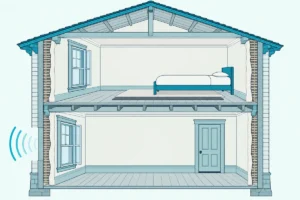
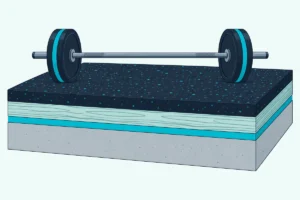
Best Carpet for Soundproofing (Pile, Pad and What It Can’t Block)
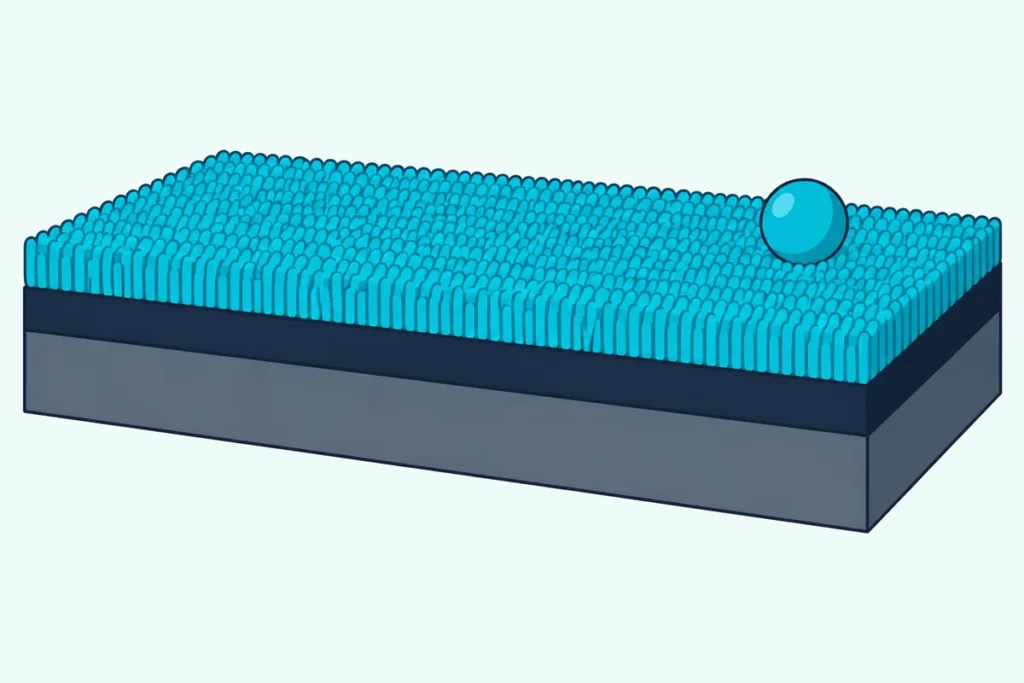
Picking the best carpet for soundproofing means choosing two layers, the pile you walk on and the cushion under it, and lab tests rank them differently for footsteps and for echo.
Maybe the people downstairs hear every step, or a bare room makes each voice ring, and a store tag that says soundproof never says which of those problems a roll will fix.
Get the pairing right and the lab ratings show a bare concrete floor’s footstep score more than doubling, while the same carpet soaks up part of the echo in your room.
This guide ranks pile, weight and cushion using the Carpet and Rug Institute’s tests, Canada’s National Research Council floor research and a 2023 lab pair that set carpet against wood.
The short answer comes first, then the numbers behind each choice and the one kind of noise no carpet stops.
What Is the Best Carpet for Soundproofing?
Those two layers have a clear winner for footsteps: a heavy carpet over a sponge rubber or foam rubber cushion. In the Carpet and Rug Institute’s tests on a concrete slab, a 44-ounce wool carpet on those cushions rated IIC 79 to 80, where the bare slab rated 34 (CRI).
IIC, the impact insulation class, rates how well a floor keeps footsteps and dropped objects from reaching the room below, and higher is better. The same bulletin rated each cushion for echo too:
| Cushion under the carpet | Footsteps (IIC on a slab) | Echo (NRC) | What it’s best at |
|---|---|---|---|
| None | 68 | 0.35 | The carpet alone does most of the work |
| 40-ounce hair-jute | 73 | 0.60 | Echo more than footsteps |
| Polyurethane foam | 76 | Not tested | A middle choice for footsteps |
| 44-ounce sponge rubber | 79 | 0.45 | Footsteps first |
| 3/8-inch foam rubber | 79 | 0.60 | The best all-rounder |
| 80-ounce sponge rubber | 80 | 0.50 (86-ounce) | The top footstep score |
The footstep column used a 44-ounce woven wool loop carpet and the echo column a 40-ounce tufted wool loop, so compare down each column rather than across. Foam rubber is the pick if you want both, since it landed within a point of the top footstep score and matched hair-jute’s echo rating.
If wall-to-wall carpet isn’t an option, our guide to the best floor soundproofing for hard surfaces compares underlayments instead.
Does Carpet Soundproof a Room or Just Quiet It?
Those ratings show carpet doing two jobs well and missing a third. It cuts impact noise heading to the room below, which is soundproofing, and echo inside your room, which is acoustic treatment, but it does little for airborne sound such as voices, music and TV passing through the floor.
So a roll sold as soundproof carpet is really an impact and echo product.
Each job has its own rating. IIC covers impact noise, and STC, the sound transmission class, covers airborne sound passing through a floor or wall.
NRC, the noise reduction coefficient, measures sound absorption: the share of sound a surface soaks up, averaged over four bands from 250 to 2,000 Hz. A carpet and cushion rated NRC 0.55 absorbs about 55 percent of the sound that strikes it, as the foam industry’s brochure on a carpet cushion test puts it.
A 2023 lab pair shows the split cleanly. Veneklasen Associates tested one wood-truss floor for MiTek twice, first with 8.3 mm engineered wood and then with Shaw carpet over a 9.5 mm pad, and the footstep rating jumped from IIC 51 to 72 while the airborne rating slipped from STC 54 to 53 (lab report).
Get Studio Tips Weekly
Join 5,000+ creators getting acoustic treatment advice every week.
No spam. Unsubscribe anytime.Which Carpet Pile Absorbs the Most Sound?
That echo side of the job depends mostly on the pile. In the Carpet and Rug Institute’s tests, cut pile beat loop pile of the same weight and height, NRC 0.35 to 0.30, because cut pile gives the surface more “fuzz,” in the bulletin’s word.
Taller pile helped too. Loop carpets of one weight rose from 0.15 at 1/8 inch to 0.35 at 7/16 inch, and tall cut piles laid straight on concrete reached 0.50 to 0.55.
Weight alone stopped helping at some point. Heavier loop pile at the same height “topped out,” and in cut pile, more weight or height didn’t change the rating much.
Fiber mattered less than construction. Three tall cut piles of 32 to 43 ounces, in nylon, acrylic and wool, measured 0.50, 0.50 and 0.55, so the wool carpet’s edge in this series was 0.05.
How Much Does Pile Weight Matter for Footsteps?
That fuzz helps the echo, but weight matters far more for footsteps. With no cushion, the institute’s seven carpets on a concrete slab rated IIC 53 to 70, and the order followed pile weight, from a 20-ounce loop at 53 to a 60-ounce loop at 70.
Every one of them cleared IIC 50, which Canada’s National Research Council calls the usual minimum for satisfied residents (NRC Canada, AIVC copy). The council’s own table puts a 150 mm slab with carpet and underlay at about 75 to 85, against 35 to 40 with vinyl and 30 to 35 with hardwood laid on the concrete.
So when two carpets look alike in the store, ask for the pile weight in ounces per square yard, which some sheets call face weight. The heavier one is the better footstep pick, all else equal.
Which Carpet Pad Is Best for Soundproofing?
Pile weight sets the baseline, and the cushion adds the rest. Under the same 44-ounce carpet on concrete, every cushion the institute tried raised the footstep rating, from 68 with no cushion to 73 with hair-jute and 80 with 80-ounce sponge rubber.
The catch is that the best footstep cushions weren’t the best absorbers. Sponge rubber, the weakest cushion for echo, scored highest for footsteps, while breathable hair, hair-jute and foam rubber let more sound into the cushion and lifted the echo rating.
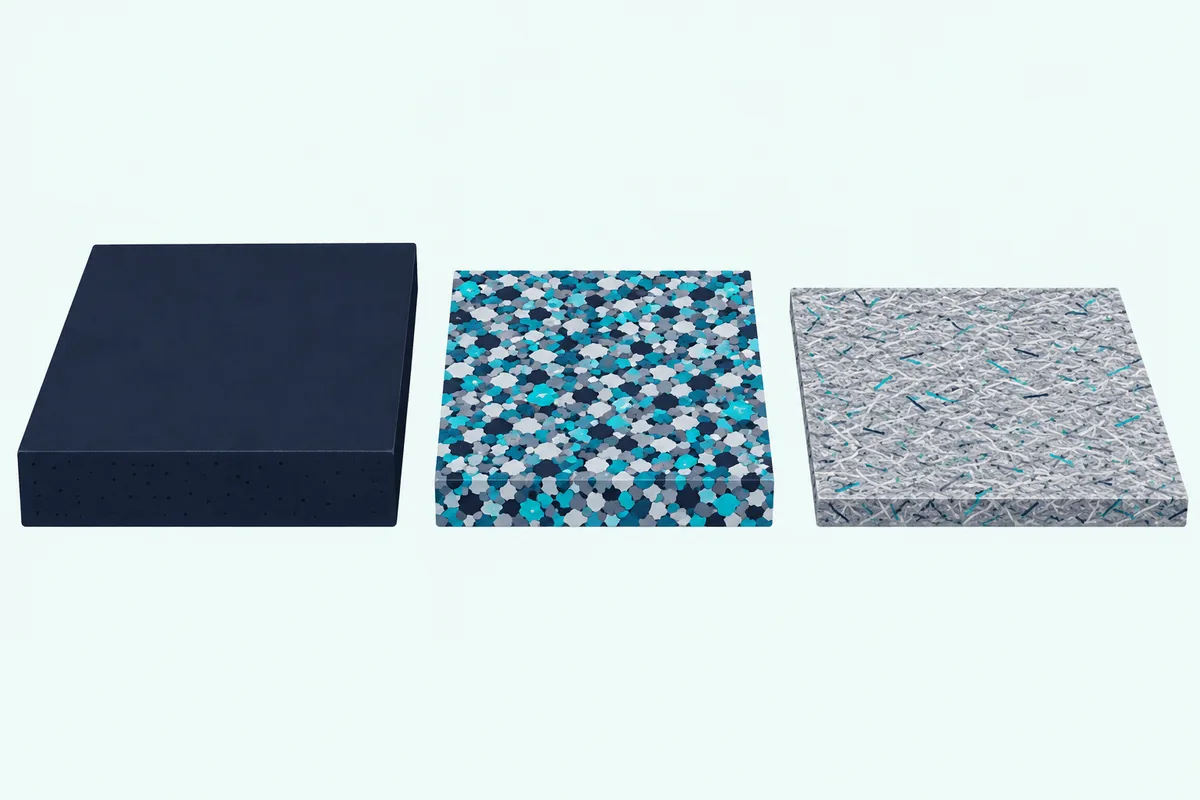
Thicker cushion helps within one material. Dura Undercushions, a Montreal maker of recycled rubber cushion, had Intertek test its cushions under 12 mm carpet on a 6-inch slab with a ceiling grid, and the IIC rose from 81 at 5 mm to 84 at 6 mm, 85 at 7 mm and 91 at 10 mm (Dura brochure, distributor Goodfellow’s copy).
Those are the maker’s numbers, on a slab and ceiling grid that rated 40 on their own, so they can’t sit beside the institute’s bare-slab results. The trend still matches the institute’s: more cushion, quieter footsteps below.
In the UK the same layer is sold as carpet underlay, so a soundproof carpet underlay follows the same rules.
Foam cushion sheets list density in pounds per cubic foot, and Future Foam’s 8-pound, 7/16-inch cushion for Home Depot lists IIC 73 and STC 52 on its sheet. That sheet doesn’t name the floor, ceiling or carpet behind those numbers.
In a commercial test the Carpet Cushion Council and the foam industry’s alliance commissioned from Intertek, a bonded polyurethane cushion took a 36-ounce cut pile from NRC 0.25 to 0.55. On a slab that rated IIC 19 bare, the same pair went from 58 to 69.
Why Can You Still Hear Voices Through Carpet?
Those cushion gains are footstep gains, and they barely touch airborne sound, which is why voices and TV still come through a carpeted floor. In the MiTek pair, carpet and pad weighed about 2.6 kg per square meter against 7.3 kg for the engineered wood, and the STC stayed put at 53 against 54.
Canada’s National Research Council makes the same point about joist floors: carpet and pad can give a high IIC while the floor still has a low STC. The council names what improves airborne control under a floor: heavier gypsum board, a deeper cavity and more sound-absorbing material in it.
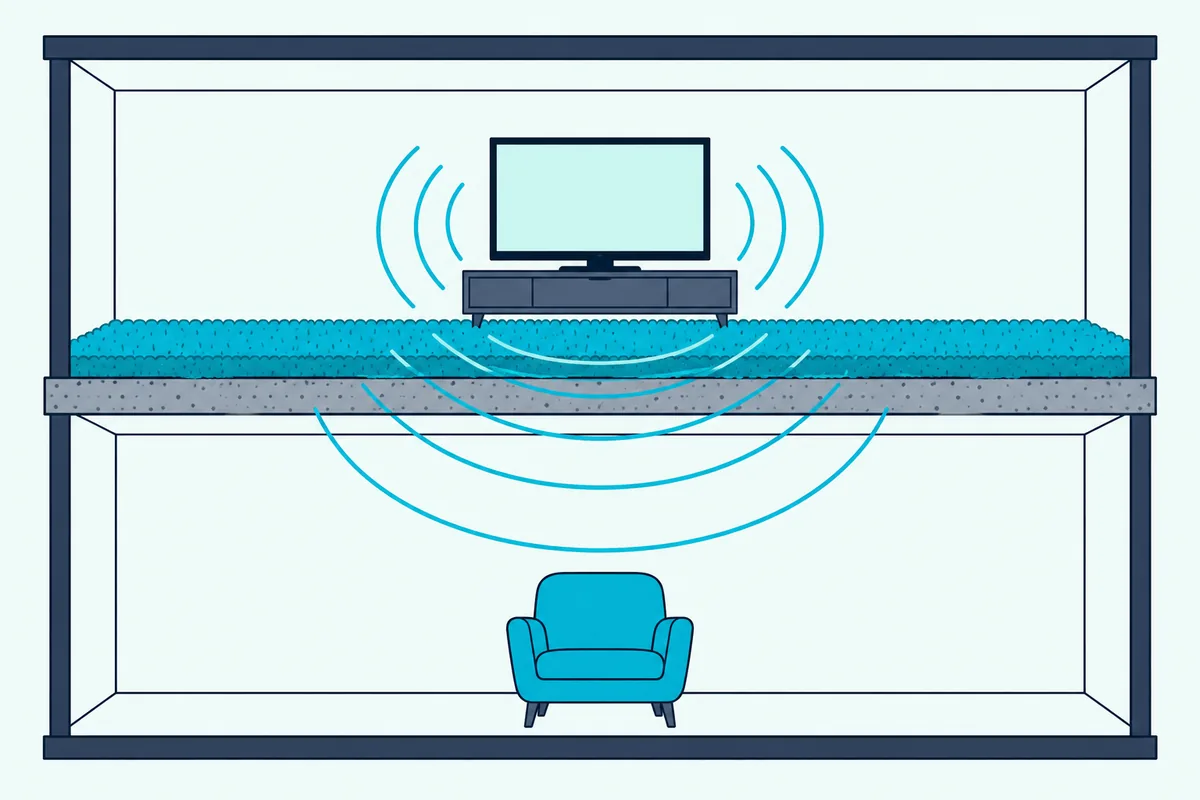
Those three are ceiling jobs, and our walkthrough of fixes between floors and ceilings covers the ceiling side. Inside your own room, carpet still changes how voices sound, since a floor that absorbs part of each reflection sends less of it back as echo.
Does Carpet Work on a Wood-Joist Floor?
That joist-floor warning deserves its own look, because carpet still helps footsteps there. On the institute’s joist floor with a 5/8-inch plywood subfloor, the bare floor rated IIC 32 and carpet over cushions rated 61 to 68.
The ratings ran lower than on concrete for the same carpets, and they miss the deep thud of a heavy step. ASTM’s tapping-machine method says it doesn’t simulate a walker’s weight, so the creaks and booms of a floor aren’t in the number (ASTM E492).
The MiTek reports put a figure on that thud. When carpet replaced the engineered wood, their low-frequency rating, LIIC under ASTM E3207, rose 12 points on the open-web truss and 18 on a second truss type, while the high-frequency rating jumped 30 or more.
The National Research Council adds that a light joist floor with carpet and pad can still draw thumping complaints if its layers lack mass. If you’re the one downstairs, our guide to soundproofing an apartment from upstairs neighbors covers what to ask for and what you can change.
Are Carpet Tiles Good for Soundproofing?
Carpet tiles follow the same rules as rolled carpet, with the backing doing the cushion’s job. Tarkett says carpet in general cuts impact sound by 20 to 30 decibels, against 5 to 10 for other floor coverings, and its felt SoundMaster backing adds 8 decibels above the standard value, in Tarkett’s words.
That backing also lifts absorption by up to 0.15 on the European αw scale, from the 0.15 to 0.20 Tarkett gives for standard carpet designs. The institute saw the same effect in loop carpet, where a foam back beat a regular back at every pile height it compared.
So ask for a cushioned or acoustic backing, and treat a tile without one like carpet laid with no cushion.
Can a Rug and Pad Stand In for Wall-to-Wall Carpet?
Tiles and rolled carpet both cover the whole floor, and that coverage is what every lab rating here assumes. None of these sources rated an area rug, so a rug’s footstep benefit is unmeasured, and it can only help where it lies.
The cushion logic carries over to rug pads. Rubber did best for footsteps in the institute’s tests and breathable cushions did best for echo, so pick the pad by the problem and cover the walking paths.
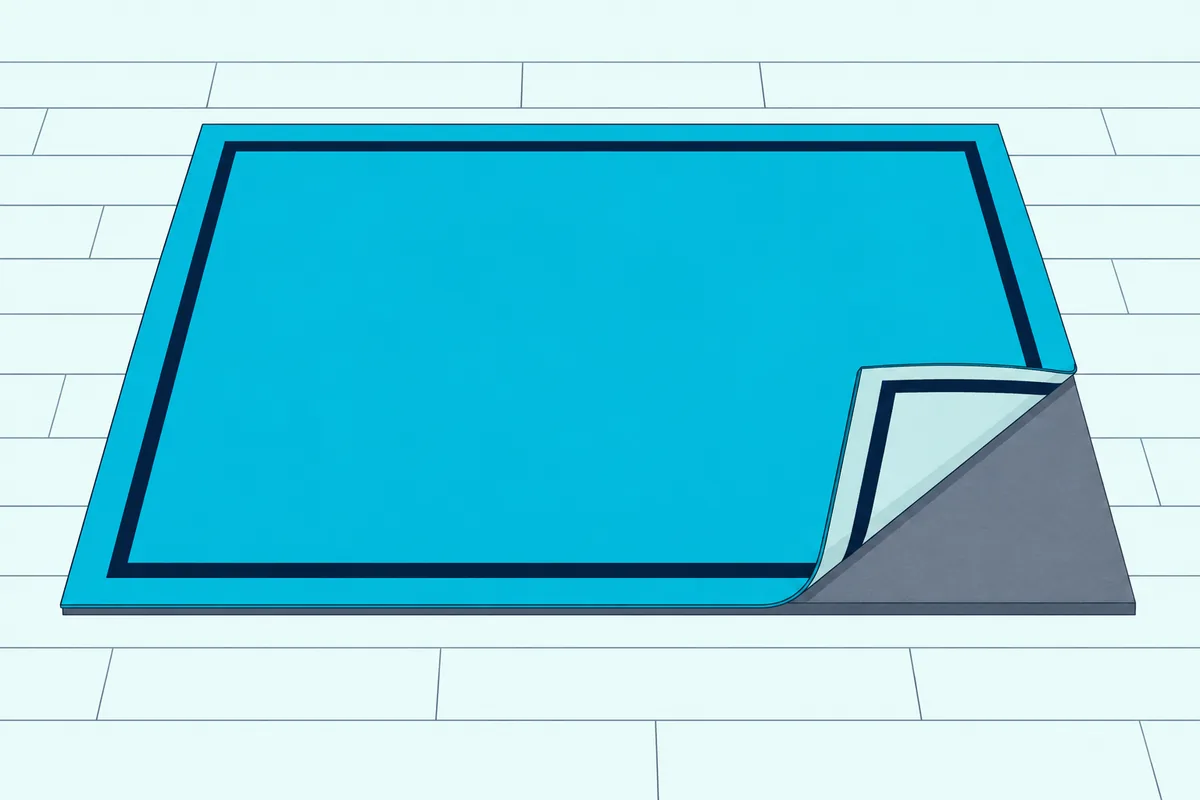
A pad sold as soundproof without an IIC, a test floor and a lab name is a claim you can’t check. For echo in a hard-floored room, Burton Acoustix’s guide to rugs as acoustic treatment covers placement and coverage.
How Should You Read IIC and Decibel Claims on a Pad?
Rug pads aren’t the only products with loose sound claims, so check any number against the floor it came from. An IIC rates a whole floor-ceiling assembly: Dura’s base floor rated 40 on its own, while the institute’s bare slab rated 34 and the Carpet Cushion Council’s 19.
That’s why the same carpet can post different numbers in different labs. Delta IIC, from ASTM E2179, is the fairer comparison, since it measures only what a covering adds on a standard concrete floor.
European and UK sheets rate impact in decibels instead, as Tarkett’s ΔLw does, where a bigger number means more reduction. And an STC on a cushion sheet mostly describes the floor underneath, since the MiTek pair shows carpet barely moving it.
Which Carpet Setup Fits Your Floor?
Those numbers point to one setup for each situation:
| Your situation | Best setup | Why |
|---|---|---|
| Upstairs unit on a concrete slab | Heavy carpet over sponge or foam rubber | IIC 79 to 80 against 34 bare (CRI) |
| Wood-joist house, footsteps below | Carpet over the thickest dense cushion allowed | IIC 61 to 68 against 32 bare; low thuds remain |
| Echo in your own room | Cut pile over a breathable cushion | NRC up to 0.70 (CRI) |
| Voices or TV through the floor | Carpet won’t fix it; work on the ceiling below | STC 54 with wood, 53 with carpet (MiTek) |
| Renting, or a hard floor you keep | Large rug over a dense pad on walking paths | Untested; it helps only where it lies |
| Office or basement tiles | Tiles with a felt or cushion backing | 8 dB more impact reduction (Tarkett) |
Read the last column as the reason, not a promise, since each figure comes from its own test floor.
The Bottom Line
All of that comes down to one rule: the best carpet for soundproofing footsteps is the heaviest pile you’ll accept over a sponge rubber or foam rubber cushion, which took a slab from IIC 34 to 79 or 80 in the Carpet and Rug Institute’s tests. For echo, choose cut pile over a breathable cushion.
Carpet won’t stop voices or TV moving through a floor, so pair it with work on the ceiling below when airborne noise is the complaint.
Frequently Asked Questions
Does thick carpet reduce noise?
Yes, mostly impact noise and echo. In the Carpet and Rug Institute’s slab tests, heavier pile scored higher with no cushion, from IIC 53 for a 20-ounce loop to 70 for a 60-ounce loop, and taller loop pile absorbed more sound. Thickness under the carpet counts too: Dura’s rubber cushions rose from IIC 81 at 5 mm to 91 at 10 mm on the maker’s test floor. Thickness doesn’t fix airborne noise, though, since carpet and pad left a tested wood-truss floor at STC 53, where engineered wood had scored 54.
Do carpets reduce noise when talking?
Inside the room, yes: carpet absorbs part of the sound that would bounce off a hard floor, so speech sounds less echoey. Carpet laid on concrete rated NRC 0.15 to 0.55 in the institute’s tests, and up to 0.70 over a breathable cushion. Through the floor, no: in the 2023 MiTek tests, carpet and pad left the airborne rating at STC 53 where engineered wood had 54, so people below hear voices about as well as before.
How do you block out 100% of noise?
Not with carpet, and none of the sources here describes a floor that blocks all of it. For airborne sound through a floor-ceiling assembly, Canada’s National Research Council names heavier gypsum board, a deeper cavity and more sound-absorbing material as what helps, and it calls resilient mounting of the ceiling’s gypsum board essential for impact sound. Carpet’s job is the impact part: the institute measured a slab going from IIC 34 to 80 with the best carpet and cushion.
Does carpet on the walls soundproof a room?
Not in the soundproofing sense, because carpet adds almost no mass. The 3/4-inch carpet in the MiTek tests weighed about 1.5 kg per square meter, against 11.9 kg for the 5/8-inch gypsum panel in the same ceiling. It does absorb sound, so it can cut echo: laid carpet rated NRC 0.15 to 0.55 in the institute’s floor tests, though no source here tested it on a wall.
Does carpet absorb sound from neighbors?
It can reduce sound bouncing around inside your room, not sound arriving through the building. If the neighbors are above you, the carpet that helps is theirs: Canada’s National Research Council puts a basic joist floor at about IIC 45 bare and 75 to 85 with carpet and underlay. If the noise is voices or music coming through a floor, carpet on your side won’t change it much, as the MiTek STC results show.