How to Soundproof a Room From Noisy Neighbors, Path by Path
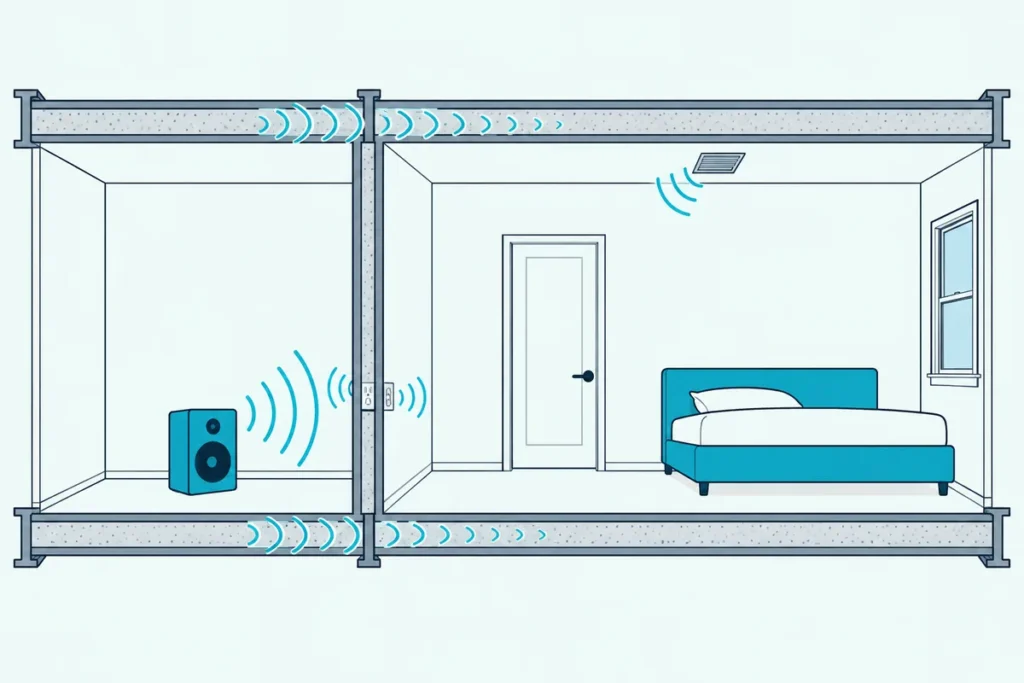
If you’re trying to work out how to soundproof a room from noisy neighbors, find the path the noise takes before you buy anything, because the wall you blame is often not the weak spot.
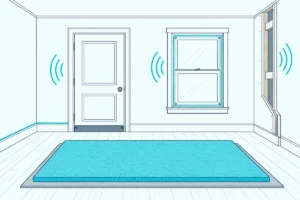
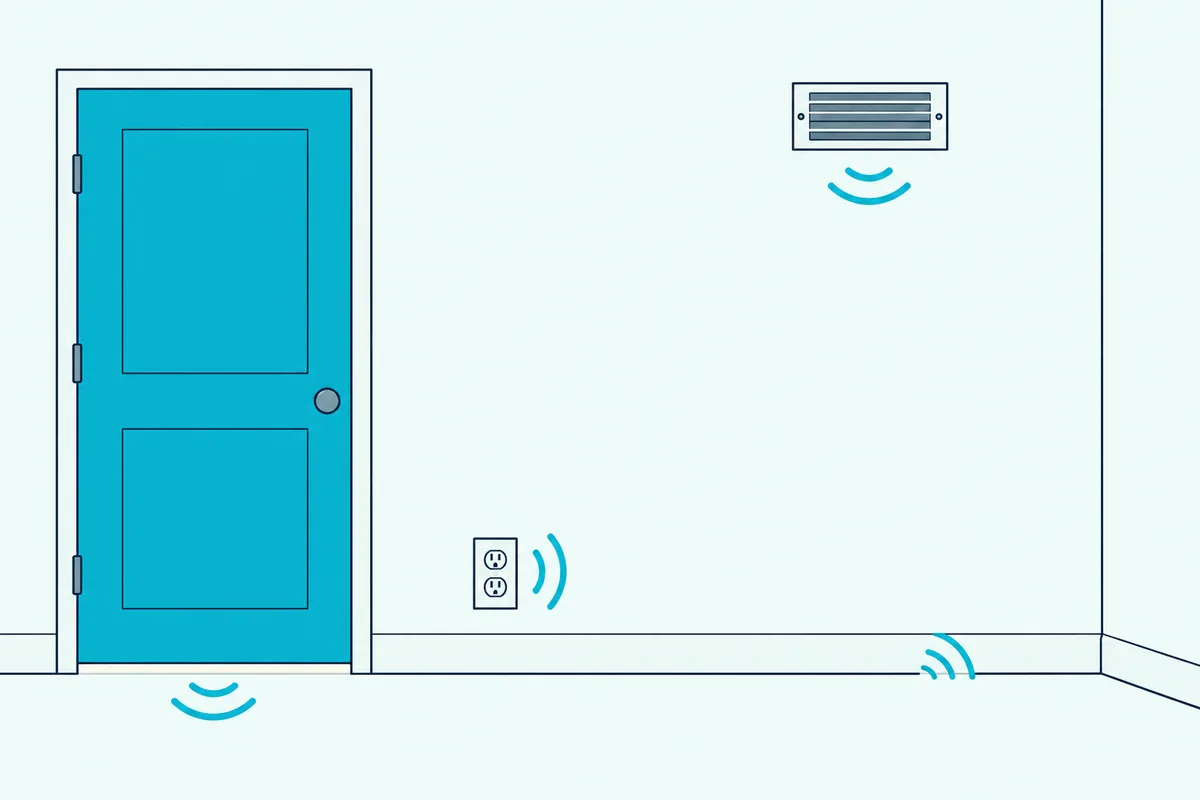
Voices, TV and bass slip in through the door gap, the outlets, the baseboard cracks and the vents, while footsteps and slammed doors travel through the building’s frame.
Close the leaks first and add mass only where it counts, and the same room can go from hearing every word to hearing a murmur.
This guide starts with two quick listening tests, then works through the door, outlets, the shared wall, the floor and ceiling, and the windows.
It ends with what renters can do without tools, what owners can build, and how to bring in the neighbor or the landlord before you spend anything.
How to Soundproof a Room From Noisy Neighbors: Where Do You Start?
Each way into the room has its own fix, and the table puts them side by side. Start with the leaks, because a federal noise guide says many party walls can be improved simply by eliminating the noise leaks and side paths.
| Path into the room | What you usually hear | The first fix | The source’s rating |
|---|---|---|---|
| Gap under or around the door | Clear voices, TV dialogue | Door bottom seal and perimeter gasket | Hollow-core door STC 17 pulls a 48 STC wall down to 24 (HUD) |
| Outlets, pipes, vents | Thin, clear speech | Seal behind cover plates; caulk around pipes | A 1-inch hole or 1/16-inch crack 16 inches long takes a 50 STC wall to 40 (HUD) |
| Baseboard and ceiling cracks | Sound from along the edges | Resilient caulk at both edges | Leaks around partitions “can be major” (NRC Canada) |
| The wall itself | Muffled voices, bass | Mass, damping, then decoupling | Typical interior walls rate STC 30 to 35 (NBS) |
| Floor or ceiling | Footsteps, thuds, dropped objects | Carpet upstairs, or a resilient ceiling | IIC 50 is the usual minimum for satisfied residents (NRC Canada) |
| Windows | A neighbor’s AC unit, dog or yard | Weatherstripping or a second layer | Good weatherstripping still rates 3 to 5 STC below sealed (NRC Canada) |
Rows one to three cost little and happen first, row four is the big job, and row five is often your upstairs neighbor’s floor, not your ceiling. If the shared wall is your main problem, our walkthrough of soundproofing the shared wall itself, fix by fix goes deeper than this page can.
Is the Noise Airborne or Impact?
That table splits into two kinds of noise, and they need different cures. Airborne noise starts in the air, like voices or a TV, while impact noise starts when something strikes the building, like footsteps, which NRC Canada describes as vibration traveling through the structure before it radiates as sound somewhere else.
Your ears can usually tell them apart. Voices, music and TV are airborne, while thumps, clicks from heels on tile and chairs scraping are impact.
NRC Canada’s Warnock notes that footsteps on a concrete slab finished with tile sound like a sharp “click” or “clack,” mostly high-pitched. Footsteps on a wood-joist floor sound more like a “thump” or “boom,” with much of the energy at low frequencies.
The difference matters because seals and caulk do a lot for airborne noise and almost nothing for impact. A gap lets air carry sound through, but a footstep shakes the whole floor, and no strip of foam stops that.
Low sounds cause the most grief either way. Warnock writes that low frequencies pass through walls much more easily than high ones, which is why bass guitar and drums from next door are usually the most noticeable sounds.
Get Studio Tips Weekly
Join 5,000+ creators getting acoustic treatment advice every week.
No spam. Unsubscribe anytime.How Do You Find Where the Noise Gets In?
Knowing the kind of noise narrows the search, and two free tests from the National Bureau of Standards finish it. The NBS noise handbook suggests a “talk test”: if a voice on the other side comes through loud and clear, there’s a serious air leak, and if you can hear talking but can’t make out the words, the sound is probably going through the structure.
The second test uses your ear against the wall. Plug one ear with a fingertip and press the other to the wall, then pull away, and if the sound is louder pressed to the wall, it’s mostly traveling through the structure; if it’s no softer when you pull away, an air leak is the likely route.
NBS also suggests cupping your hands behind your ears and turning your head slowly. Any path along which the noise grows louder will usually lead you to where it enters the room, and high sounds are the easiest to trace this way.
You can make your own test noise if the neighbor is quiet at the wrong moment. NBS lists a transistor radio or an alarm clock as steady sound sources, and a golf ball dropped from the same height each time as a repeatable impact.
Try this at night, when the building is quiet. Walk the room with a radio playing next door (with your neighbor’s help) or in the hall, and listen at the door edges, each outlet, the baseboard, the corners where the wall meets the ceiling, and every vent.
Why Is the Door Usually the Weakest Spot?
Most people who run that walk end up at the door. HUD’s Noise Guidebook says doors are acoustically even weaker than windows: a common hollow-core wood door rates STC 17, and taking up about 20% of a wall, it drags a 48 STC wall down to 24.
Swap in a solid-core door with a vinyl seal around the edges and carpet on the floor, and HUD’s figure for the same wall rises to 33. It adds that gasketed stops or a drop-bar threshold closer at the bottom of the door raise it further.
A drop closure is the strip that drops to the floor when the door shuts, and NBS recommends the same three things for bedroom privacy. Its list for a quiet bedroom is solid-core doors, perimeter gaskets and a drop closure.
Renters can do the cheap half of that today, and Burton Acoustix’s guide to a quieter apartment door covers the full door job. Start with the gap at the bottom, since any daylight under the door is an open path for voices.

For a door with no threshold, HomeProtect’s under-door draft stopper closes the bottom gap and comes off without tools. Its listing says it isn’t meant for doors with thresholds, so check yours first.
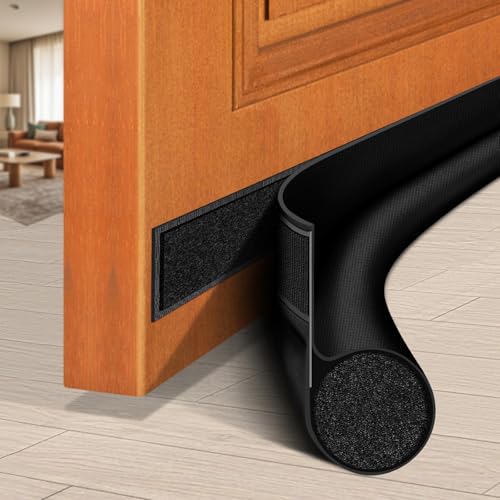
HomeProtect’s under-door draft stopper
For the sides and top, Pemko’s S88 SiliconSeal gasket sticks to the door stop so the door closes against a soft seal. Each product in this guide had at least 4.0 stars and 50 reviews on Amazon and was in stock when checked on 25 October 2026, and prices aren’t shown because they change.
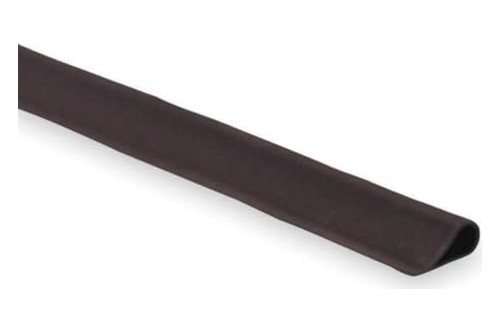
Pemko’s S88 SiliconSeal gasket
One warning before you seal a door tight. NBS points out that some homes and apartments undercut room doors by about an inch so air can reach a central return, and if yours is one, closing the gap means giving that air another route, which is a question for your landlord.
Can Outlets, Vents and Cracks Leak a Neighbor’s Noise?
Doors are the biggest hole, but the small ones add up quickly. HUD says a one-inch square hole, or a 1/16-inch crack 16 inches long, will reduce a 50 STC wall to 40, which is the difference between shouting barely audible and loud speech you can almost follow.
NBS names the usual suspects in a wall shared with an apartment next door: back-to-back electrical outlets, medicine cabinets, openings around pipes and ducts, and cracks where the wall meets the ceiling and floor. Back-to-back means your outlet sits in the same stud bay as your neighbor’s, with little more than air between them.
Warnock adds some perspective here. He calls leakage through outlets relatively minor and leakage around the edges of a partition potentially major, and he notes that leaks mostly let through high-pitched sound, which is why they make speech so clear.
That’s why the baseboard and the ceiling line come before the outlets. NBS says settlement cracks at the ceiling edge should be sealed with a resilient caulk, and the floor edge the same way, even if it means pulling off the baseboard to do it properly.
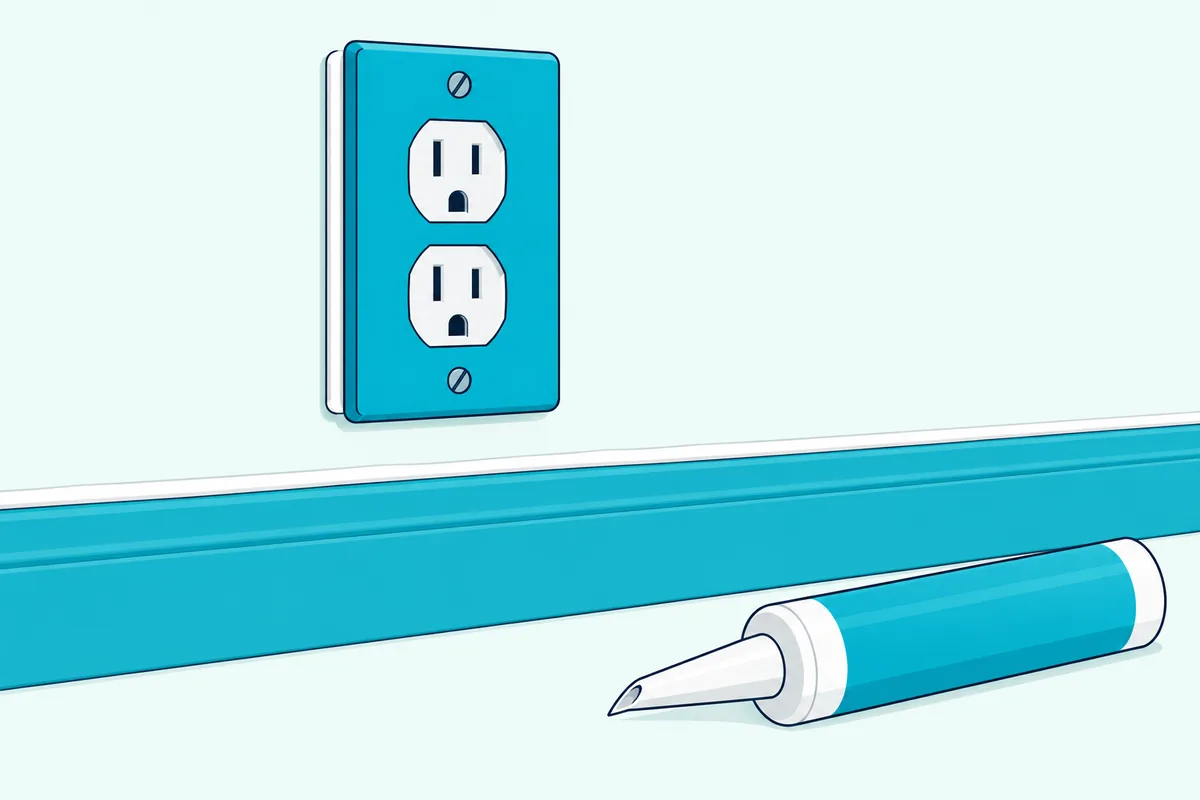
If you own the place or have permission, TMS’s acoustical caulk is sold to seal sound leaks at perimeters and gaps. Its gallery shows it applied where the drywall meets the floor and ceiling, which is exactly where NBS says to look.
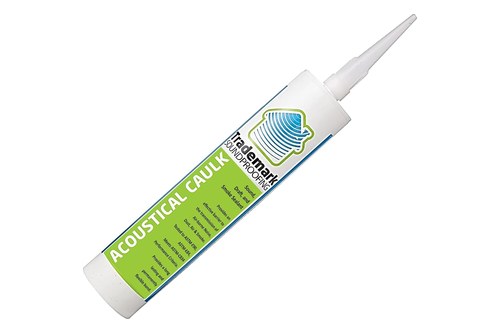
TMS’s acoustical caulk
Outlets are the renter’s easy win. Frost King’s foam outlet sealers slip behind the cover plate and close the gap around the box, though they’re sold to stop drafts and carry no sound rating.
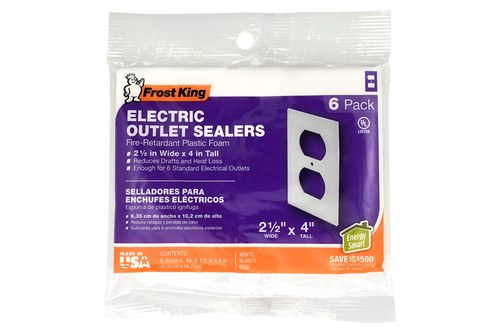
Frost King’s foam outlet sealers
NBS goes further for owners, packing glass fiber around the boxes or moving one outlet to the next stud bay so the two no longer sit back to back. That’s electrical work, so turn off the breaker or hire an electrician.
What Does the Shared Wall Itself Score?
With the leaks closed, whatever’s left is coming through the wall itself. NRC Canada’s Building Digest 239, in MIT’s copy, puts the common interior partition, drywall screwed straight to both sides of wood studs, at about STC 33, and NBS puts most interior walls between 30 and 35.
NBS’s privacy table turns those numbers into what you hear. At STC 30, normal speech is audible but not intelligible; at 40, loud speech is audible but not intelligible; at 50, shouting is barely audible.
The 2021 International Building Code asks for STC 50 between dwelling units, tested in a lab, or 45 measured in the field. A wall that lets you follow a conversation through it is far below that, likely in NBS’s 30 to 35 range.
The good news is that a wall in the 30s leaves room to improve. The bad news is that NRC Canada warns side paths through floors and ceilings can, in a poor design, carry more sound than the wall, so test the edges before you rebuild it.
Why Do Footsteps Come Through the Ceiling?
The wall’s side paths lead straight to the floor above, and footsteps are a separate problem from voices. NRC Canada’s Construction Technology Update No. 35, in the AIVC’s copy, says an Impact Insulation Class of 50 is usually considered the minimum for residents to be satisfied.
The floor covering above you decides most of it. Warnock’s table gives a bare concrete slab, or one with ceramic tile, about IIC 28, and the same slab with carpet and underlay 75 to 85.
That’s why NBS says a soft, thick carpet on the floor above will usually cut footstep noise substantially. It also says acoustical tile on your ceiling won’t reduce noise from upstairs at all, since it only soaks up sound inside your room.
Wood-joist buildings are harder. Warnock notes that thumping below 100 Hz can still annoy people below a joist floor with a good IIC rating, because the standard tapping machine doesn’t copy a person walking.
For an owner, NBS says a light-frame floor may need a gypsum board ceiling hung on resilient channels to match what carpet does on concrete. Our guide to noise from the upstairs neighbor’s floor covers asking upstairs for rugs and what a ceiling job involves.
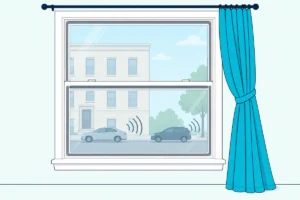
Do Windows Let a Neighbor’s Noise In?
Ceilings carry the neighbor above, and windows carry the one across the yard. NBS lists a neighbor’s air conditioning unit and barking dogs among the noises that reach even quiet suburbs, and the window is how they get in.
NRC Canada’s Digest 240 says sound through cracks around an openable window may drastically cut its noise reduction. Even with good weatherstripping, it says a window usually rates 3 to 5 STC below the same window sealed, and the loss is greatest at high frequencies.
The same rule as the door applies: seal the gaps first, then add a layer. Weatherstripping closes the air path, and a removable insert or a storm window adds a second layer once the glass itself becomes the limit.
For noise from the unit next door or upstairs, check the windows last. If your neighbor’s noise mostly comes from outside, the glass matters more than the walls and doors in the table above.
What Can Renters Do Without Building Work?
That whole tour gives a renter more options than it first seems. Everything here comes off at move-out, and together it closes most of the leaks NBS and HUD describe.
- Seal the bottom of the door with a draft stopper and the sides with a gasket on the stop.
- Fit foam sealers behind every outlet and switch plate on the shared wall.
- Move the bed to an inside wall, away from the shared one, and put a full bookcase or wardrobe against the shared wall.
- Use the closet as a buffer: HUD notes that “dead” spaces like closets and corridors can act as buffer zones between noisy and quiet rooms.
A full bookcase adds some mass but isn’t a tested wall, so treat it as a small gain rather than a fix. The bigger win from step 3 is distance, since moving your head away from the shared wall puts more of your own room between you and the source.
Sound masking is the last renter tool, and it helps less than people hope. NBS says masking “fails more frequently than it succeeds” and can’t make a noisy place peaceful, though a steady, broad sound can make occasional voices harder to pick out.
The General Services Administration frames office acoustics as “Absorb, Block, Cover,” and cover is the part masking does. If you want it for sleep, the Yogasleep Dohm Classic makes fan-based white noise with a twist-to-adjust tone and volume, and its gallery says it reaches 57.4 dB.
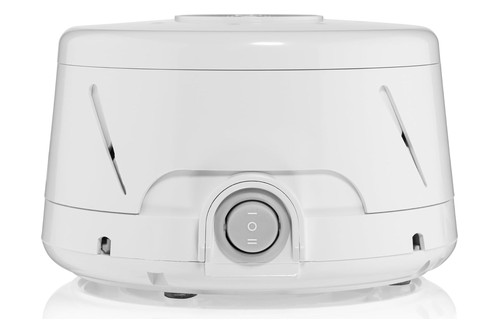
the Yogasleep Dohm Classic
What Can Owners Build on a Shared Wall?
Renters stop at seals and furniture, but owners can change the wall itself. The cheapest structural step is a second layer of drywall with a damping layer, and National Gypsum’s SoundBook lists the numbers.
Its retrofit walls on 2×4 studs at 16 inches add a 5/16-inch damped board over the existing half-inch drywall on one side. That wall rates STC 36 with an empty cavity and STC 40 with 3-1/2 inches of glass fiber inside, against the roughly 33 NRC Canada gives an ordinary partition.
Bigger gains come from breaking the connection between the two faces. NRC Canada calls rigid connections between the layers “the acoustical equivalent of an electrical short circuit,” and NBS’s privacy table puts a wall with resilient channels on both sides at STC 50.
Mass helps too, though slowly. Digest 239 says each doubling of a single layer’s weight adds only about 6 dB, which is why decoupling usually beats piling on more drywall.
Every one of those builds still depends on the seals from earlier. NBS says leaks and side paths can undo the wall’s rating, so caulk the perimeter of any new layer, and our do-it-yourself soundproofing walkthrough covers the full build.
Why Won’t Foam Panels Stop a Neighbor’s Noise?
Owners and renters both get tempted by the same shortcut. Foam and fabric panels absorb sound inside a room, but NBS says absorbers are “relatively poor sound insulators” that transmit noise very easily, because they’re soft, porous and light.
NBS calls putting absorbers on a wall to stop noise between rooms “an expensive and annoying error.” A wall built only of acoustical tile, carpet or drapery would offer almost no resistance to sound passing through it, it notes.
Panels do have a place in a noisy apartment. They cut echo, so your own room sounds calmer, but they won’t turn a neighbor’s TV down, and that same NBS ceiling-tile warning applies to footsteps.
Spend that money on seals and mass instead. A gasket on the door does more for a neighbor’s voices than any panel you could hang on the shared wall.
Should You Talk to the Neighbor or the Landlord First?
Before any of that spending, a conversation costs nothing and sometimes solves the whole thing. A neighbor may simply not know the TV sits against your shared wall, or that their heels click on a tiled floor above your bed.
Go when you’re calm, not at 1 a.m. Name the sound and the time it bothers you, and suggest one fix, like a rug, a speaker moved off the shared wall, or quiet hours after 10.
If you rent, the landlord is your next call, especially for gaps under doors, missing carpet above, or back-to-back outlets. Ask in writing, name the paths you found with the tests above, and ask whether the building ever met a sound standard such as the code’s STC 50 between units.
Many towns and buildings have quiet-hour or noise rules, and leases often mention them. Check your local rules and your lease before you escalate, since what counts as a violation varies from place to place.
The Bottom Line
Soundproofing a room from noisy neighbors works in order: test whether the noise is airborne or impact, find the leak, seal the door and outlets, then caulk the edges. Only after that does the shared wall’s mass, damping or decoupling pay off.
Footsteps need carpet upstairs or a resilient ceiling, not seals. Talk to the neighbor or landlord early, and expect a real drop in noise rather than silence.
Frequently Asked Questions
How do I soundproof a room from loud neighbors?
Soundproof a room from loud neighbors by finding where the noise gets in, then sealing those paths before adding anything heavy. Start with the gap under the door and the door’s edges, then the outlets and the cracks along the baseboard and ceiling, since HUD says a 1/16-inch crack 16 inches long can take a 50 STC wall down to 40.
If voices still come through clearly after that, the wall itself needs more mass or decoupling. If the noise is footsteps, the fix is carpet on the floor above or a resilient ceiling, not seals.
How do I block noise on a shared wall?
Block noise on a shared wall by sealing its edges and outlets first. NBS says many party walls improve simply by eliminating their noise leaks and side paths, especially at back-to-back outlets and ceiling and floor cracks.
After that, an added damped drywall layer helps: National Gypsum rates one-sided retrofit walls at STC 36 to 45 depending on stud spacing and insulation. Decoupling with resilient channels goes further.
Does soundproofing work for noisy neighbors?
Yes, when it targets the right path. Upgrading and sealing the door alone can lift a wall’s effective rating a lot, from STC 24 with a hollow-core door to 33 with a sealed solid-core one in HUD’s example.
It works poorly when it’s the wrong kind of fix. Foam panels and ceiling tiles absorb sound inside your room but block very little, and seals do almost nothing for footsteps.
Can you block out 100% of a neighbor’s noise?
No, not in an ordinary home. Even the 2021 building code’s target between apartments, STC 50, leaves shouting barely audible by NBS’s privacy table, and bass passes walls more easily than voices.
The realistic goal is turning clear speech into a murmur. Seal the leaks, add mass where it counts, and use steady background sound to cover what’s left.