How to Soundproof a Window in an Apartment as a Renter
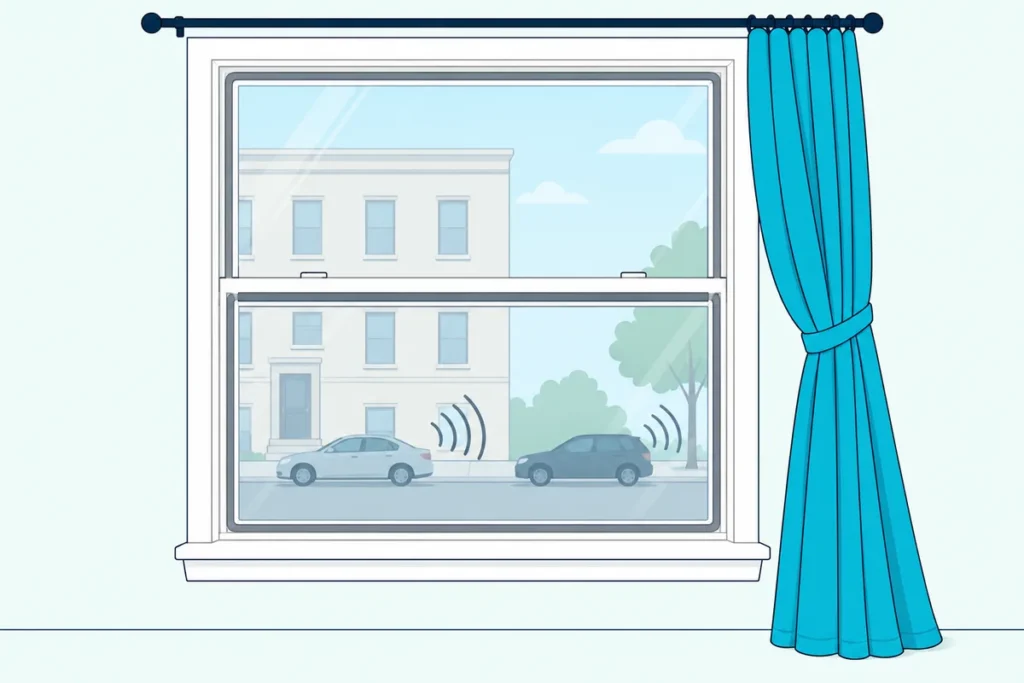
If you’re working out how to soundproof a window in an apartment, start with fixes that come down cleanly at move-out, because the window belongs to your landlord.
Traffic, sirens and street voices get in two ways, through gaps around the sash and through the thin glass, and each problem needs a different fix.
Seal the gaps and add a second layer in front of the glass, and that same window lets in noticeably less of the street at night.
This guide starts with a quick test for where noise gets in, then covers weatherstripping, rope caulk, press-in inserts, curtains, plugs and the air conditioner.
It ends with what to ask your landlord for when the glass is the real problem, so you know which fixes are yours and which are theirs.
How to Soundproof a Window in an Apartment: Which Fix Comes First?
The order matters more than any single product, and the table puts the renter fixes in it. Lock and seal the gaps first, then put a second layer of acrylic or glass in front of the window, because any leak left open undoes whatever you add.
| Step | The noise it fixes | The source’s rating |
|---|---|---|
| 1. Lock the sash and find the leaks | Sound slipping through the meeting rail and frame | An aluminum casement rated STC 31 sealed tested 21 locked and 17 unlocked (NBS data) |
| 2. Weatherstrip or rope-caulk the gaps | Air leaks at a sash that still has to open | Even well-weatherstripped windows usually rate 3 to 5 STC below the same window sealed (NRC Canada) |
| 3. Acoustic caulk at the trim, if the lease allows | Cracks between the frame and the wall | Frame gaps should be sealed with a resilient, non-setting caulk (NBS) |
| 4. A press-in insert | Sound coming through the glass | 18.9 dBA less noise over a single pane (Indow, Portland State lab) |
| 5. Heavy curtains | A little high-pitched sound, plus echo | A standard polyester curtain blocked about 5 dB at 400 to 1,600 Hz (NUS tests) |
| 6. A window plug | Night noise, when you don’t need the light | No maker or lab rating found |
| 7. Seal the air conditioner | Gaps around a window unit | A badly installed unit leaks as much air as a 6-square-inch hole (ENERGY STAR) |
| 8. Ask for laminated glass or a second window | Traffic noise through the glass | Andersen’s double-hung: STC 29 standard, 37 laminated with a combination unit |
Steps 1 and 2 cost little and change nothing permanent, step 3 needs a yes from your landlord, and steps 4 to 6 add a layer you can lift out. Step 8 is your landlord’s call, and our guide on how to soundproof windows with or without replacing them covers it from the owner’s side.
What Does Your Lease Let You Change on a Window?
Most of that table depends on one document you already signed. Your lease decides whether you can drill, caulk or stick anything to the frame, so read the alterations clause before you buy a single tube.
Fixes that are easy to undo are the safest bet: a curtain on a tension rod, an insert that holds by compression, a plug you lift out each morning. Permanent caulk, screws in the frame and adhesive on painted trim are the ones to ask about first.
Put the request in writing and keep it specific, such as “the lower sash rattles when buses pass and there’s a draft at the meeting rail.” A loose sash, a lock that doesn’t pull the window tight or a cracked pane is often a repair you can report, rather than a soundproofing project you pay for.
Take photos of the frame, sill and trim before you start, so move-out day isn’t a debate about what was there. And whatever you do, never seal shut a window you might need to climb out of in a fire; that rule matters more than any decibel figure here.
Get Studio Tips Weekly
Join 5,000+ creators getting acoustic treatment advice every week.
No spam. Unsubscribe anytime.Is the Noise Leaking Around the Window or Coming Through the Glass?
Once you know what the lease allows, the next job is finding where the sound gets in. Noise that leaks around the sash needs sealing, while noise that comes through the glass needs a second layer, and the fix for one does little for the other.
Try this at night when the street is loud: put your ear near the frame edges, the lock, the bottom of the sash and the middle of the glass in turn. If the edges sound sharper and you can feel a draft, the gaps are your first problem.
NBS Handbook 119 gives a second test for gaskets. Close the window on a strip of paper and pull: if the paper is held tightly, the seal works at that spot, so repeat it along the whole gasket.
Small leaks matter more than their size suggests. NRC Canada’s Building Digest 240 says sound through cracks “may drastically reduce” a window’s noise reduction, and HUD’s Noise Guidebook puts a number on it: a 1/16-inch crack 16 inches long drops an STC 50 wall to 40.
How Much Quieter Is a Locked Window?
That crack figure explains why the cheapest fix of all is the lock. Locking the window closes it more tightly, and in the NBS lab data an aluminum operable casement went from STC 17 unlocked to 21 locked, against 31 when fully sealed.
Owens Corning reprints the full table from NBS Building Science Series 77, and the pattern holds across window types. A wood double-hung window with 7/16-inch insulating glass rated STC 22 unlocked, 26 locked and 28 sealed, and the same window with single-strength glass rated 23 unlocked against 29 sealed.
STC is a single-number rating from lab tests, and a higher number means less sound gets through. Going from 17 to 21 by turning a latch costs nothing, which makes it the cheapest gain on this page.
The NBS handbook gives a view of the same windows in place. Ordinary locked double-hung windows generally give an average noise reduction of about 18 dB, rising to about 24 dB with a storm window added.
Which Weatherstripping Works on a Rental Window?
The gap between those locked and sealed ratings is what weatherstripping tries to close. The right weatherstripping depends on how your window moves: brush pile suits sliding sashes, and a soft caulking cord suits cracks you won’t open until spring.
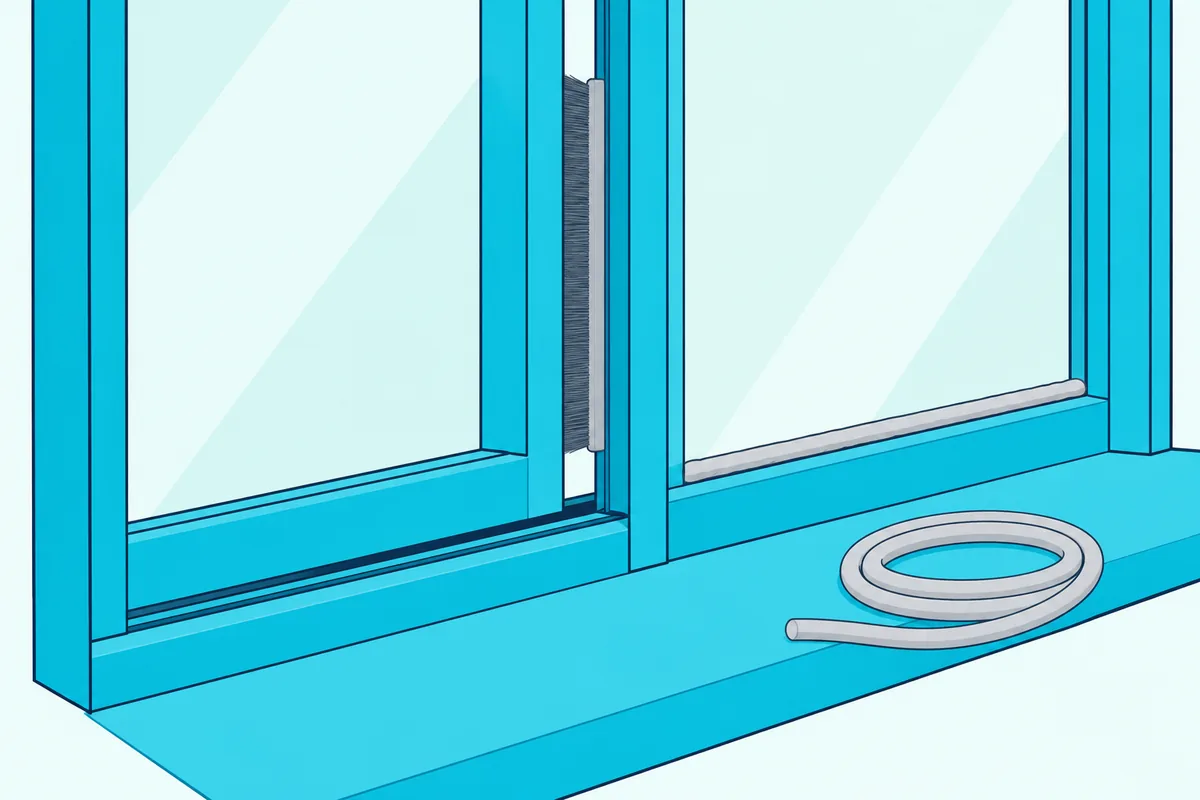
NBS Handbook 119 asks for windows caulked or fitted with gaskets to give an airtight seal. Owens Corning’s guide says the same thing in plainer words: weatherstripping a window makes it close tightly, which cuts outside sound.
NRC Canada adds a caveat worth knowing. Even a window with good weatherstripping usually rates 3 to 5 STC below the same window sealed shut, and the better the window, the more a given leak costs it.
For sliding sashes, this 33-foot pile weatherstrip is a self-adhesive brush seal sold for doors and windows. Measure your gap first, since its size chart pairs this 0.2-inch strip with gaps of about 0.1 to 0.18 inches, and test the adhesive on a hidden spot of trim.
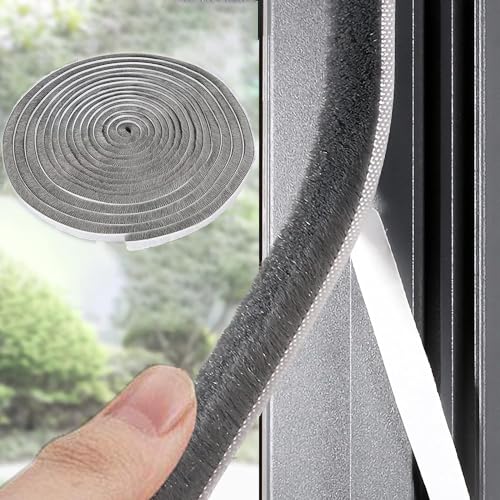
this 33-foot pile weatherstrip
For a window you’ll keep closed through winter, Frost King’s Mortite caulking cord presses into gaps with your fingertips, and its package says one roll seals six average windows. Each product in this guide had at least 4.0 stars and 50 reviews on Amazon and was in stock when checked on 24 October 2026, and prices aren’t shown because they change.
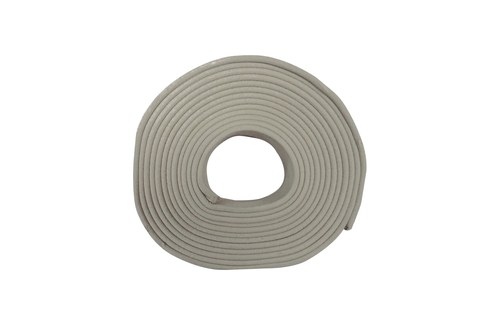
Frost King’s Mortite caulking cord
Where Does Acoustic Caulk Belong in a Rental?
Weatherstripping handles the parts that move, but the cracks between the frame and the wall need something that stays put. Acoustic caulk belongs in the fixed joints around the window trim, and only where your lease or your landlord says yes.
The NBS handbook says gaps around the framing of windows and doors should be sealed with a resilient, non-setting caulking compound. That’s the same treatment it gives pipe holes and settlement cracks, because a crack is a crack whatever sits next to it.
If you get the go-ahead, TMS’s acoustical caulk is sold to seal sound leaks at perimeters and gaps. Its listing calls the bond permanent, which is exactly why it goes after the permission step and not before.
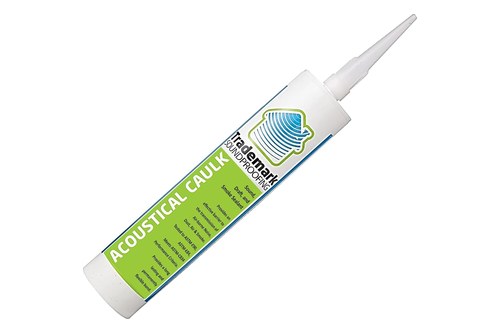
TMS’s acoustical caulk
How Do Compression Window Inserts Mount?
Sealing deals with the leaks, so whatever noise is left is coming through the glass. A compression insert is a second pane of acrylic edged in a soft tube that presses into the window frame, holding by friction with no screws or tracks.

Indow, one of the makers, describes its Acoustic Grade insert as nominal 1/4-inch acrylic edged in silicone compression tubing. It says no hardware is needed and the inserts don’t damage the existing window, and it names rental homes among their uses.
CitiQuiet takes a different route with operable interior windows on rollers, set inside the existing frame. Its FAQ says installation needs no alteration to the existing window and no building approval, though that’s a New York maker describing its own product, so check with your building anyway.
The depth of your window frame decides how much air gap you get, and the gap does much of the work. CitiQuiet puts its gap at often 4 to 5 inches and says anything under 2 inches is unlikely to help much with serious city noise.
How Much Noise Does an Insert Block?
That air gap is where the lab numbers come from. Indow reports 18.9 dBA less noise with its Acoustic Grade insert over a single-pane window in tests at Portland State University’s Green Building Research Laboratory, and its product page lists 10.2 dBA over a double pane.
Indow also reports tests at the British Columbia Institute of Technology, where inserts 3 and 6 inches from double-pane glass raised the rating to STC 42 to 45. That’s well above the STC 25 to 30 that Andersen gives for a typical dual-pane window.
NRC Canada explains why the gap matters. For double glazing, the rating rises by about 3 STC each time the air space doubles, so by that rule a 4-inch gap beats a 1-inch gap by roughly 6 points.
The same digest warns about a weak spot. Factory-sealed double glazing has a resonance between 200 and 400 Hz, where much of the energy from road traffic and aircraft falls, and a wider air space with heavier glass lowers it.
Most of these inserts are custom-made and sold direct by their makers, so we found no removable insert on Amazon that passed our checks on 24 October 2026. For the products themselves, see our list of soundproof window inserts worth buying.
Do Heavy Curtains Really Stop Window Noise?
Inserts work by adding a sealed layer and air, and that’s exactly what a curtain lacks. Heavy curtains block only a few decibels of street noise, because fabric lets air through and hangs loose at the edges.
In tests at the National University of Singapore, a standard polyester curtain showed about 5 dB of transmission loss between 400 and 1,600 Hz. A PVC-coated fabric did far better, at about 15 to 22 dB in the mid-to-high range, because its sealed surface reflected sound instead of passing it.
The same study lists STC ratings from STC 13 for a dual-layer commercial drapery to 21 for the PVC sheets. For comparison, that’s lower than the single-pane glass behind it, which Guardian Glass rates at STC 28 for a 3 mm pane.
What curtains do well is soak up echo inside the room. NBS Handbook 119 notes that pleated drapery absorbs about as much sound as carpet, mostly at high frequencies, which makes a bare room feel calmer even when the street level hasn’t changed.
So hang them for sleep and comfort, close them all the way to the wall, and don’t expect them to replace the sealing steps. The leak test from earlier applies here too, since a curtain that stops short of the frame leaves an open path around its edges.
Are Window Plugs Worth It for Sleeping?
If curtains are too soft, a window plug sits at the other extreme. A window plug is a dense, removable panel cut to fit the window opening, and it blocks light and view completely while it’s in.
We found no maker test or lab rating for a homemade plug, so this section has no number to give you. What it has instead is the principle from the HUD guidebook: the first step in reducing noise is to close and seal the windows, and a plug is a way of doing both at night.
A plug works only as well as its edges, the same lesson as the paper-strip test. A gap around a heavy panel lets sound in the same way a gap around the sash does, so fit the edges with a compressible strip.
Treat it as a nighttime tool, since it has to come out each morning, and keep the escape rule from the lease section. A bedroom plug must lift out in seconds, not need tools.
How Do You Seal Around a Window Air Conditioner?
A plug closes the whole opening, but many apartment windows have a hole in them already. You seal around a window air conditioner by fitting its own side panels and foam correctly, then filling any remaining gaps with weatherstripping, never by blocking the unit’s vents.

ENERGY STAR’s room air conditioner page says an improperly installed unit leaks as much air as a 6-square-inch hole. It tells owners to follow the instructions and use the insulation materials that came with the unit.
Frigidaire’s installation instructions spell out what that means. You cut the insulation panel to the width of the side curtain and slide it in, then apply weatherstripping wherever gaps remain between the unit and the window.
The same instructions add that the side louvers must never be blocked. A blanket thrown over the unit fails that rule, and Burton Acoustix’s guide to a quieter window AC covers tilt, pads and settings.
ENERGY STAR also suggests taking the unit out at the end of the cooling season, or using a properly sized cover in winter. Once the unit is out, the sash closes fully again, and every sealing step above starts working.
Why Do Window Ratings Overstate Traffic Noise Results?
Every number so far has been an STC, and that’s worth a warning before you talk to your landlord. Andersen describes STC as a measure for indoor sounds like talking, TV and music, so it can flatter a window against trucks and buses, which is why makers also publish OITC for outdoor noise.
ASTM E1332, the standard behind OITC, uses test data from 80 to 4,000 Hz and a spectrum averaged from aircraft takeoff, road traffic and diesel locomotives. NRC Canada makes the same point plainly: STC ratings alone aren’t enough for judging how well a wall or window blocks aircraft and road traffic.
You can see the gap in Guardian Glass’s tables. A standard double pane rates STC 34 but OITC 29, so the traffic figure sits 5 points lower than the speech figure.
Guardian adds that a site-installed pane can lose about 6 dB against its lab sample. Expect your window to fall short of the brochure, and think of every number in this guide as a ceiling.
What Should You Ask Your Landlord For?
With STC and OITC in hand, you can ask for something specific instead of “soundproof windows.” Ask for laminated glass in the next replacement, an interior second window, or exterior storm windows, since each adds what a renter can’t: heavier glass or a second sealed pane.
Andersen’s 400 Series test report shows the size of each step on one double-hung window. The standard dual pane rated STC 29 and OITC 24, adding Andersen’s combination unit (its storm window and insect screen) took it to STC 33, laminated glass gave STC 32 and OITC 28, and laminated with the combination unit reached STC 37.
NRC Canada credits laminated glass’s gain to damping in its thin plastic interlayers, and Guardian’s tables show the effect. An inboard laminated double pane with acoustic PVB rates OITC 35 and STC 41, against 29 and 34 for the plain double pane.
CitiQuiet’s FAQ says landlords may resist because they assume soundproofing means replacing windows. Its suggested pitch is to stress that interior units fit inside the existing window, open normally and come out again.
The NBS handbook offers one more tip that costs nothing. For a house, it estimates that a bedroom on the side away from the road can cut intruding traffic noise by about 10 dB, so if your unit has a quieter side, sleeping there is worth trying too.
When the window is sealed and still loud, the noise may be getting in elsewhere, through the door, the walls or the ceiling. Our guide to the rest of the apartment takes it from there.
The Bottom Line
Soundproofing a window in an apartment works in order: lock it, seal the moving gaps with weatherstripping or rope caulk, caulk the fixed trim if your lease allows, then add a press-in insert with as wide an air gap as your frame gives you. Curtains help with echo, plugs help at night, and the AC needs its own panels and seals.
Anything that changes the glass is your landlord’s decision, so ask for laminated glass or a second window by name and quote the OITC. Expect a real drop in noise, not silence, and listen again at the same spots after each step.
Frequently Asked Questions
How do I soundproof windows in a rental apartment?
Soundproof windows in a rental apartment with fixes that don’t change the window itself: lock the sash, seal moving gaps with weatherstripping or caulking cord, and add a compression insert that holds without screws. Indow says its inserts need no hardware and names rental homes among their uses.
Ask your landlord before using permanent caulk or anything that drills into the frame. Never seal shut a window you might need as a fire escape.
Can you put a window insert in an apartment?
Yes, if your window frame has room for one. Indow’s compression inserts press into the existing frame with silicone tubing and no hardware, and CitiQuiet’s interior windows sit inside the frame and lift out.
Measure your frame depth first, since CitiQuiet says an air gap under 2 inches is unlikely to help much with serious city noise. Check your lease and building rules too, because the insert maker’s word isn’t your landlord’s.
What’s the cheapest way to soundproof an apartment window?
The cheapest way is to lock the window and seal its gaps. In NBS lab data, an aluminum casement rated STC 17 unlocked and 21 locked, and a sealed version reached 31.
A roll of caulking cord or a strip of pile weatherstrip closes the gaps that remain. Even well-weatherstripped windows usually rate 3 to 5 STC below a sealed one, NRC Canada says, so seal every gap you can find.
How do you block noise through a window?
Block noise through a window by sealing the air gaps first, then adding a second layer with an air space in front of the glass. NRC Canada says each doubling of the air space adds about 3 STC.
Curtains help less than people expect. A standard polyester curtain blocked about 5 dB between 400 and 1,600 Hz in National University of Singapore tests, though curtains do soak up echo inside the room.