Best Soundproof Bifold Doors and Why Most of Them Leak
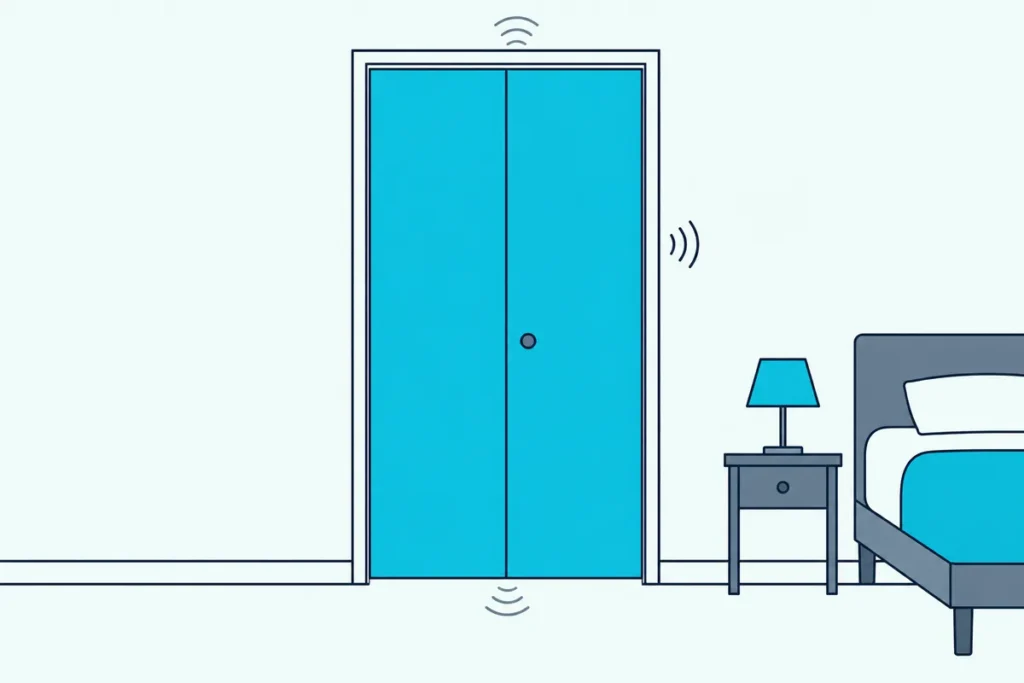
Shopping for the best soundproof bifold doors gets awkward fast, because an ordinary closet bifold is hung with gaps on purpose.
JELD-WEN’s installation instructions size the opening 1/2 inch wider and 1-1/2 inches taller than the door set, leaving room for a 1/4-inch jamb gap, a track above and a floor bracket below.
The folding doors that really cut noise publish a tested rating, weigh more and seal every edge, and those three signs make the choice simple.
This guide compares solid-core closet doors, acoustic accordion partitions and glass folding walls by the numbers their makers publish, then covers the seals that help a bifold you keep.
The short list comes first, then why bifolds leak and what to check before you buy.
What Are the Best Soundproof Bifold Doors?
Those three signs point away from the hollow closet bifold and toward folding doors built for sound. The best documented are Woodfold’s H4100 accordion partition at STC 41 and NanaWall’s NW Acoustical 645 folding glass wall at up to STC 45, while for a closet the best standard door is a solid-core bifold, though neither JELD-WEN nor Masonite publishes a rating for one.
| Pick | Type | Maker’s sound rating | Built with | Best for |
|---|---|---|---|---|
| NanaWall NW Acoustical 645 | Folding glass wall | STC 32 up to 45 | Separated aluminum frame, gaskets, sound-enhanced glass | Glass that blocks the most |
| Woodfold H4100 | Accordion partition | STC 41 (lab) | Vinyl covers, steel strips in each fold, 4.3 lb per sq ft | A wide opening that must fold away |
| Woodfold 4166 or 4188 | Dual-wall accordion partition | FSTC 41 (field) | Two walls of panels, perimeter seal, acoustic lining | A home office or meeting room |
| NanaWall NW Acoustical 545 | Folding glass wall | Up to STC 41 | Wood frame | A wood-framed glass wall |
| Modernfold Soundmaster | Accordion partition | STC 39 or 40 | Steel sound liner, three-ply top and bottom sweeps | Moderate speech privacy |
| JELD-WEN or Masonite solid-core bifold | Closet bifold | None published | Solid core in place of hollow | A closet or small room |
None of these doors is an Amazon pick, so the product cards further down are seals for a bifold you already have. If the opening doesn’t have to fold at all, the best soundproof interior doors to swap in are hinged, which matters for the reasons below.
Why Do Bifold Doors Leak So Much Sound?
That missing rating on bifold closet doors makes sense once you see how they’re installed. They hang with gaps by design: JELD-WEN’s bifold instructions size the finished opening 1/2 inch wider than the door set for at least a 1/4-inch gap at the jamb, and 1-1/2 inches taller so the track sits above the doors and the lower bracket below them (JELD-WEN).
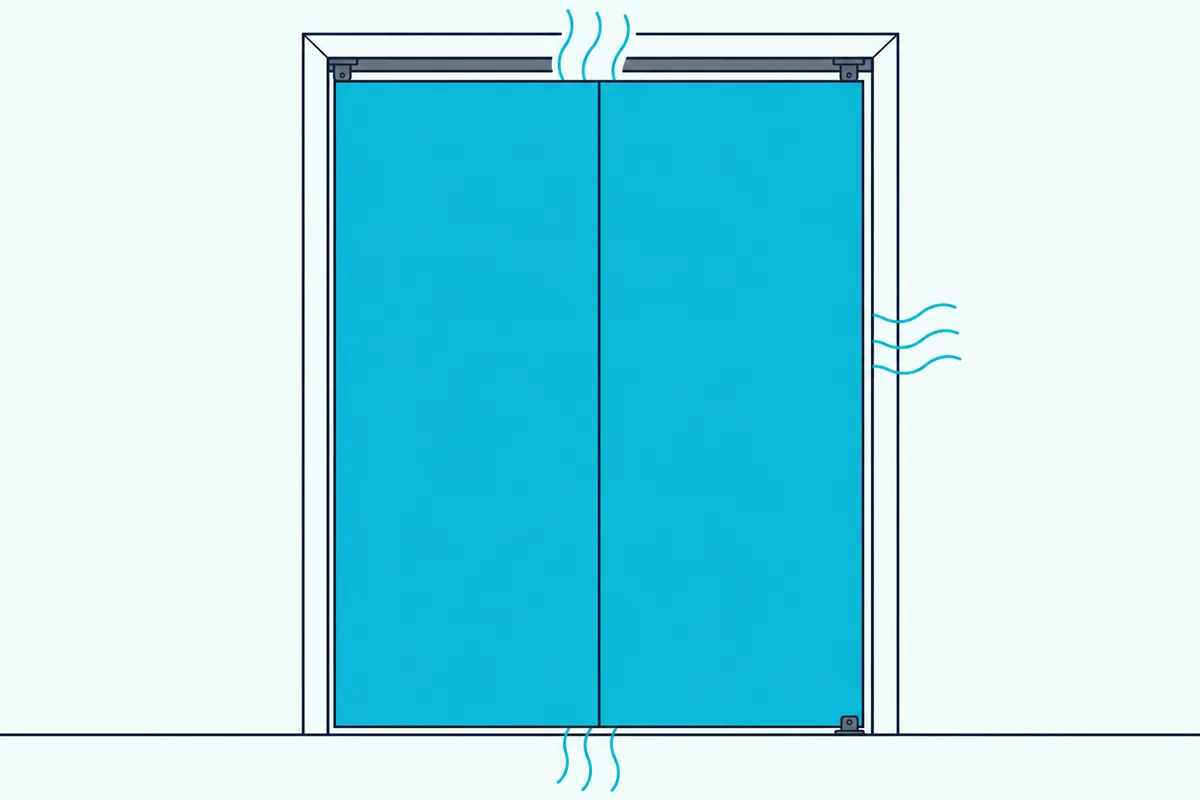
The same instructions ask a four-panel set only to meet snugly in the middle. National Guard Products, which makes door seals, says pairs of doors are intrinsically harder to control sound through because sealing their meeting edges is challenging, and every fold in a bifold adds another joint.
Those gaps outweigh the panel. NGP’s gasketing sheet says standard solid-core wood doors test at about STC 28 to 30 with gasketing and only 15 to 20 without it.
HUD’s Noise Guidebook shows what that does to a whole wall: a hollow-core wood door rated STC 17 drags a 48 STC wall down to 24, while a solid-core door with vinyl seals around its edges and carpet on the floor keeps it at 33 (HUD). That’s a 9-point difference in the same wall.
Try this at night: switch on the closet light, shut the bifold and look at it from the dark room. Every line of light around the panels, at the header, the jambs or the floor, is an air gap that sound can use too.
Get Studio Tips Weekly
Join 5,000+ creators getting acoustic treatment advice every week.
No spam. Unsubscribe anytime.Does a Solid-Core Bifold Block More Sound?
Those gaps cap what any panel can do, but a heavier panel still raises the ceiling. Yes, the panel itself blocks more: JELD-WEN’s 2023 acoustic ratings put its molded doors at STC 25 to 27 with a hollow core and 29 to 32 with a solid one, and its flush door at 24 and 30, though the sheet lists no bifold (JELD-WEN).
JELD-WEN sells its flush bifold with a hollow core or a solid particleboard core, and says solid-core construction reduces sound transmission by up to 50% compared with hollow core. Masonite’s catalog likewise offers its Livingston bifolds with Safe ‘N Sound solid cores for better durability and sound reduction.
JELD-WEN adds that its ratings are for new products, for reference only, and can vary with the components chosen. So a solid bifold is a better panel sitting inside the same gaps, and HUD’s 33 came from a solid door with its edges sealed.
That pairing of mass and seals decides how soundproof solid core doors really are, and it holds for folding doors too. A solid panel with open edges is like a thick wall with a window left ajar.
Which Folding Doors Come With Real Sound Ratings?
Since closet bifold makers like JELD-WEN and Masonite publish no ratings, the clearest numbers come from accordion partitions, a category made for offices, churches and classrooms. Woodfold rates its H4100 at STC 41 in a lab test to ASTM E90 and its dual-wall 4166 and 4188 at FSTC 41 in field tests, while Modernfold rates its Soundmaster at STC 39 or 40 (Woodfold).
Weight follows the rating. Woodfold’s H3100 weighs 2.7 pounds per square foot and rates STC 31, its H4100, with steel strips laminated in each fold, weighs 4.3 pounds and rates STC 41, and Modernfold’s Soundmaster goes from STC 39 at 3-1/4 pounds to 40 at 5.
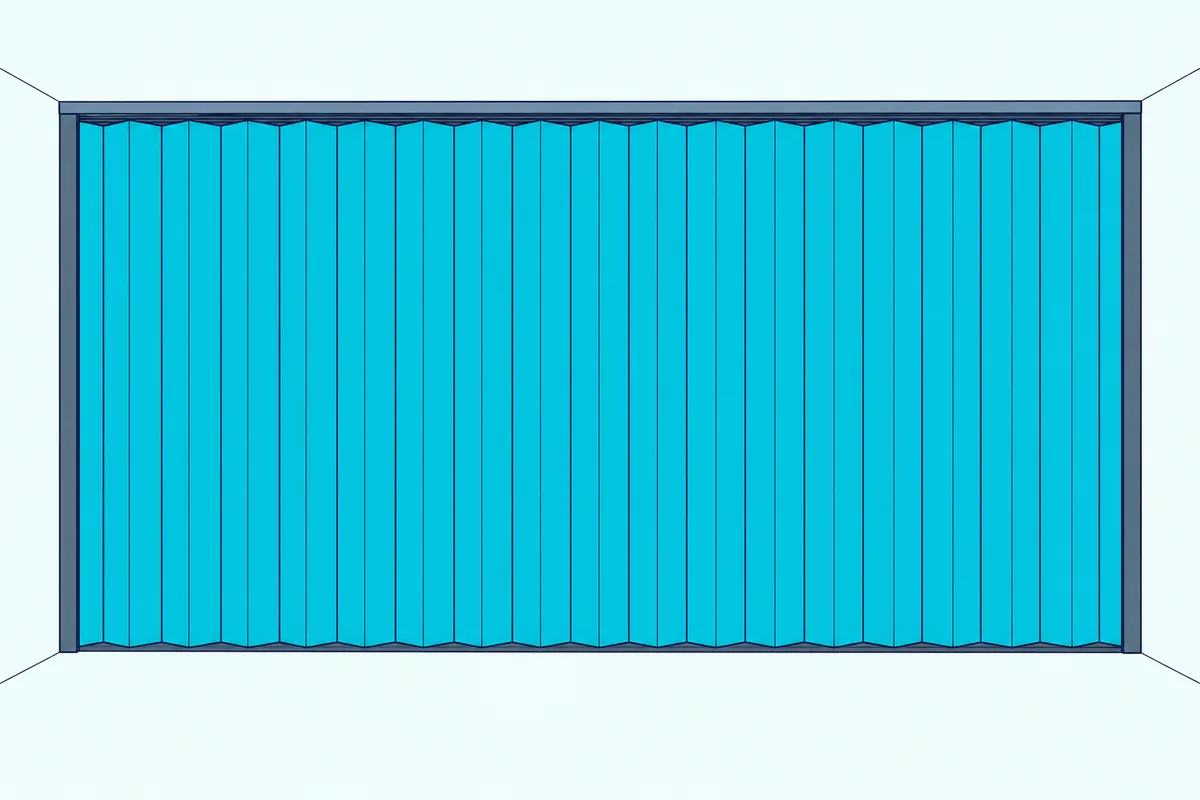
The light end shows the flip side. Modernfold’s 2 and 2-3/4 pound accordion models list no STC at all, and Woodfold’s single-wall 2100, built from 1/4-inch MDF panels, rates STC 21 and is pitched where only minimal sound reduction is needed.
Every rated partition here seals its edges, too. Woodfold’s covers carry multi-ply sweep strips top and bottom on both sides, and Modernfold says its three-ply top and bottom sweeps assure a positive seal.
The three “soundproof” Vyrata folding doors that Google lists from Amazon give no sound rating at all. One is non-woven fabric over a honeycomb in an aluminum frame, sold to “reduce noise, protect privacy,” so treat doors like it as visual dividers.
Are Glass Bifold Doors Soundproof?
Glass folding walls follow the same rule. They aren’t soundproof by default, but a purpose-built one comes close: NanaWall gives its NW Acoustical 645 a range from STC 32 up to 45, using acoustically separated aluminum framing, specialized gaskets and sound-enhanced glass (NanaWall).
NanaWall says it engineered the 645 for schools and interior spaces where acoustic privacy matters, and its listings give up to STC 41 for the wood-framed NW Acoustical 545 and up to 35 for the top-hung SL45. For scale, Andersen says a typical dual-pane window rates STC 25 to 30, and that at 36 to 40 even loud conversations would hardly be audible.
Patio bifolds are the gap. Marvin’s Ultimate Bi-Fold, a glass door for openings up to 55 feet wide, lists no STC in its architectural detail manuals, so ask the dealer for the tested STC and OITC of your exact glass and frame.
Andersen describes OITC as the measure for outdoor sounds such as traffic, airplanes and construction, which is what a patio door faces. If your glass doors slide instead of fold, these sliding glass door fixes cover the same leaks.
Can You Soundproof the Bifold Door You Already Have?
If your closet already has a bifold, the practical question is how much of that gap you can close. You can quiet one rather than soundproof it: install foam on the jamb the lead panel closes against, line the edges that slide with brush and put a sweep under each panel.
Skip acoustic foam panels on the door itself, since they absorb echo inside a room rather than block sound between rooms.
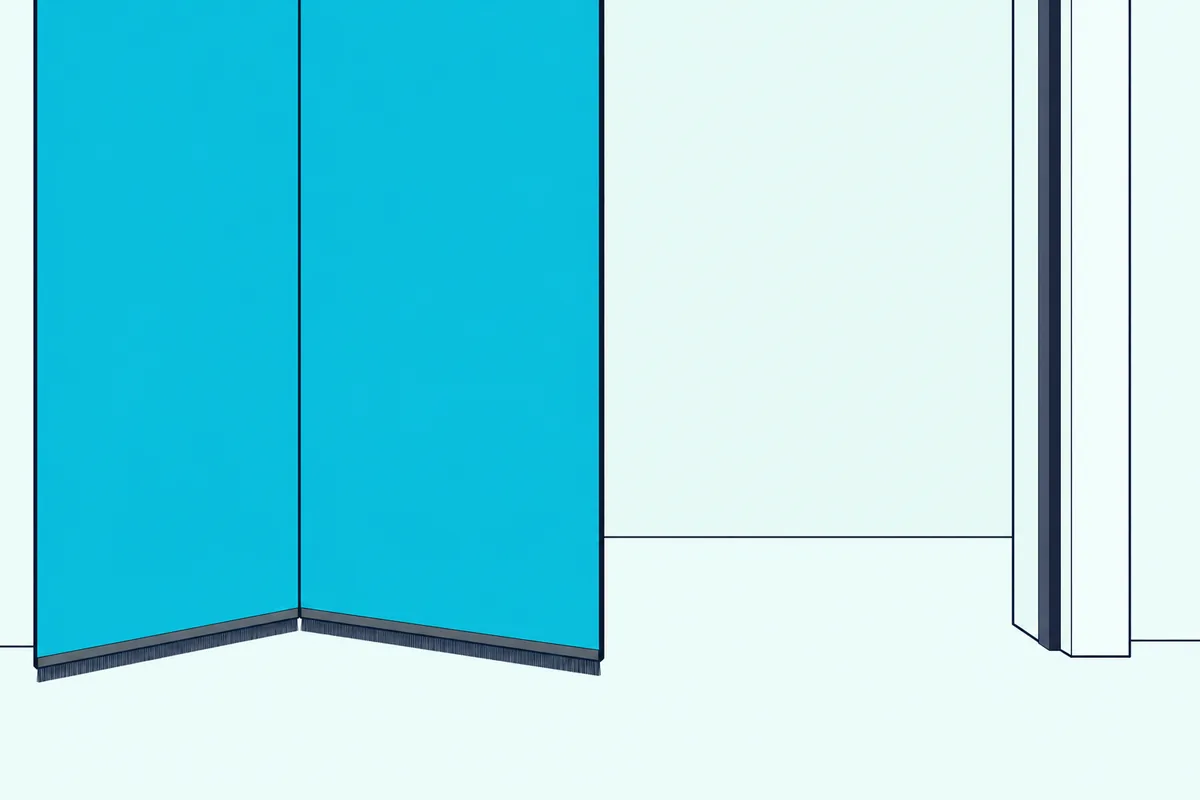
For the jamb where the lead panel closes, Kikerike’s self-adhesive foam weatherstrip is the simplest fix.
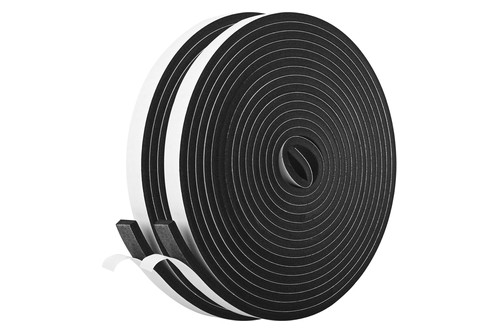
Kikerike’s self-adhesive foam weatherstrip
Its listing sells it as high-density foam insulation strip in two 21-foot rolls, 1/2 inch wide and 1/4 inch thick, far more than one closet’s jambs need.
For the edges that slide past the frame as the doors fold, TamBee’s pile brush strip fits better than foam.
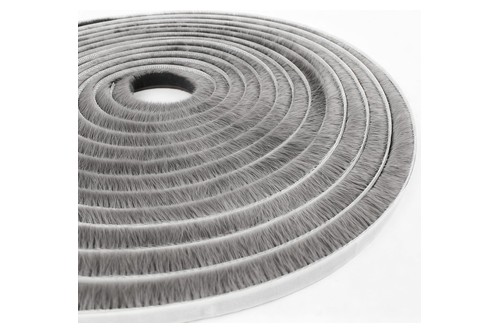
TamBee’s pile brush strip
The listing sells it for sliding window and door frames as a 3/8-inch by 3/8-inch strip, 16.5 feet long, that you cut to length.
For the gap under the panels, VITAM AMO’s peel-and-stick silicone sweep trims to fit.
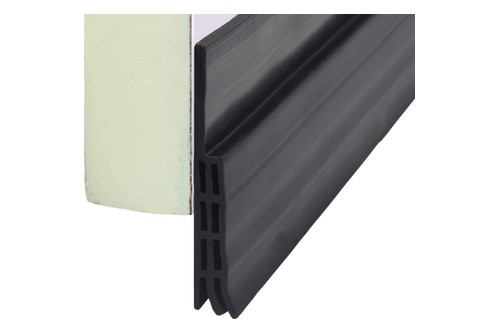
VITAM AMO’s peel-and-stick silicone sweep
Its listing says it seals gaps up to 1-3/32 inches on carpet or hardwood, and one 39-inch strip cut in two covers a two-panel set for a 36-inch opening, which JELD-WEN makes 1/2 inch narrower than the opening. None of the three carries a sound rating, and each was in stock with at least 4.0 stars and 50 reviews on Amazon on 7 October 2026.
One closet is different: a washer or dryer behind a bifold needs the air openings its maker specifies, and Burton Acoustix’s laundry room guide explains how that limits how tightly the door can seal.
If the room must be quiet, replacing the bifold with a hinged solid-core door and seals is the bigger step. That’s the kind of door behind HUD’s 33, with vinyl seals around its edges.
What Should You Check Before You Buy?
Those seals help, but a new door is the bigger lever, so check four things first:
- A published STC (lab) or FSTC (field) rating for the whole door system, not just its glass or core materials.
- Seals on every edge, like Woodfold’s sweep strips or Modernfold’s top and bottom sweeps.
- Real weight: the partitions rated STC 39 to 41 here weigh 3-1/4 to 5 pounds per square foot.
- The room’s limits, from a laundry closet’s air openings to the glass a patio door is tested with.
A door that can’t show you the first item on that list is a divider, whatever its listing calls it.
The Bottom Line
For a wide opening that has to fold, Woodfold’s H4100 and NanaWall’s acoustic glass walls are the documented choices, at STC 41 and up to 45.
For a closet bifold, a solid core plus foam, brush and a sweep makes it quieter, and a hinged solid-core door with seals is the step HUD’s numbers reward.
Frequently Asked Questions
Can bifold doors be soundproof?
Ordinary closet bifolds won’t get close, because they hang with gaps by design: JELD-WEN’s instructions leave at least 1/4 inch at the jamb plus room for a track above and a floor bracket below. Purpose-built folding doors come much closer. Woodfold’s H4100 accordion partition rates STC 41, and NanaWall’s NW Acoustical 645 folding glass wall rates up to STC 45. Andersen describes STC 36 to 40 as the level where even loud conversations would hardly be audible.
How do you quiet bifold doors?
For noise coming through, seal the gaps: foam on the jamb the lead panel closes against, a brush strip on the edges that slide and a sweep under each panel. If the doors won’t stay shut, JELD-WEN’s instructions move the snugger an extra 1/8 inch toward the doors so they snap shut but reopen with a tug, and reset the pivot brackets for a 1/4-inch clearance at the jamb.
Are accordion doors soundproof?
Only the rated ones come close. Woodfold’s single-wall Series 2100 rates STC 21, its continuous-vinyl H3100 rates 31 and its H4100, with steel strips in each fold, rates 41. Modernfold’s Soundmaster, with a steel sound liner, rates 39 or 40, while Modernfold’s lighter accordion models list no rating, and the three “soundproof” Vyrata folding doors Google lists from Amazon give none either.
Is a solid core bifold door worth it?
Yes, if you also seal the gaps. JELD-WEN rates its molded doors at STC 25 to 27 hollow and 29 to 32 solid, and Masonite says solid cores bring a dramatic improvement in quality for minimal cost. NGP’s sheet shows how much the seals carry, though: standard solid-core wood doors test at about STC 28 to 30 with gasketing and 15 to 20 without it.
Which doors are best for soundproofing?
Doors sold with a tested rating and full seals. Among folding doors that means acoustic partitions such as Woodfold’s H4100 at STC 41 or NanaWall’s acoustical glass walls at up to STC 45. For an ordinary residential doorway, HUD’s guidebook favors a heavier solid-core door that is well sealed, which held a 48 STC wall at 33 where a hollow-core door dropped it to 24.