How to Make a Soundproof Box: What the Numbers Say
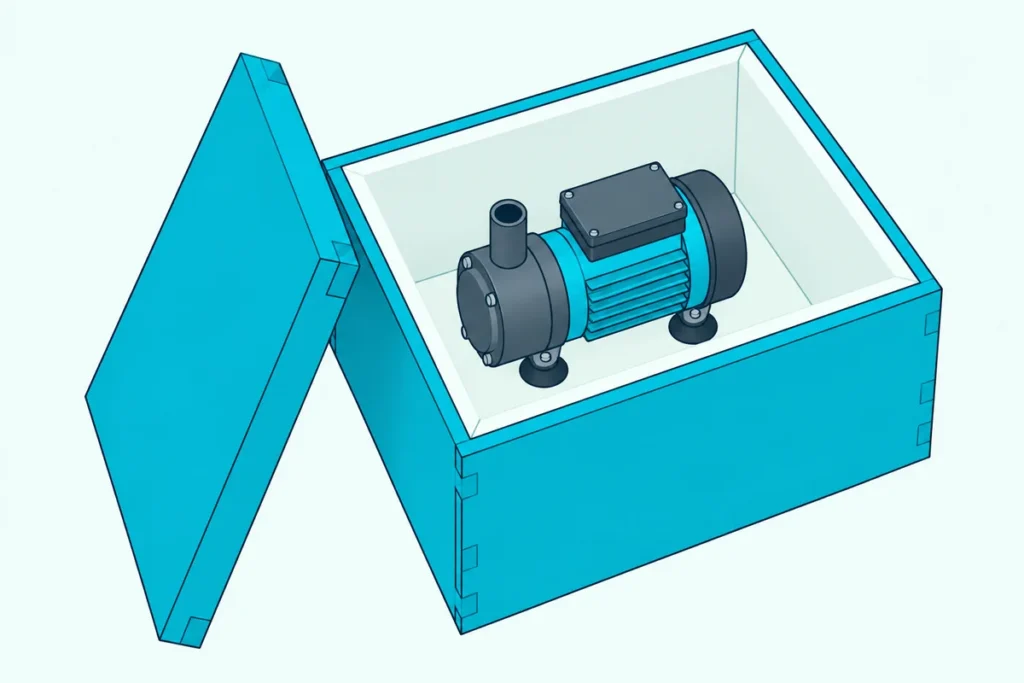
A pump hums in the corner all night, and the obvious fix is a box, so you look up how to make a soundproof box and find advice to glue foam inside a carton.
That carton will change how the hum sounds inside and barely change how loud it is outside, because foam soaks up echo but doesn’t block sound.
This guide covers what a box needs to cut noise, which wall materials block the most, how gaps, vents and vibration undo the work, and how to build and test one.
You’ll see real numbers from workplace-safety regulators, a step-by-step build, four products worth buying and what should never go inside.
Start with how quiet a box can really get, because that honest answer sets every decision after it.
How Quiet Can a DIY Soundproof Box Get?
Quiet enough to matter but never silent: OSHA’s Technical Manual says an acoustical enclosure can provide 20 to 40 dB of noise reduction, and WorkSafe Victoria says a well-designed full enclosure can cut plant noise by as much as 30 to 40 dB (OSHA, WorkSafe Victoria).
Decibels work on a logarithmic scale, and OSHA says doubling the sound power raises the level by 3 dB. So a 30 dB cut means the box has halved the sound power about ten times over.
A box with a lid, a vent and a cable hole has openings, and WorkSafe says openings cap how much an enclosure can achieve, as the section on gaps shows. It also only treats noise you put inside it, so it does nothing for sound that comes from somewhere else.
Is a Box Even the Best Fix for a Noisy Machine?
Sometimes not, because quieter fixes at the source can be cheaper. WorkSafe says to review the noise source first, and it lists eliminating noisy processes, substituting quieter equipment and using engineering controls such as isolation mounts, damping of vibrating panels and silencers, which it says may prove more cost-effective and less restrictive than enclosures.
Distance is the free fix. OSHA says that in a free field the sound pressure level drops 6 dB each time the distance from the source doubles, though indoors the reflections from walls make the drop smaller than that.
So try moving the machine, mounting it on rubber feet and tightening any loose panels first, and build the box only if the noise is still a problem.
Get Studio Tips Weekly
Join 5,000+ creators getting acoustic treatment advice every week.
No spam. Unsubscribe anytime.What Does a Soundproof Box Need to Work?
Five things, and leaving one out is what makes most DIY boxes disappoint: a dense shell, sealed joints, an absorbent lining, vibration isolation and a lined vent. WorkSafe’s guidance covers each of them, and it says a well-designed full acoustic enclosure should be relatively airtight and lined with high-density sound-absorbing material.
| Job | What it does | What the guidance says |
|---|---|---|
| Dense shell | Blocks sound passing through the walls | Dense, heavy materials are typically more effective (WorkSafe) |
| Sealed joints | Stops sound leaking around the walls | Gaps and openings limit performance (WorkSafe) |
| Absorbent lining | Stops sound building up inside | Line at least half the surface with 50 mm or more (WorkSafe) |
| Vibration isolation | Stops the machine from shaking the box | Avoid rigid connections between the machine and the enclosure (WorkSafe) |
| Lined vent | Lets heat out without letting noise out | Use silencer-design vents (WorkSafe) |
WorkSafe’s diagram of a pump-motor enclosure shows all five at once: resilient flanges where equipment enters, a silencer-design air vent, a steel casing, an absorbent lining, neoprene sealing the gap to the floor and a resilient vibration mounting.
Each job gets its own section below, in roughly the order you’d build them, and our guide to mass, damping and decoupling explains the general principles behind them.
Which Wall Material Blocks the Most Sound?
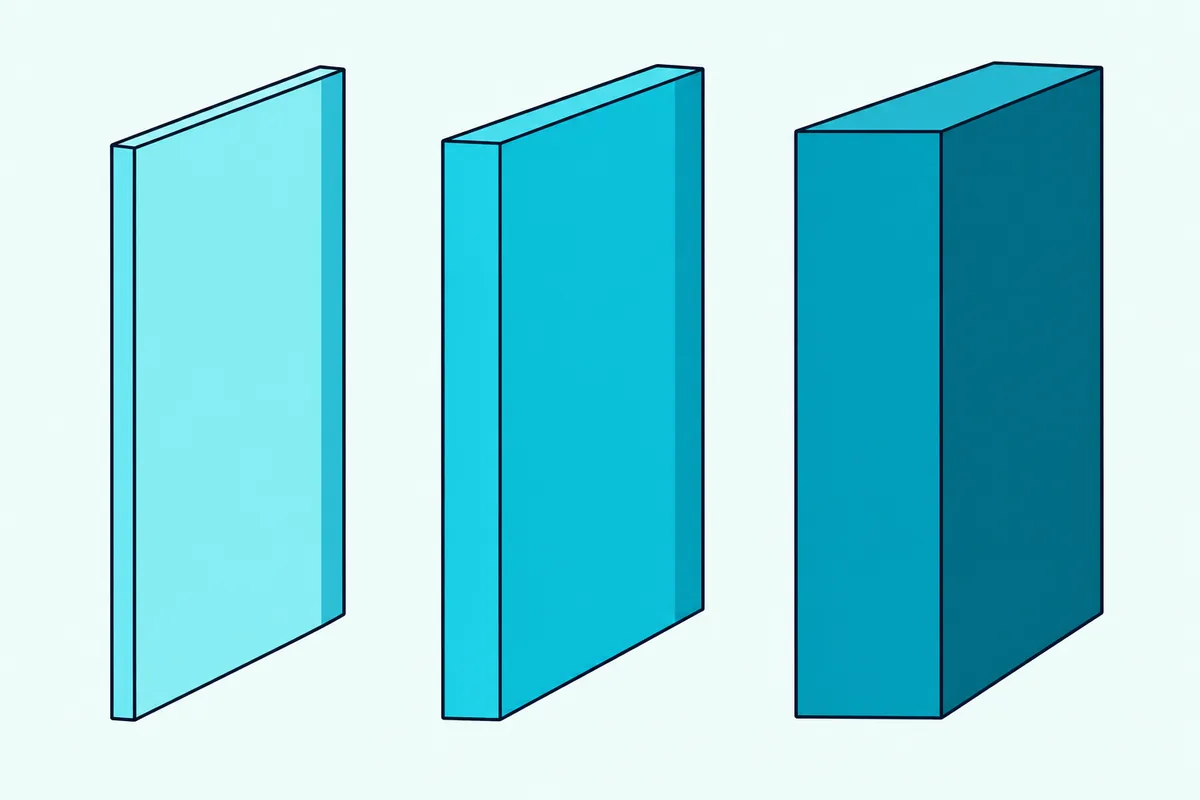
The shell comes first, and the answer is the densest, heaviest material you can work with, sealed at every joint. WorkSafe lists bricks, concrete, metal, plywood, MDF, plaster, glass and Perspex as suitable, and says the heavier and denser the material, the more noise it typically stops.
| Wall material | 500 Hz | 1,000 Hz | 2,000 Hz | 4,000 Hz |
|---|---|---|---|---|
| Plywood, 6 mm | 20 dB | 24 dB | 28 dB | 27 dB |
| Plywood, 19 mm | 27 dB | 28 dB | 25 dB | 27 dB |
| MDF, 12 mm | 20 dB | 24 dB | 30 dB | 31 dB |
| Plasterboard, 13 mm | 21 dB | 31 dB | 33 dB | 27 dB |
| Chipboard, 19 mm | 25 dB | 30 dB | 26 dB | 32 dB |
| Sheet metal, 13 mm | 31 dB | 33 dB | 35 dB | 48 dB |
| Hollow concrete block, 100 mm | 37 dB | 43 dB | 44 dB | 50 dB |
The figures are WorkSafe’s transmission loss data, which is how many decibels the wall stops at each pitch, so a bigger number is better. Most rows rise as the pitch rises, which means a deep hum will usually be blocked less than the 500 Hz column suggests.
Two rules from WorkSafe matter more than any single row. Choose materials that give about 10 dB more reduction than you need, to cover the weak spots, and know that using two sheets of a material instead of one sheet of the same material and thickness can improve noise reduction by up to about 10 dB.
Does a Cardboard Box Lined With Foam Work?
Barely, because cardboard is light and foam mostly absorbs rather than blocks. OSHA says sound absorption reduces the buildup of reflected sound but does nothing for the sound that travels straight from the source.
WorkSafe’s list of suitable wall materials doesn’t include cardboard, and its advice is that dense, heavy walls are what stop noise. If a carton is all you have, use it as a template for cutting real panels instead of as the box itself.
Why Do Gaps Matter More Than Thickness?
Because sound leaks through any opening, and WorkSafe says that without absorbent material a 10% gap limits an enclosure to about 9 dB while a 5% gap limits it to about 19 dB. A thick wall with an unsealed lid can lose more than a thin wall with a tight one.
OSHA adds that repeated disassembly creates small open paths along panel joints, which it calls sound flanking, and that enclosures need periodic maintenance such as replacing seals and gasket material.
Seal every seam, gasket the lid and make cable entries tight, using flexible sealant around anything that passes through. Where an opening can’t be avoided, WorkSafe suggests lined tunnels, self-closing flaps or brushes.
What Should You Line the Inside With?
Mineral wool, glass wool or polyurethane foam, at least 50 mm thick and covering at least half the inside surface, according to WorkSafe. Its absorption table shows why thickness matters most at low pitch.
| Absorber | 250 Hz | 1,000 Hz | 4,000 Hz |
|---|---|---|---|
| Mineral wool, 25 mm | 0.23 | 0.82 | 0.75 |
| Mineral wool, 50 mm | 0.57 | Not listed | 0.81 |
| Mineral wool, 100 mm | 0.92 | Not listed | 0.89 |
| Foam, 25 mm | 0.12 | 0.40 | 0.83 |
| Foam, 50 mm | 0.22 | 0.82 | 0.98 |
The numbers are absorption coefficients, where a larger number means more of the sound is soaked up. Thin foam absorbs very little at 250 Hz, while 100 mm of mineral wool absorbs 0.92 there.
WorkSafe says absorbent often needs a protective facing such as perforated metal or thin plastic sheet, and that at least 25% of the facing should be open for the absorbent to work. OSHA adds that the internal absorption material deteriorates over time, so plan to check it.
Our comparison of Rockwool and fiberglass insulation covers how the two fibers differ if you’re choosing between them.
How Do You Stop Vibration From Turning the Box Into a Speaker?
Keep the machine from touching the shell rigidly, because WorkSafe says rigid connections let mechanical vibration travel into the enclosure and radiate as sound. Put the machine on resilient mounts, and let the box sit on neoprene or similar material instead of bare floor.
Pipes, cables and ducts shouldn’t touch the box either. WorkSafe says to use flexible pipe sections or flexible sealants so the services stay mechanically separate.
Double walls help for the same reason. WorkSafe says they can reduce noise 10 to 20 dB more than a single wall of the same weight, and its examples rise from an average 37 dB for two 13 mm plasterboard sheets with a 5 cm cavity to 47 dB with a 15 cm cavity and 55 dB with that cavity filled with 30 mm of mineral wool.
A small box can’t always have a wide cavity, and WorkSafe also says to build the enclosure as large as you can, because noise builds up in close-fitting ones. If space is short, use higher-reduction materials and line the inside.
How Do You Let the Machine Breathe Without Letting Noise Out?
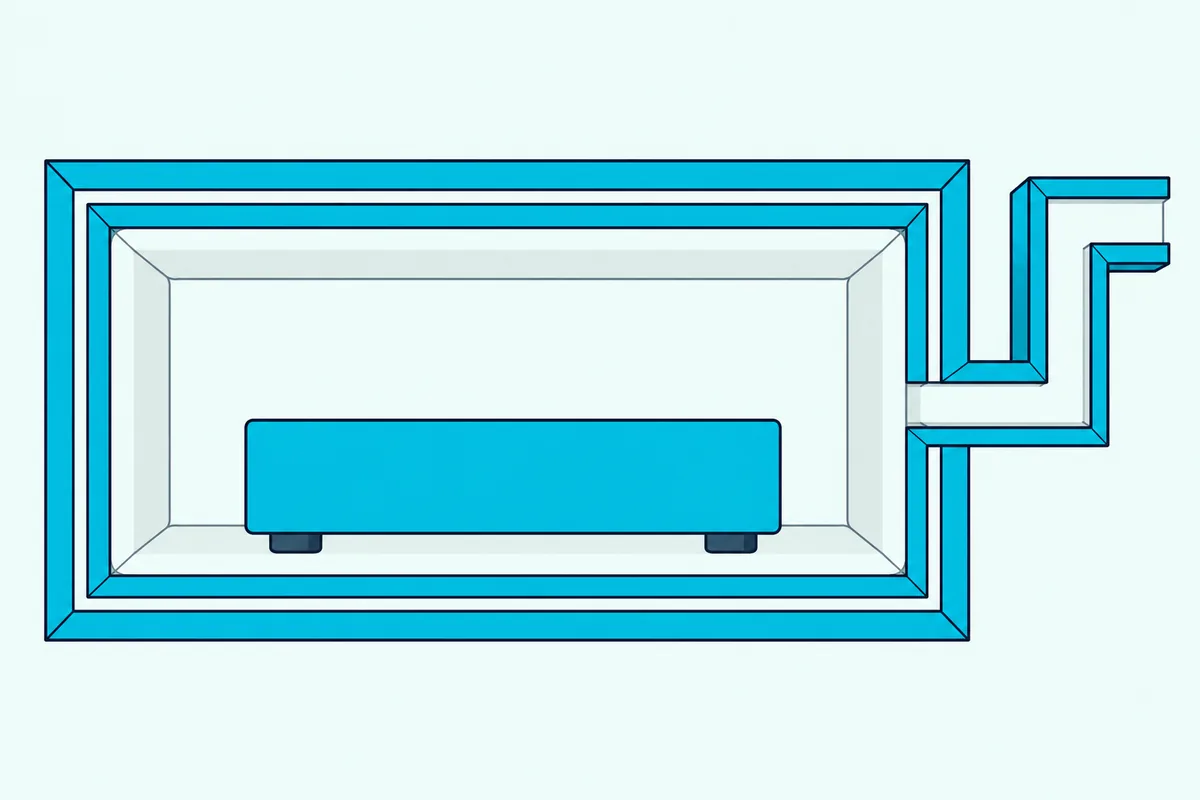
Give it a vent that sound has to travel down instead of through. OSHA lists heat buildup among the problems with enclosures, and WorkSafe says to line natural vents with sound-absorbing material.
For a duct or silencer to cut 15 to 30 dB, WorkSafe says the absorbent lining should be at least 3 times the maximum duct diameter and preferably up to 6 times. Its diagram of lined enclosure walkways shows the same idea in MDF, with vent holes and no direct line of sight.
If the machine needs a fan, WorkSafe says large, slowly rotating fans are generally quieter than small, high-speed ones. Our guide to lining and baffling a vent covers the ductwork side in more detail.
How to Make a Soundproof Box, Step by Step
Follow these steps in order, because each one protects the work before it.
-
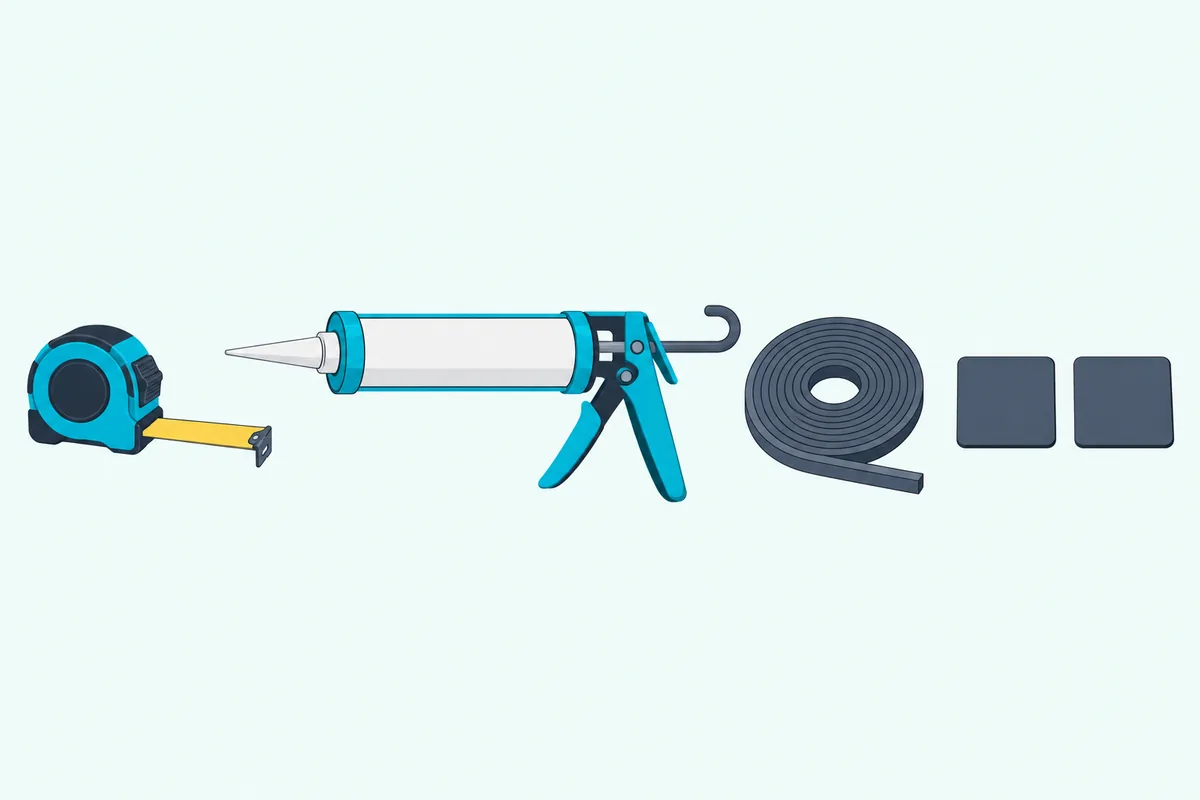
Measure the machine and leave generous room on every side, since WorkSafe says bigger enclosures suffer less noise buildup.
-
Cut the panels from MDF or plywood, and use two layers where you can, since WorkSafe says two sheets can improve reduction by up to about 10 dB.
-
Join the panels with no gaps, and run acoustical caulk along every seam.
-
Line the inside with at least 50 mm of mineral wool or foam, covering at least half of the surface, and cover it with a perforated facing, which WorkSafe says protects absorbent from damage and dirt.
-
Put neoprene under the machine and under the box, and keep every cable and pipe from touching the walls.
-
Fit a foam gasket where the lid meets the box, and close the lid firmly enough to compress it.
-
Add a lined, offset vent sized for the heat the machine gives off.
-
Pass cables through a tight notch sealed with flexible sealant, then measure the result as shown below.
What If the Machine Can’t Be Fully Enclosed?
A partial enclosure or a barrier still helps, though less. WorkSafe says partial enclosures can reduce noise by about 10 dB and generally don’t match a full enclosure, and that barriers and screens suit cases where about 5 to 7 dB is enough.
Build a partial enclosure like a full one, keeping the number and size of openings to a minimum and pointing them away from where you sit. WorkSafe’s rule for barriers is to make them as tall and wide as possible and to place them close to the source or to you.
Barriers work less well in a hard, reflective room, so WorkSafe suggests lining reflective surfaces with sound-absorbing material and sealing gaps at floor level.
What Should Never Go Inside a Soundproof Box?
Anything that burns fuel, such as a generator, because it produces carbon monoxide. CDC says never to use generators, grills or other gasoline-, propane- or charcoal-burning devices inside your home, garage or carport or near doors, windows or vents, because the gas is odorless and colorless and kills more than 500 Americans each year (CDC).
If a generator is the machine you’re trying to quiet, our guide to quieting a generator without trapping its exhaust covers the fixes that stay safe.
Heat is the other limit. A machine that runs hot needs an airflow path, and OSHA names heat buildup as a problem for enclosures, so check the machine’s manual before you box it in.
Pool pumps show why: Pentair’s IntelliFlo3 and Jandy’s VS FloPro manuals warn against installing those pumps inside an outer enclosure, so how to soundproof a pool pump starts with the fixes that leave the motor in open air.
Animals belong on that list too, and Burton Acoustix’s chicken coop guide explains why a rooster’s coop has to stay ventilated.
Our guide to building a soundproof box for a noisy machine covers air compressors, pool pumps, 3D printers and generators one by one.
Compressor makers set their own limits, from Makita’s 12 inches of open air to DeWalt’s ban on confined areas, and Burton Acoustix’s air compressor guide sets them out before any build.
Printers bring a filament limit instead, since Bambu Lab and Prusa both warn that PLA can clog in a closed, warm enclosure, and Burton Acoustix’s 3D printer guide covers the quieter fixes to try first.
A hot tub motor already lives in a box, the spa’s own cabinet, and Hot Spring and Bullfrog both tie blocked cabinet vents to an overheating pump, so soundproofing a hot tub motor means quieting the pump and its mounting while the cabinet keeps breathing.
Kitchen blenders belong on the list as well, since NutriBullet warns that covering a blender’s motor base traps heat, and Burton Acoustix’s blender noise guide sticks to the enclosures blender makers build.
Can You Measure the Result With a Phone App?
Measure the noise at the same spot with and without the box, and compare the two readings. NIOSH’s free Sound Level Meter app is accurate within plus or minus 2 dBA and meets Type 2 requirements of the IEC 61672 standard with a calibrated external microphone, but it runs only on iOS because NIOSH can’t verify Android apps (CDC).
For a wall or a door rather than a box, our guide to measuring soundproofing between two rooms adds the background-noise check and what a 3, 5 or 10 dB change sounds like.
Since OSHA says doubling the sound power raises the level by 3 dB, a drop smaller than about 3 dB means the box isn’t doing much. WorkSafe’s figures give a yardstick: about 10 dB for a partial enclosure and 30 to 40 dB for a well-designed full one.
Re-test after every fix, starting with the lid seal and the vent, because those are the usual leaks.
Which Materials Are Worth Buying?
The walls come from a hardware store, so the four items below are the small parts that decide whether those walls work. Each one was in stock on Amazon on 1 October 2026, and each listing’s facts are given as it states them.
Is Acoustical Caulk the Right Sealant for the Seams?
This 29-ounce tube of acoustical caulk comes with a cleanup wipe, and its listing says it’s an acoustical sealant by the Green Glue Company, separate from Green Glue’s damping compound.
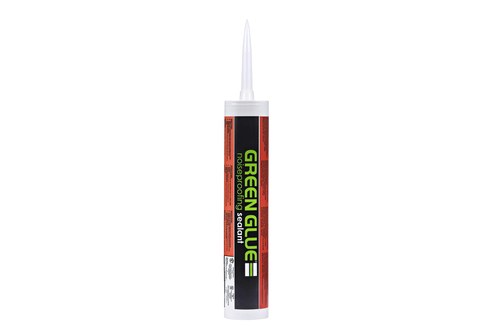
This 29-ounce tube of acoustical caulk
Use it along every seam and around every pipe or cable that passes through the wall, since WorkSafe says gaps set the ceiling.
Is 2-Inch Mineral Wool Enough for the Lining?
This 3-pack of 12 by 12 by 2 inch Rockwool ProRox mineral wool pieces gives you 2-inch, or about 51 mm, slabs, which meets WorkSafe’s 50 mm minimum for a lining, and the listing gives the density as 6 pounds per cubic foot.
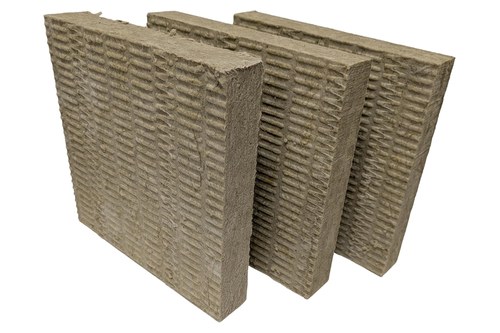
This 3-pack of 12 by 12 by 2 inch Rockwool ProRox mineral wool pieces
The listing says it cuts with a knife or serrated blade. WorkSafe says absorbent often needs a protective facing, so cover the slabs with a perforated or open-weave one.
Which Weatherstripping Works for the Lid Seal?
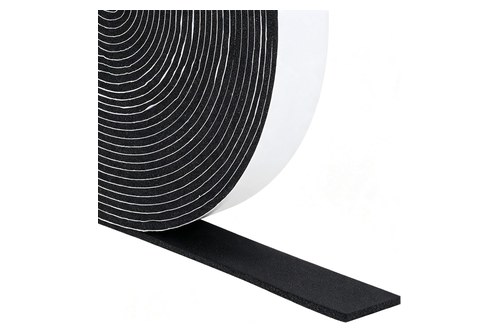
DGSL foam weather stripping comes as a 33-foot roll listed as 1 inch by 1/8 inch, according to its listing.
DGSL foam weather stripping
Fit it where the lid meets the box and close the lid firmly so the foam compresses, because WorkSafe says doors, hatches and windows must be tightly sealed.
What Should the Machine Sit On?
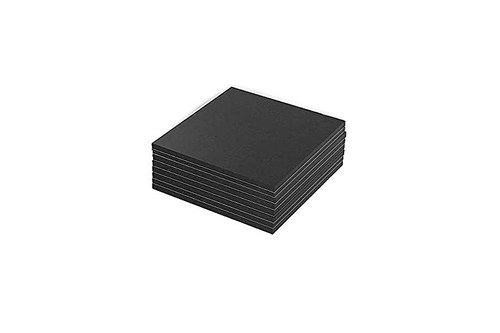
This set of eight neoprene foam anti-vibration pads has 6 by 6 inch squares that are 1/8 inch thick with an adhesive backing, according to its listing.
This set of eight neoprene foam anti-vibration pads
Put them under the machine and under the box, since WorkSafe says to avoid rigid connections and to isolate the enclosure if floor vibration is an issue.
The Bottom Line
A soundproof box works when it’s dense, sealed, lined, isolated and vented, and it fails when any one of those is skipped. Expect 20 to 40 dB at best from a careful build, and don’t expect foam in a carton to get anywhere near it.
Start with double MDF or plywood walls, seal every seam, line at least half the inside with 50 mm or more of mineral wool, and give the machine a lined vent. Then measure the result and fix the lid and vent first.
Frequently Asked Questions
How much does a soundproof box reduce noise?
OSHA says an acoustical enclosure can provide 20 to 40 dB of noise reduction, and WorkSafe Victoria says a well-designed full enclosure can cut plant noise by as much as 30 to 40 dB. A home build with openings will usually do less.
What is the best material for a soundproof box?
Dense, heavy material such as MDF or plywood in two layers. WorkSafe says the heavier and denser the wall, the more noise it typically stops, and that two sheets can improve reduction by up to about 10 dB.
Can I make a soundproof box out of cardboard?
It won’t do much, because cardboard is light and foam mostly absorbs. OSHA says absorption doesn’t reduce the sound that travels straight from the source.
Does acoustic foam make a box soundproof?
No, it absorbs sound inside the box rather than blocking it. WorkSafe’s table gives 50 mm of foam an absorption coefficient of 0.82 at 1,000 Hz but only 0.22 at 250 Hz.
Can I put an air compressor or pump in a sealed box?
Only with a vent, because OSHA lists heat buildup as a problem for enclosures. Line the vent with absorbent and follow the machine’s manual.
Is it safe to put a generator in a soundproof box?
No. CDC says never to use generators inside a home, garage or carport or near doors, windows or vents because of carbon monoxide, so check the maker’s manual and our machine guide before you build anything around one.
Is a partial enclosure worth building?
Yes if a full box isn’t practical, but expect less. WorkSafe says partial enclosures can reduce noise by about 10 dB, against 30 to 40 dB for a well-designed full one.
Does moving a noisy machine farther away help?
Yes, and it costs nothing. OSHA says the level drops 6 dB each time the distance from the source doubles in a free field, though indoor reflections make the drop smaller.