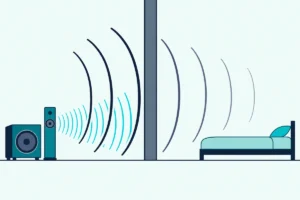
How to Soundproof a Chicken Coop Without Harming the Flock
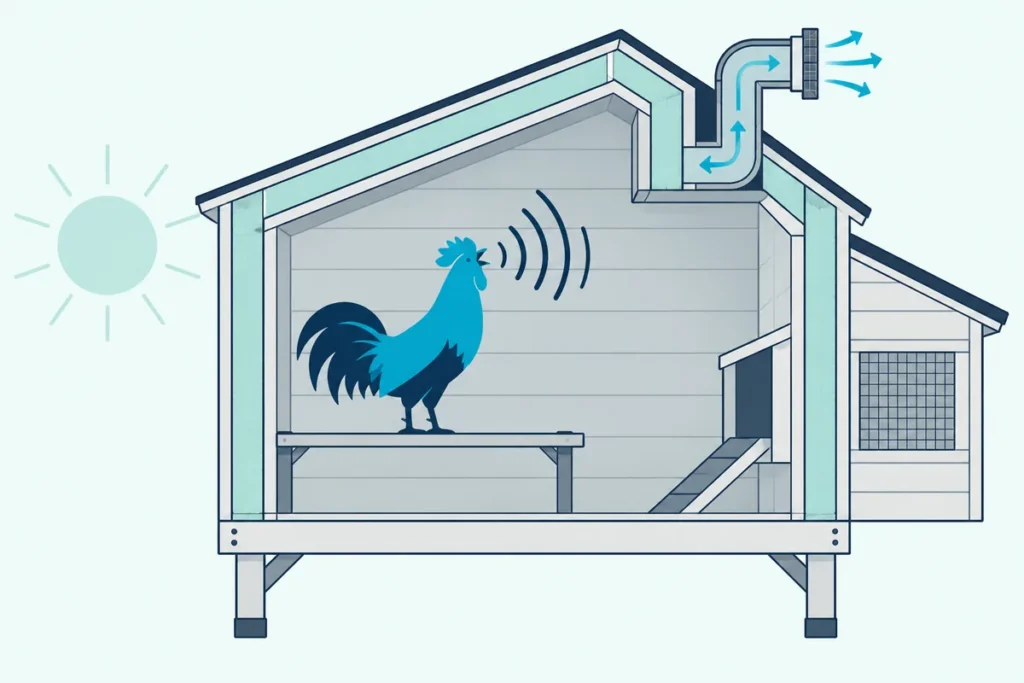
If your rooster crows before dawn and a neighbor has started complaining, a soundproof chicken coop sounds like the obvious fix, and it can help, but only so far.
A crow is reported at about 100 dB a meter from the bird, and the walls that would hold it in must also let out a flock’s ammonia, moisture and heat.
Built right, with heavier walls and lined, offset vents, a coop cuts what reaches the neighbor while the birds keep their fresh air.
This guide draws on extension guides, RSPCA Australia, three rooster studies, WorkSafe Victoria’s enclosure guidance and four local rules.
Start with the steps, then check the numbers and welfare limits behind each one.
How Do You Soundproof a Chicken Coop?
Those steps center on the night coop, since the University of Kentucky’s extension guide names crowing roosters as the main noise complaint about backyard flocks. You soundproof a chicken coop by adding mass to its walls, sealing every gap except the vents, lining those vents so sound turns corners, and watching heat and ammonia.
| What to do | Why |
|---|---|
| Add a plywood layer or mass loaded vinyl under a lining | Heavy walls block more sound |
| Seal joints, doors and nest-box lids | An unlined 10% opening caps an enclosure at about 9 dB |
| Fill wall cavities with covered mineral wool | A filled cavity blocks more sound |
| Put vents high and line them so air turns a corner | Air exchange clears ammonia and moisture |
| Shutter windows at night | Light, even headlights, can set off crowing |
| Watch heat, humidity and the smell of ammonia | Ammonia shouldn’t exceed 25 ppm |
The wall work matches what you’d do to soundproof a shed, but a coop can never be airtight.
How Loud Is a Rooster’s Crow?
That first step matters because the source is loud. Crowing has been reported at about 100 dB measured 1 meter from the bird, and University of Antwerp researchers recorded up to 142.3 dB at the rooster’s own ear canal (Claes et al., 2018).
FHWA’s noise primer says sound from one point drops about 6 dB per doubling of distance, and that 10 dB less sounds about half as loud (FHWA).
By our arithmetic, ignoring walls and wind, a 100 dB crow is still about 76 dB at 16 meters (52 feet), and the University of Kentucky’s guide says roosters crow at any time of day or night (UKY).
Get Studio Tips Weekly
Join 5,000+ creators getting acoustic treatment advice every week.
No spam. Unsubscribe anytime.How Much Quieter Can a Coop Get?
That 76 dB is what the coop has to cut, and the ceiling depends on how closed it can be. WorkSafe Victoria says a relatively airtight, lined enclosure can cut machine noise by as much as 30 to 40 dB and a partial one by about 10 dB (WorkSafe Victoria).
A coop must stay open to air, so plan on the partial end unless its vents are lined, and treat these machine figures, not coop measurements, as a ceiling.
WorkSafe adds that noise builds up in tight enclosures, so give the birds room, as our guide on how to make a soundproof box explains for machines.
Why Can’t You Seal a Chicken Coop Airtight?
That missing 20 to 30 dB is the price of ventilation, which birds can’t do without. Chickens breathe fast, which quickly raises carbon dioxide, moisture and heat, and they pant to cool down because they have no sweat glands, according to University of Maryland Extension.
Oregon State’s guide says ventilation removes ammonia fumes, carbon dioxide and moisture, so build in as much as possible without drafts (Oregon State).
The University of Georgia warns that insulated, fairly airtight houses hold ammonia in, that it shouldn’t exceed 25 ppm, and that if you smell it, you have a problem (UGA).
Heat is the other limit: panting and wings held out are the first signs of heat stress, and a pale comb or lethargy means danger (Texas A&M AgriLife, eXtension).
For checks from the house, TempPro’s TempAir indoor-outdoor thermometer reads temperature and humidity from a sensor up to 500 feet away, per its listing. Mount the sensor out of pecking reach, and aim for the 50 to 70% humidity UGA suggests.
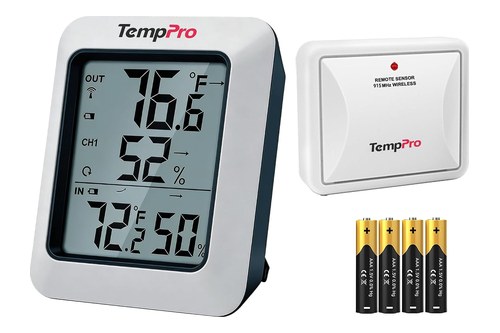
TempPro’s TempAir indoor-outdoor thermometer
How Do You Keep Air Moving Without Letting the Crow Out?
Those limits come down to air, so the vents decide how quiet a safe coop can be. Make the air turn corners: WorkSafe says to line vents with absorbent, and for a duct to cut 15 to 30 dB, its lining should run at least 3 times the duct’s diameter, ideally up to 6.
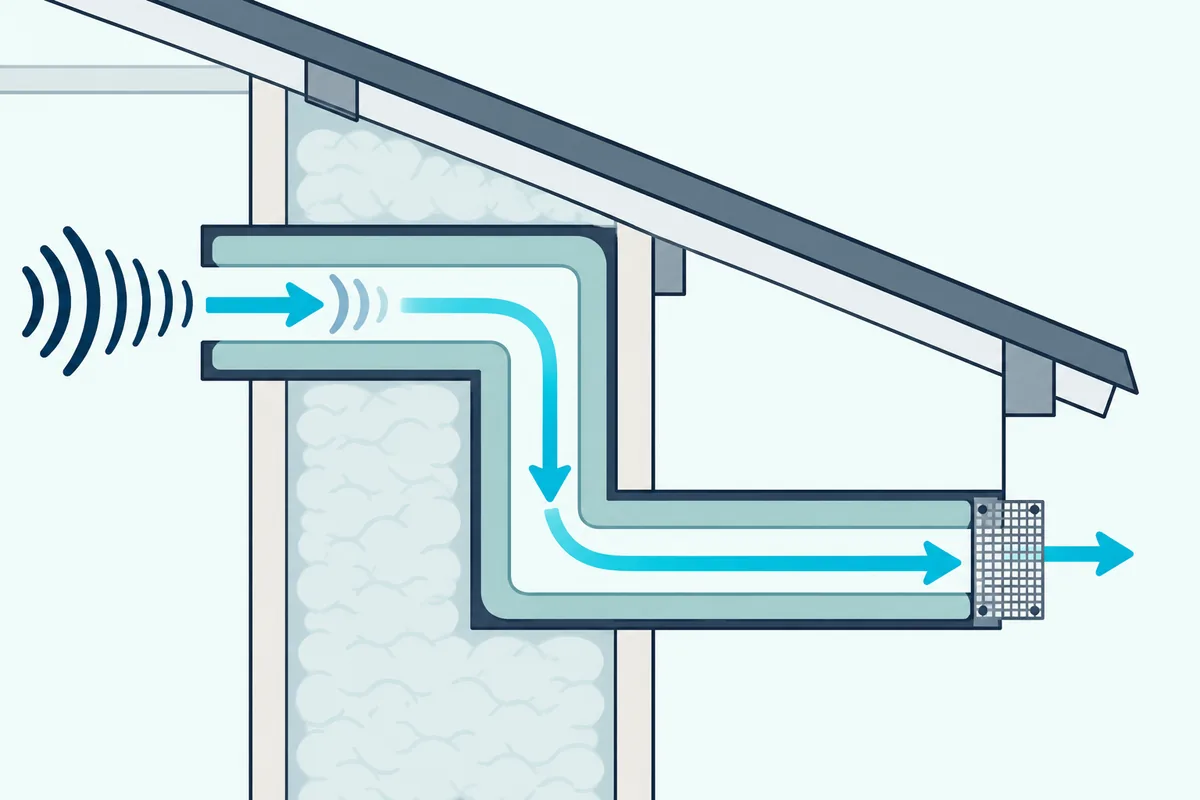
For a 4-inch vent, that’s 12 to 24 inches of lined duct, by our arithmetic.
Put openings high, away from the nearest bedroom and covered with poultry wire as Utah State advises, and in coops under 150 square feet consider the ceiling bathroom fan UConn’s guide suggests (UConn).
What Materials Work in a Coop’s Walls?
Those vents settle the air path, so walls can get heavier. Dense boards work best: WorkSafe’s table gives 19 mm (3/4 in) plywood a transmission loss of 27 dB at 500 Hz, and two sheets can beat one sheet of the same thickness by up to about 10 dB.
Where thicker walls won’t fit, Trademark Soundproofing’s mass loaded vinyl adds 1 pound per square foot at 1/8 inch thick, with an STC 27 rating per its listing.
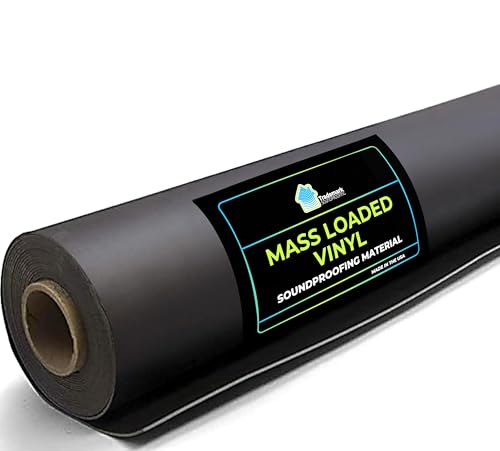
Trademark Soundproofing’s mass loaded vinyl
Cover it and any mineral wool with thin plywood, as Tractor Supply’s coop insulation guide by Gail Damerow does, so roosting birds can’t peck it (Tractor Supply).
Add a vapor barrier against condensation, as the University of Kentucky suggests, without eating into the 3 square feet per bird Oregon State asks for with a run.
Burton Acoustix’s guide to MLV explains where vinyl earns its weight.
Do Rooster Boxes and Dark Coops Stop Crowing?
Those walls hold the crow in, but many keepers also try darkness. Darkness alone doesn’t stop crowing: in Nagoya University’s 2013 study, roosters under round-the-clock dim light still crowed just before dawn each morning, timed by an internal clock (Cell Press).
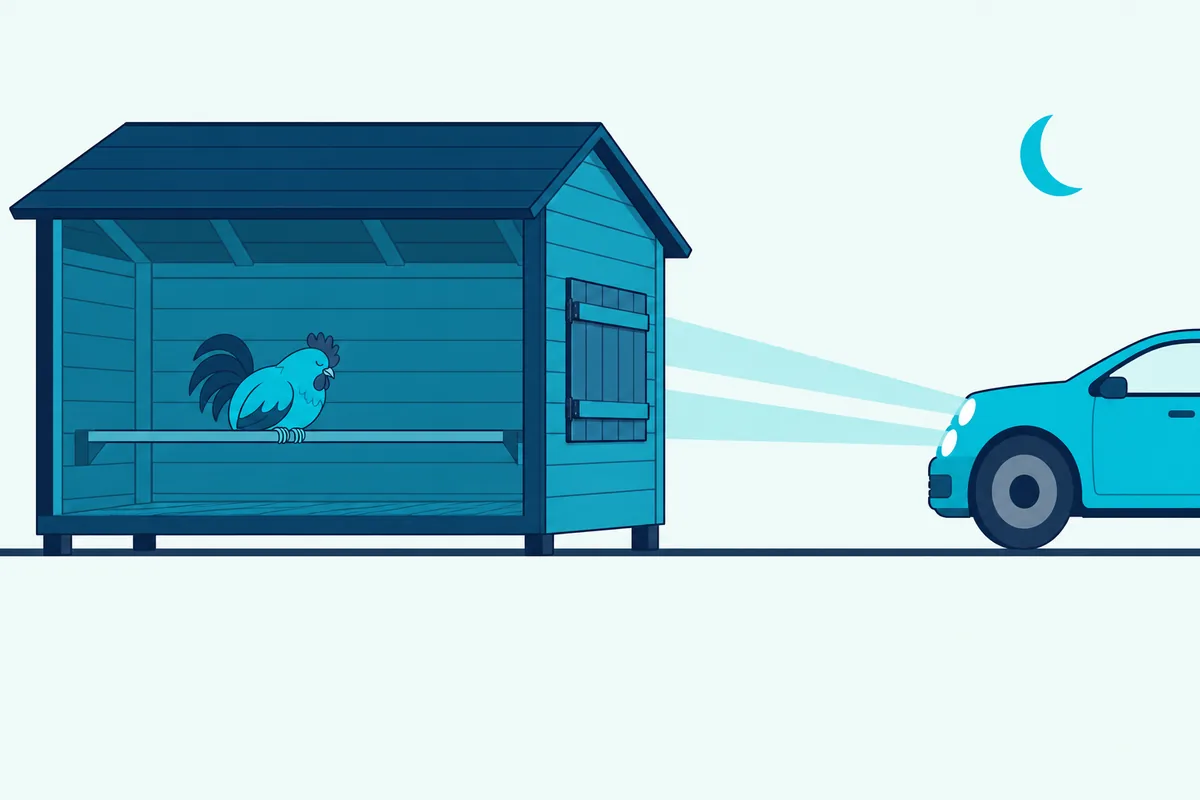
Light still matters: that release says a car’s headlights can set a rooster off, and the team’s 2015 paper says light and other roosters’ crows trigger crowing (Shimmura et al., 2015).
So fit shutters, and point the motion-detector light Oregon State suggests against predators away from coop windows.
Small lightproof night boxes are worse: RSPCA Australia says they raise significant welfare concerns by limiting movement and ventilation, and nothing shows that restricting a rooster’s neck prevents crowing (RSPCA Australia).
A late-opening dark coop shortens hens’ days, and UConn says never to decrease laying hens’ hours of light.
Are No-Crow Collars Safe for Roosters?
Because darkness can’t silence the crow, a collar can look like the next fix. RSPCA Australia says these collars fit snugly to stop the air sac expanding fully, and that they shouldn’t be used because they prevent normal behavior and may cause distress or breathing difficulties.
Where one is used anyway, RSPCA says to fit it correctly, watch closely and remove it at any sign of distress, and it opposes practices that prevent crowing.
The University of Kentucky’s guide is blunter: short of invasive surgery, the only way to avoid crowing noise is not to keep roosters, so we recommend no collar.
What Do Local Rules Say About Roosters?
That advice to keep no rooster is where many local rules start. They ban or cap roosters, set distances from neighbors’ homes or treat long crowing as a noise offense.
| Place | Rule | Source |
|---|---|---|
| Portland, Oregon | No roosters in city limits; coops at least 15 feet from a neighbor’s house | Multnomah County |
| Fort Worth, Texas | Two roosters at most; pens over 50 feet from other homes; crowing 10 minutes or longer can be unlawful | City of Fort Worth |
| Dallas, Texas | A 2023 state law overrode the city’s rooster ban, so roosters are currently lawful | Dallas Animal Services |
| Sacramento County, California | 10,000 square foot minimum lot, rooster limits by parcel and zone, enclosure standards since July 16, 2026 | Sacramento County |
Those setbacks also cut noise: by FHWA’s rule, a coop 50 feet from a neighbor’s wall is about 10 dB quieter there than one 15 feet away, by our arithmetic.
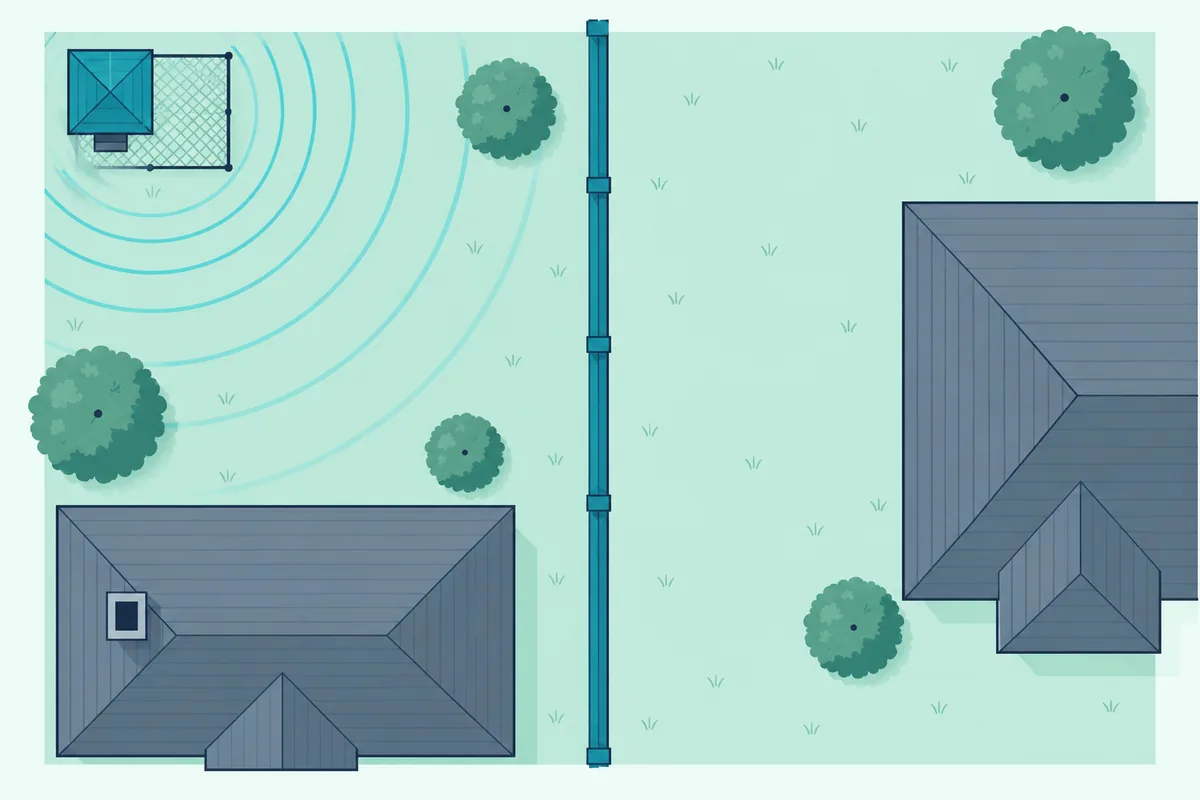
A solid fence helps a little, since WorkSafe pitches barriers at about 5 to 7 dB, and our guide to what blocks noise outdoors covers that build.
Since RSPCA Australia says hens lay with or without a rooster, a hen-only flock sidesteps these rules.
The Bottom Line
A soundproof chicken coop can take a real bite out of a crow, but only with heavy, sealed walls and lined vents, because birds need air more than neighbors need quiet.
Skip the airtight box, the night box and the collar, and check local rules before you build.
Frequently Asked Questions
Can you completely soundproof a chicken coop?
No. It must stay ventilated, and WorkSafe Victoria gives partial enclosures about 10 dB and only relatively airtight, lined ones 30 to 40 dB.
Do hens need a rooster to lay eggs?
No. RSPCA Australia says hens lay eggs with or without a rooster, and without one the eggs are infertile.
Do no-crow collars work?
They aim to quiet the crow by stopping the air sac filling, but no source here measures that, and RSPCA Australia says not to use them because they may cause distress or breathing difficulties.