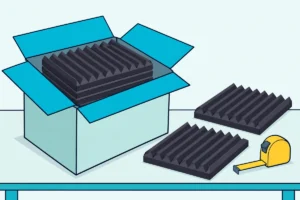
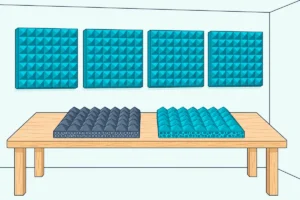
Acoustic foam has minor insulating properties, but typical wall coverage won’t move room temperature in a meaningful way.
Does acoustic foam make a room warmer? Yes, but the “warmer” part is usually comfort, not temperature.
Products in this guide
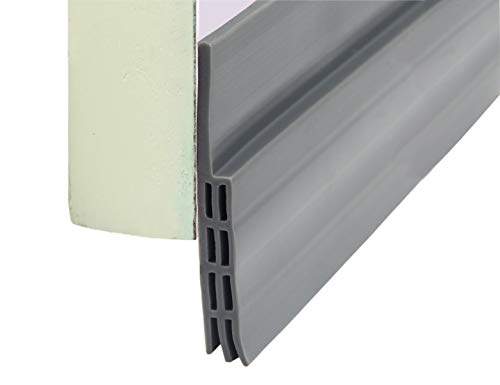
- No tools needed; not for an apartment’s entry door
- Doesn’t change your room’s acoustics
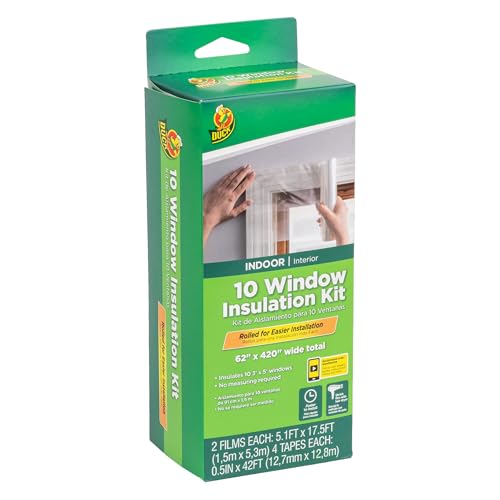
- Reduces window drafts in winter
- DIY install with simple tools
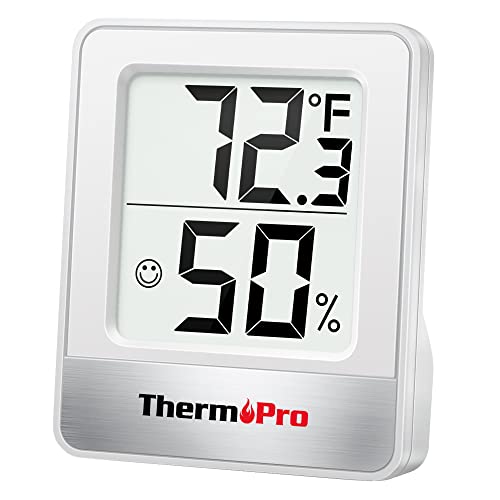
- Helps spot humidity spikes in treated rooms
- Makes tweaks measurable over time
If you treated your walls and the room still feels cold, that mismatch is frustrating and it’s easy to think you bought the wrong foam.
That’s because acoustic foam is designed to absorb reflections inside the room, while heat loss usually comes from drafts, windows, and exterior-wall conduction.
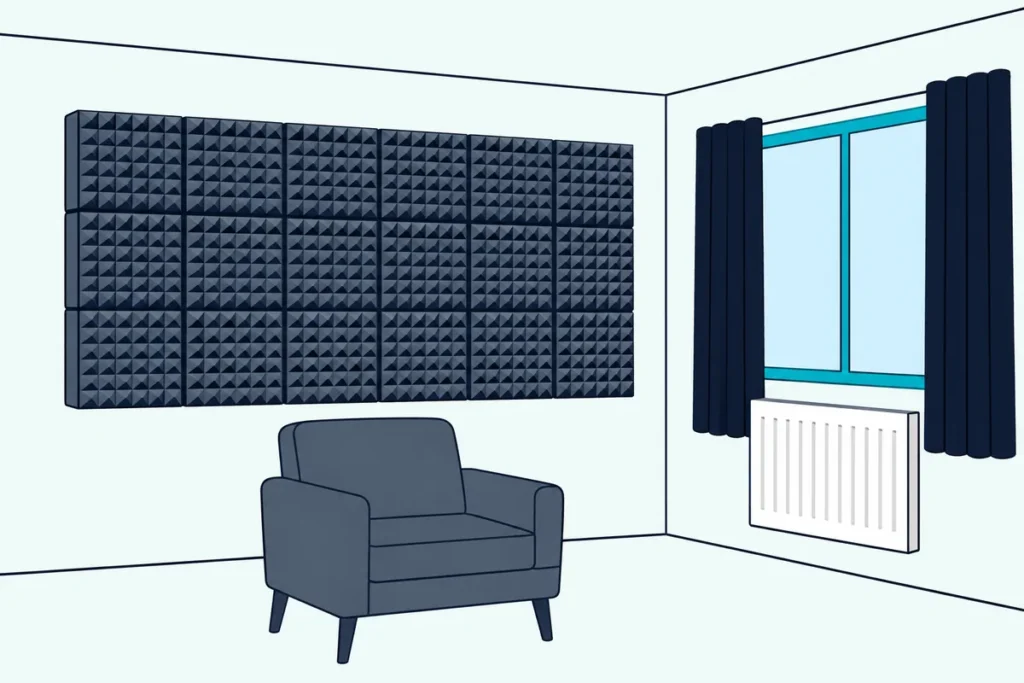
Once you separate those two problems, you can stop chasing foam for warmth and fix what actually changes comfort.
The sections below cover when foam can make a room stuffier, what (if anything) changes the thermostat number, and the first draft checks to start with in a rental.
If warmth is your goal, start with air leaks and windows, then use foam where it shines: reducing echo and harsh reflections.
Understanding Foam’s Thermal Properties
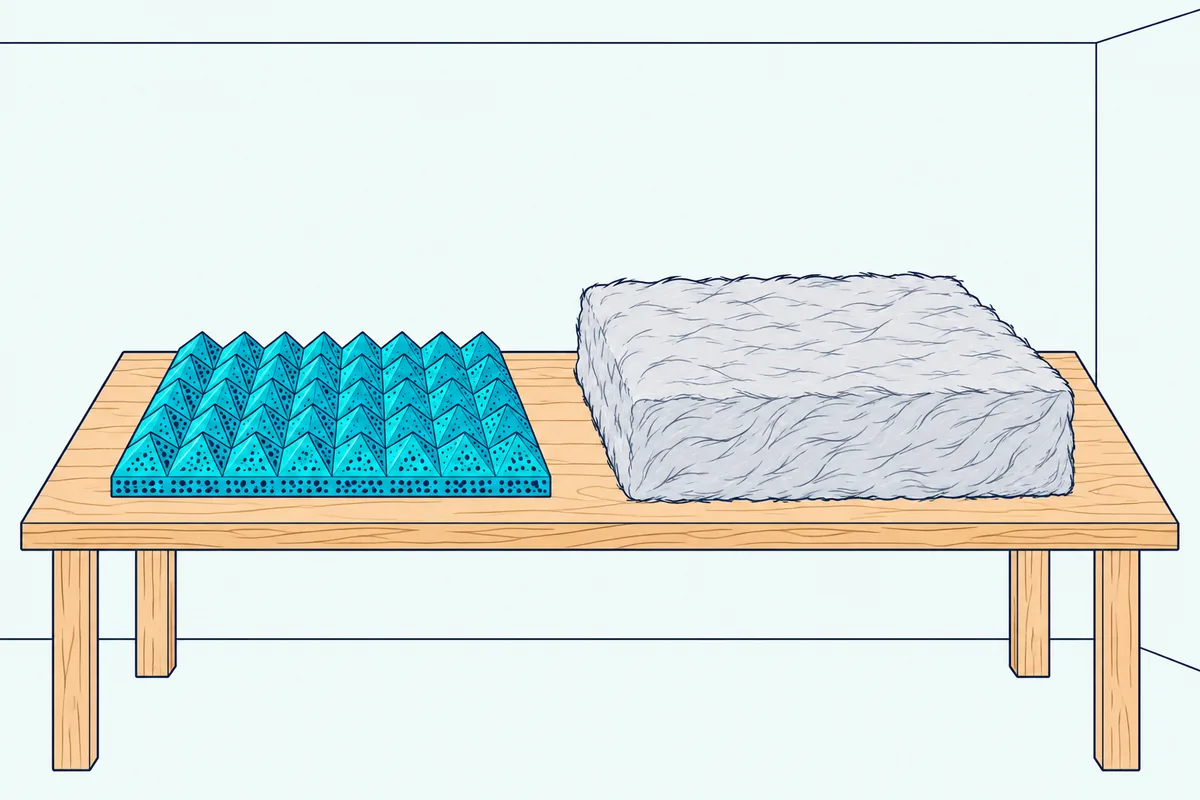
The thermal story comes down to one detail: acoustic foam is open-cell and porous.
Open-cell foam “breathes”
Acoustic foam absorbs sound because air can move into it and lose energy inside the material.
That same “breathing” behavior is why it doesn’t act like an air barrier for drafts.
Closed-cell foam and real insulation work differently, which is why the distinction matters.
If you want the quick breakdown on foam structure, see open-cell vs closed-cell foam.
Insulation needs thickness and continuity
So even if foam has a little thermal resistance on paper, it isn’t installed the way insulation is. Insulation only works when it’s continuous and thick across the whole heat path.
Thermal insulation works when it traps still air in a thick layer and covers the whole “path” heat wants to travel through.
Acoustic foam installs rarely do that because they focus on reflection points, not full-wall coverage.
That targeted placement is a feature for acoustics, and foam placement is the part to get right if echo is your real problem.
Drafts are convection, and foam doesn’t seal them
So even perfect foam coverage wouldn’t solve a drafty room. Drafts are moving air, and foam doesn’t seal the gaps where that air gets in.
Foam on a wall doesn’t stop that air movement if the leak sits at a window sash, a door gap, or an outlet box.
Try a quick test: hold a tissue near the edges of your window and door when the HVAC runs.
If it flutters, air is moving through that gap.
For the “what it does vs what it doesn’t” line in plain English, does acoustic foam work? sets expectations the right way.
Actual Temperature Effects
So foam can have some thermal resistance on paper, but your room won’t behave like a lab sample.
Typical wall treatment: temperature stays the same
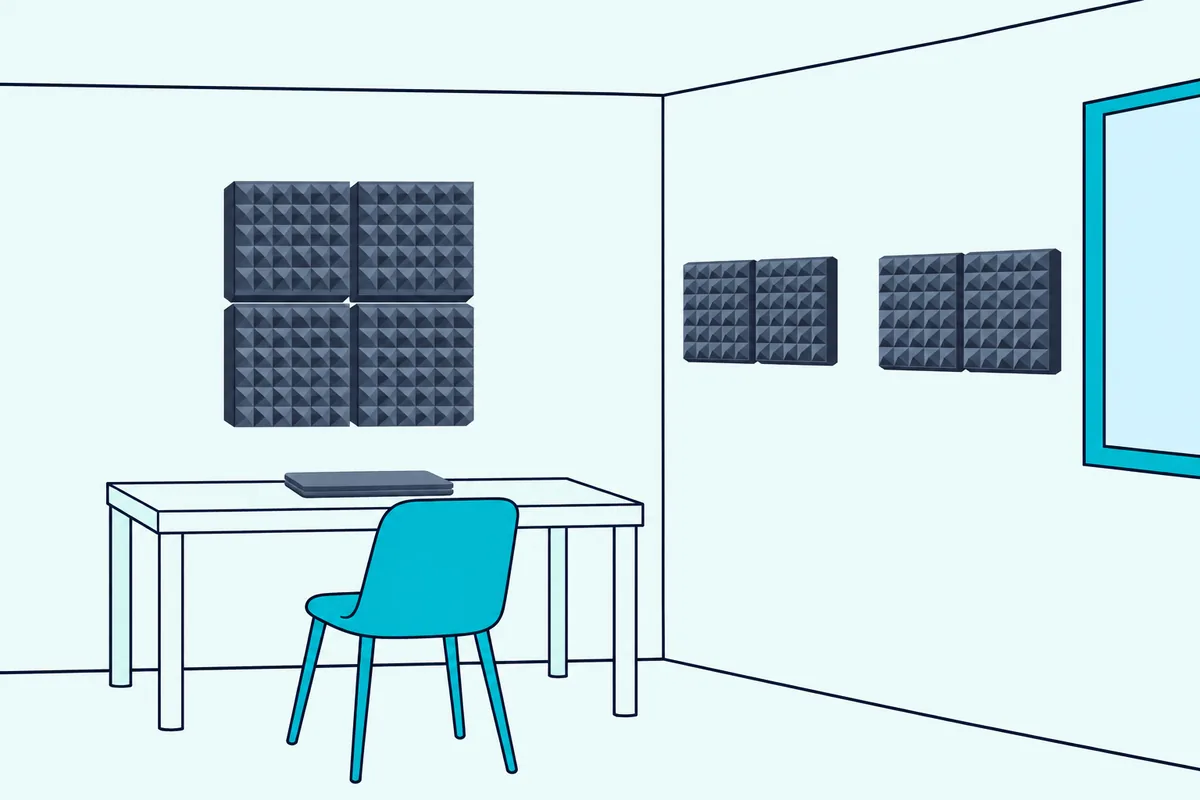
Treating the wall behind your desk, a couple side-wall reflection points, and maybe the back wall can make a room sound calmer.
That same setup almost never changes how warm the room feels, because the big heat paths stay untouched.
You’ll notice “less ring” and “cleaner audio” long before you notice “warmer room.”
Small treated enclosures can feel warmer (for a different reason)
So a “warmer” room after foam is usually a tiny space where airflow changed, even if the thermostat number doesn’t move.
Closets, vocal booths, and tiny gaming nooks are spaces like that.
Your body heat and your gear heat build up faster when airflow drops, even if the actual room temperature didn’t change much.
If that’s your use case, acoustic foam vocal booth setups need ventilation planning as much as they need absorption.
More foam doesn’t equal “insulation”
That leads to the next misconception: adding more tiles won’t turn foam into insulation. More coverage changes reverb faster than it changes heat loss.
Covering more surface area can make a room sound deader.
A deader room isn’t an insulated one, and it’s easy to overdo it.
If your room starts to feel unnaturally lifeless, too much acoustic foam explains what to fix without ripping everything down.
Factors That Affect Room Temperature
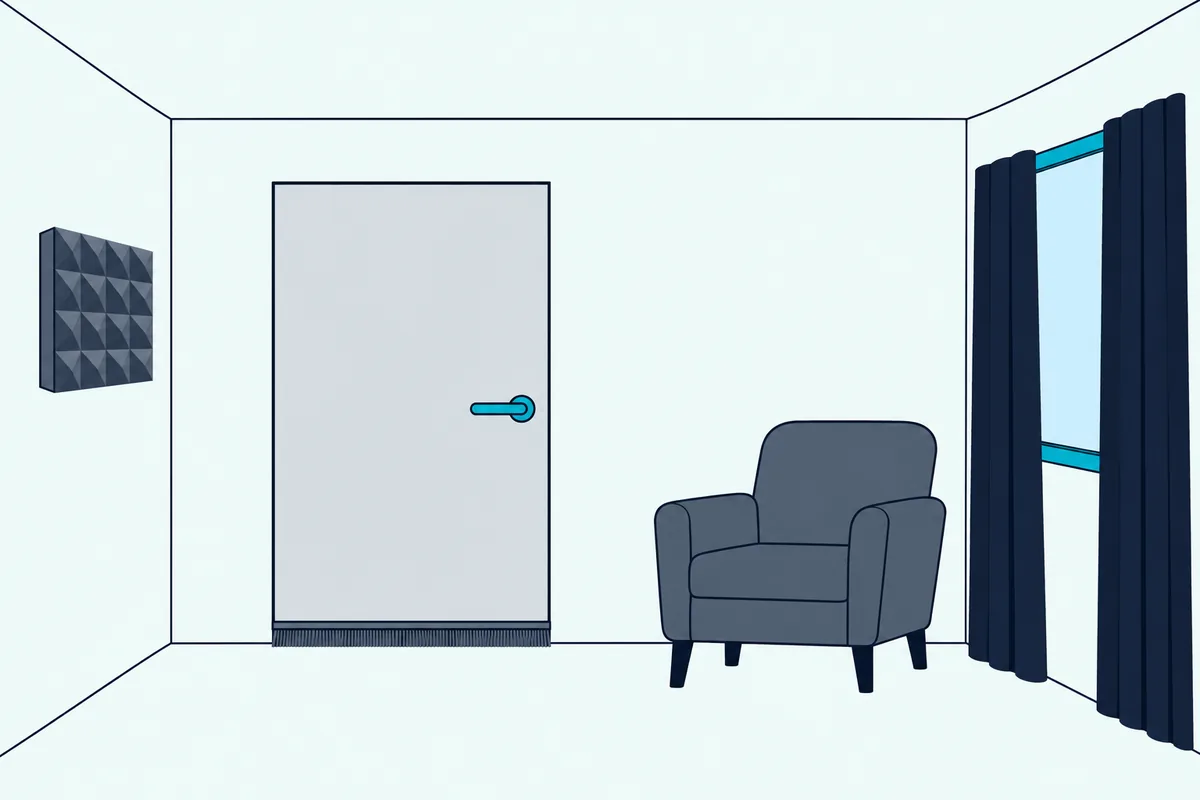
If your goal is a warmer room, these are the levers that actually move the needle.
Air leaks (the fastest win)
Drafts make a room feel colder than the thermostat number suggests.
Sealing obvious gaps around doors and windows beats adding more material to the middle of a wall, though sealing the bottom of a room’s own door also closes its air path, so check that the room has a return-air grille of its own first.
If you can only do one thing in a rental, do the draft work first. On the entry door, usually a fire door, change nothing yourself: ask your landlord in writing to fit seals listed for fire doors.
Windows and sunlight (comfort swings)
So after you deal with obvious air leaks, windows are usually the next comfort swing. They can leak cold at night and dump heat during the day, depending on sun exposure.
Windows change comfort in two directions.
Direct sun can roast a room, and nighttime glass can dump heat fast.
Curtains and window sealing usually beat “more foam” for comfort.
If you want three tools that make those comfort fixes easier (without changing your acoustic plan), start here:
- Self-Adhesive Door Sweep Brush Seal (39 in)
- Duck Brand Window Insulation Kit (10 windows)
- ThermoPro TP49 Indoor Hygrometer Thermometer
HVAC and airflow
So once leaks and windows are under control, airflow is the next thing to check.
Foam shouldn’t block vents, returns, or radiator airflow, and it shouldn’t wrap around hot equipment.
When Thermal Effects Might Matter
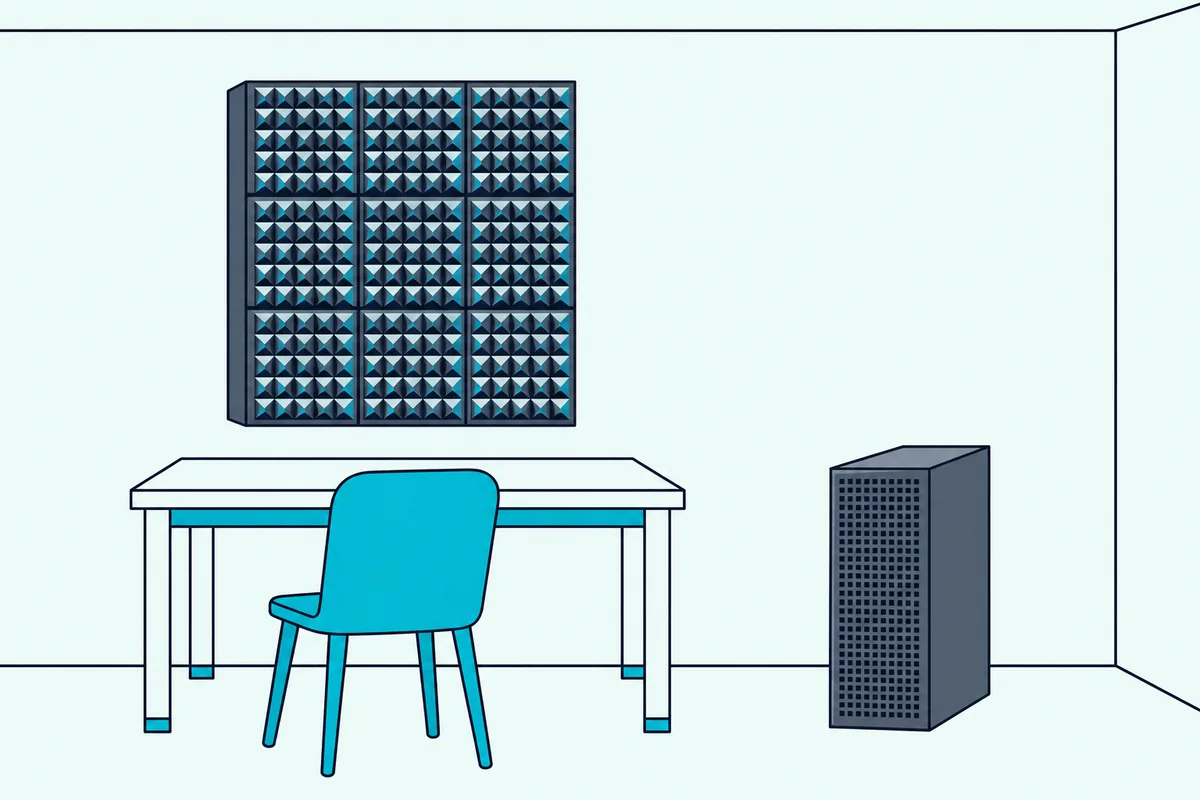
A few edge cases can make foam feel like it changed temperature, even though it isn’t acting like real insulation.
Heat sources right next to foam
Foam can restrict airflow when it sits tight around a heat source.
That matters for amps, PCs, dehumidifiers, and space heaters that rely on ventilation.
Auralex’s Studiofoam safety data sheet says foam material should be stored and handled away from open flames or abnormally high temperatures, so placement matters even with fire-rated foam. Acoustic foam safety covers what to check if “warmer room” means “foam near heaters.”
Cold exterior walls
So even without a draft, a cold exterior wall is its own problem.
Foam on that wall won’t fix the building problem that made it cold.
Stacked treatments (easy to mis-credit the foam)
So if you change multiple things at once, be careful what you credit. Comfort almost always comes from sealing and airflow first, not from wall foam.
If you add window sealing, thicker curtains, and then install foam, the room might feel warmer.
That improvement came from sealing and insulation, not from the acoustic panels you added for reflections.
Humidity Considerations
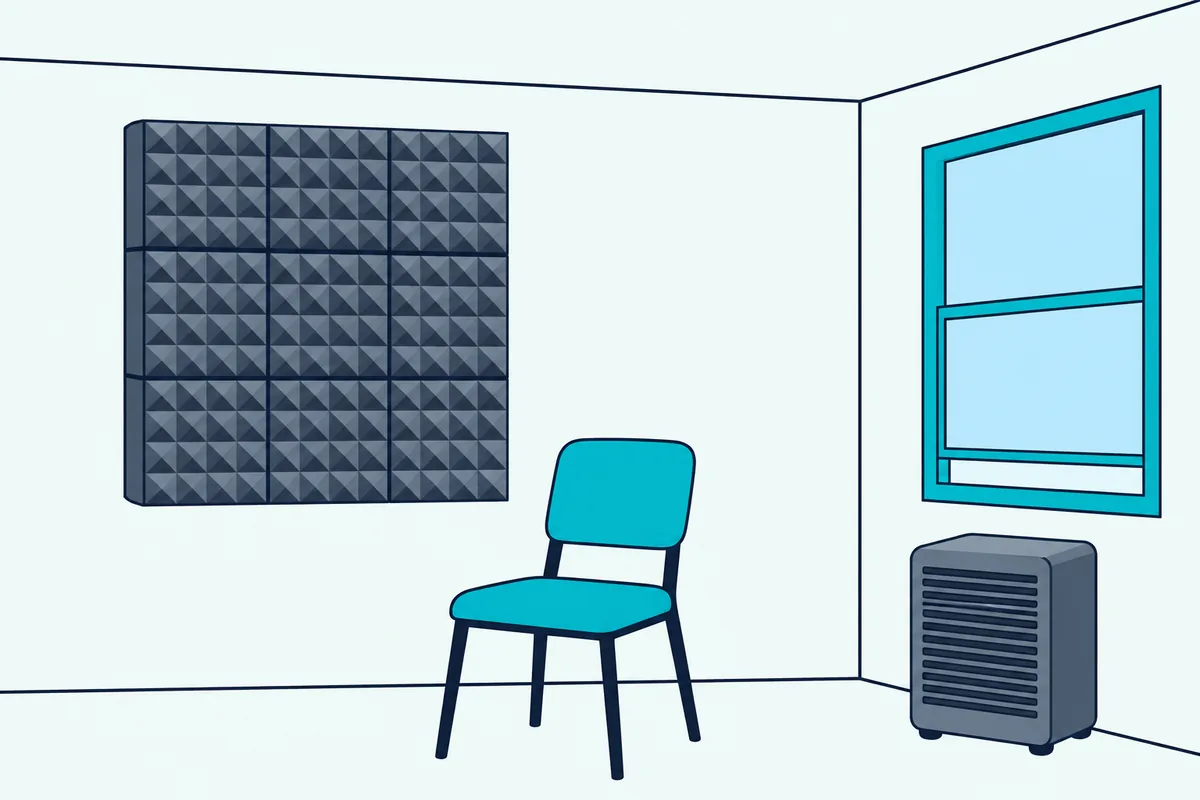
Temperature isn’t the biggest climate risk with foam—moisture is.
Open-cell foam and moisture
Open-cell foam can hold moisture and odors when the room stays humid.
Wet foam also performs worse acoustically, so the “sound fix” you wanted can fade over time.
If you ever need to deal with damp foam, drying acoustic foam walks through safe options.
Ventilation beats more material
So if foam makes a room feel stuffier, treat it like an airflow problem first. Ventilation fixes humidity far more reliably than adding more porous material.
Small treated rooms can get humid fast, especially with people, computers, and closed doors.
Air exchange and humidity control fix that; more foam doesn’t.
If you notice musty smell or visible spotting, treat it like a humidity problem first, not a “buy different foam” problem.
Acoustic Foam vs Thermal Insulation
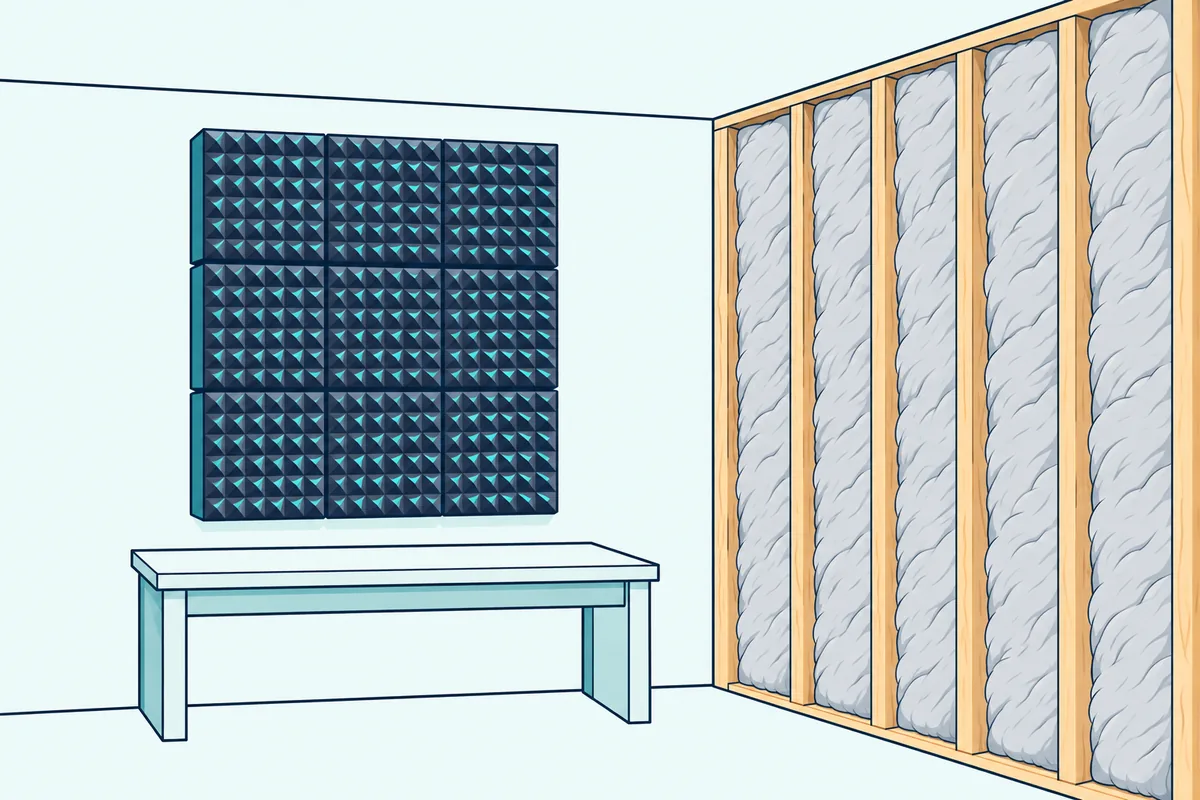
This is the clean separation that keeps you from buying the wrong material.
Use foam for echo and clarity
Foam works best when you treat reflection paths, not when you blanket every surface.
If echo is the problem, stopping echo with acoustic foam shows where to start without going overboard.
Use insulation for comfort
So if comfort is the goal, switch tools: insulation and air-sealing target heat transfer, while acoustic foam treats sound reflections.
Comfort comes from sealing air leaks, reducing window loss, and controlling airflow.
If you want the full side-by-side framing, acoustic foam vs insulation makes the separation obvious.
Want both? Treat echo first, then fix drafts
So you don’t have to choose between “sounds better” and “feels better.” Treat echo first, then fix drafts and windows.
Foam’s porous, open-cell structure matters here too.
Foam can improve clarity fast, and draft fixes improve comfort fast, so you don’t need to pretend one product does both jobs.
If you’re still unsure which problem you’re solving, is acoustic foam worth it? helps you decide.
Impact on HVAC and Energy
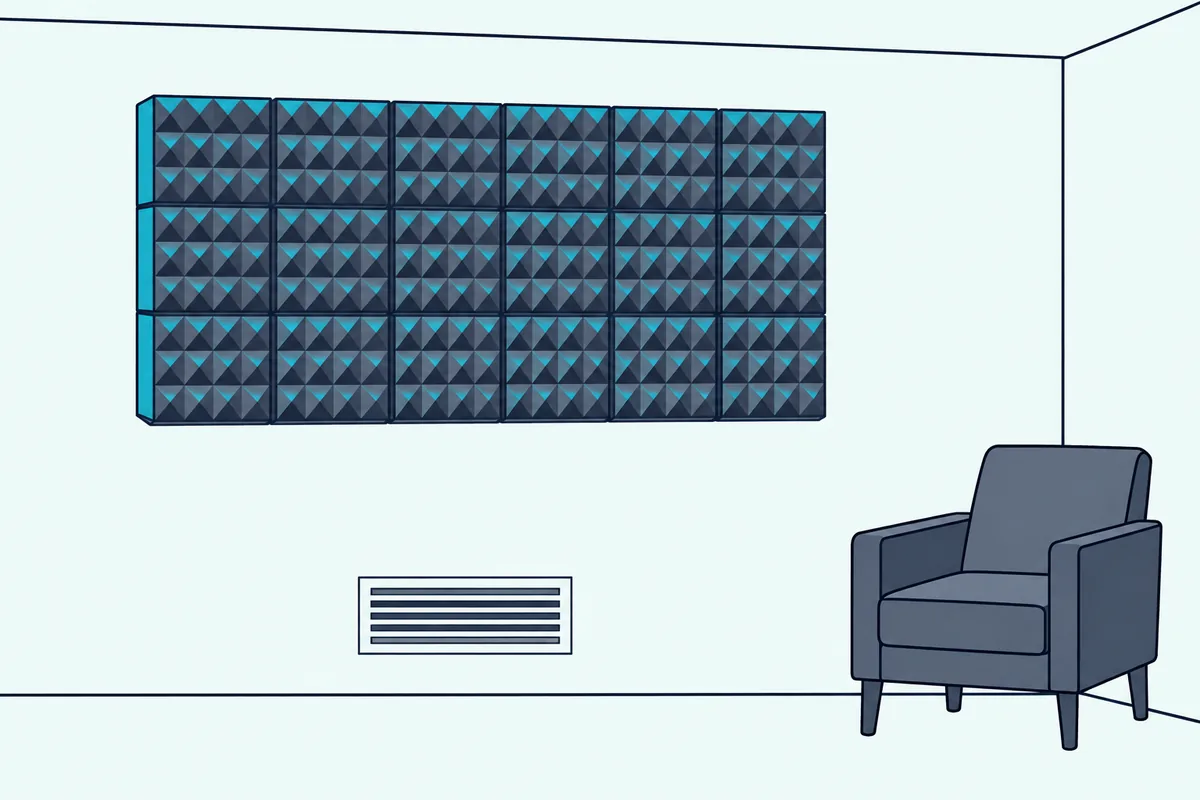
Once you separate acoustics from insulation, the energy question gets easy.
Energy use won’t change
Most rooms won’t show a measurable change in heating or cooling from acoustic foam.
Room comfort swings track drafts, windows, sunlight, and airflow far more than wall absorption panels.
Don’t block vents, returns, or radiators
So even though foam isn’t insulation, it can still affect comfort if it blocks airflow. Keep vents and radiators clear so your HVAC can do its job.
Foam should never interfere with the parts of your room that move air and manage heat.
Give vents and heaters space, and keep foam away from anything that gets hot.
Tiny rooms need ventilation planning
That matters even more in small treated spaces where heat and humidity build up fast. Plan ventilation the same way you plan foam placement: on purpose, not as an afterthought.
That “small booth feels warmer” effect comes from airflow changes, not magic insulation.
If you treat a tiny space, plan for fresh air the same way you plan for mic placement.
Conclusion
Acoustic foam won’t make a normal room warmer in a meaningful way.
Foam can make small treated enclosures feel stuffier, because airflow drops and body heat builds up faster.
If warmth is the real goal, chase drafts and windows first, then use foam for the thing it actually does well: controlling echo and reflections.
Humidity is the climate factor to watch with foam, so keep ventilation and moisture control in mind as you treat your room.
Frequently Asked Questions
Will acoustic foam help insulate my room?
Not in a way that replaces insulation.
Foam doesn’t seal drafts or cover the full heat path, so insulation still does the heavy lifting.
Can acoustic foam replace thermal insulation?
No.
Acoustic foam treats sound reflections, while insulation targets heat transfer and air sealing.
Will acoustic foam make my room hotter in summer?
Foam isn’t insulation: it treats sound reflections, while insulation targets heat transfer.
Keep it clear of vents so it doesn’t block airflow.
Should I worry about condensation behind acoustic foam?
High humidity and cold exterior walls are where you pay attention to ventilation and moisture.
Can foam trap heat around equipment?
Yes, if you put it too close.
Amplifiers, PCs, and heaters need airflow, so keep foam clear of vents and hot surfaces.
Does foam color affect temperature?
Only in direct sunlight.
Dark foam absorbs more radiant heat when the sun hits it, so it can get warmer near a bright window.
Away from sun exposure, color won’t change room temperature in a meaningful way.
Should I remove acoustic foam in summer?
No.
Foam isn’t insulation, so removing it won’t solve a warm-room problem.
Chase airflow and sunlight first, and keep your acoustic treatment consistent.
What should I do first if my room feels cold?
Start with drafts at doors and windows.
Once the leaks are under control, echo treatment becomes easier because you can place foam for sound without worrying about comfort.