Gifts for Music Producers: 12 Studio Gifts for Beat Makers
Of all the gifts for music producers, the Sony MDR-7506 headphones are the safest, because a producer wears headphones whatever software they use, and this pair has a screw-on adapter for the larger 1/4-inch jack.
| Pick | Best for | Why |
|---|---|---|
| Sony MDR-7506 | Any producer, any setup | Fits both common headphone jacks |
| Audio-Technica ATH-M50x | A producer on the move | Three detachable cables |
| Novation Launchkey Mini 37 MK4 | Keys and pads in one | Controls major DAWs, no setup |
| Akai MPD218 | Beat makers who tap drums | 16 pads in three banks |
| Novation Launchpad Mini MK3 | Ableton Live users | 64-pad grid for clips |
| Edifier MR4 | A first pair of monitors | TRS, RCA and AUX inputs |
| ATS Acoustic Panel | Taming echo at the desk | Mounting kit in the box |
| sE Electronics RF-X | Vocals in an untreated room | Four-layer filter behind the mic |
| Focusrite Scarlett Solo 4th Gen | Recording a voice or guitar | Mic and guitar inputs |
| Auralex MoPAD-XL | Any desk with monitors | Five tilt angles |
| Akai MPK mini Play MK3 | A complete beginner | Plays its own sounds |
| M-Audio SP-2 | Keyboard players | Polarity switch |
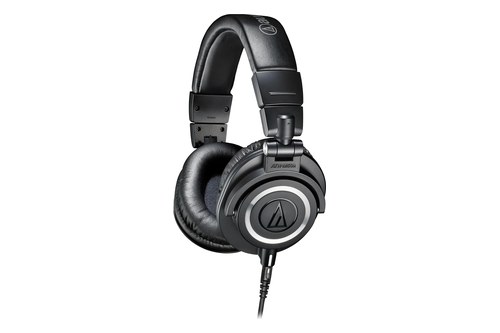
- ✓ Three detachable cables
- ✓ Sound-isolating ear cups
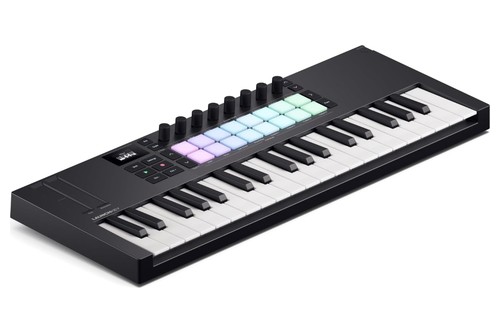
- ✓ Controls major DAWs with no setup
- ✓ Keys, 16 pads and eight knobs in one
- ✓ 16 pressure- and velocity-sensitive pads
- ✓ Three pad banks, 48 in all
- ✓ 64 RGB pads that mirror Live's clips
- ✓ Opens in Session Mode when Live starts
- ✓ Monitor and music modes
- ✓ TRS, RCA and AUX inputs
- ✓ Mineral wool core in a solid wood frame
- ✓ Mounting kit and template included
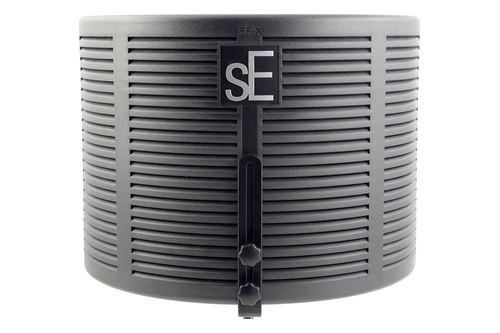
- ✓ Four-layer filter behind the mic
- ✓ Bracket and thread adapter included
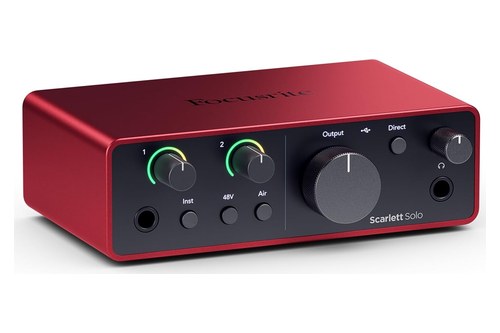
- ✓ Mic and guitar inputs on one box
- ✓ Headphone output with its own level
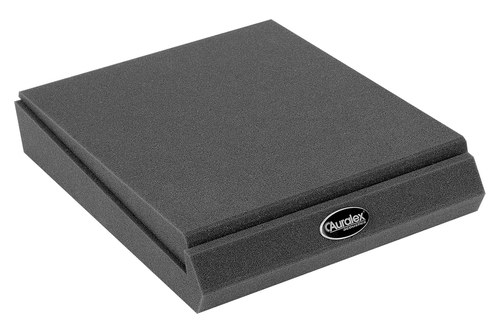
- ✓ Five tilt angles from -8° to +8°
- ✓ One set for a pair of monitors
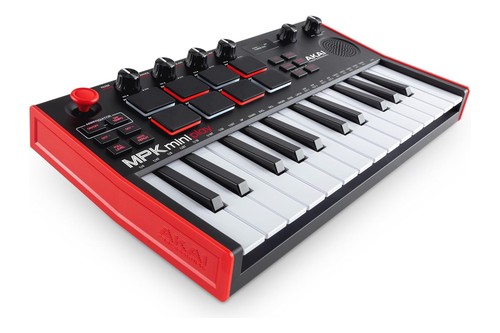
- ✓ Plays its own sounds, no computer needed
- ✓ Runs on USB or four AA batteries
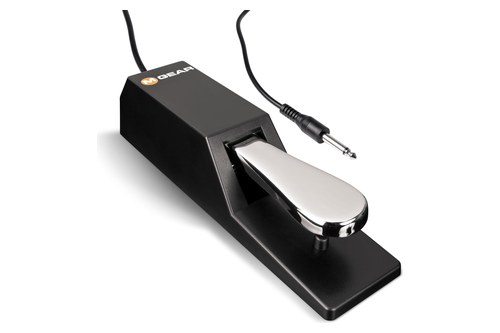
- ✓ Polarity switch for most sustain inputs
- ✓ Piano-style pedal
Guess wrong about their setup and the gift never leaves its box, like a second MIDI keyboard beside the one they own or studio monitors with no cable to reach their interface.
Match the gift to what’s already on their desk, and it goes straight into their next session.
The best gifts come first, then studio headphones, MIDI controllers, gifts that help a home studio sound better, an audio interface, small gifts for every day, gifts for a beginner and gifts for a sound engineer or keyboard player.
Start with the quick picks table, then jump to the section that fits the producer you’re buying for.
What Are the Best Gifts for Music Producers?
That headphone pick is where the answer starts. The best gifts for music producers work with whatever music production software and gear they already use, like headphones and monitor pads, while a MIDI controller, an interface or a pair of speakers only makes sense once you know their setup.
Headphones like the Sony MDR-7506 lead because every session uses them, late at night or whenever the speakers have to stay off.
The rest of the list depends on the kind of producer you’re buying for. A beat maker who programs drums wants pads, a songwriter who records vocals needs an interface and a quieter space around the mic, and a beginner needs something that makes sound the day it’s unwrapped.
For a small gift or a stocking filler, the MoPAD-XL suits anyone with monitors and the SP-2 anyone who plays a keyboard with a sustain input. The descriptions come from the makers’ manuals, product pages and listings.
Every pick met Burton Acoustix’s rating, review and stock checks on 7 November 2026.
Are Studio Headphones a Good Gift?
The table’s first two rows are headphones for a reason. Studio headphones are the best gift for most producers, because a closed pair plugs into a laptop or an interface and works with any software, and both pairs here, Sony’s MDR-7506 and Audio-Technica’s ATH-M50x, fold and keep sound in.
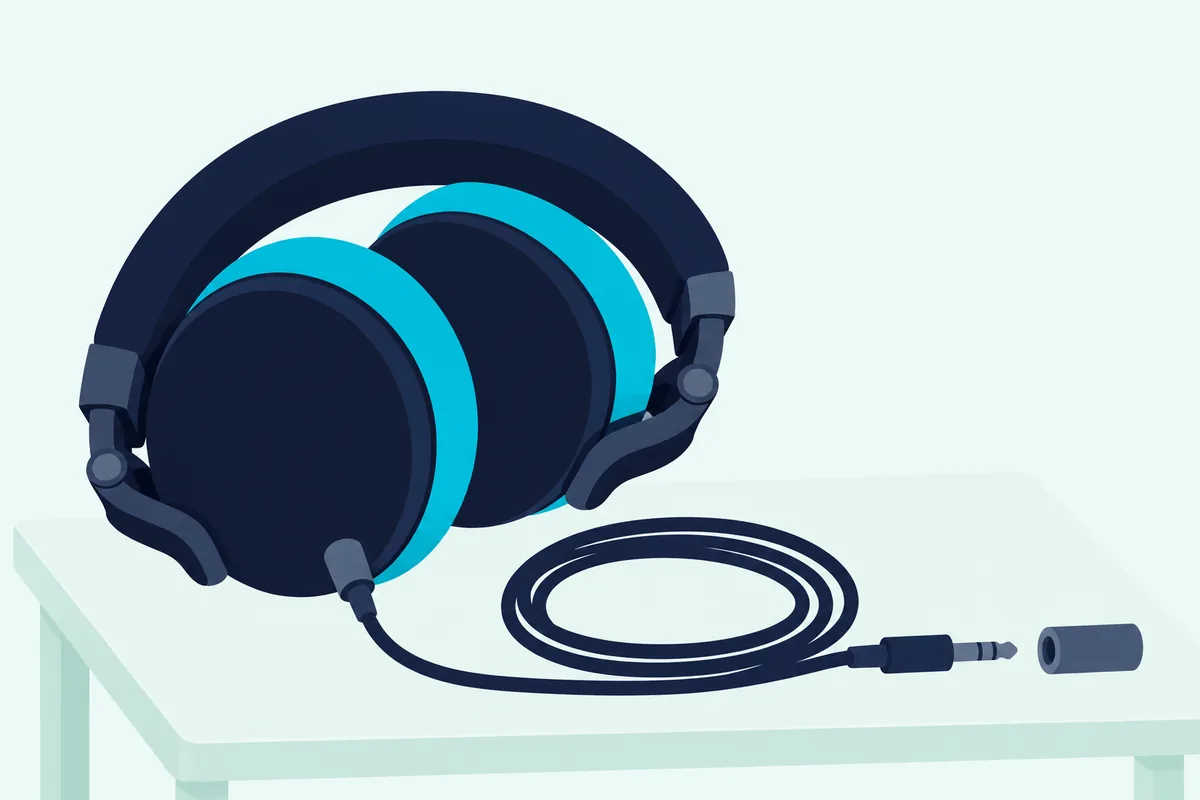
That matters when a microphone is recording a vocal track in the same room, and the MDR-7506’s listing says its closed back blocks outside noise and stops sound leaking out.
The plug is the detail that trips up gift-givers. Focusrite’s Scarlett Solo guide points out that many headphones end in a 3.5 mm jack while the Solo’s headphone socket is 6.35 mm (1/4-inch), so a pair that ships with an adapter, like the MDR-7506, fits both.
Sony MDR-7506
Spec: Closed-back folding studio headphones; 40 mm drivers; 1.2 m coiled cable that stretches to 3 m, not detachable; 3.5 mm plug with a screw-on 1/4-inch adapter; carry pouch.
For any producer, whatever they record on, the Sony MDR-7506 is the pick. Its listing describes closed-ear headphones with 40 mm drivers, a folding design, gold connectors and a supplied soft case, made for monitoring in recording studios, radio and film production.
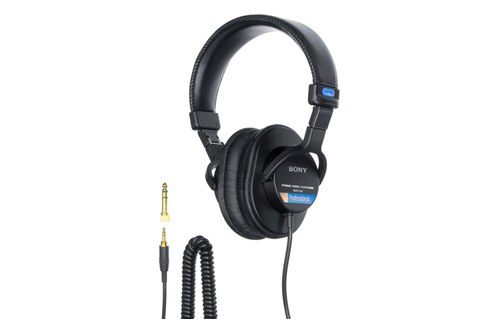
Sony MDR-7506
The listing’s photos add the details a gift-giver wants: a headband with 11 size settings, ear pads that are easy to replace and a coiled cable that runs 1.2 m and stretches to 3 m. The cable doesn’t detach, which is the one trade-off against the next pair.
Audio-Technica ATH-M50x
Spec: Studio monitor headphones; 45 mm drivers; three detachable cables; folding design.
For a producer who moves between rooms or takes their headphones out, the Audio-Technica ATH-M50x, here in black, is the pick. Its listing describes large-aperture drivers, sound-isolating ear cups, a robust build and detachable cables, and its photos name three cables, 45 mm drivers and a collapsible design.
Audio-Technica ATH-M50x
When a detachable cable fails, a new one plugs in and the headphones stay, which the MDR-7506’s fixed cable can’t match.
Which MIDI Controller Makes the Best Gift for a Producer?
Those headphones work with any software, but a controller has to suit the one they use. The Novation Launchkey Mini 37 MK4 makes the best MIDI controller gift for most producers, because it pairs 37 keys and 16 pads with eight knobs, and Novation says it controls Ableton Live, Logic Pro, FL Studio, Cubase, Reaper and Reason with no setup required.
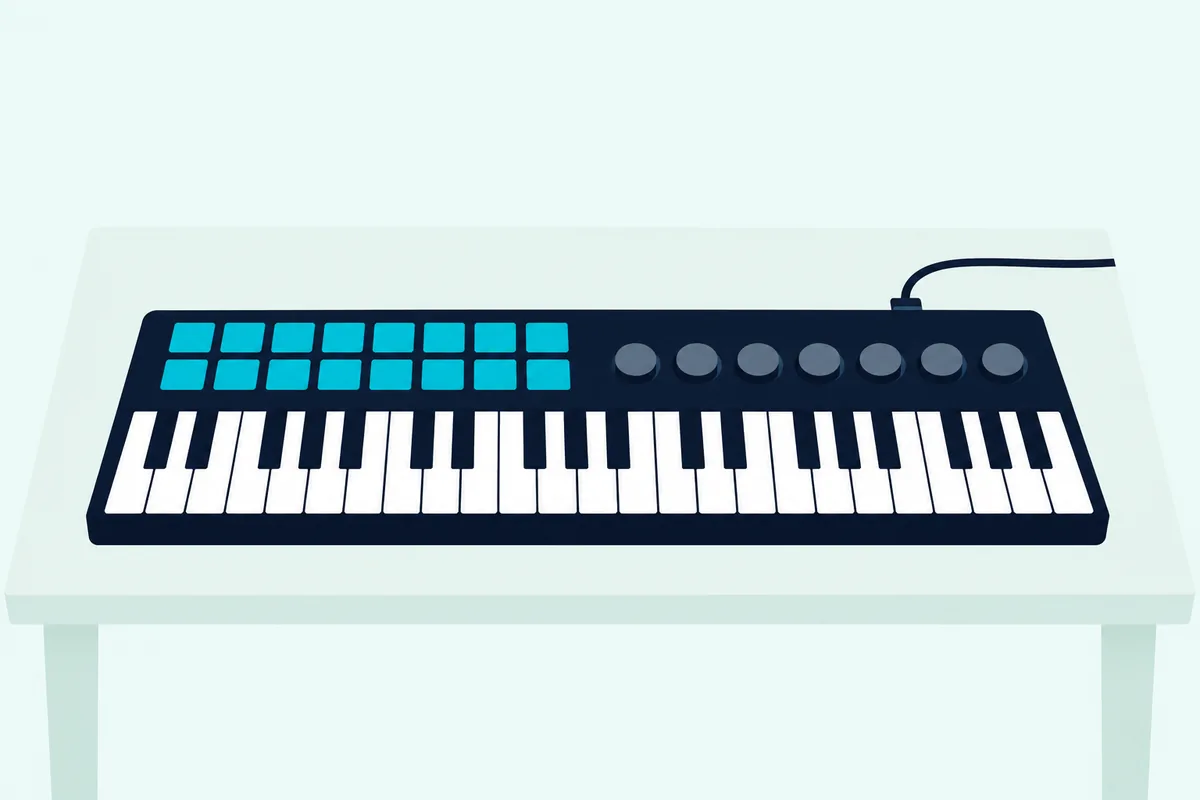
Check one thing before you buy: whether they already own a controller. A second keyboard beside the first is the easiest way for this gift to miss, so look at their desk or ask someone who has seen it.
Keys or pads is the next question. A producer who plays chords and melodies wants keys, a beat maker who taps out drums wants pads, and an Ableton Live user who launches loops gets the most from a grid, while our guide to MIDI keyboards from 25 to 88 keys covers the bigger boards.
Novation Launchkey Mini 37 MK4
Spec: 37 synth-action mini keys; 16 velocity-sensitive pads with polyphonic aftertouch; eight knobs; OLED screen; USB-C, powered by the computer; 6.35 mm sustain input; 3.5 mm TRS MIDI out; 1.02 kg.
For a producer who plays keys and pads, the Novation Launchkey Mini 37 MK4 is the pick. Novation’s Launchkey Mini 37 user guide also lists an arpeggiator, chord and scale modes, and a 3.5 mm MIDI out for hardware synths.
Novation Launchkey Mini 37 MK4
The octave buttons shift the keys from -4 to +4 octaves, and the box holds the keyboard and a 1.5 m USB-C to A cable. Novation says to update the firmware through Novation Components the first time it’s plugged in, or many features won’t work, so mention it when they unwrap it.
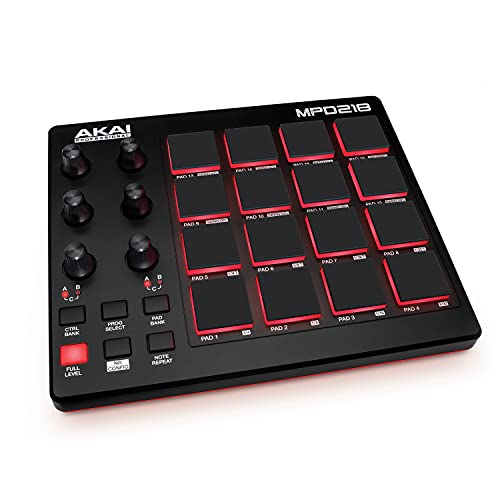
Akai MPD218
Spec: 16 pressure- and velocity-sensitive pads in three banks (48 in all); six knobs in three banks (18 controls); Note Repeat and Full Level; powered over USB.
For a beat maker, the Akai MPD218 is the pick. Akai’s MPD218 user guide describes 16 pressure- and velocity-sensitive pads for drums and samples, switchable across three banks for 48 in all, plus Note Repeat, which retriggers a pad in time with the tempo while its button is held.
Akai MPD218
Full Level makes every hit play at maximum velocity (127) however softly it’s struck, and Note Repeat offers swing from 54% to 62%. It runs on the computer’s USB power, and Akai notes it can control an iOS app through Apple’s Camera Connection Kit, sold separately.
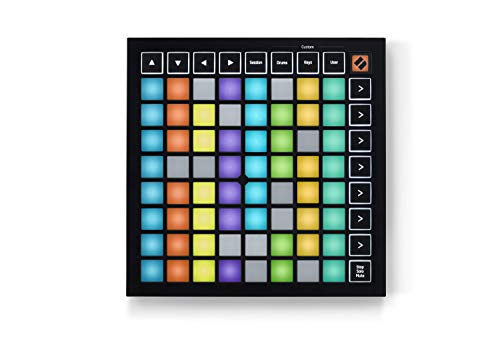
Novation Launchpad Mini MK3
Spec: 8 x 8 grid of 64 RGB pads; Session, Drums, Keys and User modes; Stop, Solo and Mute button; USB-C, powered by the computer.
For a producer who works in Ableton Live, the Novation Launchpad Mini MK3 is the pick. Novation’s Launchpad Mini user guide calls it its most compact grid controller for Ableton Live, with 64 RGB pads that bring Live’s Session View to the producer’s fingertips in color.
Novation Launchpad Mini MK3
Live detects it and opens it in Session Mode, while Drums and Keys modes turn the grid into drum pads and notes. Novation says it can control other software too but is made for Live, so a Live user who’d rather have keys can compare it with the MIDI keyboards that suit Ableton Live.
Here’s how the three compare at a glance.
| Controller | Keys | Pads | Sustain input |
|---|---|---|---|
| Novation Launchkey Mini 37 MK4 | 37 mini | 16 | Yes |
| Akai MPD218 | None | 16 (48 in banks) | No |
| Novation Launchpad Mini MK3 | None | 64 | No |
Pads and a grid feel different from keys, and the pad controllers for finger drumming we’ve compared go deeper into that choice.
What Gifts Help a Home Studio Sound Better?
Keys and pads shape what a producer plays, and the room decides how much of it they hear on speakers. Two gifts help a home studio sound better: a pair of studio monitors, and acoustic panels at the key reflection points, which ATS Acoustics says reduce strong wall reflections.
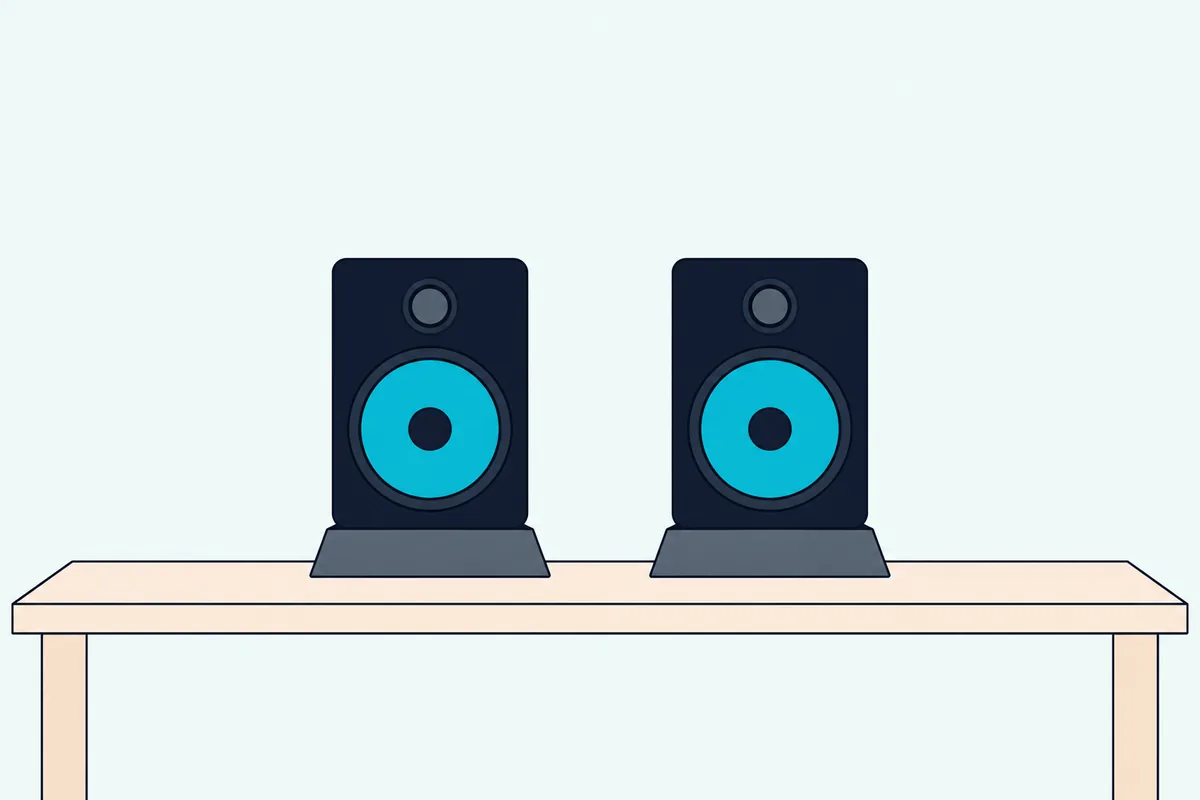
Panels and speakers work as a pair. ATS publishes a lab test by RAL showing its 2-inch panel absorbing far more from 500 Hz up than at 125 Hz, where it measures 0.12, so panels tame echo and harsh reflections while ATS recommends corner bass traps for low-frequency reverb.
Where the panels go matters more than how many. Our guide to where each acoustic panel goes works through the room wall by wall, and studio-grade acoustic panels compares the panels themselves.
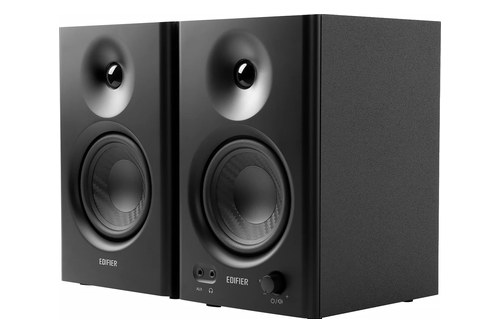
Edifier MR4
Spec: Powered studio monitors sold as a pair; 4-inch woofers and 1-inch silk dome tweeters; 21 W + 21 W; 60 Hz to 20 kHz; TRS, RCA and 3.5 mm AUX inputs; front headphone output.
For a producer who mixes on laptop speakers or headphones alone, the Edifier MR4 is the pick. Edifier’s MR4 page lists 4-inch woofers, 1-inch silk dome tweeters, 21 W per speaker, a response down to 60 Hz and a monitor mode for production beside a music mode for listening.
Edifier MR4
A balanced 6.35 mm TRS input takes an interface, the RCA input suits a computer or music player, and the front adds a 3.5 mm AUX input and a headphone jack. Edifier notes that a wall or corner boosts the bass, and its manual lists bass and treble trimmers of ±6 dB around 100 Hz and above 10 kHz that can turn it down.
The box holds a speaker cable, a 3.5 mm cable and a 3.5 mm-to-RCA cable but no TRS cables, so a pair of 6.35 mm TRS cables completes the gift for a producer with an interface.
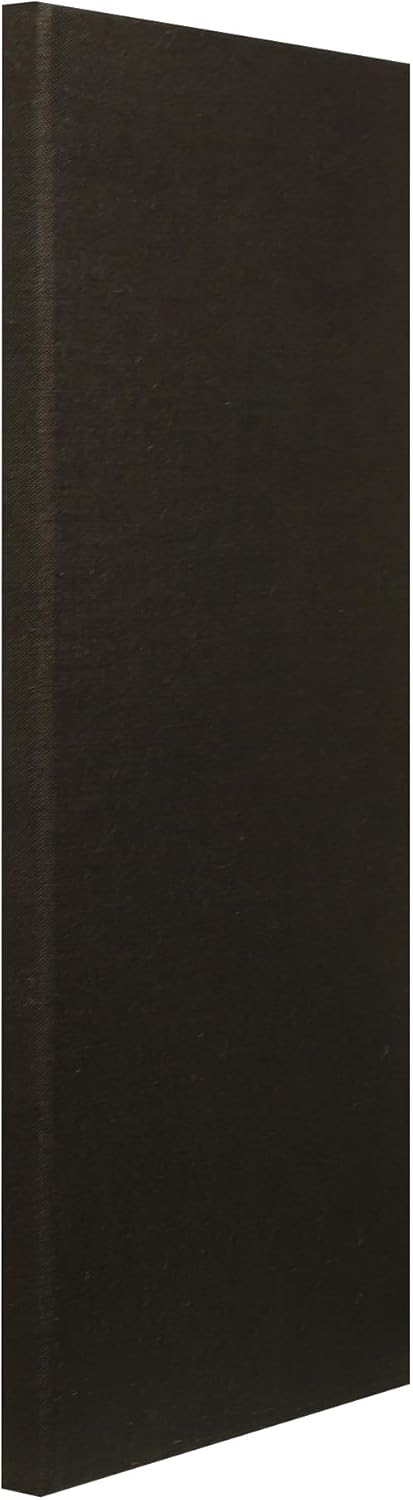
ATS Acoustic Panel
Spec: 24 x 48 x 2 in fabric-wrapped panel; mineral wool core; solid wood frame; jute fabric; about 12 lb; mounting kit and template included.
For a producer whose room sounds hollow or echoey, the ATS Acoustic Panel, here in black, is the pick. ATS’s page for the 24 x 48 x 2-inch panel describes a ROCKWOOL AFB mineral wool core in a solid wood frame, wrapped in jute fabric, and calls it its most popular size in recording studios.
ATS Acoustic Panel
Each panel comes with ATS’s kit of aluminum clips, screws and anchors for drywall, concrete or wood, and ATS says it leaves no more wall damage than hanging a picture. The listing sells one panel, so order two for both sides of the desk.
ATS also makes the panel 4 inches thick for extra bass absorption, the better choice if their low end sounds boomy.
sE Electronics RF-X
Spec: Reflection filter with four layers (vented composite panel, wool fabric, air gap, acoustic foam); mounting bracket and mic stand thread adapter included; fits on a microphone stand.
For a producer who records vocals in an untreated room, the sE Electronics RF-X is the pick. sE’s RF-X page explains that a microphone hears the room as well as the singer, and that the filter’s four layers, a vented composite panel, wool fabric, an air gap and acoustic foam, cut the reflections it picks up.
sE Electronics RF-X
The box holds the filter, a mounting bracket and a mic stand thread adapter, and sE recommends it for vocals, acoustic guitar and drums. It needs a microphone stand, and sE says its filters work best on an ordinary upright stand, so it suits a producer who already records on one.
If you’re torn between a shield and treating the walls, how a vocal shield compares with wall foam sets out what each one fixes.
Should You Give a Producer an Audio Interface?
That filter only helps once there’s an interface to record into. An audio interface is the right gift for a producer who wants to record a voice or a guitar, or to feed studio monitors from balanced outputs, and the Focusrite Scarlett Solo 4th Gen does both with a microphone input, a guitar input and two speaker outputs.
Skip it if they already own one, or if all they do is program beats with a USB keyboard, because a USB controller plugs straight into the computer and a MIDI keyboard doesn’t need an audio interface to send its notes.
Focusrite Scarlett Solo 4th Gen
Spec: USB-C audio interface; one XLR mic input with 48V phantom power; one 6.35 mm line or instrument input; two 6.35 mm TRS outputs; 6.35 mm headphone output with its own level; up to 24-bit/192 kHz; powered over USB.
For a producer who’s ready to record, the Focusrite Scarlett Solo 4th Gen is the pick. Focusrite’s Scarlett Solo 4th Gen user guide describes a 2-in, 2-out interface with 57 dB of gain on each input, 48V phantom power for condenser microphones and an Air mode for the mic input.
Focusrite Scarlett Solo 4th Gen
It runs on the computer’s USB port, and the box holds the interface and a USB-C to A cable, with no microphone or headphones. Focusrite’s guide walks through setup in Ableton Live, Logic and GarageBand, Reaper, Cubase, Pro Tools and FL Studio.
Its two 6.35 mm outputs match the Edifier MR4’s balanced input, and Focusrite recommends TRS cables for that connection and headphones of up to 300 Ω for its headphone output.
Which Small Gifts Do Producers Use Every Day?
Those TRS cables are the first small gift worth knowing about. The small gifts producers use every day improve gear they already own, like isolation pads under their monitors, two 6.35 mm TRS cables for an interface and speakers, or a 3.5 mm-to-6.35 mm adapter for headphones that came without one.
Pads lead because they work every time the speakers play. Auralex designs the MoPAD-XL to decouple monitors from the desk or stand under them, and lists less coloration, more clarity and less structural resonance as the benefits.
Auralex MoPAD-XL
Spec: Monitor isolation pads, 12 x 8.75 x 2 in each; wedge and angling pieces for -8°, -4°, 0°, +4° and +8°; one set supports a pair of monitors.
For anyone with monitors on a desk, the Auralex MoPAD-XL is the pick. Auralex’s MoPAD-XL page says one set supports a pair of monitors, and its wedge and angling pieces set each speaker at -8°, -4°, 0°, +4° or +8° to the listener.
Auralex MoPAD-XL
Each pad measures 12 by 8.75 inches, so an Edifier MR4, about 5.5 by 7.8 inches at the base, sits on one with room to spare. Auralex rates the pads for speakers up to 100 lb and notes that larger monitors may need two pads each.
For the cables and the adapter, buy the type rather than a brand: TRS for both, since Focusrite’s guide warns that headphones and adapters with TS or TRRS connectors are unlikely to work properly.
What Gifts Suit a Beginner Producer?
Pads and cables suit someone who’s already making music, but a beginner needs something that makes sound the day it’s opened. The Akai MPK mini Play MK3 is the best gift for a beginner producer, because its built-in speaker and onboard sounds let them play straight away, with no computer or software.
It’s a real MIDI controller once they’re ready for software, so the gift grows with them. Akai’s guide sets it up with MPC Beats and GarageBand.
Akai MPK mini Play MK3
Spec: 25 velocity-sensitive keys; eight velocity-sensitive pads in two banks; built-in speaker and headphone output; 128 keyboard sounds and 10 drum kits; USB or four AA batteries; 0.86 kg.
For someone who hasn’t started making music yet, the Akai MPK mini Play MK3 is the pick. Akai’s MPK mini Play mk3 user guide lists 128 keyboard programs and 10 drum kits on board, played through its built-in speaker or a headphone output, plus an arpeggiator and eight favorites that each store a keys sound with a drum kit.
Akai MPK mini Play MK3
It runs on USB power or four AA batteries, and its listing claims more than 14 hours on batteries, so it works away from the desk. The pads have Note Repeat and Full Level, and a sustain input takes a foot pedal, sold separately.
For a beginner who already wants a bigger keyboard, the starter MIDI keyboards we’ve compared go up to 49 keys. If you’re not sure they’ll stick with it, what you can make without a controller is worth reading first.
What Do You Buy a Sound Engineer or Keyboard Player?
That sustain input on the MPK mini Play MK3 points to the best gift for a keyboard player. A keyboard player gets the most from a sustain pedal like the M-Audio SP-2, and a sound engineer from tools for recording other people, like the MDR-7506 headphones or the RF-X filter above.
The pedal fits both keyboards on this page. Novation’s guide says the Launchkey Mini 37 MK4’s 6.35 mm sustain input takes sustain pedals and footswitches, and Akai lists a sustain input on the MPK mini Play MK3 for a momentary foot pedal.
M-Audio SP-2
Spec: Piano-style sustain pedal; polarity switch on the base; 1/4-inch (6.35 mm) TS plug.
For a keyboard player, the M-Audio SP-2 is the pick. M-Audio’s SP-2 support article calls it a universal sustain pedal for virtually any MIDI controller, keyboard or digital piano with a dedicated 1/4-inch TS sustain input, with a polarity switch on the base if it works in reverse.
M-Audio SP-2
Its listing describes a traditionally styled pedal with a natural-feeling mechanism, made for keyboards, synthesizers, MIDI controllers and drum machines. M-Audio notes that some keyboards accept only a TRS connection, so check the manual of any keyboard other than the two here.
For a sound engineer, the MDR-7506 suits studio, radio and film work alike. A keyboard player who wants to learn piano properly may also like what a MIDI keyboard can and can’t teach before you add lessons to the gift.
The Bottom Line
All of that points to the Sony MDR-7506 as the safest gift for a music producer: closed-back headphones that fold into a pouch, with a coiled cable and a screw-on adapter for both common headphone jacks.
Choose the Launchkey Mini 37 MK4, MPD218 or Launchpad Mini MK3 when you know their software, the ATH-M50x for detachable cables, the Edifier MR4 and ATS Acoustic Panel for the room, and the RF-X for vocals. The Scarlett Solo 4th Gen suits a producer ready to record, the MoPAD-XL and SP-2 make small gifts, and the MPK mini Play MK3 suits a beginner.
Whatever you pick, check what’s on their desk first. If you can’t, the MDR-7506 is the gift on this page most likely to suit any producer.
Frequently Asked Questions
What do you get a music producer who has everything?
Upgrade the room they work in rather than adding another device. A producer with every plug-in may still mix between bare walls, which is where two ATS panels beside the desk come in.
Are plug-ins or software a good gift for a producer?
Only if you know exactly which program they use and which mixing and mastering plug-ins they already own. Hardware brings software with it instead: Novation includes Ableton Live Lite and a set of virtual instruments with the Launchkey Mini 37 MK4, and the Scarlett Solo 4th Gen’s listing names Pro Tools Intro+, Ableton Live Lite and Focusrite’s Hitmaker Expansion.
Is a MIDI keyboard a good gift for someone who doesn’t play piano?
Yes, if it does some of the theory for them. Novation’s guide says the Launchkey Mini 37 MK4’s Scale Mode keeps you in the right key, its Fixed Chord, User Chord and Chord Maps modes build progressions, and its Chord Detector names the chord you’re playing.