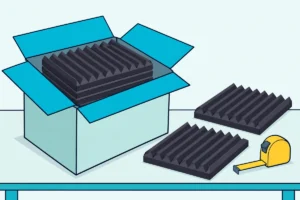
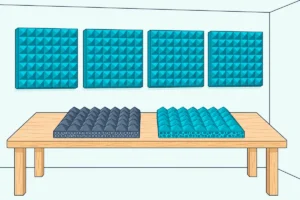
Egg cartons don’t absorb real sound and won’t fix echo.
Egg cartons look like acoustic foam, but they don’t work like acoustic foam. Auralex, which makes acoustic foam, says in its Acoustics 101 that empty egg cartons won’t keep sound from leaving or entering a studio, nor give it a pleasing, neutral sound.
The trouble with egg cartons is the echo that stays and the time wasted collecting material that does nothing for your recordings.
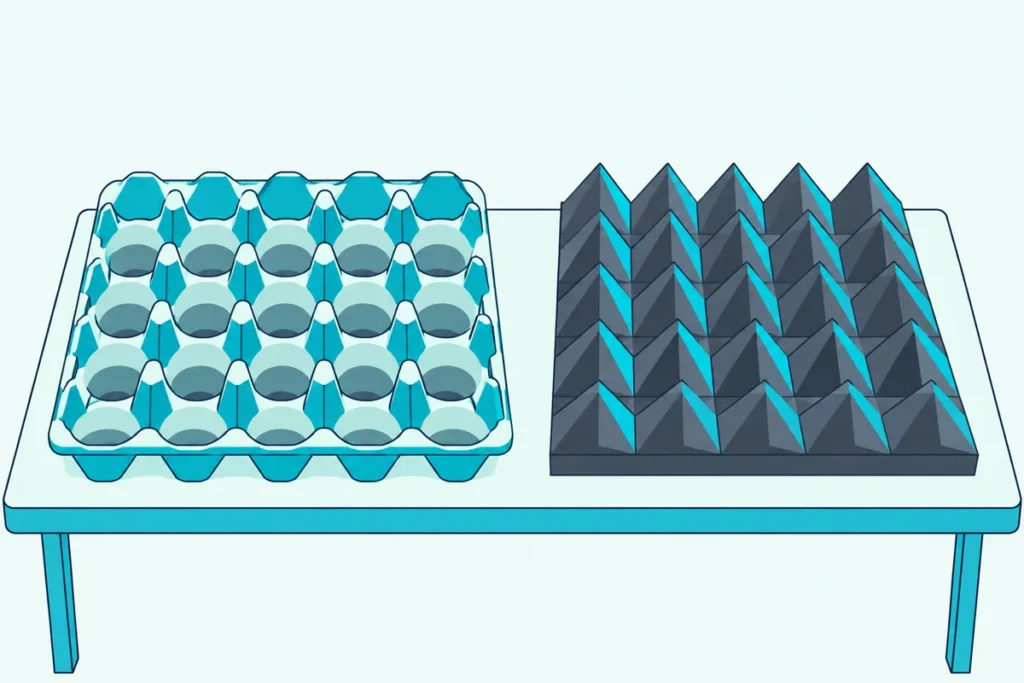
Even a single pack of acoustic foam does what cartons can’t: Auralex calls acoustic foam an extremely effective absorber of ambient, reflected sound. Below, you’ll see why egg cartons fail the physics test, which alternatives work, and how to treat a room without cutting corners on safety.
For a broader look at foam options, start with the acoustic foam hub.
Skip the myth and use real acoustic foam (or a heavy moving blanket as a temporary stopgap). You’ll get real absorption immediately.
The descriptions come from the makers’ manuals and spec pages.
Every pick met Burton Acoustix’s rating, review and stock checks on 8 November 2026.
Do Egg Cartons Absorb Sound?
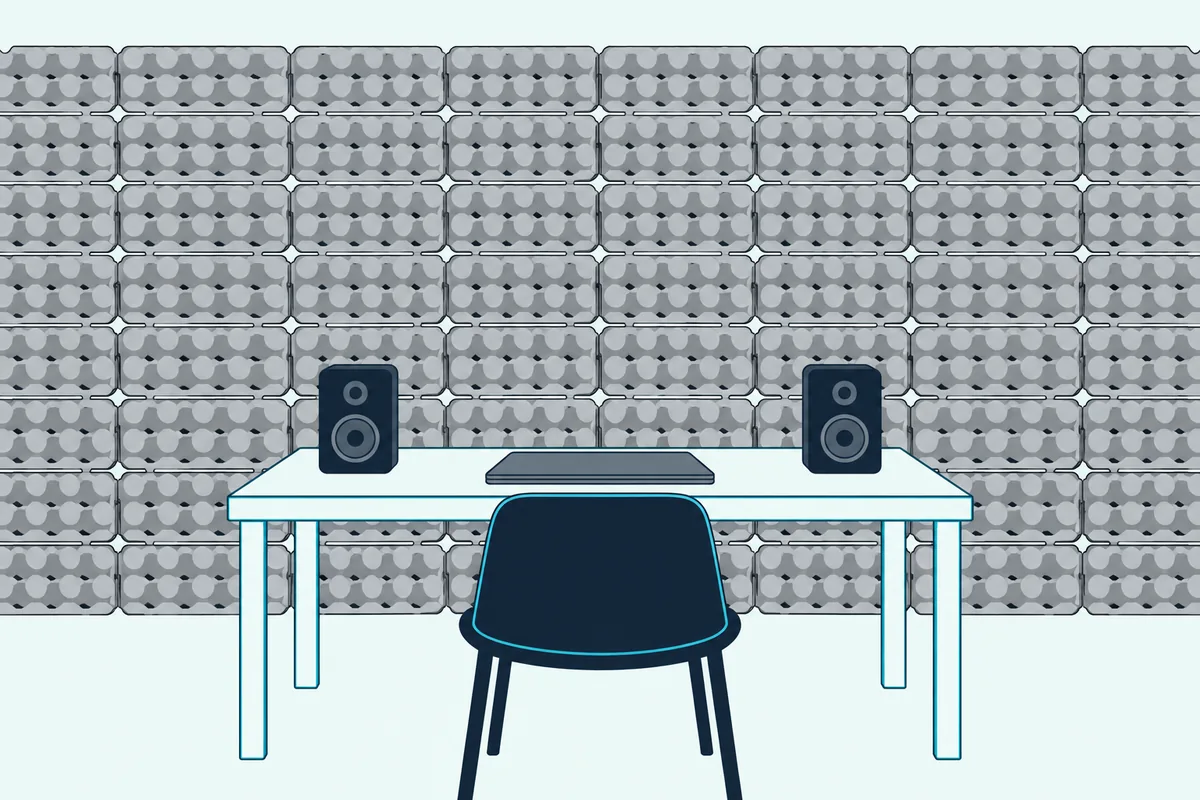
Egg cartons do not absorb sound the way acoustic foam does, and the sections below say why.
The Science: Why Cardboard Fails
Sound absorption requires porous materials that allow sound waves to enter and lose energy through friction. Think of it like a sponge absorbing water — the liquid enters the material and gets trapped in the structure.
Open-cell foam works because sound penetrates the material and bounces between thousands of tiny cell walls, converting acoustic energy to heat with each bounce. The what is acoustic foam guide covers the full science. By the time the wave tries to exit, most of its energy is gone.
Auralex’s Acoustics 101 puts the principle in one line: dense surfaces, for the most part, reflect sound back into the room, while porous surfaces absorb it.
Auralex’s own list of what won’t work names empty egg cartons, cork squares and carpet scraps.
What the NRC Numbers Show
NRC (Noise Reduction Coefficient) is the average of a material’s absorption coefficients at 250, 500, 1000 and 2000 Hz, and Auralex notes that NRCs are not percentages: a material at 1.10 simply absorbs more on average than one at 0.50.
Acoustic foam: Auralex counts acoustic foam among the soft materials with high NRCs, and says thicker acoustic foam is better at absorbing low frequency sounds.
Fiberglass panels: Owens Corning lists its unfaced 703 board, placed against a solid backing, at NRC 0.70 at 1 inch thick and 1.00 at 2 inches.
What Egg Cartons Do
What egg cartons have is a bumpy paper surface.
That surface doesn’t add up to treatment: Auralex says empty egg cartons won’t give a studio a pleasing, neutral sound.
Why the Egg Carton Myth Persists
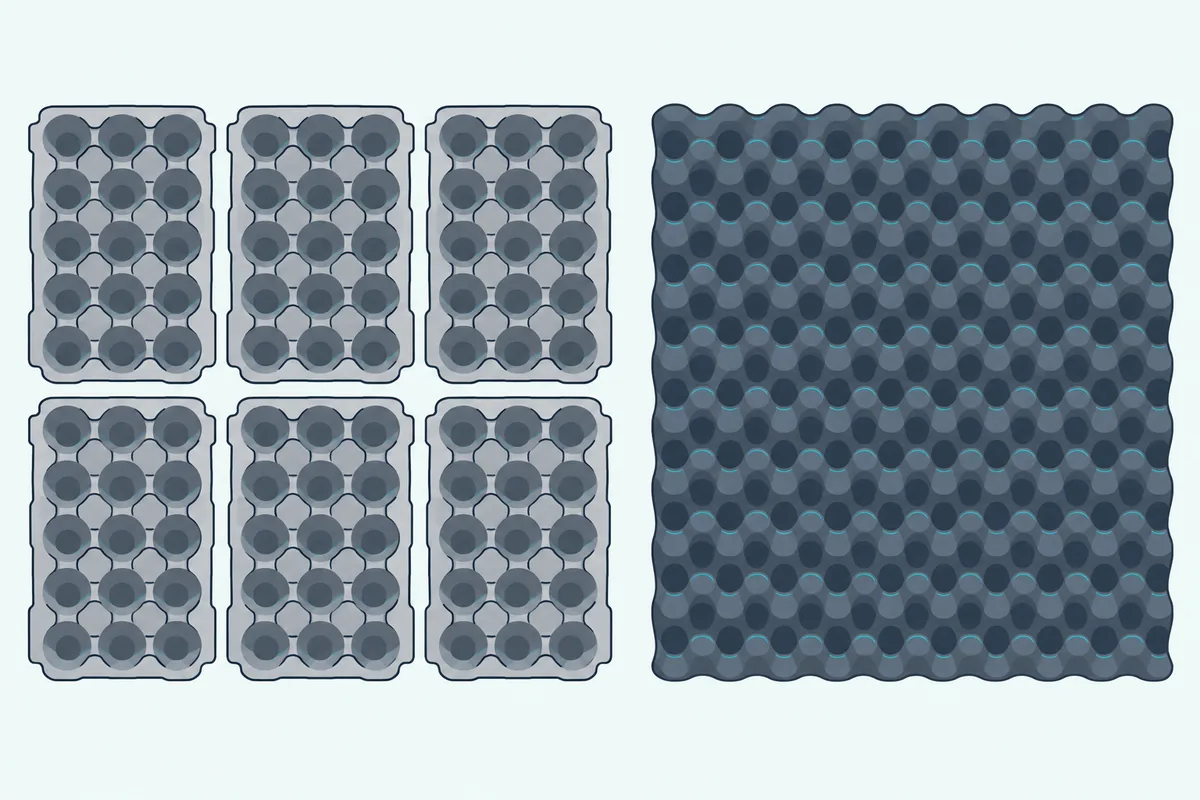
This myth persists for a simple reason: egg cartons look like acoustic foam.
The Visual Similarity Trap
Look at an egg carton. Look at acoustic foam.
They both have bumpy, textured surfaces with peaks and valleys, and the similar shape suggests a similar function.
This is like assuming a cardboard cutout of a car can drive because it looks like a car. Shape doesn’t determine acoustic properties—material composition does.
Foam absorbs sound because of its porous cellular structure, not because it has bumps. You could make foam completely flat and it would still absorb sound.
You could make egg cartons into perfect pyramids and they’d still reflect everything.
The Time Cartons Take
Cartons you already have still don’t treat the room.
Collecting, cleaning and mounting enough cartons to cover a wall takes time, and Auralex says the cartons still won’t give the room a pleasing, neutral sound.
Absorption, Soundproofing and Cartons
Sound absorption and soundproofing are different jobs, and egg cartons do neither.
If keeping noise from the neighbors is the real goal, our answer on using egg boxes for soundproofing covers what blocks sound and what doesn’t.
Foam, Cardboard and Heat

That leaves fire safety, which matters for anything mounted on a wall near studio electronics.
Cardboard, Foam and Heat Sources
Egg cartons are made of recycled paper and cardboard—materials designed to be lightweight and biodegradable.
Now think about what’s in a typical recording space: computers generating heat, audio interfaces with power supplies, studio lights that get hot, cables that can short circuit, maybe a space heater in winter. Auralex’s safety data sheet for its Studiofoam says foam should be stored and handled away from open flames or abnormally high temperatures.
Foam can burn: the same sheet warns that, if ignited, foam can produce rapid flame spread, intense heat and dense black smoke, and says fire retardants may be present depending on the product. Learn more about acoustic foam safety.
The same sheet says the foam is flammable by definition under OSHA’s Hazard Communication standard, and carries a California Proposition 65 warning that the product can expose you to tris(1,3-dichloro-2-propyl)phosphate, which the state lists as known to cause cancer.
Fire-Retardant Foam vs Cardboard
A plain wedge pack like the Burdurry 50 Pack Acoustic Panels states no fire rating on its listing, which names 50 tiles of 12 x 12 x 1-inch foam.
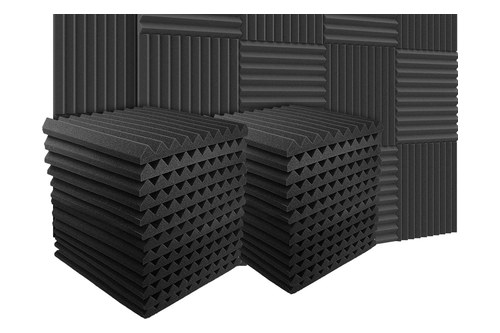
Burdurry 50 Pack Acoustic Panels
Egg cartons aren’t designed for wall mounting. They’re designed to protect eggs during transport and then be recycled.
What Works Instead: Foam, Mineral Wool and Blankets

Instead of egg cartons, four things work: a small pack of foam, thicker 2-inch foam, DIY mineral wool panels and, for a quick fix, a heavy moving blanket.
Starting Small: One Foam Pack
A 12-pack of 12-inch foam tiles provides 12 square feet of acoustic treatment. That’s enough to cover the wall behind your microphone.
With one pack, you can treat your primary reflection point with material that absorbs sound.
Stepping Up: 2-Inch Foam
For more low-frequency absorption, 2-inch foam goes further than 1-inch panels: Auralex says thicker acoustic foam is better at absorbing low frequency sounds. The 2-inch self-adhesive pyramid foam panels (12-pack) are that thicker option: 2-inch pyramid tiles with a self-adhesive backing.
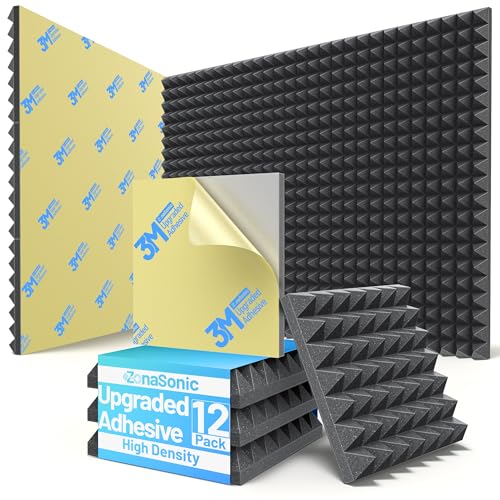
2-inch self-adhesive pyramid foam panels (12-pack)
If you’re only buying once, buy the thicker option.
The DIY Route: Mineral Wool Panels
If you don’t mind some work, you can build your own panels from rigid mineral wool: ROCKWOOL’s sheet gives its Comfortboard 80 board an NRC of 0.95 at 2 inches thick.
A single sheet of mineral wool can make multiple panels. Add a simple wood frame and fabric wrap, and you have a finished absorber.
The tradeoff is time and effort—expect a few hours for your first batch. But if you’re considering egg cartons, you were already willing to invest time in a DIY approach.
Compare the options in the acoustic foam vs rockwool guide.
The “I Need Something Today” Option
Heavy moving blankets come in bulk packs, are easy to buy locally and work for temporary setups.
Hang one behind your microphone or drape it over a mic stand. It’s not pretty—your recording space will look like you’re about to move furniture.
It is a stopgap, not treatment.
This is the fast option. Use it until you have proper foam, or keep it as your portable recording solution.
Egg Cartons vs Acoustic Foam: Side by Side
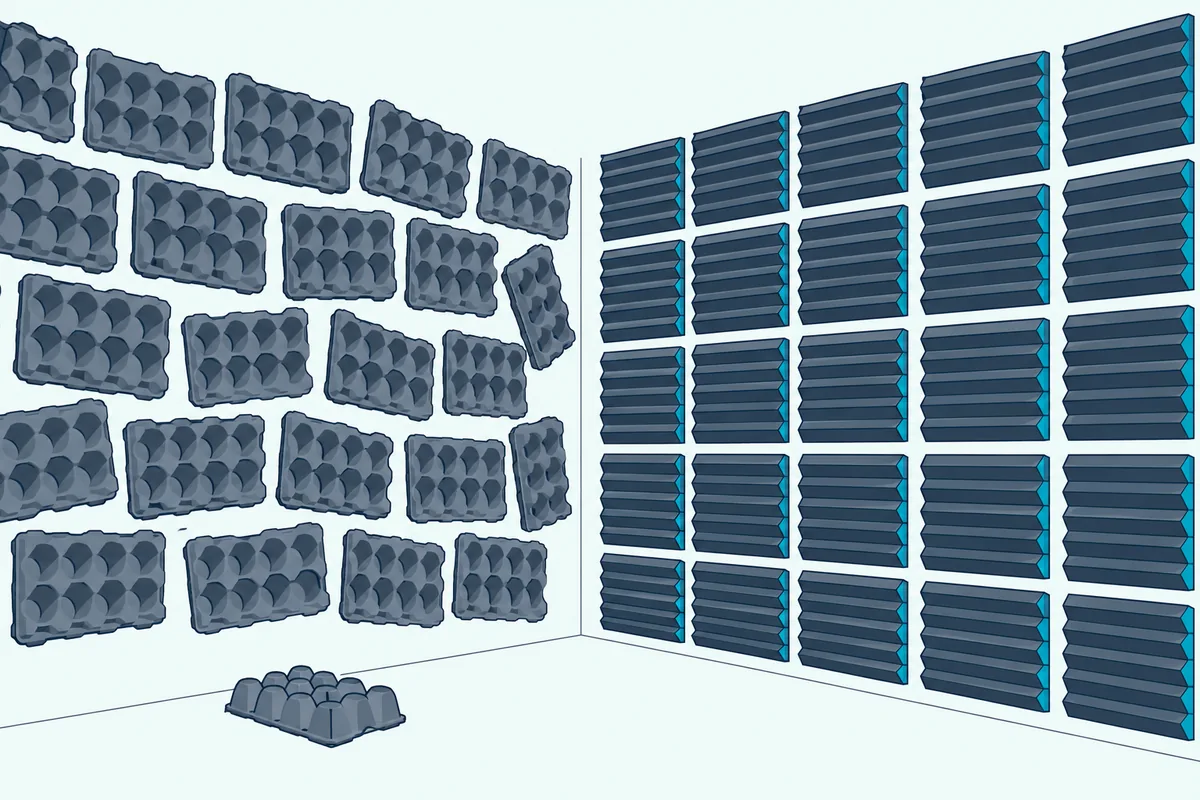
This table sets the two side by side, so there’s no ambiguity about which option makes sense:
| Factor | Egg Cartons | Acoustic Foam | The Verdict |
|---|---|---|---|
| Sound Absorption | Won’t treat a room (Auralex) | High NRC (Auralex) | Foam absorbs, cartons don’t |
| Fire Safety | No maker’s sheet covers them | Can spread flame rapidly if ignited; fire retardants may be present, depending on the product (Auralex) | Foam that lists an ASTM E84 class; Class A is a flame spread index of 0 to 25 (Intertek), and Owens Corning lists 5 for its unfaced 700 Series fiberglass board |
| Installation | Made to protect eggs in transport | Spray adhesive or adhesive strips (3M lists its Super 77 for lightweight foams) | Foam is made for walls |
Walls covered in egg cartons are walls that still need treatment.
The how to choose acoustic foam guide covers thickness, density and pack size.
The Bottom Line
Egg cartons don’t work for acoustic treatment. The myth persists because cartons look like foam.
A 12-pack of 12-inch tiles covers the wall behind a microphone.
If you want help picking, the best acoustic foam shape guide breaks down wedge vs pyramid vs flat.
For more guidance on acoustic treatment, visit the acoustic foam hub, explore best budget acoustic foam picks, or learn how to choose acoustic foam. Check if acoustic foam is worth it for your setup.
Frequently Asked Questions
Can egg cartons reduce echo at all?
Auralex says empty egg cartons won’t give a studio a pleasing, neutral sound.
What about egg crate foam mattress toppers?
Egg crate foam (the mattress material) is different from cardboard egg cartons: it is foam, not paper, and it is sold for mattresses, not rated for rooms.
Don’t put a mattress topper on the wall: the acoustic foam maker says bedding foams usually absorb less, crumble over time and are much more flammable.
If you are buying, buy acoustic foam, which its makers rate for absorption. Learn acoustic foam vs normal foam differences.
Why do some studios have egg cartons on walls?
Old photos of makeshift studios sometimes show egg cartons on the walls, and Auralex says empty egg cartons won’t give a studio a pleasing, neutral sound.
Are there any legitimate uses for egg cartons in acoustics?
No. Egg cartons belong in recycling bins or compost, not on studio walls.
If you’re determined to use free materials, a heavy moving blanket is the stopgap the section above describes.
How much does real acoustic foam cost?
It depends on how much wall you cover. A 12-pack of 12-inch tiles covers 12 square feet, enough for the wall behind a microphone.
Bulk packs cover more of a room.
Is acoustic foam safe compared to egg cartons?
It depends on the foam: Auralex’s safety data sheet for its Studiofoam warns that ignited foam can produce rapid flame spread, so look for panels whose listing states a fire rating, such as an ASTM E84 class. Egg cartons are made to protect eggs, not to be mounted on a wall.