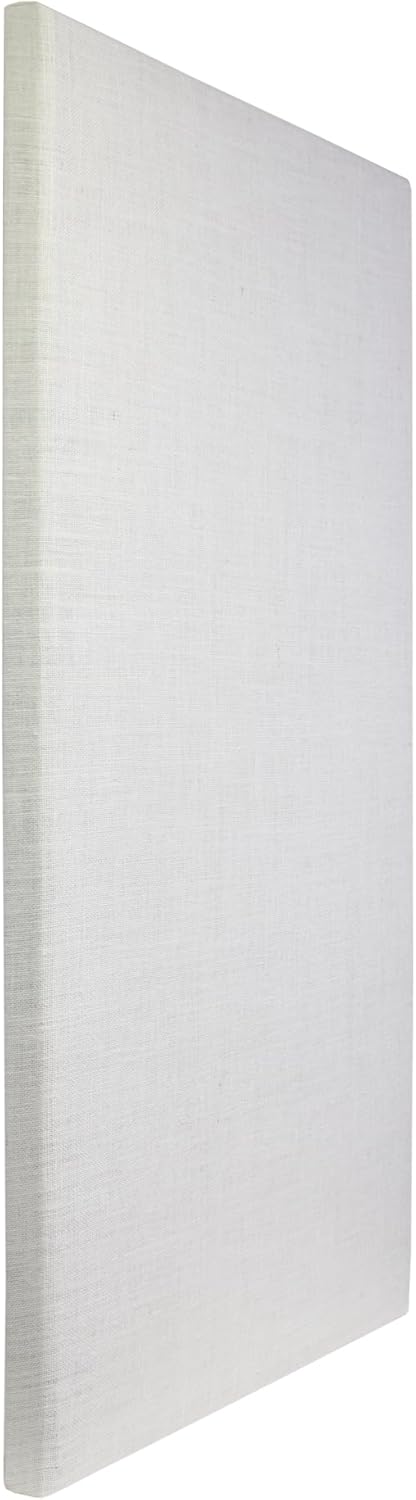
Bass Trap Thickness — How Thick Do Bass Traps Need To Be?
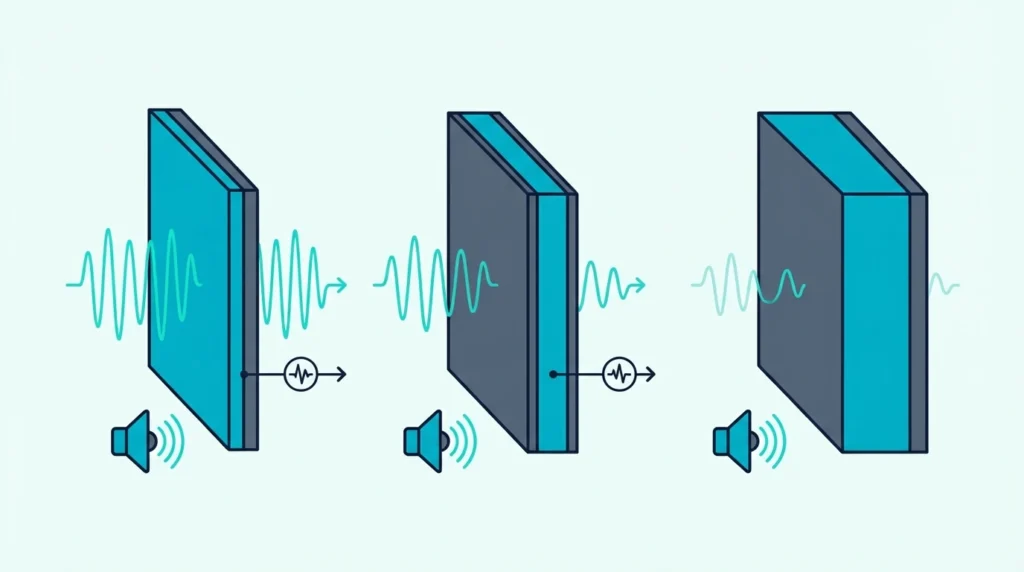
Bass trap thickness is the single most important factor in how low a trap can absorb, but most people buy 2-inch panels thinking they’re getting bass treatment when those panels barely touch anything below 500 Hz.
The physics is direct: a porous absorber needs to be at least one-quarter of the wavelength of the lowest frequency it can absorb effectively. A 100 Hz sound wave is about 11 feet long, which means its quarter wavelength is nearly 3 feet — far thicker than any commercially available panel.
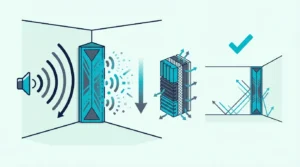
Corner mounting and air gaps compensate for thickness limitations by placing the absorptive material at the point of maximum particle velocity, but thickness still sets the floor. A 2-inch trap in a corner absorbs better than a 2-inch trap on a flat wall, but it still won’t reach the deep bass that a 6-inch trap handles easily.
Below, you’ll find the exact relationship between bass trap thickness and frequency absorption, when 4-inch traps are enough versus when you need 6 inches or more, and how material density interacts with thickness to determine real-world performance.
A 4-inch thick bass trap is the minimum for meaningful bass absorption (effective down to roughly 250 Hz when corner-mounted). Six-inch traps reach approximately 160 Hz, and superchunk corner fills (17+ inches) absorb down to 80 Hz. Thickness matters more than material density for bass frequencies — a 4-inch trap at 3 PCF outperforms a 2-inch trap at 6 PCF for low-frequency absorption.
Why Does Bass Trap Thickness Matter?
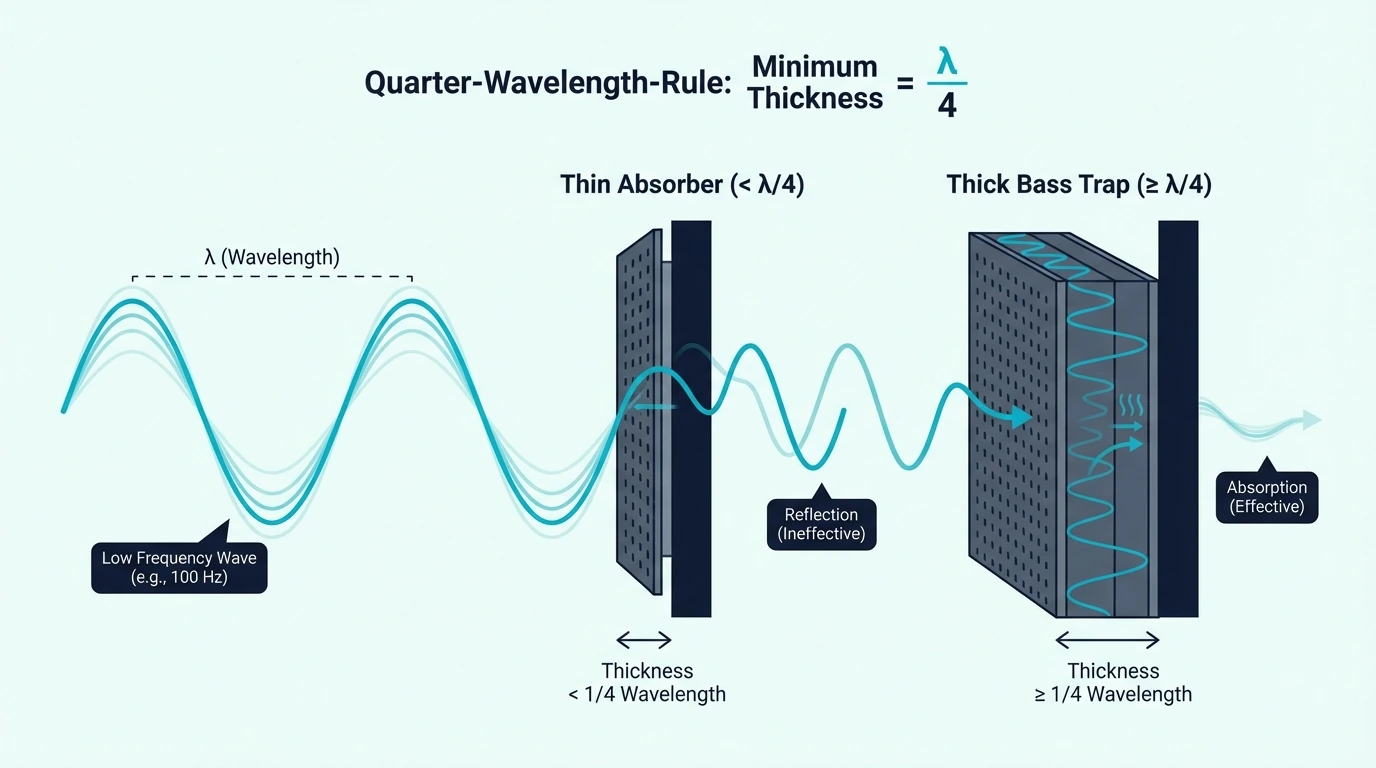
Bass trap thickness matters because of the quarter-wavelength rule — a porous absorber works best when its depth equals at least one-quarter of the target frequency’s wavelength. Below that thickness, the material simply cannot interact with enough of the sound wave to convert it to heat.
Sound waves at bass frequencies are physically long — a 100 Hz wave is about 11.3 feet, a 60 Hz wave is about 18.8 feet, and a 40 Hz wave stretches to 28.2 feet. The quarter wavelengths (2.8 feet, 4.7 feet, and 7 feet respectively) make flush-mounted porous absorption impractical for deep bass.
This is why corner placement is so critical — mounting a trap in a corner with an air gap behind it effectively extends the acoustic depth beyond the physical thickness of the material. A 4-inch trap straddled across a corner with an 8-inch air gap behaves acoustically like a 12-inch deep absorber.
Thickness is the bottleneck that no amount of material quality can overcome. The densest, most expensive mineral wool at 2 inches thick still cannot absorb at 100 Hz, while cheap fiberglass at 6 inches thick can.
How Does Bass Trap Thickness Affect Frequency Absorption?
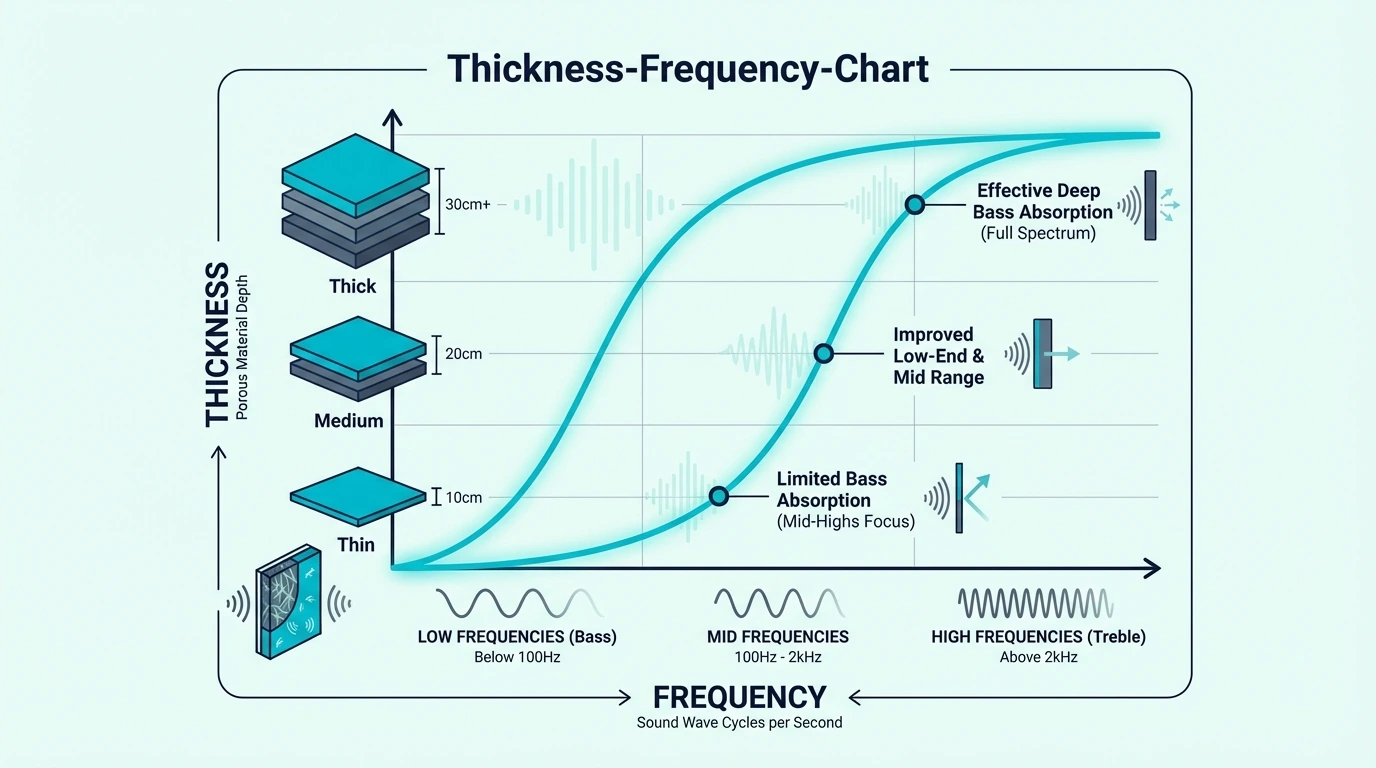
The relationship between bass trap thickness and the lowest frequency a bass trap absorbs follows predictable physics. Here are the approximate effective ranges for common thicknesses when corner-mounted with an air gap:
| Thickness | Lowest Effective Frequency (Corner) | Lowest Effective Frequency (Flat Wall) |
|---|---|---|
| 2 inches | ~400 Hz | ~800 Hz |
| 4 inches | ~200 Hz | ~400 Hz |
| 6 inches | ~125 Hz | ~250 Hz |
| 8 inches | ~100 Hz | ~200 Hz |
| 12 inches | ~70 Hz | ~125 Hz |
| 17+ inches (superchunk) | ~50 Hz | ~80 Hz |
These numbers assume standard rigid fiberglass or mineral wool at 3-6 PCF density. The “corner” column assumes a straddled mount with the natural air gap that creates.
The key takeaway: every doubling of thickness extends the effective range down by roughly one octave. Going from 2 to 4 inches is a bigger jump in bass absorption than going from 4 to 6, because 2 inches barely touches bass frequencies at all.
Get Studio Tips Weekly
Join 5,000+ creators getting acoustic treatment advice every week.
No spam. Unsubscribe anytime.Should You Choose 4-Inch or 6-Inch Bass Traps?
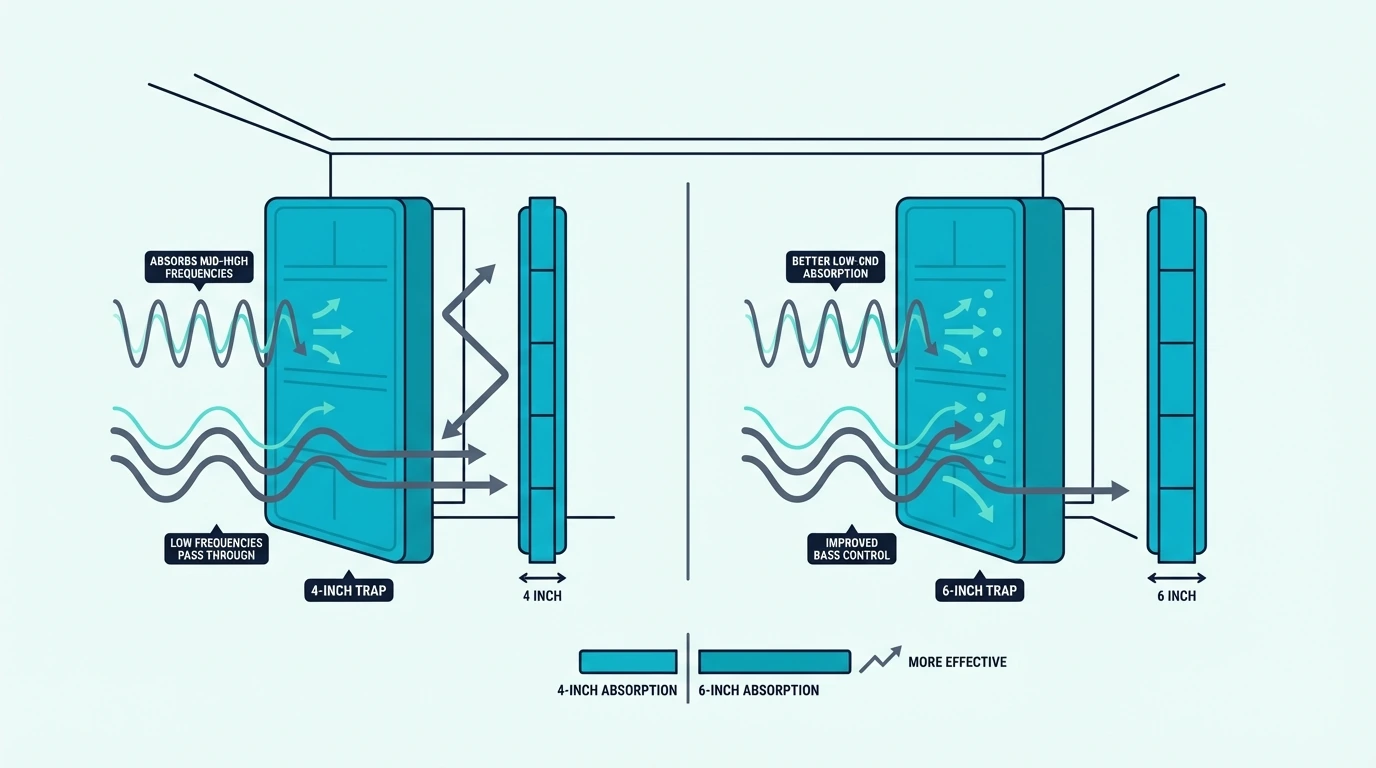
The 4-inch vs 6-inch decision is the most common thickness choice people face when buying or building bass traps. Both are viable, and the right choice depends on your room’s problems and your budget.
A 4-inch trap corner-mounted reaches down to approximately 200 Hz with useful absorption. A 6-inch trap in the same position reaches approximately 125 Hz — a significant improvement that covers the range where most room modes cause the worst problems.
The cost difference between 4 and 6 inches is typically 30-50% more for materials.
When 4-Inch Is Enough
Four inches works well when:
- Your room already has mild bass issues (±6 dB variations in the 100-200 Hz range)
- You’re supplementing existing treatment and need to fill remaining corners
- Budget is the primary constraint and you’d rather have more 4-inch traps in more corners than fewer 6-inch traps
- Your room has ceiling treatment that handles the vertical modes, and you’re adding wall traps for horizontal modes above 200 Hz
When To Go 6-Inch Or Thicker
Six inches or more is the right choice when:
- Your room has severe mode problems below 150 Hz (±10 dB or more at specific frequencies)
- You’re building a control room or mastering suite where bass accuracy is mission-critical
- Your room dimensions create strong modes in the 80-150 Hz range (common in rooms under 15 feet in any dimension)
- You’re doing a DIY build where the extra material cost is small compared to the labor you’re already investing
For most home studios, 4-inch corner traps deliver excellent value. For dedicated mixing rooms where bass decisions affect client work, 6-inch traps are worth the extra investment.
Is It Better To Have Thicker Or Bigger Bass Traps?
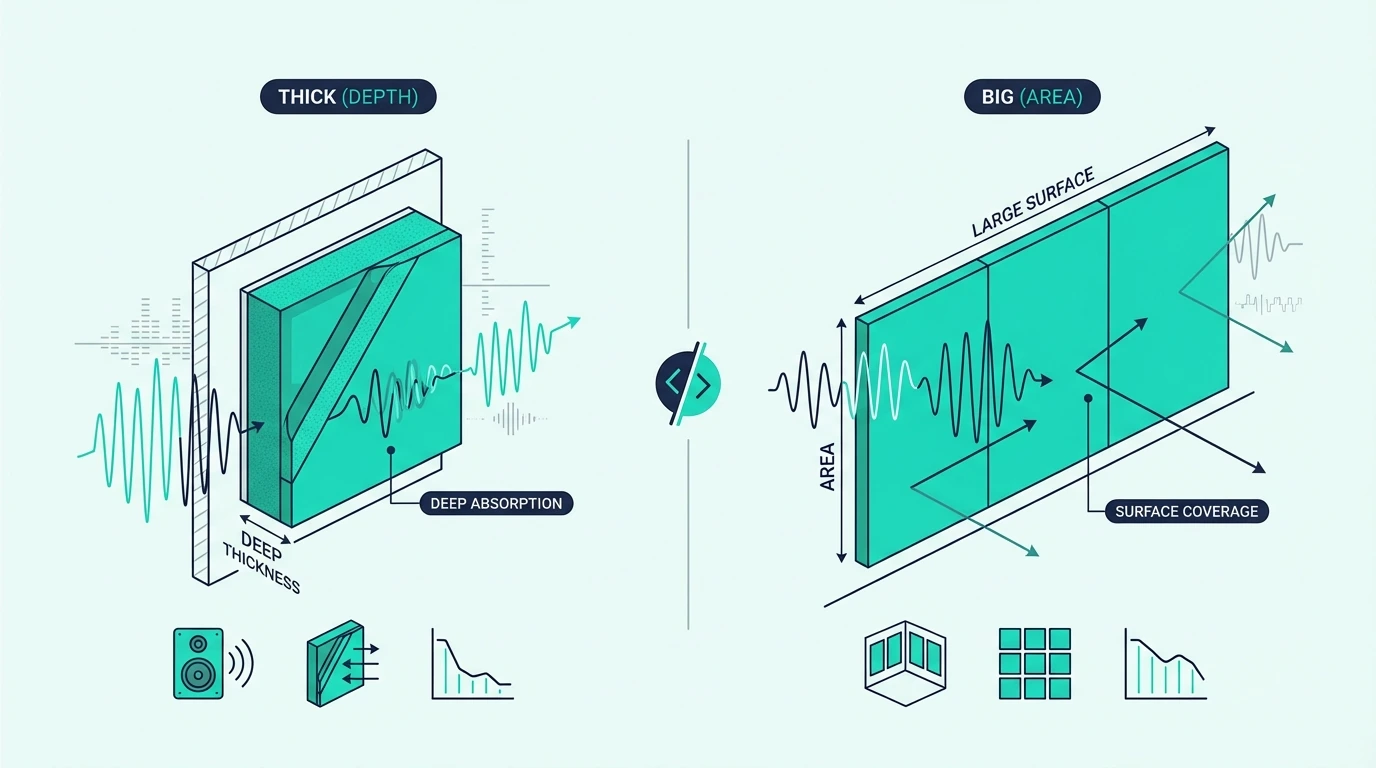
If you have to choose between a thicker trap or a physically larger one, thickness wins for bass frequency absorption. A 4-inch trap that’s 2×4 feet absorbs lower frequencies than a 2-inch trap that’s 4×4 feet, even though the larger trap has twice the surface area.
Surface area matters for how much total energy the trap absorbs at frequencies it can reach. A bigger trap removes more energy from the room at those frequencies, which is valuable for mid-range and upper-bass control.
Thickness determines how deep into the bass range the trap reaches. No amount of surface area extends the frequency range — a 2-inch trap covering an entire wall still won’t absorb effectively at 100 Hz.
The practical answer for most rooms: maximize thickness in the corners first (where bass pressure is highest), then add surface area coverage along the edges and walls. Four 6-inch corner traps plus four 2-inch reflection panels is a better combination than eight 4-inch panels spread evenly.
What Is The Best Density For Bass Traps?
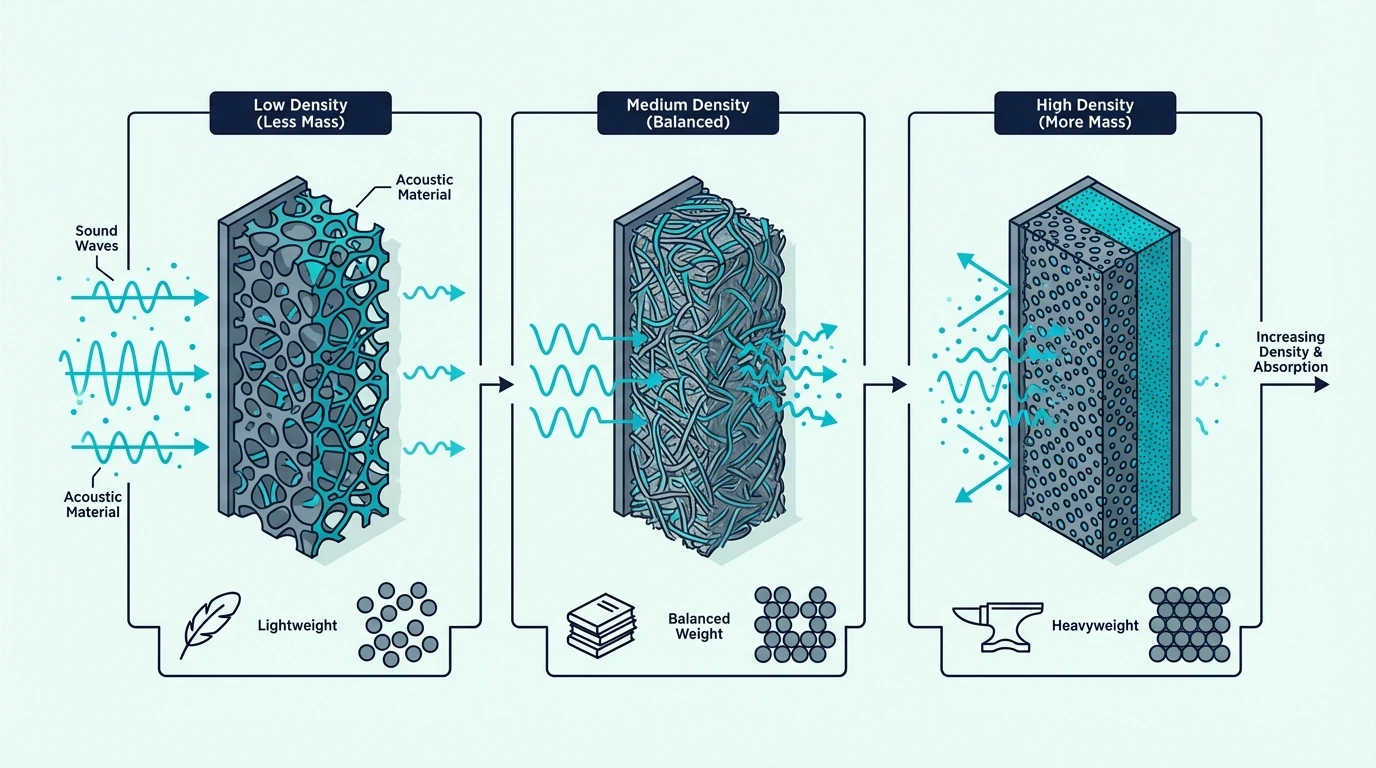
Material density (measured in PCF — pounds per cubic foot) affects how efficiently the material converts sound to heat, but its impact on bass absorption is secondary to thickness. The ideal density range for bass traps is 3-6 PCF for fiberglass and 4-8 PCF for mineral wool.
3 PCF fiberglass (Owens Corning 703) is the standard for acoustic panels and bass traps. It absorbs well across the full frequency range when thick enough and is lightweight, easy to cut, and widely available.
6 PCF fiberglass (Owens Corning 705) is denser and absorbs slightly more efficiently at mid-bass frequencies (100-300 Hz) per inch of thickness. The improvement over 703 is real but modest — roughly 10-15% better absorption coefficient at bass frequencies.
4-8 PCF mineral wool (Rockwool Safe’n’Sound, Comfortboard 80) performs similarly to fiberglass at comparable densities. Mineral wool is often cheaper and more fire-resistant, making it popular for budget DIY builds.
Above 8 PCF, diminishing returns set in quickly — ultra-dense materials can actually reflect some high-frequency sound rather than absorbing it, and the added weight makes mounting more difficult. For bass traps specifically, staying in the 3-6 PCF range and adding thickness is almost always a better investment than increasing density.
The Bottom Line
Bass trap thickness is the primary factor in low-frequency absorption — thicker traps absorb lower frequencies, and no amount of density or surface area compensates for insufficient depth. Four inches is the minimum for meaningful bass control when corner-mounted, six inches reaches the critical 80-150 Hz range where most room problems live.
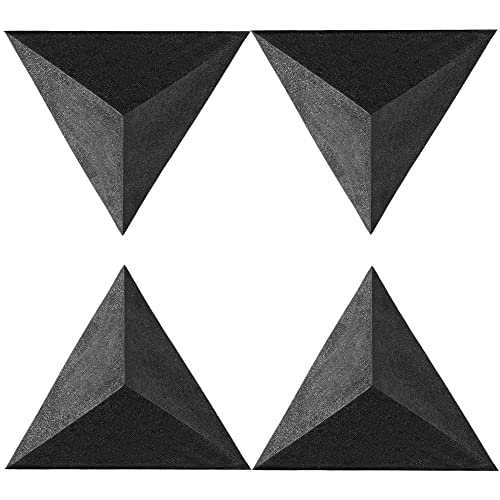
The 4 Pack Bass Traps for Ceiling Corner provides 12-inch deep triangular corner traps that reach lower than standard flat panels.
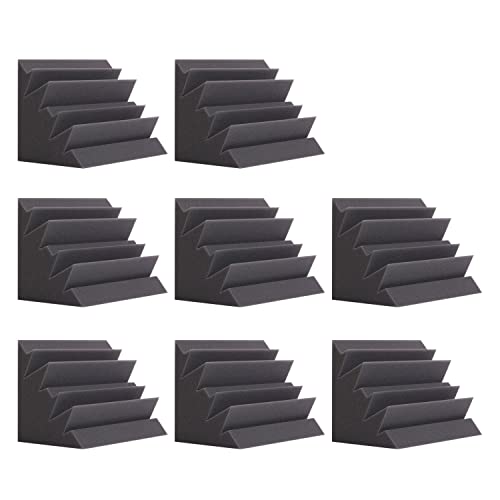
For maximum coverage across multiple corners, the 8 Pack Bass Traps Acoustic Foam Corner lets you stack pieces for increased effective thickness in each corner.
For a step up from foam, an ATS Acoustics 24 x 48-inch panel pairs a 2-inch mineral wool core with a solid wood frame; straddle it across a corner to add an air gap behind it.
Frequently Asked Questions
What is the recommended size for bass traps?
The recommended minimum size is 2×4 feet at 4 inches thick for flat panel traps, or 12-inch triangular wedges for corner-specific traps. Floor-to-ceiling height (typically 8 feet) is ideal for corner-mounted traps because it ensures every vertical room mode is intercepted at that position.
How long does a bass trap need to be?
Floor-to-ceiling length is ideal for corner bass traps because it catches all vertical room modes. If full height isn’t possible, 4 feet is the practical minimum — mount the trap at the ceiling line (touching the ceiling) rather than centered on the wall for maximum bass absorption.
Do corner bass traps work?
Corner bass traps work exceptionally well because corners are where bass pressure is highest in any room. A trap in the corner absorbs dramatically more bass energy than the same trap on a flat wall, which is why corner mounting is the standard recommendation for bass treatment.
Can you use acoustic panels as bass traps?
Only if the panels are thick enough — at least 4 inches for meaningful bass absorption. Standard 1-2 inch acoustic panels absorb mid and high frequencies effectively but have almost no effect on bass.
If your existing panels are 4 inches or thicker and made from rigid fiberglass or mineral wool, they function as bass traps when placed in corners.