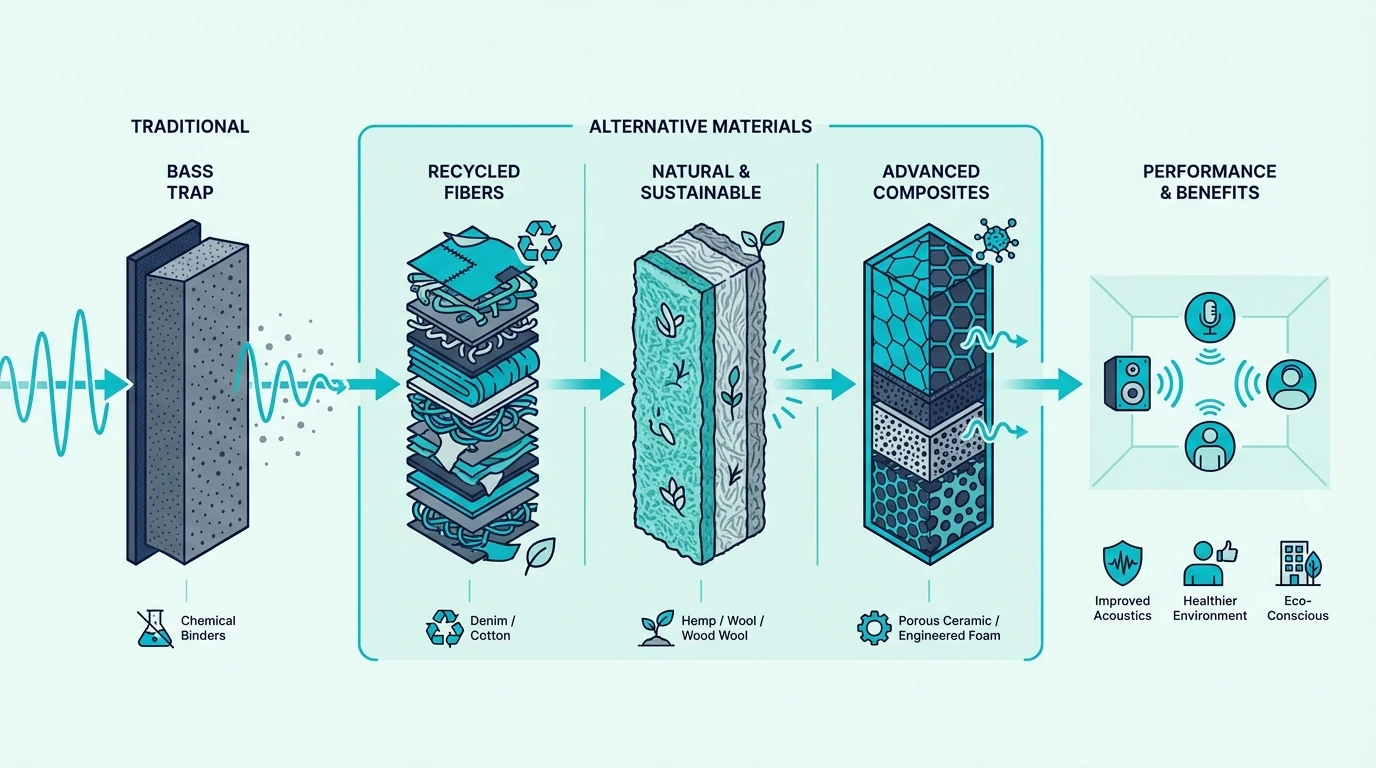
Bass traps vs absorbers is a comparison that sounds like two separate products — but the reality is that bass traps are a specific type of absorber, and confusing the two leads to rooms that look fully treated while the worst acoustic problems remain completely unaddressed. The terminology overlap causes more bad purchasing decisions than any other topic in acoustic treatment.
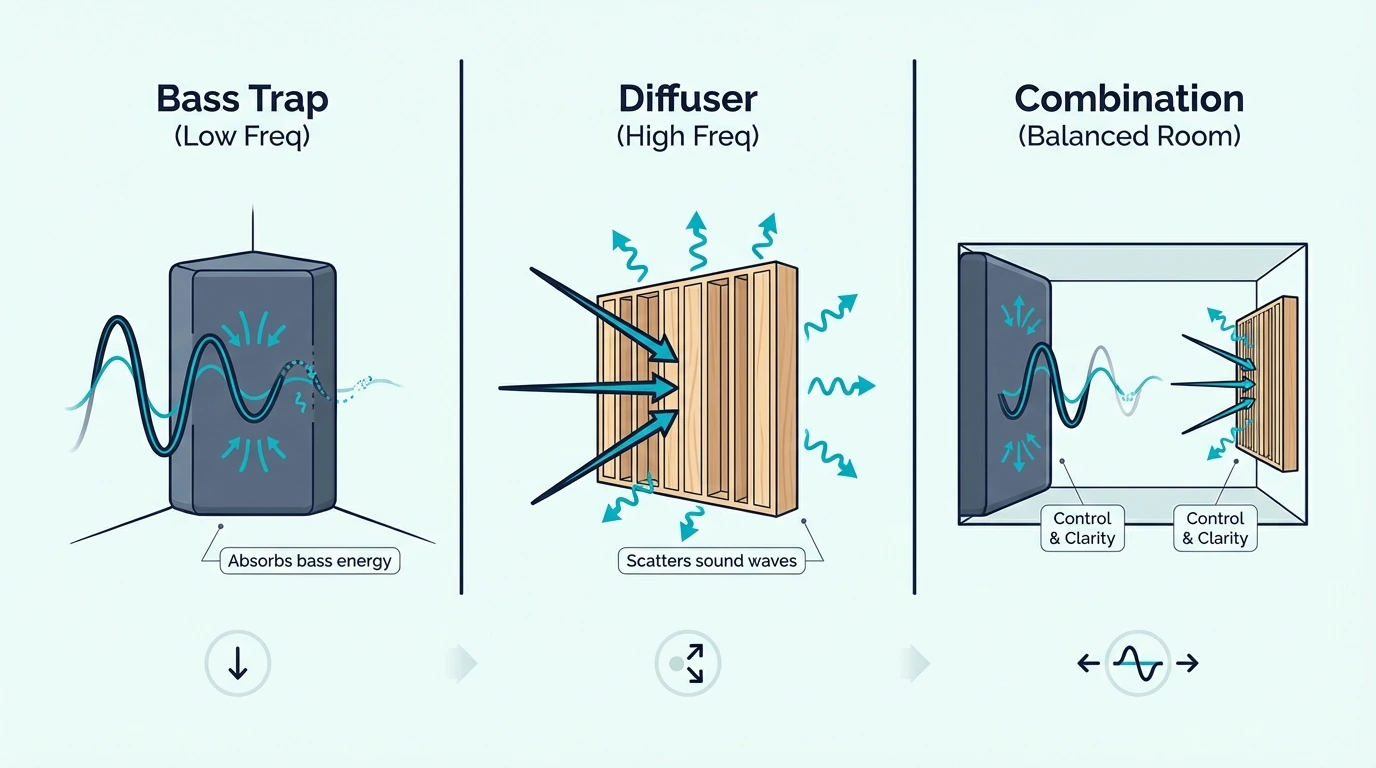
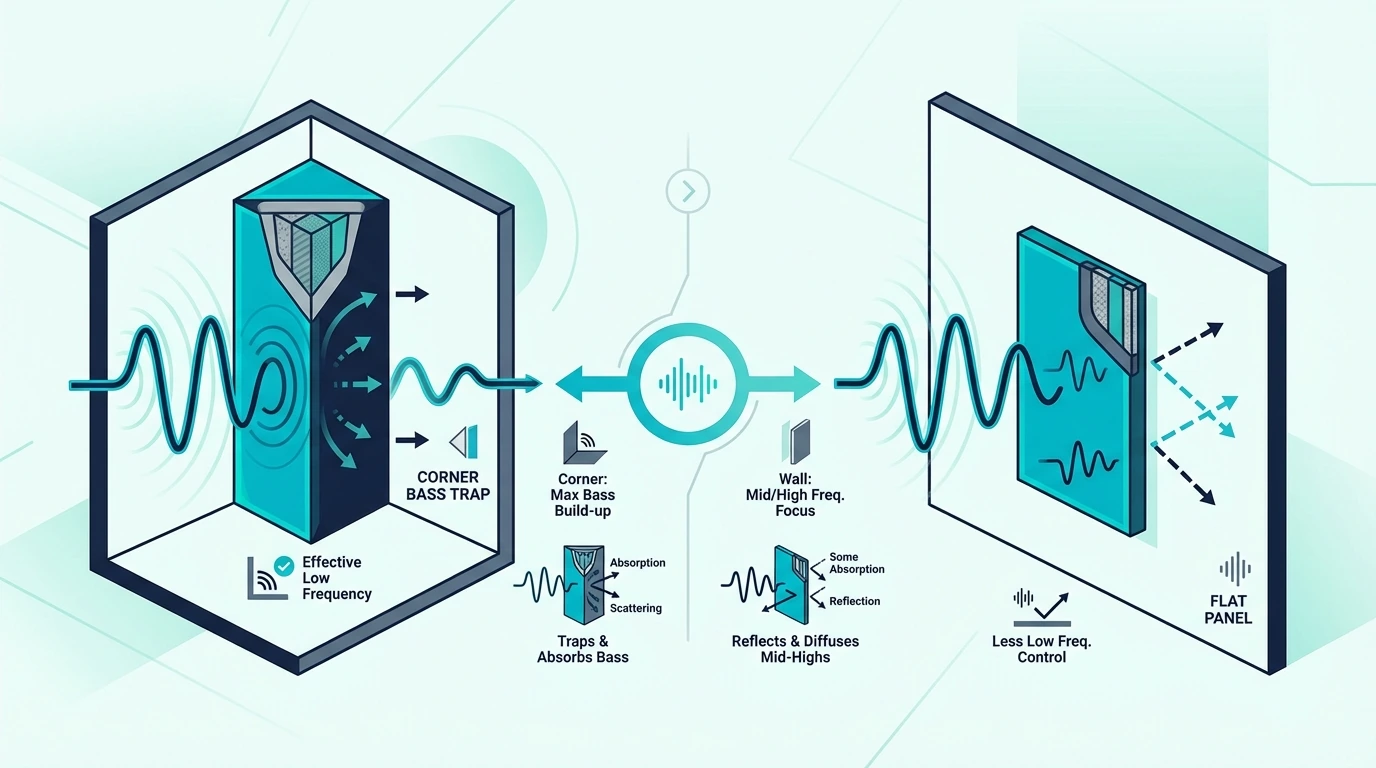
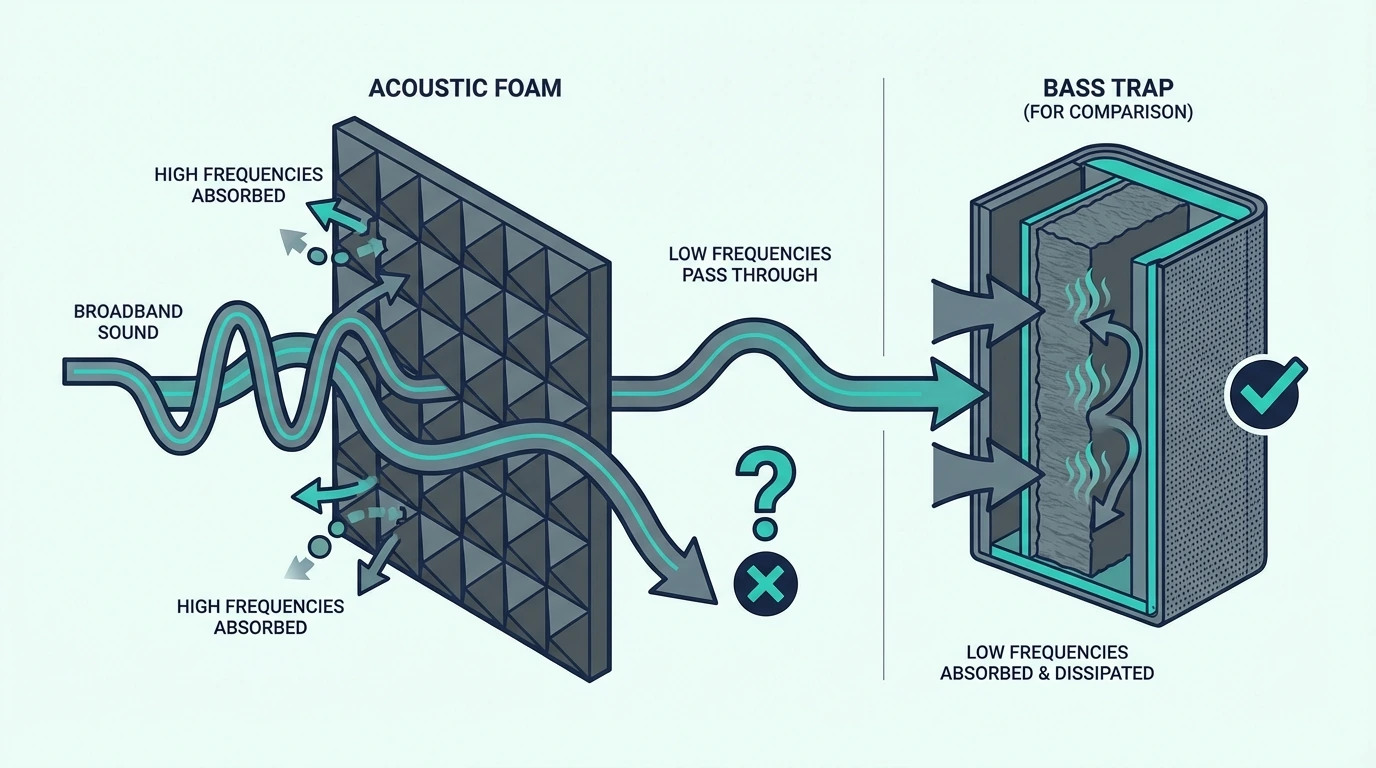
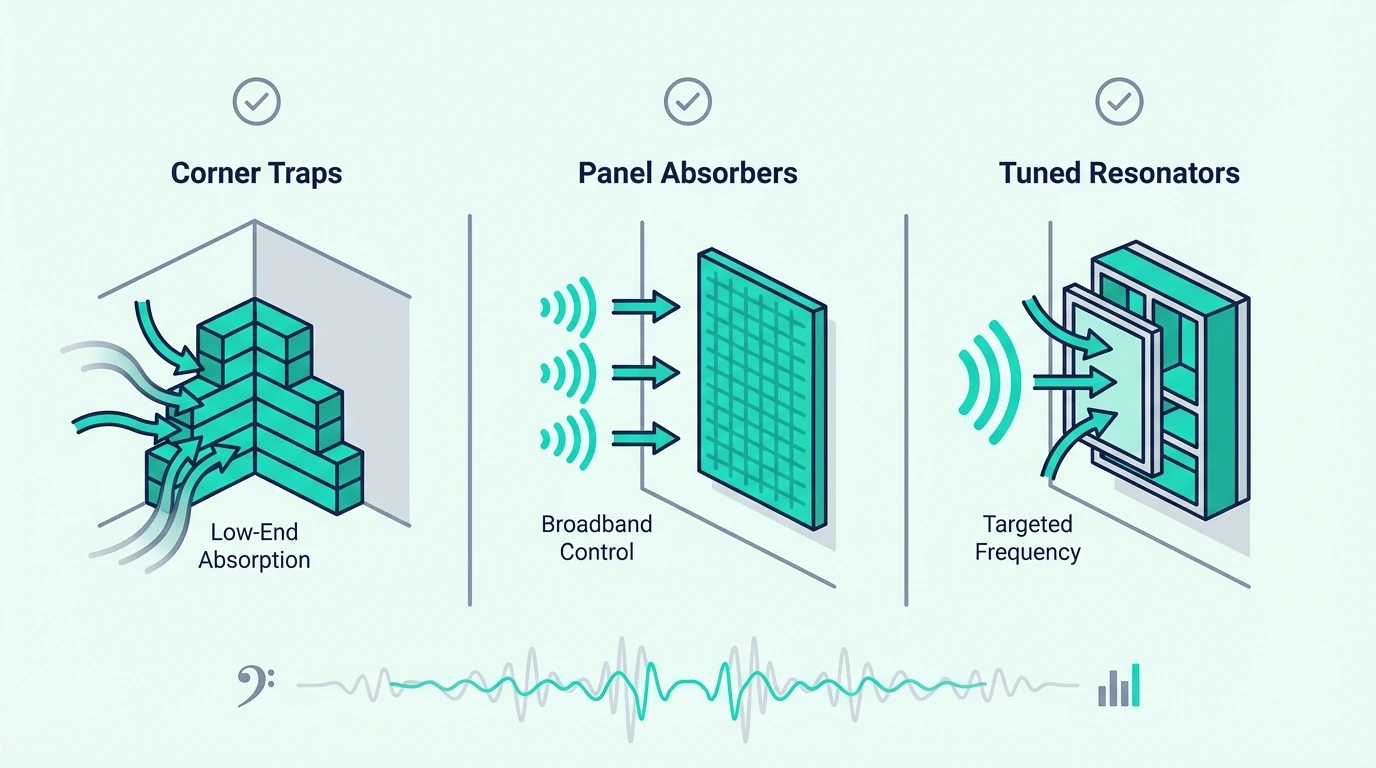
The distinction comes down to frequency range and placement — “absorbers” in common usage refers to thin panels (1-2 inches) mounted on walls to tame mid and high frequency reflections above 300 Hz. “Bass traps” refers to thicker panels (4+ inches) or resonant devices positioned in corners to absorb low frequencies below 300 Hz where room modes create the biggest problems.
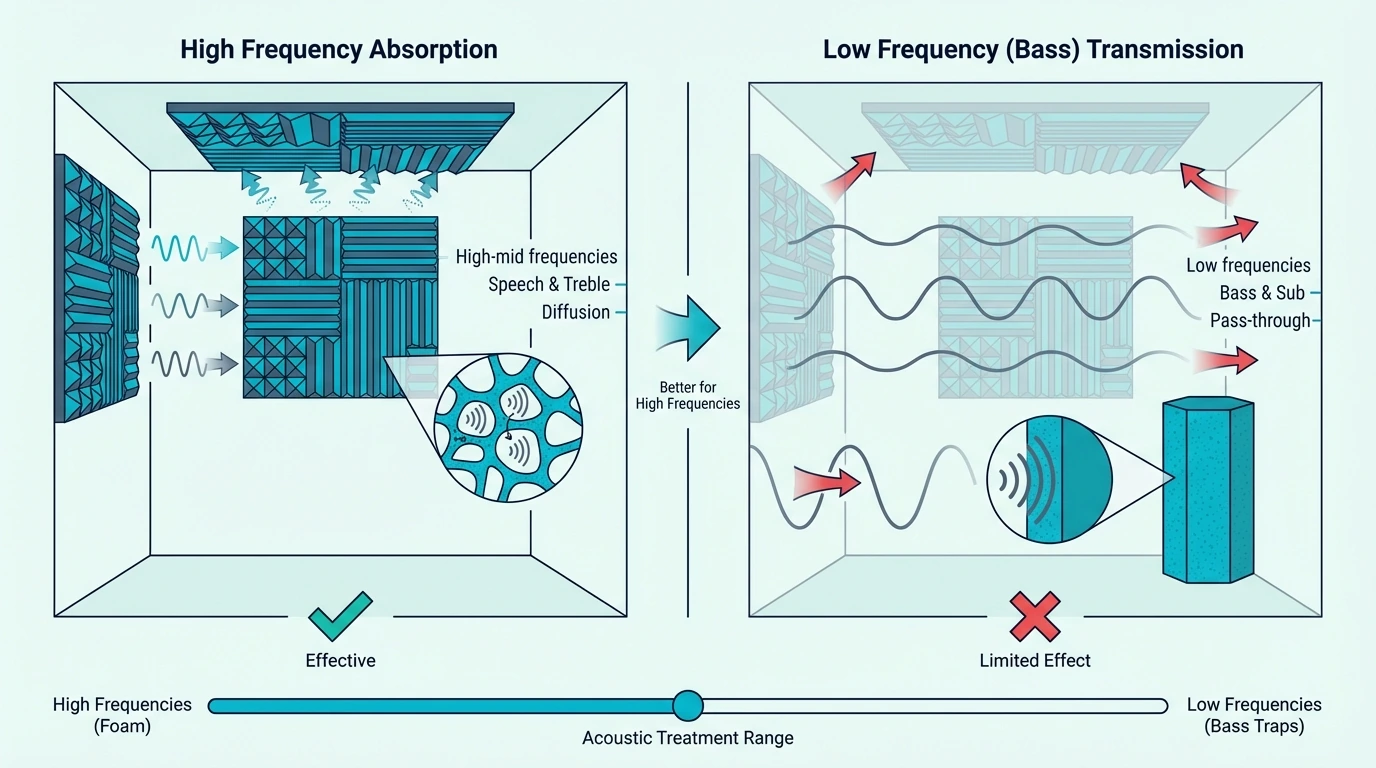
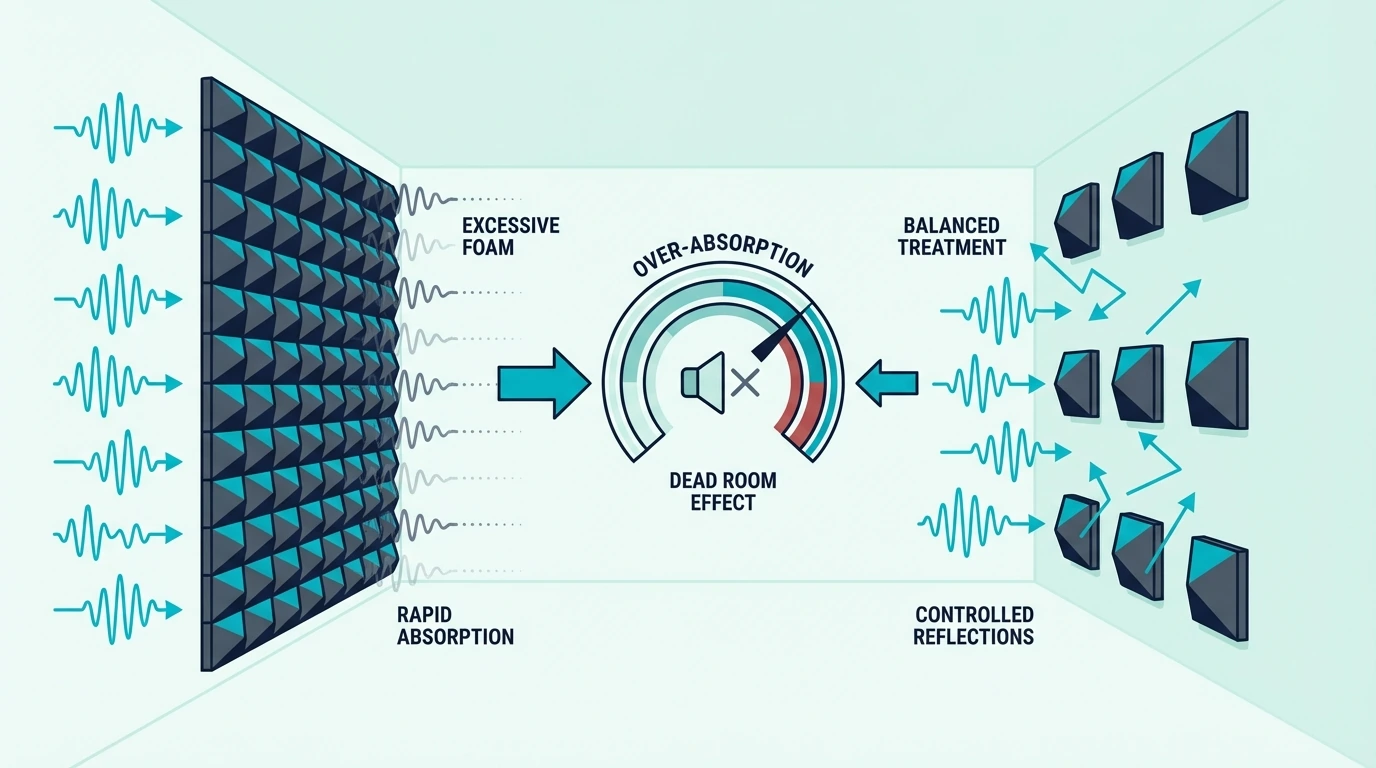
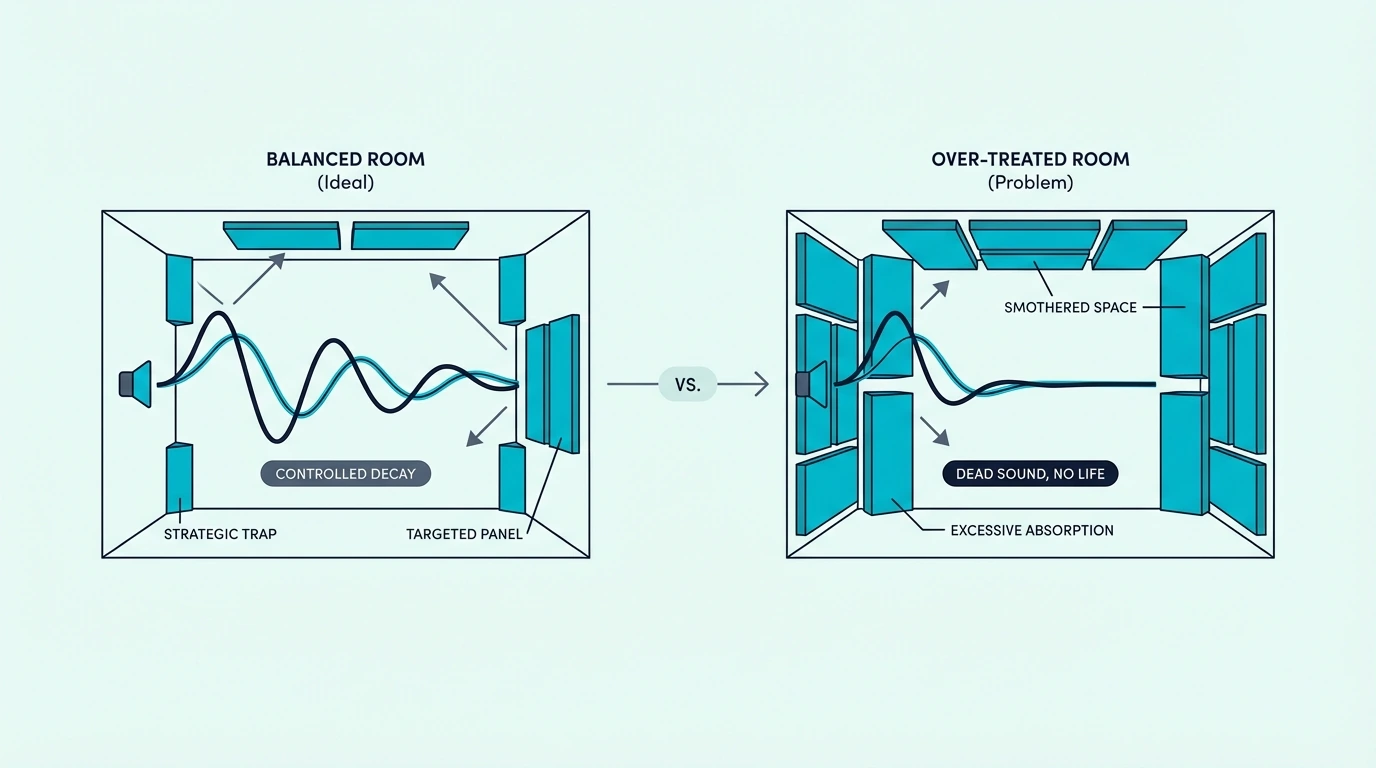
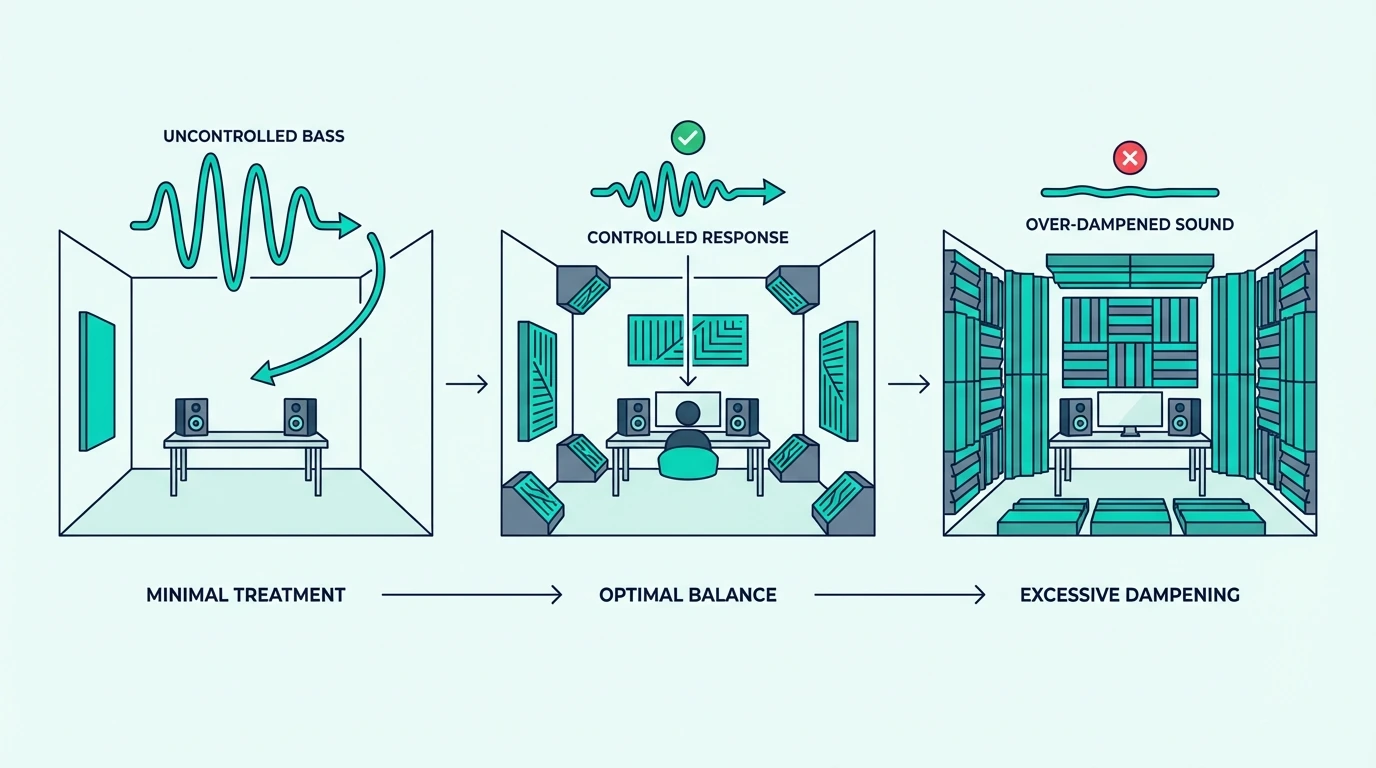
A room with only broadband absorbers still sounds boomy and uneven in the bass, while a room with only bass traps still has flutter echo and harsh reflections in the mids and highs. Understanding what each one actually does prevents you from over-investing in one type while neglecting the other.
Below, you will find exactly how bass traps differ from broadband absorbers, whether you need both, how a single thick panel can serve double duty, and clear guidance on which to buy first.
Quick Takeaway
Bass traps ARE absorbers, but not all absorbers are bass traps. Standard absorber panels (1-2 inches thick, wall-mounted) handle mid/high frequencies above 300 Hz. Bass traps (4+ inches thick, corner-mounted) handle low frequencies below 300 Hz. Most rooms need both — bass traps in corners first for room modes, then broadband absorbers at reflection points for imaging and clarity.
Bass Traps vs Absorbers — Are They The Same Thing?
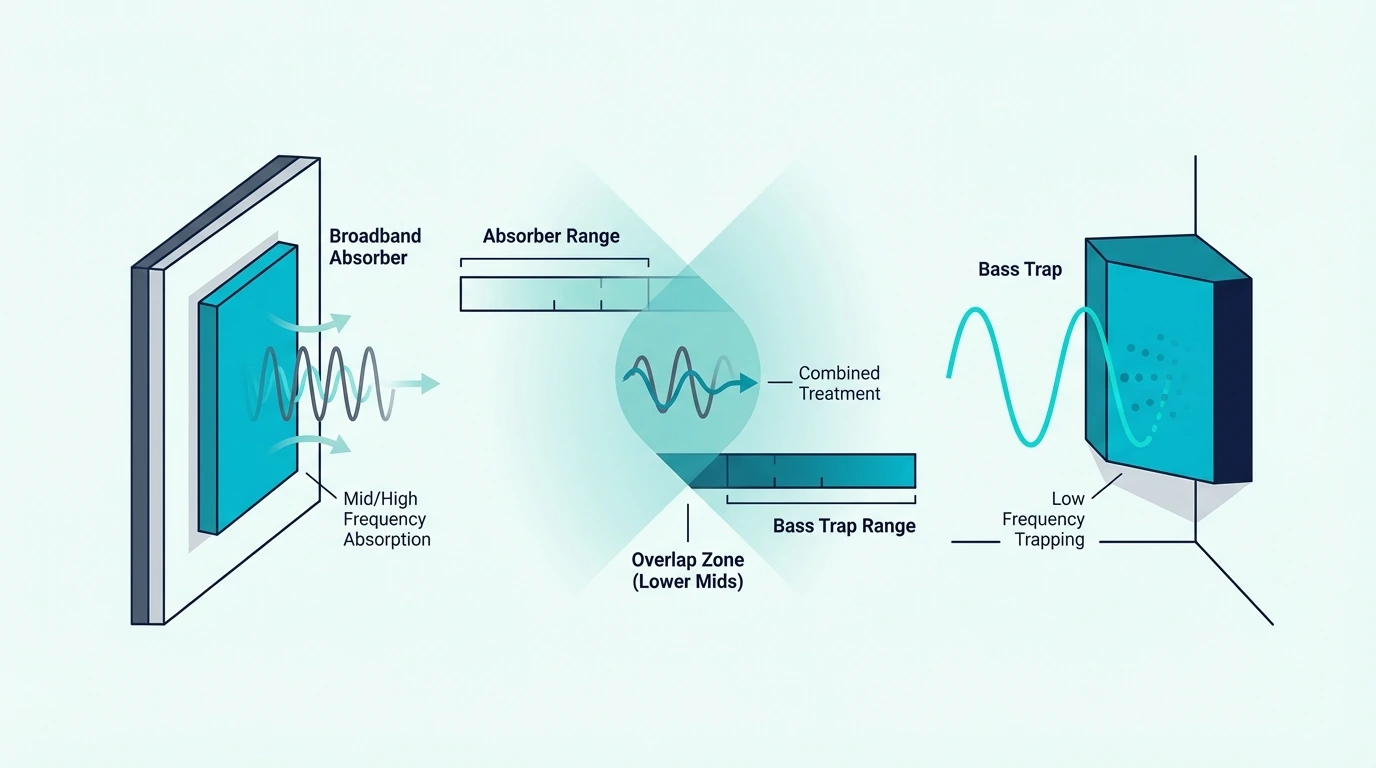
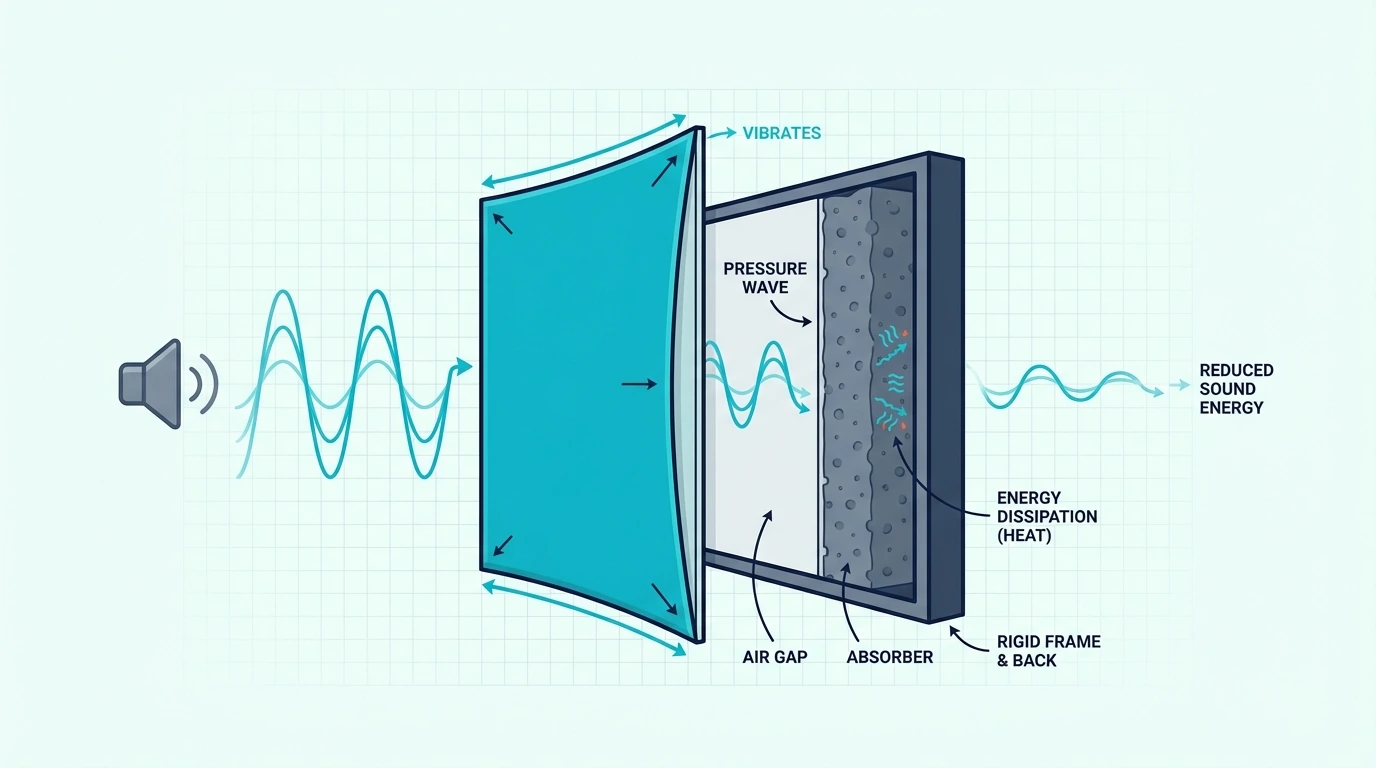
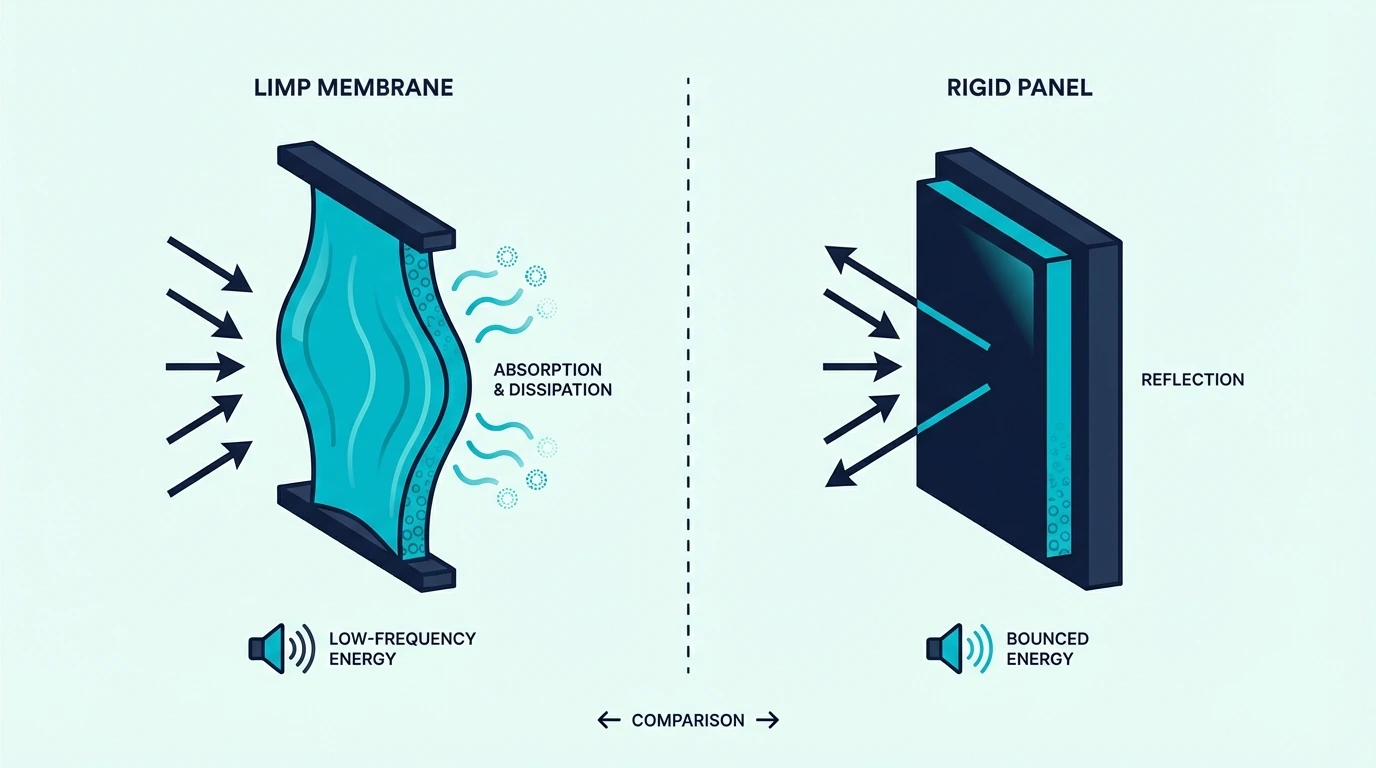
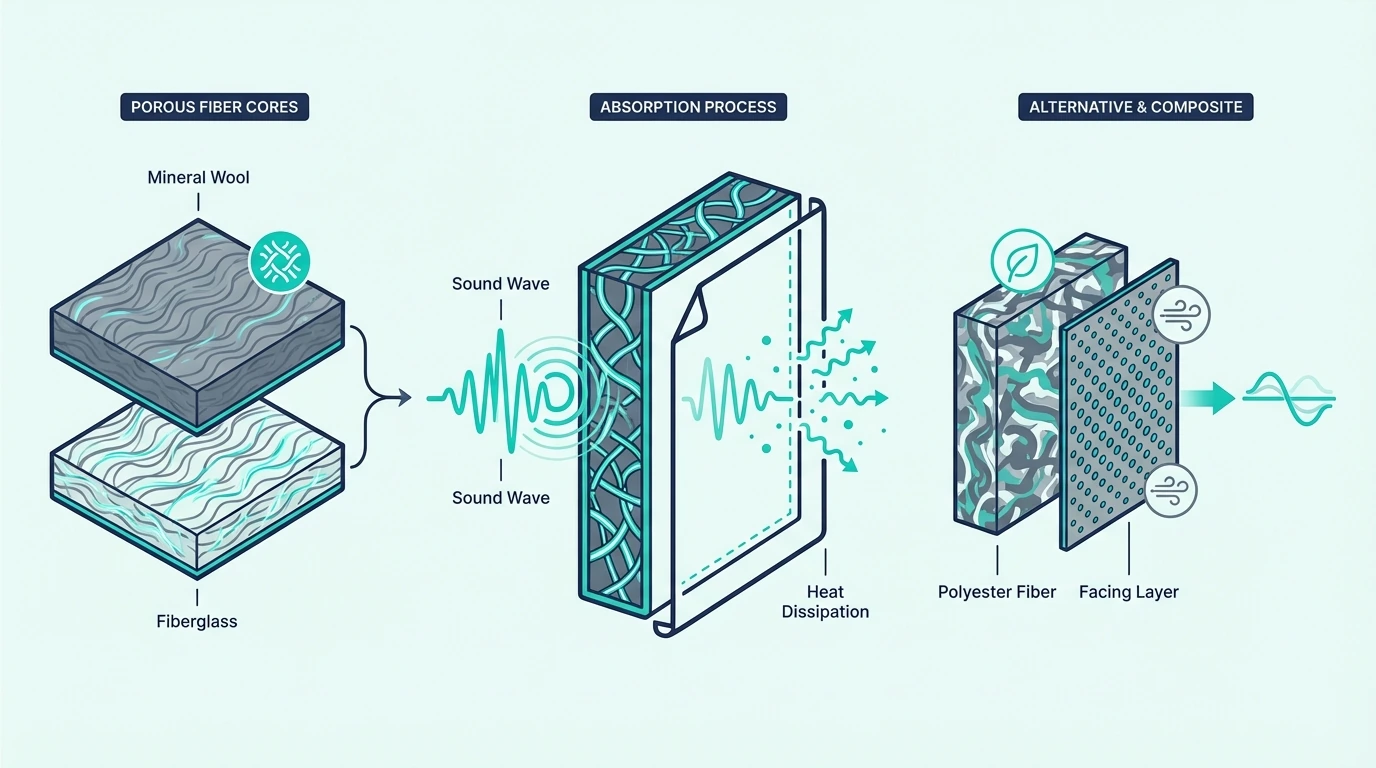
Bass traps and absorbers both convert sound energy into heat through friction — air molecules vibrate through porous material, and the resistance removes energy from the sound wave. The physics is identical, but the design parameters that determine which frequencies get absorbed are completely different.
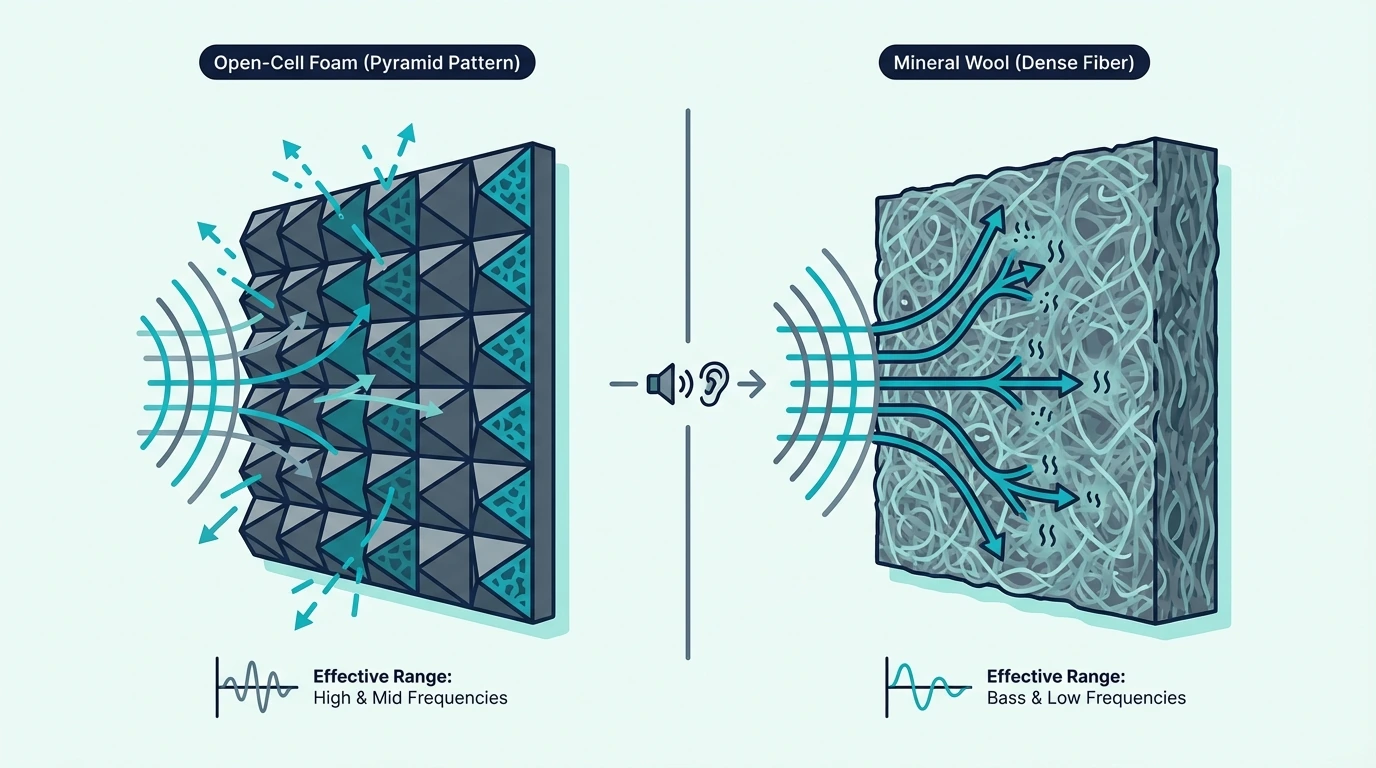
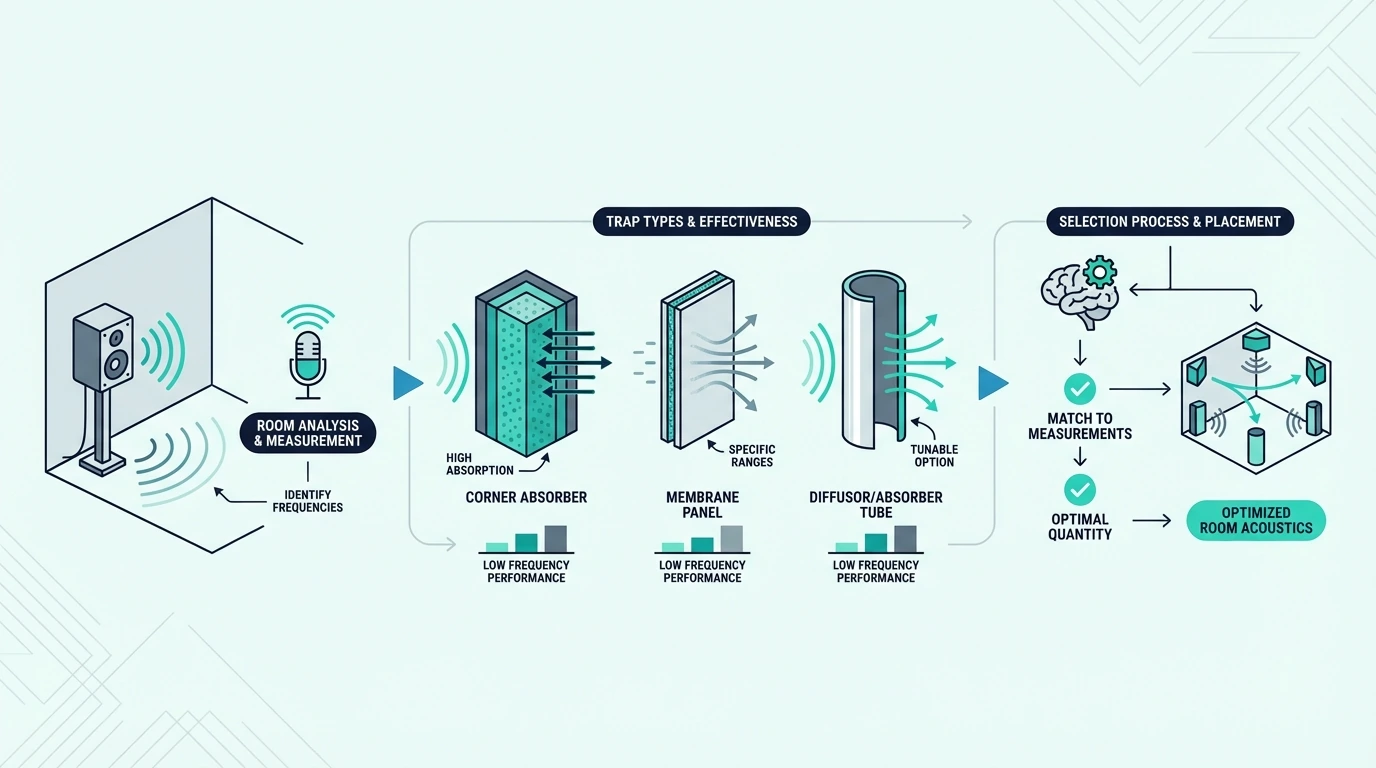
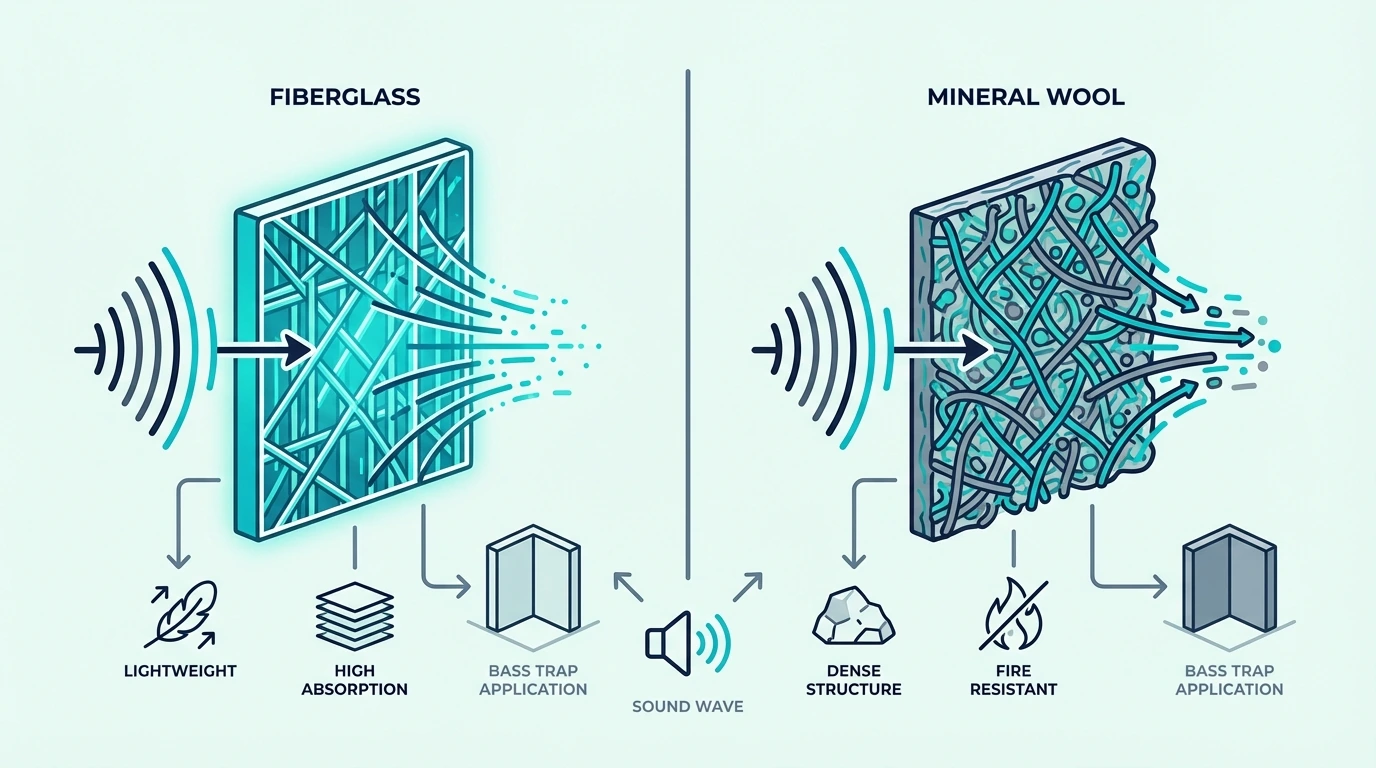
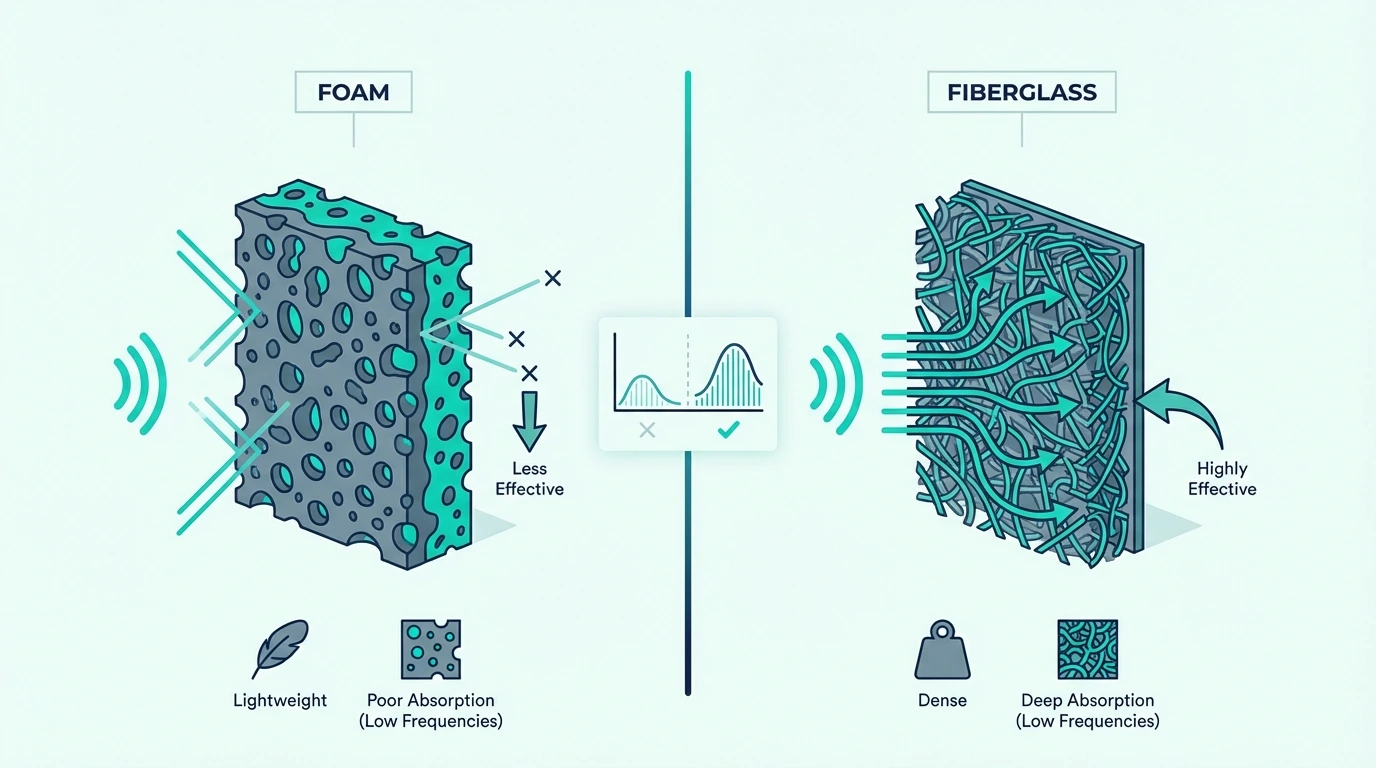
When people say “absorbers,” they typically mean acoustic panels — rectangular panels of mineral wool, fiberglass, or foam, usually 1-2 inches thick, mounted flat on walls. These panels absorb mid and high frequencies (roughly 300 Hz and above) effectively because those shorter wavelengths interact well with thin material at wall surfaces.
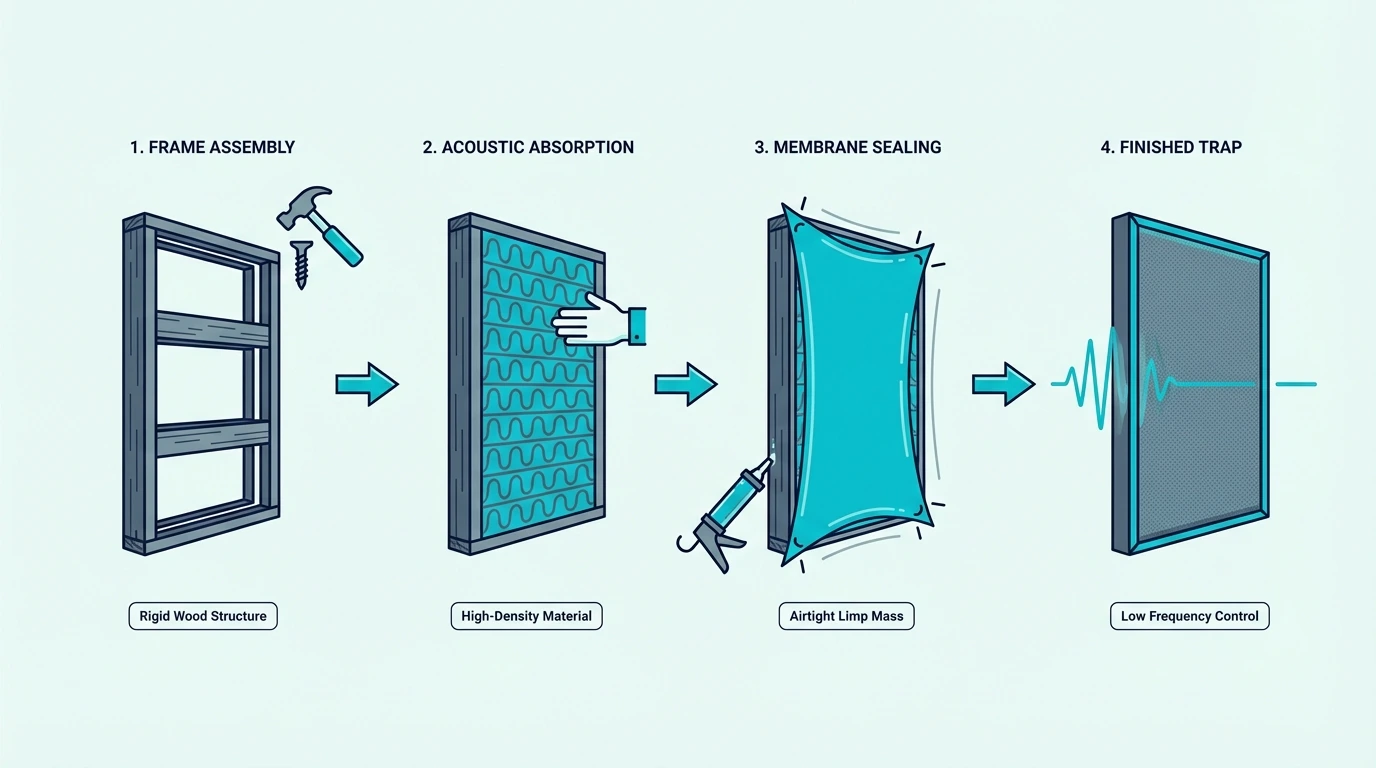
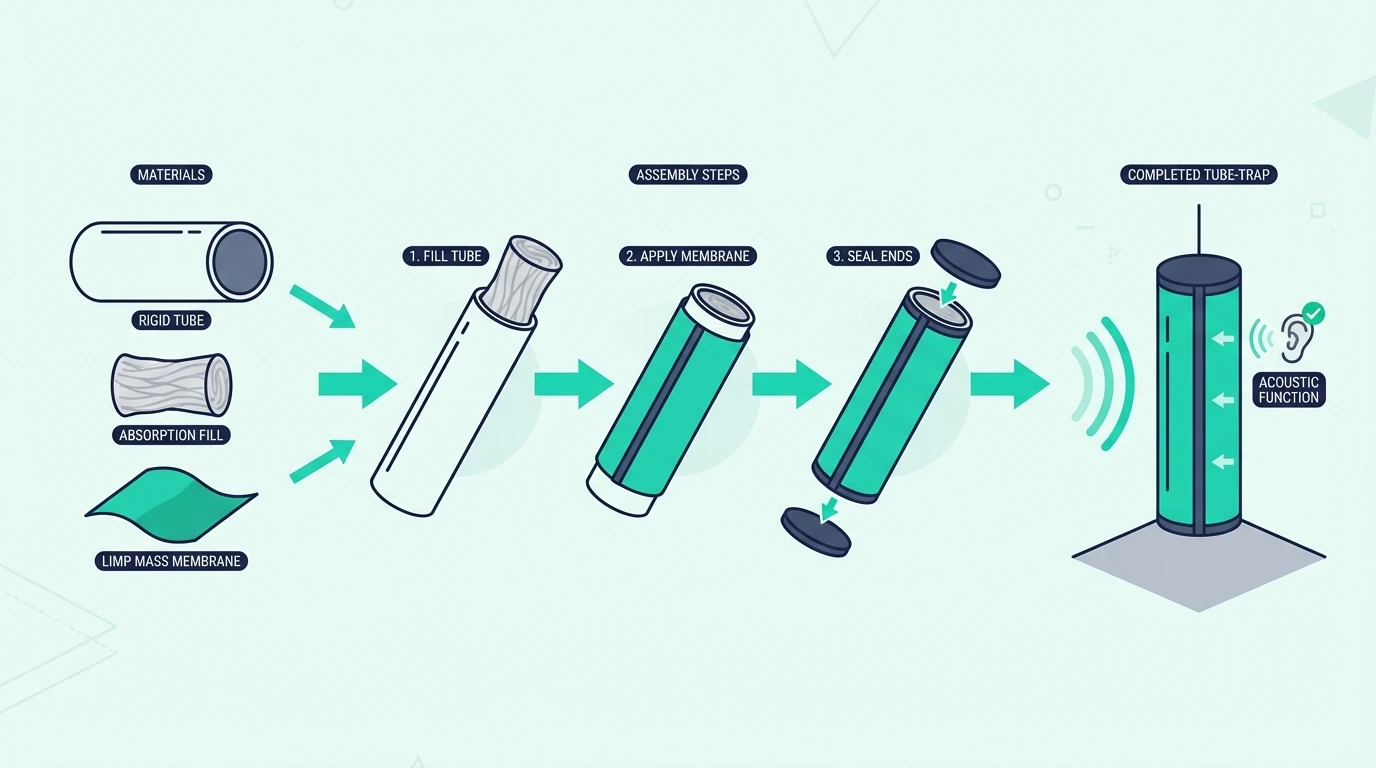
When people say “bass traps,” they mean thicker, denser panels (4+ inches) or tuned resonant devices (Helmholtz resonators, membrane absorbers) designed specifically to absorb low frequencies below 300 Hz. Bass wavelengths are 4-56 feet long, so absorbing them requires either substantially more material depth or a resonant design that targets specific frequency bands.
The confusion exists because the acoustic treatment industry uses “absorber” as both a general category (anything that absorbs sound) and a specific product type (thin wall panels). Bass traps are absorbers in the general sense, but they are not “absorbers” in the product sense — and the performance difference between a 2-inch wall panel and a 4-inch corner trap at 100 Hz is enormous.
How Bass Traps Differ From Broadband Absorbers
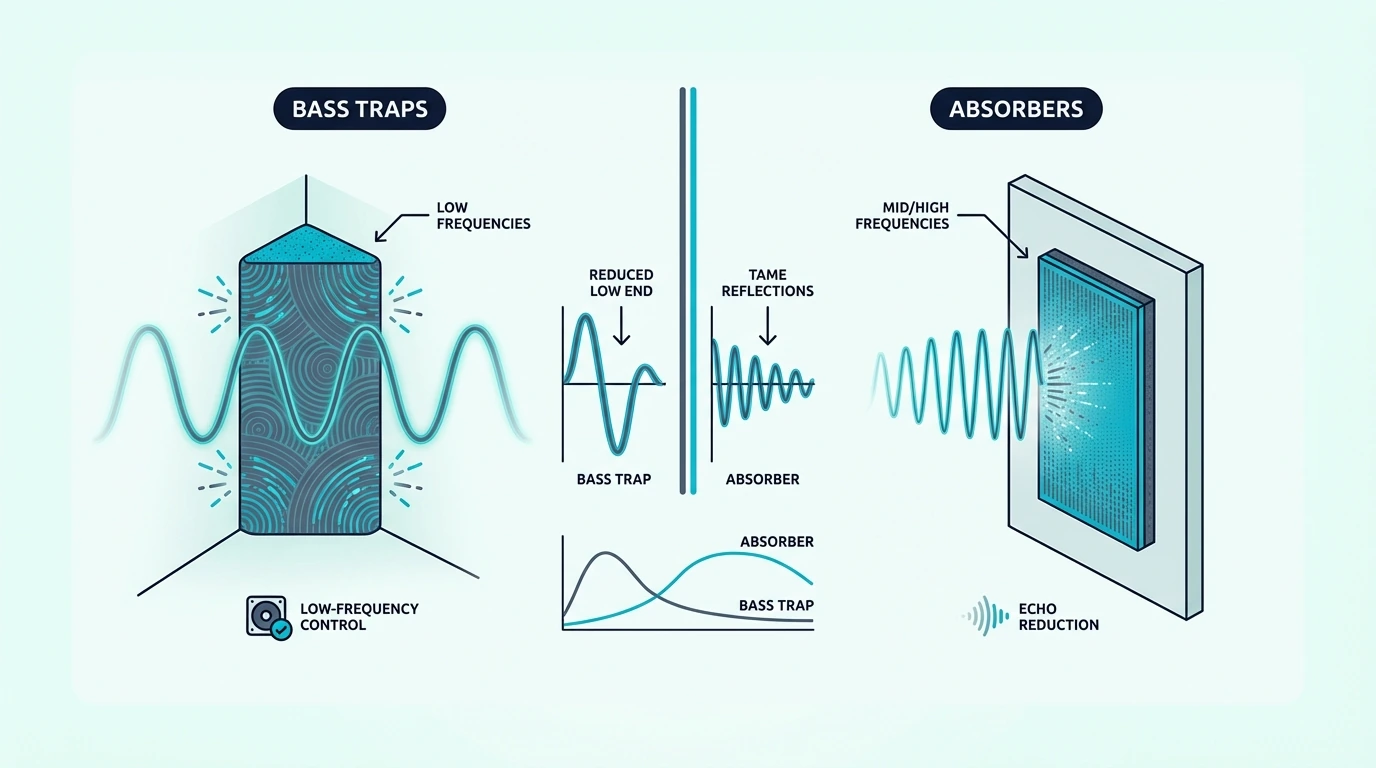
The practical differences between bass traps and broadband absorbers come down to three factors: thickness, placement, and frequency target.
Thickness And Frequency Range
A panel’s thickness determines the lowest frequency it can absorb effectively. The rule of thumb: a porous absorber works well at frequencies where the panel depth equals roughly one-quarter of the wavelength.
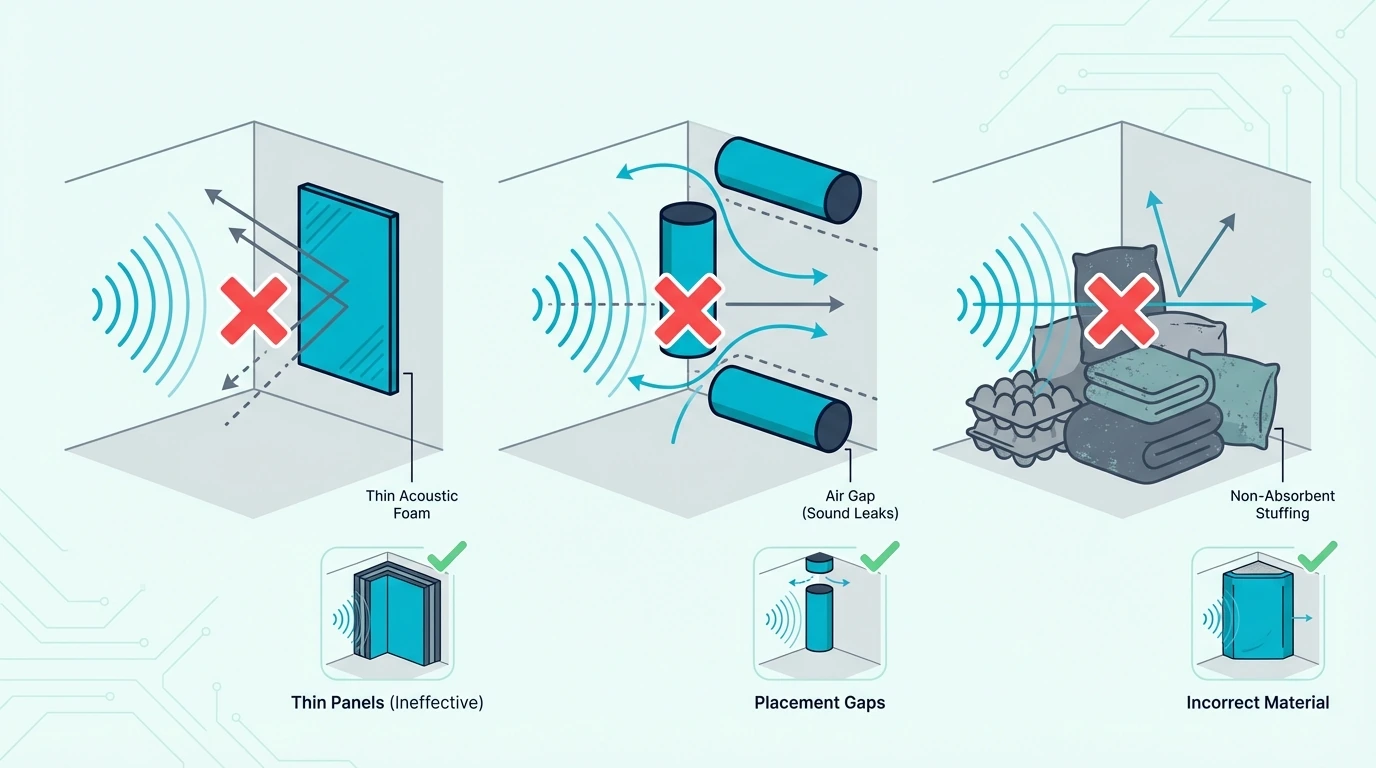
A 2-inch panel reaches quarter-wavelength effectiveness around 1,700 Hz — it absorbs well above that frequency but drops off rapidly below it. At 125 Hz (a common problem frequency), a 2-inch panel absorbs only 10-15% of the energy hitting it.
A 4-inch panel reaches quarter-wavelength effectiveness around 850 Hz and maintains useful absorption down to 200-250 Hz when mounted with an air gap. At 125 Hz, a 4-inch panel absorbs 40-60% of the energy — four to five times more than the 2-inch panel at the same frequency.
This is why thickness is the single biggest differentiator between a “panel absorber” and a “bass trap” — the same material at double the thickness absorbs an octave lower in the frequency spectrum.
Placement Differences
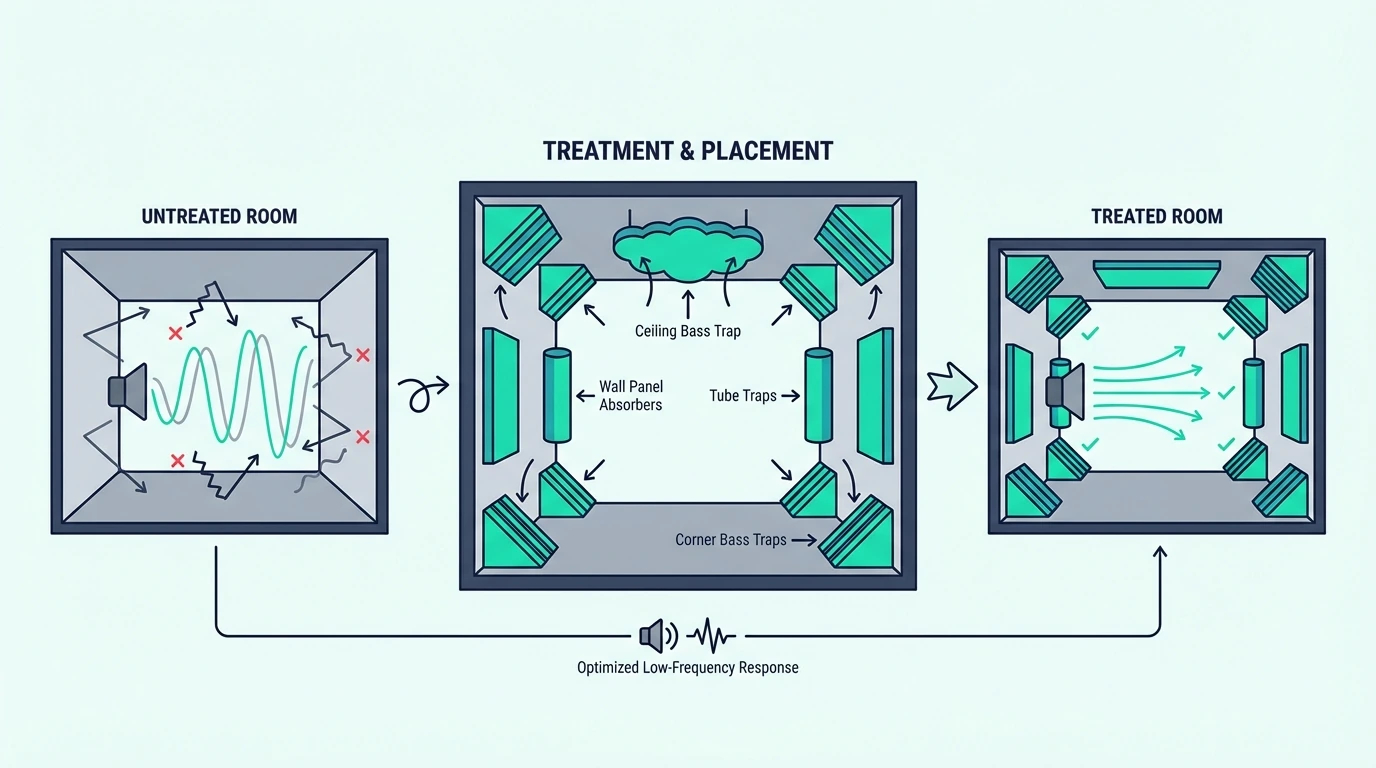
Broadband absorbers mount flat on walls at first reflection points — the spots on side walls, ceiling, and front wall where sound from your speakers bounces directly to your ears. This positioning targets early reflections that cause comb filtering and smear stereo imaging.
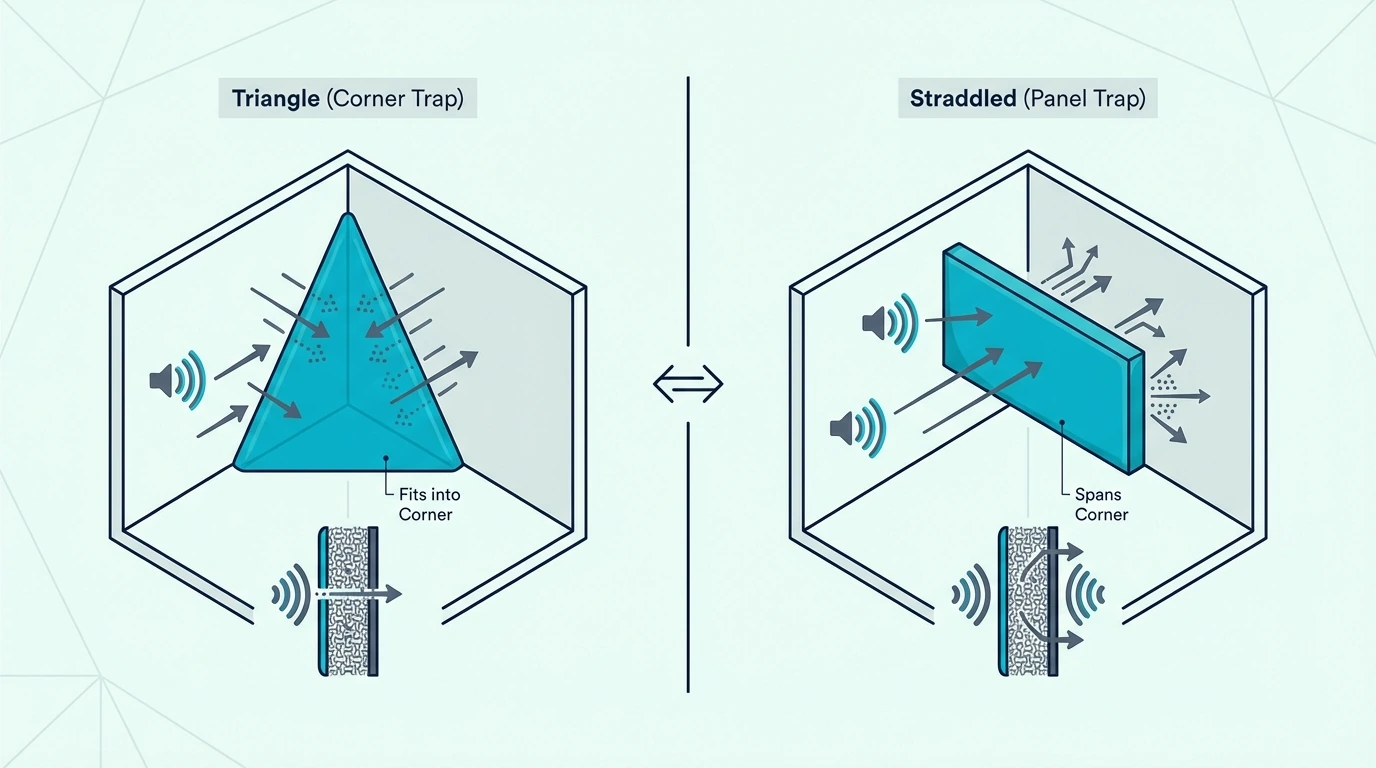
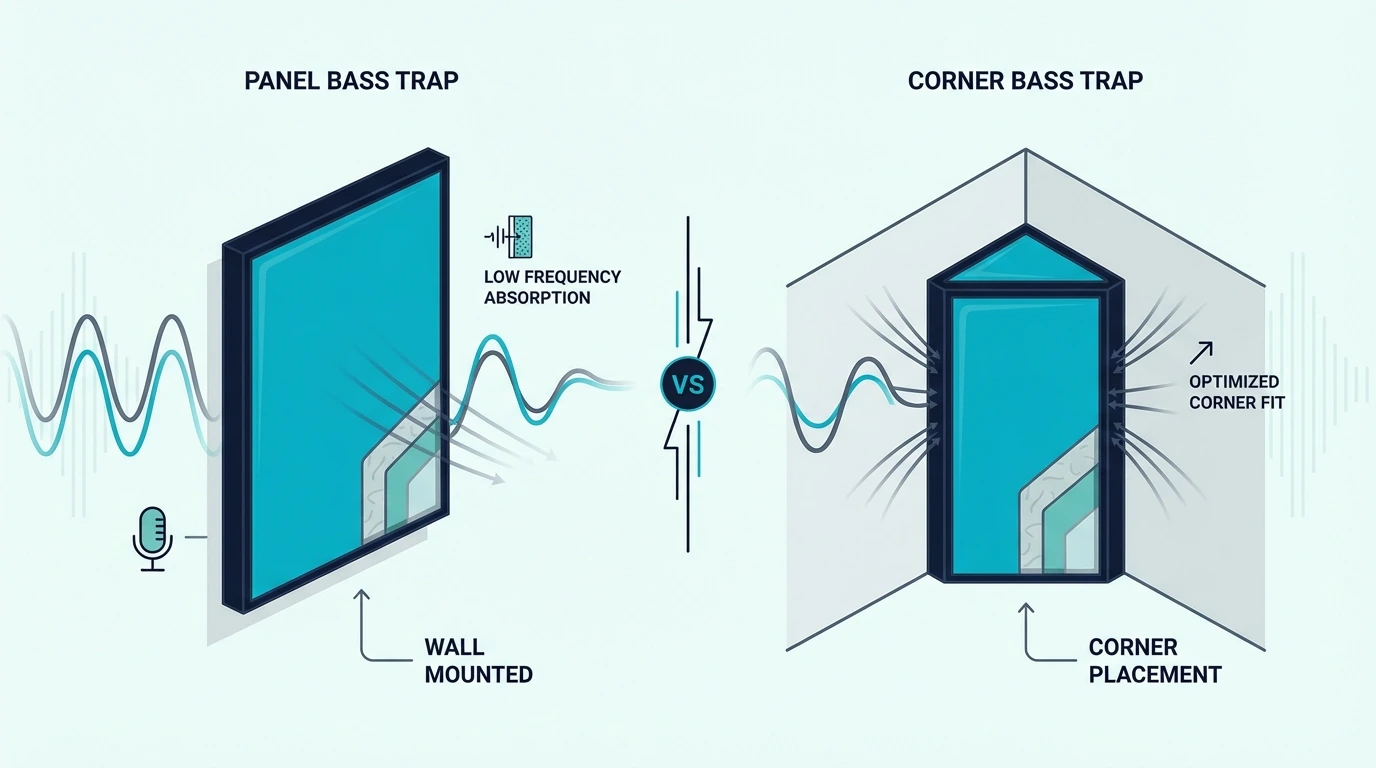
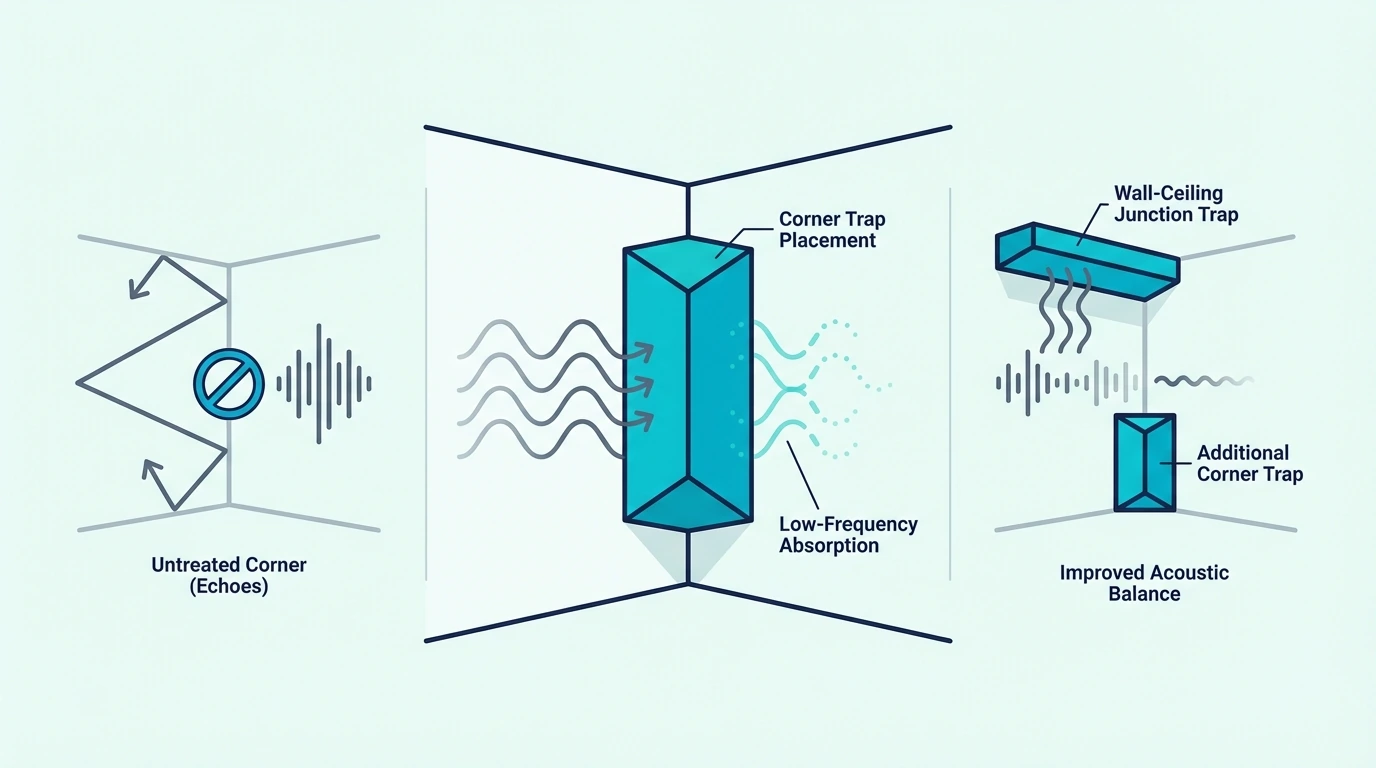
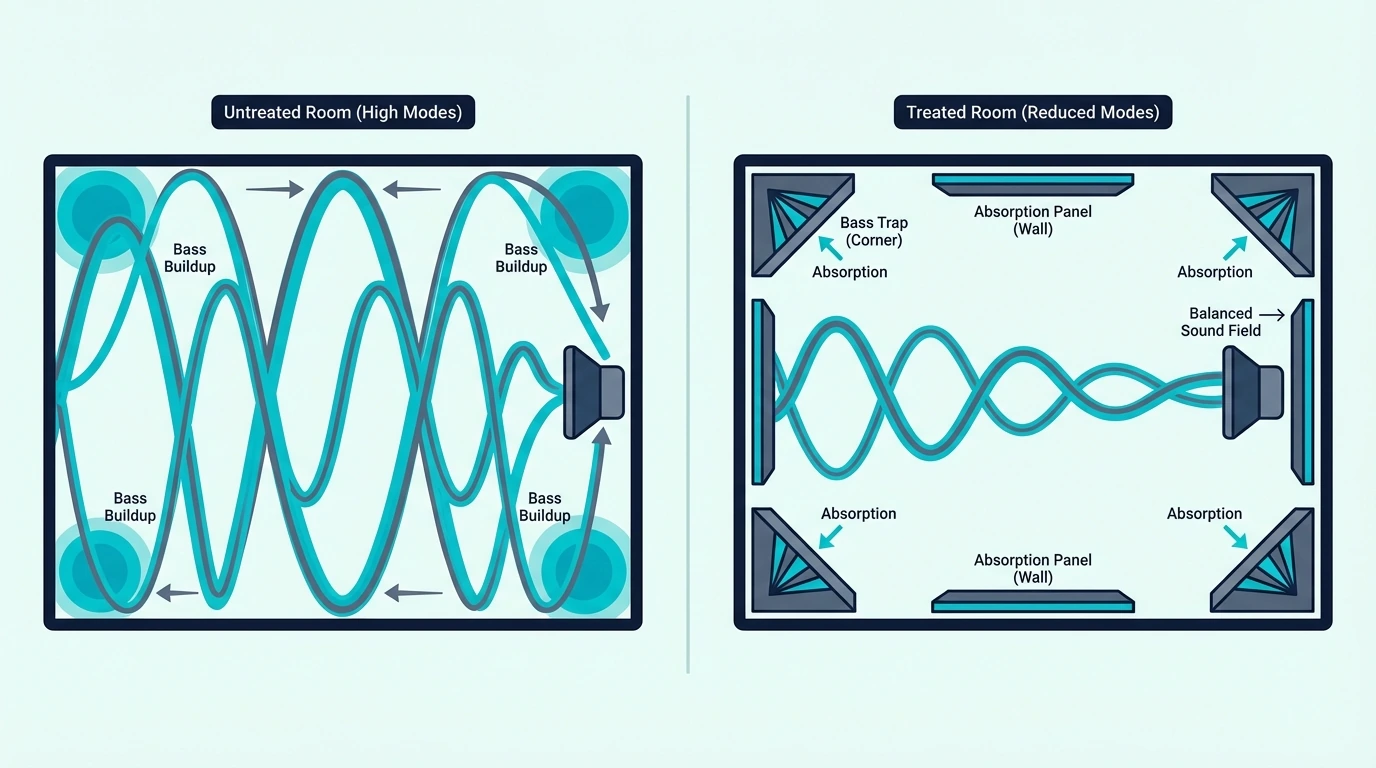
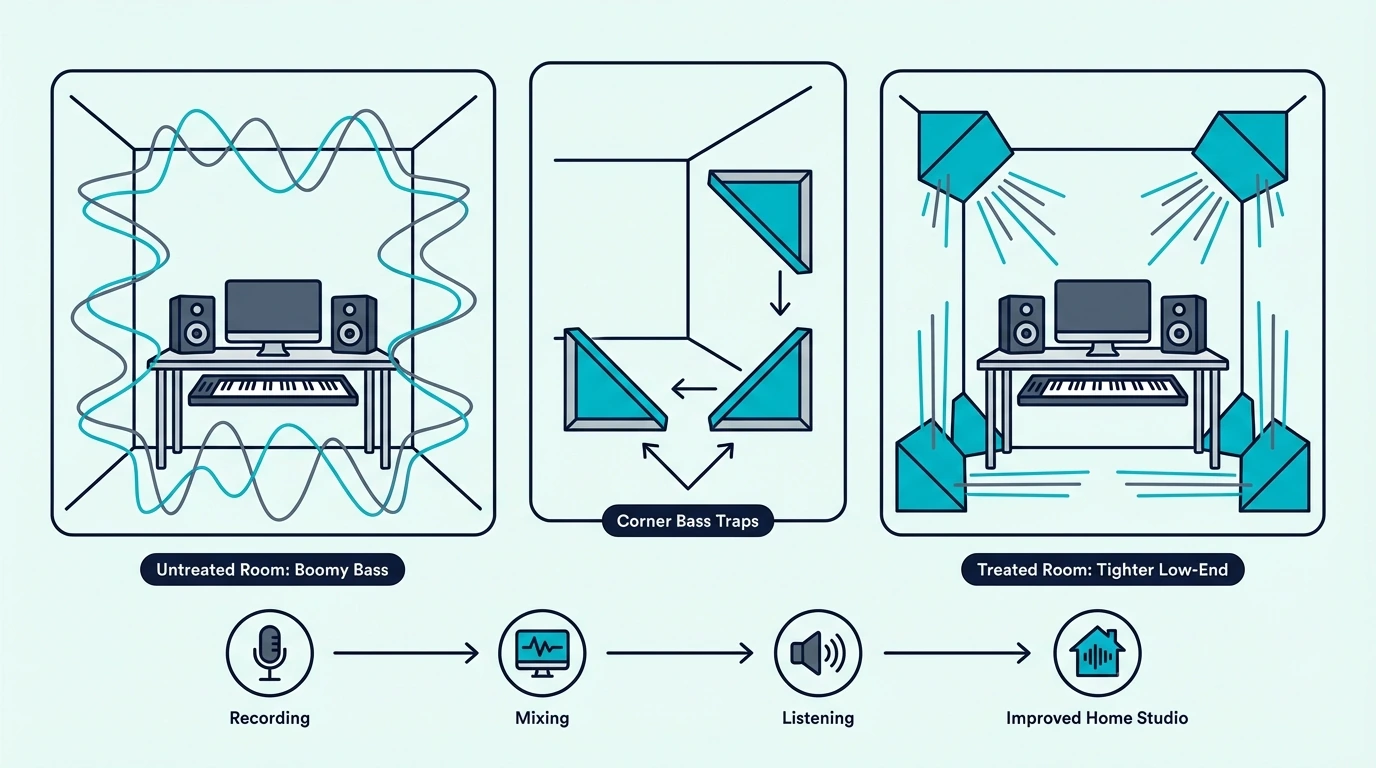
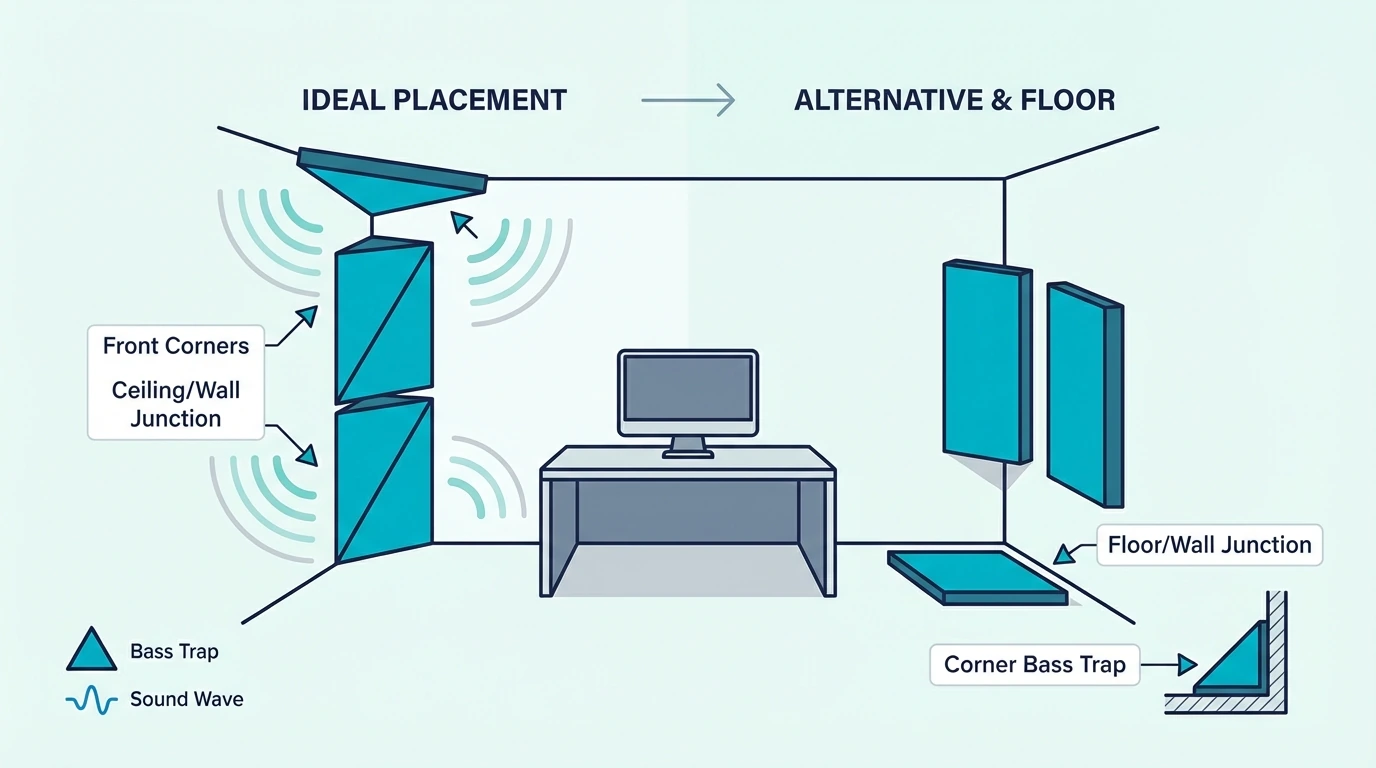
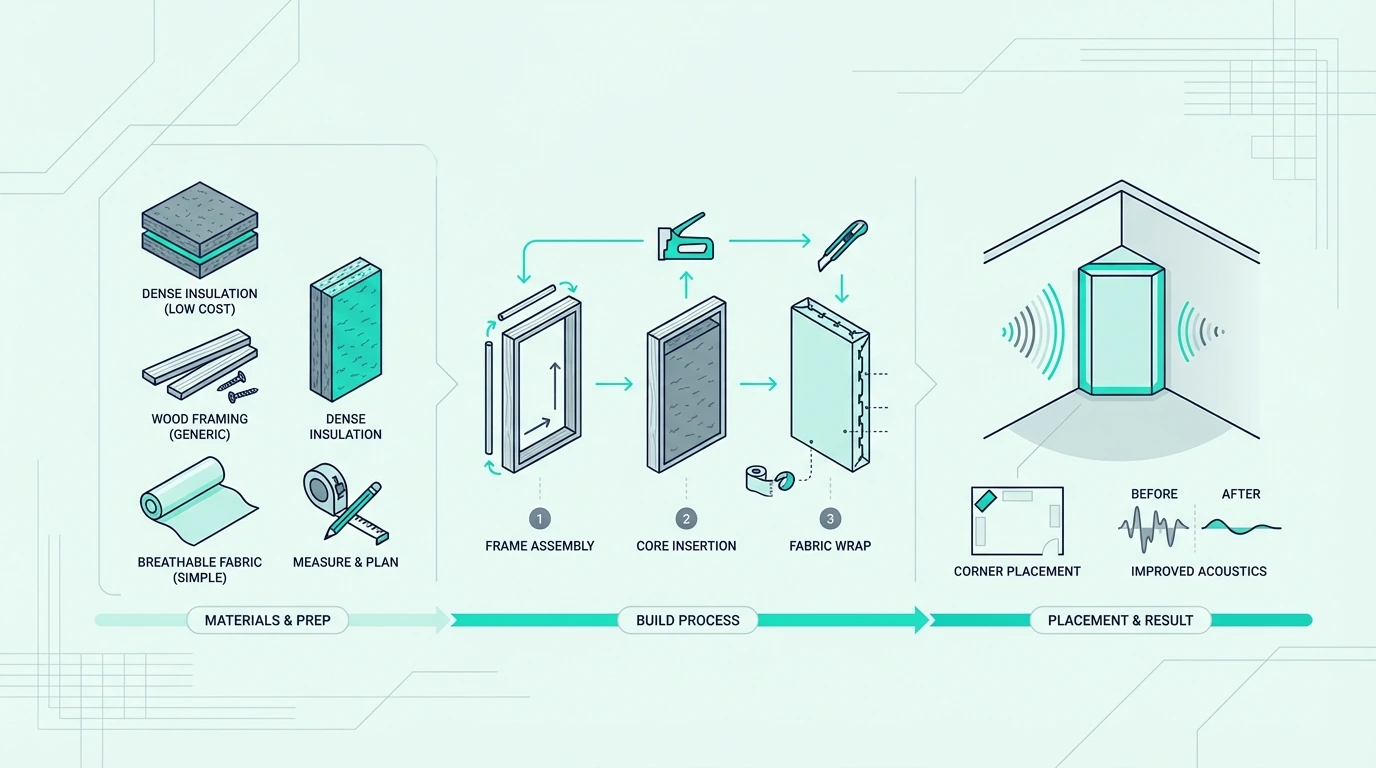
Bass traps mount in corners where two or three room boundaries meet. Corner placement is critical because bass pressure naturally concentrates at boundaries, and corners compound this effect — a panel in a corner is exposed to 2-4x more bass energy than the same panel on a flat wall, which means it absorbs proportionally more bass per square foot.
The air gap created by straddling a panel across a corner at 45 degrees adds effective depth. A 4-inch panel straddled across a corner creates 8-12 inches of total absorptive depth (panel + air gap), extending useful absorption down to 100-125 Hz without requiring a thicker panel.
Do You Need Both Bass Traps And Absorbers?
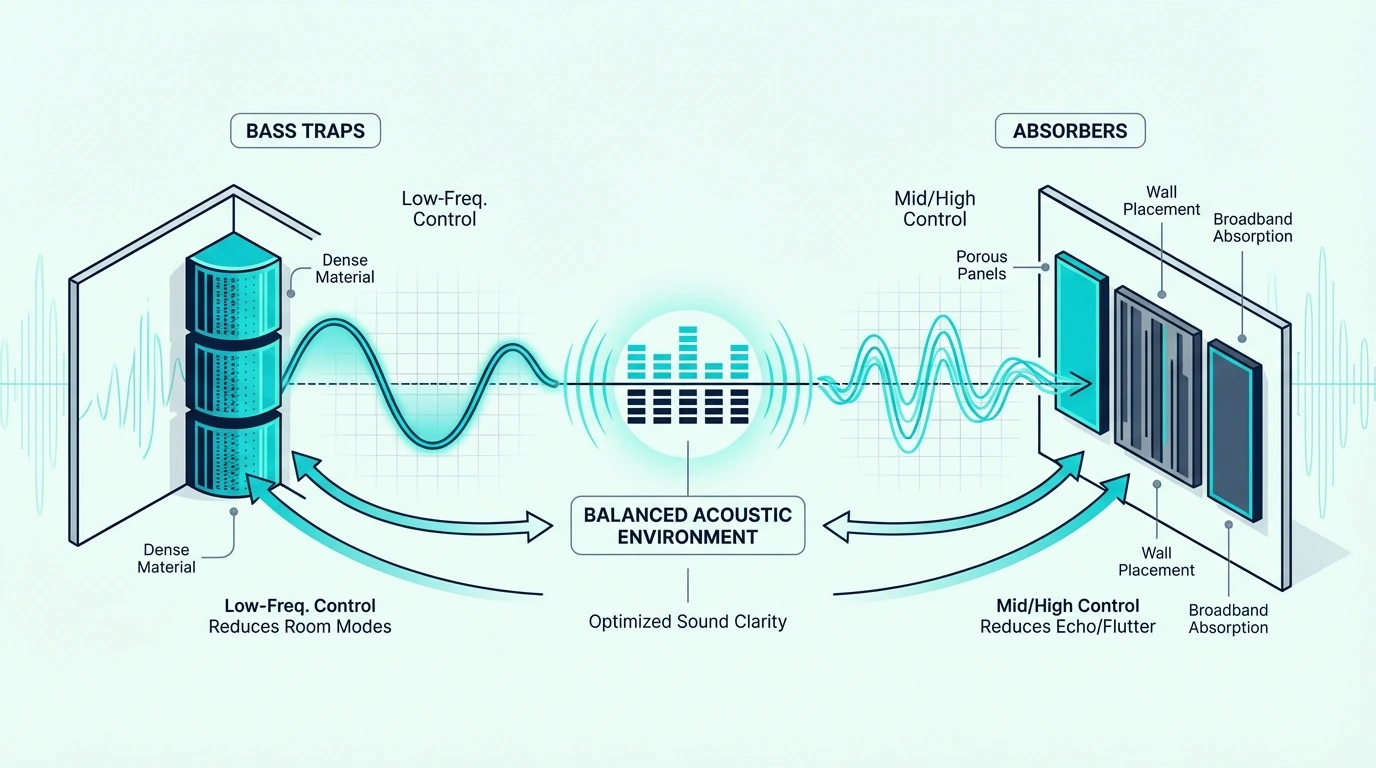
In almost every room used for music production, mixing, or critical listening — yes, you need both. They solve different problems that exist independently of each other.
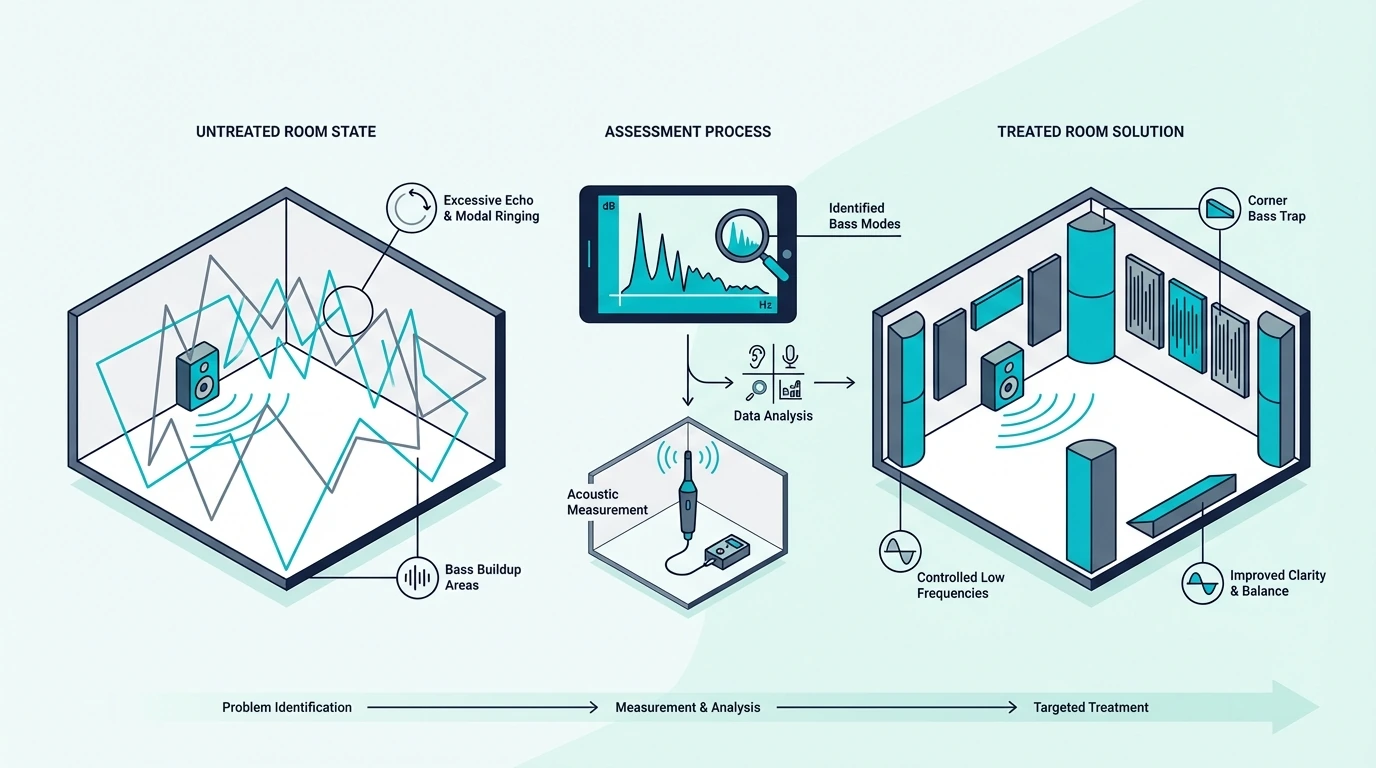
Without bass traps: Room modes cause peaks and nulls in your bass response — sometimes 20+ dB of variation across the frequency spectrum below 300 Hz, with certain bass notes booming excessively while others nearly disappear depending on your listening position. No amount of broadband absorber panels on walls will fix this because they lack the thickness and corner placement to absorb those frequencies.
Without broadband absorbers: Early reflections from walls and ceiling arrive at your ears 5-20 milliseconds after the direct sound, causing comb filtering that colors your perception of the music, while flutter echo between parallel walls creates a metallic “boing” on transients. Bass traps in corners do nothing for these mid/high frequency problems at wall reflection points.
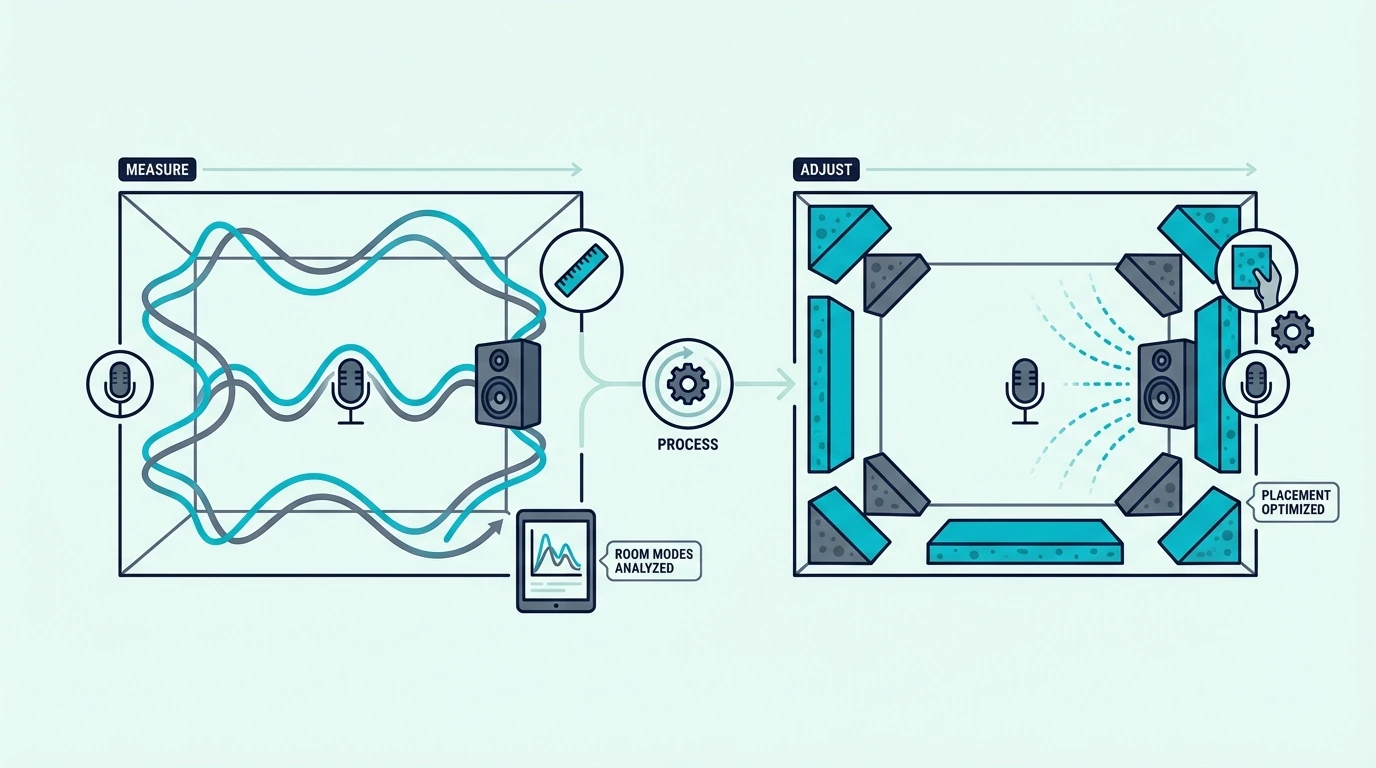
The treatment priority is always bass traps first. Room modes cause the most severe acoustic damage and are the hardest to fix, so corner treatment gives you the biggest improvement per dollar. Once bass is controlled, add broadband absorbers at first reflection points to clean up the mid and high frequency issues.
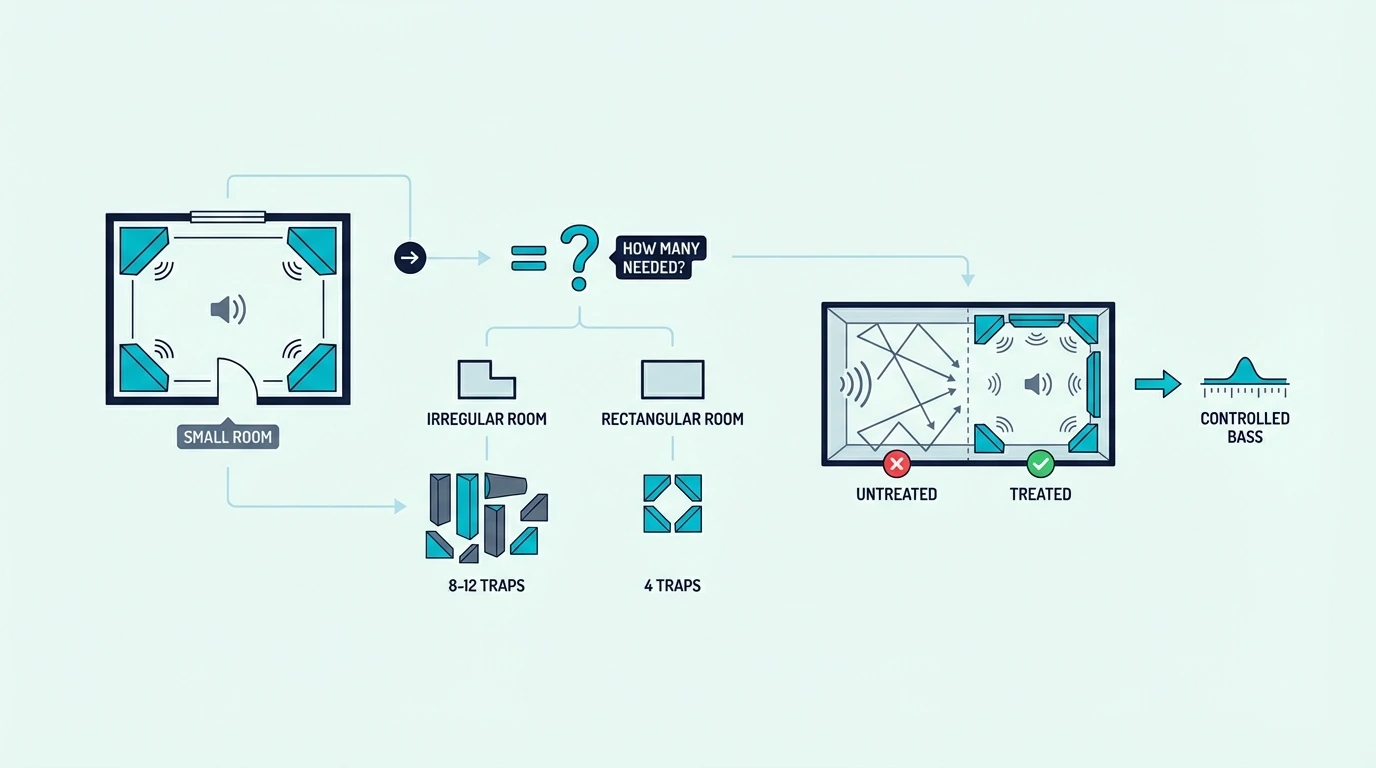
For a typical home studio, plan for 4-8 bass traps in corners (vertical wall-wall corners and ceiling-wall edges) plus 4-6 broadband absorber panels at first reflection points on side walls, ceiling, and rear wall.
Can A Thick Absorber Panel Double As A Bass Trap?
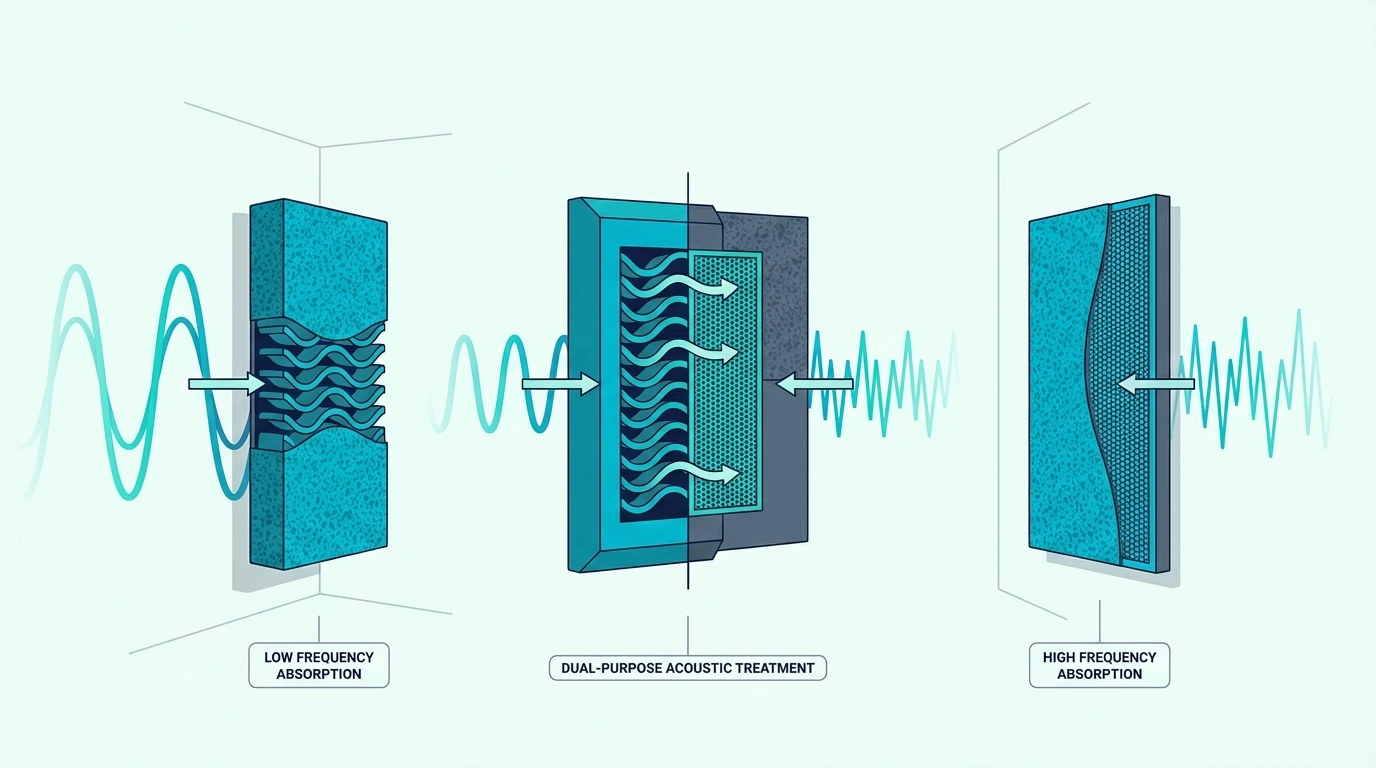
A 4-inch broadband absorber panel mounted in a corner functions as both a bass trap and a broadband absorber — this crossover is the most cost-effective approach for most rooms, and it is how professional studio designers typically specify treatment.
The key insight: there is no magic boundary between “absorber” and “bass trap.” A 4-inch mineral wool panel absorbs across the full frequency spectrum — bass, mids, and highs — with the absorption coefficient varying by frequency. In a corner position, that same panel absorbs significantly more bass than it would on a flat wall, effectively becoming a bass trap while retaining its broadband absorption capabilities.
This dual-purpose approach works because the thicker panel does not sacrifice mid/high absorption to gain bass absorption — it simply adds bass capability on top of the broadband performance. A 4-inch panel absorbs mids and highs just as well as a 2-inch panel (often better), while also reaching an octave deeper into the bass range.
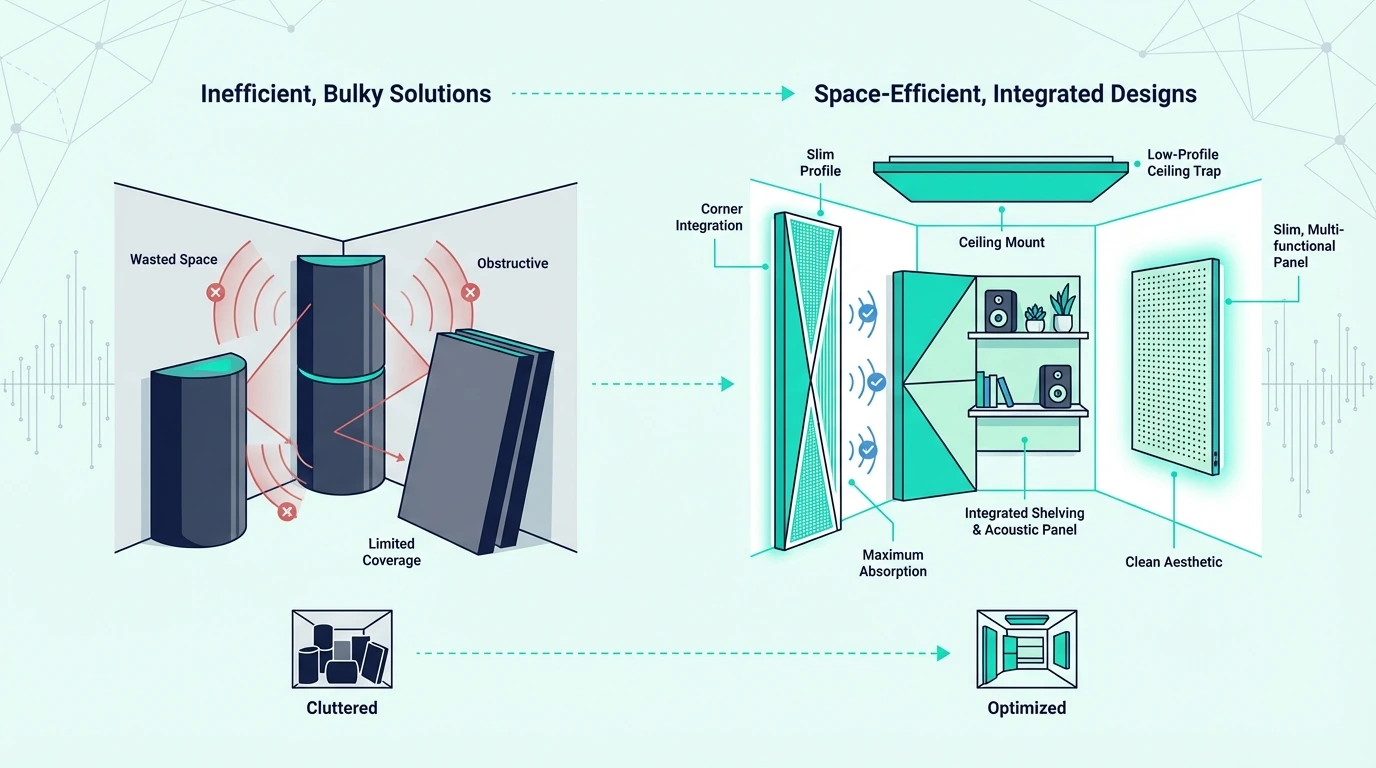
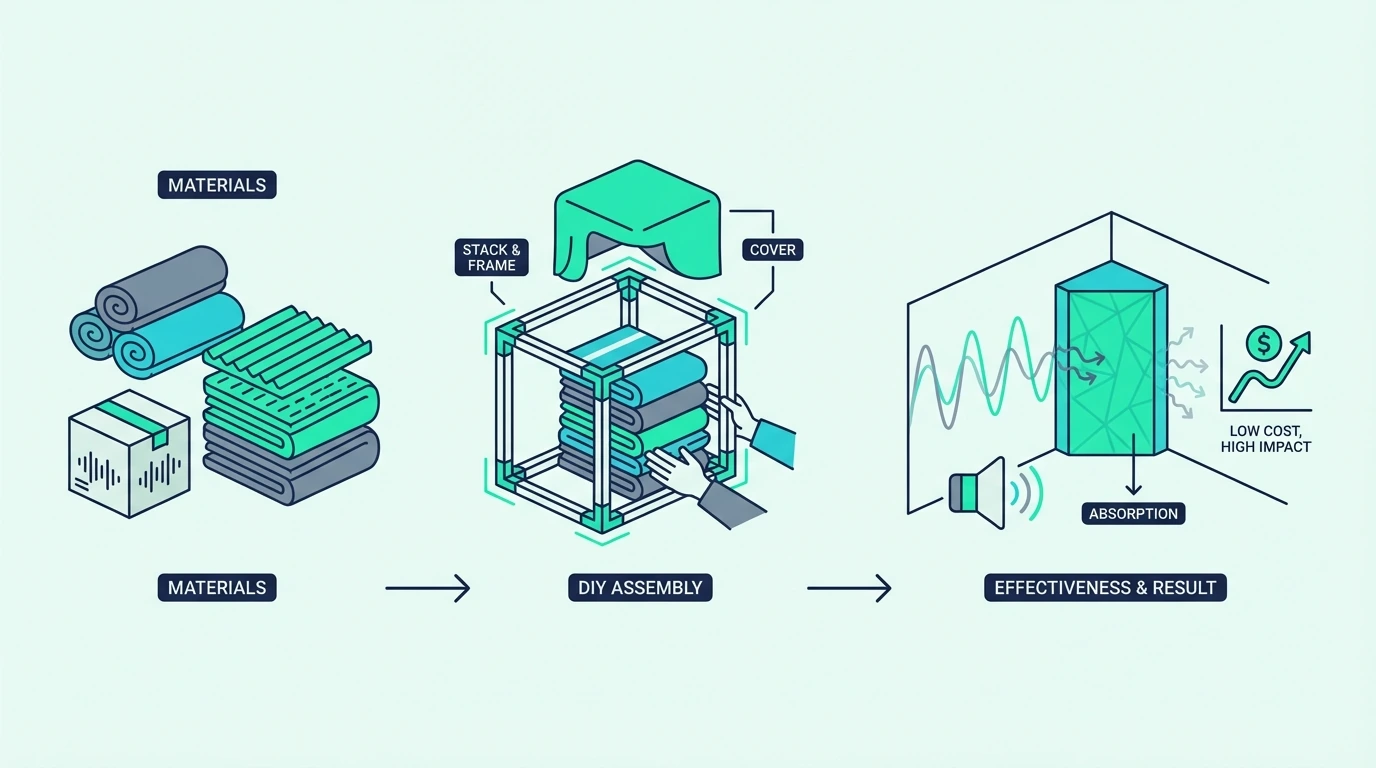
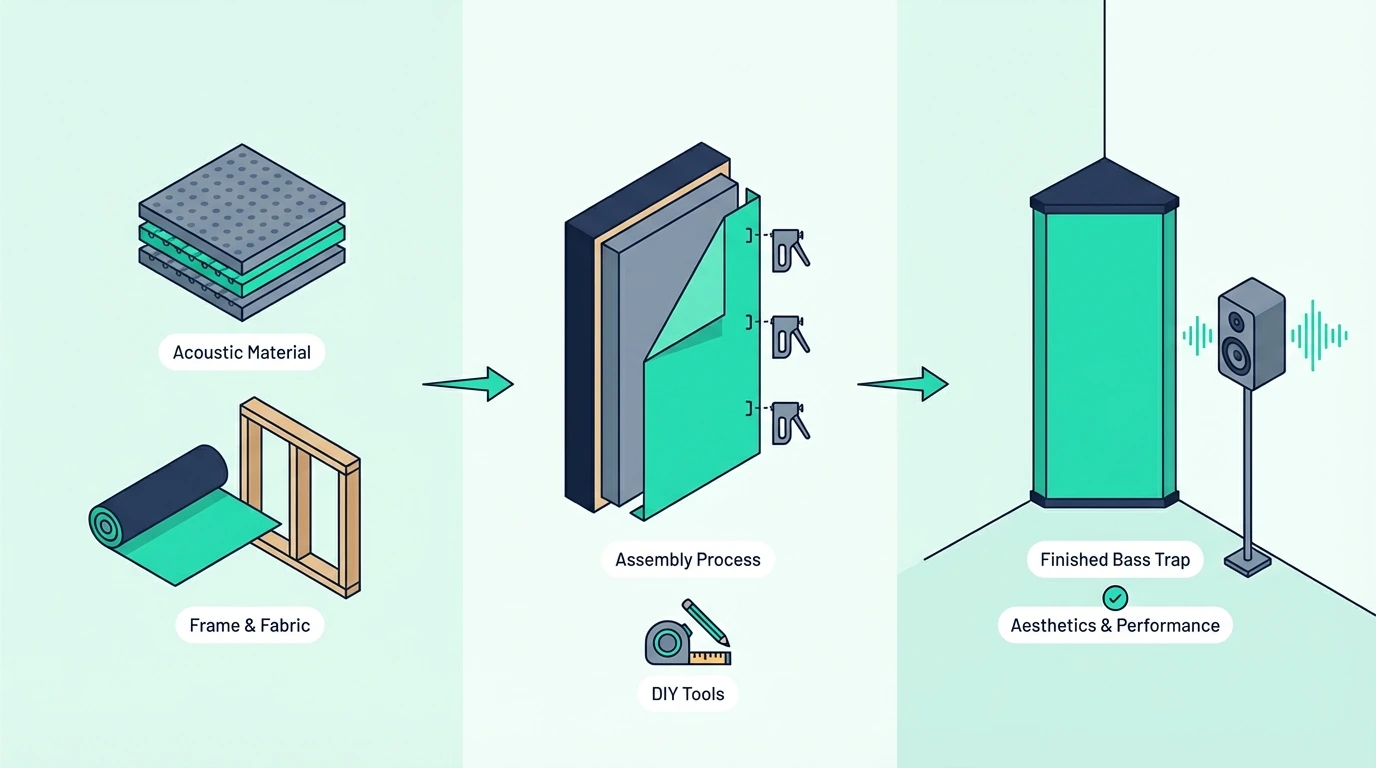
The practical strategy: buy or build 4-inch panels for everything instead of mixing 2-inch absorbers with 4-inch bass traps — place them in corners first (where they function as bass traps), then at reflection points (where they function as broadband absorbers). You get both treatments from a single panel design, simplifying construction and reducing costs.
The Bottom Line
Bass traps and absorbers use the same physics but target different frequency ranges through differences in thickness and placement — standard 1-2 inch absorber panels handle mids and highs on walls, while 4+ inch bass traps handle lows in corners. Most rooms need both, and 4-inch panels in corners give you the best of both worlds.
For corner bass treatment, the 4 Pack Bass Traps for Ceiling Corner provides ready-made corner pieces to start addressing your room’s low-frequency problems first.
For more comprehensive corner coverage, the 8 Pack Bass Traps Acoustic Foam Corner gives you enough pieces to treat all four vertical corners before adding broadband absorber panels at reflection points.
Frequently Asked Questions
How much of a difference do bass traps make?
Bass traps typically reduce the worst room mode peaks by 6-10 dB, which is a dramatic and clearly audible improvement — the bass response becomes tighter, more even, and more predictable across the listening area. Bass traps work most effectively when placed in corners where bass pressure is highest.
Do sound absorbers work better than sound insulation?
Sound absorbers and sound insulation serve completely different purposes. Absorbers treat reflections inside a room (improving how the room sounds to someone inside it), while insulation blocks sound transmission between rooms (preventing sound from passing through walls, floors, or ceilings).
Should I buy absorbers or bass traps first?
Buy bass traps first — bass traps are necessary because low-frequency room modes cause the most severe acoustic problems and are impossible to fix with thin absorber panels. Once your corners are treated and the bass is controlled, add broadband absorber panels at first reflection points to address mid and high frequency issues.