Sound Diffuser vs Absorber: Which One Your Room Actually Needs
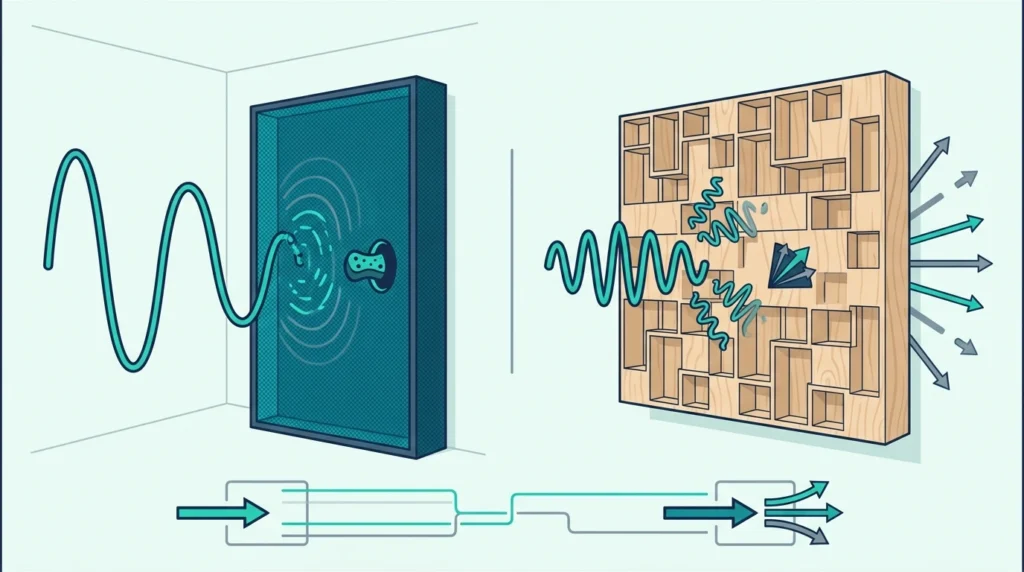
In the sound diffuser vs absorber decision, the absorber wins first — every time, in every small room — and the reason is physics rather than preference.
Most rooms get this backwards. Diffusers photograph well, they look like serious acoustic treatment, and they are the thing people buy when a room sounds wrong. Then the room still sounds wrong, because the actual problem was never something a diffuser can touch.
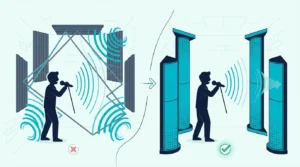
The two devices do opposite things. An absorber removes sound energy from the room and turns it into heat. A diffuser removes nothing and simply changes the direction that energy leaves in. One makes a room quieter and tighter; the other makes it sound larger and more open.
Which you need depends on a single question: does your room have too much energy, or badly aimed energy? Below is how to tell, what each device does at which frequencies, where each one goes, and the order to buy them in.
Quick answer
Absorbers — bass traps and broadband panels — remove energy and fix real acoustic faults: boomy bass, flutter echo, smeared stereo imaging. Diffusers preserve energy and scatter it, adding a sense of space once those faults are already fixed.
Buy absorbers first. Add diffusion later, if at all.
Sound diffuser vs absorber: what is the actual difference?
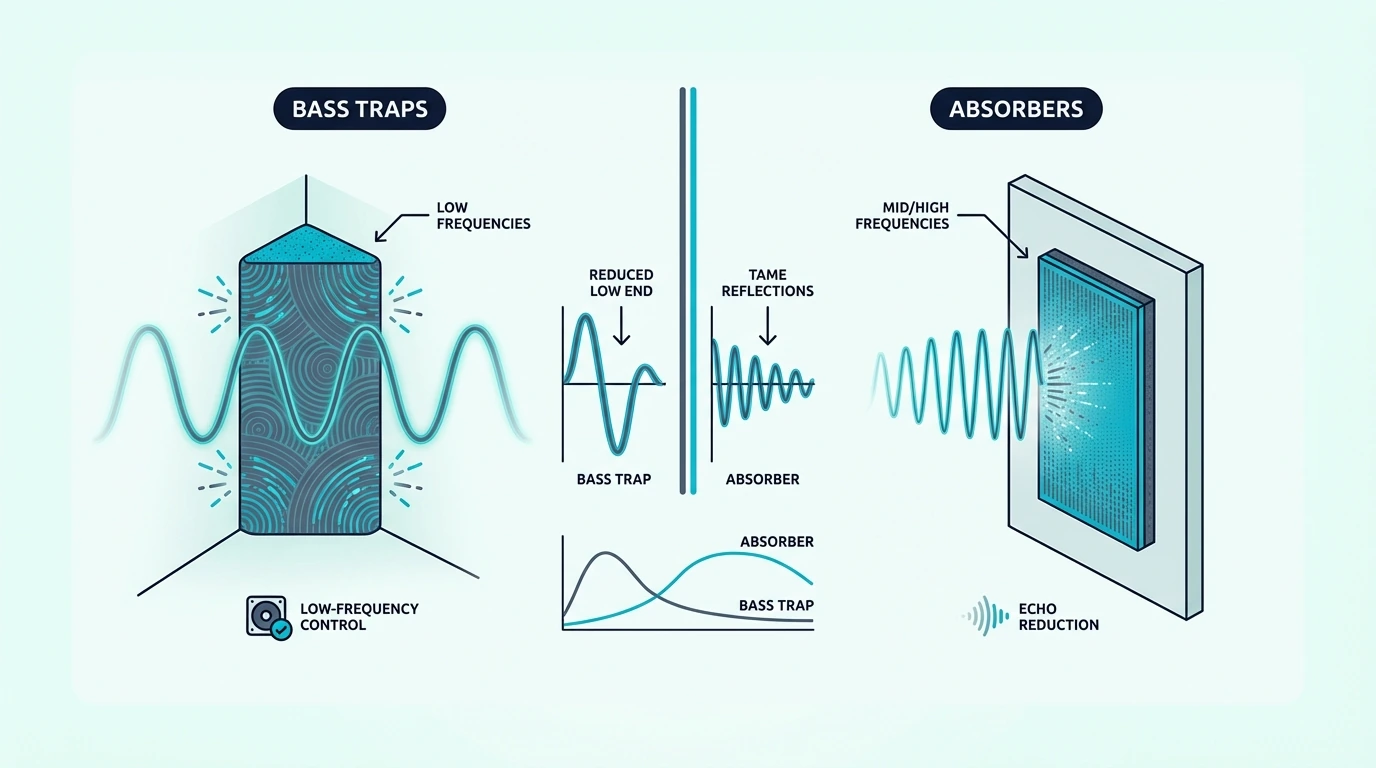
An absorber is porous or resonant. Air molecules are forced through dense material — mineral wool, fibreglass — or against a tuned membrane, and friction converts the acoustic energy into a very small amount of heat. That energy is gone from the room permanently, which lowers the amplitude of reflections and standing waves.
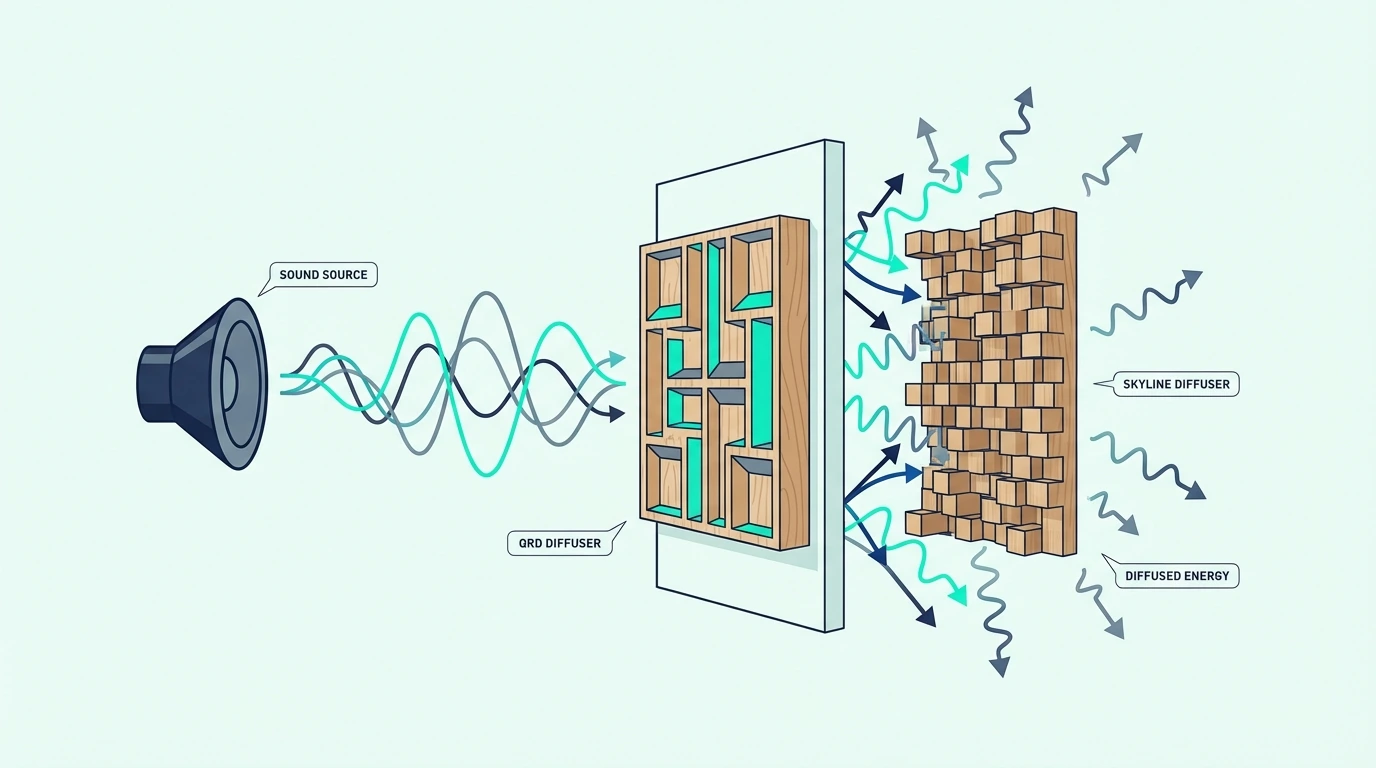
A diffuser is a rigid surface cut with wells or fins of varying depth. It scatters an incoming wave in many directions at once. Nothing is absorbed and the energy stays in the room, but instead of returning as one focused reflection it spreads across a wide angle.
So the practical split is this. Absorbers make a room drier and more controlled by taking energy away. Diffusers make a room sound bigger and more open by redistributing it. They are not competing products, and a well-treated room usually contains both — in a specific order.
Get Studio Tips Weekly
Join 5,000+ creators getting acoustic treatment advice every week.
No spam. Unsubscribe anytime.When you need an absorber
You need absorption when the room has too much energy in the wrong places. The symptoms are specific and easy to recognise.
Bass sounds boomy or muddy. Certain notes ring on longer than others. The low end changes dramatically depending on where you sit. Clapping produces a fast metallic flutter between two parallel walls.
Those are room modes and early reflections, and both are energy problems. Only absorption fixes them.
Room modes are unavoidable physics rather than a defect in your room. Every enclosed space has them, and they get worse as the room gets smaller, because the dimensions start to line up with the wavelengths involved. A bedroom studio has more mode trouble than a concert hall, not less.
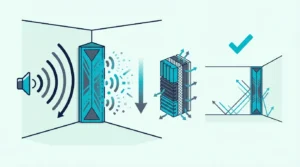
Within absorption there are two tools. Bass traps are thick — four inches and up — and go in corners, where low-frequency pressure concentrates. Corner placement buys two to three times the bass absorption of the same panel mounted flat on a wall, which is why corners come first.
Broadband panels are thinner, two to four inches, and mount at first reflection points on side walls and the ceiling. They handle everything above roughly 250 Hz and clean up the early reflections that smear stereo imaging.
To find a first reflection point, sit where you normally listen and have someone slide a mirror along the side wall. Wherever you can see a speaker in the mirror, that spot is sending you a reflected copy of the direct sound. Those are the points that need a panel.
When you need a diffuser
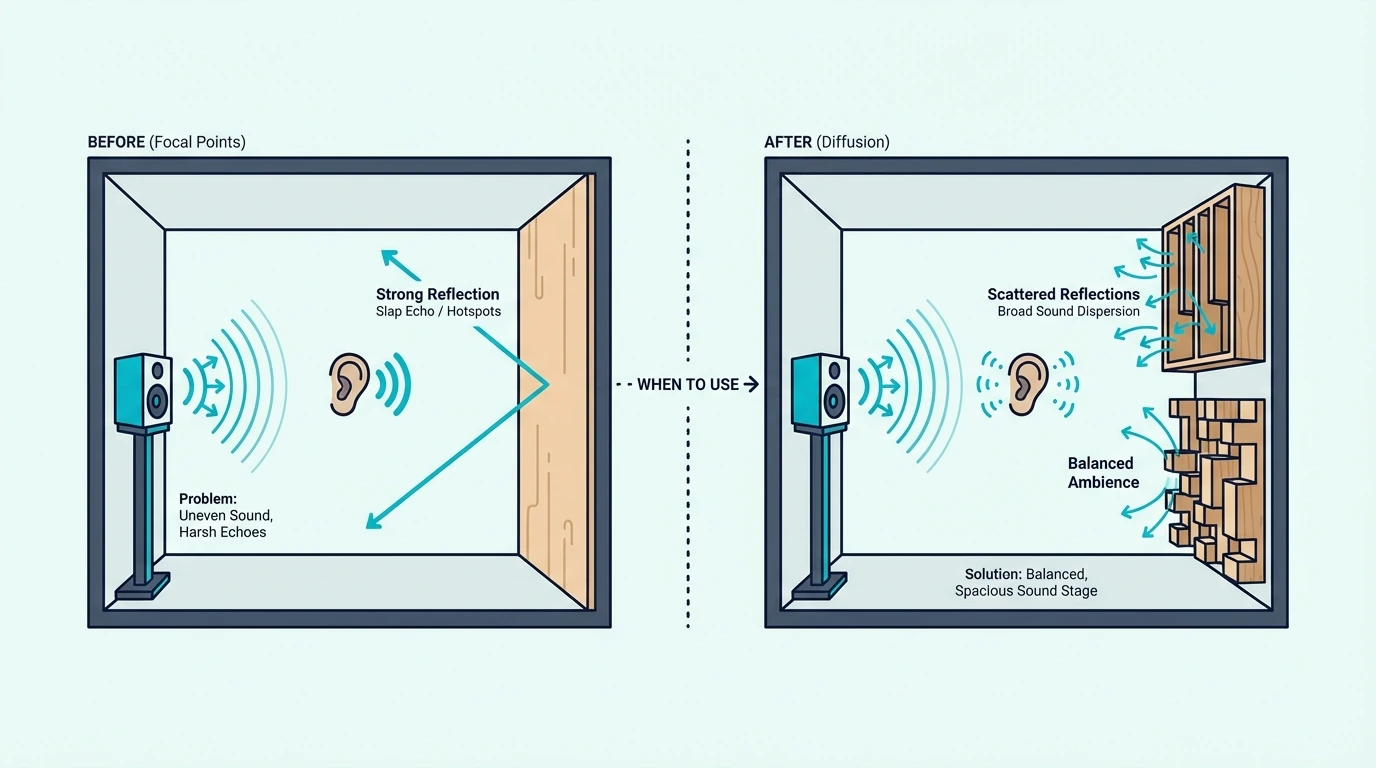
You need diffusion when the room is already controlled and has started to sound dead. That is a real failure state: a room with absorption on every surface sounds unnatural and is genuinely unpleasant to work in for long stretches.
Diffusers belong on the rear wall behind the listening position and on the ceiling above it. In those positions they scatter late reflections that would otherwise arrive at your ears as delayed copies of the direct sound.
They also need distance. A listener should be three to four feet clear of a diffuser for the scattered field to blend coherently. Sit too close and the scattered reflections arrive almost together and sound chaotic instead of spacious — which is exactly why diffusers do not belong on side walls near the listening position.
And there is one hard limit. A diffuser needs wells at least a quarter of a wavelength deep to scatter a given frequency. At 100 Hz that is nearly three feet of depth, which no wall-mounted product provides. Commercial diffusers work from about 500 Hz upward, and no further down.
Can a diffuser fix bass problems?
No, and the reason is the depth limit above rather than a question of quality or price. Bass wavelengths run from roughly four to fifty-six feet. Nothing you can hang on a wall scatters them.
If your complaint is boomy, uneven or overhanging bass, a diffuser cannot help at any budget. That job belongs to dense absorption at the room boundaries, or to a tuned resonant device.
This is the single most expensive mistake in room treatment, because diffusers are not cheap and the fault they are bought to fix is the one they cannot touch. If the bass is wrong, buy depth in the corners.
Broadband absorbers, bass traps and diffusers side by side
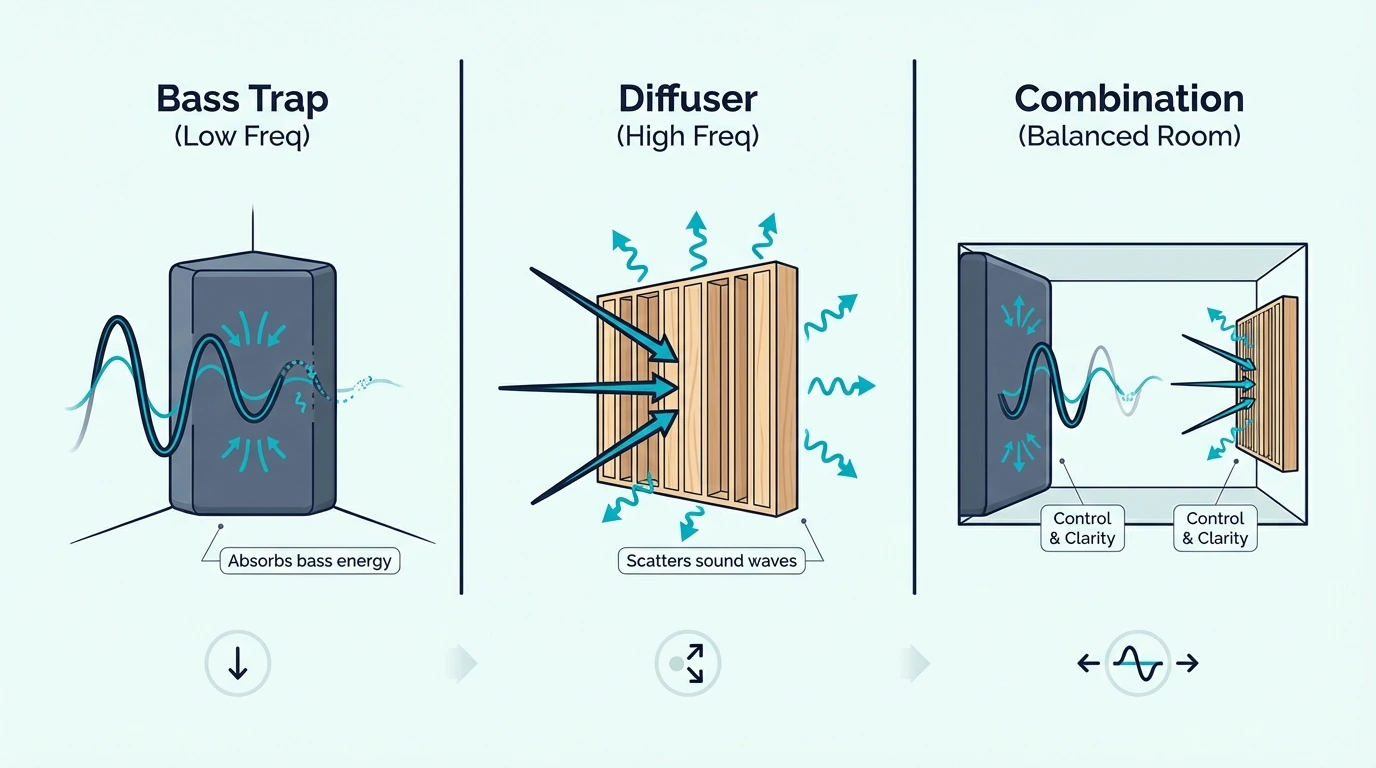
| Device | Effective range | What it does to energy | Where it goes |
|---|---|---|---|
| Bass trap | Below ~250 Hz | Removes it | Corners, wall-ceiling edges |
| Broadband absorber | ~250 Hz and up | Removes it | First reflection points |
| Diffuser | ~500 Hz and up | Redirects it | Rear wall, ceiling, at distance |
Note the overlap. Many bass traps also absorb mids and highs, which makes them the most versatile single purchase if you are only buying one thing.
Can a single panel do both?
Hybrid panels exist, with absorption on one face and a diffusive surface on the other. They compromise on both: the absorptive layer is too thin for meaningful bass work, and the diffuser pattern too shallow to scatter effectively. Dedicated panels outperform them for almost every real use.
The order to treat a room in
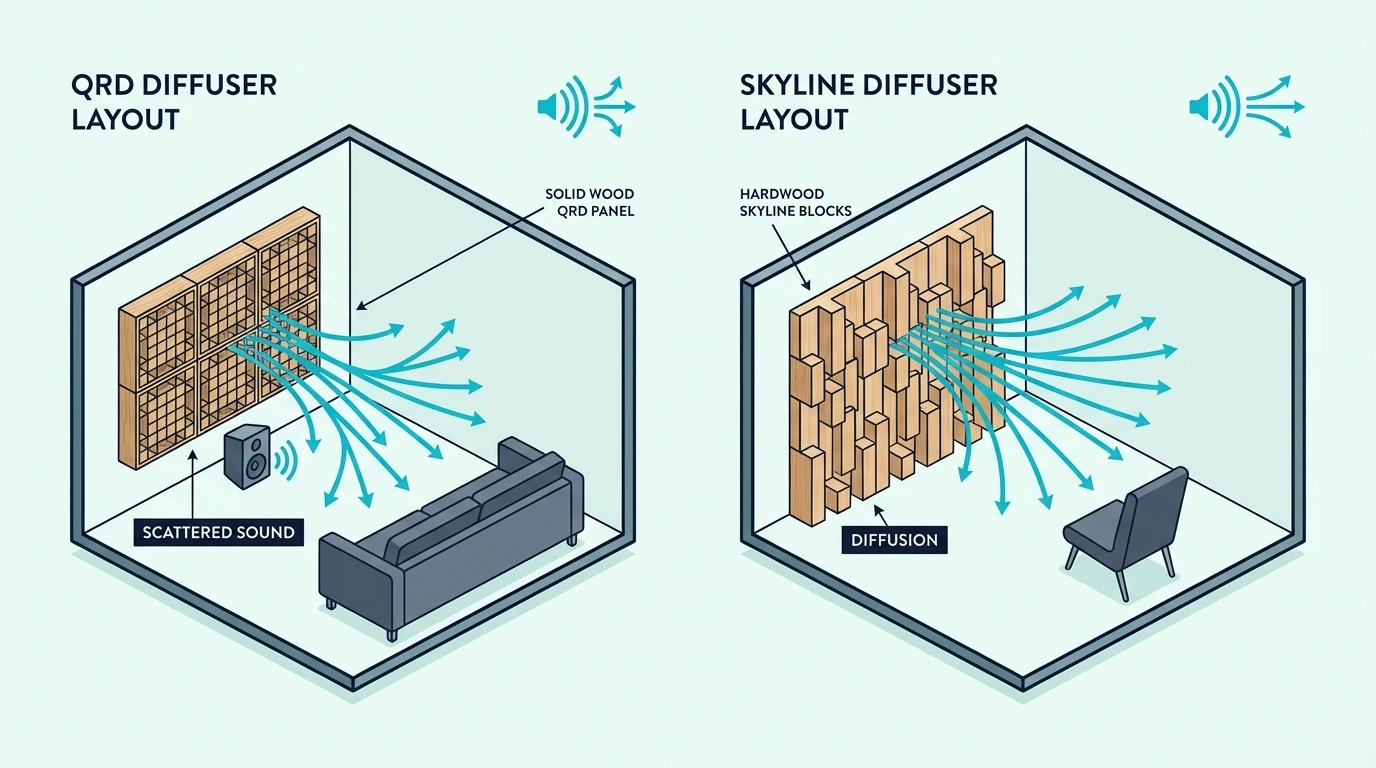
Sequence matters more than product choice, because each step removes a problem that would otherwise mask the next one.
Step 1 — bass traps in every corner. Four-inch minimum, straddled across vertical wall-wall corners and wall-ceiling edges. Room modes are the single biggest fault in an untreated room, so budget roughly 60–70% of the total here.
Step 2 — broadband absorbers at first reflection points. Two to four inch panels at the mirror points between your monitors and your listening position, plus the ceiling above it.
Step 3 — diffusers on the rear wall. QRD or skyline-style panels behind the listening position, scattering late reflections while keeping the depth that full absorption would kill.
Step 4 — adjust. More trapping if modes persist, more diffusion if the room still sounds focused. The target is controlled bass, clean reflections and a natural sense of space — not a dead room.
On a limited budget, skip step 3 entirely. Absorption fixes faults that damage what you hear; diffusion is a refinement on top of a room that already works.
A useful test between steps: clap once, hard, and listen to the tail. A fast buzzing ring means flutter echo and untreated parallel surfaces. A long boomy decay means the corners still need depth. A short, even, slightly dry decay means the absorption is doing its job and diffusion is now worth considering.
The bottom line
Absorbers and diffusers solve opposite problems by opposite mechanisms, so the sound diffuser vs absorber question is really a question of order rather than of preference. Absorption first, because untreated room modes do far more damage than the late reflections diffusion addresses.
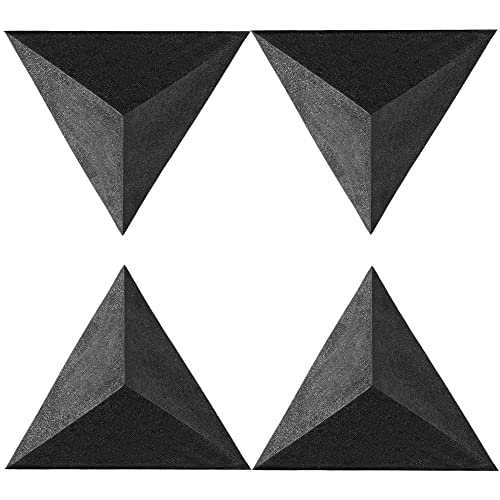
For corner treatment as a first step, the Foroomaco 4-pack of ceiling corner bass traps gives you ready-made corner pieces that go up quickly.
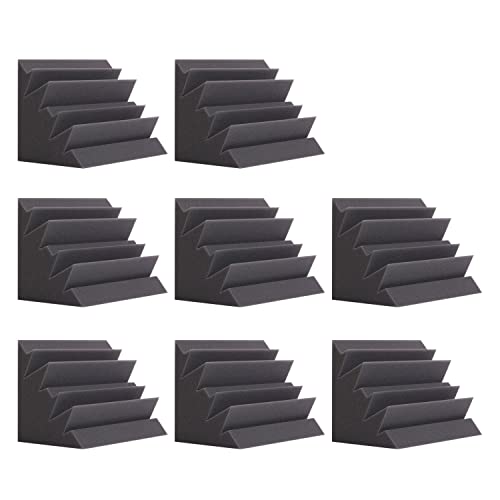
To cover all four vertical corners before you consider diffusion at all, the 8-pack of foam corner bass traps is enough material to finish the job.
Frequently asked questions
When should I use diffusion instead of absorption?
Use absorption to solve identifiable faults — room modes, flutter echo, comb filtering from early reflections. Use diffusion only once those are handled and you want to restore spaciousness without putting focused reflections back into the room. If the room has an audible problem, the answer is almost always absorption.
Which is better, a sound diffuser or an absorber?
Neither is better in the abstract, because they fix different faults. For a first purchase in an untreated small room, the absorber is the correct answer roughly every time: it addresses the low-frequency problems that dominate small rooms, while a diffuser cannot reach those frequencies at all. Buy diffusion when the room is controlled but lifeless.
Do I need diffusers in a small room?
Usually not. Diffusers need three to four feet of clearance to blend, and many small rooms cannot give them that distance. In a bedroom studio the budget is almost always better spent on more corner trapping and proper first-reflection panels.