Corner Vs Panel Bass Trap — Which Design Controls Bass Better And Where Each One Belongs
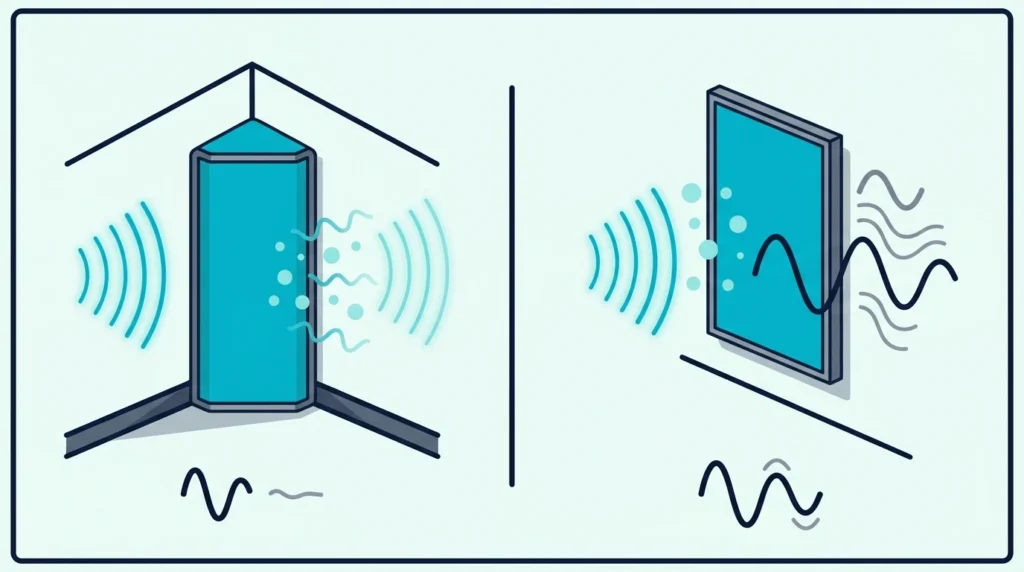
Corner vs panel bass trap is a comparison most people skip because both designs use the same materials — but where you place that material changes everything about how much bass it actually absorbs. Getting this wrong means spending the same money for dramatically less bass control, and most rooms end up under-treated in the low end because panels went on flat walls instead of into corners.
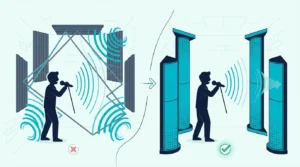
Corner bass traps sit in or across room corners where bass pressure is highest, using the boundary effect to maximize low-frequency absorption. Flat panel bass traps mount directly on walls, treating the wall surface but missing the concentrated bass energy that builds up in corners.
Most rooms need both, but the priority order matters. Treating corners first gives you the biggest improvement per dollar spent on bass control, while flat wall panels are better suited for mid-frequency reflections and first reflection points.
Below, you will find exactly how each design works, when to use triangle superchunks vs straddled panels, how commercial options like the Monster Bass Trap and Tri Trap compare, and a clear decision guide for choosing between corner traps and flat panels in your room.
Corner bass traps absorb 2-3x more bass energy than identical panels mounted flat on walls because corners are pressure zones where bass energy naturally concentrates. For bass control, always treat corners first with 4-inch minimum thickness panels straddled at 45 degrees (creating an air gap for deeper absorption), then add flat wall panels at first reflection points for mid/high frequency treatment.
Corner Bass Trap vs Panel Bass Trap — What Is The Difference?
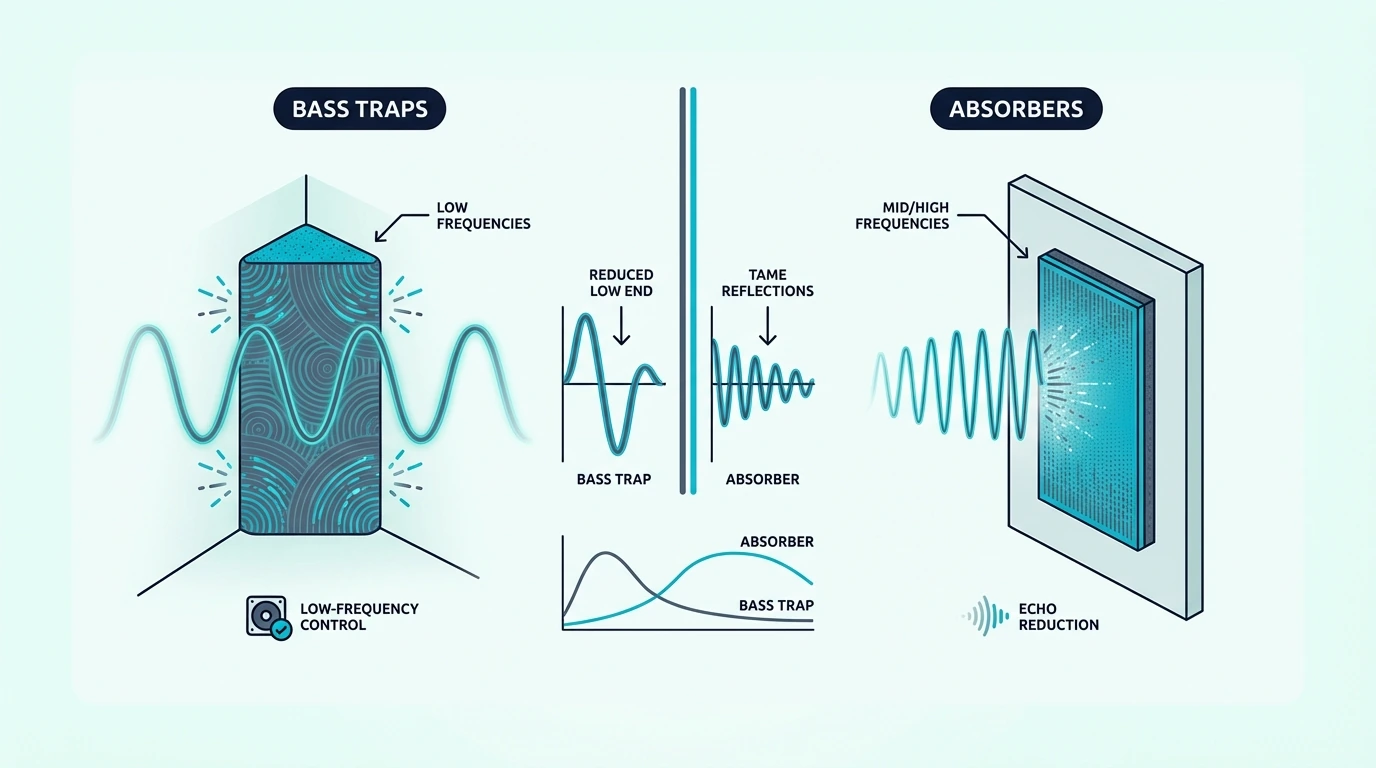
A corner bass trap is any absorptive panel positioned in or across a room corner — either straddled at 45 degrees across the corner (creating an air gap behind it) or filling the corner completely as a triangular “superchunk.” The corner placement puts the absorber where bass energy is most concentrated.
A panel bass trap is the same absorptive material mounted flat against a wall surface. The panel sits directly on the boundary with minimal or no air gap behind it, treating reflections at that wall surface.
The critical distinction is geometry, not materials — a 4-inch Rockwool panel performs very differently depending on whether it is straddled across a corner (with 8-12 inches of effective depth including the air gap) or mounted flat on a wall (with only 4 inches of absorptive depth). The corner-mounted version absorbs meaningfully at frequencies an octave lower than the same panel on a flat wall.
How Corner Traps Work Differently Than Flat Panels
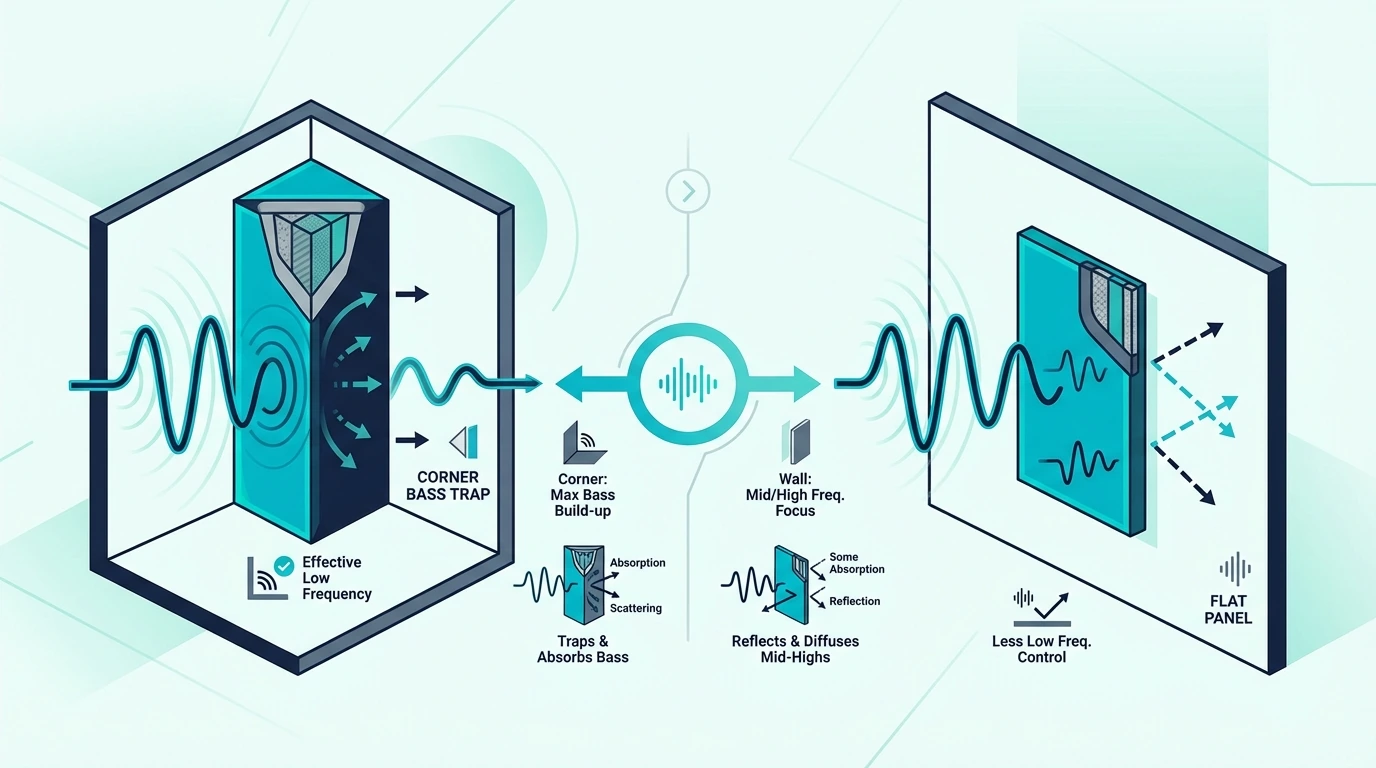
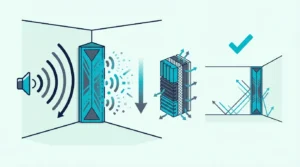
Corner traps outperform flat panels for bass because of two physics principles: pressure zone concentration and air gap depth.
Why Corners Have More Bass Energy
Bass standing waves create pressure maxima at room boundaries — where two boundaries meet (a wall-wall corner), the pressure from both surfaces compounds, and where three boundaries meet (a tri-corner), pressure from all three surfaces overlaps. This compounding effect makes corners the highest-pressure zones in any room.
This boundary effect means a room corner has roughly 2-4x the bass pressure of a flat wall surface at mid-room height. Placing an absorber in a corner exposes it to more bass energy per square foot than the same absorber on a flat wall — and more energy exposure means more absorption.
The practical result: a single 2×4 foot panel in a corner absorbs more bass than the same panel centered on a wall. This is why corner placement is always the first priority for bass treatment, regardless of the specific panel design.
The Air Gap Advantage Of Corner Mounting
When you straddle a panel across a corner at 45 degrees, the triangular space behind the panel creates a natural air gap. For a 4-inch panel in a standard 90-degree corner, this gap ranges from 8 to 12 inches depending on the panel width and exact angle.
Air gaps dramatically increase low-frequency absorption because bass velocity (particle movement) peaks at a distance from the boundary, not at the boundary itself. A 4-inch panel flat on a wall only absorbs well above 200 Hz, but the same panel with an 8-inch air gap absorbs well down to 125 Hz because the combined depth reaches the velocity peak of those lower frequencies.
This is the single biggest reason corner traps outperform flat panels for bass — you get 2-3x the effective depth using the same amount of material, purely from the geometry of corner mounting.
Get Studio Tips Weekly
Join 5,000+ creators getting acoustic treatment advice every week.
No spam. Unsubscribe anytime.Triangle (Superchunk) vs Straddled Panel In Corners
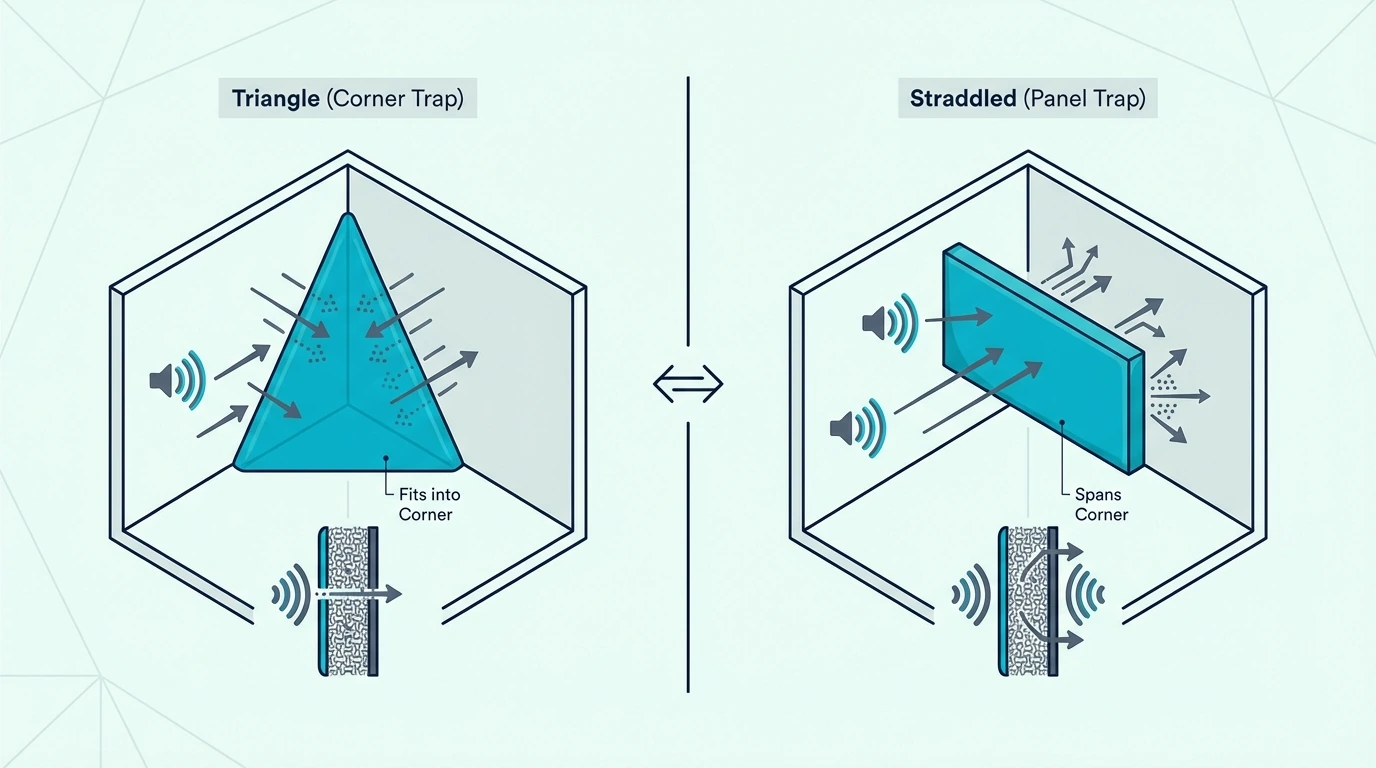
Both designs go in corners, but they use different amounts of material and perform differently at the lowest frequencies.
Superchunk (triangle) traps fill the entire corner with stacked triangular wedges of insulation, typically cut from rectangular batts — a superchunk using 24-inch batts creates roughly 17 inches of solid absorptive depth, the maximum possible for that corner dimension. They provide the deepest bass absorption of any porous absorber design.
Straddled panel traps mount a flat rectangular panel at 45 degrees across the corner, leaving the air gap open behind. They use significantly less material (one panel vs dozens of triangular wedges) but rely on the air gap for low-frequency reach rather than solid absorptive mass.
Performance comparison: Superchunks absorb more total energy across all frequencies because they have more absorptive material, and at very low frequencies (below 80 Hz), the solid mass of a superchunk outperforms a straddled panel with an air gap. Above 100 Hz, the performance difference narrows significantly — a straddled 4-inch panel with a deep air gap provides 80-90% of a superchunk’s absorption in that range.
Cost and practicality: Superchunks require 3-5x more insulation material than straddled panels for the same corner height. For most home studio applications, straddled panels offer the best performance-per-dollar ratio because the frequencies they miss (below 80 Hz) are often below the room’s fundamental mode anyway.
Monster Bass Trap vs Tri Trap
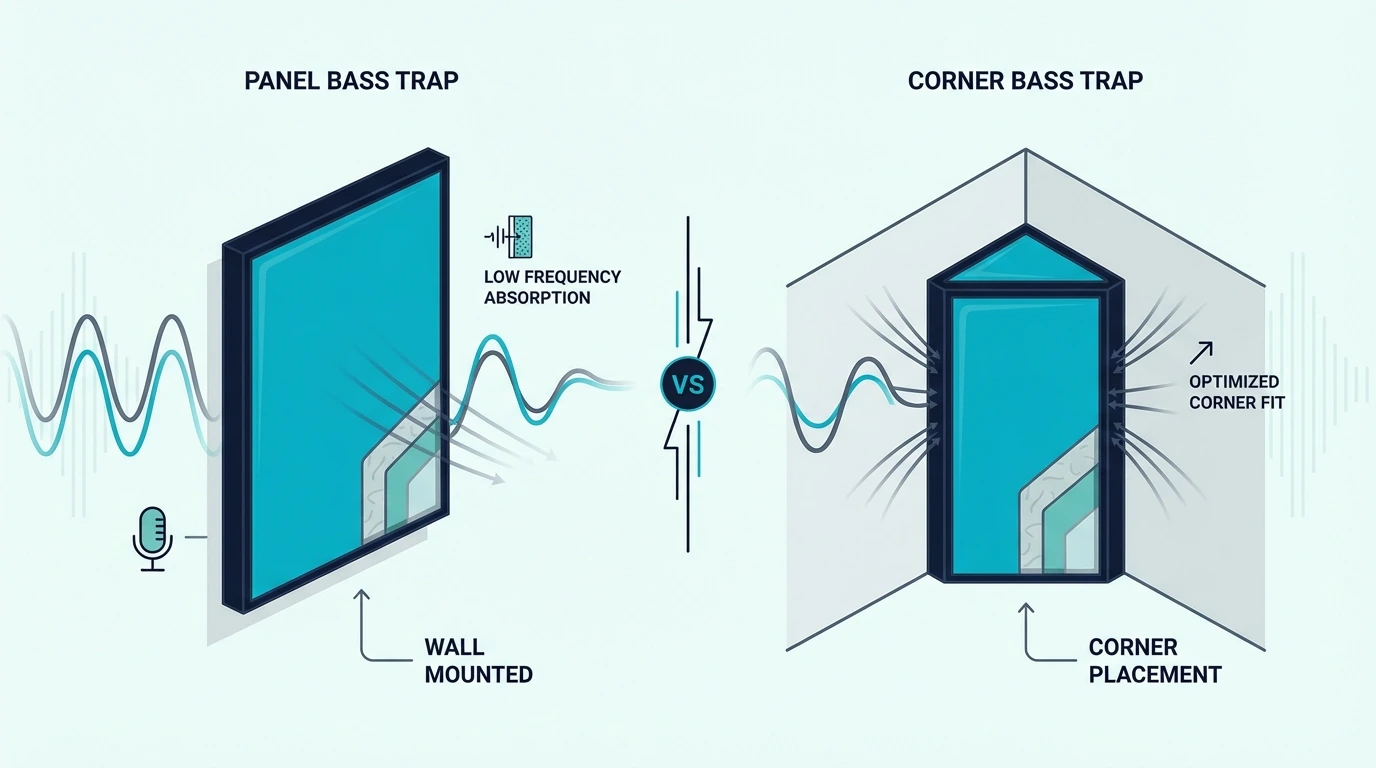
The Monster Bass Trap and Tri Trap are two commercial product formats that represent the panel and triangle approaches, respectively.
Monster Bass Traps are large rectangular panels (typically 4-6 inches thick, 2×4 feet or larger) designed for corner mounting in the straddled position, using rigid fiberglass or mineral wool at professional density wrapped in acoustically transparent fabric. Prices range from $150-300+ per panel depending on size and manufacturer.
Tri Traps are triangular-profile products designed to fill the corner completely — similar to a superchunk but manufactured as a single piece or stackable modules using either dense foam or mineral wool insulation shaped to fit the corner geometry. Prices range from $80-200+ per module depending on material and size.
The key trade-off mirrors the DIY comparison: Monster-style panels are more space-efficient and visually cleaner, while Tri Trap designs provide deeper absorption but consume the entire corner volume. For most rooms, the Monster panel format straddled across corners gives the best balance of performance, aesthetics, and cost.
Building your own versions of either design costs one-third to one-half the price of commercial products using identical materials.
When To Use Corner Traps vs Flat Wall Panels
The decision between corner traps and flat wall panels depends on which frequencies you need to control.
Use corner traps when: Your primary problem is bass — boomy, uneven low-end response below 300 Hz, specific room modes that ring at certain bass notes, or monitoring that sounds dramatically different depending on where you sit. Corner traps are always the first treatment to install because they give you the most bass absorption per panel.
Use flat wall panels when: Your primary problem is mid and high frequency reflections — flutter echo between parallel walls, comb filtering at the listening position from early reflections, or an overly bright/harsh room character. Flat panels at first reflection points and rear walls address these issues effectively.
Most rooms need both. The optimal treatment order is:
- Front wall vertical corners (corner traps), then rear wall vertical corners
- Ceiling-wall edges (corner traps)
Then add flat panels:
- First reflection points on side walls
- Rear wall
This priority sequence addresses bass first (where most rooms have the worst problems) and then adds mid/high treatment as budget allows.
The Bottom Line
Corner bass traps absorb significantly more bass than flat wall panels because corners concentrate bass energy and the straddled mounting geometry creates a deep air gap that extends low-frequency reach. Always treat corners first — a single 4-inch panel straddled across a corner outperforms the same panel flat on a wall by roughly 2-3x for bass frequencies below 200 Hz.
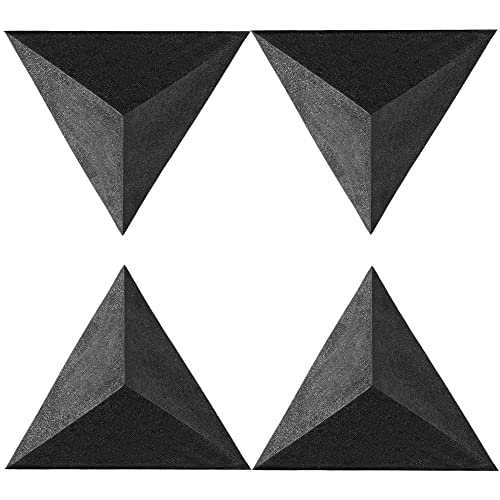
For budget-friendly corner treatment, the 4 Pack Bass Traps for Ceiling Corner provides ready-made triangular corner pieces that install in minutes.
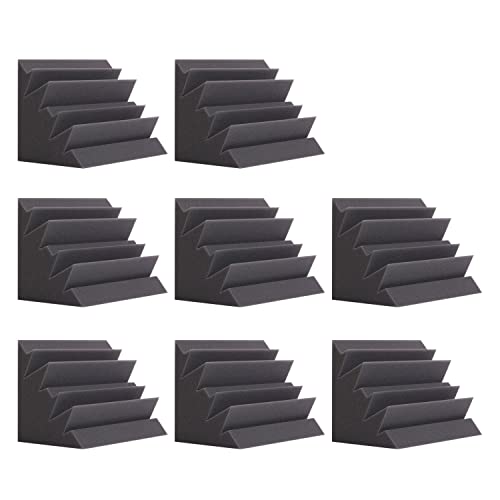
For covering more corners with a value pack, the 8 Pack Bass Traps Acoustic Foam Corner gives you enough pieces for comprehensive corner treatment across all four vertical corners.
Frequently Asked Questions
Do corner bass traps make a difference?
Corner bass traps make a significant, measurable difference — placing absorbers in corners typically reduces the worst room mode peaks by 6-10 dB, which is clearly audible as a tighter, more controlled bass response. Corners are the single most effective position for bass treatment because they sit at pressure maxima where bass traps work most efficiently.
What is the best shape for a bass trap?
Shape matters less than thickness, material density, and placement — a rectangular 4-inch mineral wool panel straddled across a corner performs nearly as well as a triangular superchunk filling the same corner at one-third the material cost. The best shape is whichever one gets 4+ inches of dense absorptive material into your room corners.
What is the difference between a bass trap and an acoustic panel?
Bass traps are thick (4+ inches), dense panels designed to absorb low frequencies below 300 Hz, and they work best mounted in corners or at ceiling-wall edges. Standard acoustic panels are thinner (1-2 inches), target mid and high frequency reflections (500 Hz and above), and mount flat on walls at first reflection points. Both use similar materials, but bass traps require the extra thickness to reach low enough in the frequency spectrum.