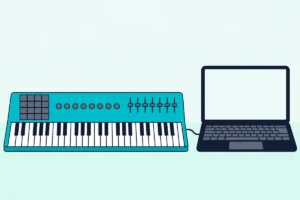
The Akai MPK Mini MK3 is the best budget MIDI keyboard for most producers, with keys, pads, knobs and bundled software in one unit.
The picks
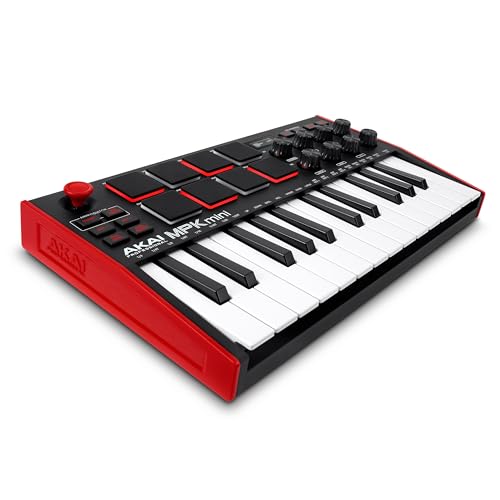
Akai Professional MPK Mini MK3
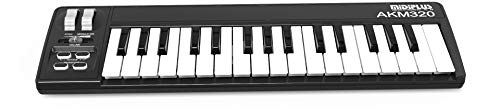
midiplus AKM320
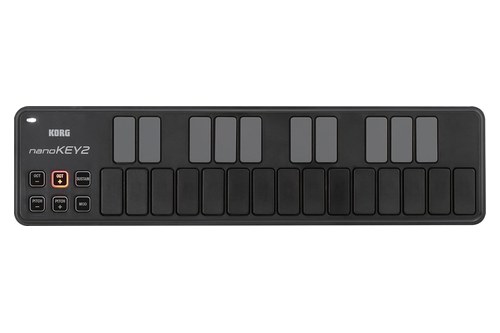
Korg nanoKEY2
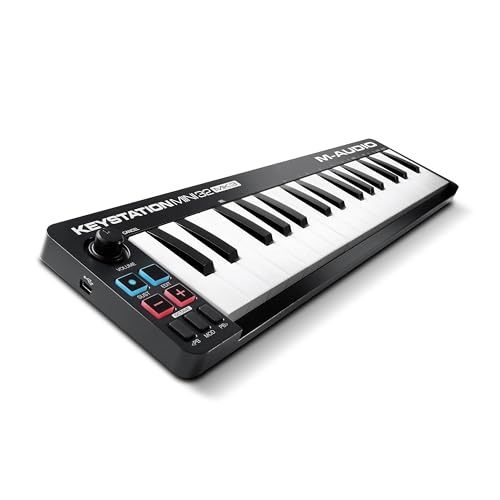
M-AUDIO Keystation Mini 32 MK3
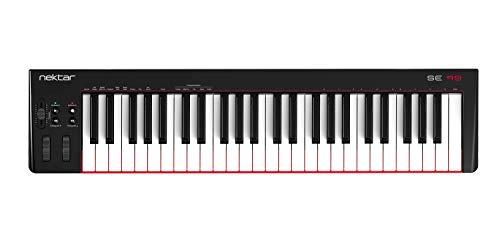
Nektar SE49
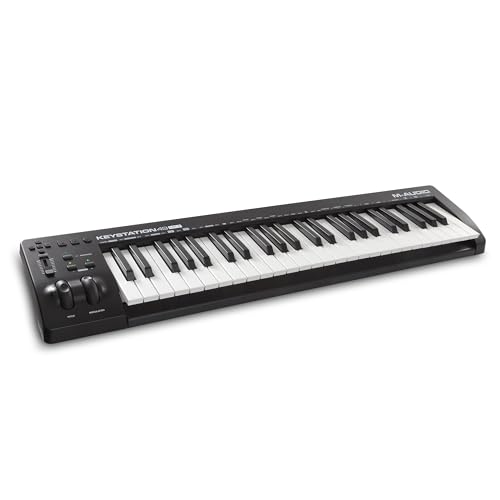
M-AUDIO Keystation 49 MK3
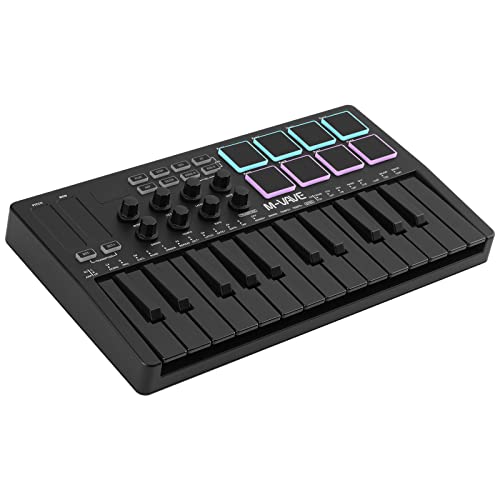
M-VAVE 25 Key MIDI Controller
Best budget MIDI keyboard searches pull up dozens of controllers that look identical in product photos, but the gap between a usable budget controller and a regrettable one comes down to key feel, build quality, and whether the bundled software works.
Pick the wrong one and every note comes out at one volume however you play, or the board sits unused with no software to play through.
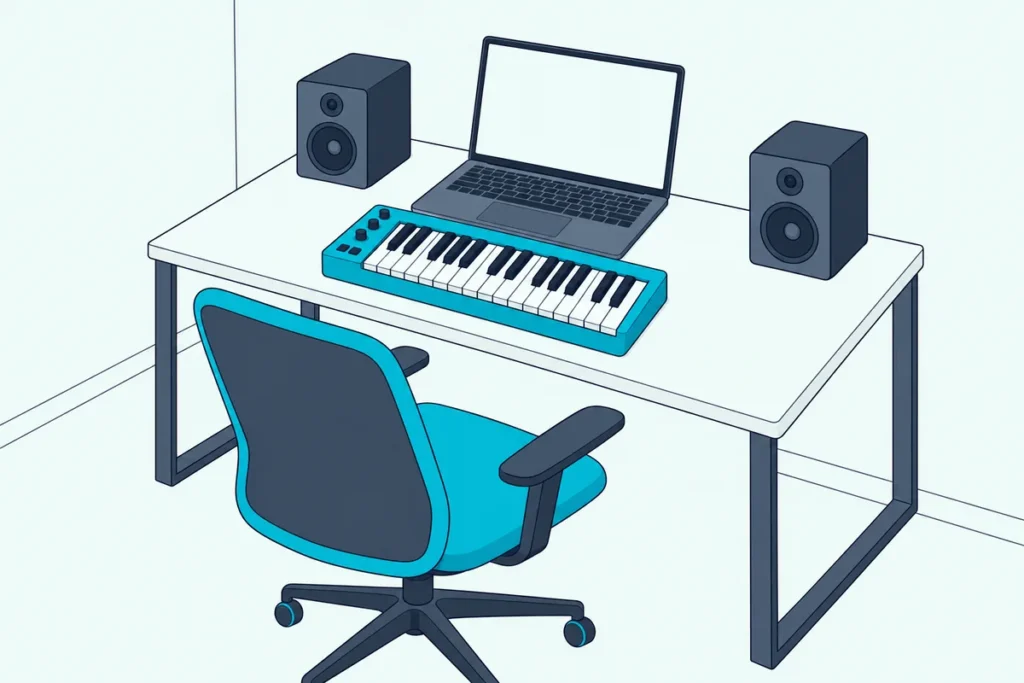
This list narrows the field to 7 controllers, from the simplest keys-only board to 49-key and pad controllers.
The sections below cover what makes a budget board usable, the best picks with the overall pick first, which one fits how you play, and when to upgrade.
If you already know you want pads or full-size keys, go straight to the picks.
The Akai MPK Mini MK3 adds pads and knobs to the keys, but for the simplest setup, the midiplus AKM320 and Korg nanoKEY2 both deliver velocity-sensitive keys over USB. If you need full-size 49-key range, the Nektar SE49 hits that target.
| Pick | Best for | Why |
|---|---|---|
| Akai MPK Mini MK3 | Most budget producers | Keys, pads, knobs and bundled software |
| midiplus AKM320 | Keys only | 32 velocity-sensitive keys over USB |
| Korg nanoKEY2 | A slim keys-only board | 16 mm thin and 244 g |
| M-AUDIO Keystation Mini 32 MK3 | A compact step up | 32 mini keys at 450 g |
| Nektar SE49 | Two-handed playing | 49 full-size keys |
| M-AUDIO Keystation 49 MK3 | 49 keys with transport buttons | Transport buttons for the DAW |
| M-VAVE 25 Key MIDI Controller | Wireless on a budget | Bluetooth MIDI to iOS and Android |
The descriptions come from the makers’ manuals and spec pages.
Every pick met Burton Acoustix’s rating, review and stock checks on 7 November 2026.
What Makes a Good Budget MIDI Keyboard?
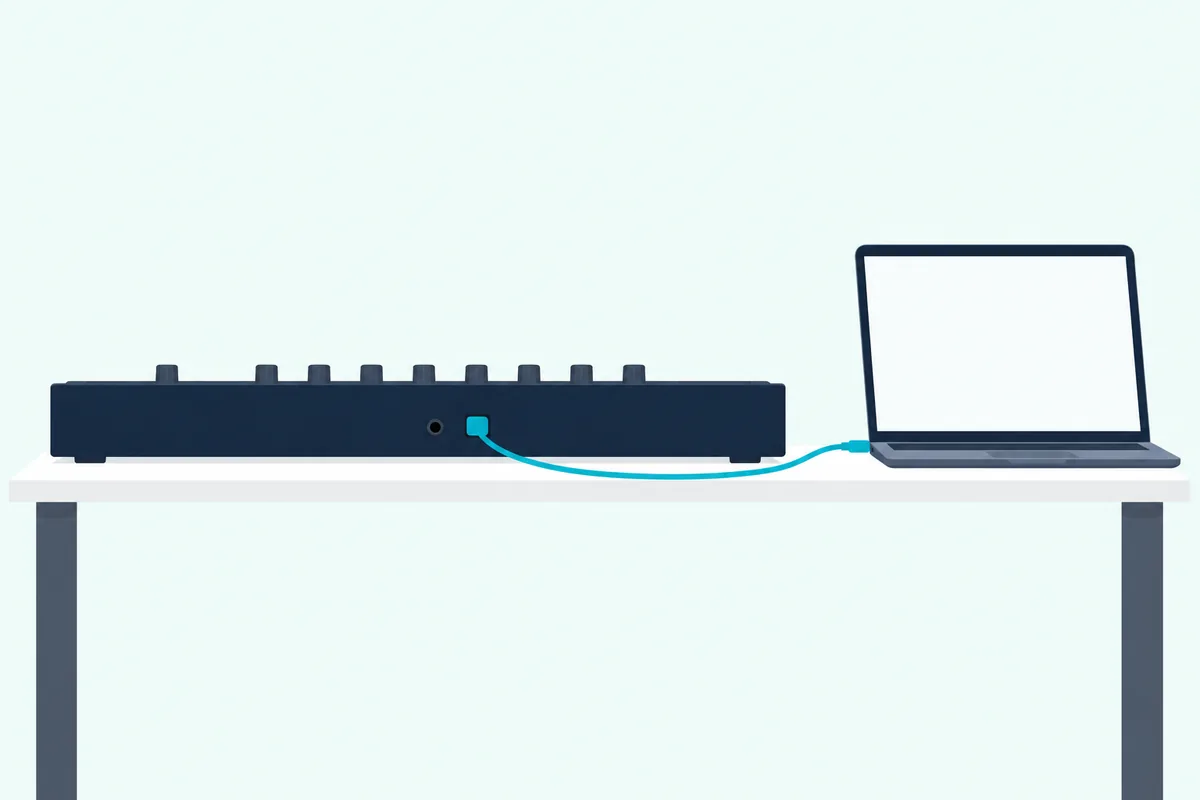
Behind those picks sits a quality bar that any budget MIDI keyboard has to clear. It comes down to velocity-sensitive keys, a rigid chassis with keys that do not wobble, and whether bundled software gives you something to play through on day one.
Velocity Sensitivity Is Non-Negotiable
The first feature to check on any MIDI keyboard is velocity sensitivity. This means the keys detect how hard you press them and translate that force into MIDI velocity data.
Without velocity sensitivity, every note plays at the same volume regardless of how you touch the keys. That removes the entire expressive dimension that separates a MIDI keyboard from clicking notes with a mouse.
Every controller on this list has velocity-sensitive keys. If you find an option that lacks this feature, skip it entirely.
Build Quality To Look For
Budget controllers use a lot of plastic — that is expected. The question is whether the plastic flexes under normal playing pressure.
Look for a rigid chassis, keys that do not wobble, and a USB connector that sits firmly in its port.
Bundled Software Gets You Started
Bundled software, such as a DAW lite version and virtual instruments, is often the difference between a controller that works on day one and one that sits unused because you have nothing to play through it.
The best MIDI keyboards include legitimate production software — not trial versions that expire.
What Are the Best Budget MIDI Keyboards?
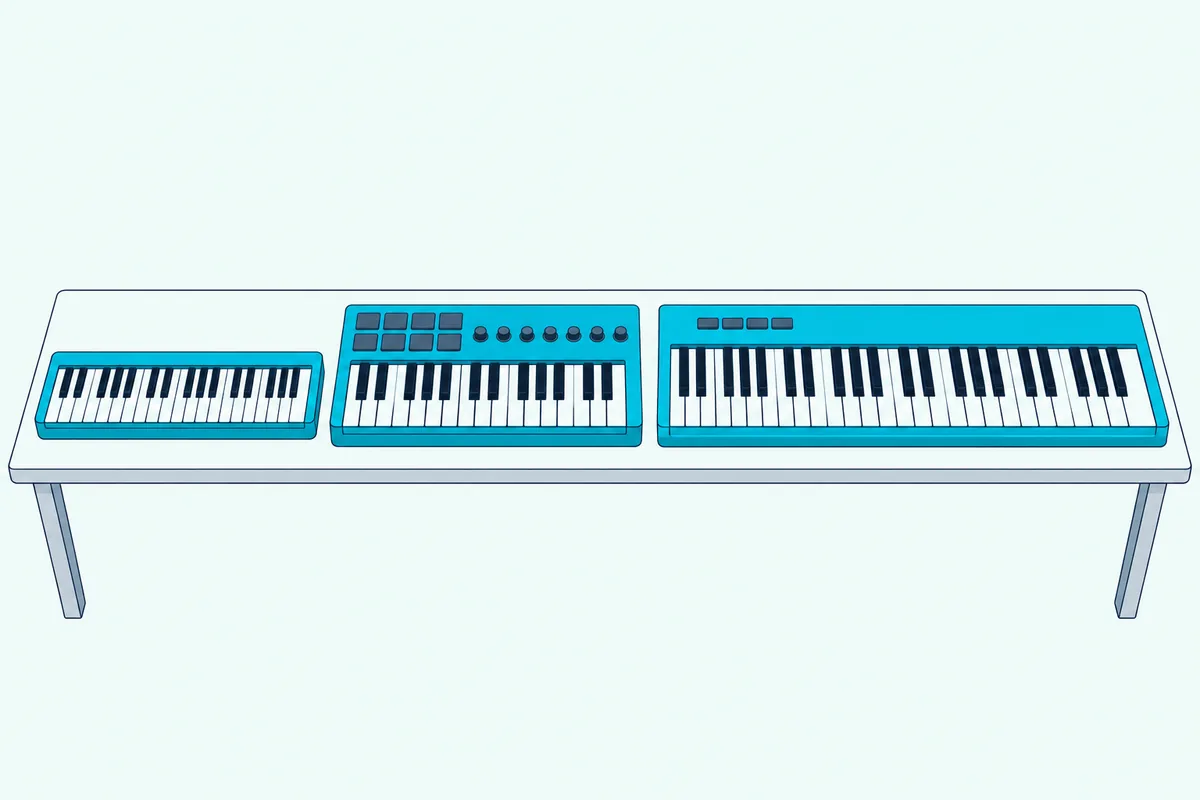
On keys, build and software, the controllers below fall into three groups. The Akai MPK Mini MK3 suits most producers, with 25 keys, 8 pads, 8 knobs and bundled software in one unit, and the others run from the simplest keys-only boards to 49 full-size keys.
Complete Production Controllers
The Akai Professional MPK Mini MK3 has 25 keys, 8 MPC-style pads, 8 assignable knobs and a built-in arpeggiator, plus bundled software, all in one package.
Akai Professional MPK Mini MK3
Keys Only
The midiplus AKM320 delivers 32 velocity-sensitive mini keys. No pads, no knobs, no frills — just keys that respond to your touch and work with any DAW the moment you plug in.
midiplus AKM320
The Korg nanoKEY2 is the pared-down pick: 25 velocity-sensitive keys, power and MIDI over one USB cable, and a weight of 244 g (0.54 lb), per Korg’s specifications. If portability matters, it measures 325 x 83 x 16 mm, and the best travel MIDI keyboard picks compare small controllers by size, weight and power.
Korg nanoKEY2
The Next Step Up
The M-AUDIO Keystation Mini 32 MK3 steps up from the bare-bones picks by bundling MPC Beats, a full DAW, with AIR’s TubeSynth, Electric and Bassline instruments and Melodics lessons. You get 32 mini keys plus production software.
M-AUDIO Keystation Mini 32 MK3
The Nektar SE49 gives you 49 full-size synth-action keys. If you want two-handed playing range, this is the pick.
Nektar SE49
The M-AUDIO Keystation 49 MK3 also has 49 full-size synth-action keys, plus dedicated transport buttons for moving around your DAW. If you want those buttons, it is the alternative to the Nektar SE49, and the guide to the best 49-key option compares more boards this size.
M-AUDIO Keystation 49 MK3
The M-VAVE 25 Key MIDI Controller packs 25 keys, 8 drum pads, 8 knobs, and Bluetooth connectivity into one controller. The Bluetooth option lets you produce on a tablet or phone without cables.
M-VAVE 25 Key MIDI Controller
Which Budget MIDI Keyboard Fits How You Play?

Those boards differ in what they add to the keys, so the right one depends on how you play. For melody input, simple chord entry and learning the fundamentals, 25 to 32 velocity-sensitive mini keys are enough, and two-handed playing needs 49 full-size keys.
Pads and knobs matter once you produce rather than just play, which is why the Akai MPK Mini MK3 leads. Bluetooth matters only if you produce on a tablet or phone, and a phone can even be the controller, as the guide to using a phone as a MIDI controller shows.
When To Upgrade
If you find yourself limited by mini keys after a few months of production, upgrading to a weighted MIDI keyboard or a 61-key controller makes sense. The budget controllers on this list are starting points, and those boards add weighted keys or more range.
MIDI is a universal standard, so the projects you build don’t depend on the controller you build them with.
The Bottom Line
The Akai MPK Mini MK3 is the best budget MIDI keyboard for most producers because it packs keys, pads, knobs, and software into a single unit. If you want two-handed playing range, the Nektar SE49 gives you 49 full-size keys.
For the simplest setup, the midiplus AKM320 gives you 32 velocity-sensitive mini keys with no pads or knobs.
Frequently Asked Questions
What is a good starter MIDI keyboard on a budget?
The Akai MPK Mini MK3 is the starter pick here because it includes keys, pads, knobs, and bundled software. For a simpler start, the Korg nanoKEY2 gets you playing with 25 velocity-sensitive keys over a single USB cable.
Do budget MIDI keyboards work with an iPad or phone?
The M-VAVE 25 Key MIDI Controller connects to iOS and Android over Bluetooth MIDI as well as USB, and Nektar says the SE49 works with an iOS device through Apple’s optional USB camera connection kit.
What is the best budget MIDI keyboard with weighted keys?
None of the budget controllers on this list has true weighted (hammer-action) keys. If weighted keys are essential, look at a dedicated weighted MIDI keyboard instead.