Best Weighted MIDI Keyboard: Fully Weighted Picks for Pianists
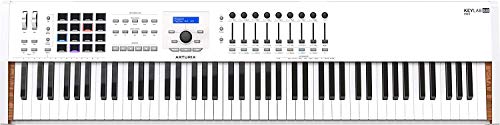
The Arturia KeyLab 88 MkII is the best weighted MIDI keyboard for most players, with 88 hammer-action keys, aftertouch and 16 pads.
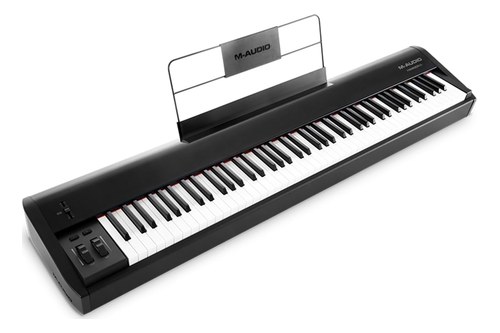
- ✓ 88 velocity-sensitive, fully weighted hammer-action keys
- ✓ USB-powered and class compliant
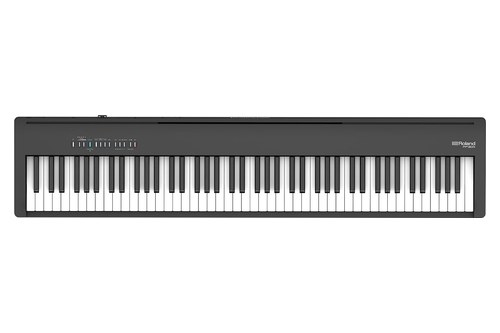
- ✓ PHA-4 Standard keyboard with escapement and ivory feel
- ✓ Bluetooth audio and MIDI
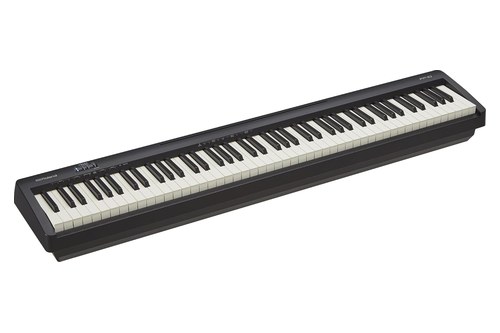
- ✓ PHA-4 Standard keyboard with escapement and ivory feel
- ✓ Bluetooth MIDI and USB MIDI built in
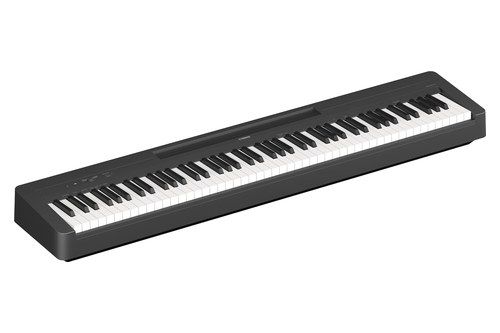
- ✓ GHC keyboard with matte black keytops
- ✓ USB TO HOST carries MIDI and audio
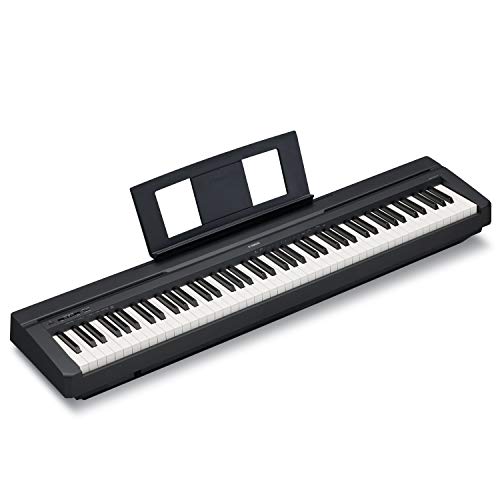
- ✓ GHS keyboard with matte black keytops
- ✓ USB TO HOST for a computer, iPhone or iPad
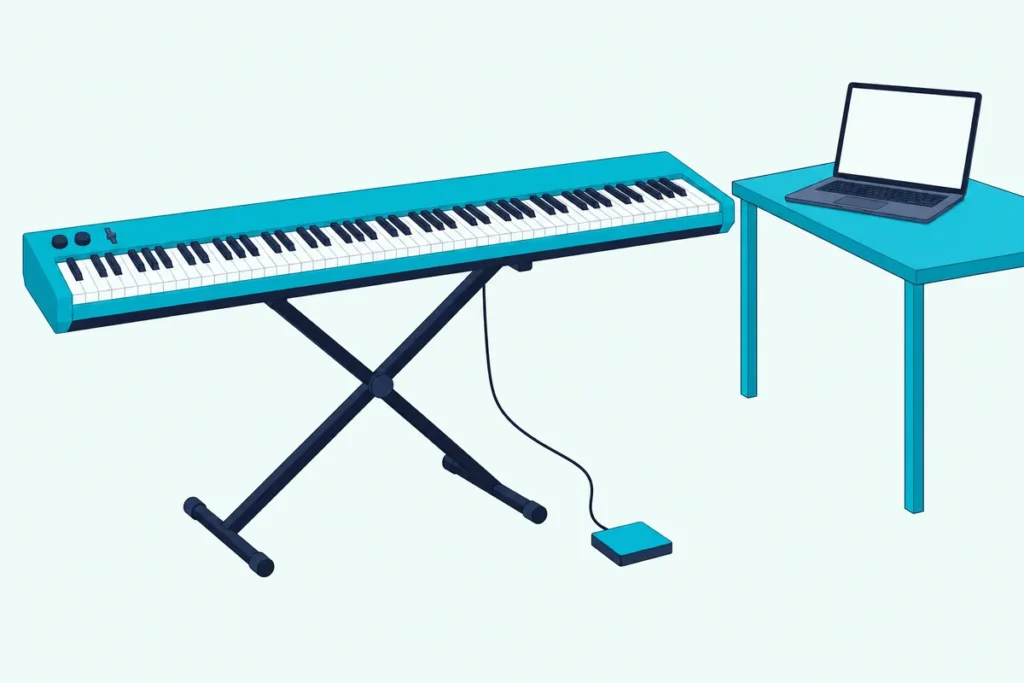
Choosing the best weighted MIDI keyboard comes down to one word on the spec sheet, because makers attach “weighted” to everything from semi-weighted keybeds to graded hammer actions.
Buy on that word alone and you can end up with semi-weighted keys when you wanted the fully weighted keys you practice on, or a 38-pound controller when you mostly program beats.
Match the keys to how you play, and one keyboard can cover scales, recorded piano parts and software instruments without a second board on the desk.
The picks below are fully weighted controllers and digital pianos that send MIDI over USB, with every key mechanism, weight and connection taken from the makers’ own manuals and spec pages.
Start with the quick answer, then see what each maker’s name for its keys means before you choose one.
What Is the Best Weighted MIDI Keyboard?
That spec-sheet word is where the quick answer starts. The best weighted MIDI keyboard for most players who want a pure 88-key MIDI controller is the Arturia KeyLab 88 MkII, because Arturia’s KeyLab MkII User Manual lists an 88-note hammer action keybed with velocity and channel aftertouch, plus 16 pads, nine faders and 5-pin MIDI In and Out.
If you’d rather have a piano that plays on its own and also sends MIDI, start with the Roland FP-30X. Roland lists the same PHA-4 Standard keyboard it puts in its A-88MKII controller, plus speakers and Bluetooth MIDI.
The table lines up each pick by the keys its maker names:
| Keyboard | Type | Keys, in the maker’s words | Connects over | Weight, maker’s figure |
|---|---|---|---|---|
| Arturia KeyLab 88 MkII | Controller | 88-note hammer action keybed with channel aftertouch | USB, 5-pin MIDI In and Out, CV and Gate | Not given in the manual |
| M-Audio Hammer 88 | Controller | 88 fully weighted hammer-action keys | USB, 5-pin MIDI Out | 38.5 lbs |
| Roland FP-30X | Digital piano | PHA-4 Standard, with escapement and ivory feel | USB, Bluetooth MIDI and audio | 14.8 kg (32 lbs 11 oz) with music rest |
| Roland FP-10 | Digital piano | PHA-4 Standard, with escapement and ivory feel | USB, Bluetooth MIDI | 12.6 kg (27 lbs 13 oz) |
| Yamaha P-145BT | Digital piano | GHC keyboard with matte black keytops | USB TO HOST, MIDI and audio | 11.1 kg (24 lb 8 oz) |
| Yamaha P71 | Digital piano | GHS keyboard with matte black keytops | USB TO HOST | 11.5 kg (25 lbs 6 oz) |
The descriptions come from the makers’ manuals and spec pages, and every pick met Burton Acoustix’s rating, review and stock checks on 28 October 2026.
Which Weighted MIDI Keyboards Are Worth Buying?
The table gives the headline facts, and each pick earns its place for a different player. The Arturia and M-Audio boards are pure controllers with fully weighted keys, while the Roland and Yamaha pianos send MIDI over USB and also play through their own speakers.
Arturia KeyLab 88 MkII
If you want fully weighted keys and a full studio control surface in one keyboard controller, the Arturia KeyLab 88 MkII covers the most ground. Arturia’s manual lists an 88-note hammer action keybed that senses velocity and pressure as channel aftertouch, while the 49 and 61-key KeyLab MkII models get semi-weighted keys instead.
Arturia KeyLab 88 MkII
Above the keys sit 16 backlit RGB pads that send polyphonic aftertouch, three banks of nine assignable knobs, faders and buttons, and a Chord mode with dozens of preset chords you can edit. The rear panel adds MIDI In and Out, sustain and expression inputs, three aux pedal inputs and CV, Gate and two Mod outputs for modular synths.
Arturia calls it a class-compliant USB device, so its drivers install themselves, and the USB cable powers it too. With an optional 9-12 V power supply, its MIDI Out drives hardware with no computer attached.
It’s built around Arturia’s Analog Lab software, which the manual says puts over 6,000 presets from 21 instruments under your fingers, with DAW track and transport control on top. The manual doesn’t give a weight, and Arturia’s KeyLab 88 mk3 moves to a Fatar TP/110 keybed with aftertouch.
M-Audio Hammer 88
For the plainest route to fully weighted keys, the M-Audio Hammer 88 keeps the controls to a minimum. M-Audio’s Hammer 88 page lists 88 velocity-sensitive, fully weighted hammer-action keys, a pitch wheel, a modulation wheel, a master volume fader and assignable Up and Down buttons.
M-Audio Hammer 88
M-Audio pitches it as a keyboard controller for virtual instruments or sound modules, aimed at players who want a realistic grand piano feel. It’s USB-powered and class compliant, so it needs no power supply, and its 5-pin MIDI output drives hardware synths, sound modules and drum machines directly.
Separate inputs take sustain, expression and soft pedals, and an iPad connects through Apple’s iPad Camera Connection Kit, sold separately. M-Audio gives its weight as 38.5 lbs, and its page lists no aftertouch, so vibrato on a held note stays with the modulation wheel.
The included controller editor lets you reshape the keybed and controls from your computer.
Roland FP-30X
If you want a piano that works on its own and doubles as a controller, the Roland FP-30X has the most onboard of the pianos here. Roland’s specifications list the 88-key PHA-4 Standard keyboard with escapement and ivory feel, 256-voice polyphony and two 12 cm speakers driven at 11 W each.
Roland FP-30X
Bluetooth carries both audio and MIDI, so you can stream a backing track through the piano or send your playing to an app, and its USB Computer port carries MIDI and audio to a computer. Roland gives its weight as 14.8 kg (32 lbs 11 oz) with the music rest, on a body 1,300 mm wide.
Roland describes it as a portable piano that builds on the entry-level FP-10 with an enhanced sound engine, more powerful onboard speakers and more polyphony. That makes it the pick for pianists who’ll play it as a piano most days and as a MIDI keyboard when they record.
Roland FP-10
For the same Roland keyboard in a smaller, simpler piano, the Roland FP-10 is the one to look at. Roland’s FP-10 page lists the PHA-4 Standard keyboard with escapement and ivory feel, and says the hammer weight is heavier in the low registers and lighter in the highs.
Roland FP-10
It has built-in Bluetooth MIDI and USB MIDI interfaces for apps and music software, though Roland notes the Bluetooth feature may not be included in every country. Its 96-voice polyphony plays through two 12 cm speakers at 6 W each.
Roland calls it the most compact 88-note digital piano in its class: 1,284 mm wide and 12.6 kg (27 lbs 13 oz) with the music rest detached. Half-pedaling needs Roland’s optional DP-10 pedal.
Yamaha P-145BT
For Yamaha’s compact GHC keyboard, the Yamaha P-145BT is the lightest piano here. Yamaha’s spec sheet lists a GHC keyboard with matte black keytops, and its product page pairs 88 weighted, touch-sensitive keys with Graded Hammer Compact action.
Yamaha P-145BT
Its USB TO HOST port sends MIDI and audio over one cable, while Bluetooth is listed for audio only, so it streams songs to play along with rather than sending MIDI. Yamaha lists 64-note polyphony, two 7 W amplifiers with oval speakers and a weight of 11.1 kg (24 lb 8 oz), and a footswitch comes in the box.
The Smart Pianist app controls its settings from a phone or tablet, and Yamaha lists an optional LP-5A pedal unit for it. Pick it if you’ll carry the piano between rooms and want one USB cable to your computer.
Yamaha P71
For the simplest weighted piano that still talks to a computer, the Yamaha P71 sticks to the basics. Yamaha’s P-71 Owner’s Manual lists a GHS (Graded Hammer Standard) keyboard with matte black keytops, and Yamaha presents GHS as giving the feel of an authentic piano.
Yamaha P71
It has 10 voices, 64-note polyphony, two 12 cm speakers at 6 W each and four touch settings (Hard, Medium, Soft and Fixed), and a footswitch comes with it. The USB TO HOST terminal connects a computer, iPhone or iPad, and Yamaha gives its weight as 11.5 kg (25 lbs 6 oz) on a body 1,326 mm wide.
One setting matters if you’ll use it as a controller: the manual lists Local Control as On, among the MIDI settings it says can’t be changed. So the P71’s own voices keep sounding while it sends MIDI, and you’ll want its volume down when a software piano is doing the talking.
What Do Weighted, Semi-Weighted and Hammer Action Mean?
Those picks share one word, and it’s the word most listings use loosely. In the makers’ own terms, keyboards run from synth action through semi-weighted keybeds to fully weighted keys, and the pianos above all use fully weighted keys.
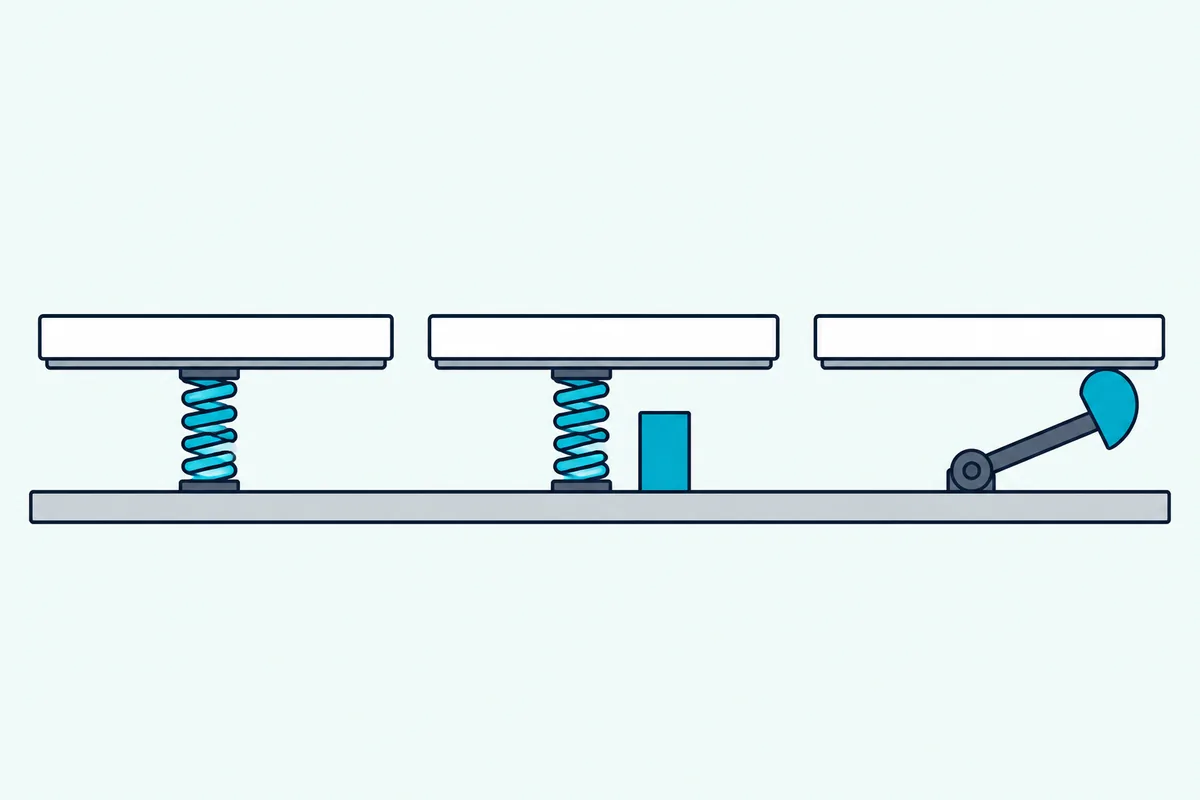
At the light end sits synth action, the label M-Audio gives the M-AUDIO Keystation 49 MK3 and Nektar gives the Nektar SE49. Organ players add their own checklist on top of the keys, and Burton Acoustix’s organ controller guide covers waterfall keys, drawbars and swell pedals.
In the middle sits semi-weighted, the word Arturia uses for the 49 and 61-key KeyLab MkII and the KeyLab Essential 88 mk3. M-Audio uses it for the Keystation 88 MK3, Novation for the Launchkey 88 and Nektar for the Impact GXP88.
At the heavy end sit fully weighted keys. M-Audio calls the Hammer 88’s keys fully weighted and hammer-action in one phrase, Arturia’s manual gives the KeyLab 88 MkII a hammer action keybed, and Roland lists the FP-10’s PHA-4 Standard keyboard in an 88-key hammer-action format.
“Graded” adds one more detail, and Roland spells it out on the FP-10 page: heavier hammer weight in the low registers, lighter in the highs. Yamaha builds the same word into GHS and GHC, and Kawai lists grade-weighted hammers in the VPC1.
Two more terms come up in Roland’s and Kawai’s specs. Roland says the escapement in PHA-4 Standard supports fast key repetition and that its ivory feel comes from a moisture-absorbing material on the white keys, while Kawai lists let-off simulation and Ivory Touch white key surfaces on the VPC1.
Here’s a quick test for any listing: look up the keyboard’s name on the maker’s spec page. If it names GHS, GHC, PHA-4 Standard, TP/110, RM3 Grand II or a hammer action, the keys are weighted in the full sense; if it says semi-weighted, they aren’t.
How Do Yamaha, Roland, Kawai and Studiologic Name Their Weighted Keys?
That quick test only works if you know the names, and every maker has its own. Yamaha’s are Graded Hammer Standard (GHS) and Graded Hammer Compact (GHC), Roland’s is PHA-4 Standard, Kawai’s VPC1 uses RM3 Grand II, and Studiologic and Arturia build on TP keybeds such as the TP/110.
| Maker | Name | Found on | What the maker says about it |
|---|---|---|---|
| Yamaha | GHS (Graded Hammer Standard) | P71 | The feel of an authentic piano, with matte black keytops |
| Yamaha | GHC (Graded Hammer Compact) | P-145BT, P-225, P-143 | 88 weighted, touch-sensitive keys with matte black keytops |
| Roland | PHA-4 Standard, with escapement and ivory feel | FP-10, FP-30X, A-88MKII | Heavier hammer weight in the low registers, lighter in the highs |
| Kawai | RM3 Grand II | VPC1 | 88 wooden keys, grade-weighted hammers, let-off simulation, triple sensor key detection, counterweights |
| Studiologic | TP/110 | SL88 and SL73 | A weighted mechanism with reduced bounce and aftertouch |
| Studiologic | TP/400 Wood | SL88 GT | Its finest keybed, with wooden keys |
| Arturia | Fatar TP/110 | KeyLab 88 mk3 | A fully weighted keybed with aftertouch |
| M-Audio | Fully weighted hammer action | Hammer 88 | 88 velocity-sensitive keys |
Two names in that table mean wooden keys. Kawai lists 88 wooden keys for RM3 Grand II, and Studiologic says the SL88 GT’s TP/400 Wood has wooden keys.
Studiologic’s own SL manual credits Fatar for its keyboard, describing three contacts per key and aftertouch. Kawai’s triple sensor key detection is the same kind of detail, a spec that tells you how each key is read.
Yamaha’s GHS and GHC differ in name by Standard and Compact, and Yamaha’s spec sheet lists GHC on the P-145BT, P-225 and P-143. If you’re choosing between the P71 and the P-145BT, the keyboard’s name is the first difference to check, before the speakers and the Bluetooth.
Is a Semi-Weighted Keyboard Good Enough for Piano?
Semi-weighted boards sit outside that table on purpose. The makers pitch them for both playing and production rather than for piano feel: Arturia says the KeyLab Essential’s semi-weighted keybed suits performance and studio beat-making alike, while Roland and M-Audio describe their fully weighted keyboards by how closely they follow an acoustic or grand piano.
So if your practice is classical repertoire, scales and pieces you’ll later play on an acoustic piano, follow the makers’ own split and pick fully weighted keys. If you play piano parts inside productions and also trigger drums and synths, a semi-weighted board keeps the weight down, and some add pads.
M-Audio’s semi-weighted Keystation 88 MK3 weighs 13.75 lbs, a little over half the 24 lb 8 oz of the lightest fully weighted piano here. Novation’s Launchkey 88 adds 16 pads with polyphonic aftertouch and Scale and Chord modes, and Nektar’s Impact GXP88 puts aftertouch on its semi-weighted keys and works with Nektar DAW Integration.
If you want the full 88-key range without fully weighted keys, semi-weighted 88s such as the Keystation 88 MK3 and Launchkey 88 are compared on Burton Acoustix’s 88-key page. For something smaller, boards with 61 semi-weighted keys keep five octaves and leave more of the desk free.
Beginners who aren’t sure they need fully weighted keys yet can read how much key action a first piano keyboard needs for the semi-weighted middle ground. It covers what a MIDI keyboard can and can’t teach before you spend on heavier keys.
Who Actually Needs Weighted Keys?
That middle ground answers most of this question too. Weighted keys suit pianists who practice repertoire, take lessons or perform, and producers who record piano parts by hand rather than drawing them in.
If you practice for lessons or recitals, the fully weighted keyboards above are the ones their makers describe in piano terms, and graded weighting adds the heavier bass and lighter treble Roland describes. The pianos above also give you speakers for the days you don’t want to start a computer.
If you record piano parts in your DAW, a weighted controller gives your fingers the same keys you practice on while the software piano does the sound. Velocity is what carries the dynamics: the MIDI Association notes that a keyboard sends a velocity with each Note On message, and the receiving instrument normally uses it to set the note’s loudness.
Beat makers and electronic producers who mostly trigger pads or program notes with a mouse can skip weighted keys and look at 25-key controllers with pads instead. Burton Acoustix’s main guide still covers the Akai MPK Mini MK3 for that kind of desk.
If desk space matters more than the keys’ weight, 37-key boards with synth-style keys sit at the other end of the scale. A quality unweighted controller still sends the same Note On and velocity messages as a weighted one, so the difference lies in the keys, not in the MIDI your DAW records.
Can You Get Weighted Keys on Fewer Than 88?
Desk space raises the next question: whether you need all 88 keys. You can get fully weighted keys on 73, since Studiologic’s SL73 uses the same TP/110 as its SL88, and Studiologic’s spec page for the SL73 Studio, on the TP/100LR, gives 11.5 kg (25.3 lbs) against 13.7 kg (30.2 lbs) for the SL88 Studio.
That’s six octaves instead of just over seven, and among the boards in this guide, Studiologic’s 73-key models are the only fully weighted ones shorter than 88 keys. Count the range of the pieces you play: if they stay inside six octaves, a 73-key board drops 15 keys, and on Studiologic’s Studio figures that saves 22 cm of width (104 cm against 126 cm) and 2.2 kg.
Below 73, the boards in this guide with any weight to their keys are semi-weighted. Arturia gives the 49 and 61-key KeyLab MkII semi-weighted keys and only the 88 a hammer action keybed, and Nektar’s Impact GXP comes in 49, 61 and 88-key versions, all semi-weighted.
So among the boards here, a five-octave keyboard means semi-weighted keys, and the 61-key page linked above compares five-octave boards. A pianist who needs fully weighted keys and a short board should look at the 73-key SL73 first.
Should a Pianist Buy a Digital Piano Instead of a Controller?
Pianists who do need weighted keys face one more choice. A digital piano is the better buy if you want to practice without switching on a computer, because the P71, P-145BT, FP-10 and FP-30X play through their own speakers, while a controller like M-Audio’s is built to drive virtual instruments or sound modules.
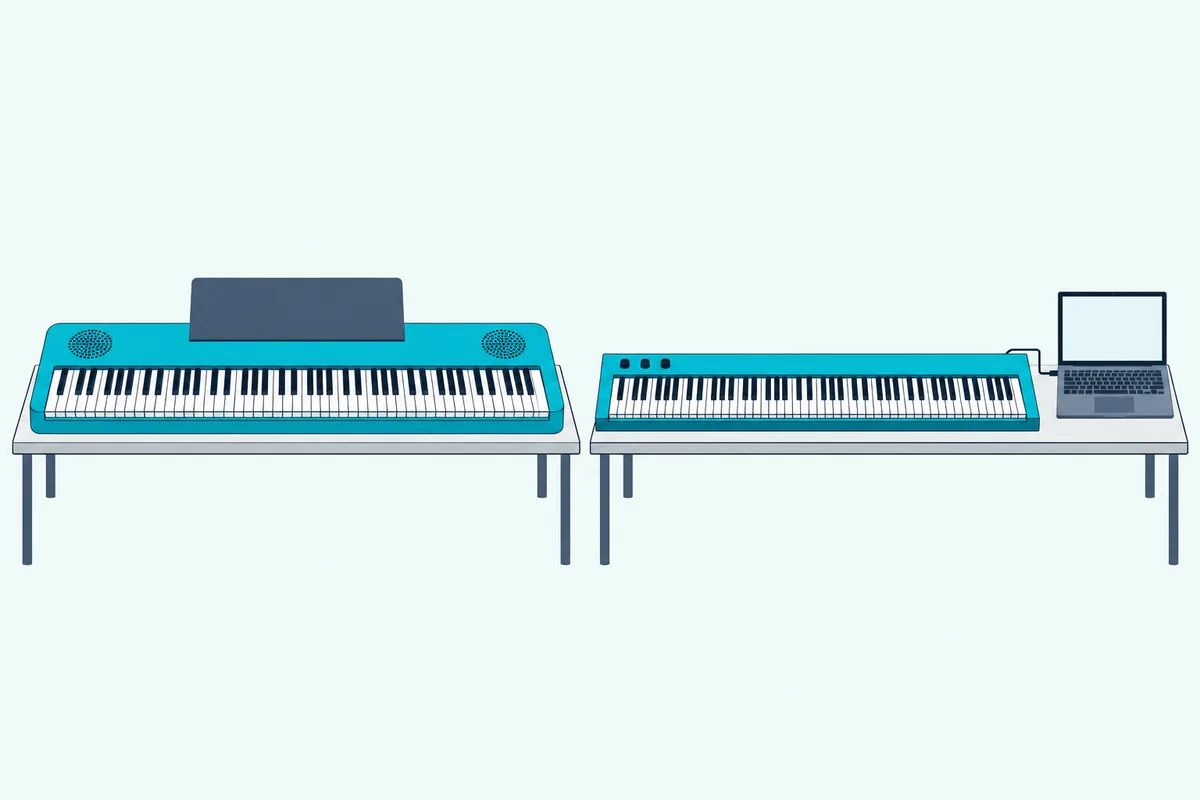
A controller makes more sense when software is the instrument. The KeyLab 88 MkII adds pads, faders, aftertouch and CV, none of which the piano spec pages here list, and it leaves the sound to the sampled pianos and synths on your computer.
Each piano here sends MIDI over USB, so it can still drive that software, with one catch to check in the manual. Yamaha’s P71 keeps Local Control fixed at On, and the MIDI Association explains that turning Local Control off is what separates an instrument’s keyboard from its own sound engine.
The decision for most pianists comes down to where the sound should come from on a normal day. Our MIDI keyboard vs digital piano comparison goes through sound, setup, learning and size side by side if you’re still torn.
How Much Do Weighted MIDI Keyboards Weigh?
Whichever kind you pick, plan for the weight. The makers’ own figures for the fully weighted boards here run from 11.1 kg (24 lb 8 oz) for Yamaha’s P-145BT to 29.5 kg (65 lbs) for Kawai’s wooden-key VPC1.
| Keyboard | Keys | Weight, maker’s figure |
|---|---|---|
| M-Audio Keystation 88 MK3 | Semi-weighted | 13.75 lbs |
| Yamaha P-145BT | GHC | 11.1 kg (24 lb 8 oz) |
| Yamaha P71 | GHS | 11.5 kg (25 lbs 6 oz) |
| Roland FP-10 | PHA-4 Standard | 12.6 kg (27 lbs 13 oz), music rest detached |
| Roland FP-30X | PHA-4 Standard | 14.8 kg (32 lbs 11 oz), with music rest |
| M-Audio Hammer 88 | Fully weighted | 38.5 lbs |
| Roland A-88MKII | PHA-4 Standard | 17.5 kg (38 lbs 10 oz) |
| Kawai VPC1 | RM3 Grand II | 29.5 kg (65 lbs) |
The dedicated weighted controllers are the heaviest boards in the table, and the semi-weighted Keystation 88 MK3 is the lightest by a wide margin. Arturia’s manual doesn’t give a weight for the KeyLab 88 MkII, so check the listing before you plan a stand around it.
Width matters as much as weight. Roland lists 1,284 mm for the FP-10 and 1,429 mm for the A-88MKII, Yamaha 1,326 mm for the P71 and P-145BT, and Kawai 138 cm for the VPC1.
Try this before you order: measure your desk. A 48-inch desk is about 1,219 mm, so each of those widths overhangs it, and a keyboard stand or a longer desk is part of the purchase.
If portability matters at all, weighted keys and travel don’t mix well. Keep the weighted board at home for practice and carry a compact mini controller for mobile production.
Do You Need Aftertouch on a Weighted Keyboard?
Weight comes with the keys, but expression doesn’t. You need aftertouch only if your sounds respond to pressure on a key that’s already down: the MIDI Association’s About MIDI Part 3 describes that pressure as aftertouch, used for effects such as vibrato and sent either as channel aftertouch, one level for the whole keyboard, or polyphonic aftertouch, a reading for each key.
Among the weighted boards here, Arturia lists channel aftertouch on the KeyLab 88 MkII’s keys and polyphonic aftertouch on its pads. Arturia’s KeyLab 88 mk3 puts aftertouch on its Fatar TP/110 keybed, and Studiologic says the TP/110 in its SL88 and SL73 triggers aftertouch through the hammer action.
M-Audio’s page for its weighted controller lists velocity-sensitive keys and no aftertouch. The Roland and Yamaha piano pages here list touch settings and polyphony, not aftertouch.
If you mostly play piano sounds, check whether your piano software responds to aftertouch before you pay for it. If you play string pads, brass or synth leads that swell under pressure, our aftertouch MIDI keyboard picks sort boards by the pressure type they send.
Which Connections Matter on a Weighted Keyboard?
Aftertouch only matters once the keyboard is talking to something. For a computer, every pick here connects over USB: Arturia and M-Audio call their controllers class compliant, Roland’s pianos have a USB Computer port, and Yamaha’s have USB TO HOST.
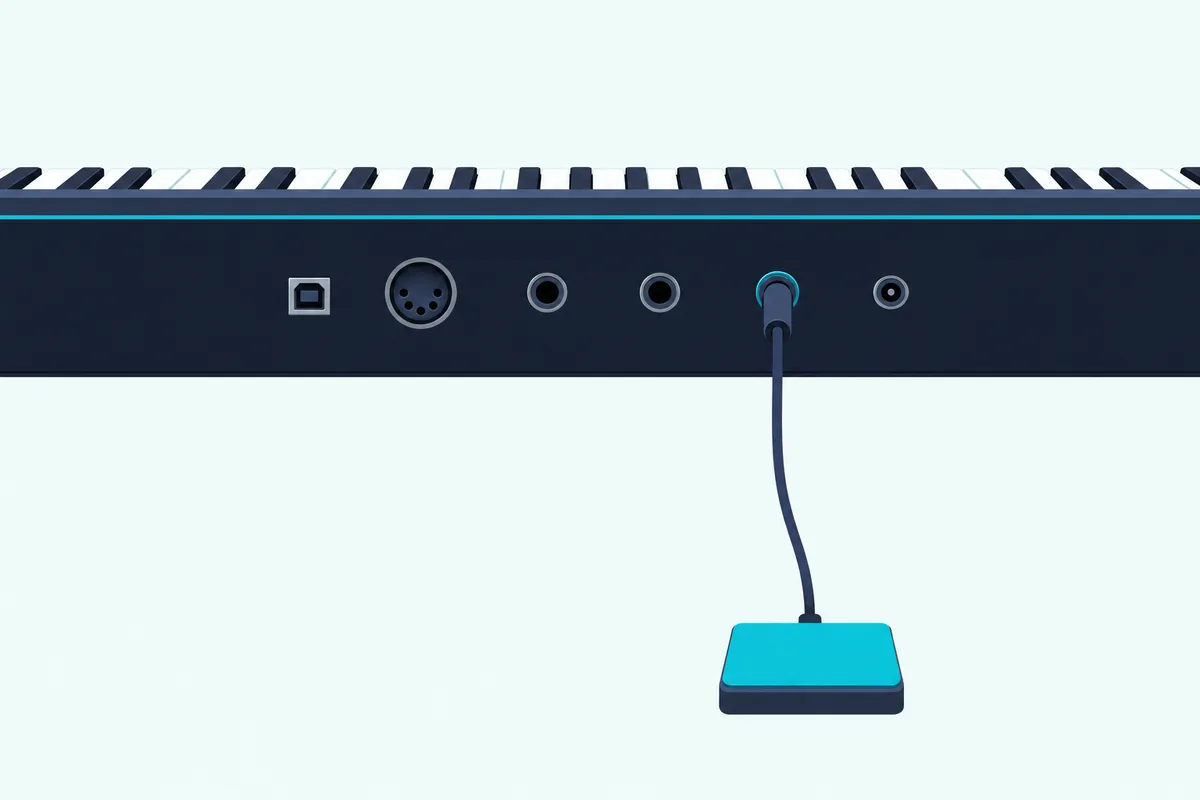
For hardware synths and sound modules, you want 5-pin MIDI. The KeyLab 88 MkII has MIDI In and Out, M-Audio’s controller has a 5-pin MIDI output, and Kawai lists MIDI IN, OUT and THRU on the VPC1, while the P71’s manual lists only DC IN, PHONES, SUSTAIN and USB TO HOST.
Pedal inputs are the next check. The KeyLab 88 MkII takes sustain, expression and three aux pedals, the Hammer 88 sustain, expression and soft, the A-88MKII a damper and two assignable pedals, and Kawai lists the F-30H triple pedal unit with half-pedal support among the VPC1’s accessories.
Wireless is a piano feature here. Roland’s FP-10 and FP-30X have Bluetooth MIDI, while Yamaha’s P-145BT lists Bluetooth for audio only, so for wireless MIDI to an iPad app the Rolands are the ones that do it.
For a wired iPad, M-Audio’s board uses Apple’s Camera Connection Kit, the A-88MKII connects over class-compliant USB-C to iOS and iPadOS devices, and the P71’s USB TO HOST terminal is listed for an iPhone, iPad or computer. On a Windows computer, Burton Acoustix’s Windows setup guide covers the USB setup step by step.
How Do You Set Up a Weighted Keyboard for Software Pianos?
Once it’s plugged in, three settings decide how a software piano responds. Set the touch response first: Yamaha’s pianos offer Hard, Medium, Soft and Fixed, Roland’s FP-10 lists five key touch types plus fixed touch, and Kawai lists approved touch curves for popular virtual piano packages on the VPC1.
Next, set the MIDI channel and check Local Control. The P71 transmits on channel 1 by default and lets you pick any channel from 1 to 16, while Local Control stays On, so turn its volume down when the software piano should be the only sound.
Then plug in the sustain pedal before you switch on. Yamaha’s P-71 manual warns that pressing the footswitch while the power comes on reverses how the piano reads it, while Arturia says the KeyLab MkII’s sustain input detects the pedal’s polarity at power-up.
Each maker also has software for the rest of the settings. Arturia’s MIDI Control Center edits the KeyLab MkII’s control assignments and global settings, M-Audio’s editor reshapes the Hammer 88’s keybed and controls, and Yamaha’s Smart Pianist app handles the P-145BT from a phone.
Roland’s FP-10 works with the Roland Piano App, though Roland notes the app’s rhythm function isn’t available on that model.
If notes trail your fingers, work through the chain in order rather than blaming the keys. Our guide to fix delay on a MIDI keyboard goes from buffer size and audio drivers to Bluetooth MIDI and plugging straight into the computer, one cause at a time.
What Should You Check Before Buying a Weighted Keyboard?
Those setup steps assume the right keyboard is already on your desk, so here’s the short list to run through first. Check the keyboard’s name on the maker’s spec page, then whether it makes its own sound, then the aftertouch, ports, power and size.
The name tells you what kind of keys you’re getting: GHS, GHC, PHA-4 Standard, TP/110 and RM3 Grand II are the fully weighted names on this page, and semi-weighted is a different keybed. Sound decides the category, since a digital piano like the P71 plays through its own speakers while a controller like the KeyLab 88 MkII needs software or a sound module.
If the keyboard you own now already makes its own sound, a controller can be the better second instrument, and if it doesn’t, a digital piano covers practice without the computer. Aftertouch matters only for sounds that use it, and the boards here split between channel aftertouch on the KeyLab’s keys, aftertouch on the TP/110 boards, and none listed on M-Audio’s controller or the pianos.
Ports come next: 5-pin MIDI for hardware synths, a sustain input at minimum, and Bluetooth MIDI if you play into iPad apps. Power and size finish the list, since the KeyLab MkII, M-Audio’s controller and the A-88MKII can run on USB bus power while the Yamaha pianos list an AC adaptor, and every 88-key width published here is wider than a 48-inch desk.
Which Other Weighted Controllers Are Worth Knowing?
That checklist works for any board, including the fully weighted controllers that aren’t among the picks above. Roland’s A-88MKII, Kawai’s VPC1, Studiologic’s SL88 and Arturia’s KeyLab 88 mk3 are the other names that come up, each with its maker’s own keybed.
Roland’s A-88MKII uses the same PHA-4 Standard keyboard as the FP-10 and FP-30X, with three user-definable zones, eight RGB-lit knobs, eight RGB-lit pads and three pedal inputs. Roland lists class-compliant USB-C with bus power, MIDI 2.0 support from system software version 2.00, 17.5 kg (38 lbs 10 oz) and a 1,429 mm width.
Kawai’s VPC1 is a MIDI controller built for virtual piano players, with no knobs or wheels on its cabinet. Its RM3 Grand II keyboard has 88 wooden keys, it weighs 29.5 kg (65 lbs), and Kawai lists a triple pedal unit among its accessories.
Studiologic’s SL88 and SL73 use the TP/110 with aftertouch, and its SL88 GT moves to the TP/400 Wood with wooden keys. Arturia’s KeyLab 88 mk3 also uses a Fatar TP/110 keybed with aftertouch, if you want the mk3 generation of the top pick.
If you’re comparing them, line up the keyboard’s name, the aftertouch type and the weight from each maker’s spec page. Those are the same three facts the tables above use, and they’re the ones a listing title can blur.
The Bottom Line
Those names, weights and connections narrow the choice quickly. For a controller, start with the Arturia KeyLab 88 MkII if you want aftertouch, pads and CV, and the M-Audio Hammer 88 if you want fully weighted keys and little else.
For a piano that also sends MIDI, the Roland FP-30X has the most onboard, the FP-10 the smallest footprint, the Yamaha P-145BT the lightest body and the P71 the simplest controls. Whichever you choose, read the keyboard’s name on the spec sheet first, because semi-weighted and hammer-action keybeds are different things.
Frequently Asked Questions
What is the difference between weighted and semi-weighted MIDI keyboards?
Fully weighted keyboards use hammers: M-Audio calls the Hammer 88’s keys fully weighted hammer-action keys, and Roland’s PHA-4 Standard keyboard, in its pianos and the A-88MKII, has hammer weight that’s heavier in the low registers and lighter in the highs. Semi-weighted is the label makers give keybeds meant for playing and production alike, such as M-Audio’s Keystation 88 MK3, Novation’s Launchkey 88, Nektar’s Impact GXP88 and Arturia’s KeyLab Essential 88 mk3. Read the maker’s spec line: GHS, GHC, PHA-4 Standard, TP/110 or RM3 Grand II means fully weighted keys, and semi-weighted means a different keybed.
Is a fully weighted MIDI keyboard the same as hammer action?
For the boards here, makers use the two terms together: M-Audio calls the Hammer 88’s keys fully weighted and hammer-action in one phrase, and Arturia describes the KeyLab 88 mk3’s Fatar TP/110 the same way. “Graded” adds a detail on top, which Roland describes as heavier hammer weight in the low registers and lighter in the highs, and Yamaha builds the word into GHS and GHC. When a listing only says “weighted”, look up the keyboard’s name on the maker’s spec page before you buy.
Do I need weighted keys for music production?
Only if you play your parts in rather than program them. Weighted keys matter most for recorded piano parts and for players who also practice on an acoustic piano. For drums, basslines and synth parts, a semi-weighted or synth-action board sends the same Note On and velocity messages, and the MIDI Association notes that velocity normally sets a note’s loudness. The difference is in the keys under your fingers, not in the MIDI data your DAW records.
Are weighted MIDI keyboards heavier?
Yes. The makers’ figures for the fully weighted boards here run from 11.1 kg (24 lb 8 oz) for Yamaha’s P-145BT to 17.5 kg (38 lbs 10 oz) for Roland’s A-88MKII and 38.5 lbs for M-Audio’s Hammer 88, with Kawai’s wooden-key VPC1 at 29.5 kg (65 lbs). M-Audio’s semi-weighted Keystation 88 MK3 weighs 13.75 lbs by comparison. Plan for a stand or a sturdy desk, and measure the width as well: the 88-key models here with a published width run from 1,284 mm to 1,429 mm.
Can I practice piano on a semi-weighted MIDI keyboard?
You can learn notes, chords and timing on one, and the beginner guide linked above covers what a first keyboard needs. For repertoire you’ll later play on an acoustic piano, the makers point you to fully weighted keys: Roland, Yamaha, M-Audio and Kawai describe theirs in acoustic or grand piano terms, while Arturia pitches its semi-weighted KeyLab Essential keybed for performance and beat-making alike. If the acoustic piano is the goal, practice on keys built to follow it.
Can you use a digital piano as a weighted MIDI controller?
Yes, if it has a USB MIDI port. The Yamaha P71 and P-145BT send MIDI through USB TO HOST, and Roland’s FP-10 and FP-30X send it over USB and Bluetooth. Check the MIDI settings in the manual first: Yamaha’s P-71 manual lists Local Control fixed at On, so the piano’s own voice plays alongside your software unless you turn its volume down. A dedicated controller such as the KeyLab 88 MkII adds pads, faders and aftertouch that the piano spec pages here don’t list.
What is the best 88-key fully weighted MIDI controller?
Among controllers without speakers, the Arturia KeyLab 88 MkII is the pick here for its hammer action keybed with channel aftertouch, its pads and faders and its 5-pin MIDI In and Out, with the M-Audio Hammer 88 as the plainer choice. Roland’s A-88MKII with PHA-4 Standard, Kawai’s VPC1 with RM3 Grand II wooden keys and Studiologic’s SL88 with the TP/110 are the other fully weighted 88s to compare. Line up their keyboard names, aftertouch and weights from the makers’ spec pages before you choose.