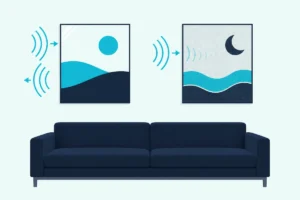
Rugs absorb high-frequency floor reflections (the Carpet and Rug Institute gives NRCs of 0.15 to 0.55 for carpet laid on concrete), while fiberglass panels absorb a wider range (Owens Corning lists its 2-inch 703 board at an NRC of 1.00).
Rugs vs acoustic panels — which one fixes your room’s sound problems? Both help, but for completely different frequency ranges and surface types.
Picking one or the other can leave part of the room untreated, because a rug treats the floor and panels treat the walls and ceiling.
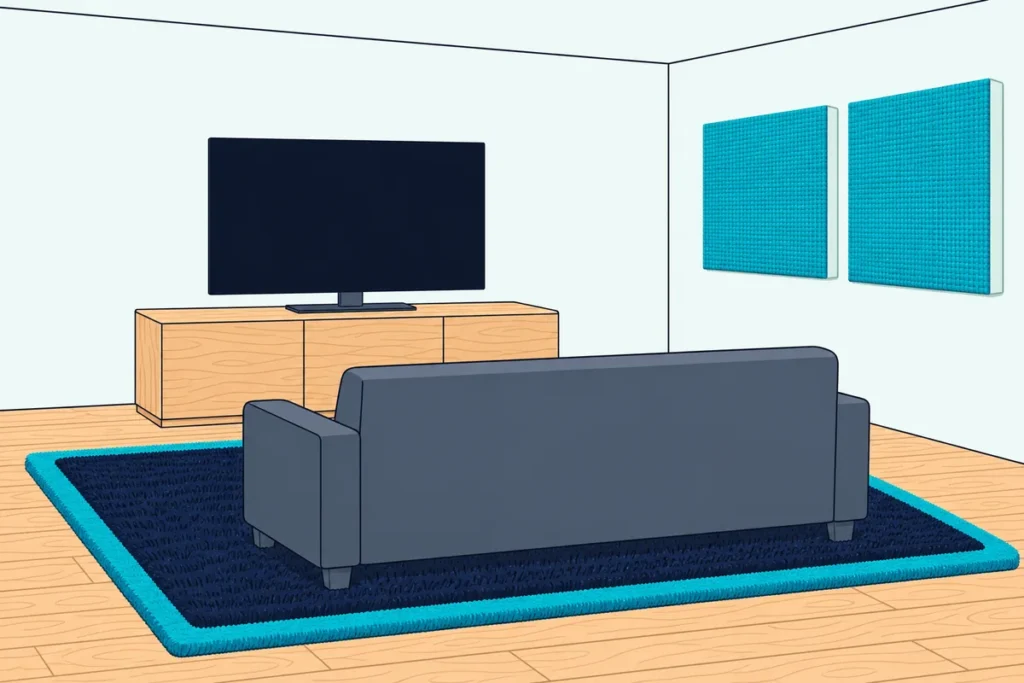
The sections below cover what each handles, where to deploy them, and when you need both.
Use rugs for hard floors and panels for walls — they solve different problems and work best together.
The descriptions come from the makers’ manuals and spec pages.
Every pick met Burton Acoustix’s rating, review and stock checks on 7 November 2026.
What’s the Real Difference Between Rugs and Acoustic Panels?
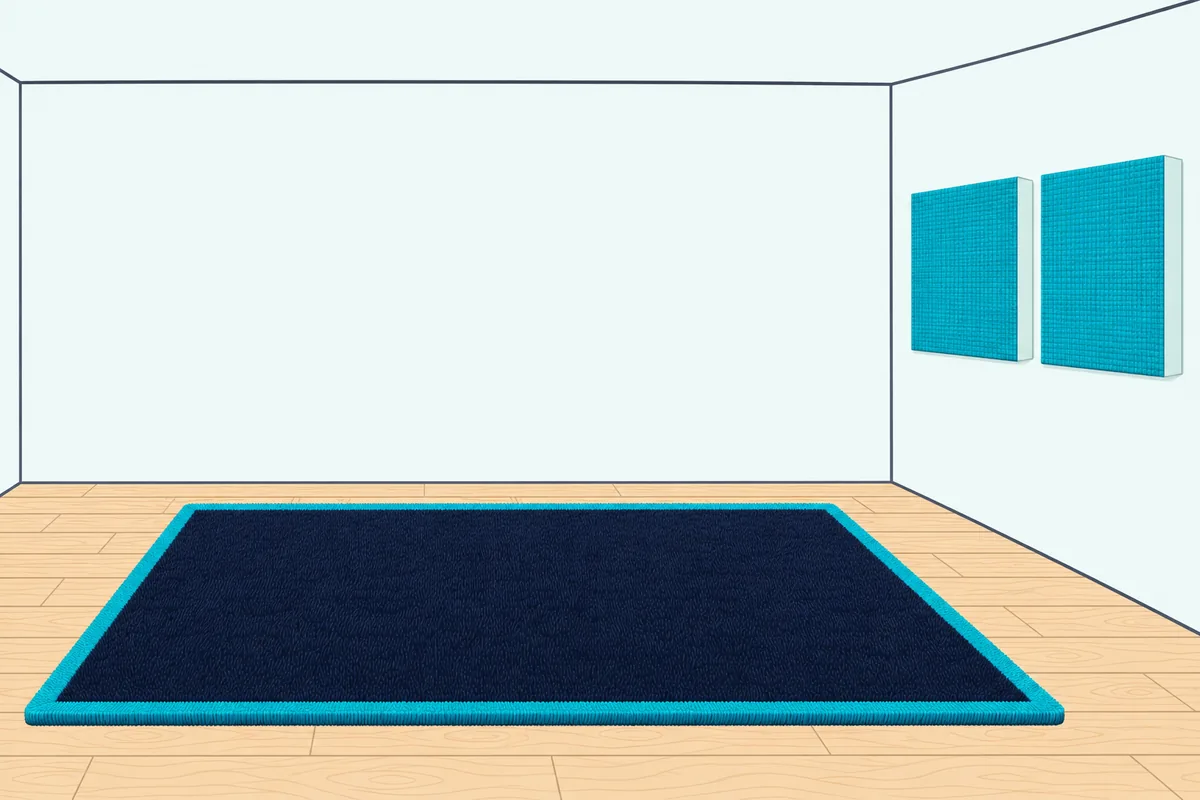
Rugs and acoustic panels serve fundamentally different purposes in room acoustics — a rug treats the floor, and panels treat walls and ceilings.
Rugs sit on your floor and absorb sound that would otherwise bounce off hard surfaces like hardwood, tile, or concrete.
They reduce footstep noise and dampen floor reflections.
Acoustic panels mount on walls and ceilings. Wall reflections cause the echo you hear in untreated rooms.
Understanding how absorption differs from soundproofing prevents buying the wrong product.
Why Do People Compare Them?
Both are soft, and both absorb sound.
Auralex’s Acoustics 101 counts carpeting and fiberglass among the soft materials with high NRCs, but a rug covers only the floor.
Rugs do absorb some sound, but only at the floor.
Rugs help floors, panels help walls, and complete room treatment usually requires both.
How Do Rugs Absorb Sound?
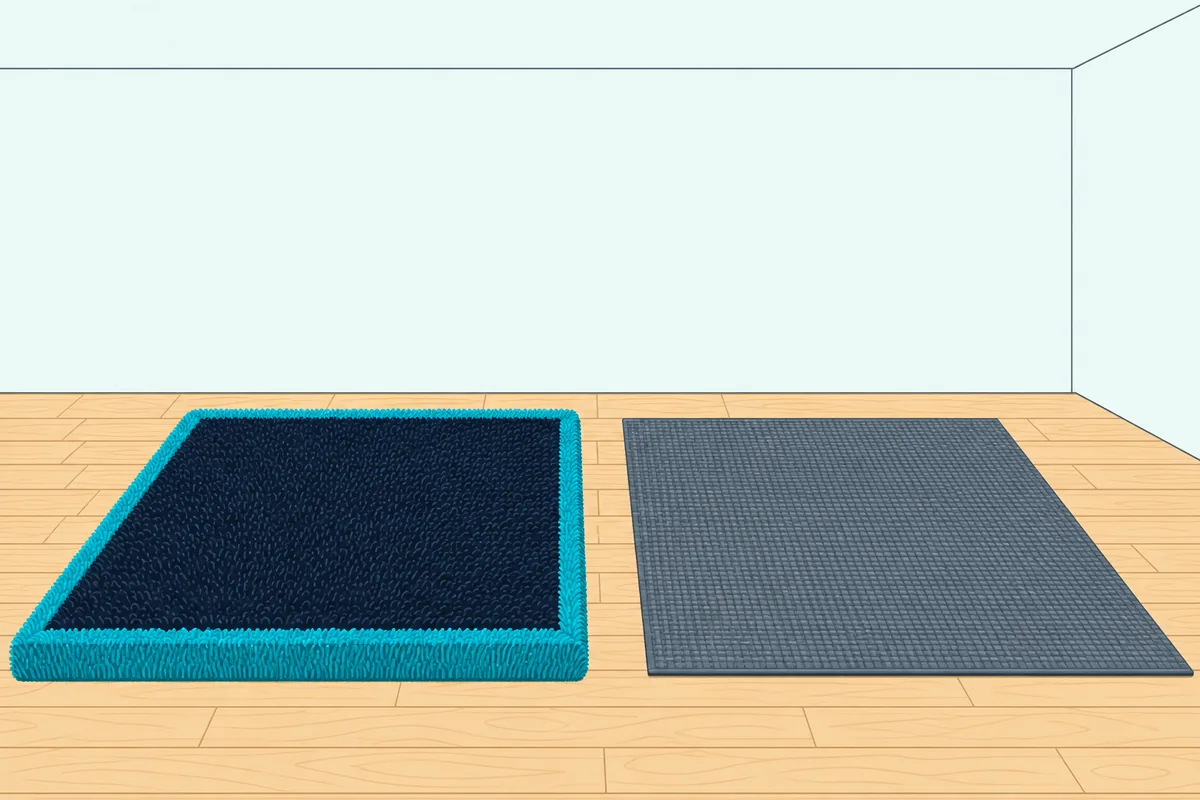
Rugs absorb sound through friction — when sound waves hit the rug fibers, the wave energy gets converted to tiny amounts of heat through fiber movement.
What Frequencies Do Rugs Absorb?
Rug fibers are thin and relatively short — even a thick shag rug only has fibers a few inches long. That physical characteristic limits them to absorbing high frequencies only.
Rugs absorb mainly the high frequencies. They struggle with the mid-range and do almost nothing for bass.
USG puts human speech between 125 Hz and 4,000 Hz, a range that reaches down into the mid frequencies where rugs struggle.
The Carpet and Rug Institute’s technical bulletin gives NRCs (Noise Reduction Coefficients) between 0.15 and 0.55 for the carpets it tested laid directly on concrete, with loop pile averaging 0.20 to 0.35.
An NRC is the average of a material’s absorption coefficients at 250, 500, 1000 and 2000 Hz, and Auralex notes that NRCs are not percentages.
Does Rug Thickness Matter?
Pile height can matter: in the Carpet and Rug Institute’s tests, raising the pile height of loop pile carpet at the same pile weight improved absorption, from an NRC of 0.15 at 0.125 inch to 0.35 at 0.437 inch.
In cut pile, the bulletin says more pile weight or height may not change the NRC substantially, while a deeper pile collects more dust and takes more maintenance.
How Do Acoustic Panels Compare?
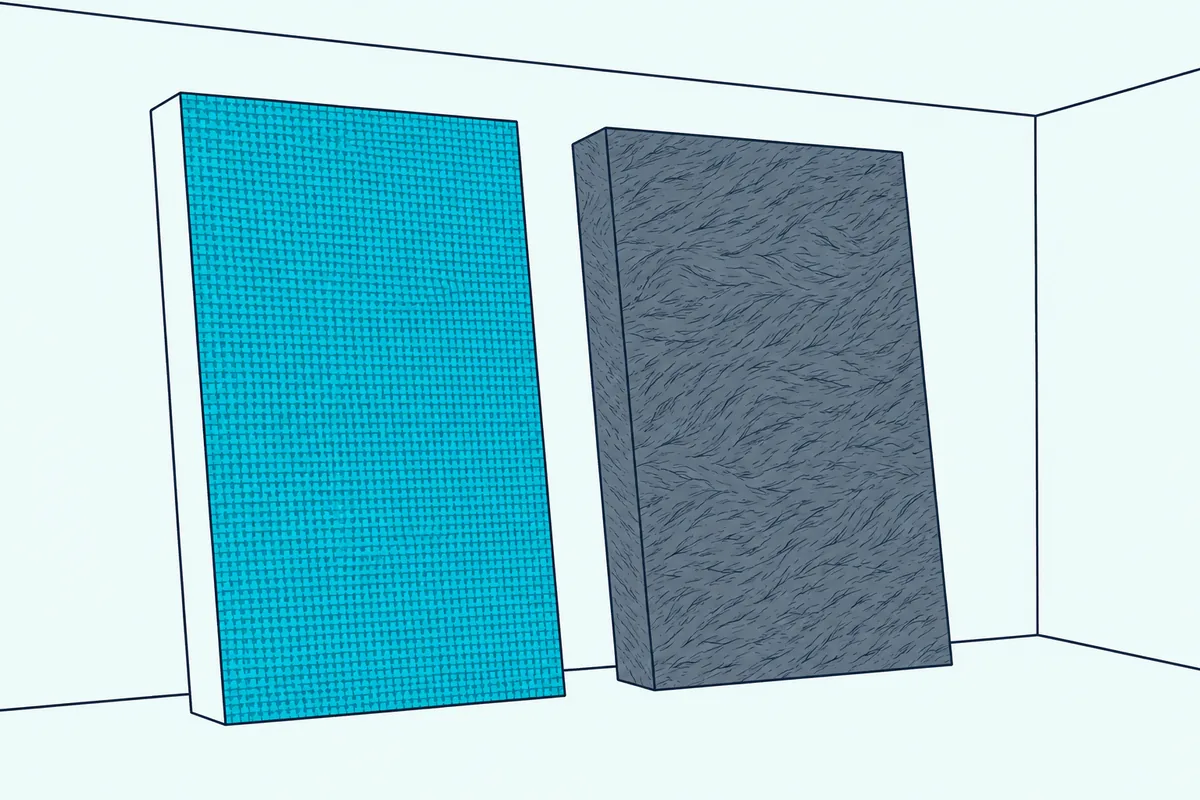
Acoustic panels use materials specifically chosen for acoustic properties — typically rigid fiberglass or mineral wool — wrapped in acoustically transparent fabric.
The NRC rating guide covers the science behind panel absorption in depth.
What’s the Absorption Difference?
Owens Corning lists its 703 fiberglass board at NRCs of 0.70 at 1 inch, 1.00 at 2 inches and 1.15 at 3 and 4 inches, against 0.15 to 0.55 for the carpets the Carpet and Rug Institute tested on concrete. Auralex notes that NRCs are not percentages: a higher NRC means more sound is absorbed on average.
More importantly, panels work lower in the spectrum: Owens Corning lists its 2-inch 703 board at 0.71 at 250 Hz and 1.14 at 500 Hz.
Panel density determines how far absorption extends into lower frequencies. Thickness extends it too: Owens Corning lists its 703 board at 0.15 at 125 Hz at 2 inches thick and 0.56 at 4 inches.
That mid-range is where voices sit: USG gives human speech as 125 Hz to 4,000 Hz.
Why Does Placement Matter?
Panels go on walls and ceilings, which have more surface than the floor: in a 10×12 room with an 8-foot ceiling, the walls alone are 352 square feet against a 120-square-foot floor.
First reflection points are the spots where sound from your speakers or voice bounces directly to your ears after hitting the wall.
The placement guide shows exactly where to position panels for maximum effect.
Ceiling reflections matter especially in rooms with hard floors. Auralex’s Acoustics 101 notes that sound bounces back and forth between hard, parallel surfaces, such as a hard floor and the ceiling.
Ceiling panels or clouds address this directly.
Can Rugs Replace Acoustic Panels?
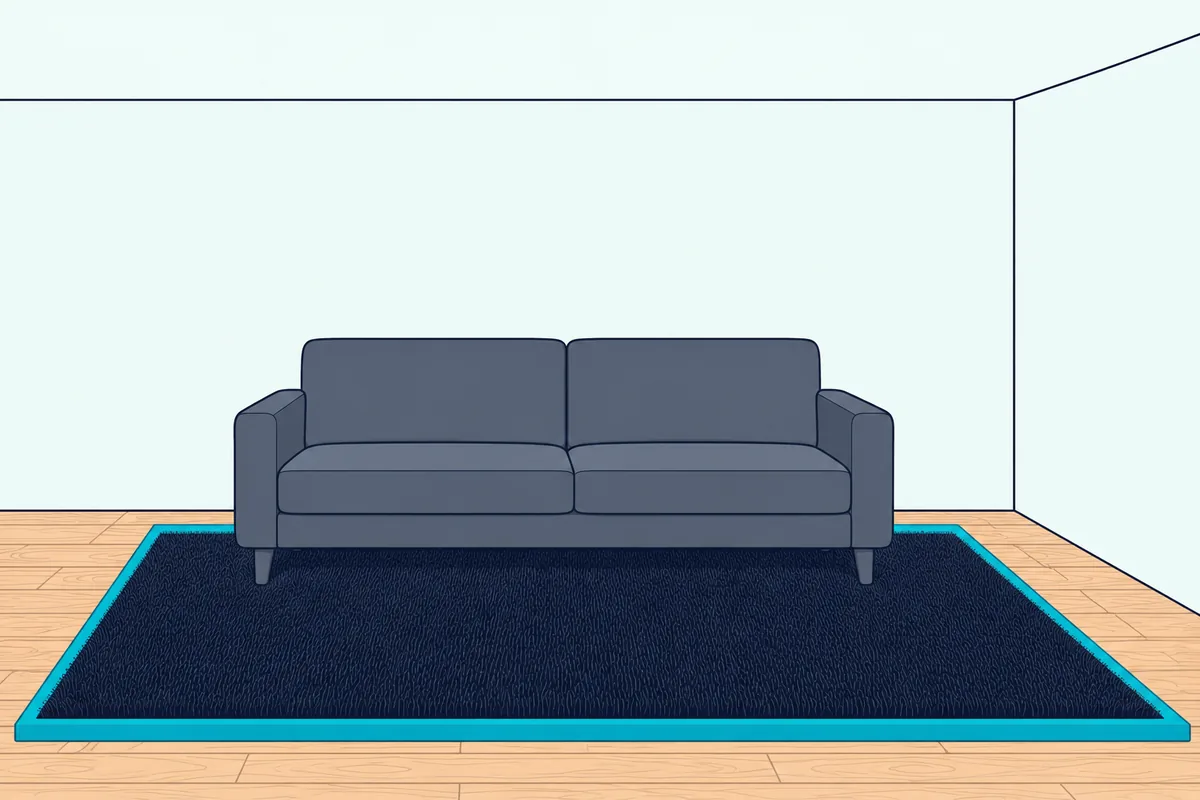
The short answer is no: a rug treats only the floor.
Walls and ceilings stay untreated when you only lay down a rug.
What Rugs Fix
Rugs treat floor problems that wall panels don’t reach. Hard floor surfaces create footstep noise, chair scraping sounds, and high-frequency “slap” reflections that add harshness to room acoustics.
If you have hardwood, tile, laminate, or concrete floors, an area rug treats the floor. It won’t fix your room’s echo problem on its own.
For home offices, rugs reduce keyboard clicks and chair noise that would otherwise bounce around the room. For recording spaces, rugs prevent floor reflections from reaching microphones.
Where Rugs Fall Short
Rugs can’t treat wall reflections. They can’t address ceiling flutter.
Hanging a rug on the wall doesn’t solve this either. Rugs lack the thickness and density to perform like acoustic panels.
Bass frequencies have wavelengths measured in feet. A half-inch rug can’t meaningfully absorb them.
When Should You Choose Rugs Over Panels?
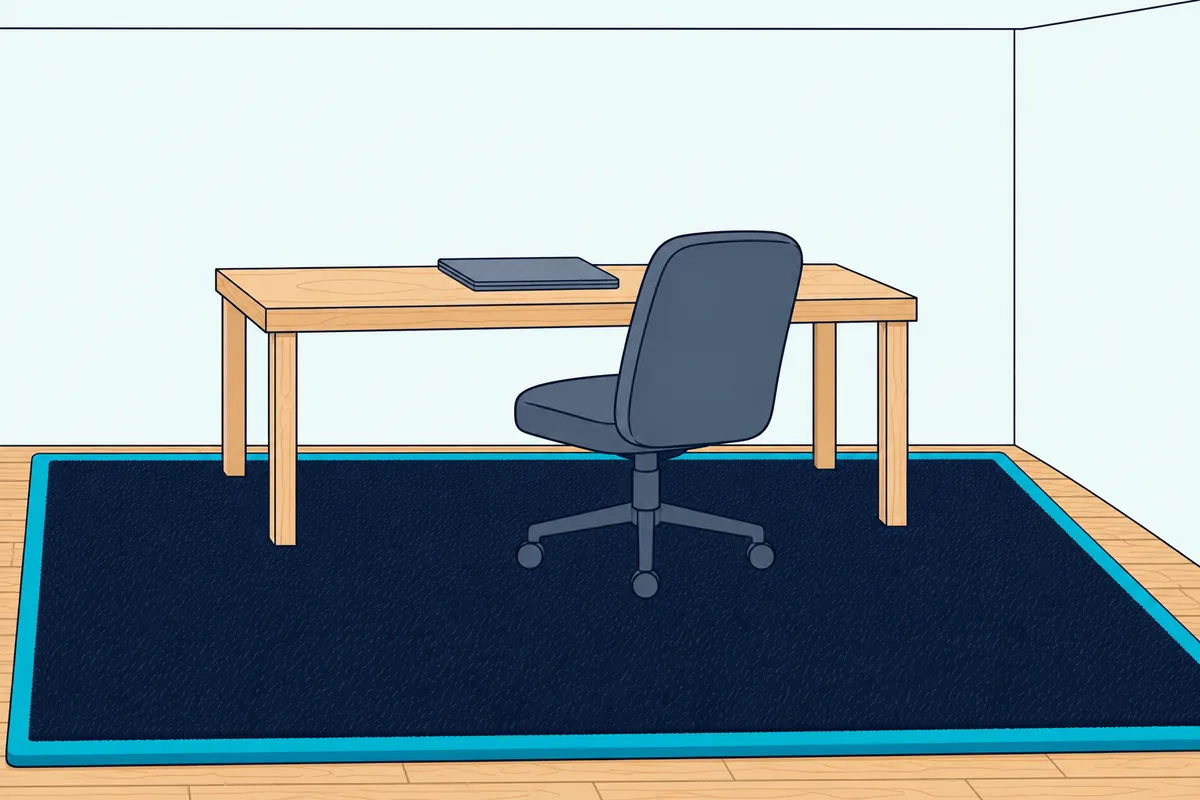
Rugs are the better first choice in some situations.
Hard Floor Echo Problems
If your room has hard floors and you’re primarily bothered by footstep noise, chair sounds, and that harsh “clicky” quality that hard surfaces create, an area rug comes first. Panels won’t help with floor reflection issues.
Large area rugs work better than small accent rugs for acoustic purposes. More surface coverage means more absorption.
Aesthetic Priorities
Rugs integrate into room design more naturally than panels in many spaces. Living rooms, bedrooms, and home offices often benefit from the warmth and visual interest a quality rug provides.
If you need some acoustic improvement but won’t tolerate panels on your walls, a thick area rug at least addresses floor reflections.
Which to Add First
If you add one at a time and hard floors are the problem, starting with a rug for floor treatment makes sense — as long as you understand it’s not a complete solution.
You can add wall panels later. The rug will continue helping with floor reflections even after you install dedicated wall treatment.
When Should You Choose Panels Over Rugs?
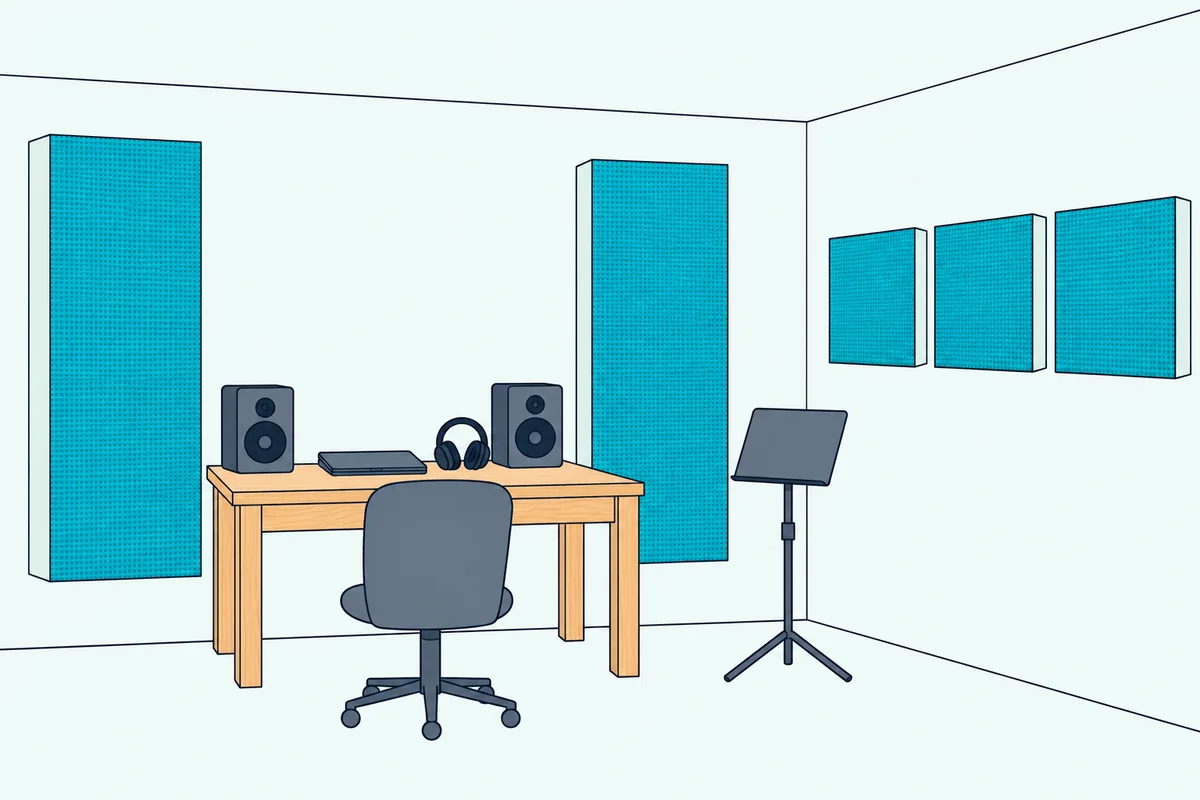
Panels should be your priority when the acoustic problems you’re experiencing relate to echo, reverb, or sound clarity — these issues originate from wall and ceiling reflections.
Recording and Podcasting
Any space where you record audio needs panels first, rugs second, because a microphone picks up the wall reflections as well as the floor’s.
Wall reflections create the “roomy” or “boxy” sound of a recording made in an untreated room.
First reflection points on walls behind and beside microphones require treatment. Ceiling clouds above recording positions matter almost as much — the ceiling panel guide covers cloud mounting techniques.
Home Theaters
Film dialogue clarity depends on controlling early reflections from walls and ceilings. The surround sound experience relies on your room not adding unwanted echo to the carefully mixed audio.
Home theaters take panels at the first reflection points, and Vicoustic notes that cinema rooms at home often add sound diffusers to reduce echoes and increase the sense of spaciousness. The home theater acoustic treatment guide covers best panel placement for surround systems.
Rugs help if you have hard floors, but they’re secondary to wall treatment.
Music Listening Rooms
Critical listening requires accurate sound reproduction without room coloration. Wall reflections smear stereo imaging and muddy frequency response.
Panels absorb those wall reflections.
What About Combining Both?
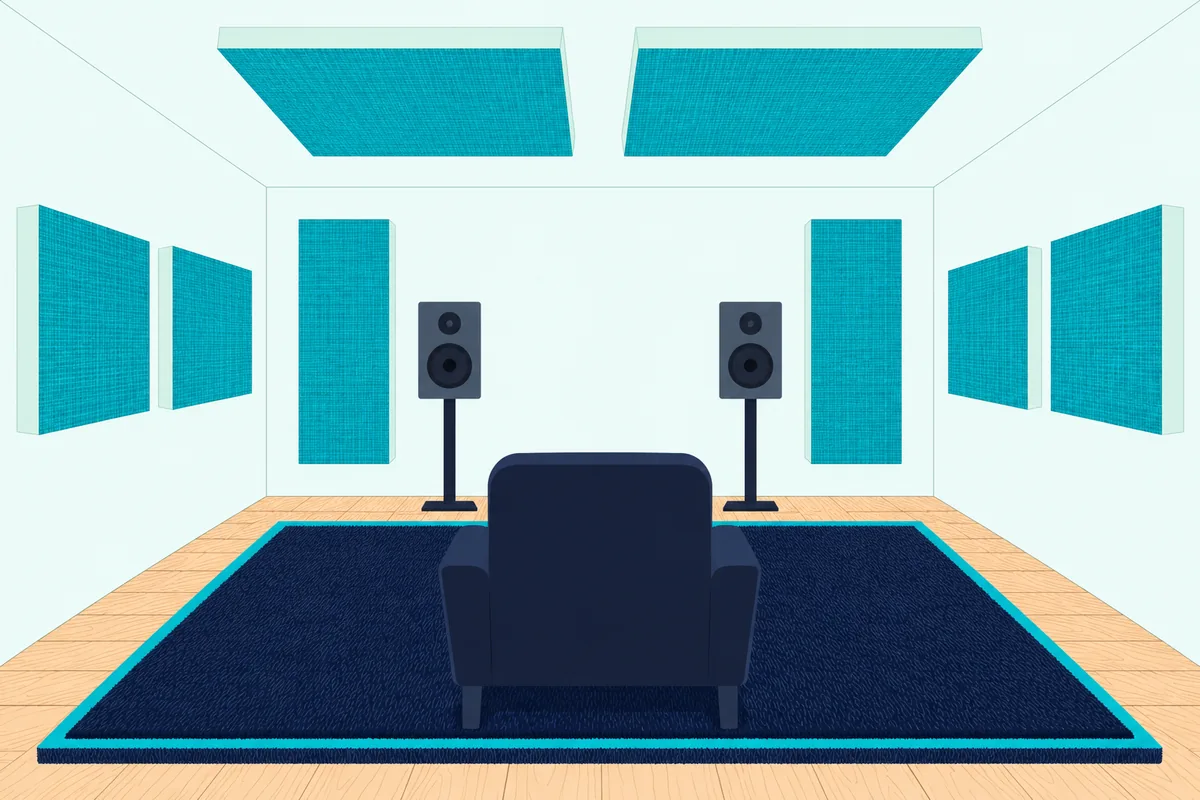
Each treats its own surface, and full treatment combines the two for your room.
The Ideal Approach
Start with your primary acoustic goal. If echo and reverb bother you most, panels come first.
If hard floor noise and harshness bother you most, rugs come first.
For complete room treatment, you’ll eventually want both. Panels handle walls and ceilings.
The installation guide covers every mounting method for getting panels up. Rugs handle floors.
For wall treatment, the BUBOS 4-Pack Fabric Acoustic Panels goes on the walls while an area rug covers the floor.
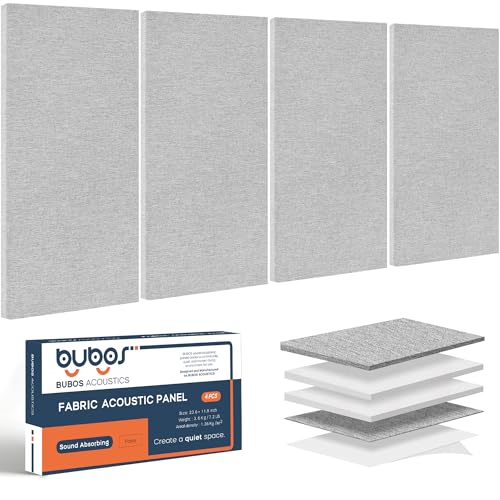
BUBOS 4-Pack Fabric Acoustic Panels
Coverage Recommendations
For wall treatment, focus on first reflection points first, then expand coverage based on remaining issues.
The panel quantity guide provides room-specific calculations.
For floor treatment, cover as much of the hard floor as the room allows. In the Carpet and Rug Institute’s tests, carpet over a cushion gave better NRCs than carpet laid on concrete.
Panels at the key reflection points and an area rug on the hard floor treat both surfaces.
Rugs vs Panels: Quick Comparison
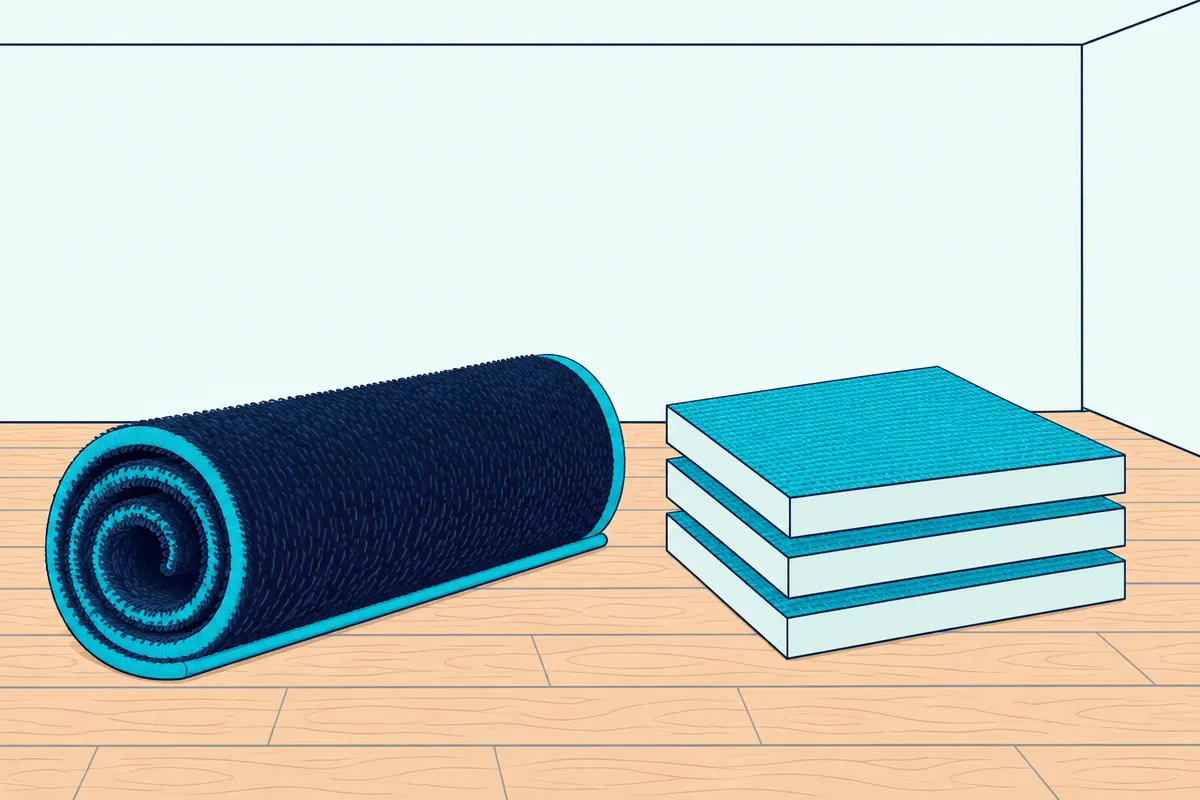
The table below covers the key differences.
| Factor | Rugs | Acoustic Panels |
|---|---|---|
| Primary Surface | Floors only | Walls and ceilings |
| NRC Rating | 0.15 to 0.55 for carpet on concrete (Carpet and Rug Institute) | 0.70 to 1.15 for Owens Corning 703 board, 1 to 4 inches |
| Frequency Range | Mostly high | Mid to high |
| Best For | Hard floor echo, footsteps | Room echo, recording, clarity |
| Aesthetic Integration | Natural in most rooms | Requires design consideration |
| Installation | Lay on floor | Mount on walls/ceiling |
| Complete Solution? | No — floors only | Partial — walls/ceiling only |
The NRCs differ: Owens Corning’s 703 board lists higher NRCs than the carpets the Carpet and Rug Institute tested, and by Auralex’s account a higher NRC means more sound is absorbed on average. For any room where sound quality matters, panels are the primary tool.
Rugs earn their place on hard floors, but as a complement to wall treatment, not a substitute.
Conclusion
Rugs and acoustic panels aren’t competing products — they’re complementary treatments for different parts of your room. Rugs handle floor reflections.
Panels handle walls and ceilings, across the mid and high frequencies.
For complete room treatment, you need both. If you can add only one at first, prioritize based on your specific problem: hard floor noise means rugs first; echo and reverb means panels first.
The best acoustic panels guide has specific recommendations when you’re ready to buy. Rugs help, but they can’t substitute for dedicated wall and ceiling treatment when you need meaningful acoustic improvement.
Frequently Asked Questions
Do Rugs Help With Room Echo?
Rugs reduce floor-bounce echo only — they can’t address wall and ceiling reflections where most echo originates. A rug helps hard-floor rooms sound less harsh but won’t solve noticeable echo problems alone.
Can I Hang a Rug Instead of Buying Panels?
Hanging a rug provides less absorption than panels. Rugs lack the thickness and density for effective mid-frequency absorption.
Owens Corning’s 703 board lists higher NRCs than the carpets the Carpet and Rug Institute tested.
What’s the Best Rug for Sound Absorption?
In the Carpet and Rug Institute’s tests, cut pile gave a greater NRC than loop pile of the same specification, and carpet over a hair cushion scored 0.10 to 0.20 higher than on bare concrete. Larger area rugs cover more of a hard floor.
How Many Panels Do I Need If I Have Rugs?
Rugs don’t reduce panel requirements — they treat different surfaces. Start with panels at the first reflection points, whatever the floor treatment.
The rug handles floors; panels handle walls.