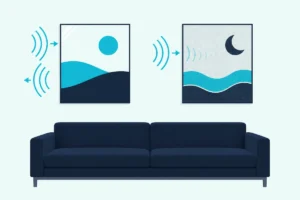
Acoustic panels ABSORB sound inside a room (reducing echo and reverb).
Products in this guide
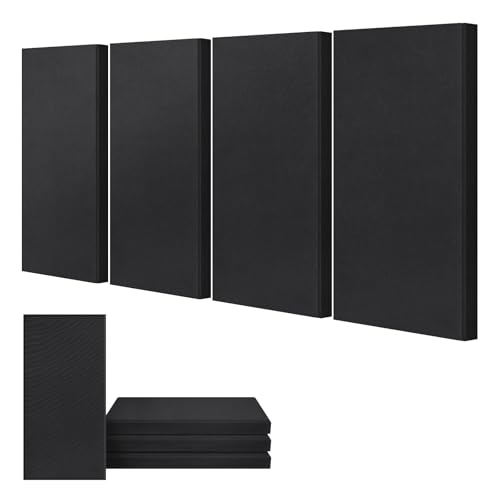
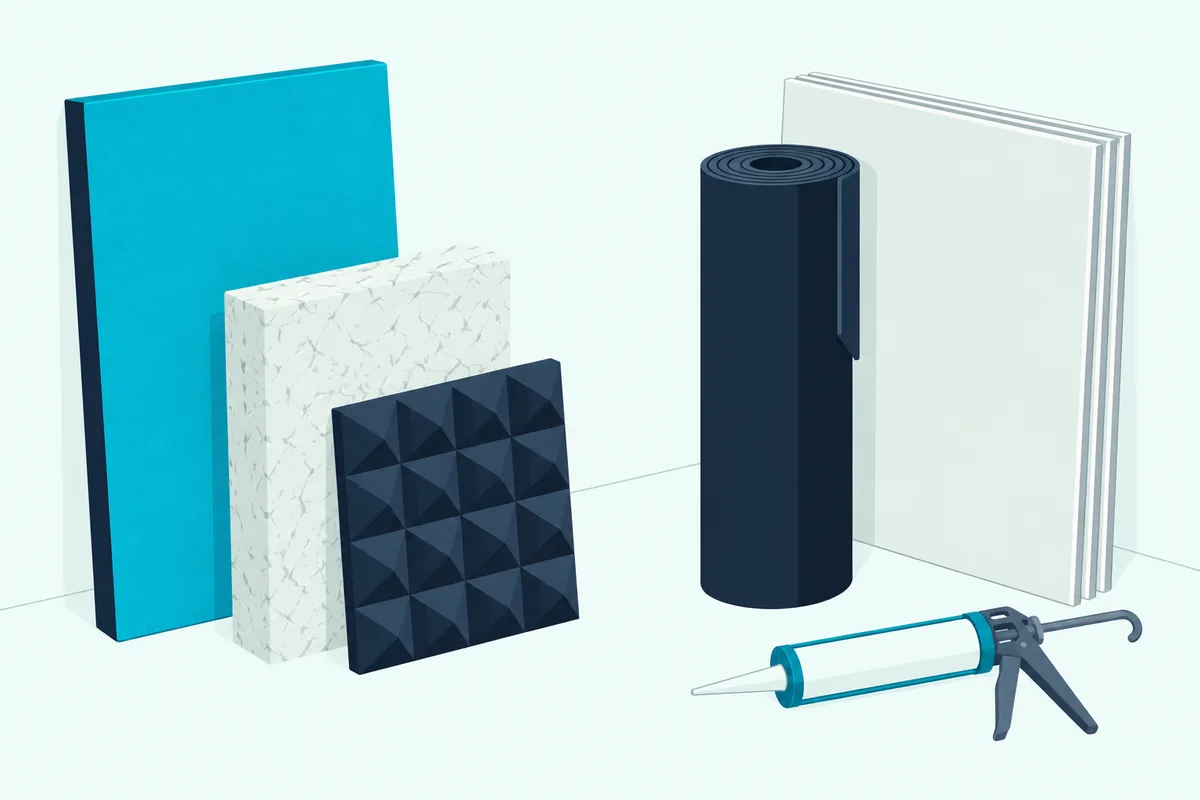
- True fiberglass core, 2 inches thick
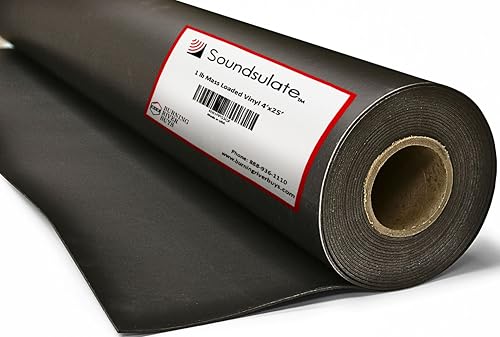
- Adds real mass to any wall assembly
- Flexible enough to cut and layer around outlets
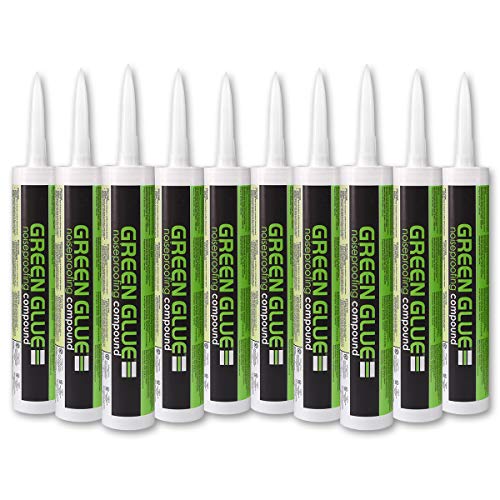
- Viscoelastic damping compound used between two drywall layers
- No measuring or troweling needed
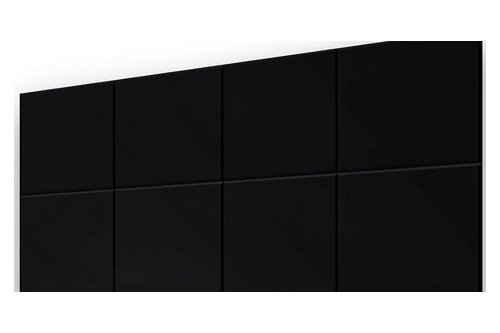
- 18 polyester fiber panels for echo control
Acoustic panels vs soundproofing turns on what Auralex calls one of the single biggest concepts to understand. Acoustic panels do not soundproof a room, and Auralex, which makes acoustic foam, says as much in its Acoustics 101: its foam is not going to soundproof your room.
If your neighbor’s bass is shaking your walls or traffic noise is ruining your recordings, acoustic panels won’t fix it. They solve a completely different problem, and that difference decides which one your room needs.
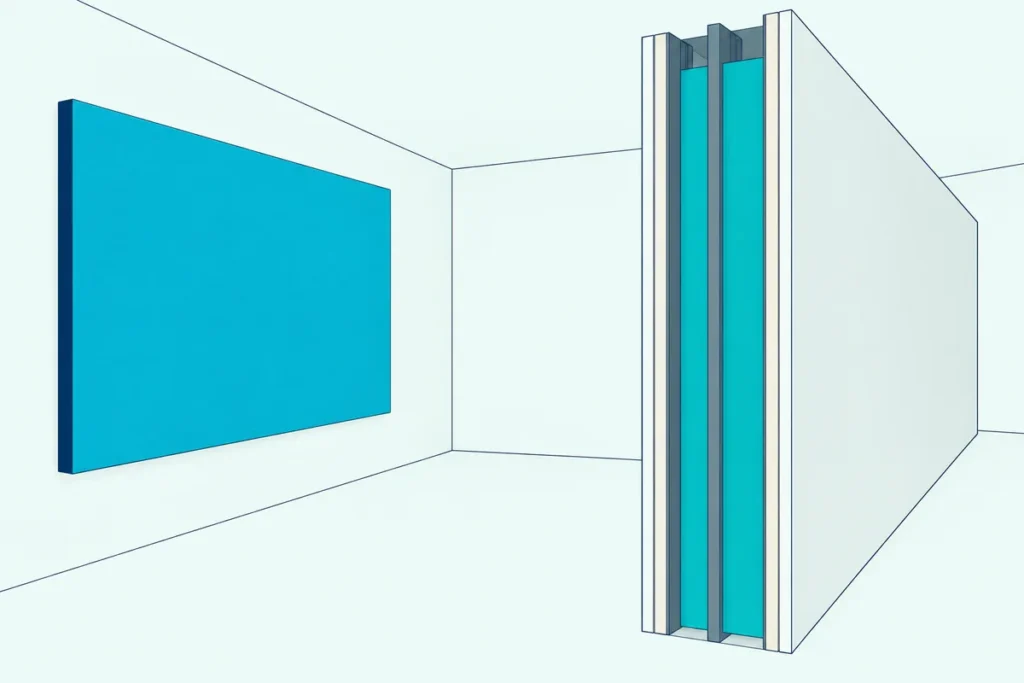
Below you’ll find exactly what each solution does and when you need which one.
Once you see how absorption and blocking work, you’ll know which one to buy.
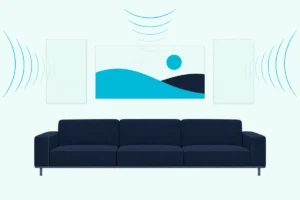
Soundproofing BLOCKS sound from entering or leaving a room (stopping noise transmission).
They’re completely different solutions for different problems. Panels can’t stop neighbor noise—only soundproofing can.
The descriptions come from the makers’ manuals and spec pages.
Every pick met Burton Acoustix’s rating, review and stock checks on 9 November 2026.
What’s the Difference Between Acoustic Panels and Soundproofing?
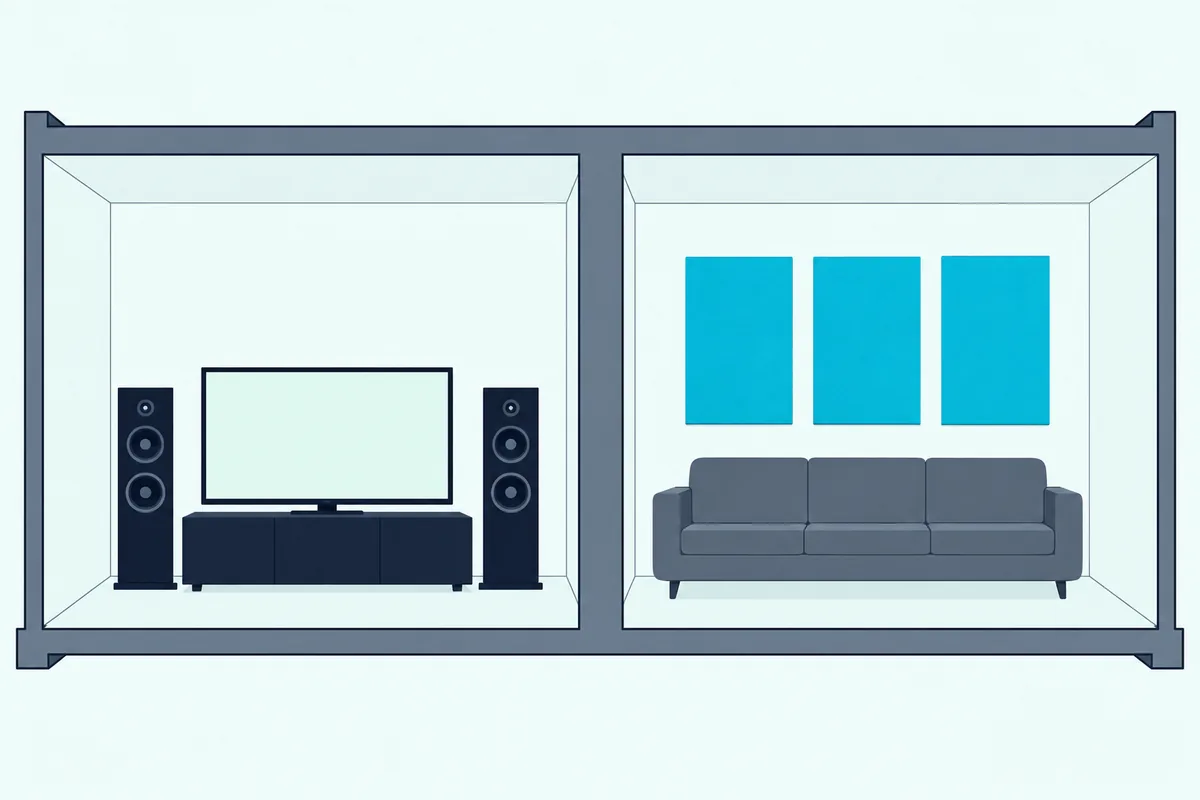
The split is absorption versus blocking: physics-level differences, not marketing categories.
Acoustic panels absorb sound waves that are already inside your room. Soundproofing blocks sound waves from passing through walls, floors, and ceilings.
One works within a space; the other works between spaces.
Why Do People Confuse Them?
Part of the confusion is that foam does a little of both: Auralex says acoustic foam contributes some sound isolating properties, mostly at high frequencies, but is not sufficient by itself to keep sound in or out of a room.
The confusion also stems from the word “sound” appearing in both terms.
But absorbing sound energy and blocking sound transmission require completely different approaches.
The real giveaway? Check the product specifications.
Genuine soundproofing materials list STC (Sound Transmission Class) ratings. Acoustic panels list NRC (Noise Reduction Coefficient) ratings.
Different metrics because they measure completely different things.
Which One Do You Need?
Ask yourself one question: where is the problem sound?
If the sound is inside your room—echo during calls, reverb in recordings, flutter between parallel walls—you need acoustic panels. They’ll absorb that excess sound energy and tighten up your room’s acoustics.
If the sound is coming from outside your room—neighbor’s TV, street traffic, your drums bothering the family—you need soundproofing. Panels won’t help because the sound isn’t bouncing around inside; it’s transmitting through your walls.
Some rooms need both, but they solve different problems. A recording studio might need soundproofing to keep external noise out AND acoustic panels to control the sound inside.
Neither can do the other’s job.
What Are Acoustic Panels?
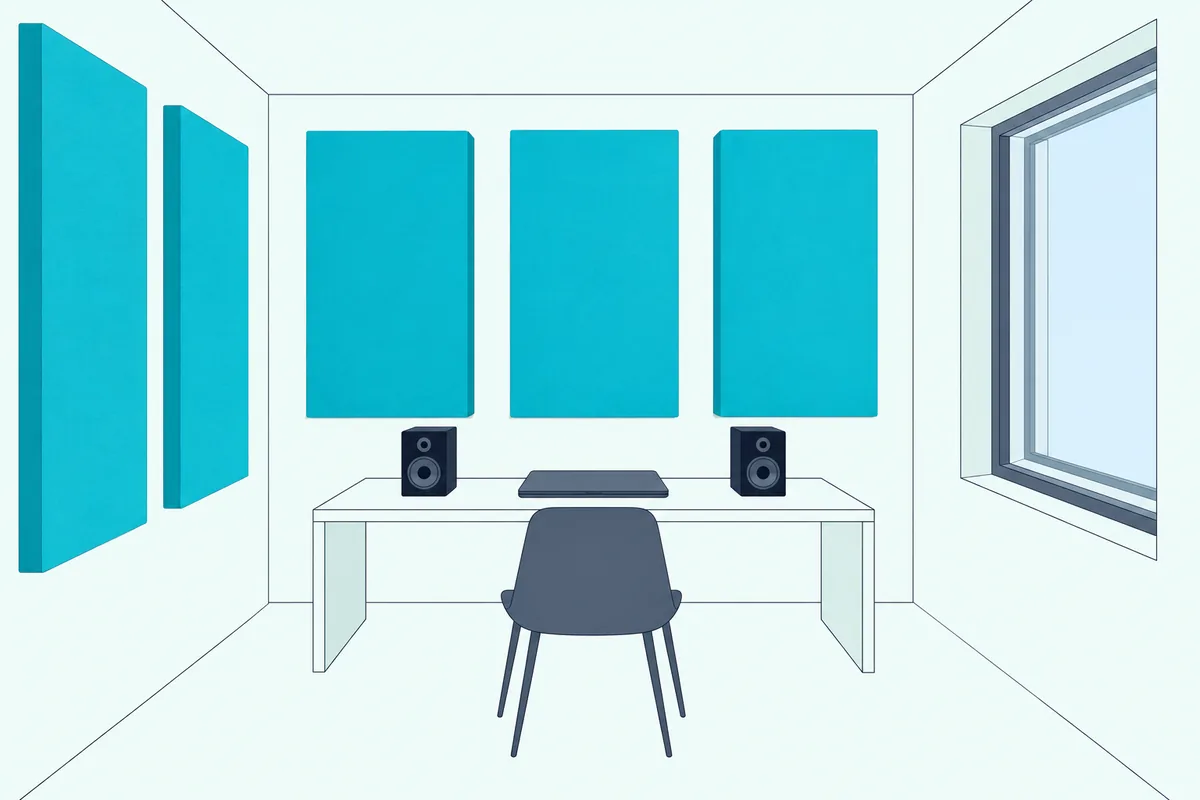
Acoustic panels work through a single mechanism: converting sound energy into heat. That mechanism is powerful within its lane — but it has a hard ceiling.
What Do Acoustic Panels Do?
Acoustic panels convert sound energy into heat through friction. When sound waves enter the porous material—whether fiberglass, mineral wool, or polyester fiber—the air movement creates friction against the fibers.
That friction dissipates the sound energy as tiny amounts of heat.
This process is called absorption. The sound wave enters the panel and doesn’t come back out (or comes back much weaker).
The industry measures panels using NRC ratings—Noise Reduction Coefficient.
Auralex’s Acoustics 101 defines a material’s NRC as the average of its absorption coefficients at 250, 500, 1000 and 2000 Hz, and notes that NRCs are not percentages: a higher number simply means more sound is absorbed on average.
Owens Corning lists its 703 fiberglass board, unfaced and placed against a solid backing, at NRC 0.70 at 1 inch thick and 1.00 at 2 inches. The UMIACOUSTICS Fiberglass Panels use fiberglass cores 2 inches thick.
UMIACOUSTICS Fiberglass Panels
That friction process explains why thickness matters. Thicker panels absorb lower frequencies because those longer wavelengths need more material to fully dissipate.
A 2-inch panel handles speech frequencies well: on Owens Corning’s sheet, unfaced 2-inch 703 absorbs 1.14 at 500 Hz and 1.16 at 1000 Hz, but 0.15 at 125 Hz, against 0.56 at 4 inches.
What Problems Do They Solve?
That absorption process sounds technical, but its job is simple: acoustic panels control sound within a room.
They reduce echo—that audible repetition you hear in empty rooms with hard surfaces.
They tame reverb—the sustained “wash” of sound that makes rooms feel boomy or muddy.
Flutter echo is another target. This happens when sound bounces rapidly between two parallel surfaces, creating a distinctive ringing tone.
Panels on one or both surfaces break up that reflection pattern.
For home offices, panels improve speech clarity on video calls. For music rooms, they let you hear your instrument clearly without room coloration.
For a home theater room, they tighten up dialogue and prevent bass from becoming a muddy mess.
The common thread: all these problems involve sound that’s already in the room behaving badly. Panels give you control over that behavior.
What Problems Can’t They Solve?
All those improvements happen inside the room — and that’s exactly where panels hit their ceiling. Acoustic panels cannot stop sound from passing through walls.
Sound transmission is a mass and isolation problem, not an absorption problem.
If you can hear your neighbor’s television, panels won’t help. That sound is transmitting through the shared wall structure—through the drywall, studs, and air gaps.
Putting foam on your side doesn’t block that transmission path.
Similarly, panels won’t contain your sound. If you’re a drummer worried about complaints, panels inside your room will make your drums sound better to you, but they won’t reduce what your neighbors hear.
The sound energy still hits your walls and transmits through.
That gap is why the phrase “soundproof panels” misleads: it suggests foam can make an apartment sound-isolated.
It won’t—and can’t, based on how absorption physics work.
What Is Soundproofing?
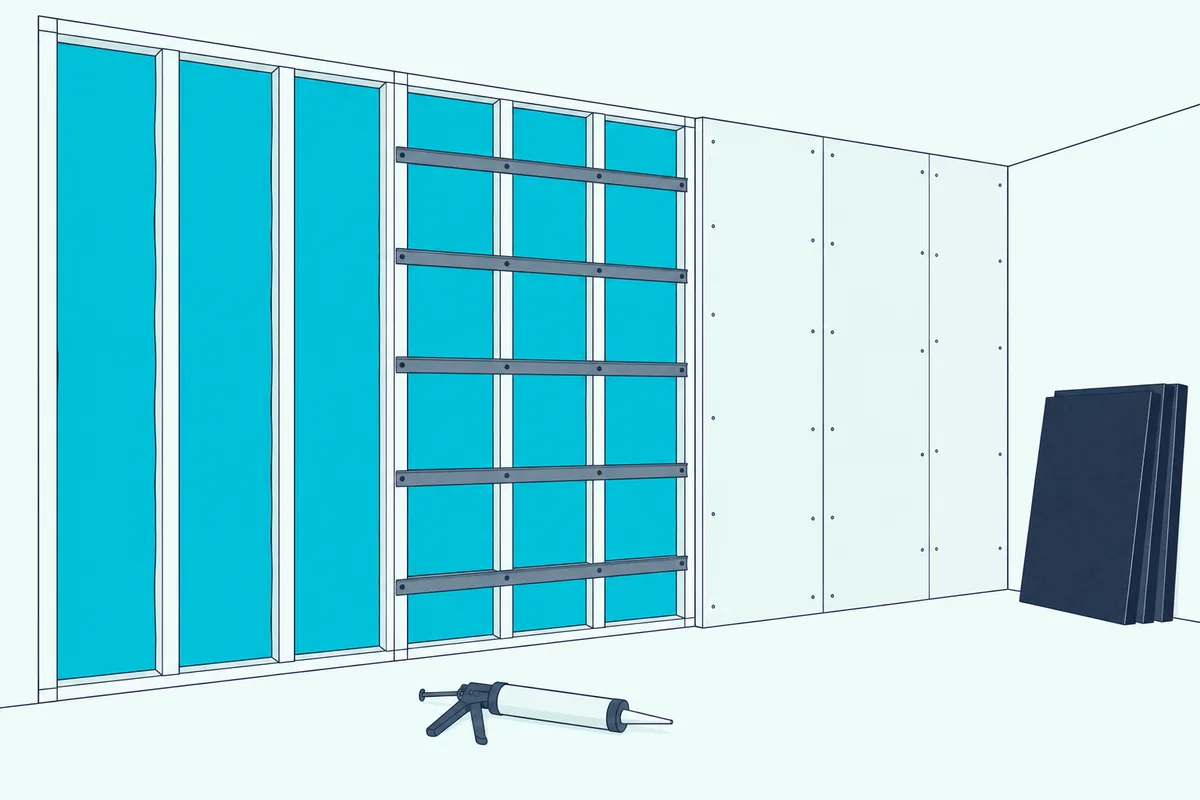
Soundproofing operates on completely different physics — mass and isolation instead of absorption. The process is heavier and more invasive for a reason.
What Does Soundproofing Do?
Soundproofing prevents sound from traveling from one space to another. This requires stopping the sound wave’s energy from passing through the barrier between spaces—your walls, floor, ceiling, doors, and windows.
Sound transmission happens through two mechanisms: airborne and structure-borne. Airborne sound travels through the air and passes through gaps and thin materials.
Structure-borne sound travels through solid connections—vibrations that move through studs, joists, and concrete.
Effective soundproofing addresses both. It adds mass to block airborne sound, decouples structures to interrupt vibration paths, and seals gaps where sound can leak through.
The key measurement is STC—Sound Transmission Class. In the National Bureau of Standards’ Handbook 119, a wall rated STC 50 leaves shouting barely audible.
The same handbook puts most interior walls in a typical home or apartment at STC 30 to 35.
How Is Soundproofing Different from Sound Absorption?
That heavy-duty approach is the opposite of what panels do. Absorption lets sound in and converts it to heat.
Soundproofing does the opposite — it reflects or blocks sound from entering at all.
Think of it this way: a sponge absorbs water that lands on it. A plastic sheet blocks water from passing through.
Both deal with water, but through completely different mechanisms.
Absorption converts sound energy to heat inside the material. Blocking reflects or stops sound energy at the surface.
The sound wave either bounces back toward the source or gets stopped by mass it can’t move.
This is why you can’t substitute one for the other. Covering your wall with the best acoustic panels in the world won’t add the mass needed to block sound transmission.
The physics just don’t work that way.
Why Does Soundproofing Take Construction Work?
Effective soundproofing requires construction-level intervention.
You’re adding mass, building isolated structures, and sealing every possible leak path.
This isn’t a weekend project with stick-on products.
Products like Soundsulate Mass Loaded Vinyl are just one component: you also need resilient channels, multiple drywall layers, acoustic caulk, and specialized door and window treatments.
Soundsulate Mass Loaded Vinyl
Full soundproofing often means removing existing drywall, building new wall assemblies, and reinstalling everything.
Even “simpler” solutions like adding a second drywall layer require skilled installation.
What Is the Science Behind Absorption vs Blocking?
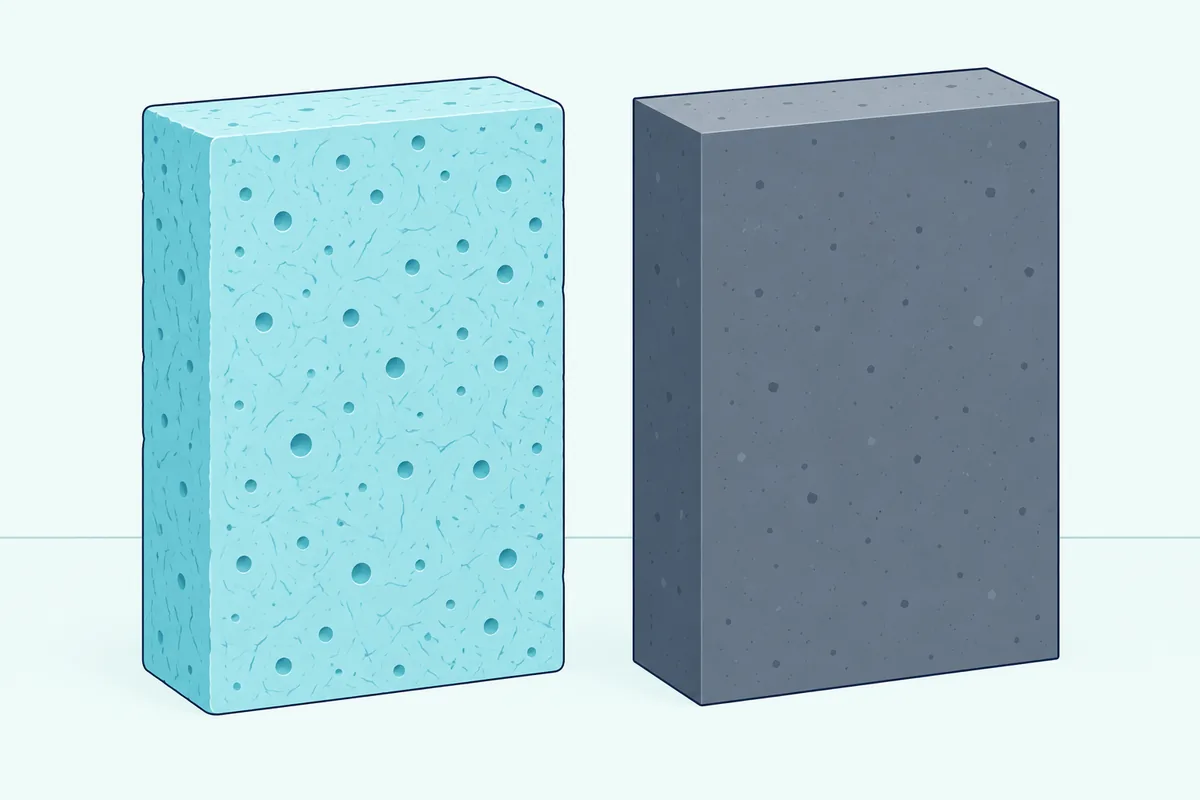
Absorption and blocking rely on opposite material properties — porous versus dense, lightweight versus heavy. The physics behind each explains why swapping one for the other never works.
How Does Sound Absorption Work?
Sound waves are pressure variations traveling through air. When these waves encounter a porous material, the air molecules carrying the wave enter the material’s structure.
Inside the porous matrix—fiberglass fibers, mineral wool strands, or polyester batting—the air movement creates friction. That friction converts kinetic energy (sound) into thermal energy (heat).
The amount is tiny, but it’s enough to measurably reduce the reflected sound.
The absorption coefficient depends on material density, thickness, and mounting. A denser material creates more friction.
A thicker material allows lower frequencies (longer wavelengths) to fully enter and dissipate.
Mounting changes the figures too: Auralex says absorption numbers for a material laid on the test floor (A mounting) and for one spaced several inches off it are “apples and oranges,” so compare numbers from tests that used the same layout.
That placement factor is why good positioning matters alongside panel quality.
How Does Sound Blocking Work?
Blocking takes the opposite approach — instead of letting sound in, it keeps sound out. Heavy materials are harder for sound waves to vibrate, so they transmit less energy through to the other side.
The National Bureau of Standards’ Handbook 119 puts the gain for a single wall at about 5 dB of sound insulation for each doubling of its weight. This is why adding layers of drywall helps—you’re adding mass that the sound must move to transmit through.
Damping compounds take that mass strategy further. Green Glue Noiseproofing Compound goes between two drywall layers, and in Green Glue’s brochure a wood-stud wall with two layers of 5/8-inch drywall on each side tests at STC 45 with no glue and STC 56 with 2 tubes of the compound per 4 by 8 foot area.
Green Glue Noiseproofing Compound
Decoupling adds another layer of effectiveness. When you break the physical connection between wall surfaces—using resilient channels, staggered studs, or completely separate wall structures—you interrupt the vibration path.
Sound can’t easily travel through something it’s not connected to.
Sealing prevents flanking paths. Sound finds the path of least resistance.
Handbook 119 names back-to-back electrical outlets, openings around pipes and ducts, and cracks at a wall’s ceiling and floor edges as common causes of noise leakage, and says the sound insulation of many walls can be improved simply by eliminating those leaks. Complete soundproofing means closing every possible leak.
Can One Do the Other’s Job?
Given how differently absorption and blocking work at the material level, the answer is predictable. No — the physics are fundamentally incompatible for cross-purpose use.
Absorptive materials are light and porous by design. They need to let sound in to absorb it.
But “letting sound in” is exactly what you don’t want for blocking. Light materials vibrate easily and transmit sound readily.
Heavy blocking materials reflect sound instead of absorbing it. A concrete wall blocks sound transmission effectively but creates terrible room acoustics—sound bounces off it without absorption, creating harsh echoes and reverb.
Some materials provide minor amounts of both. ROCKWOOL says its Safe’n’Sound stone wool batt, made for interior partitions, absorbs sound and reduces noise traveling from one room to another, while its rigid Comfortboard 80 board is designed for exterior continuous insulation.
But the batt isn’t substituting for either—it’s a complementary component in a larger system.
When to Use Acoustic Panels

Acoustic panels are the right tool when the problem sound is already inside your room. The trick is knowing where they shine, and recognizing the situations where they’re the wrong tool.
Where Do Acoustic Panels Make the Biggest Difference?
Recording studios need acoustic panels to control room sound. Without treatment, reflections from walls color your recordings—microphones pick up both the direct sound and delayed reflections.
Panels at first reflection points eliminate this coloration.
Home offices benefit from panels for video calls.
Home theaters use panels to improve dialogue intelligibility and tighten bass response. Without treatment, sound bounces create comb filtering effects that muddy the audio.
Panels on side walls and rear walls clean up the sound field.
Podcast studios, streaming setups, and gaming rooms all share similar needs. Any space where you’re producing or consuming audio benefits from controlled acoustics.
When Are Panels the Wrong Solution?
Panels fail when the problem is noise transmission. If you’re trying to stop sound from leaving your room or entering from outside, panels are the wrong tool.
They’re also wrong for bass-heavy problems. Owens Corning’s sheet starts at 125 Hz, where unfaced 2-inch 703 absorbs 0.15, and gives no figure below it.
You’d need very thick broadband absorbers or bass traps instead of panels.
Panels can’t fix fundamental room shape problems either. A room with severe flutter echo between parallel walls needs treatment, but if the room dimensions create standing wave problems, panels alone won’t solve it.
You might need diffusion or room layout changes.
Finally, panels won’t help if you simply need less volume. If your home theater is too loud, turning it down is free.
Panels control sound quality, not quantity.
When Should You Use Soundproofing?
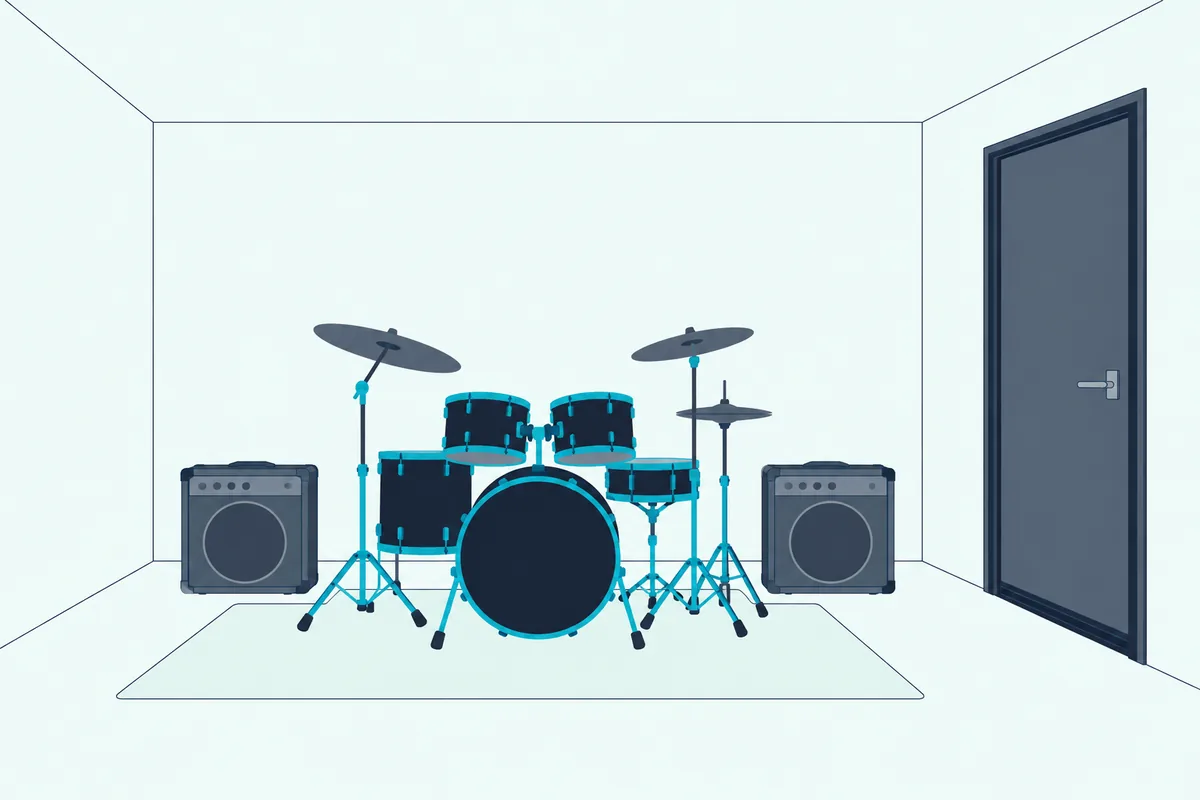
Soundproofing becomes necessary when sound needs to stay in or stay out — a fundamentally different problem than echo control. It is construction work, so knowing when it’s needed matters.
Where Does Soundproofing Make the Biggest Difference?
Apartment dwellers dealing with neighbor noise need soundproofing. Whether it’s footsteps from above, voices through walls, or bass from next door, the sound is transmitting through building structure.
Only soundproofing addresses this.
Drummers, bands, and loud musicians need soundproofing to contain their volume. Acoustic panels will improve how your playing sounds to you, but they won’t stop the sound from reaching your neighbors.
True isolation requires soundproofed walls.
Home theater enthusiasts who want cinema-level volume without disturbing the household need soundproofing. You can’t play action scenes at full volume if that sound transmits throughout your house.
Any situation where sound needs to stay in or stay out requires soundproofing, not just acoustic treatment.
When Is Soundproofing Overkill?
If your problem is echo or reverb inside your room, soundproofing doesn’t address it. You don’t need to block sound from leaving; you need to control how it behaves while it’s there.
Panels are the tool for that.
For modest noise reduction, partial solutions may work. Adding mass-loaded vinyl to one wall won’t soundproof a room, but it might take the edge off.
Full soundproofing is for when you need serious isolation.
Soundproofing is also overkill if you rent and can’t modify the structure. You’d be building improvements you’ll leave behind.
In rental situations, focus on panels for acoustic improvement and accept that complete sound isolation isn’t practical.
How Do Acoustic Panels and Soundproofing Compare Side by Side?
This table summarizes the core differences at a glance:
| Factor | Acoustic Panels | Soundproofing |
|---|---|---|
| Primary Function | Absorb sound inside room | Block sound between rooms |
| Solves | Echo, reverb, flutter | Noise transmission |
| Doesn’t Solve | Neighbor noise, containment | Room acoustics, echo |
| Key Metric | NRC | STC |
| Installation | DIY-friendly | Usually requires contractors |
| Renter-Friendly | Yes (removable) | No (permanent modification) |
| Materials | Fiberglass, mineral wool, foam | MLV, drywall, clips, caulk |
The installation difference deserves emphasis. Quality acoustic panels are DIY-friendly and removable.
Soundproofing a room properly requires construction work you may not be able to do yourself.
Can Acoustic Panels Stop Noise from Neighbors?
No: panels absorb sound inside the room, and Auralex says acoustic foam is not sufficient by itself to keep sound in or out of a room.
Why Do Panels Seem to Block Noise?
Several things feed this myth.
The visual similarity doesn’t help. Both acoustic panels and legitimate soundproofing materials mount on walls.
If you don’t understand the physics, they look like they should do the same thing.
Early results also mislead. When you add panels to a room, it sounds different—less echoey, more controlled.
The room sounding better to you doesn’t mean the neighbors hear less.
What Blocks External Noise?
None of that changes the physics. Mass is the primary solution.
Heavy materials—multiple layers of drywall, mass loaded vinyl, concrete—resist the vibration that sound transmission requires.
The more mass, the more sound gets blocked.
Decoupling prevents sound from traveling through structural connections. Resilient channels, isolation clips, and staggered stud walls all break the vibration path.
Sound can’t easily cross a gap.
Sealing closes the remaining paths. Acoustic caulk around edges, solid-core doors with tight seals, and window treatments all address flanking paths where sound sneaks around your soundproofed wall.
None of these involve absorption. The goal is blocking sound from moving through, not absorbing sound that’s already arrived.
Completely different physics, completely different materials.
Can You Use Both Together?
Panels and soundproofing solve different problems, but many spaces genuinely need both working together. The key is knowing which one to tackle first, because getting the order wrong means redoing work.
When Does It Make Sense to Combine?
Professional recording studios combine both because they need complete control. Soundproofing isolates the studio from external noise and keeps loud sessions from bothering neighbors.
Acoustic panels then control the sound inside the isolated space.
Home studios face similar needs at smaller scale. If you’re recording vocals and can hear traffic outside, you need some soundproofing.
But you also need panels to prevent room reflections from coloring your recordings.
Drum rooms and band rehearsal spaces represent extreme cases. The volume levels demand serious soundproofing for containment.
But playing drums in an untreated concrete bunker sounds terrible—you need acoustic treatment to make the space usable.
Even rooms with both echo and bass issues benefit from combined treatment. Soundproofing can reduce noise from adjacent rooms or outside.
Panels can improve speech clarity for video calls or create a more peaceful acoustic environment.
Which Should You Do First?
Once you’ve decided to combine both, the order matters. Soundproofing must come first. You can’t add soundproofing materials behind panels that are already installed without removing them first.
More practically: soundproofing is construction work. Panels are finishing touches.
You build the structure, then you treat the room. Doing it backward means taking the panels down to build behind them.
If you can only tackle one, decide which problem matters more. External noise bothering you?
Start with soundproofing; you can add panels later. Room acoustics the main issue?
Start with panels and accept that some external noise will persist.
If the problem is echo or reverb inside the room, panels alone are the tool.
Full soundproofing makes sense only when noise transmission is genuinely problematic.
Which Solution Do You Need?
The answer depends entirely on your problem. Use this decision framework:
Choose acoustic panels if your room has echo, reverb, or flutter — if video calls sound boomy, recordings pick up room coloration, or you want better sound quality inside the room.
Choose soundproofing if neighbor noise bothers you, you need to contain loud sound, external traffic is audible, or sound leaking out causes problems.
Choose both if you need isolation AND good room sound, you’re building a serious studio, or you want complete treatment.
The acoustic panels guide has specific picks for both jobs, the panels that absorb echo and the layers that block noise. The NRC rating guide and panel quantity calculator help dial in the details.
Conclusion
The single test that matters: clap your hands in the room. If you hear ringing, flutter, or a long tail of reverb, acoustic panels fix that. If you hear your neighbor’s TV through the wall, no amount of panels will help — that’s a soundproofing problem.
Panels need none of the construction work soundproofing demands.
Foam panels don’t block noise, so check the product specs: NRC rating means absorption, STC rating means blocking.
If the listing only shows NRC, it only absorbs.
Start with the clap test and match the rating to the problem.
Frequently Asked Questions
Do Foam Panels Block Sound?
No. Foam panels—the pyramid and wedge shapes sold everywhere—are acoustic absorbers with modest NRC ratings.
They absorb some high-frequency sound inside your room, and Auralex says foam is not sufficient by itself to keep sound in or out of a room.
Don’t confuse foam panels with soundproofing. Check for NRC ratings (absorption) versus STC ratings (blocking).
Foam only has NRC ratings because blocking isn’t what it does.
Which Is Cheaper: Panels or Soundproofing?
Panels are finished products you hang yourself, from sets like the 18-Pack Acoustic Panels to fiberglass panels in several sizes and materials.
Soundproofing requires construction materials and often professional labor. A single wall treatment with MLV, resilient channels, and additional drywall is a building job rather than a weekend project.
Do Home Studios Need Both?
It depends on your situation. If you’re recording in a quiet house with no external noise issues, panels alone may suffice.
If external noise intrudes on recordings or you need to play loud without disturbing others, you need both. The soundproofing handles isolation; the panels handle room sound.
Neither substitutes for the other.
The breakdown of how acoustic panels work covers the physics in more detail.