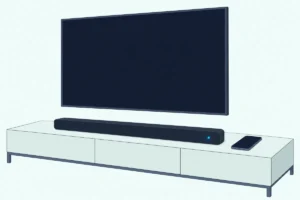
Every current Polk system ships with a wireless subwoofer, while Bose sells its bass modules separately and builds Alexa into its Wi-Fi bars.
Products in this guide
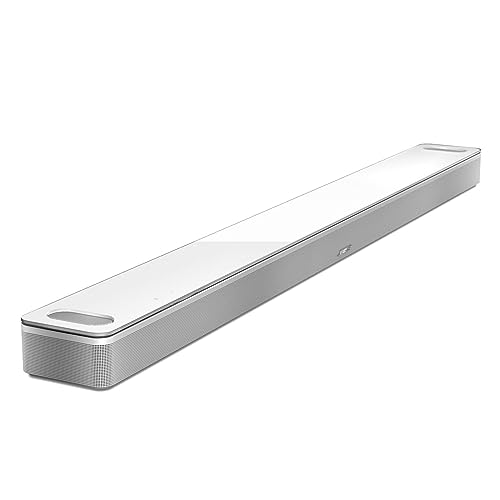
- ADAPTiQ room calibration, with the headset in the box
- Alexa built in, plus AirPlay 2, Chromecast and Spotify Connect
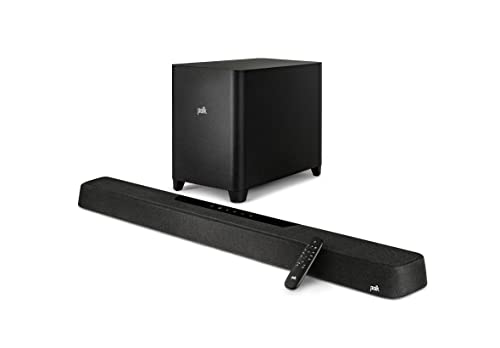
- A 10-inch wireless subwoofer in the box
- Three 4K HDMI inputs, with Dolby Atmos and DTS:X
Settling a Bose vs Polk soundbar choice on reputation misses the real split: every current Polk system ships with a wireless subwoofer, while Bose sells its bass modules separately and builds Alexa into its Wi-Fi bars.
Choose on the badge and the gaps show up at home, when the bar has no input for your console or needs an eARC port your TV lacks.

Match the range to your TV’s ports, your room and the extras you want, and either maker offers a documented path from a simple TV upgrade to up-firing Dolby Atmos.
The short answer and two tables come first, then the bars paired by size, from Bose’s TV Speaker and Polk’s Signa S2 up to the Smart Ultra and MagniFi Max AX.
By the end, you’ll know which bar fits your screen and what each choice leaves you to add later.
Is Polk Better Than Bose for a Soundbar?
That subwoofer is the first of several differences you can check in each maker’s own documents. Polk isn’t better than Bose across the board: it includes a wireless subwoofer with every current system and gives its MagniFi bars DTS:X and its two biggest systems three HDMI inputs, while Bose builds Alexa into its three Wi-Fi bars, runs them from the Bose app and adds room calibration to its two largest.
Bose’s home theater range lists five soundbars: the TV Speaker, the TV Speaker (2nd Gen), the Smart Soundbar, the Smart Ultra Soundbar and the Lifestyle Ultra Soundbar. Polk Audio’s sound bar page lists the Signa S2, S3 and S4 and the MagniFi Mini AX, Max AX and Max AX SR, plus the S2D and S4D in online-exclusive finishes.
So the choice comes down to three questions: do you want the subwoofer in the box, do your sources plug into the TV or the bar, and how much do you want to run by voice and app?
The descriptions come from the makers’ manuals and spec pages. If Klipsch is also on your shortlist, our look at how Polk’s bars compare with Klipsch’s covers that pairing.
How Does a Bose vs Polk Soundbar Compare Spec by Spec?
Those three questions map onto a short list of hardware and software differences. A Bose vs Polk soundbar comparison comes down to the subwoofer, HDMI inputs, DTS:X, voice control, the app and room calibration, as the table shows brand by brand.
| Feature | Polk: Signa S2, S3, S4; MagniFi Mini AX, Max AX, Max AX SR | Bose: TV Speaker, Smart Soundbar, Smart Ultra, Lifestyle Ultra |
|---|---|---|
| Subwoofer in the box | Yes, wireless, 5.25 to 10 in | No; Bass Module 500 or 700, or the Lifestyle Ultra Subwoofer, sold separately |
| Up-firing height drivers | Signa S4 and the two 45-inch MagniFi systems | Smart Soundbar, Smart Ultra, Lifestyle Ultra |
| Dolby Atmos | Signa S4 and all three MagniFi bars | Smart Soundbar, Smart Ultra, Lifestyle Ultra |
| DTS:X | MagniFi bars | Not named in Bose’s owner’s guides |
| HDMI inputs for other sources | Three on the two 45-inch MagniFi systems | None; sources connect to the TV |
| TV connection | HDMI ARC or eARC, and optical, on every bar | HDMI eARC or ARC; optical on all but the Lifestyle Ultra |
| Wi-Fi streaming | Signa S3 (Chromecast) and the MagniFi bars (Chromecast, AirPlay 2, Spotify Connect) | Smart Soundbar, Smart Ultra, Lifestyle Ultra (AirPlay 2, Chromecast or Google Cast, Spotify Connect) |
| Built-in voice assistant | None; the Wi-Fi bars take commands from a separate Echo or Google device | Alexa built into the three Wi-Fi bars |
| Setup app | Google Home on the Wi-Fi bars, plus AirPlay on the MagniFi bars and the Alexa app on the 45-inch ones | Bose app, except on the TV Speaker |
| Room calibration | None in Polk’s documents | ADAPTiQ (Smart Ultra), CustomTune (Lifestyle Ultra) |
| Rear speakers | Polk SR2 for the MagniFi bars; two in the box with the Max AX SR | Bose surround speakers for the Smart bars; Lifestyle Ultra Speakers for the Lifestyle Ultra |
| Warranty | 1 year electronics, 3 years drivers (the 45-inch MagniFi systems) | 1-year Bose limited warranty |
Read down the Polk column and its case is about what comes in the box and what plugs into it. Bose’s column is about the software around the bar, from Alexa and one app to calibration that measures sound where you sit.
Which Bose and Polk Soundbars Match Up by Size?
That brand table hides how far apart the individual bars are. The two ranges pair off by role rather than by length, with Bose’s bars running from 23.38 to 43.28 inches wide and Polk’s from 14.4 to 45 inches.
| Bar | Width | Drivers or speakers, by the maker’s count | Subwoofer in the box | Dolby Atmos |
|---|---|---|---|---|
| Polk MagniFi Mini AX | 14.4 in | 5: two tweeters and three mids | Yes, 5 x 7 in woofer | Yes, with no up-firing drivers listed |
| Bose TV Speaker | 23.38 in | 3 speakers | No | No |
| Bose Smart Soundbar | 27.34 in | 5 speakers and a center tweeter | No | Yes |
| Polk Signa S2 and S3 | 35.43 in | 4: two oval drivers and two tweeters | Yes, 5.25 in | No |
| Bose Smart Ultra | 41.14 in | 9 speakers and a center tweeter | No | Yes |
| Polk Signa S4 | 41.2 in | 7, two of them up-firing | Yes, 5.9 in | Yes, over HDMI eARC |
| Bose Lifestyle Ultra | 43.28 in | 6 full-range, a center tweeter and 2 PhaseGuide | No | Yes |
| Polk MagniFi Max AX and Max AX SR | 45 in | 11, two of them up-firing | Yes, 10 in | Yes |
Bose also suggests a room for three of its bars: 8 x 8 ft for the TV Speaker, 10 x 12 ft for the Smart Soundbar and 12 x 14 ft for the Smart Ultra. Polk gives no room sizes, and its buying guide says to start with a bar smaller than or the same width as your TV.
Measure the screen before anything else. A 43-inch TV is about 37.5 inches wide, a 50-inch about 43.6 and a 55-inch about 47.9, so the 41-inch Signa S4 and Smart Ultra fit under a 50-inch set, while Polk’s 45-inch flagship wants a 55-inch one.
How Does the Bose TV Speaker Compare With Polk’s Signa S2 and S4?
The smallest pairing in that table is the one most shoppers start with. The TV Speaker is the shortest and simplest of the three, a 23.38-inch bar with three speakers and no subwoofer, while the Polk Audio Signa S2 is a 35.43-inch bar with a 5.25-inch wireless subwoofer and the Signa S4 adds up-firing drivers for Dolby Atmos.

Bose’s TV Speaker connects by optical, with the cable in the box, or by HDMI ARC with a cable you supply. Its remote has Bluetooth, bass and Dialogue mode buttons, and Bose’s FAQ says it takes a Bass Module 500 or 700 by wire but no surround speakers and no app.
Polk’s Signa S2 info sheet lists HDMI ARC, optical, a 3.5 mm input and Bluetooth, with HDMI and optical cables in the box and Dolby Digital decoding. Polk says its low profile, 2.15 inches in the spec table, won’t block the TV’s bottom edge or its IR remote sensor.
The Signa S4 steps up with two tweeters, two racetrack mids, a center driver and two 2.6-inch elevation drivers in a bar 41.2 inches wide. Polk’s product page says its Atmos requires an HDMI eARC connection, and like the S2 it has no Wi-Fi.
Bose’s TV Speaker (2nd Gen) keeps the formula, with an HDMI cable in the box and no voice assistant, and our comparison of the TV Speaker against Bose’s smart bars covers what stepping up adds. Under a 43-inch TV, about 37.5 inches across, the TV Speaker and the S2 both fit, while the S4 overhangs each side by almost two inches.
Which Is Better, the Bose Smart Soundbar or Polk Signa S4?
One step up that ladder, Bose’s answer to the Signa S4 is its mid-size Smart Soundbar. The Smart Soundbar is the better fit if you want Wi-Fi streaming, built-in Alexa and a 27.34-inch bar, while the Signa S4 is the better fit if you want a subwoofer in the box and can give it 41.2 inches of shelf.
Both bars use up-firing drivers for Dolby Atmos. Bose’s Smart Soundbar page describes five speakers and a center tweeter, plus TrueSpace processing that upmixes stereo and 5.1 content, and its owner’s guide sends Atmos through the TV’s HDMI eARC or ARC port.
Polk’s Signa S4 owner’s manual lists Linear PCM, Dolby Digital, Dolby Digital Plus, Dolby TrueHD and Dolby Atmos, with no DTS. Bose’s Smart Soundbar guide doesn’t name DTS either, so if DTS matters to you, Polk’s MagniFi bars are the ones that list it.
Streaming is the sharpest split. The Smart Soundbar plays over Wi-Fi with AirPlay 2, Chromecast built-in and Spotify Connect, while the Signa S4 streams over Bluetooth only.
Dialogue tools differ too. The Smart Soundbar has AI Dialogue Mode in the Bose app and Personal Surround, which turns Bose Ultra Open Earbuds into rear speakers for one listener, while the S4 has three VoiceAdjust buttons on its remote.
Growth is the last difference. The Smart Soundbar takes Bose’s Bass Module 500 or 700 and its surround speakers, while Polk’s Signa documents list no surround speakers and the MagniFi Max AX in our 5.1 soundbar guide takes Polk’s SR2 rears, sold separately.
How Does the Polk MagniFi Mini AX Compare With the Bose 600?
Those Signa limits are where Polk’s smallest bar comes in, and it’s often set against Bose’s older Smart Soundbar 600. The 14.4-inch MagniFi Mini AX brings Wi-Fi, DTS:X and a subwoofer in the box, while the 600 and the Smart Soundbar that Bose now sells in its place bring up-firing drivers and built-in Alexa.
Bose says the Smart Soundbar is similar in many ways to the Smart Soundbar 600, adding AI Dialogue Mode and Personal Surround, so a Mini AX vs Bose 600 question mostly carries over to today’s Smart Soundbar. Polk’s MagniFi Mini AX quick start guide says an optical connection doesn’t support Dolby Atmos or DTS:X, so use HDMI eARC.
Its info sheet lists two tweeters and three 2-inch mids, left, center and right, a 3D mode that adds a virtual height dimension, and Chromecast, AirPlay 2 and Spotify Connect. Plan floor space for its subwoofer, which stands 14.6 inches tall beside a bar only 3.1 inches high.
Does the Bose Smart Ultra or Polk MagniFi Max AX Do More at the Top?
Bigger rooms bring the two flagships into play, and they split the same way the smaller pairs do. The MagniFi Max AX does more in the box, with a 10-inch wireless subwoofer, three HDMI inputs and DTS:X, while the Smart Ultra does more around the bar, with ADAPTiQ room calibration, built-in Alexa and a glass top on a 41.14-inch bar.
Polk’s spec table lists 11 drivers in the 45-inch bar, two of them 2.5-inch height drivers, and three 4K HDMI inputs that pass HDR and Dolby Vision video through to a fourth eARC port. Bose’s Smart Ultra FAQ takes the opposite line: every source connects to the TV, and the bar has no 4K pass-through.
The Smart Ultra’s owner’s guide says ADAPTiQ takes measurements at several spots in the room through a microphone on the supplied headset, and asks for a fresh run after you move the bar or add a bass module. Polk’s manual for its flagship describes no room calibration, and Bose’s guide doesn’t name DTS.
The Max AX SR is the same bar and subwoofer with two wireless surrounds in the box, which is how Polk reaches 7.1.2. Bose’s Lifestyle Ultra, announced in May 2026, is its other big bar, with six full-range drivers, a center tweeter and two PhaseGuide drivers, CustomTune calibration from your phone and no remote in the box.
Bose’s Lifestyle Ultra page says it pairs only with Lifestyle Ultra Speakers for rears, not Bose’s older surround speakers, and takes a Bass Module 700 only by wire. It names HDMI eARC, with ARC as the fallback, and neither the page nor its owner’s guide mentions an optical input.
Do Bose Soundbars Come With a Subwoofer Like Polk’s?
Those add-on rules raise the bass question for every Bose bar, not just the big ones. No: every current Polk system includes a wireless subwoofer, from 5.25 inches on the Signa S2 and S3 to 10 inches on the Max AX models, while no Bose bar has one in its box.
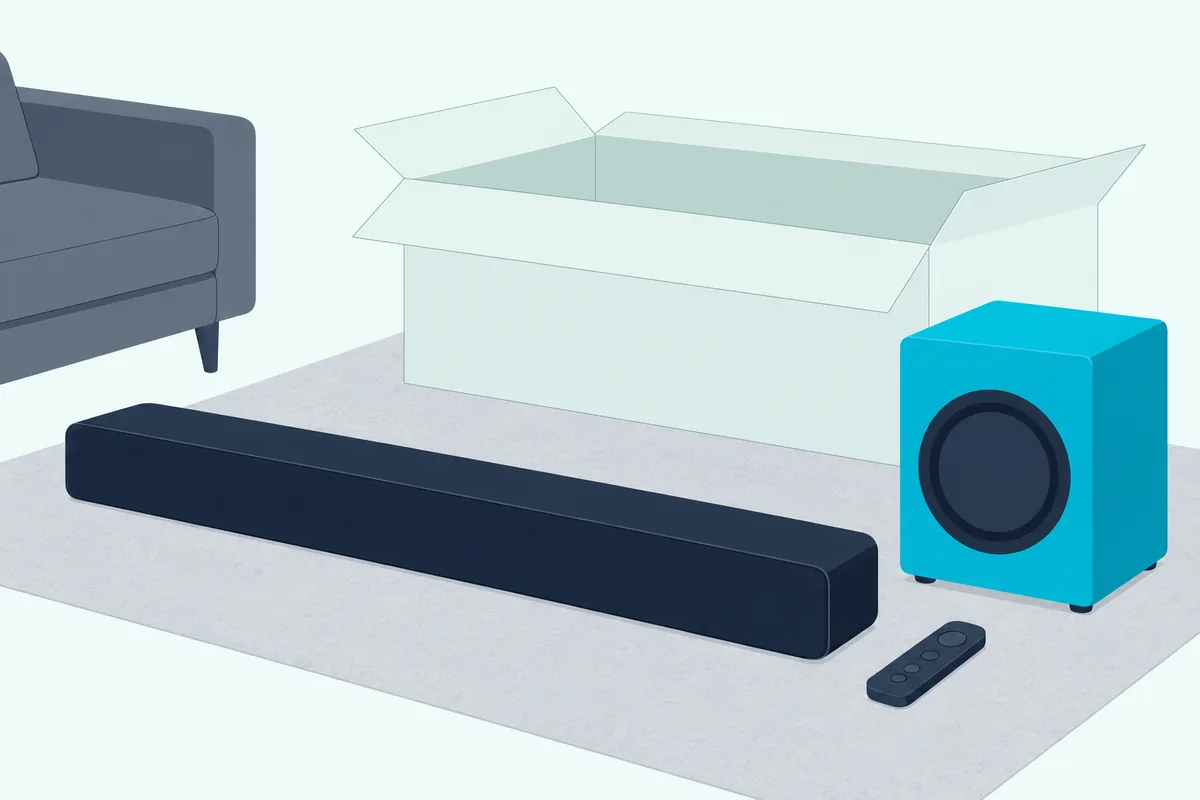
Bose’s Smart Soundbar and Smart Ultra pair wirelessly with a Bass Module 500 or 700, and the Smart Ultra FAQ allows two, as long as both are the same model. The TV Speaker takes either module only by wire, and the Lifestyle Ultra takes its own Lifestyle Ultra Subwoofer, wired or wireless.
Rear speakers follow the same family lines. Polk’s MagniFi manuals name the SR2 Wireless Surrounds while the Signa documents list none, and Bose’s Smart bars take Bose Surround Speakers or Surround Speakers 700 while the TV Speaker takes none.
Neither brand’s rears are cable-free. Polk’s SR2 box holds two power supplies and Bose says its Surround Speakers 700 plug into a power source, so check for outlets behind your seats before you plan a 5.1 system.
Which Bars Play Dolby Atmos and DTS:X?
With the bass settled, height is the next spec on most shortlists. Polk lists Dolby Atmos for the Signa S4 and all three MagniFi bars and Bose for its Smart Soundbar, Smart Ultra and Lifestyle Ultra, while DTS:X appears only on Polk’s MagniFi bars and Bose’s owner’s guides don’t name DTS at all.
The cable decides whether you get any of it. Polk says the S4 needs HDMI eARC for Atmos and the MagniFi bars lose Atmos and DTS:X over optical, while Bose’s guides send Atmos through HDMI eARC or ARC.
Height doesn’t always mean up-firing drivers. The Mini AX lists none and uses a virtual 3D mode, while Bose’s TrueSpace upmixes content that isn’t encoded in Atmos and the Lifestyle Ultra’s TrueSpatial handles content not mixed in Atmos.
Polk’s Signa S2 and S3 sit outside all of this, with Dolby Digital decoding and what Polk calls DTS virtual surround, and so does Bose’s TV Speaker.
Try this before you buy: find the HDMI port on your TV labeled eARC or ARC. If it only says ARC, the Signa S4’s Atmos is off the table, and if there’s no such port, a MagniFi bar on optical plays neither format.
Which TV Connections and Remotes Does Each Brand Use?
That port label settles more than Atmos. Both brands connect over HDMI ARC or eARC with optical as the fallback, but only Polk’s 45-inch MagniFi systems add HDMI inputs for other sources, while Bose’s FAQs say to connect sources to the TV.
Check the box contents, too: Bose packs an optical cable but no HDMI cable with the original TV Speaker, while Polk packs an HDMI cable with every bar.
Your TV remote can usually run either brand. Bose’s guides tie TV-remote control of power, volume and mute to the HDMI eARC or ARC connection, and the Lifestyle Ultra relies on that link, since it has no IR remote in the box.
Polk adds more remote options. The Signa S3 works with Samsung, LG, Vizio, TCL and Sony TV remotes, the S4 is pre-programmed for most TV remotes, and the MagniFi Max AX owner’s manual adds a learning mode that teaches the bar your TV remote’s buttons.
Roku TV owners get one more shortcut. Polk lists the Max AX and Mini AX as Roku TV Ready, and Bose says the same of the TV Speaker and the Smart Soundbar.
Which Bars Stream Over Wi-Fi and Answer to Alexa?
Remotes cover the TV, and the network covers music. Bose’s Smart Soundbar, Smart Ultra and Lifestyle Ultra stream over Wi-Fi with AirPlay 2, Chromecast or Google Cast and Spotify Connect and have Alexa built in, while Polk’s Wi-Fi bars stream through Chromecast, with AirPlay 2 and Spotify Connect on the MagniFi models, and take voice commands from a separate device.
Bluetooth-only bars are on both sides. Bose’s TV Speakers and Polk’s Signa S2 and S4 list Bluetooth and no Wi-Fi.
Polk’s manual for its flagship sets up Wi-Fi through the Google Home app, the Amazon Alexa app or an iOS device, and uses an existing Alexa Built-in or Echo device for voice. The Signa S3 info sheet adds that a Google Home speaker, sold separately, brings Google Assistant control.
Bose runs its Wi-Fi bars from the Bose app, which handles setup, EQ, AI Dialogue Mode, grouping and, on the Smart Ultra, ADAPTiQ. Google Assistant reaches Bose’s bars through a separate Google device too, so Alexa is the only assistant either brand builds in.
Polk’s own Polk Connect app is listed on Apple’s App Store for the older Command Bar, and no current Polk manual uses it.
How Do Polk’s VoiceAdjust and Bose’s Dialogue Modes Compare?
Voice commands aside, both makers give spoken words their own control. Polk’s VoiceAdjust raises voices without changing the rest of the soundtrack, while Bose uses a Dialogue mode button on its TV Speakers, AI Dialogue Mode on the Smart bars and adjustable SpeechClarity on the Lifestyle Ultra.
Polk pairs VoiceAdjust with a center driver on the S4 and the MagniFi bars, while the S2 and S3 have none. The S3 and S4 list three levels, and the S4’s Night mode lowers the bass while raising VoiceAdjust.
Bose says AI Dialogue Mode senses when dialogue occurs and adjusts the tonal balance, and our best soundbar for dialogue guide compares other brands’ versions.
Room calibration is the other tool for clear sound, and only Bose documents it. ADAPTiQ on the Smart Ultra needs 10 minutes when the room is quiet, and CustomTune on the Lifestyle Ultra uses your iOS or Android phone’s microphone instead of a headset.
How Long Is the Warranty on Bose and Polk Soundbars?
After calibration, the warranty is the last spec most buyers check. Bose’s store pages say its products come with a one-year warranty from the date of purchase, while Polk lists one year on electronics and three years on drivers for the Max AX and Max AX SR.
Polk’s Signa pages disagree with themselves. The S2 and S3 pages give 1 year on amplifiers and 3 years on speakers in their feature lists but 2 years on drivers in their spec tables, and the S2 info sheet says 3 years.
Polk’s warranty page sends you to each owner’s manual for the exact terms and says Polk gives no warranty on purchases from unauthorized dealers, so check who’s selling the bar before you order.
Which Bose or Polk Soundbar Should You Buy for Your Room?
Warranty terms rarely decide it, so go back to the screen and the room. Match the bar to the screen width first, as Polk’s buying guide advises, then to the room sizes Bose suggests under the size table.
Our choose a soundbar guide covers the general questions, and the two brand guides rank each maker’s bars on their own: the best Polk soundbar guide and the best Bose soundbar guide.
A Small Bar for a Bedroom or a TV Under 43 Inches
For a small room, Bose’s TV Speaker and Polk’s Signa S2 are the matched pair. Pick the TV Speaker for the shortest bar and Bose’s Dialogue mode, or the S2 for a subwoofer in the box.
A Mid-Size Bar for a 43- to 50-Inch TV
For a mid-size TV, Bose’s Smart Soundbar and Polk’s Signa S4 are the pair. Pick the Smart Soundbar for Wi-Fi, Alexa and a bar that fits under a 32-inch screen or larger, or the S4 for a subwoofer and Atmos without Wi-Fi.
Measure first: the 41.2-inch S4 needs at least a 50-inch screen to stay inside its width.
A Big Bar for a 55-Inch or Larger TV
For a big screen and the most in the box, the Polk MagniFi Max AX bar and its 10-inch subwoofer is the pick.
Polk MagniFi Max AX bar and its 10-inch subwoofer
For a big screen run by voice and app, the white Bose Smart Ultra Soundbar with its glass top is the pick. It also comes in black.
Bose Smart Ultra Soundbar
Every pick met Burton Acoustix’s rating, review and stock checks on 4 November 2026.
Where Do Older Models Like the Bose 700 and Polk React Fit?
Those picks are current models, but plenty of searches name bars that have left each maker’s range. Bose’s home theater page lists no Smart Soundbar 600, 700 or 900 today, and Polk’s React page reads out of stock.
Our page on where the Bose 600 and 700 differ sets Bose’s older bars side by side from Bose’s own guides, including the 700’s ADAPTiQ and the absence of Dolby Atmos from its owner’s guide.
On Polk’s side, the React had Alexa built in, with the React Sub and SR2 surrounds sold separately. Polk’s archive also lists the older MagniFi Max SR, a Dolby 5.1 system with a 43-inch bar, an 8-inch subwoofer and SR1 wireless surrounds, so check whether a listing means that one or the Max AX SR.
The Bottom Line
Older names aside, the current Polk Audio vs Bose choice is short. Polk’s bars come with a subwoofer, and the MagniFi models add DTS:X and, on the two biggest, HDMI inputs, while Bose’s Wi-Fi bars bring built-in Alexa, the Bose app and, on the two largest, room calibration.
Pick Polk if you want bass in the box or a console plugged into the bar, and Bose if you want voice control, one app across the house or a calibrated big bar. Either way, check your TV’s HDMI port label, the width under your screen and the outlets behind your seats first.
Frequently Asked Questions
What does Bose build into its bars that Polk doesn’t?
Built-in Alexa is the main one: Bose puts it in the Smart Soundbar, Smart Ultra and Lifestyle Ultra, while Polk’s current bars take voice commands from a separate device. Bose also documents ADAPTiQ or CustomTune room calibration on its two largest bars, Personal Surround with Bose Ultra Open Earbuds and a glass top on the Smart Ultra and Lifestyle Ultra.
Polk’s documents answer with a subwoofer in every box, DTS:X on the MagniFi bars, three HDMI inputs on its two biggest systems and a three-year warranty on their drivers, against Bose’s one-year limited warranty.
Can you use a Bose bass module with a Polk soundbar?
Bose’s accessory pages list its Bass Module 500 and 700 for Bose products only, and Polk’s manuals pair each subwoofer with its own bar. Plan on staying within one brand for the subwoofer and the rears.
Which brand works with a TV that has no HDMI ARC?
Both, through optical. Every Polk bar and every Bose bar except the Lifestyle Ultra lists an optical input, and Bose packs the optical cable with the TV Speaker, Smart Soundbar and Smart Ultra.
On optical, Polk’s MagniFi bars lose Dolby Atmos and DTS:X, and Bose’s guides tie TV-remote control to the HDMI connection.
How tall are Bose and Polk soundbars, and will they block the TV?
Bose lists 2.21 inches for the TV Speaker and Smart Soundbar, 2.29 for the Smart Ultra and 2.648 for the Lifestyle Ultra. Polk lists 2.15 inches for the Signa S2 and S3, 2.4 for the S4 and 3.1 for the Mini AX, and its documents give the 45-inch flagship as 2.8 or 4.6 inches, so measure against the larger figure.
Polk says the S2 and S4 won’t block the TV or its remote sensor, and Bose says the same of the TV Speaker’s bottom edge.
Do Bose and Polk soundbars work with a Roku TV?
Yes, for several bars. Polk lists the MagniFi Max AX and Mini AX as Roku TV Ready, and Bose says the TV Speaker and Smart Soundbar are too, once connected to the Roku TV’s HDMI ARC port.
Polk’s MagniFi guides add that Roku TV Ready doesn’t work over optical.