Best 5.1 Soundbar Picks and Where Their Surrounds Come From
The Sony BRAVIA Theater System 6 is the best 5.1 soundbar for most living rooms, because its surround comes from real rear speakers.
| Pick | Best for | Why |
|---|---|---|
| Sony BRAVIA Theater System 6 | Most living rooms | Two rear speakers in the box |
| Amazon Fire TV Soundbar Plus bundle | Fire TV homes | Two surround speakers in the bundle |
| Samsung HW-Q800F | Atmos height without rears | Side- and up-firing channels |
| JBL Bar 500MK2 | A bar and a big subwoofer | A 10-inch wireless subwoofer |
| Polk MagniFi Max AX | Extra HDMI inputs | Three 4K HDMI inputs plus eARC |
| Samsung HW-B750F | 5.1 on a smaller budget | Side-firing surrounds and a subwoofer |
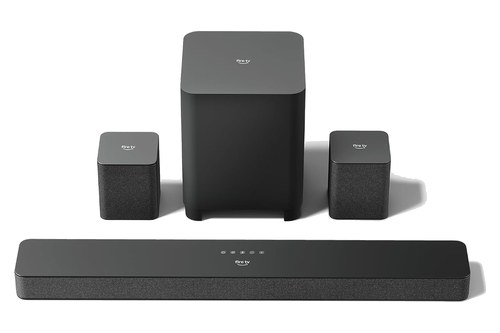
- ✓ Two surround speakers and a subwoofer that connect to the bar once plugged in
- ✓ A dedicated center dialogue channel, with Dolby Atmos and DTS:X
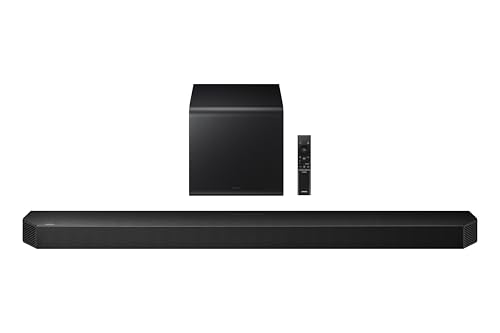
- ✓ 5.1.2 layout with two side-firing and two up-firing channels
- ✓ HDMI input and eARC, Wi-Fi, AirPlay and built-in Alexa
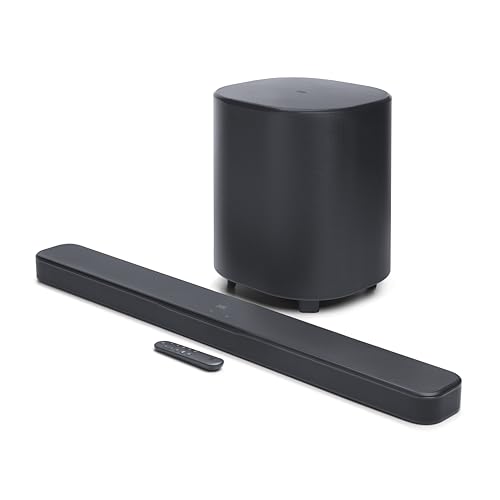
- ✓ 10-inch (260 mm) wireless subwoofer and 750 W maximum output
- ✓ HDMI input with eARC, Wi-Fi and Bluetooth 5.3
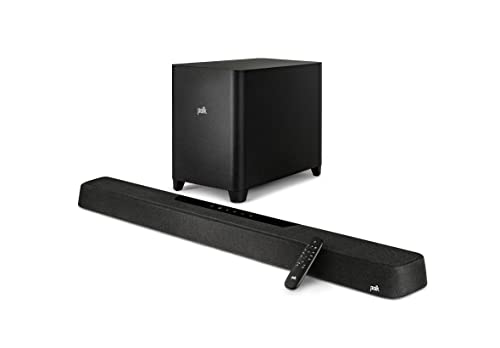
- ✓ Three 4K HDMI inputs plus eARC
- ✓ 11-driver bar with left and right height channels and a 10-inch wireless subwoofer
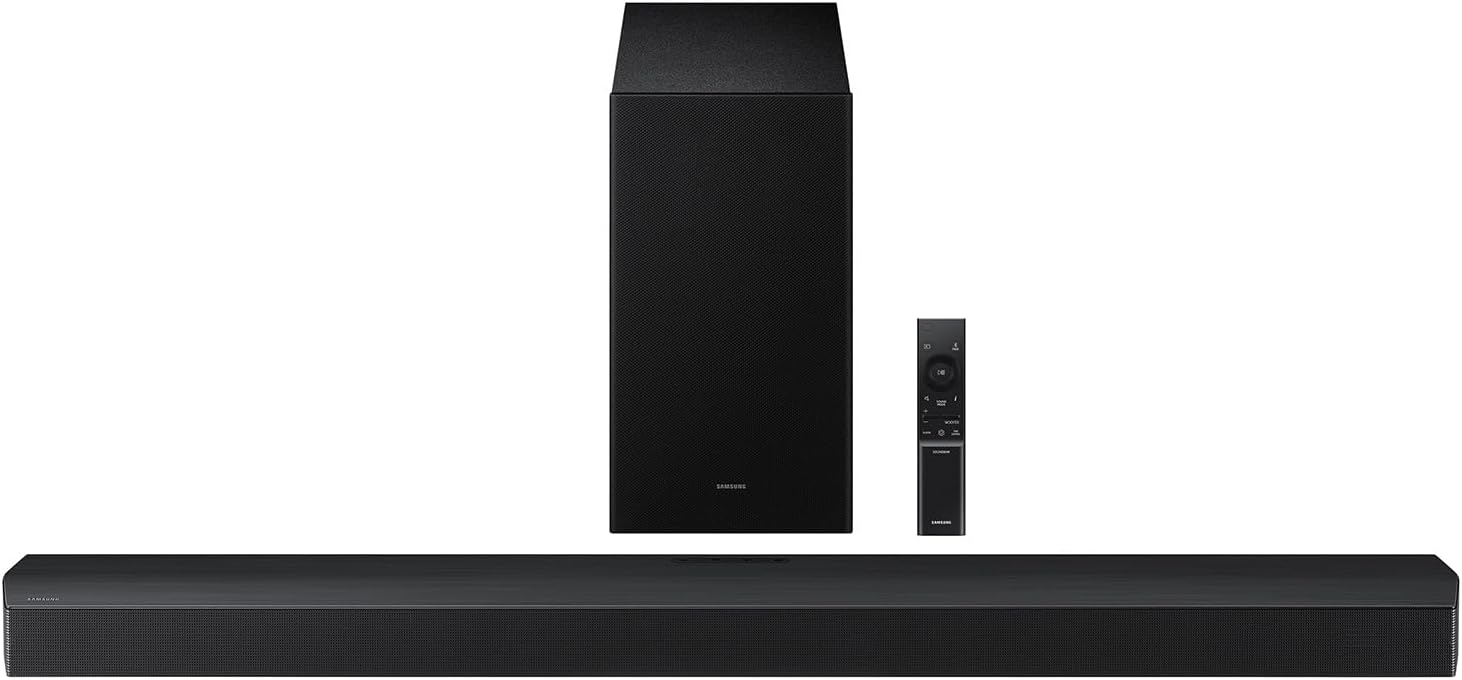
- ✓ Left, center, right and two side-firing channels with a wireless subwoofer
- ✓ Optical cable included, plus HDMI ARC

Picking the best 5.1 soundbar starts with a question the number alone doesn’t answer: where do the two surround channels actually come from?
Dolby counts 5.1 as left, center, right, two surrounds and a subwoofer, yet some systems put those two channels in speakers behind your couch while others play them from the bar at the front of the room.
Know which kind you’re buying and you’ll know what reaches the back of the room, what’s in the box, and which parts still need a power outlet.
Six systems from Sony, Amazon, Samsung, JBL and Polk follow, two of them with rear speakers in the box.
Next come the quick answer and table, each pick, what 5.1 means, real rears versus side-firing bars, what wireless rears plug into, Atmos height and the right TV port.
What Is the Best 5.1 Soundbar?
That question decides the answer, and the Sony BRAVIA Theater System 6 is the best 5.1 soundbar for most living rooms because its surround channels come from two real rear speakers, each with its own tweeter. Sony’s help guide lists front, center and rear speaker sections plus a 200 mm subwoofer, and it puts the rear speakers and their wireless amplifier behind the viewing position (Sony).
If you’d rather keep everything at the front, Samsung’s HW-Q800F fires those channels from the sides of the bar and adds two up-firing drivers for a 5.1.2 layout.
Every pick met Burton Acoustix’s rating, review and stock checks on 26 October 2026. The descriptions come from the makers’ manuals and spec pages.
If sound from behind matters less to you than dialogue or size, our best sound bars for every TV cover the wider field.
Which 5.1 Soundbar Should You Buy?
Those six split two ways: two systems put real speakers behind you, and four play all five main channels from the bar. Pick the first kind if there’s floor behind or beside your seat, and the second if there isn’t.
Sony BRAVIA Theater System 6
For sound that really comes from behind you, the Sony BRAVIA Theater System 6 is the pick.
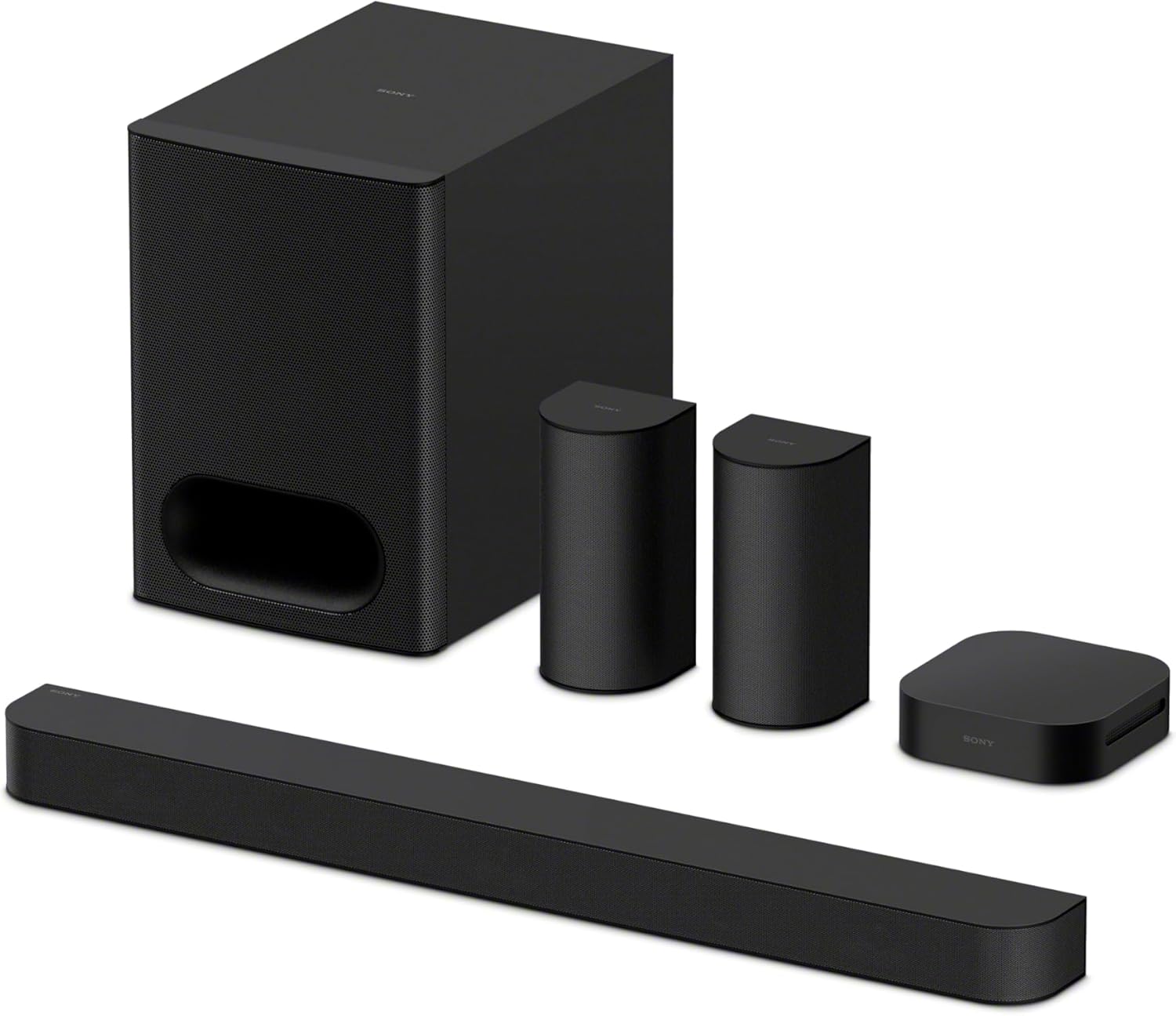
Sony BRAVIA Theater System 6
Sony’s help guide makes the subwoofer the main unit: the bar plugs into it by cable, and a wireless amplifier behind the seats drives the two rear speakers through their own cables. The box holds the bar, subwoofer, amplifier, both rears, a remote and an HDMI cable.
It supports Dolby Atmos and DTS:X over eARC, setup runs through Sony’s BRAVIA Connect app, and a TV without ARC can feed the subwoofer’s optical input instead.
Amazon Fire TV Soundbar Plus Bundle
For a Fire TV home, the Amazon Fire TV Soundbar Plus bundle is the pick.
Amazon Fire TV Soundbar Plus bundle
Amazon’s own listing calls it a 5.1-channel system: the Fire TV Soundbar Plus with a subwoofer and two surround speakers that connect to the bar once you plug them into power. The bar on its own is a 3.1 model with a dedicated center channel, and its listing puts an HDMI cable in the box for the TV’s eARC or ARC port.
With a Fire TV, one remote runs the TV and the bar, and the sound settings sit in the Fire TV audio menu on select models.
Samsung HW-Q800F
For Atmos height without rear speakers, the Samsung HW-Q800F is the pick.
Samsung HW-Q800F
Samsung’s spec sheet spells out the layout: three front channels for left, center and right, two side-firing channels, two up-firing channels and one subwoofer (Samsung). The box adds an HDMI cable and a wall-mount kit, but no rear speakers.
Add Samsung’s optional SWA-9500S rear speakers and the manual’s output table rises from 5.1.2 to 7.1.4. Samsung says its wireless signal reaches up to 10 meters under normal conditions.
JBL Bar 500MK2
For a plain bar and a big subwoofer, the JBL Bar 500MK2 is the pick, and how it differs from the older JBL Bar 5.1 models is worth a look if you’ve seen those names side by side.
JBL Bar 500MK2
JBL’s spec sheet lists a 5.1-channel system with five racetrack drivers and four tweeters in the bar and a 10-inch wireless subwoofer (JBL). It doesn’t say which of those drivers carry the surrounds, and JBL’s documents list no rear speakers for it.
The manual calls its height effects virtual Dolby Atmos and starts a sound calibration for your room from the remote. The box holds an HDMI cable, a remote and a wall-mounting kit.
Polk MagniFi Max AX
For extra HDMI inputs, the Polk MagniFi Max AX is the pick.
Polk MagniFi Max AX
Polk credits an 11-driver array working with its SDA technology for the 5.1.2 sound, and its driver list assigns every driver in the bar to the left, right, center or height channels (Polk). No driver in that list is a surround driver.
Polk sells SR2 wireless rear speakers separately, and with them the system becomes 7.1.2. Three HDMI inputs mean a console, a streaming box and a disc player can all plug into the bar.
Samsung HW-B750F
For 5.1 on a smaller budget, the Samsung HW-B750F is the pick.
Samsung HW-B750F
Samsung’s spec sheet gives it the same five main channels as the HW-Q800F, three at the front and two side-firing, with a wireless subwoofer but no up-firing drivers (Samsung). It decodes Dolby and DTS 5.1 and adds DTS Virtual:X processing.
Its manual adds Samsung’s wireless rear speaker kit as a separate purchase that takes the surround modes to 7.1. The connection is HDMI ARC or optical, and only the optical cable comes in the box.
What Does 5.1 Mean on a Soundbar?
Every layout here uses Dolby’s numbers: ear-level speakers first, then subwoofers, then any height speakers. In that scheme 5.1 means five main speakers (left, center, right and two surrounds) and one subwoofer (Dolby).
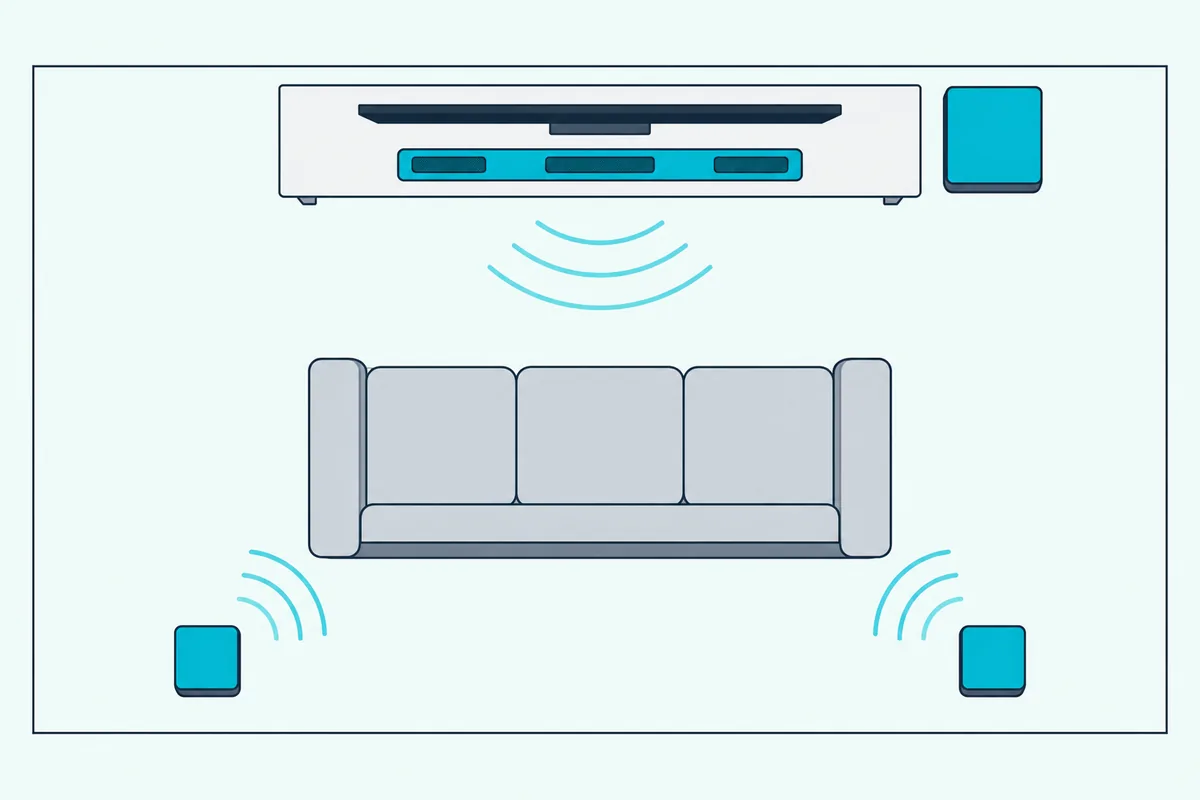
So 5.1.2 adds two height speakers and 5.1.4 adds four, which Dolby says can sit in the ceiling or fire upward to bounce off it. Dolby places surround speakers behind or to the side of the listener.
Soundbar makers use the same numbers for channels, which is how one bar can claim 5.1: Samsung’s spec sheets count their side-firing drivers among the five. For the rest of the label, here’s how those numbers work on any soundbar.
Do 5.1 Soundbars Have Real Rear Speakers?
That side-firing route is where these picks part ways, because only two of the six put speakers behind you. Sony’s two rears and Amazon’s two surround speakers are separate boxes, while Samsung’s two bars fire their surrounds out of the bar’s sides.
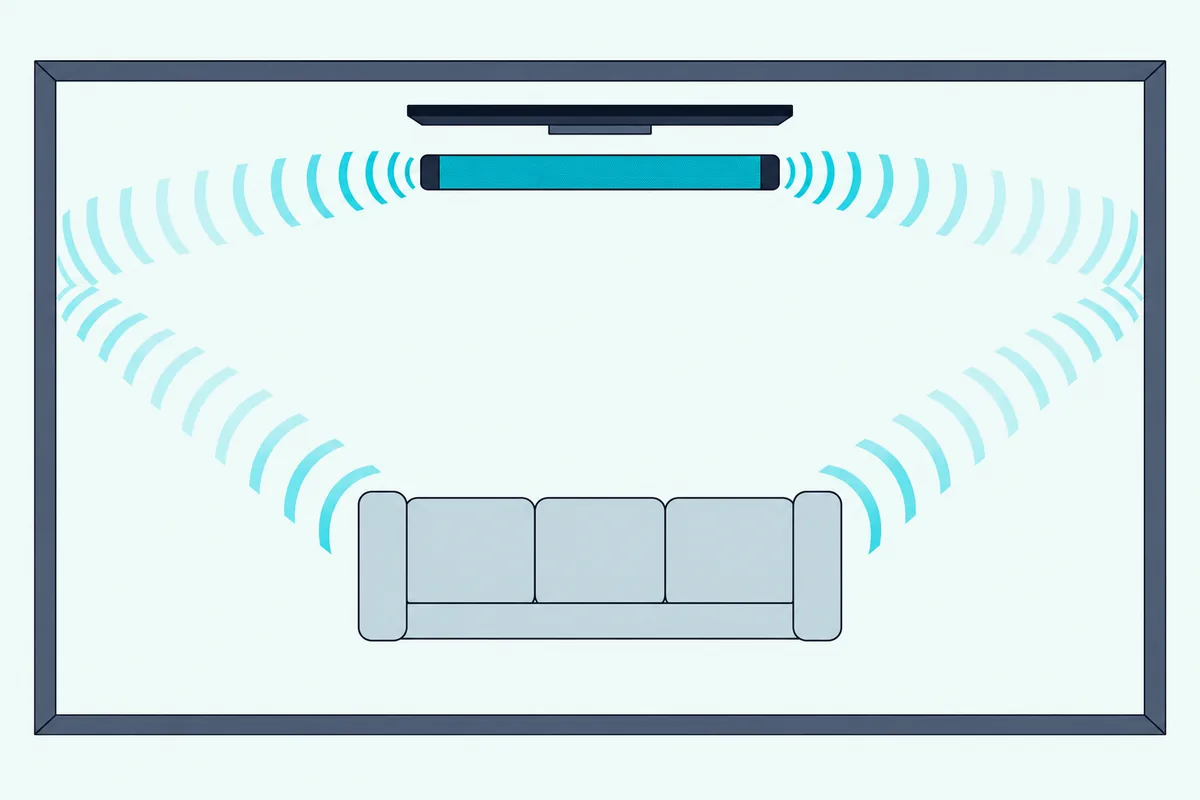
Polk and JBL name no surround driver at all: Polk’s list gives every driver in the bar another channel, and JBL’s lists its drivers without saying which channel each plays. Dolby’s guide calls rear boxes like these satellite speakers, and they’re the only kind that sit behind you.
Here is where each pick’s surround channels come from:
| Pick | Layout | Surrounds from | Rear speakers |
|---|---|---|---|
| Sony BRAVIA Theater System 6 | 5.1 | Two rear speakers | In the box, with a wireless amplifier |
| Amazon Fire TV Soundbar Plus bundle | 5.1 | Two separate speakers | In the box |
| Samsung HW-Q800F | 5.1.2 | Side-firing drivers in the bar | Sold separately |
| JBL Bar 500MK2 | 5.1 | The bar | None in the box |
| Polk MagniFi Max AX | 5.1.2 | The bar | Sold separately |
| Samsung HW-B750F | 5.1 | Side-firing drivers in the bar | Sold separately |
Try this before you buy: sit in your usual seat and check the floor behind and beside it. Sony’s guide puts its rears behind the viewing position, and Dolby allows the side as well, so a sofa against the back wall needs space at its ends.
Are Wireless Rear Speakers Really Wireless?
Those satellite boxes still need power, because only the signal travels through the air. Amazon’s rear pair connects to the bar once it’s plugged into power, and Sony’s rears cable to a wireless amplifier that needs its own outlet.
The same goes for every wireless subwoofer here. Polk’s manual has you plug its subwoofer into a wall outlet and keep it within 30 feet (10 meters) of the bar, after which it pairs on its own.

Samsung builds the antenna into its subwoofer and rear speakers, and the HW-B750F’s spec sheet notes that the two speakers in its add-on kit connect to each other by wire. Count the power cords before you call a system cable-free: Sony’s needs two outlets, one for the subwoofer and one for the amplifier.
The same count applies to the systems in the best soundbar under 1000 dollars guide: Polk’s MagniFi Max AX SR takes four power plugs, and LG’s S80TR powers up in a set order, subwoofer first.
Do You Need 5.1.2 or 5.1.4 for Dolby Atmos?
Those cords aside, height is the other thing a plain 5.1 system leaves out. You need the third number for overhead sound from drivers of its own: a 5.1.2 system has two height channels, while a 5.1 system that decodes Atmos, like Sony’s or Amazon’s, has no height speaker to play it from.
Samsung’s HW-Q800F has two up-firing channels and Polk’s MagniFi Max AX two height channels, while JBL calls its height effects virtual, a gap that shows up across JBL’s and Samsung’s mid-range bars. None of the six is a 5.1.4 system, which Dolby defines by four height speakers.
These soundbars under $500 set JBL’s Bar 500MK2, whose height effects are virtual, beside 3.1.2 bars with up-firing drivers.
If overhead sound matters most, Burton Acoustix’s Dolby Atmos soundbar picks compare bars built around height channels.
Which TV Connection Carries 5.1 Sound?
Atmos also depends on the port, because the full-resolution formats need eARC. The HDMI Licensing Administrator lists uncompressed 5.1 and 7.1, Dolby TrueHD, Dolby Atmos and DTS:X among the formats eARC carries (HDMI LA).
Sony’s guide puts it the other way round: eARC carries the object audio and multichannel PCM that plain ARC can’t. Five of the six picks list eARC, while Samsung’s HW-B750F stops at ARC and optical and decodes Dolby and DTS 5.1 but not Dolby Digital Plus.
For that bar, Samsung’s manual recommends switching the TV’s digital output from PCM to Dolby Digital when a broadcast carries Dolby Digital sound. For any of the others, look for the eARC label on your TV’s HDMI ports and use that one.
The Bottom Line
Buy the Sony BRAVIA Theater System 6 for two real rear speakers and a 200 mm subwoofer in one box, or the Amazon Fire TV Soundbar Plus bundle if your home already uses Fire TV.
Choose the Samsung HW-Q800F for Atmos height without rears, the JBL Bar 500MK2 for a bar and a 10-inch subwoofer, the Polk MagniFi Max AX for three HDMI inputs, and the Samsung HW-B750F as the budget pick.
Frequently Asked Questions
Are 5.1 soundbars worth it?
They are if you want sound placed beside or behind you, which a 2.1 or 3.1 layout has no channels for. If you mostly watch news and talk shows, a 3.1 bar’s center channel carries the dialogue, which Dolby calls that speaker’s main job, and the 3.1 vs 5.1 soundbar breakdown weighs that step down.
Is Dolby Atmos better than 5.1 surround?
It adds to 5.1 rather than replacing it: Atmos height speakers let sound move overhead and around you, in what Dolby calls a dome of sound. To hear it, play a movie or show marked with the Dolby badge; JBL’s Bar 500MK2 can also stretch plain 5.1 and 7.1 Dolby Digital tracks into its virtual Atmos effect.
Can you add rear speakers to a 5.1 soundbar later?
Some can. Samsung lists an SWA-9500S rear kit for the HW-Q800F and a wireless rear speaker kit for the HW-B750F, and Polk sells SR2 rears for the MagniFi Max AX, which takes it to 7.1.2. JBL’s documents list no rear speakers for the Bar 500MK2, and Sony and Amazon include rears in the box.
Do you need a receiver for a 5.1 soundbar?
No. Each system here decodes the sound itself and connects straight to the TV by HDMI, and most add an optical input. Dolby describes soundbars as hooking right up to the TV, while an AV receiver is the hub that powers separate speakers around the room.